Some Quick First Impressions: Engaged to the Unidentified, Pupa and Hozuki no Reitetsu

Engaged to the Unidentified

Short Synopsis: Our lead character has to marry against her will.
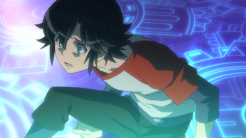
I’ve found my surprise of the season with this show. Now don’t get me wrong, the premise is horrible and something that we’ve seen many times before. This series would have been incredibly boring, if it wasn’t for one character: the little girl. You’ll know who I mean when you see her. She made me laugh quite a few more times than what I’d like to admit. I mean, on one hand she uses moe like no other. But on the other she’s like this really weird combination between a child and an adult. Her eloquence is one moment really polite, and the other incredibly childish. The rest of the cast… well they try what they can with a premise of suddenly learning that your grandfather has arranged your marriage behind your back, but the drama is forced and cheesy. That little girl though… she made this worth the watch. The danger with these characters is of course that it’s really difficult for them to carry the show on their own. I mean, this series needs to stay fresh for an entire season. I did not see hints that it will, but who knows?
ED: Generic J-Pop
Potential: 60%

Pupa

Short Synopsis: Our lead character eats stuff.
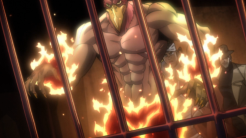
I really am puzzled for this one. I’d really like to know the story behind this series. How did it get made? Who are responsible for it? Why was it made? I mean, clocking in at only four minutes (three if you ignore the OP and ED) this was obviously made on a shoestring budget. The animation shows the same: there was hardly any inbetween work done here, and the animation that is there looks incredibly jerky. And yet the art itself is very good, and the soundtrack also rocks. Tomomi Mochizuki is a brilliant director who really knows his stuff, so he has to have some kind of idea or vision behind such a series that obviously is going to be short with only twelve episodes. Was this like a project to train some new people at Studio Deen or something? Does that explain why it was delayed one season? I mean, the episode had a good atmosphere, although it was a bit weird and really really short so there was no time to let things sink in. What’s going on here?
OP: Love the art, although it is a bit lazy.
ED: It’s like… the creators made a long version only to hear that it had to be cut incredibly short
Potential: #$@?%

Hozuki no Reitstsu

Short Synopsis: Our lead character works as an executive in hell.
Thank god, finally. Houzuki no Reitetsu was the first episode for which I can really say that yes, it was well written. It already was amongst the top series to look out for, and it did not disappoint. It blows the entire season out of the water in terms of creativity, but it sets itself apart with its script. The way in which the characters talk to each other is delightful. A lot of this series is simple smalltalk, but thankfully the creators did not listen to the Shaft-school of writing dialogue, but they kept things meaningful and to the point, while at the same time throwing in tons of references to Japanese mythology, but also weirdly talked about things like wildlife and Ayer’s Rock. It also weaved in its comedy very nicely: it only makes a joke when it’s got something funny to tell. Some of the jokes were quite clever, something you wouldn’t expect of anime lately where most of the jokes are simply quite crass.
OP: The best OP of the season, introduces the characters with a weird song and trying something different for a change.
ED: This was weird, but still better than the other EDs we got to listen to this season.
Potential: 95%

Ranking all of the past Winter Seasons till 2000

Over the years, even when I just started blogging, I’ve seen enough people get tired of anime, claiming that anime in the past used to be so much better. I remember that I kindof saw their point, however there were plenty of awesome series to keep me watching. However, after the current state of the season so far, I really do long for the anime of the past, and they seemed so much more diverse.

However, the big trap with these statements is to over-glorify the past. “Yeah, the past used to be so much better, in my days blah blah”, so you need to be careful with these kinds of statements: you forget the boring parts and only remember the things that stood out. So because of that I decided to take a good look back at the past winter seasons. I’ll rank all of them, but I’ll talk about them in chronological order. For each picture, I’ll use a picture of the series that turned out to be the best, by the standards I hold today.

Once this season has ended, if I feel motivated enough, I’ll also include it in this list.

Winter 2013


This was a really bad season. The only remotely good non-sequel show to come out of it was Kotoura-san. It had a very strong first episode for a school series, and managed to keep it up for 1 cour. Beyond that, the obvious stand-out was a sequel: Chihayafuru, which admittedly was just fantastic. AKB0048 unfortunately was not as interesting as I hoped it to be, and Amnesia and Tamako Market had promising first episodes, only to crash down horribly. Apart from that, the school setting was again very prevalent (Boku wa Tomodachi ga Sukunai, Mangirl, Sasami@Ganbaranai). Lots of series looked the same, but there also was some historical fantasy here and there (Maoyuu, The Hakkenden, Senran Kagura). Out of around 31 series, I only found three of them actually worth watching.
Rank: #11

Winter 2012


This was a season in which suddenly there were three ambitious science fiction series airing at the same time: Rinne no Lagrange, Mouretsu Pirates and Aquarion Evol. Out of those, only Rinne ended up not fulfilling its promise, but still it wasn’t bad. On top of that there was a solid horror-series with Another, and three really solid comedies in the form of Poyopoyo Kansatsu Nikki, Danshi Koukousei no Nichijou and the incredibly random second season of Tantei Opera Milky Holmes. Natsume Yuujinchou came with its amazing fourth season that gave a ton of depth into the people around him. So yes, I would say that this was a very good season, with a pretty decent variety as well. Aside from mecha and comedy, there also was slice of life, sports, fantasy and romance. I would call this a very well rounded season.
Rank: #7

Winter 2011


This season stood out due to three absolutely amazing series: Level E, Mahou Shoujo Madoka Magica and Hourou Musuko. All three together covered the entire spectrum: one was a brilliant comedy, another brilliantly deconstructed the mahou shoujo genre, and another was a brilliant look into what it is to be a transgender. These three alone made this season worth watching, and on top of that we also get a pretty decent closure to Kimi ni Todoke, a “so bad it’s good”-comedy Mitsudomoe Zouryouchuu, and Gosick, an adventure series which started out questionably, but ended beautifully. The downside to this season was that there were a lot of stinkers. Fractale is the most notable for having a wonderful premise, only to completely ignore it, but Yumekui Merry had the same fate: great premise and execution, but just cut off in the middle leaving nothing resolved. Dragon Crisis just went worse as it went along, and Kore wa Zombie Desu Ka also failed to stay funny. Not to mention the epically bad Rio Rainbow Gate, Infinite Stratos and another Oniichan series. A season of huge ups and huge downs.
Rank: #6

Winter 2010


Oh boy, I remember how this was a stinker when it came along. However, looking back on it, it’s not the worst, it’s better than the Winter of 2013, however that season was backed up by a very strong Autumn season, while this one… wasn’t. So we were stuck with Durarara, a series which thankfully had a fantastic first half, only to have a much less interesting second half later on. The one series that stood out was Heartcatch Precure, the series that showed how much you can do with the mahou shoujo formula. Katanagatari also was interesting and fresh with its wordplay, but the problem with these series was that they paid out very slowly: Heartcatch Precure only started in February and had 50 episodes, and Katanagatari only aired once a month. Apart from that there were series that had interesting premises and were nice to watch, but never really were meant for greatness, like Cobra The Animation, a revival of the classic TV-series, and Sora no Oto, which at the very least had a very intriguing setting (really rushed ending though!). However, this also was the season in which the barriers of good taste got lowered significantly: Seikon no Qwaser was pretty much borderline porn. With a measly 17 series total that aired, things did not look good for anime at the time. However, things recovered afterwards.
Rank: #10

Winter 2009


Winter 2009 was weird. It was stunning, completely stunning. Birdy the Mighty Decode still stands in my top 10 because of it. White Album was incredibly annoying, but ultimately worth it and a unique romance. Ride Back started out rather weird, but it turned out to be a pretty unique mecha series about an adult female who drove this cross between a motorcycle and a robot. Maria-sama ga Miteru surpassed itself, Shikabane Hime was weird, but ultimately awesome to watch, and Hajime no Ippo also completely surpassed itself. It was glorious, and yet there were so many annoyances at the same time with how the Tower of Druaga failed to live up to its hype, Natsume Yuujinchou’s second season was not as strong as the first, Koukaku no Regios didn’t go anywhere, Kurokami failed to deliver, and Munto turned out to be nothing more than a blatant recap. I also remember complaining about how there were way too many sequels this season. And true, the amount of sequels at the very least has never been as overwhelming as in this season. 2009 was definitely the year with the most conflicting feelings.
Rank: #3

Winter 2008


This season was one of the best winter seasons ever. The reason was the sheer quantity of amazing series that aired. Porphy no Nagai Tabi is a series that today can not be made: 52 episodes dedicated to a children’s novel, coupled with stunning background art. Gunslinger Girl’s sequel was very controversial due to the style change, but I loved it. Shigofumi had an awesome concept of a girl who brought back letters from the dead, and True Tears is one of those unique romances in which you never really know what the characters were thinking. Hakaba Kitarou seamlessly combined horror with comedy, Aria the Origination was an amazing conclusion to the Aria franchise and Spice and Wolf was a really intelligent look at medieval economics with excellent characters. THIS. This is what a winter season should be. There was something for everyone, many risks were taken and many series delivered in well thought-out ways. There were a few disappointments, but none of them were really big disappointments. Just a few series that burned out in their second halves (Zoku Sayonara Zetsubou-sensei and Sisters of Wellber 2), and the obviously bad series like Rosario to Vampire were in a minority and could be easily avoided.
Rank: #1

Winter 2007


The 2007 season had much less quantity. However, what it lacked there, it made up for in quality as it premiered two series that would grow out to be absolute classics: Les Miserables and Nodame Cantabile. This definitely was a season for the people into classic literature or music. No other season has ever been able to deliver two of these masterpieces at the same time. If you look at the rest of the season, the you’ll see lots of action: generic action series or series about people with powers fighting each other, that never really stood out. Rocket Girls was nice, and Master of Epic also was this unique little comedy series. There also was slice of life, sports. That’s the big difference between this season’s lackluster series: in 2014, everything looks like each other. In 2007, things were uninteresting, but at least they were different.
Rank: #5

Winter 2006


This was the first winter season I actively followed. And what a season it turned out to be: Ayakashi ~ Japanese Classic Horror, Ergo Proxy and Rescue Wings together. All incredible series, aimed at adults, yet all completely different. Beyond that there was a really solid romance series situated in a hospital with HanTsuki, Magikano was hilarious back when Seiji Kishi was still good. Plus, Nerima Daikon Brothers: an actual animated musical that never got fully subbed, yet was really fun to watch. There may not be as many series here, but here is the thing with this season: all these six series were incredibly well thought out. They had some really interesting ideas and they took their risks, instead of rehashing the most popular thing around. All of these series set out to challenge the status quo and do something never done before. Even Magikano, as its brand of humour was still fresh back then.
Rank: #4

Winter 2005


Here we get to the point where I haven’t seen every series that came out, so my view of this season has also a few impressions here and there. This was an average season, that delivered two really strong short series: Air and Starship Operators. Romance and space opera. Beyond that there was the short comedy Gag Manga Biyori. Beyond that, there’s lots of romance, mecha and kiddie shows. I mean things like Mahou Sensei Negima, Peach Girl, Jinki Extend: I saw small fragments of them but none of them really looked like they had potential. This actually reminds me a lot of the season we’re currently in.
Rank: #8

Winter 2004


This is a weird season since there were two utter classics that aired with strange schedules: Ghost in the Shell’s second season aired two episodes at the start of each month, and Paranoia Agent started in february. Especially Paranoia Agent was absolutely fantastic in every single way. But yeah, this season absolutely rocked. One of the best action series out there in the form of Jubei-chan 2 also was shown here. That’s three completely amazing shows in one winter-season, and the rest of the season, even the not interesting ones, are incredibly varied. There are fanservice series, but plenty of historical ones, there is a comedy, there are series aimed at a young audience, and old audience, plenty of series that took risks and series that just stayed with the status quo. The balance is perfect here.
Rank: #2

Winter 2003


The top three series this season were all really inspired: The Big O’s second season really knew how to play with the mecha genre, Ashita no Nadja was a really creative shoujo adventure that we nowadays never get to see anymore, and Wolf’s Rain, although the execution left a bit to be desired here and there, really stood out with how its main cast consisted out of wolves, and I absolutely cannot fault its setting, which was incredibly imaginative. Beyond that though, this was a small season. Most of the other shows were just harmless fluff or just plain bad series. Oh, and Licensed by Royal, which I haven’t seen but admittedly does look interesting.
Rank: #9

Winter 2002


One thing to note is that ten years ago, the seasons were much smaller. This season, ignoring the kiddie shows, had about 16 anime. The best of which was RahXephon, which was an intelligent mecha series, definitely. Also good were the adventure series Patapata Hikousen no Bouken for the younger audience, and Fullmetal Panic, for the older audience. Nothing standout like in previous years though. Kanon also premiered, starting the trend of key adaptations, and Onegai Teacher aired as well. Nothing much stands out, but there are lots of cute girls, along with generic action series in which the enemies are strange supernatural beings.
Rank: #12

Winter 2001


Here we get to the part where the winter season was pretty much insignificant. The only series that are noteworthy are Arjuna (a nature series, admittedly very creative) and Tales of Eternia. Ojamajo Doremi also had one of its seasons here, but apart from that… there was hardly anything. That I’ve seen, at least. The thing is that there are surprisingly many series that feature adults as their protagonists. There are 14 series in total, and while most of them indeed do look uninteresting to me, they don’t suffer from the problem of not trying out different things.
Rank: #14

Winter 2000


Only 9 series aired in total. 9. That’s nothing. One series stood out from the bunch: Boogiepop Phantom. Fantastic show if you want to work hard in order to understand a series. Kazemakase Tsukikage Ran was also a very solid period piece. Beyond that though were mostly kiddie shows (we saw Mushrambo and Mon Colle Knights on Dutch TV, actually), but yeah, it’s apparent that producers at this age didn’t see much into winter seasons, and any series airing there is a mere coincidence. I’ll stop my overview here then.
Rank: #13

Conclusion

So, what did I conclude from this? Well, globally, these years can be divided into three periods. In the first period, until about 2005: relatively few series were released, and among them were two or three series that really stood out as amazing series, only 2004 had more and falls more in the period that came afterwards. The rest of the series were meh, however they were varied and were different from each other.

The second period is what I’d like to call the golden age of anime. It lasted from 2006 to 2009, including 2004 (and 2011 and 2012, I guess). The season size got much larger, and with that the amount of amazing series also increased. Every season had so many series that worthwhile. There was something for everyone and so many series came up with interesting ideas, rock solid executions. There were meh series, and series that didn’t deliver, but even amongst them was enough good stuff and things were varied.

And the third period started in 2010. Globally, things returned to having two or three really standout, really good series, with the rest not really being remarkable. But here’s the kicker: as opposed to the first period, the amount of series per season still is huge. There are as many series as in period two, and most likely even more! The result is that while a decade ago, you had the same amount of standout series, this time they’re surrounded by heaps and heaps of generic series that on top of that all look the same and don’t try to be anything new, different or fresh. You get piles of series that are all trying to fit into the same niche and therefore all just end up watering each other down due to the huge amount of competition.

Because of this, the stakes to stand out get higher, so more money is poured into the animation budget. The financial risk is higher, so in terms of storytelling you can’t take many risks either, so people opt for safe scriptwriters and series with interesting ideas are really hard to greenlight. Because of how everything is overcrowded, series that have certain elements in them tend to sell more, so every series needs to have those elements in them in order to also compete for sales. Even the good ones, leading to the excessive amounts of fanservice you see in nearly every show today. I mean, it cannot be a coincidence that Kill la Kill and Space Dandy, the TWO series that set out to try something new and different, both being ended up so crass at the same time.

So yes. I’m not saying anime is dying. I’m saying anime is in dire need of a new business model. The current one is fifteen years old now, and the lack of innovation is starting to hurt. The industry thankfully isn’t as far south as the gaming industry is, however something needs to happen. Be bold! Be creative! Screw conventions!

Some Quick First Impressions: Hamatora, Super Sonico The Animation and D-Frag!

Hamatora

Short Synopsis: Our lead character is a detective.
Okay, I now feel really sorry for Noragami for mistaking it with Hamatora. Sure it was boring and all, but at least it was well told here. Seiji Kishi has no sense of timing whatsoever. This episode was a huge mess, and while it wasn’t such a huge waste of potential like Dagan Ronpa, under a good director I could have seen potential here. Seiji Kishi, let me explain something to you: think of any anime there. Do you recall those random background shots that they keep showing? They do that for a reason: to establish the setting, so that we know where the current scene takes place. You can’t just take that out in an attempt to save time. The same goes for small-talk: the purpose of that is to build your characters and show what kind of people they are. You don’t need to make every sentence in small-talk funny, and you by all means don’t want to force a laugh, because now we got this incredibly stupid analogy about that egg of Columbus that just doesn’t make any sense. A lot of directors and writers nowadays have completely missed the point of build-up! Adapt the freaking story so that everything fits well, don’t try to cram everything in! Pick the right points you want to focus on! Make the story flow already!
OP: Nice and artistic, but the song sucks.
ED: Dull and formulaic j-rock.
Potential: 0%

Super Sonico the Animation

Short Synopsis: Our lead character is a gravure model.
Watching this episode really made me facepalm, and realize even more what a terrible state the anime industry is in. It’s not that this episode was terrible. This show does remain incredibl commercialized, being basically nothing more than a way to glorify the incredibly moe mascot of some company. And the moe indeed went through the roof in this episode. But guess what? It wasn’t that bad compared to its contemporaries. The thing with Sonico is that she’s a mascot, so she needed to be portrayed in an as good light as possible. The creators knew that all too well, and in the process they created an actually good character. The thing is: Sonico works hard. She does well in school, she can take care of herself with a part time job, she performs in a band, she models. She has an actual life! Usually characters just have one hobby. One thing that they do, and nothing more. Sonico actually has an interesting life. Sure, there are cliches and the gravure part was cringe-worthy and the preview for the next episode showed that there is no point in watching beyond this first episode, but the creators here delivered a more complex character than a lot of other uninspired series out there. Only because she’s a mascot and therefore cannot be put in a bad light. When such a sell-out actually trumps you, it’s time to start wondering what the hell went wrong.
ED: The CG! It burns!
Potential: 30%

D-Frag!

Short Synopsis: Our lead character is forced into a club.
Comedy is hard. Anime can do good ones, however they’re in the vast minority. D-Frag is about a game design club that doesn’t really do anything (well, where have we seen this before?), who need to recruit new members and they reel in this one weird guy. And to be honest: it doesn’t really get better. The whole gimmick of the series is that it’s got weird characters who all have this “element”, like the water girl throws glasses of water around, and the “earth” girl plays with sandcastles. The jokes are all badly delivered, they lack inspiration, they try too hard. I see no potential.
ED: Oh god the terrible vocals!
Potential: 0%

Some Quick First Impressions: The Pilot’s Love Song, Nobunagun and Nobunaga The Fool

The Pilot’s Love Song

Short Synopsis: Our lead character goes to school and falls in love.
You know? It might be because I didn’t read the premise for this series careful enough and all, but I expected this series to be a little more… interesting. I expected this series to be about airplanes. Instead, we got a series about this teenager who goes to a new school with his sister, and meets a cute girl and they instantly fall in love with each other. Also they fly some planes here and there. It’s another one of those series that has inexplicably teenagers piloting airplanes in the army, despite there being enough capable adults who can probably do a much better job of it. Also, there is a giant floating island in this series. So what do the people decide to do with it? They dedicate it entirely to one single school. Even taking into consideration that this was set up by nobles, it’s an incredibly contrived set-up. Oh, and there’s also drama. We have no idea what yet, because this episode only hinted at it. Without any subtlety whatsoever, but it did hint at it. This show is like all cheerful and stuff, and suddenly out of nowhere a character goes “oh my god I hate you so much!”, only to drop it again. The movie was about a simple escort mission. That was interesting! That was about characters who at the very least looked and acted like adults.
OP: Bad J-pop
ED: Pretty good, in the spirit of the series at least.
Potential: 30%

Nobunagun

Short Synopsis: Our lead character is the reincarnation of Oda Nobunaga.
Okay, so shounen action. I’ve gotten bored with it mostly. Like with Noragami, it’s all just too standard and… just not exciting. Nobunagun wasn’t one of those series, to my surprise: the action here is pretty good here for a show that’s supposed to be about this high school girl. I’m not sure about the exact reason why, but this does have energy. It’s got a good atmosphere, and does go all out when it needs to, with a pretty good soundtrack. The creators also tried to go a bit into the main character’s head, which did make up for her rather awkward acting at the start. So yeah, I enjoyed this episode, however: what’s in it for the future? They’re just going to fight these same monsters in the same way over the entire series? That’s going to get old very fast.
ED: Hard rock? Okay. It’s good to hear something other than J-Pop for a chance.
Potential: 50%

Nobunaga the Fool

Short Synopsis: Our lead character is a 15th century warlord… sortof.
Shoji Kawamori’s gimmick is that no matter how implausible, he can stick mechas in any kind of premise. The big difference between him and the likes of Seiji Kishi or Shinbo is that he always manages to do this in a different and fresh way. This series is unmistakably his, but at the same time I did not expect him to take the 15th century warring states era that has been butchered so many times by now, and stuff giant robots, flying spacecraft, Joan of Arc, Leonardo Da Vinci and tarot cards all together. The scale of this first episode was huge, and it sounds really promising. It introduced a ton of characters, and most importantly: they were all fun to watch. They’re all characters who have been cameod to death, but this series made them fresh again, even Oda Nobunaga. It also created its own backstory and lore that combines East with West, and Old with New. The episode was actually build up very well and it juggled its different characters around so that we could get a good view of Nobunaga, but also the rest of the cast. Oh, and the soundtrack. Bloody amazing, they did it again. If the rest of this show is like this episode, then we’re in for a treat!
OP: A background OP, this one will probably change…
ED: This one is a bit overproduced.
Potential: 85%

Some Quick First Impressions: Noragami, Tonari no Seki-kun and Space Dandy

Noragami

Short Synopsis: Our lead character is a god.
Okay, so I mistakenly got the director of this series wrong. Apologies, my bad. Still, this episode had its problems: it looked stylish, but ultimately it just got a bit too generic. Characters had basically two modes and nothing more: snarky and serious, and that got old a bit too quicky. The monster design is quite nice, but this series isn’t really impressing anyone in that department after Space Dandy. From this first episode it rather looked like a standard shounen supernatural series to me, with perhaps better animation than usual.
OP: Nod bad. The style works here.
ED: I’m not a fan of this song, it’s very generic.
Potential: 40%

Tonari no Seki-kun

Short Synopsis: Our lead character sits right next to someone with an overactive imagination.
Tonari no Seki-kun is a weird series. It’s only 5 minutes per episode, and it’s based on just one and only one gimmick: during class, the titular Seki-kun does the weirdest things as a means to alleviate his boredom and the teacher doesn’t notice a thing of it. Remember doodling like crazy during classes? This series takes that to an art-form. Here is the thing though: if it’s just got one gimmick, then why would I want to watch more than one episode? The next episodes are just going to be exactly the same, only with other hobbies that the main character ends up doing on his desk. The female lead also is a very stiffly acted for a straight man. That also breaks the flow of each episode a bit.
OP: Yay for spoiling what the future episodes will be about…
ED: Again, there’s no nead to make even more clear what the gimmick of this show is going to be.
Potential: 40%

Space Dandy

Short Synopsis: Our lead character is dandy and in space.
This was an incredibly silly episode. It didn’t take itself seriously at all. But oh my god, the creativity! At heart this is an adventure series in which we follow the characters to all sorts of fantastical worlds with all kinds of weird and crazy creatures. It makes no sense whatsoever in the process, and the obsession with boobs probably wasn’t the best way to start with, but this episode was a lot of fun to watch. The animation in the second half in particular deserves to be watched. Bones really put their top people on that sequences; the movements were amazing! I do have some complaints though: some jokes were really corny (and I mean 1980s corny), plus the animation is quite inconsistent: the animation in the first half of the episode strangely cut all sorts of corners. Given that usually, series splurge the most of their budget in the first episode, Bones does need to have the resources to make this consistently good.
OP: Dandy.
ED: A great ED. It flows really well from the ending of the episode rather than starting abruptly.
Potential: 85%

Some Quick First Impressions: Buddy Complex and Witch Craft Works

Saikin Imouto Blahblahblah

Short Synopsis: Our lead character gets to have is own little sister.
Japan…. whyyyyy? Why do you keep making these utterly horrid imouto-series? What is people’s fascination with having their own little sister that they can have sex with, which is something that they always end up implying? This one is especially bad, by the way. Where it’s normally just the sister who for some inexplicable reason fancies her brother, this time it’s going to be worse: the sister is actively forced, against her will, in order to have sex with her brother due to some incredibly stupid chastity belt. It’s the single worst premise for an sister-series that I’ve ever seen! And I guess that this episode did tell a bit about the etymology beind the word “sister”, and why it’s so ingraved in Japanese culture, but that still doesn’t really justify the incredible slew of these series that go to so many lengths for some hot brother-on-sister action. Oh yeah, they’re not REALLY siblings: we all know what’s being implied here. There is also no single excuse to why I had to watch this sister go to the toilet for SIX. FLIPPIN’ MINUTES!
OP: Lazy. Badly sung,
ED: Again really bad J-Pop, plus the chibi character is just not funny.
Potential: 0%

Buddy Complex

Short Synopsis: Our lead character’s future self sends a cute girl to him to date and fight robots and stuff.
Here’s a surprise. Buddy Complex looks like this incredibly cheesy robot-series, and I already started to cringe when the creators somehow managed to wedge a school in there. However, as the episode went on, I noticed that on quite a few occasions the creators were actually using logic in order to advance their plots. You want to escape from this giant robot that’s attacking you? Just grab a bicycle and hide in narrow streets: that makes sense if you’re just a normal high school boy who can’t do anything else. Now, don’t get me wrong, the series remains really cheesy and it’s got no excuse of putting teenagers in the middle of armed conflict as the pilots of robots, however it is refreshing to see that it takes itself completely seriously: it’s got a story that it wants to tell. The cheese will be its biggest potential pitfall, because most of the characters are really hamming it up here.
OP: Very, very cheesy again. I know that a basketball has to do with the story, but you should not look at it like that.
ED: A decent song for once. Nothing special though. Again cheesy.
Potential: 70%

Witch Craft Works

Short Synopsis: Our lead character is protected by a hot girl.
Well, so the first new series of the year… is completely vapid, shallow and boring. Everything about this episode was just taken from the hundreds of other school magic series that exist with nothing new whatsoever, and everything about this show just screamed that the creators were just bored when they made it. It’s another one of those fantasy series in which the completely useless male lead gets protected by the single most popular girl in school, who this time has her own fanclub of crazily obsessed people who use weird catchphrases. It’s another glaring example of how badly a big part of the anime industry is stuck in its own rut by completely retreading the same thing over and over and over again.
OP: Even the vocalist sounds completely bored!
ED: Trying way too hard to be cute.
Potential: 0%

2013 Summary

And so, 2013 has nearly ended. It was an interesting year, in which a lot changed. The way I look at this blog has changed, and at the same time I have been making less posts. I just couldn’t keep up with 12 posts a week anymore, however I still have my passion for anime, especially the good ones.

Having said that though, 2013 is the worst year for anime since the past decade, and I’m afraid that I need to say this. The big problem lied in the amount of series that aired. Every season had its gems, however when you look beyond these gems, that’s where the problems lied: everything just looked the same, and there were lots of series that had potential, only to get bogged down by bad writing. This is the year I really realized that the way in which most anime are written is inherently flawed, with too few writers working on too many projects and people not really thinking about making anime whole conclusive stories that stay consistent. I’ve seen so many promising series this year that only ended up meh, when they could have been so much better, so it’s really a shame to see this.

As for the good stuff though, there thankfully were quite a few series that did catch my attention. Here are my highlights. Unfortunately Hajime no Ippo and White Album are not included because I’m really behind with them at this point.

Worst Series

Amnesia

There really were some stinkers this year that at first sight looked like they had potential. As much as I’d like to hand this award to Valvrave for pulling the rape-card from out of bloody nowhere, it had nothing on Amnesia. At first sight this looked to be an interesting mystery-series, however every single character save for one in the series was a total prick. The worst was the stalker one with the cage. I mean, did nobody on the production team stop to think “wait, this is completely stupid”?

Worst First Episode

Walkure Romanze

Oh god, there really was a lot of bad stuff this year, though most of the ones fell into the category of “so generic that they’re bad”. On top of that there also was the usual terrible incest, as well as the many, many shows that were simply thinly veiled fanservice. It was hard to just pick one that stood out, however I have to go with Wankure Romanze. It’s really here where the creators just gave up completely trying, treating their audience like a herd of lobotomised sheep. This episode really screamed “just whatever, I dunno. Have a horse that eats panties or something so we’ll at least get some viewership. I don’t care”.

Biggest disappointment

Yozakura Quartet – Hana no Uta

Despite being a big fan of the director and the OVA, I really don’t think that I’m going to be able to finish this series. Why? Because the story is just random fluff. Okay, I guess stuff happens aside from its horrible fourth episode and all, but when I really ask myself whether that’s interesting to watch for a full season… I have to answer no. Even though the animation is just completely fantastic… the rest just wasn’t.

Most Pleasant Surprise

Ore no Nounai Sentakushi ga, Gakuen Lovecome o Zenryoku de Jama Shiteiru

I was ready to immediately write this series off as the umpth light novel adaptation with a ridiculously long title and having it be nothing more than a glorified boob parade. And then the first episode aired, and it was actually the best thing that the creators could have done with such a horrible premise. The creators made this actually a really funny parody, and they kept it up for about seven episodes. I really did not expect that.

Funniest series

Yondemasuyo, Azazel-San

Oh, Azazel-san. You sure gave me quite some headaches this year. On one hand, you made me laugh harder than any other series this season, but on the other you had these completely tasteless episodes that tried way too hard to go for laughs with their shock value. Every episode we would hope that we’d strike gold, instead of literally poop. However, when you hit, you hit hard. The characters at their best are absolutely hysterical with their brand of sadistic humour and energy that very, very few series can match, and you had me nearly fall of my chair on multiple occasions.

Best Animation Studio

Production IG

This year, I was torn between Madhouse and Production IG. They really rose to high standards this year with many great series. The reason why I handed it to Production IG though, was because Madhouse has been too much into its own franchises: as amazing as Chihayafuru’s second season was, it was a sequel. Hajime no Ippo is great, however, it already has so many episodes. Hunter X Hunter too has been going on for ages: they played it way too safe. Production IG meanwhile went all out with Psycho Pass and Shingeki no Kyojin, they did something really bold with Kick Heart. Sure, they had their sequels, but they had a balance between old stuff and new stuff, which I didn’t notice that well in Madhouse’s case.

Most Promising Studio

Wit Studio

Every year I also hand out an award to a studio that’s either really new, or made a huge improvement over the past. With this year, it’s obvious that it would be Wit Studio, the subsidiary of Production IG. Next season they’re out on their own, and if Shingeki no Kyojin is any indication, then there is a lot of talent hiding amongst them, and I hope that they can follow Bee-Train’s example and become a good standalone studio in the future!

Best Action

Jojo’s Bizarre Adventure

It took the award last year, it also takes it this year. Jojo is just so wonderfully over the top and every episode was just loads of fun to watch. It really was everything that the shounen genre should be, and I can understand why it got so popular. However, it did have much more competition this year. Kill La Kill is a huge contender for next year’s award with the way that it’s going, and Shingeki no Kyojin also was really exciting to watch, from start to finish. I really had trouble with the award this year, as opposed to last year.

Best Horror

Aku no Hana

Pure psychological horror, but oh my god, this show was so effective in drawing me into its atmosphere. There was hardly any point at which I wasn’t at the edge of my seat, and that’s what I consider an amazing horror-series.

Best Background Art

Shingeki no Kyojin

This year, I want to give props to the incredible amount of polish that the creators put into the backgrounds of Attack on Titan. They really created a medieval-ish city and the amount of detail that went into it is astounding, and it looks consistently crisp. The creators obviously spent a lot of money on it, and it did pay off.

Best Animation

Yozakura Quartet – Hana no Uta

There were lots of really well animated series this season, a few too many, if you ask me personally, however Yozakura Quartet to me was the best, because of its focus on kinetic energy that was very visible in its movements. Its animation wasn’t just a bunch of money shots, the creators really cared about natural movements and interesting poses, they really wanted to create movement, and they did that better than any other series this season. It’s just a shame that the animation was the only thing noteworthy about this show.

Best-Looking Series

Kyousogiga

This award goes to the series that just looks incredibly good, regardless of animation. The artistic direction here is important, and Kyousogiga had that, and much, much more. For 10 episodes there were hardly any weak moments in the animation, and everything just looked gorgeous. Close seconds are Chihayafuru and From the New World, not to mention the trippy Jojo’s Bizarre Adventure and the gritty Aku no Hana (I don’t care: I loved how Aku no Hana looked, with its own unique and distinct style; so what if it wasn’t crisp).

Top 20 of 2013

#20: Teekyu

Wildcard: Teekyu is just something to sit behind, turn your brain off and enjoy the spectacle. Nothing special, but damn entertaining to see all of the things that the creators can throw to the screen in the span of only two minutes per episode.

#19: Yahari Ore no Seishun Love Comedy wa Machigatteiru

Light novel adaptations with really long titles had previously been notorious for being bad, lazy and incredibly contrived for fanservice. This year, there were two series that broke that trend. Noucome (resting at place 21 due to its rather bad ending), and Yahari Blahblah. This series starts off with the generic ingredients, but I don’t know. Along the way something happened that set itself apart from its contemporaries. The dialogue, it was actually cleverly written. It actually takes a deep look at its characters, and creates some thought-provoking drama out of that, rather than going with the usual cheese. The characters in this series all look like completely generic stereotypes, and yet they aren’t. This series could have tried even more though, and there are some stories that are a bit lacklustre compared to the others, placing this relatively low at this list.

#18: Yondemasuyo, Azazel-San

Yondemasuyo, Azazel-San’s sequel contained both the best, and the worst episodes of the season so far. The Moloch-episodes were obviously awesome, but a few other arcs were also comedic gold. And then there was the haemorrhoid arc. What on earth were the creators thinking? It’s a series with huge ups and downs, but its own brand of incredibly vile and sadistic comedy somehow worked for me.

#17: Kamisama no Inai Nichiyoubi

Kamisama no Inai Nichiyoubi is nothing really fancy, however it did create its own fascinating setting that it rolled with for thirteen episodes,. It did have a tendency to suddenly pull twists from out of absolutely nowhere, but it barely avoided those becoming Deus ex Machina, and it consistently asks questions about life and death with its strange portrayal of the undead. It could have been much more because the series just ends after a random arc has been resolved, however, the characters all made it very worth watching.

#16: Uchuu Kyoudai

Last year, I made the prediction that for 2013, this series again would have been a great contender for the number one spot, however, something happened along the way. The series remained a wonderful look at what it means to become an astronaut, it still was fascinating. The problem however, was the pacing. Things started to take forever to get going, and every episode on top of that started with like two minutes of recap. The creators were simply coasting on the manga to carry them through, and you couldn’t see the passion of the first fifty episodes any more. The creators made the mistake of going on for way too long, lessening the experience. It’s such a pity, because this series really stood out: it had characters in their thirties for once, and the synergy between them is just amazing. However you also need to learn to not overstay your welcome.

#15: Gatchaman Crowds

Anime is a great storytelling medium, but usually they really aren’t up to date with current events. Some shows nowadays still feature the Tokyo Tower as the highest building in Tokyo, for example. Gatchaman Crowds however, is about social media. It’s very clunky, but it portrays a setting in which saving the world is crowd-sourced: through the internet everyone contributes with stuff like saving the day and protecting the earth from aliens, and from that base setting it creates its storyline. The characters aren’t the most relatable, however they serve the purpose of exploring this setting. The pacing is ridiculously fast, but in the end they pulled it off with also quite a great ending to close off with.

#14: Samurai Flamenco

Samurai Flamenco, I’ll put you at number 14 for now. This can become much higher, or much lower next year. The series started off really well with a sortof realistic view on this idiot who wanted to play a superhero. And then episode seven happened, and it was awesome, but afterwards it just kept getting more and more ridiculous, to the point where we are now just watching a completely different series. It’s really a bizarre series and at this point it really could go anywhere. I do have to give props for having the balls to actually try what it did though.

#13: Silver Spoon

Silver Spoon: a meticulously planned out look at what farming life is. It has lovable characters, it’s fun to watch, but at the same time it also doesn’t shy away from the realities of farming: that animals are killed in the process, in order to make a living. It shows both sides of the picture, and never really leaves a moment or episode wasted, and it’s filled with interesting trivia. Not to mention that it made me hungry on a regular basis.

#12: Uchoten Kazoku

Uchoten Kazoku is a look at Japanese folklore,in a modern coat. It tells about tanuki and crows, and how they can transform into stuff, and it contains all sorts of obscure cultural references surrounding their legends. It really taught me quite a few new things through its airtime, and that’s always a plus. The best thing about this series is its dialogue: cleverly written and it manages to develop the characters in a unique and engaging way. It does lose a bit of steam near the end, but it remains witty and unpredictable.

#11: Kill La Kill

Kill La Kill’s storyline is nothing special, however it manages to present itself in such a way that it doesn’t become boring. Its formulaic, but never formulaic enough to get tedious, the characters are simple, but not one-dimensional enough to get boring. It’s all carefully planned out for the action to just keep you entertained from beginning to end. Hiroyuki Imaishi is a great director, and you can see Studio Trigger having a ton of fun making the most over the top action sequences that are all still very varied and interesting to watch. Not to mention that soundtrack. That really makes the series even more exciting.

#10: Hunter X Hunter

My stance on the series remains: I did not like sitting through a year and a half of material that I had already seen. I’m sorry, but that was really tedious, even though the Greed Island was much better than the Nippon Animation version. Finally though, the Chimera Ant arc stepped into new material. At this point I’m really behind, however even though the arc took incredibly long to build up, I just reached the point at which it really started to deliver. Finally I can appreciate this series for the very intelligent shounen series that it was meant to be, and it indeed blows generic stuff like Naruto and Bleach completely out of the water.

#9: Rozen Maiden

The third season of Rozen Maiden, but really: this new instalment is completely different from the previous two TV-series. It’s written perfectly over its airtime, starting off small and ending big. The first half really mostly just takes place in one room, with most of the characters absent, being dedicated to some really personal character-development for the ones who did get the focus. It pushed all of its characters to a different direction, and definitely was a worthy addition to the Rozen Maiden franchise.

#8: Zetsuen no Tempest

Tempest’s second half perhaps was a bit less sharp than its first half, but it still was just complete gold in terms of its script, and how it played with its storyline to throw all kinds of logic-based holes and loops. This really was a great example of a world-shattering conflict being solved by logic, with force playing just the role of assistant. The characters also got through their own share of development that this series also cleverly made use of and all of that resulted into an incredibly fun watch. The biggest reason why this one ended up slightly behind the others is its slightly lackluster ending.

#7: Shingeki no Kyojin

All series from #8 are incredibly close to each other. They all were amazing to watch. The reason why Shingeki no Kyojin lost out was because of its inconclusive ending: no resolution whatsoever, leading to one heck of a cliff-hanger. Up to that point we got to witness an amazingly tense action-series that really managed to convince that yes, humanity is completely screwed. This series is incredibly good at putting humanity at the brink of destruction, and keeping the stakes just inches away from everything going to hell. This is fantastic for its atmosphere, and on top of that, it was easily the series with the best production values of the entire year: everything looked incredibly polished, and where these series usually skimp on the substance, this series had plenty of it. This is an action-series with brains.

#6: Psycho Pass

Psycho Pass, intelligent science fiction from Urobuchi Gen, and the second half really delivered, whereas the series that aired alongside it, Robotics;Notes, pretty much crashed and burned. What managed to keep it afloat was that it always knew where it was going, and it kept asking poignant questions about its setting and it actually continued to push its storyline forward in creative ways. The characters came to their rights, the animation was still solid, and everything concluded really well, so I was really pleased with this series.

#5: Jojo’s Bizarre Adventure

This series became something really amazing, putting most other shounen completely to shame with how much manly action the creators managed to put on the screen. It’s definitely not for everyone, and the excessive use of colours will disturb some, however I loved just how over the top this show got. There were so many moments that were just pure gold, and the creators really knew how to capture the essence of the manga, which delivered its action with completely ridiculous poses and massive amounts of manliness, while still keeping a straight face. The training arcs were really kept to a minimum, and the fights themselves all tried to be as creative as possible, both by making great use of the environment every fight was in, and some very creative powers. This really was my weekly fix of adrenaline, done incredibly well.

#4: Chihayafuru

After Shingeki no Kyojin, the second most polished series of the year. A show about Karuta, every single match looked crisp. Every single swipe made impact. The creators still managed to keep this up for in total 52 episodes. The most amazing thing about this series however, was its character development. Most series just pick one character to develop per episode. Oh no, not this series.. Every single episode developed as many characters as it possibly could a little. This means that hard-hitting development could really come out of absolutely nowhere. It’s only a shame that we still haven’t reached the ending, and we need to wait for a potential third season for everything to be resolved. And it already was a miracle that we got a second season.

#3: Aku no Hana

Aku no Hana is unlike any other anime ever made. The animation is completely rotoscoped, leading to continuous movements, that all are jerky, and amazing characters that say “screw it!” to every single convention. The pacing is incredibly slow, but it’s deliberately so: it’s entirely made to draw its audience into its atmosphere, and some of the best moments of the series are actually when little happens and you only can watch the eerie moments happening. It’s an amazing look at the darker sides of being a teenager, and the creators did an absolutely fantastic job of capturing the paranoia inside the main character. But yeah, they did choose to do it in a style that will turn off plenty of people. But that makes it even better: a series actually had the balls to be completely different in every single way from all other anime. That deserves to be commended.

#2: Kyousogiga

Kyousogiga is just a series that did everything right for me. It’s a whimsical story, inside its complete own world with its own set of rules, heavily infused in Buddhist and Shinto themes, and it got itself some consistently incredible animation with hardly any weak points. There is always something interesting going on on the screen and the characters are more expressive than any other series this year. Its storytelling is meant to be vague: you can see lots of unsaid stuff inbetween the lines and every single episode is different. It’s incredibly fun for all ages, and the conflict and resolution are finally something different than what we’re used to, due to the lack of villains. It’s one of those series in which all of its different parts come together wonderfully in every single episode: the animation, the music, the story, the characters, the themes. Everything fits perfectly.

#1: From the New World

For 2013, it was really difficult to choose my number one pick. Numbers 1, 2 and 3 were all incredible series that I enjoyed immensely, despite the lacklustre nature of the rest of the year. The reason Shin Sekai Yori, or From the New World, is my number one pick though, is because it had one of the best endings I have ever seen. I’m not sure if it’s in my top 5 favorite endings, but definitely my in my top 10. The series already was really good, with how it portrayed its characters its incredibly mature style of storytelling, and how it just did not shy away from anything (there really was some shocking material here that nearly broke my heart). It was incredibly intelligent in how it presented itself, even though some of its characters were quite naïve, and it used its animation brilliantly to create a consistently creepy atmosphere. It’s hard to watch because it’s completely different from traditional animation, and the camera often made things difficult to make out, but to people whose alley it was up at, it rewarded with an incredible finale. 2013 may have been the worst year in terms of anime in more than a decade, however these series still showed me that there are some very passionate, inspired and special people working in the industry. And ehre is to hoping that they will show more of themselves in 2014 and the years to come. I wish all of you a very happy new year, and I’ll see you in 2014.

Kick Heart

Okay, so I didn’t want to exit 2013 without having seen Masaaki Yuasa’s Kick Heart. It’s only twelve minutes anyway, and I consider him to be one of the best anime directors out there.

The story here is pretty silly and mostly serves as a backdrop, so I mostly want to talk about the nature of this little short: how it was crowd-funded and they actually got Masaaki Yuasa to direct it, Mamoru Oshii served as the consultant to make it happen, and They got a lot of talented animators involved. Because of this I love it. The creative team here attempted something really ambitious, and they actually succeeded in it.

Because of that, it’s also not surprising that Masaaki Yuasa got full creative control over the animation, and this probably is his most personal work since Mind Game. Especially with Yojou-han Shinwa Taikei you could see that it wasn’t just his work, albeit it still was really well executed, Kaiba was probably also forced into at least a normal storyline (for very good reasons by the way, because it turned out amazing), and even Kemonozume looked like some compromises had to be made. Here, the only compromise was the short length of only 12 minutes. He could really goof off as much as he wanted here, and the result is incredibly trippy. The animation is utterly gorgeous because of it.

This short made me learn a lot about Yuasa’s style, and I’m even more amazed at how well he works together with other people. This guy, when he is on his own, he can create completely unique stuff like Mind Game, but when he’s more under control he actually manages to get the best out of everyone, leading to the masterpieces that were Kaiba and Yojou-han Shinwa Taikei. He really is one of the most talented directors out there.

Kick Heart was incredibly silly, so don’t expect the same emotional intensity of is other works, but still his talents really show here and it was a great watch, and it serves as an example of how to do anime right.

Kyousogiga Review – 90/100


Everyone’s taste is different, and that’s a wonderful thing because that allows us to have so many different forms of media that all aim toward their own niche. My blog is obviously written from the perspective of my own taste, and even when a show doesn’t cater to it (which is nearly always), I love getting worked up a bit about what if the show did get everything right. That’s why there is no one “best series” out there.

A show that I really didn’t have anything to say against, that really seemed to cater exactly to someone with my tastes, is Kyousogiga. Seriously, to me, that show was perfect and it hit every right note.

This series is really well made: the animation is consistently good, with very few moments of weaknesses. The series looks really good, but that can be said for a lot of series this season. What the animators also did however, was that they made the faces of the characters incredibly expressive, more than any other show that aired alongside it. The variety is great, and the camera always knows how to capture them in the most genuine ways. The way in which they’re able to keep this up for more than 10 episodes shows that this was a series made with a lot of passion.

This is a series that’s deeply rooted in Buddhist themes: not only are there many monks in the series, but also many characters from Buddhist folklore make cameos, the whole world this is based on has many winks here and there to the religion (although Shinto also has its noticeable roots here), combined with plenty of ideas of its own. This all combined leads to a very detailed and imaginative setting that is perfect for a short and whimsical series that can be enjoyed by all ages.

One complaint I’ve hear a lot is that the big conflict of the series isn’t really that big, but that’s something I actually liked a lot. To be vague for the sake of spoilers, Kyousogiga is about the inner turmoil of a family of characters with world-changing powers. The latter may seem serious, but the end resolution is much less dramatic than what you might expect. And I loved that! It’s got plenty of conflict, but for once it isn’t all gloomy. There is really no villain whatsoever, nor anyone who even remotely looks like the stereotypical evil villain who is out there to destroy the world for some superficial reason, even though this might appear to be the case at times. The entire series however is focused on the characters: them coming to terms with their identities and the ones around them. It’s one of the few series that in the end, manages to be epic while keeping the focus on the characters and their issues, without taking any cheap writing-tricks to simplify things near the end. It’s got plenty of touching moment, its just not as grand as what it was made out to be.

I was a long-time fan of this series, so obviously I’m biased. The creators actually managed to incorporate the OVAs into the series and integrated them seamlessly, so you do not need to watch anything before starting the TV-series, aside from episode 05 of the second OVA, and even that isn’t really necessary. This series makes use of vague storytelling: not everything is told or stated explicitly, but you’re also expected to think a bit for yourself and piece things together, and it does that in an intelligent way, rather than what you usually see where the creators obviously ran out of time (this series is also perfectly paced, not too slow nor too fast).

If you want to know whether this series is for you or not, ask yourself the question of what you want to watch. If the answer comes close to a series which excels at bringing animation, music, story, characters, setting, and all together flawlessly, then by all means give this a chance. If you’re looking for complexity or grandeur, or something mundane though, then there are better choices.
One-Sentence Review: Lots of love and passion
Suggestions:
Mahou Shoujotai
Strange Dawn
Ooedo Rocket

Kyousogiga – 10

Holy crap, they actually did it. They actually finished this off perfectly! I was really afraid of this episode: I have seen so many wonderful series skimp out on the ending. And yet, with this episode, the creators managed to avoid every single pitfall that hits so many different series, leaving behind a wonderful ending.

– Focusing too much on flashy action? Nope, there was enough substance.
– Leaving behind an ending that’s too open? Nope, everything was answered adequately unless you really start nit-picking.
– Pulling silly Deus ex Machina to get out of the corners the writers got themselves into? Nope, everything just makes sense in the deliberately vague rules that this show created for itself.
– Just closing off with a straightforward and boring ending? Oh hell no, this episode pulled many surprises.
– Forgetting to push forward the characters even more? That too was averted, because so many characters got even more depth than what they already had.
– Running out of budget? This episode looked just gorgeous. After ten episodes I still could not see any cut corners.
– Being too fast? Nope, everything fit perfectly and it was still able to do everything, and things didn’t feel crammed.
– Being formulaic and predictable? Absolutely not. This really was the ending to Kyousogiga, not copied from another series or story.

I mean, this ending really was amazing. They did everything right here. I know I have been very quiet. Part of the problem is a change in my personal life, but another part is that I have felt really disappointed with the past Fall Season. It looked so promising, and yet nearly every series turned so generic or rushed, and nearly always it had to do with lazy writing. The one exception was Kyousogiga. Everything else this season just paled in comparison. Thank you Toei, for greenlighting this and making this possible.