Shingeki no Bahamut: Genesis- 02

This episode devotes its entirety setting up the characters as well as the journey coming ahead, and it does so very well.

Here’s the thing-this season, we have a ton of shows packed with great style, animation, and direction, but none are as stylistic as Shingeki no Bahamut. I remember a few months ago when I watched the premier of Blade and Soul, and I was genuinely impressed with it- the pacing was solid, the art was decent, and the characters were mildly interesting…. However, starting with episode 2, I lost all interest and moved on, and I never bothered figuring out why. But, after watching this episode, I now know why that was. Unlike Blade and Soul, this show knows not to take itself too seriously. The completely serious Amira turns into a very light-hearted, rather amusing character who really lightens up the entire episode, and Leone/Kaisar’s bouts are, once again, very entertaining to watch.

The highlight of this episode was, without a doubt, Amira, because I did not expect her character to change as abruptly as she did. It’s quite astounding what adding a little flare to a character can do, because although I still don’t give a crap about her background, she manages to give depth to our little maverick in a way that didn’t feel overly cheesy or dull (I won’t spoil). This show has found a way to be charming whilst completely avoiding cheese.

I’m always keeping an eye out for great artists who keep trying out different things, and with Keiichi Sato, Mappa has struck gold. Now, we can only hope that he will keep this passion of his, and keep landing jobs as a director for non-mecha productions like this. His mecha productions may be quite notorious, but he hasn’t really produced anything worthwhile since Tiger and Bunny anyways, so it’s time to move the hell on. He has the potential to really make this series shine.

Fate/Stay Night Unlimited Bladeworks – 01

First things first. To those of you coming into this anime from the prequel anime Fate/zero I suggest that you do not expect another fate/zero. Fate/zero and fate/stay night are two different beasts. If I was truly pushed I would say that Fate/zero is the more mature series whereas Fate/stay night was the more shounen series. However that does not mean that the latter is weaker than the former. Both have their strengths and weaknesses and it’s best to enjoy what you get rather than lament what you don’t. If you intend to experience this as a different kind of story then you can get the most enjoyment out of it.

So to recap. This is not a remake of Studio Deens 2006 Fate/stay night. The original visual novel had three routes. These routes could be considered alternate tellings of the same story. Same characters, same setup but a different way that things turned out. The routes are named Fate, unlimited bladeworks and heavens feel. This is the unlimited bladeworks route so our main heroine has changed from Saber to Rin. To provide a simpler explanation, think of the 2006 anime as Full Metal Alchemist and this new anime is Full Metal Alchemist Brotherhood. Both may start the same but end up completely different stories. Our episode begins to retell the events leading to the climax of the prologue. However this time from the perspective of Shirou Emiya, our main protagonist. (Yes I am sure many hoped it would stay with Rin but bear with me.) The first thirty minutes deal with Shirou’s daily life of helping fixing broken objects at school, cooking at home, and small touches foreshadowing the things to come. To new viewers this may not be very interesting but to those of you coming from the visual novel or prequel anime, the slight subtleties are bound to interest you. Then upon witnessing two figures fighting at school our main is quickly stabbed in the heart and left for dead. But thanks to mystery helper from last episode manages to heal and walk back home. But his previous killer is coming back to finish the job.

Lets talk about Shirou for a minute. He’s been called a sexist pig, a stupid idiot and a outright annoying useless whiner. To those of you coming from the source we know these things are simply not true. This is a misconception spawned by a lacking adaption and…by some questionable things in the source itself. Withhold your gasps and outcries my kin. This is coming from someone who is currently re-reading the source. And yes there are some rare questionable “stay in the kitchen” moments that no amount of monologuing justify. This moments are only present in the fate route however and seeing his actions in the other two make Shirou being sexist not add up. The reason I bring this up is because gentlemen this is UFOtables greatest hurdle. Of this anime the main, if not most important element is to fix this years held misconception of Shirou. Because this is his story and if you do not care for this character then all the pretty animation in the world won’t get you invested.

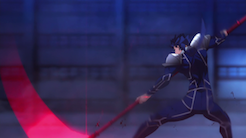
How are they doing so far? I say, fair. The fact is that a lot of his character is in monologues and those are things which do not mix well with a visual focused medium such as this. There are moments where they are attempts to turn his inner monologues in dialogue though I argue that the result is a little bit unnatural. Considering what was omitted from the visual novel I say one of the most important ones was the battle between Lancer and Shirou. This was bypassed pretty fast. A pity as it was a strong character moment. Speaking of Lancer I am fond of the business like manner displayed when killing Shirou. In another anime this would have some psycho hyena with a half moon smile yelling how awesome killing is and how he can’t wait to get home to drown kittens, punch babies and worship satan. But with Lancer there is none of this. Just a bored sense of duty firmly disappointed in having to perform the act. It’s nice and shows that he is not someone without a heart. His second attack was also notable. At first trying to end the kids life quickly but seeing him put up a fight giving him a decent chance to defend himself. I like that. And do I even need to speak on the Lancer vs Saber fight? It’s UFOtable level animation, quite frankly it speaks for itself.

Lastly, one thing I find rather irritating is that if you judged this based on the opening then you would assume that Saber is once again the main heroine. She isn’t. Sabers had her story and she shouldn’t be so prominently featured in someone elses. But once again Type moon seems reluctant to change their poster girl. By the way I know my kin well so I will say this. Guys keep the talk of future events and lore out of the comments. No spoilers, even if they are asked for. Because gentlemen we didn’t need someone at our side shouting how awesome this series is to recognise it’s value. Let them see for themselves.

Gugure! Kokkuri-San- 02


Now, TMS Entertainment is a studio that covers a wide range of different shows, and over the years, I’ve known that they can make good shows-but they just weren’t making them like they used to. However, I can safely say that it is different with this one. Despite their most recent failures like The Pilot’s Love Song, Yowamushi Pedal ( which I actually liked the first 2 episodes of), and SeHa Girl, it’s a good thing that they managed to pull off a comedy series like Kokkuri-San well enough to keep me interested.

The point is, this episode was funny. What makes Gugure! Kokkuri-San enjoyable so far are the interpersonal relationships between all of our characters, and this episode had a lot of that, by introducing us to yet another interesting person from Japanese folklore. Unlike the first episode, which was a rather mixed bag, this episode was far superior in terms of comedy, and the animation brings it out really well. This anime was directed by Yoshimasa Hiraike, director of the first season of Wagnaria, so no wonder this show was executed so well this far.

The dark humor really works in this series, and finally, it’s about time we got another one. Now, don’t get me wrong, this show isn’t dark enough to be considered a true dark comedy, but hell, it’s been too long since Sayonara Zetsubo Sensei and I need my dark humor fix. It’s a very nice way of bringing out the heavier tone that a premise based on the children’s game this show is based on brings along, while managing to stay humorous and putting a twist on folklore in a way that isn’t annoying as f*ck. That’s how you turn your Japanese folklore into comedy.

Some Quick First Impressions: Amagi Brilliant Park, Psycho-Pass Season 2

Amagi Brilliant Park

Short Synopsis: Our protagonist is kidnapped by an emotionless girl with a musket.

Ninjarealist’s Impression: A bitter and narcissistic ex-child star, a creepy and falling-apart theme park whose few visitors are outnumbered by vermin, a cast of characters named after American hip-hop stars: these are just a few of the bizarre elements that make up the first episode of Amagi Brilliant Park. And if you’re unable to imagine how all of that could fit neatly into one show, let me reassure you: this debut episode is laugh out loud funny. Comedy is probably the most subjective of genres, but what sets Amagi Brilliant Park apart from the crowd is that it’s quite clever. For example, the choice to name the main characters after hip-hop stars. It’s an inherently funny choice, but a lesser series might be content to simply play this for cheap jokes. But in Amagi Brilliant Park these names are actually used as ironic commentaries on the lead characters’ attributes. The emotionless girl, who is constantly shooting at people with a musket, is named after famed stoic and shooting victim, 50 Cent. The self-absorbed child-star protagonist takes his name from renowned narcissist Kanye West. That’s the type of subtle humor that this series uses. It doesn’t just stop at the usual manzai jokes (although it does those very well), it utilizes the bizarre setting and strange characters to play with the viewer’s expectations and force us to laugh at the morose absurdity of it all. In this way, Amagi Brilliant Park reminds me more of a show like Humanity Has Declined than the typical KyoAni fare that many expected this series to be.

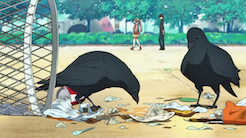
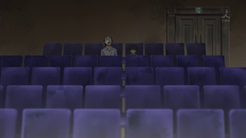
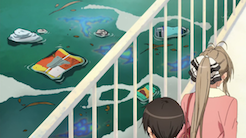
A lot of what makes this show work so well is the excellent direction, which fleshes out the setting with lifelike visuals. Much of the humor in the first episode is driven by the surroundings, a theme park so poorly-maintained that it feels more like a haunted house than a place to unwind. And what really drives this home is the director’s use of short but intricate scenery shots that direct the viewer’s eyes to important details, which might be missed if they were placed in the background. Crows eating from a spilled trashcan, aging animatronics struggling to speak outdated lines, a bored child sitting with his parent in an empty auditorium, playing video games, as the uninspired show girls struggle to feel relevant: brief shots like this make the setting feel almost like another character in the show. This is gracefully mixed in with the comedy and never bores the viewer or verges into scenery porn. Much of these exposition shots are jokes unto themselves.

Amagi Brilliant Park is by no means a perfect show. There’s plenty of dumb fanservice and, while the dialogue is usually quite funny, it can sometimes feel extremely corny and derivative. That’s what worries me the most about this show. While I loved the first episode, it showed unmistakable signs that it might devolve into something less unique than what we see in the first episode. The use of dramatic flashbacks late in this episode suggests that this show intends to get serious at some point. And I have some doubts about whether this series can pull off drama as well as comedy. Still, this is was an impressive first episode and I’m excited to see where they go with it.

Potential: 70%

Psycho Pass Season 2

Short Synopsis: Our protagonist is a cop hunting criminals in a “Minority Report”-style dystopia.

Ninjarealist’s Impressions: Full disclosure, I really liked the first season of Psycho-Pass. The show had a lurid, hollywood, feel to it that made it seem almost as much like an American action movie as an episodic sci-fi anime. And as much as it pains me to say it, I’m just not really feeling as much of either influence from Psycho Pass 2, which seems much more rooted in modern anime. The main characters have gotten cuter, the soundtrack has cut down on the orchestral instruments and upped the amount of electronic ones, and the script, no longer written by Gen Urobuchi, doesn’t quite have the same edge to it. That’s not automatically a bad thing, but something seems like it’s missing from this sequel. Akane is still a badass, the premise is still great, and the setting is still super cool, but the show sort of feels like some of the life has been sucked out of it. There’s just not a whole lot in this first episode that compares favorably to the original series. With all of that being said, I still liked this first episode. While I’m disappointed that the staff seemed to be making a concerted effort to up the number of cute girls, I do like Shimotsuki’s character and I like how they’ve set her up to be so antagonistic towards Akane. It’s essentially the same relationship she had with Ginoza in the first season, but in reverse. And maybe that sounds boring to some of you but I for one am excited to see how Akane deals with an upstart who questions her authority. The new villain is also an obvious retread of the villain from the first season, but again, they’ve made some interesting choices with him that should provide some serious challenges for the main characters. If viewers can get past the fact that this show seems to be a downgrade in quality from the original Psycho Pass, I think they might find something to like here.

Potential: 65%

Some Quick First Impressions: Shigatsu wa Kimi no Uso

Shigatsu wa Kimi no Uso 

Short Synopsis: Our lead character plays/played the piano very well.
Impressions: We get shows like this every few seasons. You know, the ones that are generic to the core, yet they do the generic shit pretty well? See, this episode was very formulaic: we have our genius with a troubled past, our main character’s best friend, childhood friend, and the mysterious new girl who our protagonist will most likely end up banging. I could compare this to Bokura wa Minna Kawaiisou from Spring’s lineup, but that wouldn’t do this show very much justice-because unlike Kawaii Complex’s premier, this first episode wasn’t a total piece of shit. In fact, it was consistently solid, and A-1 Pictures seems to have done their best with the crappy premise handed to them. If the story and characters weren’t so much of a damn cop-out though, I could see myself enjoying this anime for what it is: a teenage angst drama. This is the first time Kyohei Ishiguro is directing a show by himself (Unlike Psycho Pass, My Little Monster, Amagami SS+, Hourou Musuko, Kyokai Senjo no Horizon, & Fairy Tail, where he was an episode director), so I guess I have to congratulate him for making this episode decent at the very least. However, if I learned anything from the past few years, it’s that generic shows like this quickly fall apart.

OP: Generic, nothing to see here.

ED: Generic, nothing to see here.

Potential: 40%

Some Quick First Impressions: Akatsuki no Yona and Donten ni Warau

Akatsuki no Yona

Short Synopsis: Our lead character is a young princess of an important country.
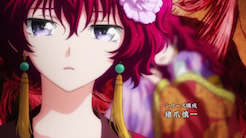
Impressions: I started out as a fan of the shoujo genre. That unfortunately changed after the entire genre suddenly deteriorated after a point. I’m not sure what happened, but at a certain point, all shoujo series just became dry, one-dimensional and bland; full of fanservice and pandering. Only once in a while you had something like Kamisama Hajimemashita, but even that in the end boiled down to a romantic comedy, instead of series that packed real punches like Ashita no Nadja, Glass Mask or Kaleido Star. With Akatsuki no Yona though, we finally have another seemingly good shoujo adventure. At the very least, it manages to push a lot of the right buttons in its opening episode: it starts off with a younger version of the lead character and shows a bit of character-development right from the start. The acting for once isn’t bone-dry but instead the characters are fun to watch. I especially want to give the creators props to the way they portrayed the female lead character: the way in which they delivered the energy that goes on inside the mind of a teenaged girl, including how she feels about love, was quite addictive. The show does look sloppy right from the start, which is why I fear that a lot of people won’t give it a chance, but that changes pretty quickly once you see it in action. Now: keep this up! Have a story to tell that fits the pacing of an anime, instead of goofing off for too long. This episode didn’t introduce all of the side-characters yet, but make them count.
Potential: 80%

Donten ni Warau

Short Synopsis: Our lead character ferries criminals during the Meiji-restoration.
Considering that this is only a shounen-series, I can see that there’s something good buried underneath. This episode itself was sloppy, but for a series of its genre I’ve seen much worse. The thing is dhat Donten ni Warau opened with an episode that had absolutely nothing to do with its plot. Or at the very least, the beginning of the episode and ending of the episode threw around hints of this epic storyline, and yet most of the episode here focused around the usual shounen brat acting on his own, and this really weird piece of comic relief in which a character who seemily had nothing to do just started cross-dressing for no reason. This was meant to be a character-building episode for the three main characters, but their problems are all pretty basic: you have an older brother who is really strong, a middle brother who wants to be acknowledged but who is weak (and who probably is the main character here), and the youngest brother who is just still a kid. You can make quite a few predictions based on this set-up. Where this show scores points is its setting: for the villains to be the samurai who are discontent with pretty much losing their identity after Japan’s westernization: that’s actually a very good base for a villain. It’s something different from those “I want to save the world so I need to destroy it first”-villains.
ED: SO many characters appear here who made no appearance whatsoever in this episode. The ED itself is also not bad either.
Potential: 35%

Some Quick First Impressions: Shingeki no Bahamut, Parasyte, Gugure! Kokkuri-san, Cross Ange

Shingeki no Bahamut: Genesis

Short Synopsis: Our lead character is a bounty hunter.
Impressions: This show gets how to make a first episode, Keiichi Satou does a superb job in introducing us to the world of Mistarcia. The various character introductions are just as well done, and the 17th Century Spain-like setting really sets the tone for the anime. The anime borrows the styles of some of my favorite Westerns and swashbuckler films, like Ivanhoe, True Grit, Three Musketeers, and The Master of Ballantrae, which I cannot praise enough for having the balls to do. This episode showed me that the series knows how to borrow those styles correctly, and as a fan of 20th Century Westerns & swashbucklers myself, I appreciated the homage. On top of that, this series really knows that it’s an anime, and you can see a lot of personality in the characters which I thought that even some Westerns lacked. This episode had a lot of things happen in 20 minutes or so, but it knows how to pace itself relatively well, using that time in the most optimal manner to show as much personality in the characters as it possibly could.  Lastly, I feel like I have to mention the soundtrack, which is yet another great homage to my favorite Spanish films from the 50’s and 70’s.

ED: A nice listen.

Potential: 90%

Parasyte

Short Synopsis: Our lead character’s right hand becomes sentient
Impressions: Okay, the marketing department really did this anime injustice; the trailer for this show sucked and pretty much failed to garner much interest (aside from fans of the manga/people who pay attention to these things). However, who cares? The first episode was great, and despite the complaints pouring in from the raging idiots about the “modernized” character designs, the animation and art were very solid. Other than that, I just need to see that the creators know what they’re doing going forward. The episode had it’s problems, but at the same time, I saw clear efforts on the part of Kenichi Shimuzu  in making this story resonate with today’s audiences to the best of his budget. Both the pacing & character introductions were very well done, succeeding without having to put in much dialogue between the characters themselves-which ultimately allowed tons of things to happen in just one episode. It’s quite a shame, really, that this sub-genre of horror (with the exception being the works of Junji Ito) hasn’t been done very well since 95′, because it’s still pretty much uncharted territory at this point. Hell, there is real potential here.

OP: Not really my kind of song.

ED: Safe

Potential: 85%


Gugure! Kokkuri-san

Short Synopsis: Our lead character summons Kokkuri-san.
Impressions: Okay, so this show knows how to use the comedic formula, a pleasant surprise after being months without a decent comedy since Spring. Regardless, I  have to point out the fact that this appears to be one of those comedies that are VERY hit-or-miss. I’ve read about people on forums being put off by it’s deadpan humor and the shortage of background music-which I found rather appealing, because the anime quickly sets the tone for itself within the first half of the episode. Unlike the manga, which is rather episodic in nature as all 4koma tend to be, the anime manages to keep itself from appearing too episodic, smoothly transitioning between one deadpan comedy sequence to the next. So in that sense, I was relatively pleased; the episode is largely consistent in it’s humor. Really, the only faults I can find is that it is rather boring at times, and the jokes are occasionally under delivered, leaving these uncomfortable moments when I’m trying to figure out if I was supposed to have laughed or not . For what it is worth though, the episode is fairly solid, and it might turn out to be a relatively strong comedy…But I do worry about the jokes drying up, although that’s likely an unnecessary concern, seeing how there are much more characters yet to be introduced.

ED: Bit annoying, actually.

Potential: 70%


Cross Ange

Short Synopsis: Our lead character is yet another Princess.
Impressions: Of course, what a great impression to make, starting off your main character’s introduction with fan service. The episode starts off with a terrible cg battle, then takes a few steps back in the timeline to fully introduce our heroine, who is yet another princess. Frankly, after the Martian princess from Aldnoah Zero, I don’t think I can stomach yet another heroine who’s a princess. Basically, the main character is painfully uninteresting, and the “twist” is so damn stereotypical that I cannot take it seriously. Who are these people? How does Ange not figure out she cannot use magic until she’s f*king 16 years old?! The entire episode’s climax revolves around the fact that Ange realizes that she cannot use magic and is therefore a Norma (a person who cannot use magic), which is why a coupe even occurs. So for the last 16 years, she herself does not figure out that she cannot use magic, while a goddamn baby gets discovered to be a Norma in the middle of the street? The only positive aspect I can squeeze out this episode is that it had dragons in it for a few seconds. Nothing else.

OP: Embarrassingly bad

ED: Generic, nothing worth noting.

Potential: 20%
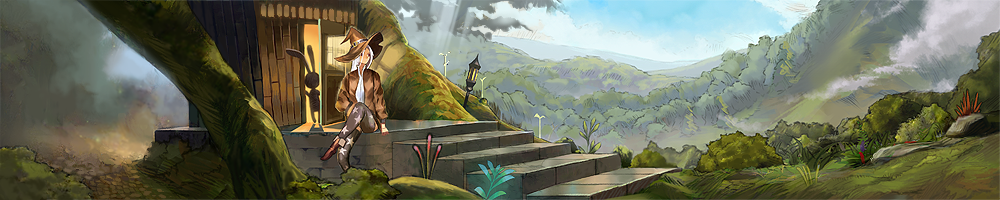
Some Quick First Impressions: Fate/stay night: Unlimited Blade Works(TV), Akatsuki no Yona, Orenchi no Furo Jijou

Fate/stay night: Unlimited Blade Works(TV)

Short Synopsis: Our heroine is a plucky magician who summons a wise-cracking familiar.

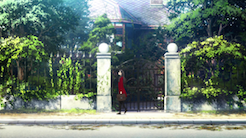
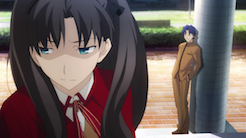
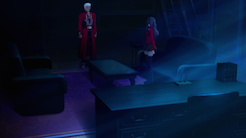
Ninjarealist’s impressions: The much hyped Ufotable TV adaptation of Fate/stay night is here and let’s just get the big questions out of the way right up front: yes, the first episode lives up to the hype and no, this show is not for people who are unfamiliar with the Fate franchise. So if you haven’t seen the first adaptation, or the prequel, then you might as well just stop reading now. That’s not to say you might not get something out of the show, but the biggest failing of this adaptation is that it’s just not very accessible to newcomers. Events and characters get thrown at you so fast that you’ll have a difficult time following along if you don’t have a basic idea of the plot already.

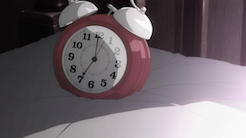
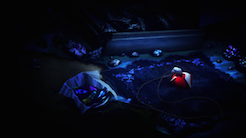
Fate/stay night: Unlimited Blade Works really succeeds in all the ways you would expect from a Ufotable adaptation of a TypeMOON property. The animation is gorgeous, though I found myself less impressed with the flashy special effects and more impressed with the small details, like the hammers on Rin’s alarm clock or Archer absent-mindedly playing with a pendulum in the Tohsaka study. These small touches really go a long way in enhancing the atmosphere of the show. There are some noticeably horrendous textures that become especially obvious in a few scenes, but overall I was struck by how many of the visuals, especially the indoor vignettes, reminded me of still images from the visual novel. It’s not just a good-looking adaptation either: I like the script. Rin has never been more likable and Archer is wittier than ever. Their antics repeatedly made me chuckle and play out almost like an 80’s buddy-cop movie. I think a lot of why the dialogue works so well is the consistent pacing. On the other hand some aspects of the show did feel overwrought. The characters, while endearing, are prone to rattling off extended monologues that often feel a bit hamfisted. The Hideyuki Fukasawa score isn’t bad but honestly, the best parts of this episode are the parts with no music at all. I hope that in future episodes this show uses a little less music. This is especially problematic in the fight scenes, which do feel a little bit overdone, a feeling that is only enhanced by the epic, orchestral, score. Still, this is a quality adaptation that manages to hit most of the right notes. It’s hard for me to see fans of the franchise being disappointed by this. My biggest criticism is that it’s just not very accessible to everyone else.

Potential: 75%

Akatsuki no Yona

Short Synopsis: The protagonist is a princess in a “Romance of the Three Kingdoms” style fantasy setting.

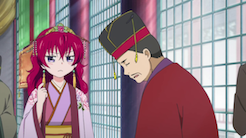
Ninjarealist’s impressions: Like many anime fans on the internet, when I first saw the preview for this show I was reminded of another Studio Pierrot series, The Twelve Kingdoms. I’m a big fan of that show and from the classical Chinese setting to the red-haired protagonist, Akatsuki no Yona seemed almost like it was inspired by that venerable series. Alas, appearances can be deceiving. Beyond the superficial similarities Akatsuki no Yona doesn’t feel anything like The Twelve Kingdoms. If anything, it feels more like an adventure series in the mould of Full Metal Alchemist or recent Studio Pierrot-influenced product The Legend of Korra. That’s not necessarily a bad thing and in a lot of ways Akatsuki no Yona seems to be getting this formula right. Yona manages to be a surprisingly likable character and her banter with the other characters actually made me chuckle pretty consistently. The audio/visual presentation is extremely good with a very solid performance by Chiwa Saito as the lead. Still, while this show seems to have a lot of the elements of a good series, it feels kind of soulless so far. The thematic content is pretty shallow and the aristocratic setting is lacking in any sort of grit to make the world feel lifelike. Then again, the show clearly has a lot of ground to cover, so I wouldn’t be surprised if we get more of that later on. But a bigger issue for me is the direction. While the individual shots look great, the pacing feels a little too convenient. Characters always show up exactly when you would expect them too and dramatic moments unfold in a way that feels a little too scripted and artificial for me. Contrary to what you would expect from the first episode in an adventure series, there isn’t much action and the action we do see is not particularly well-choreographed. It’s unclear to me whether this will change later in the series. Lack of action isn’t usually a bad thing, but if the narrative and thematic content continue to be so weak then I can’t see them carrying the show. Akatsuki no Yona does have most of the elements of an entertaining adventure series and I think it will be a modest success if it goes that route. But if the show is trying to be something more serious I’m not encouraged by this first episode.
Potential: 50%


Orenchi no Furo Jijou

Short Synopsis: Our protagonist has a cute merman living in his bath.

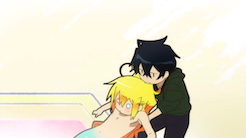
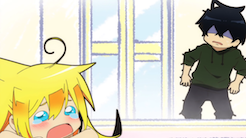
Ninjarealist’s impressions: I’m a big believer in short comedies. Teekyu and Poyopoyo are some of my favorite shows in recent memory, and they really demonstrated why the short format works so well for humor. A common problem with full-length comedy series is that the first episode will use up all the jokes and the rest of the series goes downhill from there. This doesn’t happen as often with short comedies because they’re over so quickly that there just isn’t enough time to use up all the jokes. It’s clear after the first episode that Orenchi no Furo Jijou still has a lot of cards in its hand. So far the series has barely scratched the surface of what a high-school aged boy and his handsome, physically-affectionate, merman friend might do together in a bath. The first episode was surprisingly funny. The Merman, is just completely, over-the-top, ridiculous, both in appearance and personality. This is accentuated by his seiyuu, rookie Yuuichiro Umehara, whose voice manages to be both deep and effeminate at the same time. Seeing him tease the deadpan protagonist was funnier than I expected it to be. Still, as many joking anime viewers have pointed out, this show is essentially Free! in a much smaller pool. It’s a cute guys doing cute things show. That’s not inherently a bad thing, but it doesn’t usually make for the most interesting viewing. The hilarious OP, and the sheer absurdity of the premise, both seem to suggest that this show might be a parody, and I do like parodies, but I’ve been burned too many times in the past by comedies that promise parody and just fail to deliver it. I can’t recommend this show to anyone but serious slice-of-life fans.
Potential: 35%

Announcing some site changes:

It’s time to announce some site changes: over the past months obviously a lot has changed. Star Crossed can’t continue on like it has been, because I just can’t write episodic posts anymore and in the meantime between me posting first impressions and finishing series the site will have quite a bit of inactivity. I just don’t have the time to fill this site with posts anymore. Fortunately in the past few months, I’ve been talking to a few very talented people (ninjarealist and k-off), and we’ve come to the following conclusion:

Star Crossed is going to become a multi-author blog.

The change will be gradual, but over the next season people will start posting episode reviews, first impressions, editorials and reviews along with me on this site. So from now on each post will have an author. This will bring more activity into the site.

Nerawareta Gakuen Review – 84/100

Let me talk a bit about Ryousuke Nakamura. For a long time, this guy was my hero. He started off as an assistant director to Monster, in my opinion a big reason why that series got such a ridiculously solid adaptation, and then in 2008 he came with the groundbreaking Mouryou no Hako. No TV-series was like what we saw there. A year later, he completely rewrote the classic story of Hashire Melos to the point of brilliance, while he still kept incredibly faithful to the original work. This guy’s hands were pure genius. Afterwards, he left Madhouse, the company he was under contract of, and he started working freelance.

Now the problem with working freelance is that it’s a lot harder to land really good jobs. The best example of that is Dai Sato, a brilliant writer (think Erbo Proxy, Eureka Seven), who in the meantime of writing episodes here and there has resigned to writing kiddie shows in order to pay the bills. Ryousuke Nakamura thankfully fared better, but even then he has not gotten the golden opportunity that will give him complete freedom yet. The only television-series he did was Aiura, which was a 5-minute episode show about a bunch of girls that do nothing. It was incredibly well executed and all, but you can’t do anything with that kind of a setup. Beyond that he’s done all kinds of jobs here and there, from episode directing to storyboards, to production progress, to also just animating.

There is only one serious thing that he took the main seat as the director at… and its biggest focus is a romance between middle schoolers. That’s also its biggest problem right there: Monster! A tense thriller across Germany! Mouryou no Hako, a ground-breaking mystery chockful of Japanese folklore after World War II. Aoi Bungaku! A look into the mind of the writer of Hashire Melos! Nerawareta Gakuen! A teenaged romance with time travel!

So yeah, there are cliches. He doesn’t shy away from that. In some cases, he even takes cliches, gives the illusion of subverting them, only to subvert those subversions again and adhere to the cliches, repeats that several times after. And yeah, when you take into account that there will be lots of teenaged hormones… this pretty much is a beautifully executed movie. It takes care to make its four main characters well rounded, the side cast all are enjoyable and likable, the story brings in enough twists. With the cliches ingredients, it tries to make as much of it as it can and the themes that it uses, and the ideas that the whole story revolves around are actually pretty damn interesting. This also is not one of those romances in which nothing happens. Stuff does happen. It’s cliched obviously, but the most important part is this: both the characters and the relationships between these characters are constantly evolving.

Visually this show is perfect. You can see lots of the signature tricks that Ryousuke Nakamura loves to pull for his series. There obviously are the shots that are spammed with sakura leaves, but also the more subtle things. When characters move, they move full of energy and inspiration. Their facial expressions are full of emotions. All of this leads to a cast that feels very believable and relatable. This movie is already more than a year old and I didn’t notice any sort of buzz around it. It’s a pity, because it’s pretty damn charming for what it is. I’d say that the acting in Toki wo Kakeru Shoujo was a bit better than this one, but it’s definitely not by much.

Then there is the ending. I want to talk about it, but I’ll be as vague as possible for the sake of spoilers. At first sight the ending seems to suggest that it was rushed. Things happen fast. However, I believe that it somehow worked out very well. It’s the kind of ending that doesn’t explicitly spell everything out for you. It allows you as a viewer to fill in the blanks, and it’s even a bit open to interpretation at some points. I would not call it rushed to the point where it becomes flawed. Instead it makes the ending work and gives you something to think about. Not bad for a movie targeted at kids.