Some Quick First Impressions: Shouwa Genroku Rakugo Shinjuu S2, Seiren and Urara Meirochou

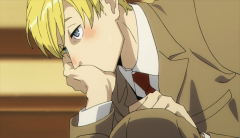
Shouwa Genroku Rakugo Shinjuu S2

Short Synopsis: A former ex-con hopes to keep the profession of Rakugo alive.

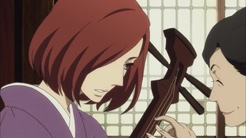
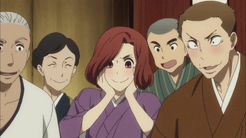
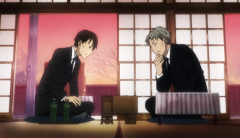
It’s good to see this show hasn’t lost it’s touch in between the seasons and having Yotaro do a recap of the first season through Rakugo was a particularly great touch. The drama is still excellent and we already have some interesting aspects being brought up. For one it’s fascinating how Yakumo is in his prime as a performer now that he’s a senior. Age does benefit a storyteller as it gives his words more weight and you can really tell it with Yakumo. We have those claiming that Yakumo is a shinigami who will take Rakugo with him when he dies thanks to his reluctance to take on appearances. Even Yakumo himself isn’t reluctant to take on the role of being Rakugo’s reaper. Yotaro and Konatsu’s relationship is heartwarming and it is nice how Yotaro is a happy go lucky idiot that is charming for how genuinely honest he is. Yotaro looks to be bringing the future of Rakugo with the help of a man who was refused when he asked to be Yakumo’s apprentice. We have a great start to what is likely to be an underrated but absolute gem of a series.

Potential: 95%

Mario: Rakugo is back again in fine form, now the second season follows Yotaro in present day. As Yotaro is much more impulsive than Kikuhiro, the story in turns has a lot more comedic moments and overall offbeat tone. As for now I don’t feel that comic exaggerated gestures (especially his friend in Kyoto who gave up rakugo) fit well with the rest but I will wait to see more. Other than that, there’s nothing to complain here. Making new rakugo plays sounds like an interesting angle to me and I really don’t mind to follow just that for the rest of this season, but then we also have his relationship with Konatsu and Kikuhiro and many of the people who connected to rakugo in all sorts of way. As with the nature of rakugo or really of nearly everything traditional, women have a restrict, limited role so I really look forward for Konatsu to break that restriction. This show is easily the cream of the crop this season so people who missed out on its last season, go watch it. You don’t even need to catch up on the first season, just go watch it now.

Potential: 95%


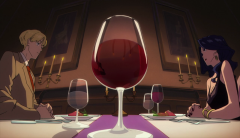
Seiren

Short Synopsis: A series of romance tales involving a boy and various girls in his school.

This is Amagami in everything but name. The good news is that if you liked Amagami then you will like this. The bad news is that it carries the same flaws as Amagami. The biggest being the protagonist whose as bland as they come. I find that self insert protagonists really only work within novels and games where you are in the mind of the character in question. When it comes to the more visual medium self inserts are less effective as it’s difficult to insert yourself into a character on screen whom you cannot control nor hear his thoughts. You could imagine being in his position but not really usurping it. In truth this kind of protagonist only really serves to make the lead as boring and malube as possible which causes all character interaction with him to suffer. The second problem is that when you have romances happening and then negated to move on to the next heroine it somewhat falsifies the romance in question. After all even if the protagonist declares himself to have found his true love then wouldn’t that statement sound hollow considering that if things were slightly different he would be declaring the same thing with someone else just as easily? Either way there is nothing truly wrong with this show and I do find it watchable and the girls are rather charming. Should make for a fairly decent romance series.

Potential: 40%

Mario: In preparation for this show, I watched the first season of Amagami SS and I found all those standalone stories were a decent take on romance. Seiren, although billed as an original, serves as a more spiritual adaptation of that series so you know what you’re getting too. On the matter that whether Seiren can make itself apart from Amagami SS still remain a question mask. I enjoy the 4-episode arc format focus on each girl as the romance won’t drag for too long. The main guy is improved a bit compared to Amagami SS’s but he still isn’t interesting at all. That main character again has a little sister and I really don’t know why the show include her at all. Apart from the harem girls the show spends quite a time for Shoichi and his best mate so that’s a plus for me. At least the first girl Hikari is interesting enough and I very much enjoyed the loose but naturalistic dialogues. Overall I have a good time watching this and for the season that actually crowded with romantic offerings, this one still stands as your safest bet.

Potential: 60%


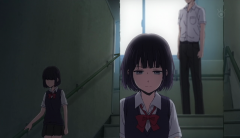
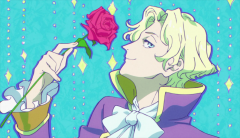
Urara Meirochou

Short Synopsis:

Out of cute girls doing cute things shows this is the best out of currently airing but I can honestly say this genre will never quite appeal to me. Maybe because I am a soulless gargoyle who wouldn’t be moved by such fluffy antics or maybe I just find the general concept a bit too artificial. There are no girls who act like this and the experience of watching this show is akin to watching baby animals in a zoo.  Sure it’s cute but there’s nothing more to it. It’s just watching dumb animals being dumb. So you will watch, go dawww, laugh and forgot it all by the time you walk away. Not saying anime doesn’t need a show like that but I find there is just too much of an abundance of them lately.

Potential: 30%

Mario: Okay, it was rather surprising even to me but I enjoy every moments of this show. The series is simply a variation of cute girls genre but damn are they overly cute! That town looks strange but lively and warm, these girls are admittedly very generic but just look at those ears and those belly buttons (I know, I know!) Those fortune telling types are what sell the show to me and I’m generally intrigued to learn more about those details. Yes, in that world every girls are obsessed to fortune telling, but to what extent and for whatever purpose are still pretty much in the air now. Of course not even the main girls but the instructors, the manly guardswoman, even all the animals are too fluffy that actually turn me off a bit. This normally isn’t my kind of show (on a second thought, maybe it is), but I’m more than happy to spend more time with those girls and those fortune tellings.

Potential: 50%

Some Quick First Impressions: Youjo Senki, Schoolgirl Strikers and Minami Kamakura Koukou Joshi Jitensha-bu

Youjo Senki


Short Synopsis: A little girl named Tanya Degurechaff fights for the German Empire in World War One as the most dangerous sorcerer of the imperial army. However, she is actually one of Japan’s most elite salarymen, who prioritizes efficiency and her own career over anything else, that was reborn as a little girl after angering a mysterious being who calls himself God.

A decent start to one of the shows I am looking forward to this season. Animation wise this show is looking great as those war scenes really are just how I thought they would be. THey need a lot to keep up this level of quality though but I hope they can. However if there’s one thing that has suffered here it’s the female character designs. They differ quite heavily from the more realistic male soldiers and I can’t help but find them a little off putting so far. Tanya is fine but her subordinate just looks off at time. Doesn’t help that she has gotten a serious downgrade from she novel design. If you look it up the two don’t even look like the same person. However I don’t really get the decision to jump to chapter 3 of the novel right from the start. I am hoping that this was a flash forward and they plan to go back to the start. What is really needed here is Tanya’s inner monologue which paints an entirely different picture of her character. I do believe it was the intent to make this more an outside view of her so that people would be misguided by her character. Her voice is also strange to me as I often thought she would have a more intimidating tone but this voice could add to the more comedic aspects of this series. Overall this is a strong start but it hasn’t really shown what it can do yet.

Potential: 80%

HelghastKillzone: World War One seems to be in vogue with the release of Battlefield 1 and the Izetta: The Last Witch featuring some vintage hardware military in the Blitzkrieg phase of World War Two. Youjo Senki looks to become the show that Izetta promised but never delivered on with its good animation, depressing color palette and utter savagery that is Tanya Degurechaff. She is less of your standard magical anime girl and more like the calculating mind of Lelouch Lamperouge that has no qualms about loping heads off or incinerating entire groups with her superior magical levels. Speaking of magic, it is far more prevalent in Youjo Senki’s world and makes for an interesting conflict where entries armies clash using a mixture of traditional firepower alongside with fantasy powers.   

I don’t have any real gripes with the opening episode even though the story is being told in a different order. The fundmental objective of any opening episode is to hook the viewer into its world and Saga of Tanya the Evil fulfilled those goals for people like me who are unfamiliar with the source material.There are complaints about the drastic changes in the character design of Viktoriya Serebryakov and I actually don’t mind her anime dopy look because it matches her overly cheerful personality and airheadedness as opposed to the generic look in the manga. So  long as this show keeps its focus on Tanya ripping and tearing through her enemies with ruthless efficiency backed up by sound tactical decision making,  I can see this become one of the highlights in this sparse winter season.

Potential: 85%


Schoolgirl Strikers – Animation Channel

Short Synopsis: A bunch of schoolgirls fight monsters.

I have a firm belief that when this show finishes airing, no one will remember it. It is that kind of utterly forgettable show, not good enough to be watchable yet not bad enough to be entertaining. In a word it’s blah. Just a soulless show trying to cash in on current trends. Either way the monster in this show are ridiculously unthreatening to the point where I actually wonder if they mean any real harm. The only ones to stop them are schoolgirls with various fetish outfits. You gotta feel sorry for the team that decided the best battle attire would be bikini swimsuits. I found the school life elements don’t really mesh well with the whole battling supernatural beings as after an introductory battle we transition to a normal school day where it isn’t even mentioned. I originally thought that this was how they became Schoolgirl strikers but nope. Straight out of nowhere to interrupt the search for school mysteries our girls get messaged and blam. Sudden sci-fi complex and exposition about how the school is gathering girls to fight off monsters for…some reason. The girls themselves honestly feel like tropes ripped from other shows. Not really characters, more just quirks. It does warm my heart to see even a low priority show like this can have pretty decent battle animation but that could be because they replace the backgrounds with CGI to compensate. Anyway, this isn’t worth watching.

Potential: 0%

Mario: After watching this first episode, one thing that baffled me was whose perspective we’re supposed to follow here? In the beginning the red hair girl served as our main with her silly antics, but as soon as the long black hair appeared she was dropped like a falling apple. To make that issues more glaring these two girls don’t have any chemistry together at all. That same main girl who lose her memories is also something that we see way too often. I like the O’bli creatures aspect of the show but I don’t care much about those schoolgirl strikers at all. The story actually hinders to get darker later on. There’s never a good sign when those girls don’t really know what they’re fighting against or even why they fight. This show is more like a magical girl show in disguise (as strikers) and I expect this one to be a mildly effort at best.

Potential: 20%


Minami Kamakura Koukou Joshi Jitensha-bu

Short Synopsis: A girl learns to ride a bike and goes to school.

You know what’s the problem with moe? It depends on making characters dumber in order to make them more “pure” and spur protective instincts because they can’t look after themselves. Hence why the female cast of any Key work tend to act more like eight year olds rather than genuine teenagers. But there’s a point where stupidity stops being endearing and just makes a character look bad. This girl crossed that point as she takes out a bicycle, tries to ride it and then realised that you have to pedal bikes in order to make them move forward. I mean wow, that’s just a level of stupidity that makes me think this girl isn’t ready for high school. In this show it’s clear that the effort went into the backgrounds as while the character designs are rough, the backgrounds are beautifully slush and vibrant. The story so far is like attending the first day of japanese high school and it certainly is as dreadfully boring as I imagined it. Other than that we just have a girl making friends which is been there done that to death. Look you want cute girls riding bikes then watch Long riders or even Bakuon if motorbikes suffice. This just isn’t worth it.

Potential: 0%

Mario: On my personal notes, I had been to Kamakura myself and it was a beautiful place; therefore I’m extremely glad I have a chance to see the settings again in anime. The show does justice to many attractions that made that town famous (the great Buddha statue, the ocean road, Mt Fuji from afar) but unfortunately that’s the end of my praise for this show. First off, the show goes completely overboard with the cherry blossoms to the point of irritating. The main girl is eccentric and carefree, but not in a good way. The plot is way underdeveloped, like how the show reveals that Hiromi was riding a kiddie bike with training wheels (that explained why she has no idea how to ride a bicycle), but isn’t that bike her old bike? Where does it from then? Why do all good, special things tend to happen only in class B? How can she appear fine without scratch after falling down so may time? The story so far is as generic as it gets and even compare to Long Rider last season this show is an inferior one. You don’t need to waste time on this.

Potential: 10%

3-gatsu no Lion – 12 [What Lies on the Opposite Shore – Black River (part 1)]

3-gatsu no Lion is back again in the new year with another stellar episode. Structure-wise, I think this is one of the most confident episode 3-gatsu no Lion has delivered for a while, as the show handled multiple tones and aspects in Rei’s current life in one neat package. This episode begins with a deep look inside Rei’s depression, then move on to the noise and colorful life of his shogi life from his shogi-mates, then deliver one of the most intense moments when Rei meet Gotou, and later on back to the warm and cozy atmosphere of the sisters; the result is like a roller coaster of feeling: disturbing one moment, warm and heart-felt the next, all wonderfully tie up with Rei’s own emotion right in the center. Let’s get down to each of them below.

Shaft has always been superb when it comes to depicting Rei’s inner psyche, especially his insecurities towards the life he been living. Sharp lines with black and white imaginaries, water bubbles, the loud noises of his clock and his air conditioner, and even their extreme close-up, all successfully visualize his mental breaking point. It actually gives us the nausea effects that Rei is suffering, put us into his mindscape and for me this is one of the most real depiction of depressions in anime. Rei compares the three sisters’ house as kotatsu, a place so warm that it makes every other place seem colder and pale in comparison. Now he’s sitting in his house and realizes how lonely he is and he knows full well that he can’t rely emotionally to others; because once you rely on something you become dependent, and vulnerable as well, yet at the same time he can’t help but longing for one. I’m myself amazed with the complexity of personal struggles the show given to Rei. It’s not only his struggles but the same for all of us, it isn’t a temporary battle but a lifelong one and even then we might never find a true answer at the end of the road. Must be suck being human.

In a steep contrast to that dark void of his inner voice, the professional shogi players all serve as an energetic and hilarious facet to spice up his life a bit. All the matches this week aren’t about competition or ranking progression like other sport shows, but function more as bright, light moments in his life. The ninth dan who played against him this week fit well into that vein as his antics are decidedly quirky. I personally love the moments Smith-san won the match, the two were just staring and dissecting Smith’s tactics because it’s so damn unprofessional but simultaneously show how they love shogi at hearts. The shogi chairman also kicks things up a notch with his fishes. A lot of fishes. It’s a brief sequence but I’m totally feel the care of him towards Rei so I’m up to see more about him in the future.

But never before, even in Kyouko’s moments, the show has reached that much intense when Rei (to be more exact, we) finally meets Gotou in person. Unlike Kyouko where Rei’s feeling for her is a mixture of love, guilt, and heaps of pain, there is only pure hatred from him when it comes to Gotou; not that the guy has any better opinion towards Rei either. Now it sheds a rather intriguing twist to Gotou and Kyouko’s relationship: Gotou calls her “a stalker” and wants to get rid of her. Talking about perspective! Either they had been in an affair (his wife is “still” in the hospital) and now Gotou wants to cut his ties or all the intense love from Kyouko are just her feeling alone. Those possibilities are still pretty much unclear at this point; but one thing for sure that Kyouko is in a deeper sh*t than she thought and that Gotou is not a sane guy. Things pretty much set up for the match between those two (poor Smith-san) and I know everyone is pretty hyped up for that moments to come. Well, you better be.

The episode ends with the warmness moments inside the Kawamoto’s house and the show again handles those scenes with styles. Rei now aware that he feels at home in that house but in order to keep forward, he has to step out and walks on his own two feet. The moment when Rei hold Momo tight gets me every time for how emotionally honest it feels. This episode by far is the most tonal inconsistency the show had to encounter so far, but by focusing squarely on Rei’s feeling, those uneven in tones actually become an asset to underline the highs and lows of Rei’s current life; as a result this episode is one of the richest 3-gatsu no Lion had ever pulled off.

Some Quick First Impressions: AKIBA’ S TRIP: THE ANIMATION, Fuuka and Masamune-kun no Revenge

AKIBA’ S TRIP: THE ANIMATION

Short Synopsis: A boy and girl fight off possessed humans by stripping them of their clothes.

Honestly I expected this to be a lot worse but it could turn out decently watchable if the rest of the episodes match this then this could turn out to be a good series. I am quite skeptical on that however as it would require them to keep up this level of animation. The art and character designs are somewhat crude but I think this could be like the new Pokemon series where the artstyle was changed to allow for much more fluid animation. For the fight scenes here are actually pretty well animated and it does warm my heart that even lower budget studios can have some pretty good fight animation. The designs and general mannerisms of the characters do feel somewhat studio trigger like but with far more Otaku and Akiba pandering. Which has me worrying that instead of having more fight scenes they instead just run around buying figurines and worshiping Otaku culture. So far for a show about stripping people this looks alright but I would say there are likely better shows to watch this season.

Potential: 30%


Mario: And with this the new season has begun. Akiba’s trip’s not only the first series aired this Winter season, it’s also representing the very first new anime material of 2017. I think it’s very fitting that the Akiba’s Trip is a very typical anime product, set in the epicentre of otaku and anime madness: Akihabara. The show itself is terrible, full of fan-service (the very premise of stripping the enemies) and completely campy; the characters fall comfortably under your usual cliche types but Akiba’s Strip knows how to push those elements up with its shameless execution so yeah basically if you had a good time with this first episode chances are you gonna enjoy the rest of the show. Special kudos for the good use of many amusing scores here and there (I spotted Girls Just Wanna to Have Fun-inspired score in one instance). There will be more girls tripping; there will be more otaku-babbling and the show will get dull fast later on but hey, what’s wrong with dumb fun?

Potential: 20%


Fuuka

Short Synopsis: a boy, while twitting, crashes into a girl so she breaks his phone. Later, they meet up at school and go for a date.

You know as I get older I find that romantic comedy cliches become less endearing and more insidious. Take this for example, a girl crashes into the protagonist, in the crash she accidently shows him her panties and because he accidentally see her panties she breaks his phone and slaps him across  his face. In no way was that the protagonists fault and this girl is clearly out of line. If a girl did that to me I would punch her in the gut and tell her to pay for my phone. Doesn’t matter if she’s cute or a girl, that shits not on. Anyway this is a normal romantic comedy so far and it does gain a music element later. Though honestly that music part is mainly like Nana where it’s only there to heighten the drama rather than actually be about music. Protagonist is a bland plank who’s got girls after him left right and center. If you happen to know the author Seo Kouji and his works Suzuka and Kimi no Iru Machi then you might know what you are in for here. Fun fact the movie Half and Half that these characters go to see in this episode is a manga by him also. So the general rundown is this, this show is fanservice, stupid drama and apparently rage inducing plot twists.(Personally I wasn’t invested enough to be affected. Unlike Mario down there.) I won’t be watching the show but I might be keeping up with the reddit episode discussions because man, those things are gonna be entertaining.

Potential: 10%


Mario: I’m normally not a writer who give impression based on their previous works, but let me tell you my personal experience with this mangaka Kouji Seo. I had fallen victim for his works Suzuka and A Town Where You Live and I was raged over the latter especially (because it hadn’t finished by the time I read it yet). The guy made me stay invested to the characters and then breaking my emotions apart by his characters’ kneejerk, stupid, dumb decisions to make the romance more doomed and unbearable. Now I know his trick so I won’t fall very easily this time. That said, his introduction always be an ordinary rom-com set up before break everything up with melodrama and Fuuka takes up that trend. There’s a chemistry between Fuuka and the male lead but apart from that everything falls flat. All their encounters are your textbook rom-com, Yuu is a boring male lead and the sisters don’t do much except making everything feel even more awkward. If you’re into heartbreaking romance or if you enjoy the couple’s chemistry then Fuuka is for you, for me though I will jump off this train fast because I don’t think I can handle what awaiting me ahead.

Potential: 10%


Masamune-kun no Revenge

Short Synopsis: A boy seeks revenge on the girl who broke his heart.

Well for starters I should mention that the manga of this anime will be ending soon and from my information the anime intends to adapt the full manga. Which is good as there are not many harems which have conclusive endings. Admittedly calling this show a harem is somewhat questionable though it does qualify as there are at least four girls into the protagonist. Anyway I forgot how brutal Aki was in the beginning as here she did essentially ruin the rest of a boys high school life, by revealing personal information after an unjustified investigation and all because he asked her out. Sort of loses it’s comedy when you look at the context. Anyway this remains as relatively mediocre as I remember. If you don’t mind something being generic it does make for some watchable entertainment. There are tropes what with the male friend who looks like a girl and the loli mom. Threw me through a loop seeing the maid had blond hair, I always seen her as a redhead in the manga. For those watching this show more for the revenge aspect I say it doesn’t really pay off. This is a romantic comedy so you will be watching it for one of those two and not Aki getting some much needed just desserts. A decent watch while waiting for other shows but not something you should go out of your way to watch.

Potential: 40%


Mario: Admittedly, revenge story always intrigued me because it’s so damn entertaining to follow every step of the plan till the final showdown, and in that vein the show actually piques my interest throughout. The main casts are decidedly unlikable: jerk and bitch respectively but these traits are just their fronts for now so they will be more approachable soon (or so I hope), but the rest of the cast is unfortunately so uninteresting and full of cliché: loli mom (Why?), plain little sister, plain female friends, one-note school servant. The art is actually nice to look at for a high school comedy and I didn’t expect her secret to be that “out of the box” so I enjoy the ride so far. I will give if another episode to see how his revenge plan going to turn out. Revenge after all is the dish best served when it’s cold.

Potential: 35%

Flip Flappers (Fall 2016) Review – 93/100

What makes Flip Flappers stand out from the rest of the anime field? I found a lot of people asking that question along the way. Well, first off, Flip Flappers isn’t your ordinary anime offering, that’s for sure. Its visual styles are too much and too incoherent for one thing, the narrative never really reveal anything until halfway point for another thing. At the same times, this is the one rare anime that inspired many analysis, essays trying to decode what it is actually about, drawing thematic relevance out of their visual motifs and symbolism. So, what’s all the fuss, really? Let me get into that now.

On the surface, Flip Flappers is an adventure stories between the timid, shy Cocona who was dragged by the impulsive Papika into “Pure Illusions” worlds, the alternative realities that might or might not represent the inner psyche of its human’s subjects; to collect fragments that would grant wishes. Originally billed as a magical girl, the show hops through variations of genre, settings to whatever it pleases. In one episode Papika and Cocona were in the middle of a wasteland for an action Mad Max-inspired adventure, to the next they were trapped in a Class-S circle that would actually surpass many psychological horror shows out there, to another episode where they mysteriously became one identity that would make any David Lynch’s fans proud. It’s that freedom to break the rules and pick whatever content and styles they see fit made the show refreshing and unpredictably, which actually very fitting to how adventures should be like.

Moreover, Flip Flappers is a very visually arresting show, a true “show, don’t tell” kind of series. We’re no stranger with shows that are more about styles, shows that are showcases for young, talented animators to experiment with new styles and visuals, Normally, I don’t mind those kinds of show because we do need something like this to push the boundary of anime medium, but more often than not those shows don’t have any proper storytelling at all. Great visual doesn’t mean great storytelling anyway. Flip Flappers walks that very thin line as the show seemingly try to overwhelm us with its abstract visual, vibrant imaginary; color and resonant emotions in an expense for coherent plots; but I will give the show this: while Flip Flappers not always make sense narrative, it more than makes it up thematically as those wild visuals and motifs are in service for of its adolescence themes.

In fact, if you look a little deeper behind its fun adventures, the show constantly addresses many of its coming-of-age concerns throughout its run. First and foremost is the theme of identity, as for its 13-episodes long our main Cocona had to figure out who she wants to be, whom she can be trusted. The identity theme is continuously directed in many forms, both visually and symbolically: from Cocona being a constant source of being manipulated and controlled by others, those two girls are trapped in a false, repetitive cycle of “safe” environment, the girls represent the same character or even to other extreme, Papika appears continuously as various different identities. Papika and Cocona’s relationship, on the other hand, function like two sides of the same coins of being growing up. The show is a constant adolescent journeys that make up from opposing force between the urge, freedom and emotional directness from Papika and compassion, responsibility, think before act quality from Cocona. It’s a legitimate fear of growing up and becoming an adult filled with responsibility and burden; but as the third girl Yayaka and our Cocona later figure out, maybe small steps like be honest to your feeling could be what it takes to become a fully-grown person and overcome that fear.

The show’s climax, while closing down nicely Cocona and Papika’s relationship and give Mimi just about enough development to become a fearsome antagonist; I still consider it a lackluster final arc that keep me from giving it a higher score, especially coming straight from a spectacular middle part. In fact, the only time I would consider as brilliant in this last arc was Yayaka kicks ass and getting a well-deserved transformation. The rest of the cast unfortunately don’t have much roles in the final showdown. Judging those side characters as a whole, we actually know very little about them despite the twins and the staffs from Flip Flap organization appear in nearly every single episode, which is a shame. The late addition of Nyunnyun and the very role of Bu-Chan are also hugely unnecessary, as they don’t add much to the big picture and moreover, the inclusion of them feel a bit awkward to the rest of the story. Dr. Salt, on the other hand, had a bit of development but the show still doesn’t know how to use him to full potential as his role in the show function towards Mimi only; as a result; although it’s pretty much confirmed that Dr. Salt is Cocona’s father, I have a hard time believing that because there was no chemistry between them. Maybe that’s a whole point as he felt awkward towards Cocona based from his guilt, but I have a feeling that the show doesn’t seem to try even that.

But as I said in my weekly post, judging the show by how well it plays the rule isn’t a right approach, for Flip Flappers is the show that determines to break free and walk its own path. So back to that very first question: What makes Flip Flappers special? Well, I will put it this way: the show is a sublime example of animation in its purest form. Shows like this further highlight what makes animation so unique and appealing (I’m not talking strictly about anime, but the whole animation medium) that others medium can’t be able to express. Story like this can only works in animation form and the show successfully remind us the pure magic of animation and really why we fall in love with animation in a first place. With show as confident and creative as this I have a pretty optimistic feeling for the future of animation. Cross my fingers.

Sound! Euphonium 2 (Fall 2016) Review – 86/100

I must admit that out of all the series I was blogging last year, Sound Eupho 2 was the one I’m saddest to see it ends; not because it was my absolute favorite anime last year, but because the sheer amount of their attention to details and their ridiculously quest for perfection are something that out of this world, in this day and age, which I will get to that later in my review. This is a sequel to Sound Eupho last year but I will keep the comparison to the first season to minimum in terms of quality because this season is great enough to be judged by its own.

The story is a direct continuation from the end of last season, as the Kitauji high school concert band just qualified from the qualifying round, now heading to Kansai region competition and later on, the National competition. Unlike the first season where the main dramatic events like Aio pulled out from the music club to focus on her study; the audition to choose the best players for the competition or the challenge to pick the lead trumpet arise and resolved around the development of the band club itself, the second season concentrates more on the band members’ personal issues. This change of focus is more apparent in the second half, when the show completely drops the band practice, even to the point of not showing the national performance at all. I understand this bold choice can cause disappointment to many fans who want to see the band in action, and moreover focus on individual character drama can cause the lack of cohesive theme; this shift of attention, on the other hand, also brings out some of the best character developments and intimate moments the show has ever achieved.

I will get to the negative part first. When the show concentrates more on character’s heightened drama, those dramas can be uneven and doesn’t add up much to the big picture. Two of this season’s acts for example: Yoroizuka and Reina act don’t play well for me because they have the exact opposite problems. Yoroizuka (the only character that I used by surname here, as this is how Kumiko refers her) is a secondary character who was suddenly given the spotlight and while her final confrontation with Yuuko and Nozomi was effective, the drama was resolved too quickly, Yoroizuka changed so fast that I personally don’t see her grow as natural at all. Reina’s affection to Taki-sensei grow to another level this season, but I’m not alone to say that this was the show’s weakest act because almost everyone can see the outcomes. That drama isn’t much to speak of to begin with; it’s a shame because Reina was my favorite character the first season and I’d like to see other kind of developments for Reina, any other development but this.

Moreover, sometimes it does feel like Sound Eupho stumbles around those dramas in order to “create the situation”; as a result sometimes the show loses its focus because it has to cover too many grounds (like in episode 6), other times some of the conflicts feel forced and calculated (of all time, Mamiko choose she decided to tell her parents to quit college on that stormy night, and “she quited because it has to be now”. Why?). While the Mamiko act actually turns out pretty great, those issues speak to the lack of single unified theme that made the first season so tightly constructed. The last issue, which was also the show’s biggest flaw, lied in the fact that when they focus too much on one set of characters for the drama, other cast members unfortunately don’t have much roles so all they do is hanging around and making the best out of little screen time they had. Reina, before reaching her act, serves as a shadow behind Kumiko; Shuichi becomes the unluckiest guy in the world and worst of all, Hazuki and Sapphire don’t have any development anymore, given that they are still billed as the lead characters.

In contrast, if anything, this season will be remembered as the season of Kumiko and Asuka. They are the heart and the soul of this season, and it’s a blessing to see how far both of them have matured in the end. Asuka has been one of the most complex character in Sound Eupho’s universe and the show did a damn fine job to underline her struggles with both her parental figures, as well as gradually peeling off the mask to reveal her true feeling inside. The most brilliant part of it was that she never lose her strong side at all, never in many moments we are allowed to see her vulnerable side, because it’s more that she becomes honest to herself, embrace herself to what she loves most and comes out even stronger than before. In additions, most of Asuka and Kumiko moments develop into the highlights of the season. When Asuka played that Sound Euphonium piece to Kumiko in episode 9, it was one of the best moments of the whole show, period. When Kumiko poured her heart out to convince Asuka to come back to the band, it was one of the most effective drama the show could ever committed. As the two getting closer and more honest to each other, it makes a whole lot sense that we have that final confrontation between them that warmly tied up this whole season together. This show indeed ends on a high note.

Kumiko also deserved to be one of the year’s best character here as she has changed a lot from timid and passive with no real passion into the one who is really honest to what she feels. Aside from her interaction with Asuka, her moments with her sister, while soft and never overly dramatic like other acts, feel all too real ans intimate on how siblings care about each other. The last few episodes when we follow her through her quiet tears on the train, her outbursts, her confessions were a joy to watch and each step she made feel like a natural progression. I have to give extra gratitude Tomoyo Kurosawa, the saiyuu of Kumiko, for delivering such a deadpan, plain but strangely distinctive voice of our main girl.

But what make Sound Eupho stand head above the rest of the crop lies in its production values. That 10-minute performance in episode 5 simply outperformed everything else I watched in recent years. KyoAni’s always known for their gorgeous designs and their attentive to make every little detail right, but this is just another level of insanity the more you get to know what they achieved. Almost every performance you heard in the show was correctly timed to their single notes (meaning that if you hear the character hits the notes onscreen, they were the right notes), the position of their fingers, their postures, even down to the preparation of the members before hitting the notes, were all accurate. Now imagine all of these in animation with a band of thirty something characters for the whole two seasons. I can’t even think how on earth one could achieve animating all that, let alone making it all flawlessly. They even go as far as making the echo of the announcement on the firework scene in the first episode, because they wanted it to be real (the city Uji is surrounded by mountains). No, something as insane as this don’t happen often, especially on TV-anime level, so to see it finally at the end of its road suddenly make me feel a little sad.

This second season is indeed a worthy follow up to the Sound Eupho the series. Just a bit of note that the score I’m giving above is for this second season alone, if I have to give a score for the whole series it would be 93/100. Sound Eupho is an install classic and for me is up there as one of KyoAni’s best works to date. As of this writing right now, there is one more novel about our Kitauji school that is more of a collection of short stories (like the real reason Aoi quit the band, or the story of Shuichi finally confesses to Kumiko) so I think OVAs will be the most possible outcomes. Otherwise we have the spin-off novels that focus on Azusa (Kumiko’s childhood friend) and her Rikka high school marching band and for now I think there’s a high chance that in the future KyoAni will return back to that universe by adapting this spin-off. Well, they better adapt it, or on that note, why not adapting Haruhi season 3?

Drifters – 12[Staring at Shinsengumi ~The Song of the Fervid Kyushu Man~]

I know I am late with this and I am sure I disappointed those of you still reading though I doubt my Drifters reviews have been all that interesting. It is nice that Drifters managed to get a climatic battle in before the finale though what really saved it was the announcement of a second season. This series is far from an end goal and perhaps a second season can give it the time it needs to bring an endgame. This episode did manage to make the Drifters sweat a bit which was a good thing as we really need these guys to work for a victory for once. But Hannibal made that small moment of tension disappear by once again giving Oda an idea through his eccentric mannerisms.

I think Hannibal is really just putting on this senile act as the man seems to always intervene when he is needed. The battle between Toyohisa and Toshizou was clearly the highlight of the episode but was somewhat undercut by my not really knowing the history of these two. Drifters doesn’t really make an effort to explain the background of the characters which is fine for those whom have a decent mainstream recognition. But for the more obscure characters I could really use a blurb giving a brief rundown and save me looking up a wikipedia article. Even the Fate series makes the effort to acquaint the audience with the history of the characters.

Overall Drifters set out to capture the same ridiculous nature and badassery of Hellsing Ultimate  and I think it succeeded at that sometimes. The series never did stop getting hampered by Kouta’s rather jarring sense of comedic timing but it had it’s fair share of good moments. I do wish the animation could have been as impressive as the opening episodes as later down the line I noticed that the camera ratherly moved back to let you soak in the action. Often pulling out a large amount of close ups and still frames to save on the budget. On a show like this you really need to go all out on the action as it is the main selling point.

Having the character all be famous historical figures was novel but there is a problem that a lot of this are far too similar personality wise. The majority of the series so far has been a one sided match between the Drifters and the Orte so with little to make the Drifters sweat it’s been a consequence free slaughter fest. Now the Drifters have a standing with a worthy opponent to face. One of the most important things the next season can do is up the stakes, make the Drifters work for victory and get enough of a budget to make those action scenes really shine.

Fune wo Amu (Fall 2016) Review – 81/100

This series is, in retrospect, a really appropriate title that speaks to the very spirit of noitaminA block: an adult drama slice of life about the making of dictionary that surely don’t try to target the young audiences. Sound as dry as it is, Fune wo Amu’s actually one of the strongest noitaminA show come out for the last few years (not that the TV programming have been doing well to begin with). In Fune wo Amu, we follow Majime as he transferred to the dictionary department with the main mission is to publish a new dictionary called The Great Passage, along with the small team. That process, of course, taking time: 10 years, 20 years, you call it. The series is divided into 2 parts, the first follow him as he begins on the project and detailing how his normal workplace look like, the second part jumps 13 years later at their nearly-publishing phase. The decade-long efforts that he and the people he worked with delicate themselves in is something that you rarely seen in this anime medium.

I will be the first to admit that making dictionary doesn’t sound like an interesting subject matter to me, not because there isn’t anything great about it, but mainly because the subject will get dull very fast. But even I am surprised to say that the show keeps me hooked from start to finish. The tricks of how the show nailed it in making dictionary interesting are 1) the way the show managed to demonstrate how important dictionary is and 2) show us how those characters giving their all to make it possible and 3) point out to us the love for words and that each dictionary has, in fact, each own personality. For the first point, the show frames dictionary as the passage for everyone (not “everyone” everyone. Japanese people only) to communicate and connect to each other. Words are the way to express our thoughts, our feeling, so using the right words at the right time can make others understand the context completely. The Great Passage is one of a way to connect that gap between what we want to express and what we actually express, between one person to another. It is irony, but still fitting to that theme, that our main character Majime is a socially-awkward type. He has an extended knowledge about words, but he’s struggle to express what he wants to say. His love letter to Kaguya perfectly demonstrate his geeky nature, as even Kaguya herself can’t figure out it was a love letter, but being moved nonetheless.

But the beauty of dictionary means nothing if we don’t see the love and efforts of people behind it, and thanks god, this is where the show shines as well. Even in the wear-down corner of the otherwise-busy publisher, with so few people in it, it’s their passion to the project that counted the most. As in a line in La La Land (great film! Go watch it), people are enthusiasm about it because YOU are passionate about it. The love that you have can affect other people in the most positive ways. In the series, Nishioka, Majime’s co-worker, isn’t a type of person for this job. He’s socially active, care for others but never really interested in words. Through Majime’s passion though, he started to feel the joy of his works and committed himself fully to make The Great Passage the reality. Other characters, Mr. Araki and Mr. Matsumoto, we can feel their whole lives devoted in words, their meaning and they’re damn proud of what they’ve achieved. Last but not lease, the show successfully depicts dictionary as a creation, something akin to the work of arts. To be fair, think of it that way make the whole process makes much more sense too. The Great Passage is a brainchild of all the people behind the project, so everything has to be perfect, from the selection of words that eventually appear in the dictionary, the description process, down to how to choose designs, mascots and even page’s quality that best represent the personality of The Great Passage. That lead us to the painstaking task but ultimately rewarding of double-checking every single entry to see if there are any words missing. As the tasks done, the team (and ultimately, us) feel relieved that The Great Passage going to be a masterpiece.

Fune wo Amu, moreover, isn’t simply about dictionary-making process, it’s the show about people, too. As with the nature of dictionary, it’s a desire for connection that brings those people together. In the show, we witness how Majime and Nishioka, as vastly different as they are, can really bring the best out of each other. We can also follow Majime and his love affair, as quiet and poetic as it is, this is for me one of the best depiction of romance that I’ve seen so far for the last few years. The romance speaks to me because it grounded to reality, it’s beautiful because it is quiet, and isn’t it the best kind of relationship when you regard your spouse as a partner for life (well, for me it is). Even the new girl Midori fits into that pattern as well. Her struggle from being forced to transfer to the department that she had no idea of (you might not know but this happened regularly in Asian culture, especially 20,30 years ago, but I still have no idea why Nishioka had to hide his relationship with his co-worker partner), we see her from being distressed about the new workplace, come to really appreciate and love her job is nothing but a rewarding experience. Every one of the cast have their own different traits and characteristics, and that precisely the point that the dictionary (and the show by that extend) need all of their diverse voice in order to become multi-layered production.

If anything, the passage of time is the show’s main theme as it lingers in various forms throughout the show. The sudden time-skip, for example, signals us how everything is supposed to change (it’s 13 years for Peter sake), and yes, we can see there are some minor changes from the settings and the characters. But the sameness from the dictionary department’s office really tell us that in the room, time flows slowly; and really, that amount of time spent for making dictionary is nothing compare to how the dictionary might flourish for generations to come. In that 13-year gap, people leave, new people come in, it’s that cycle of life that make the show timelessness. Furthermore, Mr. Matsumoto unfortunate leaves us at the end of the show, but we know full well that the old plants gone in order for the new plants to blossom. Through every change, the words inside the dictionary will continue to live on and connect more and more people together as time goes on.

The show, although very well-pace, still has some flaws too. The subject matter is decidedly niche that unfortunately it will fly below the normal viewer’s radar. The passing away of Mr. Matsumoto before the time of the publishing is a tired cliché that for me bring an unnecessary regret to Majime. The animation as a whole, while serviceable enough and really don’t have many high actions, still a bit below par compared to your regular anime. Although we have a big time-jump, if the series meant to highlight the progression of making The Great Passage and the life of our main characters, I would’ve much preferred if they show us instead how they were doing along the way. I want to follow their journey from beginning to end (not the beginning and the end), and I don’t care one iota if they’ll successfully publish it or not, what I want is the ride to get there.

To sum up, Fune wo Amu, along with Shouwa Genroku Rakugo Shinjuu, are the titles that I’m really glad they are made after all. The older I get, the more I’m wearing off at high school comedy anime and high action anime, the more these titles speak to me on a personal level. I’m really glad anime still have platforms like this, the show that tripped out all the spectacular over the top visuals to instead telling the story it wants to tell. What we have in the end might seem nothing much plot-wise, but the sophistication behind the story and the love that the people behind it put into are something that I will remember fondly.

Flip Flappers – 13 [Pure Audio]

I’ve said right in the beginning that Flip Flappers is a show about adolescent and the fear of growing up, but never in my wildest dream I dare to think the show would go even farther and touch the issues of womanhood and the fear of being a motherhood too. Mimi’s descend from a responsible mother to a totally control freak is a solid development and the more heartbreaking when the intention came from a genuinely good place: “to take a good care of Cocona”. But her overbearing control is plagued with dark and extreme actions that Mimi herself deforms into a beast, a cold-blooded creature. Mimi’s dark version was born during the time of Cocona’s pregnancy, and for me that extreme thoughts of keeping the child all for herself and protect the baby at all cost are the very thoughts that any woman during pregnancy had to undergo. A woman becomes a mother when she gets pregnant, a man becomes a father when he sees his baby. She’s getting frustrated that everyone she cared for: Cocona, Papika and then Salt opposing her for what she sees as the good cause. The last moment where she is defeated, sitting on the shallowness lake and embracing herself perfectly concluded her villainous act. Her role as an antagonist might come as a bit too sudden but it still packs a huge emotional punch and still pretty relevant to the theme of identity the show keeps addressing so far.

With only this episode left, it is the time that the main focus sways back to Cocona and Papika. In fact, they share many great moments together: from the surreal encounter when Papika reversed back to a child and lose her memory (from Papika’s perspective); to their completely honesty to each other about their eternal love (from both girls’ perspective. Another confession? What’s up with all the shows I’m covering this season??), to the teasing Pure Illusion world at the end (from Cocona’s perspective). Their chemistry has always been the show’s main emotional focus, so it is nice to see after many episodes of distrust and falling apart, they’re again together for new adventures. Speaking of the possibility of new season, while I’m normally against milking on the success of the first season on a story that already completed (think Yuri!!! on Ice), the adventures segments of Flip Flappers are so inventive and awe-inspiring that I personally think it’s a waste not to spend more time into those Pure Illusion worlds.

While this Mimi act and the show as a whole does end on a satisfying note, there is not without its problems, too. I still can’t figure out the reason Dr. Salt using ELPIS. He’s planning to put another layer to that world, appears in front of dark Mimi declaring he’ll oppose her, and waiting to get killed? Then the good Mimi descends from the sky to save the day, is it what he planned as well? Hell no, this is a weak writing for me, such a shame because Flip Flappers’ still unsure how to use his character to its full potential. On that same note, the twins and the third Amorphous girl Nyunyu don’t have much roles in this climax. Nyunyu (and Bu-chan, for that matter) is a shining example of character without any real purpose, so their main role is just hanging around, having fun and doing crazy stuffs, at the same time serve as a perverted lensed for the show. They are the worst kind of characters to be completely honest.

But judging Flip Flappers in term of how well it plays the rule is a wrong approach, me think, because simply the very existence of Flip Flappers is to break free with all the common sense throw out of a window. At the end of the day year, no other show makes me feel optimistic about the future of anime (or animation as a whole) like this one. The full review will come out next week but be prepared for a highly positive one.

December Summary

This December was… a challenge. Amidst the busy holiday month, my schedule got very busy and my backlog got larger and larger. However, in the end I did manage to keep up with five series (four of which which ended, and one which will continue onto the next season). These are the first series I have finished ever since the first season of Space Dandy, in Winter 2014. Two years, since my writer’s block started.

And really: all these five series are special. They have made this a very successful season, and even though I have my criticisms about them, when it comes down to it I consider them to be really good. These are what anime as a medium is capable of. They knew what they were good at, and they delivered, unhindered and without compromise. They’re all incredibly different from each other, all at least a bit weird, but I recommend them all for those with an open mind

As usual, these impressions are mine and mine alone. And beware of spoilers here and there.

#5: TO BE HERO (09-12)

Okaaaaay… that ending. I’m a bit speechless by what I saw there, but I think the creators actually did it: create a comedy without cheesing the ending. Or at least, that’s what it feels like right now. Even though some of the things they pull are like the things that immediately get you an F in writing 101.

Yet it all works because of how ridiculous the series is. On one hand the final episodes turn this show into an action series. And really good action by the way, the animation is surprisingly good, and while the series is a bit more serious, the jokes aren’t completely gone. The tone changes, but it stays very deliberately TO BE HERO. The main character’s love for his daughter keeps everything together, and even more after “the big reveal”. It’s just as trolly as you’d expect, and yet I admit that I felt sorry for the guy. He’s a horrible human being, and yet… it worked.

This was an emotional roller-coaster. It’s faaaar away from the series you’d usually associate with that term, but it fits so much, only the emotions you feel are a bit different. At any moment in this series, you either feel schadenfreude, disgusted, or the struggles of a failed father who despite everything loves his daughter deeply. It’s comedy at its blackest, and yet I’m glad to have finished this series.

#4: Yuri on Ice (09-12)

And the series of 2016 with the most annoying fanbase is… yeah. I mean I do not belittle anyone for their passions and likes. Everybody is different and everyone’s taste is unique, and it would be horrible if this wasn’t the case. However, when one of the main reasons to like a series boils down to “porn”, things get a little… awkward. Both for male and female fanservice.

Thankfully there are plenty of other reasons to love this series. The final two episodes of Yuri on Ice breezed through the world championships of figure skating, and in two episodes we got 12 performances with together made for a riveting finale where in total style, a ton of things happened and a lot of characters got to show off. However, because it was the finale, its disadvantage was that it got a little predictable. I mean, the ending… think of the single most likely scenario for the final results. And yeah, that’s it.

It was beautifully made though. And props to the creators for using actual French in their series. I really like how international this series is. There are many nationalities represented here, and the creators did justice to them: characters were portrayed as actual characters, and the creators resisted going for the cheap racial stereotypes, and that resulted into a really wild and colourful cast of characters.

With this success there is bound to be a second season. I’m not sure whether that’s the best idea, since these 12 episodes are perfect for just a standalone show, however the ending really was a bit of a cop-out with a “will they won’t they continue”-tactic. Be bold: either close things off or immediately plan for two seasons right from the beginning. Being wishy-washy more often than not makes things awkward. Like you’re at the end of a party and say goodbye, only to end up awkwardly standing in the same room for fifteen minutes without anyone leaving.

#3: Natsume Yuujinchou Go (09-11)

My favourite episode of the fifth season? Episode 10. My heart just completely melted, it was just so adorable. Season 5 was really the season of the side characters (where Season 1 was the introduction, season 2 about the setting, season 3 about the character-development, season 4 about Natsume himself), and this season was at its best when focusing on this. Not that the other episodes were bad or anything, but we’ve seen better.

Like expected, the sixth season has already been announced, and I really beg the creators: make this the conclusion! Make this the end of the series, and end it with a bang. Compare it to eating chocolate for example. A bit is delicious and amazing, especially if you’ve got the really good quality kind. However try to wolf down ten bars of the stuff and after a while you’ll be so full that it just tastes horribly. It’s up to the series to find that right balance between leaving the viewers hungry and over-stuffing them, and season six feels like exactly that balance, especially considering how season 5 wasted one of its episode for that stupid Nyanko-sensei sidestory.

Because episode 5 I would not consider that the best season. That goes to season 4. I’d also consider season 1 and 3 better, and season 2 worse. It was very clearly a building-up season, so I’ll forgive it for that. But I keep stressing this: brevity! Like it’s a good thing that I watched Legend of Galactic Heroes when I still was a student with no life, because brilliant as it might be: if I had to watch it today I’d simply refuse. There is no way I have that much time just lying around.

#2: Classicaloid (09-12)

This was the halfway climax for Classicaloid, and it was awesome. It’s a fitting climax by finally making everything around Bach come together and finally made him step outside of his shadow and gave him a character; it did not disappoint. However, my favourite episodes still are the ones that revolve around Kanae. I LOVE her character, she is one of the best straight man (or straight women in this case) in a comedy I’ve ever seen. She doesn’t just offer order to the chaos of the other characters, she offers responsibility to their idiocy, she’s being forced to deal with whatever ridiculous ideas the other characters come up with, and is basically being forced to raise this group of man-children. Also check out all of the effort she puts into keeping the mansion tidy. This might seem like an tiny detail, but it’s actually incredibly important from a storytelling perspective. It not only adds character to the mansion itself, but it also makes the setting so much more believable. It adds a very natural sort of tension to the series to keep the mansion clean. It makes the viewer feel much more part of the whole setting, compared to if the characters just lived somewhere.

Amazing stories and characters can be found in any medium. But what makes anime stand out, and the reason why I originally became a fan, is the way in which it combines everything: animation, music, storytelling, characters, themes, setting. How they all work together in creating one experience to the point where the whole is better than the sum of its parts. Obviously not every anime gets this (most don’t), but Classicaloid adheres very much to this philosophy. It very blatantly sacrifices making sense for a feast for all the senses (heck Musik is pretty much a Deus ex Machina with which the creators can do whatever they want). And it’s not just the way in which all Musik scenes are incredibly fun, with all their remixes of famous classical works and full of crazy ideas like giant penguins and mecha helicopters, but also look at the themes: Classicaloid is a series about music. And between all the lines of goofing off, it really is trying to explore what music is, what drives great music, the struggles that the composers face when creating it. We’re halfway through the series and it’s already quite fascinating what’s going on here.

This is why I like Classicaloid more than Natsume Yuujinchou: as much as I love Natsume, it could have been done in any other medium. I can see that work. Classicaloid can only work as an anime. Any other way to do it just won’t work, and it makes brilliant use of that.

#1: Fune wo Amu (08-11)

In its final month, Fune wo Amu has turned out to be incredibly motivational, much more than I expected. Just about everything that was thrown at the characters: they just ended up sucking it up and dealing it up, working diligently for fourteen years until finishing. And I love how well they did it: usually when a challenge is presented, the creators end up cheesing it with the solution: a convenient loophole is found, the problem doesn’t really matter that much in the end, a plothole shows up, or they just kind-of end up solving everything without really going into detail how. Fune wo Amu avoids all of this: the characters work hard and for every problem in their way, they come up with a solution to handle the incredible task of putting together a dictionary.

The time-skip was brilliant in this, and yet it didn’t gloss over how hard these characters worked in compiling every of the 240000 words to get there. There was only one commonly used trope: the death of the professor. But even that was handled very tastefully: very carefully built up for episodes, and it was swiftly presented as part of the path of life, rather than dragging it out for the sentimental value. I really shed a tear that final episode, it was that good.

And really, there is no contest that this was the best of the season. Of course I have not completed many series this year, but let me just say that there would be very surprised if there is a better series than this one in 2016. Fune wo Amu has been amazing, and exactly what I needed. As I struggled keeping up with the episodes, I found that I really WANTED to finish this series. That’s a first in years.

And if there is any series I’d like to be influential, it’s this one. And it’s not like I’m asking for more series about dictionaries, but it goes deeper than that: nearly every single series can learn something from Fune wo Amu. How to animate characters to breathe them to life without overdoing it. How to develop characters, how to adapt your source material by making everything fit within the time you’re given. You want romance? Treat it as this show does, rather than the annoying whining we normally get. Look at this series for a textbook example of how subtle acting should be done, how attention to detail should be done. I can name very few series where it’s all this obvious. The biggest flaw really is that building a dictionary limits audiences: it’s probably a bit too mundane for most audiences. But whoever manages to figure out how to apply the design principles and philosophies that lead to the creation of this series to a more mainstream title: you’re gonna hit pure gold!