Ballroom e Youkoso – 07 [Tenpei Cup]

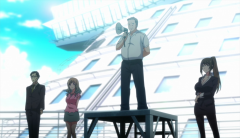
I spent the majority of the previous review breaking down a single scene, so let’s play catch-up for a bit. This episode features the Tenpei Cup, an annual event held by some rich dance enthusiast. Despite not being an official competition, the stakes are high: if the fledgling pair of Tatara and Mako can outplace Gaju and Shizuku (who are favored to win), Gaju will be forced to take back his sister as his partner. Thankfully, Sengoku has given his full support to his new student, having supplied him with a new tailcoat and a strategy to impress the head judge during the Quickstep round. It’s a relief that Sengoku has quit trying to embarrass and discourage the impressionable Tatara, who needs all the support he can get, given his lack of self-confidence.

Regarding that timid streak, this episode didn’t bring it across as well as the last one. During his previous phone call with Mako, we got a clear picture of how unworthy Tatara felt, both as a dancer and as a young man. This time, he was a simple scaredy-cat, begging his coach not to put him back on the floor after nearly every round, then finding his groove again once the dancing started. I get that the major story of Ballroom is Tatara’s journey to find himself, but we don’t need a miniature version of that arc every six minutes. The show even commented on this practice through Sengoku, who quickly became fed up with what he described as a “rollercoaster mentality.” It’s good that the writers aren’t totally clueless, I guess, but the show’s awareness of the problem doesn’t make it any less boring to watch.

Thankfully, the episode really picked up during its second half, especially after a dance floor collision between Tatara and Gaju. We never got a definitive answer on whether Tatara purposely engineered the crash, but after he watched Gaju and Shizuku steal the show during the second round, I’m choosing to believe that he made a conscious decision to level the playing field by drawing attention to himself. The waiting room confrontation that ensued was highly dramatic, with all the yelling, punching, and crying that you expect from shounen anime. I liked almost everything about it, though. Gaju is a very believable villain, whose insensitivity and tendency to belittle others read like those of a real high schooler. When Mako hits him and runs off crying, it’s at the perfect point in the conversation. My favorite part of the scene, though, came immediately afterward.

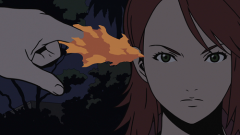
When Shizuku sees her teary-eyed competitor flee the scene and asks what all the fuss is about, it comes out that Tatara thinks there’s a chance that Mako will surpass her. At this point, I fully expected the older girl to berate Gaju for mistreating his totemo kawaii imouto~ and run off to make sure Mako was okay, at which point we’d get a scene where the girls talk about how boys are stupid. Instead, Shizuku walks right up to Tatara, gives him an icy stare, says, “Don’t underestimate me,” snaps his bowtie, and walks away. I think I’m in love. After receiving precisely zero speaking lines in last week’s script, Shizuku was due for her moment in the spotlight, and she certainly got it here. Part of me hopes that she still checked on Mako after she was through being a badass, but the version of the argument that we got was the best possible way the scene could have played out.

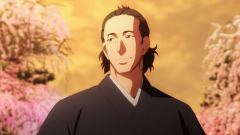
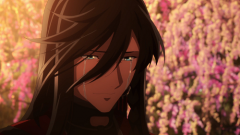
The story wraps with the introduction of Marisa Hyodo, mother of Tatara’s destined rival. Before she was revealed as a guest judge for the semifinals of the Tenpei Cup, we got a car scene between Marisa and Kiyoharu, who don’t seem to be the closest of parent-child duos. As we might expect from a superstar of the dance world, she works constantly and doesn’t see much of her son, but what’s worse is that she rationalizes her absence by declaring him the type who “likes being alone.” Ballroom is full of parents and authority figures who are less supportive than they ought to be, although I suppose it wouldn’t be anime if it weren’t. When the Hyodos appear at the very end of the episode, Sengoku looks like a kid who’s been caught with his hand in the proverbial cookie jar – does he have an agreement with Marisa not to train anyone except her son, or is there some history between them that we don’t know about? Guess we’ll find out next week.

Princess Principal – 07 [Case 16 Loudly Laundry]

This week in Princess Principal … what exactly did I just watch? Suddenly spies do (steampunk) laundry and do business as well? Getting 231% raised in revenue and catch a thief in a process? That’s a bit of a stretch here. And who in the right mind would think it’s a good idea for a spy to step up and buy the business of a place she currently works undercover? She wants to get herself exposed of being a Princess? Phew. This episode is just as necessary to the main plot as the appendix in our body. Furthermore, it’s just dull. The only saving graces I can possibly take out from this episode are 1) their positive treatments to all the female casts: although all brought up in difficult backgrounds, girls can be good at their jobs – without men – and can control their own lives; and 2) the various precious facial reactions from Chise, and to a degree, Beatrice (geez, the moe factor eventually gets into me).

This week, the girls decide to join the laundry team in order to find the Poison Gas Jack (possibly a rip-off to Jack the Ripper), a terrorist whom they believe to be a military man. The plan is to find the uniforms that reacts to a pyridine test. Sound like a well-thought plan, right? Except that they have to go through hundreds of uniforms and there is a chance that the culprit doesn’t leave his own uniform for washing (you can always hand-wash your clothes, you know?); so guess what the show did? The spy girls bought off the place after learning about its debt and the culprit’s uniform was just accidently sent to the laundry service by some unnamed hero military men. Haizz, the more I talked about the plot the more painful I get so here’s the gist: this episode just feels sooo mundane and unrealistic at the same times and it betrays the fast, plot-driven tones Princess Principal has established so far. We don’t feel any tension regarding the actual case, we don’t feel excited because the action happens like… 10 seconds. Chise has a fair bit of interaction with the laundry leader, Marilla, but even that relationship feels half-baked at the end.

Chronologically, this is case16, which should be the second most recent (after last week’s case18) and there is a guy (the loan shark guy) that appears in both episodes. Funny that the only thing that connect him with the spies in both episodes is him being kicked in the butt by Dorothy, and Ange, respectively. Let’s see if he’d appear in later episodes but if he does, I suspect that he’d be the first one to make a connection about those girls who seem to be everywhere (he met 4 out of 5 girls already) and sell off the information to the Duke of Normandy. The part where our girls working together to repair all the steampunk laundry machines is warm that signal us that they’re all genuine people who care to help others (although why Beatrice is the only one who looks dirty?), but others than that, this episode is just unnecessary and the production isn’t that great with many off-models and the laundry girls’ designs are all uninspiring. Filler episode at its most head-scratching quality.

Re:Creators – 18 [All of Us Are Incomplete]

One of the major gripes I have with this series is its uneven presentation that has far too much exposition while lacking in the action department. In the eighteenth episode, it finally found its footing in balancing the exploratory themes of creativity, action scenes and comedic bits in a seamless transition as Re:Creators successfully sustain its momentum in its push towards the last few closing episodes. From Blitz’s defection to the hectic fight of Shou and the explosive entry of Charon, it did not let up in its twists nor epic moments of awesomeness. Of course, Yuuya’s creator gets the short end of the stick as his own creations decides to spoils his own flagship series in such a causal manner that is akin to Reiner’s underhanded reveal in Attack on Titan. It doesn’t stop there as even in its more fanservicey moments, it manage to say something about the nature of anime fans as Hikayu’s scandalous martial artist outfit shows how their willingness to accept ludicrous scenarios.

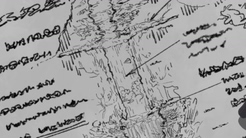
For once, talking with Magane doesn’t end in a reversal of causality that is detrimental for those on the receiving end. Sota, in particular, has matured quite a bit from being the otaku version of Inaho (Aldnoah.Zero) to having a backbone when conversing with the most twisted and manipulative creation of the show. Seeing him defends his dreams of becoming a creator makes him a far more likeable character than the secretive Sota of the mid-series. I’m quite curious in seeing what Sota drew in his own notebooks as it is obvious that it isn’t doodles of Altair or erotic stretches of Selesia (or it is?). In any case, the decision to release Hangaku back into Yuuya’s control and allow for Sota’s creations to translate into reality is really the surprise of episode. I doubt Magane did Sota a favour out of the goodness of her heart given her history of being a murderous troll. This moment of graciousness doesn’t redeem her lies and bloodshed in the slightest, but it does show the other side of the coin that is the fun-obsessed Magane.

With four episodes to go, it comes as no surprise that we have not reached the climax of Re:Creators just yet despite everything being literally lined up for Altair’s defeat. There is simply far too much time left in the series for that to happen and Charon still need to have his time in the spotlight. I find it perplexing that the three defecting creations didn’t bother to even inform the government forces of Charon and his massive robot. While Charon does have that menacing looking mech adorned in black and red accents, the combined arms of the other creations should be more than enough to bring down Altair and a Vogelchevalier clone. As one person on the internet once said, “one super fighting robot isn’t gonna make a difference”.  

Extra points for those who can figure who said that last line.

18if – 07 [And now There are none…]

This episode is one of the reason why I am glad that I’m still putting my faith on 18if, an episode that displays a complete different range of visual style, and a satisfying children’s story about friendship as a cherry on top. There’s a lot to love here, from the beautiful aesthetic that heavily influenced by the European stop-motion-like (it’s still hand-drawn though) animation, to the tale that inspired by children fairytale with more mature, political undertones and the song “And there were none” at the end nearly take my breath away. This freedom of creating wide range of visual-storytelling based on each directors’ own visions is 18if’s most appealing factor, and episode 7 is when that freedom works totally for the show’s benefits. This comes as no surprise that the director handling 18if this week is veteran Kouichi Chigita, a director who responsible for Last Exile; Brave Story and Full Metal Panic. Apart from a bit of obvious, shaky CG opening, the rest of the episode moves with ease with the stunning visual that pays homage to many other Western animations, but nonetheless is original enough to stand on its own.

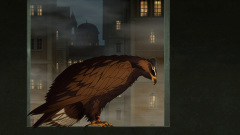
I’m not attempting to discuss about the actual plot of this beautiful episode (ala what all this means in the real life), as I believe the dreamy story we witnessed makes sense enough that trying to dig deeper into the plot kinda do its story a huge disservice. Instead, I will delve into the literacy inspirations this episode makes references from. The most obvious comparison would be The Little Prince, both because of those similar styles, but also they share the same kind of fairytale story and the same mature feeling those two manage to pull. Well, the main character, Pol, is a prince if there’s any more doubt. The character designs are decidedly simple that are reminiscent of stop-motion puppets and a fair bit remind me of Pixar’s characters of all things. The art designs are another highlight as 18if produces an enormous amount of standout backgrounds, from the peaceful forest, to the doomed city life to the creative kingdom designs. At one time the show reminds me greatly of Samurai Jack as you can see in one of the screenshots, and at other time the character designs, especially those who manipulated Pol, take a nod towards those villains in the Triplets of Belleville and our mains this week are another nod to the characters from the Wizard of Oz. Like I said, while this episode has huge inspirations, never at once I feel it as a rip-off, because those influences are in service of deepening its narrative and manage to bring the emotions across.

Then, the characters of Pol and Pot are heavily implied as a reference to Polpot, the infamous Khmer dictator and the Khmer Rouge and the even more infamous The Killing Fields. The way Pol eventually abandons his friendship, becomes heartless in the process and rules the Kingdom of massacre of innocent people, people died from hunger, totalitarian rules and the way he was just a puppet figure head all have very dark political undertones pointed towards that dark period of Cambodia. It’s also implied that Pot, his best friend, is executed for the crime of “treason”, the same crimes that the Khmer Rouge would use to kill intellectual people (more commonly known as “people with glasses”).

But all the metaphors and references are just a mere service to tell a story about a friendship between Pol (the Prince), his best friend Pot and the girl Nene, whom later become a Witch. And I would recommend you not to look so much into the deeper metaphors because the story is beautiful as it is, while at the same time tell us just enough about the Witch’s issues. It’s a rather tough trick to pull considering that the whole episode is from Pol’s (not the Witch’s) perspective; but we can really understand what make Nene drifting apart and come to hate the friendship that she used to love. The story literally goes all the phases of emotional progressions (the Five Passions: joy; pleasure, grief, anger, hate), while paralleling all the phases of their friendship from how the friendship is formed, how it comes to a genuine love and how everything just broken apart afterwards; how Pol comes to term with accepting the fault he made and how eventually Nene comes to forgive him about his misdeeds. It’s a story about growing up, all told in a form of dreamy fairytale that might not appear to make sense on the surface, but make total sense narratively.

Well, I’m intrigued to see what 18if will go from here. This episode alone receives a perfect 5/5 score from me and I’m not pressing to say that this episode is my favorite standalone episode of this season. As in the nature of 18if, this episode is a standalone story so everyone can watch it and see the stunning, simple yet elegant little story for yourself. Sometimes it’s nice to see something like this in an anime-landscape, which remind me again of the possibilities and the globalization anime medium is capable of.

Shoukoku no Altair – 05 [The City of the Lighthouse]

After a three-week break, Shoukoku no Altair returned today with an episode reminiscent more of its first three than its last. If you’ve been reading these posts for the last couple months, you’ll know that’s not a good thing, at least from where I’m sitting. We were awash in exposition and timeskips again this time around, and looking at the off-model characters scattered throughout the episode, I suspect it may have been outsourced (or else MAPPA is spread too thin with Kakegurui and Bahamut also airing this season). Still, the show’s weekly barrage of new characters, nations, and locales lends Altair a briskness that makes it easy to blog. You know the old saying: when the show’s too thin to analyze, suck it up and summarize.

Actually, there was one theme at work in this episode that I felt was rather effective, and that’s the struggle between realism and idealism within Mahmut. When we first met him, he was tactless and naïve, despite his military status – he spoke without thinking, abandoned his city to help his friends on more than one occasion, and was regularly taken aback by the machinations of enemies and political rivals. His do-gooder streak remains, as we saw this week when he refused to leave Phoinike even after they declared war on the Empire, but he’s becoming more pragmatic and self-aware all the same. The decision to sail for Venedik and gain their support was motivated not by emotion or instinct, but by the fact that if Phoinike falls, the Empire will have Mahmut’s homeland of Turkiye surrounded. The former Pasha was also able to recognize a display of overconfidence in a friend, flashing back to his own trust in Ibrahim, who betrayed Turkiye just a month ago. I don’t expect that Mahmut will transform into a battle-hardened cynic before the series concludes, but the nuance is appreciated.

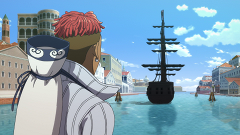
The man who will facilitate the aforementioned departure for Venedik is the newcomer Kiros, who you may have recognized as one of the riders flanking Mahmut during the opening theme. Kiros is another one of Zaganos’ spies, although his idea about what constitutes an effective disguise might make him ill-suited for the job. (Seriously, what’s with the Jack Sparrow cosplay?) His acquisition was handled by Suleyman Bey, who preyed on Kiros’ hatred of his politician father’s two-faced greed in order to bring him into the fold. This flashback was among the more interesting scenes of the episode, as it depicted the grittier side of espionage. Although Mahmut actively seeks out the company of intelligence gatherers, it might be a while before he gets his own hands dirty, so for now I’ll make do with the backstories of shadier men.

Konstantinos is the other significant character who made his debut this week. Though he appears friendly at first, he quickly reveals himself to be a dead ringer for Zaganos, who will use whatever (or whomever) is handy to achieve his ends. Konstantinos invites Mahmut to a government meeting in a fancy amphitheater, where the Phoiniken senators are set to debate whether they should allow the Balt-Rhein Empire to use their ports. Rather than allowing his guest to voice his opinion, however, it becomes clear that Konstantinos has only allowed Mahmut to attend the debate as a symbol of imperial defeat. With the support of both the people and his fellow senators, he declares war on the Empire, and what follows are a series of bloody conflicts along the wall that presently keeps them out. Altair’s politics are about as complicated as a mud pie, but its battles are much more interesting – Lady Lelederik is back, with a plan to scale Phoinike’s crystal cliff and infiltrate the city for the first time in 1800 years. Now it’s a race between her troops and the reinforcements Mahmut hopes to bring, and though the victor is all but assured, the contest may be compelling yet.
Classroom of the Elite – 06 [There are Two Kinds of Lies; One concerns an Accomplished Fact, the Other concerns a Future Duty]

Youkoso embraces its true nature this week, pulling off some resolves that are pulpy, but clean up nicely the conflicts they present this episode. With episode 6, not only class-D settles the accusation from class-C; they set up, and quickly resolve, Sakura’s stalking issues and gives a much-needed concern regarding Ayanokouji’s own agenda behind his actions: lurking in the shadow, (possibly) manipulating people around for the benefits of the class. Or does it? It’s about goddamn time we need to know more from him. Youkoso makes it quite clear that the guy doesn’t really care about the class, so why does he agree to help Horikita moving up to Class-A in a first place? The flashback hints that he was in some sort of lab experiment in his young age, that might attribute to how he’s exceptional, or rather, overpowered, but passive; doesn’t want to stand out (although people do notice) and most importantly, prefers to.be left alone. I don’t mind this direction to be honest, Youkoso is at its best when it’s stay true to its ridiculous elements, so if the show pulls off another orphanage that is a secret lab experiment to create the new Hitler, I’m all in.

My real complain for the first segment of this episode simply lies in the fact that I never believe those guys from Class-C would be that stupid to go meet Kushida, at that crucial time of the investigation. All three of them. Do they forget that Kushida is in class-D as well? Or do they forget about the case altogether? Other than that though, it’s nice to see Horikita and Ayanokouji pull off such plan: set up the camera where the incident happened, make them think that the camera caught on their actions, and then persuade them to drop the case. Well, it’s more of a mind game than an actual plan but it works like a charm because the thugs from class-C are assigned for fighting, not for thinking by themselves. It’s a bit manipulative but isn’t Youkoso all about manipulation?

Sakura has a much darker story to tell. Stalking isn’t funny, after all, so although Youkoso just hints about her issue in the beginning of this episode, we feel the stakes are there. But… who’s in the right mind would go to dark alley while being stalked? Geez Sakura… you should’ve known better. While the conflict itself is nicely done, we get to see how Ayanokouji would save the day and thus, how Sakura starts to trust the guy and believes more in herself and what not; I have a hard time dealing with the whole implication behind this conflict. Not only Sakura is framed as a worst image of feminism ever: get into trouble and then whoops, the Prince comes and saves the day (not to mention her bouncy boobs that have no place in the story); the way Youkoso treats that clerk’s character is just so unpleasant. You can’t show us how awesome a character is by an expense of another character, ever. Well-written characters, even the evilest ones, we still have some level of sympathy towards them because they’re layered with their personalities. For all their actions, there are always a solid reason behind. That clerk man here, do you feel anything else about him other than disgusting and repulsing? Youkoso tries too hard to make this clerk creepy, that I am creeped out by the way they frame him instead.  Imagine each character as a “soul”, and I feel pity for that “soul” for being born as a deformed, one-note character whose the sole purpose is to be booed by everyone.

Half way in, can’t say myself that I enjoy Youkoso that much. It’s not a terrible product but I feel totally… indifferent to it. This episode, for example, while I could say that overall this is one Youkoso’s better episode, I personally have so many issues regarding its treatments to the plot and the characters.  I’m trying my best not to sound overly negative in my review, as I still see some solid qualities behind the show and I know constant ranting don’t do either you or me any good. I will stick with it till the end so maybe it’s better that I need to just enjoy the ride and don’t think too hard about it.

Re:Creators – 17 [The Rain’s Rhythm Shoots Down on the World’s Roof]

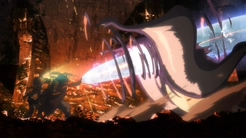
If you are still remaining faithful to Re:Creators over the course of months on end, then this is the episode where all the buildups and exposition pays off in dividends with the grand opening of the ‘Elimination Chamber Festival’. Characters with long standing grudges square off, insert songs being played back-to-back, and Studio TROYCA really went all out with the visuals in serie’s longest sustaining and best fight so far. In spite of all the explosions, pretty lights and new powerful abilities, nothing, outside having Altair embracing Selecia from inside her cockpit, is surprising. None of the fights have resolved themselves although there are signs that there are much bigger twists to come like Alicetaria’s eventually betrayal and Magane’s continuous intrusion into Sota’s life.

While the first half satisfied that craving of action that has been sorely missing for the last two months, the second half had the best conversation between a creator and her creation. Within the initial nine creations introduced in the first half, Blitz is the final character to met up with his creator for a chat and this was probably the best out of them all as it provides some of the best insights into why a creator would subject their creation to terrible scenarios. Simply enough, the answer is for the sole enjoyment of the audience. Think of some of the most popular franchises out there like Game of Thrones, Walking Dead, Berserk, Attack on Titan and Tokyo Ghoul and the insurmountable challenges and hardships within them. It is in these extremes where the audience finds their greatest enjoyment as characters we know and love go through their journey of suffering and ultimately triumph. In comparison, Altair’s motivations of revenge, as Suruga describes it to be a shallow fanfic bore out of resentment and anger, ,are actually quite basic once you get passed her dressed-up fancy speeches. Blitz isn’t cut from the same cloth as her, in spite of following Altair around for most of the series and being hellbent on following through with his destructive plan. There is something far deeper that a dedicated creator like Suruga has invested into Blitz and this is the exact method, with the stunning reveal of his daughter, in which to turn Blitz against his current master. The best part is that the crazy ride to Re:Creators finale is only beginning with plenty of surprises to come.

Made in Abyss – 06[Seeker Camp]

I feel like Riko has been naked quite a lot in this series and I thank god that it’s not treated in a fanservice manner. That may be something that should be par for the course but with my experience in anime it often takes every opportunity to throw in some fanservice. At this point I have become rather immune to it but I can appreciate that Riko has been topless on screen a number of times and it doesn’t make me feel like I am watching something that could potentially get me arrested. Something that I cannot say so easily about certain other shows which shall not be named. The episode recaps at the start of episodes feel like they are getting longer but animation still is at a high level which I hope continues till the end of the season. I am surprised at Ozen whom I originally had pegged to be significantly more villainous by the end of the last episode. This episode instead shows her as a much more playful character than her intimating design would suggest. She reminds me a bit of a Katanamonogatari character with her eyes and general listlessness. So far she is acting the role of the cynic, and raining on Riko’s earlier misplaced optimism. One by confirming that her mother is indeed dead and also verifying that the message inspiring this whole journey was not written by her.

I find this rather…cathartic. Riko has so far attributed that everything that has happened so far is related to her. Much like the main character in a story she thinks that the world revolves around her only to have Ozen confirm that she doesn’t really have anything to do with this at all. Of course we don’t quite know if Ozen is telling the truth or not but based on the character she has shown in this episode I don’t quite think she’s the type to lie. In fact this journey appears to be more about Regu than anything else and Riko is more just the tagalong. Sadly this episode ends right before what looks to be the biggest and most shocking reveal but we did get some interesting things. We have a strange corpse like creature that Riko saw in the middle of the night as well as some new info on the Abyss.

My guess is that this corpse being happened to be the Whistles that tried to ascend from the lower levels and got hit with the curse at it’s worst. But as to why it happened to be in Ozen’s house at that moment does make me wonder whether Ozen is experimenting on them. For other exposition we have Marulk who lets us know that the further down you get in the abyss, the more complex the artifacts become. As well as how a tree this giant can grow in the abyss by taking nutrients from the sea floor of the land above. Also Marulk may be a boy instead of a girl seeing how he reacted to Riko walking in naked and Regu inquiring about his gender. So we have reached the halfway point of this series and I do wonder just what twists await with this white cube and how it will effect the story going forward.

Fate/Apocrypha – 07[Where Freedom Lies]

As a Fate fan I can state for certainty that this series does have a problem of having a bit too much anticlimax. Which is a problem that may affect all Chuuni style stories come to think of it. I love the series but I can say that I don’t think any of them truly capitalised on the holy grail war concept. Often at the start of the series there’s a build up and promises that the series more often than not doesn’t deliver on. This is also why I am conflicted when asked to decide whether Fate/Zero is better than Fate/Stay Night. For while in many aspects Fate/Zero comes across as the superior story, I still believe that Fate/Stay Night had better climaxes and did things that Fate/Zero didn’t do. But how is that relevant to this episode you may ask and well it’s just that a conflict was resolved with everyone just deciding to duke it out later which happens to be the third time this has happened. This is followed by a buildup to what could be the biggest fight of the series yet and I find myself with a wariness over whether it will be truly satisfying. At this point characters and general plot haven’t engaged me as much as I would have liked them to so the final vanguard is whether I can see some cool fights. A prospect which is looking less and less likely when the animation per episode is getting rougher.

Still it really is nice to see interpretations of historical figures and their history does enrich their position in this war. It’s logical that Shakespeare wouldn’t take a combat role considering his vocation and he staying by the sidelines just so he can chronicle the whole war as a new work is a great take. Though to make up for his lack of real combat power the Assassin of Red is playing a dual role. There has been some rewriting of the rules a bit and Semiramis possesses double summon which means shes effectively a Assassin and Caster rolled into one. Contrived indeed but hardly the first contrived exception to the rules. This episode marks the rise of her noble phantasm which is a giant floating fortress by the name of the “Hanging Gardens of Babylon”. Exposition time: Semiramis did not in fact make the Hanging Gardens of Babylon but their creation is often mistakenly associated with her. As a result she needs to jump through some hoops to actually summon it but it is an example of a servant gaining a power based on popular association, something which should come into play later. Servants powers are in general amplified based on popular belief. In reality Excalibur wasn’t really able to shoot laser beams nor was Alexander able to summon an army at will.

Once again Seig proves that any moment he’s on screen is a moment this series becomes boring. His talk with his caretaker reminded me a lot of the talk that Waver and his fake grandfather had in Fate/Zero and I get the feeling it was trying to emulate it. However it was missing the real heart of that conversation as well as Gen’s masterful hand at writing exposition. Seig’s dilemma and ultimate choice just come as expected. Even within the narrative it was already decided that he would be jumping back into the fray. So really this isn’t some much a character development moment for him but rather a reaffirmation of him being pushed into a stereotypical role. My hope is that his role isn’t too big in this story as when he’s off screen this does become a better show.

Kakegurui- 06[Tempting Woman]

Here’s where these betting games get really out of control as we have an elaborate setup which likely cost quite a lot of money to make and only serves to make this bet possible. Before I made the choice of ignoring the general nonsensical rules of the school however now I think that I should consider it that the entire world outside this school doesn’t actually exist. I mean we now introduce a member of the student council whom has her own torture complex under the school complete with a dangerous betting game in which people can get actually shot with a real gun. I just have to wonder what hospital takes in these students with mysterious gunshot wounds and how parents don’t hear of their children getting sent to hospital. Likely the explanation is that when money talks, everyone shuts up. But there really is so far before something this ludicrous is revealed to the world. This place is one reporter away from becoming headline world news so my only real option is just to assume that the world doesn’t exist and this school is center of the universe.

We have the introduction to our new opponent, Leader of the beautification committee, Midari Ikishima. Midari is somewhat unhinged which would be an understatement because she’s completely goddamn insane. In honesty I wonder how these kinds of characters function in mundane scenarios because I can’t imagine this girl sitting in a classroom for a full day without pulling a gun on the teacher. It’s also puzzling how someone so spontaneously prone to mood swings can somehow collect loyal followers.In a show that is already over the top, this girl is chewing the scenery to the absolute extremes. One thing about her that I find myself pondering over is the nature of the absurd level of raw sexuality from her. Normally I would sigh at such things as a girl straddling the male protagonist while begging to let her play a game but in the case of Midari I don’t find these actions titillating. I am sure someone is getting off on this but to me it feels the story is portraying her in a manner that these lustful mood swings are more disturbing than erotic. Her bloodshot eyes, practically drooling thirst and desperation show her off as more revolting in her naked unrefined desire. In the spectrum of Seduction and ravenous lust then Midari would be a full on rapist who would likely kill you afterwards. Strange that all this lust is directed at having a bet with Yumeko and while the story does draw parallels between their desire for risky bets, Midari’s seem more rooted in physical satisfaction.

Fanservice that I can’t quite reason away however is how the Student council president attempts to recruit Mary into their ranks and then the conversation gets as bit odd. Now the context of the scene is clearly that the president is trying to threaten her into the position but how the anime frames the scene is more like a seduction. Remove the sound and you could very well assume that she was coming on to her and I wonder if this is the director’s influence. I wonder just how much is intentional catering to this demographic and what is simply the result of him amping story developments up to eleven. Moving on the game is afoot and someone is obviously cheating because they always are. It’s difficult to see what plan Yumeko has at this point and knowing her, it’s bound to have her taking a big leap of faith. However it is a rather weak cliffhanger to end on a gunshot and have the after credits sequence ruin the surprise. Not that Yumeko was going to die but we could have been in suspense over her getting injured.