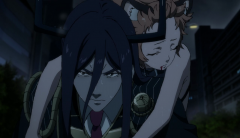
3-gatsu no Lion – 27 [Feelings/Confession]

This episode of 3-gatsu felt like a companion piece to the heart-wrenching drama of the previous week. In fact, the “Feelings” chapter from this installment, where Rei asks Hayashida-sensei for advice, was a direct continuation of the same chapter from last time. Until this point, I felt that the series had approached the subject of bullying very naturally, without lecturing or feeling like an after-school special. There was a bit of preachiness to Hayashida’s dialogue this week, though it would have been tough to avoid that sensation, based on the straightness with which Rei asks for “anti-bullying measures.” Listening to the teacher’s speech on the difficulties of dealing with bullying, one gets the sense that this chapter was a sort of soapbox moment for Umino-sensei. Given the overall strength of this arc so far, though, I’m willing to handwave its less subtle bits. Plus, I admire anyone who integrates the social issues they care about into their art, especially when the end product is actually good.

There were two elements of Rei and Hayashida-sensei’s conversation that made it a success on a level apart from “bullying is a tough nut to crack.” The first was the humor, which came as a relief for me, since Shaft’s brand of comedy doesn’t always find its way to my funny bone. I credit a lot of the laughs to the keyboard track that starts around 1:40, and again at 7:30. Combine its playful Wurlitzer melody with some goofy voice acting and inventive visual gags (Hayashida turning into a wooden statue springs to mind), and you can generate a lighthearted tone that balances the chapter’s heavier moments. The second, more significant element was the show’s flirtation with the Rei/Hinata pairing, as seen through Hayashida-sensei’s eyes. In my last 3-gatsu post, I mentioned that the two characters are quite suited for one another, but that was in regards to their temperaments and personal histories. The three year difference between Rei and Hina makes it difficult to think of them as romantic partners, and Honey and Clover was famous for its couple-related curveballs, so I don’t want to make any serious predictions at this stage. Hayashida is certainly convinced that Rei has a crush, though, if his disappearance into the rushing river of adolescence is anything to go by.

I appreciate that “Confession” continued to explore the effects of Hinata’s bullying on other members of the Kawamoto family. Akari carries one of the heaviest burdens in the 3-gatsu universe, having acted as a mother to her sisters since the age of 17, and for this to be added to her plate must be nearly unbearable. She feels even worse after comparing her own defensive, questioning response to Someji’s reassuring one, which isn’t an observation that a lot of other series would make. Poor Akari – she declares herself “no good” because of her failure to comfort her baby sister, but she’s the most traditionally “good” character the show has to offer. Thankfully, Rei draws an inspired parallel between Hina’s courage and the values with which Akari raised her, and gives her a much happier reason to cry. Even though Rei made such a bold commitment to Hinata last week, I think he actually demonstrated more growth here by attending to this subtler form of grief. Finding the perfect words like he did in this episode proves that Rei is on a path of real transformation, and I plan to accompany him until he reaches its end.

Fate/Apocrypha – 19[Dawn of the end]

We near the finale and Apocrypha gears up to bring things to a close, even if that setup is essentially mentioning that the battle is coming to an end over and over again. it’s more than a little strange to see this episode start up and it is though the entire three episode arc of dealing with Jack the Ripper never even happened. I actually think you could skip over those episodes entirely and starting this episode nothing would really feel amiss. It feels rushed at just how this series is pushing towards a finale, with only Sisgou and Mordred proving to be the most natural on screen. This episode had a focus on Fiore giving up on her right to lead the house on the basis that she is simply not cut out for the life of a mage. She has plenty of magic talent as stated by Chiron but is too kind to take on the normally dark aspects of a mage lifestyle. Bit of a stretch as you don’t need to disregard life in order to be a mage and she certainly gave up rather fast seeing as her whole reason for entering the war was to allow her to walk and be a mage without giving up on one. I like the narrative arc of having Caules become the leader of the Yggdmillennia but I certainly feel like this development isn’t as smooth as they wanted it to be. Plus they really played down just how intense transferring a magic crest is. It normally requires surgery.

I have heard word that Fate/Apocrypha was an attempt by the writer Yuichiro Higashide to top Fate/Zero. It’s up for debate on how true this is as the wiki states that Kinoko Nasu planned and wrote a majority of the story elements for the characters and plot. That said there is a certain air around this series of wanting to emulate Zero, especially in the light novels. The Assassin of black duo are very reminiscent of the castor duo in Zero. Having the story focus on multiple master and servant pairs instead of basing it around one. A general dark tone and having a presist of the church be a main villain. Admittedly these are abstract vague comparisons and could very well be brushed off but I even felt that out of all the fate works that Apocrypha was the closest to being a Fate/Zero 2. That said it overexerted itself due to having a writer who really can’t match up to the scale of the narrative he wants to tell. Apocrypha has good ideas and good characters(Aside from you know who) and I would very much attribute those to Nasu as that has always been his forte. Gen was the master of exposition, pacing and focus, elements which Apocrypha is very much missing. Fate/Zero is a tight story with nary a unnessary moment. Apocrypha on the other hand has had several episodes which could be removed from the story entirely. Now this isn’t to say that Urobuchi Gen is a perfect write, believe me that he has his own writing issues, but I do want to point out just how much of a perfect match Gen and Nasu were. Higashide is not Gen and as such cannot take Nasu’s good ideas and make a good patchwork. So should Gen and Nasu just write all future Fate works from now on? Well that does sound interesting but other writers have proven they can work their own magic on it. Ryohyo Narita’s Fate/ Strange Fake has quite a number of fans after all.

I have become significantly less fond of astolfo as of late. Part of that might be because of him helping to ship Sieg and Joan in this episode but I admit that a large part of his character is just the gimmick of him being a trap. I liked him in the novel for being the comic relief much in the same way as Alexander did in Fate/Zero. But he’s just not provided anything besides trap jokes but perhaps much like Joan, his problem is in that he just has a cardboard plank to work off of. Again, so many of Apocrypha’s problems connect back to Sieg. It’s a pity that Mordred and Sisgou are not in the spotlight more as this episode was at least made more interesting by Mordred being to wonder just what makes a good king. Rather amusing that despite wanting to usurp the title from Arturia, that her idea of a good king is very much the same as hers. The every same idea that got so chastised by Alexander in Zero. Despite her professed hate, she still holds a high degree of respect and admiration for her father. Something that Sisgou sees easily…sigh…why is it that these two were shafted into the side character slot? I do believe this series was significantly better when we were under the impression that they were to be the main characters. So the last battle draws near and Apocrypha is looking to be a decent but sadly disappointing entry into the Fate animated universe. Pity we had so many Fate adaptations this year and a majority of them disappointed. Grand Order’s Ova was rather bad, though I must admit the Mobile app itself has me absolutely addicted.(Saving my quartz for you, my darling Scathach) Fate/Apocrypha disappointed. Fate/Prisma Illya’s movie, despite adapting the best part of the manga, has dropped the ball on animation quality.(Though the movie seems to be still pretty decent) Heaven’s Feel at least looks like it delivered for you goddamn lucky Americains. And I have no real expectations for the Fate/Extra adaption happening next season due to the source material being nothing special. The year of Fate has sadly not turned out well but maybe now Nasu can get off hs lazy ass and write something for a change.

Kino’s Journey -The Beautiful World- – 06[In the clouds]

I would say there were plenty new watchers fooled into thinking this was Kino’s origin story and I admit to having the thought that the remake may be creating a new origin for her. But alas this is an episode focused on someone else entirely. Still I consider it a strong episode even if it got a bit too forced with the portrayal of the caravans people. I can forgive that as it’s not the first time that Kino has sacrificed characterisation in order to tell a story. In fact many a time in the old series did people turn into exposition puppets solely there to push the parable of the week. Kino in essence isn’t really about the characters but rather the underlying themes and questions brought up with the story being told. In terms of that we got a lot of meat here. The situation is that a girl is sold as a slave to a caravan in order to cover the expenses the country owes. However it appears the girl isn’t a very useful slave. Those the adults treat her badly due to feeling they got scammed and the children treat her even worse. However we have an odd situation where the slave girl is from a religious country that preaches in believing in the good in others and not hating other people. Thus her beliefs are put to the test by her horrible owners and the fact that she was sold off.

The funny aspect of this story is that while the slave girl does speak that she would never hate them and mention her beliefs, the look in her eyes does not suggest that this is what she truly believes. Instead it feels like the beliefs that she was indoctrinated with. She believes such because it was what she was taught to believe and despite that the beliefs themselves are not inherently wrong(Though naive) there’s something wrong in how she has ingrained them into herself. The big test comes when she realises that the herbs thrown into the soap were poisonous and attempts to warn the group. There is so much beautiful irony in this episode. One of the members of the caravan mentions that the girl is someone abandoned by luck but inadvertently by episode’s end she is the luckiest girl there. Indeed it was as if god himself turned events to her advantage. Her attempt at suicide was stopped by a coincidental bullying from one of the children. Fog stopped Kino from reaching the camp in time as she could have warned the group about the poisonous herbs. Though if Kino saw how they treated the slave girl, I wonder if she would have sat back and let them accidently kill themselves. The fact that the only member of the caravan to survive was someone who sympathised enough with her to free her shackles. Not to mention the beautiful line of him mentioning that his grandfather said that he shouldn’t be a picky eater and he inadvertently survived because he was a picky eater. The motorrad in the truck that could teach her how to drive and not to mention give her the perfect advice to combat her suicidal mindset.. Yes, everything worked out in this girl’s favor and that begs the question of whether her belief that the founder somehow knew things would work out for her was indeed true or if this was all plain coincidence.

Now when it comes to the girls abuse I actually thought the majority of this episode handled it well with it being rather low key instead of pushing it too hard. The point that really makes it forced is right before the caravan dies and the son of the caravan leader makes the suggestion that his father sell him the slave girl just for the express purpose of him proving himself a man by killing her. Yes this is quite forced, especially with it coming just right before they die to show that they are far beyond redemption. The funny thing is here that I can somewhat understand this kids reasoning. Judging by what Kino has to deal with, traveling is a dangerous job and isn’t one that allows for high moral ground. Even Kino isn’t against killing someone if the need comes. So I can understand just why this kid feels that it’s important for him to be able to kill. The logic fails here however in just how he is going to go about it. Killing someone who’s out to kill you is far different from killing and torturing a girl who can’t fight back. Of course it’s up for debate on whether this kid is truly capable of it as I can certainly see him talking a big game and losing his nerve once he gets to the act. I feel like this scene would have worked better if the father was in favor of the idea while other members of the caravan felt conflicted. Like the boy’s mother not being too keen on the idea of her son torturing a girl, regardless of who it is. If there was a failure in this episode it would be the adult’s reaction to the boys proposition. I don’t care how evil people are, suggesting this crap over a dinner table wouldn’t get unanimous acceptance.

That aside this was a very good episode that showed this shows strength over others. This episode could be a commentary about religion and how the ideals it teaches are hollow if you haven’t any resolve or real investment in them. It could be a message about abusive relationships and how the abused tries to see the best in their abusers despite all evidence to the contrary. The while altruism is an admirable virtue, it’s truly important to accept that you are only human and as such do not need to uphold a perfect ideal to be a good person. Or even a anti-suicide message for after all, you are inevitably going to die someday. So if you want to die then just live and it will happen eventually. Or quite simply, a moral that things may be at their darkest at times but the future always holds the potential for happiness. Not an easy episode to watch but I do love the food for thought. Keep it coming Kino.

Mahoutsukai no Yome – 6 [The Faerie Queene]

Welcome to what is, in my opinion so far, the most beautiful episode of Mahoutsukai. Stunning art, world-building and character progression await you inside. Lets jump in.

The best part of Mahoutsukai this week to me was easily the art/music and the world-building. I bring these up first because they were easily the most standout parts of the episode. The entrance of Titania, the Gaelic (?) folk-like music. Her and Oberon’s designs, the filters/lighting whenever they do anything was all fantastic. I could do without the weirdness of Titania’s brazier, but shes Fey, i’ll let it go. This all did a lot to really sell Titania’s other-worldliness. The forest changes just by her presence, every time she moved there was a soft sound and then she just appears, we never actually see her “walk”. Oberon just appears next to Chise once we pan back over to her, surprising even Elias. Mahoutsukai did a good job of depicting the Queen and King of Tir na nOg and the Summer Court and making the Fey stand out.

Continue reading “Mahoutsukai no Yome – 6 [The Faerie Queene]”

Houseki no Kuni – 06 [First Battle]

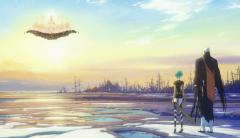
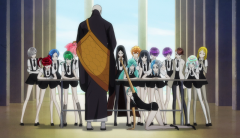
Houseki maintains its impressive streak this week, with Phos learning their new role patronizing, a job once again clearly isn’t suitable for our main character. While you could say Houseki follows the same formula from the very first week: first introduces a huge array of Gems’ cast, then leaves Phos out in some kind of trouble that needed saving, then reverts back to status quo with Phos learning something new; the world-building gets even deeper and more mysterious. And like how others described about Phos – a good-for-nothing, selfish, loud brat – it’s surprising to say that Phos has grown a lot on me. Through many transformations Phos still comes off and behaves exactly like themselves: excited for a chance to wield the sword and go for battle, but too weak to even hold the lightest blade (great touch of comedy here), extremely cautious about the Moon people to the point of straining themselves both physically and mentally. It’s interesting to note about Phos’ growing so far, since they are all the different aspects of changing: first as an emotional bond with Cinnabar, then as a speaking ability to the Admirabilis, the physical transformation of the new leg, could it be this time about their inner spiritual growth? The more I see, the more I come to learn that Phos’ transformation might be one of Houseki’s dominant theme. It makes sense in the long run since I suspect the central conflicts of Houseki will be about the three races and their transformation/ hybrid into a fully-formed human being as a final phase of transformation. Speaking of “human”, it’s the only term that the now-forgotten Phos mutters, and needless to say Kongo-sensei is furious about it. From the look of it Kongo-sensei seems to know exactly what Phos means, and he’s hiding that fact from other gems, for whatever intent (goodwill or ill-will) we have yet to know.

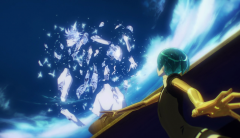
The new cast this week, consist of Yellow Diamond, Amethyst, Zircon and even Obsidian (who I assume as swords’ designer. How cool!) are already a delight. Despite having a relatively short screen time, they all have their own unique voice and personality that I can never get tired of without being too over the top. Not a small feat at all for a show that feature such an extensive cast (and the fact that Houseki keeps introducing handful of new characters every week), but so far every single one of them – except for the Lunarians, which for my money is intentional – is memorable, expressive and bounce off each other very well. Yellow Diamond, in particular, is a big brother of the Jewel people, but Yellow don’t feel they deserve the respect since their partners were all taken to the Moon. Not their fault, but they are the main catch from the Lunarians. Amethyst, moreover, is such fascinating character(s) and their laid-back attitude (even more laid-back than Phos, that says something) makes it fun just to follow them and Phos for their patronizing. When Amethyst eventually get captured, shattered apart by the Moon people, the terror isn’t come from the fact that we sympathize for the character (after all, we just know them for, like, 10 minutes), but come from the realization that those Gems are crushing apart and kidnapped to the Moon is a very real thing (Their last word “Run, Phos” echoed my remark last week. My my). Consider that Bort, and then Kong-sensei come to intercept just in time, Amethyst can count themselves lucky this time.

I haven’t touched much on the CGI and the visual motifs of Houseki so far, so lets me address them a fair bit in this last paragraph. I agree that the full CGI of Houseki can take some time to get used to, but now I’m digging this computer-generated style. The action sequences are stunning, dynamic, breathtaking and overall pleasing to the eyes. The scene where Yellow grabs Phos, for example, astonishes me. But I see another (probably unintentional) quality of the CGI: its physical comedy. The way the characters move (like how Phos’s stumble with their blade, or how the Gems run for their lives when Kongo-sensei’s furious) somehow adds a whimsical sense that normal, traditional art can’t match. Last week I mentioned about the image of Phos losing their legs and one eye to show how pathetic Phos’ current situation was, this time I will address the visual motifs about Phos that we’ve seen from the very beginning: the image of Phos’ lying on the grass field. That image was literally the very first thing we saw when Houseki introduced Phos, whenever they feeling down they would lie on the grass, fast-forward to this episode when the Lunarians attack and Phos remains there entirely during the fight. Another visual motif that I really like is the symmetrical visual, which you can see from Amethyst’s twin design; or whenever the Gems prepare to fight off the coming Moon people. I’m pleased with the overall package so far. Houseki is an exciting, inventive, sometimes emotional wrenching gem but always fascinating in every aspect. Sounds exactly like my kind of anime.

Girls’ Last Tour – 06 [Takeoff]

Some might say futility is an essence of life. That we spend our life wasted away for complete nothingness. And some might argue that what their life worth is based on how much they contribute to the society. Not here in Girls’ Last Tour, the world where the concept of society is long vanished, ultimately what do the surviving people all live for? That question is more relevant here this week with the introduction of another additional character to this minimalist cast. Unlike Yuu and Chi-chan who survive for the sake of being survival, both Kanazawa from episode 3 and Ishii this week have their own missions. For Ishii, she determines to build an airplane based on old records so that she can fly to another city. For the reason she builds it, unlike Kanazawa who regards making map as his purpose of life, she does it to escape the hopelessness of this dying city (“you’ll just end up dying along with this city”).

And if you still haven’t caught on with what I just described, hopelessness is the main theme of this episode. We see in the world of Girls’ Last Tour, where food, fuel and electricity are all scarce, the human left in this ruin barely survive the day. Wherever they go, they will likely end up with more, and more wasteland. The very act of making an airplane, as a result, is as nonsense and hopeless as it can get. It’s the plane that she self-designs based on the scattered blueprints within the base (which mean there’s a huge risk), it takes her a large amount of time to finish, and eventually the next city over might have been worse than the one she lives in right now. Yet she does it because she doesn’t lose hope. True hopelessness, after all, is not having anywhere to go. Ishii also wants the girls to serve as witnesses for the actual take-off (“If someone is watching, then I’m sure it will become a history”).

Although I love the inclusion of Ishii as she’s a wonderful inclusion for Girls’ Last Tour, I feel the pacing is too rushed at times. We don’t spend that much time watching them making the airplane, for example. With this episode, we also get a hint of the overall world-building of Girls’ Last Tour. Apparently, the girls only travel in one big abandoned industrial city with multiple levels as of now, the more they go to an upper level, the more food (hopefully) and electricity they can receive. Will they ever make it to the next city? It remains to be seen.

As staying true to the down-to-earth nature of Girls’ Last Tour, Ishii’s plane flights steady, and then crashes and burns. It was all pipe dream in the end. But Ishii feels relieved, and smiles to her heart’s content. It’s not the destination, but the ride that worth spending time for, and I’m quite sure that she will survive wherever she falls. And when you did your best and still failed, all you can do is just accept it.

3-gatsu no Lion – 25/26 [June/Ladybug Bush/Feelings]

During the bizarre cold open of this makeshift two-parter, the thought flashed across my mind: are we getting one last bit of frivolity before the other shoe drops, or is wackiness the new normal for 3-gatsu? Over the last couple weeks, we’ve witnessed a lot of exaggerated behavior from characters like Hiyashida-sensei, Nikaidou, and even Rei himself, and as much as it pleases me to see everyone enjoying shogi and loving life, I’ve been waiting for the series to take a dramatic turn. I’ll even confess to experiencing a sinking feeling as Rei’s self-proclaimed rival engaged in his usual hysterics during “June,” wondering if the rest of this season was going to be more of the same. But if you’ve seen both of these episodes (which you almost certainly have, since this post is weeks overdue), you already know that my worrying was in vain. From the moment Akari opened that door to reveal her sister’s mismatched shoes and teary eyes, this show put me through an emotional wringer as powerful as anything from its first season. 3-gatsu, I’m sorry I ever doubted you.

Apart from the inherent injustice of Hinata’s circumstances, what makes her story particularly effective is how strongly Rei can relate to her. He’s been bullied for a good portion of his life, whether it was being labeled a robot on the class chalkboard, having a classmate refuse to sit next to him on a field trip, or getting cans full of rocks chucked at his head. As a quiet, introverted kid, made more quiet and introverted by the death of his biological family, Rei was a perfect target for bullying by exclusion. The show even refreshes our memory on the subject just before telling Hina’s story, so it’s easy to identify her withdrawal at home as a symptom of bullying. When the truth finally comes out, Rei is horrified to realize that the pain he once felt is now being visited upon someone who has always supported him. And when Hinata bolts from her house, filled with shame and self-loathing, there’s no question of who will follow. The only thing he manages to say before sprinting after her is, “I will.”

Bullying in Japan is often characterized by its intensity, and the scope with which it’s carried out. Entire classrooms can ally themselves against individuals in the name of conformity, and even teachers may be complicit, as they are in this case. Though Hinata’s sensei refuses to acknowledge the abuse occurring just under her nose, kind-hearted Hina could never abandon a friend, so she sits with Chiho during lunch and sticks up for her in class. But Chiho eventually changes schools, and the bullies shift their sights to the closest remaining target. After Hinata recounts all of this to her family, she begs through her sobs for Akari to tell her what she ought to have done to save her friend. But later, as she confesses her fear and sorrow to Rei on that bench by the river, she starts on the long journey of putting herself back together. With big Ghibli tears dripping down her face, she raises her voice and screams in defiance of her classmates, teachers, and culture that what she did was right.

That was the moment where I lost all control. How could Hinata, who never goes anywhere without a smile, be reduced to this scared and angry state? How could the incompetents running that school allow any of this to happen? The girls who stole her shoes could work their whole lives and still fail to pay for the hurt they caused her. I was furious – but Rei, despite all the bullying he’s endured, had a different reaction. His promise to Hinata, to stay with her and to spend the rest of his life paying her back for her kindness, closely resembled a marriage proposal, and his commitment felt just as strong. He even got down on one knee before making his big declaration, which I’m sure was a conscious decision on Umino-sensei’s part. When Rei described the feeling of being saved by Hina’s courage, it struck me that both of these characters are uniquely positioned to help the other. Hinata’s good nature allows her to extend warmth to people who dwell in dark places, and Rei’s familiarity with that darkness enables him to lead others out of it. This episode, more than any other, has convinced me of their suitedness for one another, and of my love for this series. May it continue for years to come.


Some other thoughts about these episodes:

– Though Rei’s initial reaction by the river is one of dedication and compassion, he later thinks to himself that he wants to rip Hina’s tormentors limb from limb. Episode 26 even closes with him wracking his brain for a way to improve her situation, so we haven’t reached the end of this story yet.
– The symbolism behind the ladybug in “Ladybug Bush (Part 3)” was a stumper for me, perhaps because of the language barrier. I did a little Googling, and it turns out that aside from the general superstition of ladybugs bringing good luck, they can also represent impending happiness, or the idea that one’s troubles have come to an end. Hinata would welcome either possibility, I’m sure.
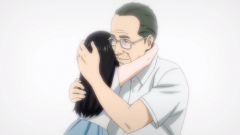
– Someji’s commendation of his granddaughter’s courage warmed my heart (and what a fantastic lesson for little Momo), but even more moving were the contents of the dinner that Akari prepared for her little sister: deep-fried chicken, potato salad, and cream stew, all of Hinata’s favorite foods. The fictional moments that touch me most are always the ones where people are good to each other.

Inuyashiki – 5 [Yuko Shishigami]

Welcome to another episode of Inuyashiki! This week we head back into the Inuyashiki/Shishigami conflict and get to see new sides to both of them. Lots to talk about this week, so lets jump in.

Continuing the parallel theme going on between our two main characters, we see new sides for each of them this week. However the clear star of this episode was Hiro. We finally see a different side to him, showing he does have people he cares for. To me, this made him a more real character, and a tad more terrifying. To the first point, I found it difficult to believe that Hiro would have nothing left of his life before becoming a cyborg, so seeing his family made him more than just Hiro the Murderer. As for being more terrifying, we saw how deep his devotion to his mother ran. Right now he murders to feel something, with no impetus for anything bigger. With his mother however, it’s clear she is being setup for some terrible event that will push Hiro to greater evils.

Continue reading “Inuyashiki – 5 [Yuko Shishigami]”

Ballroom e Youkoso – 17/18 [Performer/Competitor No. 13]

It’s a good thing I didn’t go back to single episode reviews, as I promised last time, because these two didn’t leave me with a whole lot to talk about. Much of “Performer” was spent bringing Tatara and Chinatsu back together after their spat from the previous installment, but since I didn’t buy into that conflict in the first place, it ended up feeling like more of a hangout episode (with plenty of fanservice and shipping to boot). We got some uncommon character pairings, too, like Chinatsu/Mako and Tatara/Shizuku, the latter of which is a rarity these days. And while these sorts of cast shake-ups might have delighted me a couple months ago, they seemed rather utilitarian here, given the need for our main couple’s big breakup to be reversed. Thankfully, the chill-inducing conclusion to “Competitor No. 13” justified the show’s clumsier machinations – but we’ll get to that soon enough.

Ballroom e Youkoso has devoted what seems like a dozen monologues to the ideas that 1) Tatara is a poor leader, and 2) he and Chinatsu aren’t a good fit. There’s a glaring issue with this constant hammering of the same couple points, and it’s one I’ve tried not to mention too often, since it’s such a widely repeated criticism of the show. Maybe this episode was the straw that broke the camel’s back, though, because I’m compelled to bring it up: the dancing direction isn’t strong enough to communicate the same messages. We hear it verbally, but we rarely see Tatara failing as a leader. What we see are a lot of still shots, anguished expressions, and reactions from judges or crowd members. Moreover, Ballroom hasn’t properly shown its audience what successful leadership looks like in motion. We’ve just been trained to equate confidence with skill, and as anybody who’s ever played a sport knows, they’re not the same at all.

Without the choreography necessary to convey Tatara’s failures, the show falls back on dialogue to destroy and rebuild his new partnership. A lot of Chinatsu’s grief seems to stem from jealousy, which comes to the surface after she learns about the past Tatara/Mako partnership. I felt really proud of Mako for keeping her patience with Chinatsu, even after the older girl implied that dancers with consistent partners led breezy, carefree lives. Mako’s maturity aside, however, this scene boiled down to Tatara’s leadership being verbally praised, and Chinatsu deciding to give him a second chance as a result. The Tatara/Shizuku scene involved even more lip service, but was somehow less convincing – if Tatara is capable of impressing a veteran like Shizuku, why is his lack of leading ability constantly being harped on? As this scene played out, with one of Japan’s best amateur dancers calling him “a mystery,” I couldn’t help but think that Tatara has always been portrayed as an open book.

Alright, that’s enough criticism of the show’s visuals. As important as they ought to be in a show about ballroom dancing, the characters are the main attraction, and they really came through in the second of these two episodes. Being in a competitive setting once again, Tatara and Chinatsu really seemed to be click, despite their occasional bickering. The appearance of the dancers’ family members was a lot of fun, as well, especially Mine-san’s wife and child, from whom he kept his continued dancing a secret. But the thing that really sold me on the start of this arc was the final scene, where Tatara’s intensity started to overtake Chinatsu, represented both by smoke and by blood cells entering her body. Ballroom pulled out a couple of neat dance sequences for the start of the Metropolitan tournament, but taken alone, those wouldn’t have been enough to convince me of Chinatsu’s sensation. This show tends to hit a home run whenever it uses visual metaphors this way, so I’m glad it went back to that well. It’s no small task to convince your audience that someone as stubborn as Chinatsu would give control to another person, but the creative team took a good first step with this episode.

Juuni Taisen – 06 [Even a Champion Racehorse May Stumble]

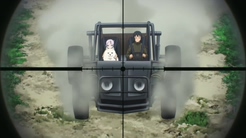
Like what I predicted last week, halfway point and we have multiple deaths this week and the betting is officially kicking into gear. Unlike what I predicted last week, it’s not two but three players are leaving the game. One of them completely takes me out by surprise, not in a good way. For the main reason is that the three death warriors are respectively: Monkey – Goat and Horse; and that falls neatly to the reverse Zodiac order AGAIN. As for now, I pretty much think the death order is intentional, but I can’t see the reasons behind that. Why follow the same pattern? Why make it predictable? Why those who have a brief background end up taking the short straws? Honestly, I am disappointed, and a little pissed since Juuni Taisen killed off my favorite character, Monkey. Granted, Monkey might not be gone yet (again with rule number 1: nothing is certain unless you see the dead body), but I’m still a bit curious to see Monkey in her zombie form and what her role remains in later events, because I still see her pacifist attitude can still be relevant as the show reaches the climax. One thing I come to certain now: Rat is likely to win after all, both because he’s the least favorite to win (everyone loves an underdog), and because his role is getting more and more significant now. A modern Death Reaper, perhaps? Comes to signal the death of fellow warrior and then vanishes into thin air?

It’s Horse episode this week so naturally we learn a bit about him. All the flashbacks pointed to him training his body to become a human armor, with the current situation serves to explore his psychology. That bit is still one of the factor that I’m digging in Juuni Taisen: various warriors have different personalities, fight styles, and their game philosophy towards the Zodiac War. For Horse, it’s all about defence. He’s great of defending himself; his main ability, likewise, is “stirrup”, the ability to allow him to increase the toughness of his body beyond that of normal human limits. After losing confidence over the one-sided fight with Bull earlier, he holes himself up into well-guarded bank vault, and that ultimately is how he loses his life. Rat criticizes Horse method of “doing nothing but surviving” is no better than death itself, since the world that everything stands still is basically a dead world. He might not be the great warrior or has high chance to win the race, but Horse’s role and his philosophy still adds up considerably in Juuni Taisen.

In another battle, Tiger proves herself to be a badass with her drunken fist style… boy, I love how messy and ridiculous she often behaves, but when it comes to action she does a quick and clean job. Bull basically just walks around, looking goofy. And like how Rat describes the Zombie headless Snake, he comes as more alive and threatening than most the players out there, especially his twin-brother counterpart, Dragon, who still nowhere to be seen at this moment and still managed to be in the top 6. Geez, I don’t like that kind of one character per episode focus. We will have a two-part episode next week, which is rather appropriate since the next episode will focus on the Snake – Dragon dynamic, and I’m 80% sure now that after it ends, Dragon will be the next to die. As of now, I still enjoy the Juuni Taisen’s solid set of characters, but in the grander scheme my interest has waned quite a bit. Don’t even care who will win the race for one thing (but let’s hope it won’t be Zombie Snake, or better yet, Zombie Monkey).

As of now,

Deaths: Snake, Boar, Dog, Chicken, Monkey, Goat, Horse

Favorites to win: Rat, Bull, Rabbit