Chio-chan no Tsuugakuro – 10 [Shinozuka-san, Sugar Content, and the Press Conference/ Thousand Spring/ Andou and George]

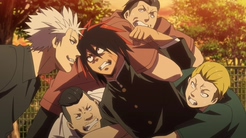
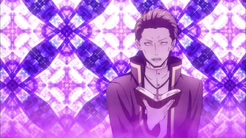
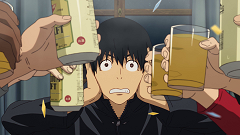
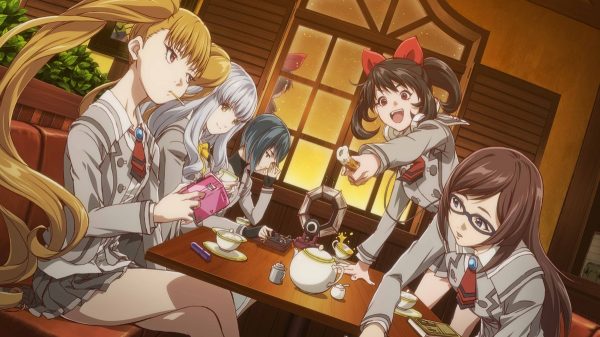
We seem to have a routine of one below-average Chio-chan’s episode, follow up by one above-average as of late. This week is amongst Chio-chan’s better ones as it fleshes out two side characters with great effect. As you might remember, Momo wasn’t that memorable when she first appeared. Her uptight attitude is a nice foil for our Chio and Manana, but taken as an individual, her character is damn plain. Adding her having a weak spot for sweet, however, is awesome. Seeing her just go loose and dandy while eating sweets make this segment sooo worth it. Appropriately Chio and Manana step back out of spotlight for Momo’s wild and adorable reactions (“I’m in Hokkaidoooo”). It also helps that her obsession towards Gotou-sensei allows her to do something out of character: going to the sweet shop to get the taste of why students eating candy. This segment also benefits from its escalation to hyper-Momo doing an acceptance speech for mixing candy ingredient into soda. It’s a good gag through and through

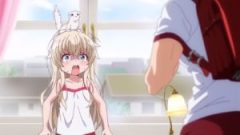
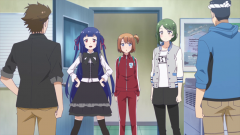
The second segment also benefits from giving the side cast some more texture than first appeared. I should’ve seen this coming that Chiharu is Andou’s imouto (I mean… with hair colors and stuffs) and extra point for her contrasting appearance (she wears rich-girl school uniform) with her personality (disappointed that her brother comes clean… or in her own words: “uncool”). That set up quickly escalates to Chio admits that it was her who changed Andou (in a hilarious but believable way). Kudos for Andou and Chio’s combined silliness that things can’t go like planned. And Mamana late arrival gives the whole situation an interesting mix. The only issue I take with this segment is… why boob groping, Chio-chan? Sigh

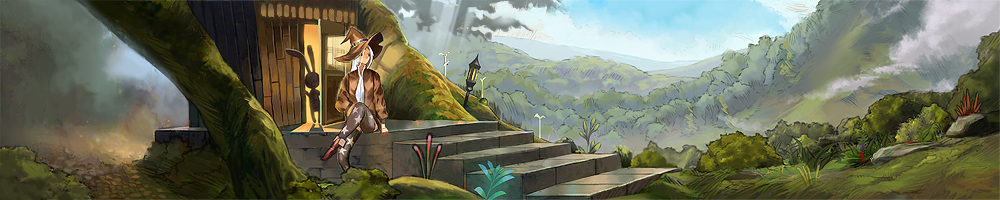
Speaking of how Chio-chan trying new things, the epilogue comes out as a nice surprise for its change of pace. Completely void of any dialogue, with watercolor simple designs, it still manages to tell a quirky, lovely tale of Andou and the cat. Chio-chan accomplishes what it does best this week: fleshing out side-characters and building up this simple premise to a right degree. Here’s hoping next week Chio-chan will break its own routine.

Banana Fish – 10 [Babylon Revisited]

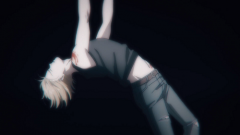
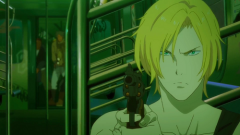
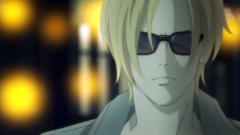
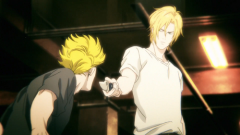
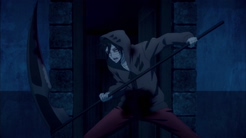
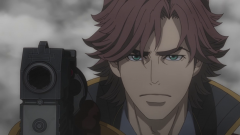
Banana Fish, so consistently good that I am running out of interesting ways to start these posts. This week we have a jailbreak, miscommunication and a blond haired Rambo. Lets jump in!

General stuff first, Banana Fish was all go this week. Really, its sorta been that way for awhile, but this episode was explosions and bullets and death, oh my. There were some small issues with the animation I noticed this week. It was stilted in places, and really any scene without Ash didn’t seem to get as much attention. It’s nothing back breaking, as the entire episode still works and didn’t hurt enjoyment much, but it did catch my eye. Luckily Banana Fish’s thin line design and sort of muted colors, in contrast of normal anime’s bright and vibrant ones, makes it very hard to notice most of the time. The music also continues to be on point, really adding to every scene. Every instrumental Banana Fish puts out knocks its scene up another notch in quality. Non-spoilers out of the way, time to go into specifics.

Continue reading “Banana Fish – 10 [Babylon Revisited]”

Steins;Gate 0 – 20 [ Rinascimento of the Unwavering Promise -Promised Rinascimento-]

Sometimes, even problem children will surprise you. This week, Steins;Gate 0 did just that. I was not expecting a leap to the future, and now that I have seen it, I want more. Sadly I don’t think I will get it. Not much anyways. Lets jump in!

So, outright, this episode wasn’t bad. I like that we got to see the dystopian future in more than just flash backs (flash forwards?). But after the initial enjoyment, all it really did was remind me of what a waste of potential this series is. Take this future episode as the perfect example. Why should we care about Ruka or Suzuha or Ferris here? Suzuha just “died” 2 episodes ago, and now Ruka is “dying”, but we are about to go back to 2011. Steins;Gate 0 hasn’t spent enough time with these characters to make me care about them. We didn’t see them suffer through this war, we didn’t see any of these experiences. Its like they are copy-pasted from the 2011 timeline into now, with military redesigns. Animosh, from our chatbox, said it very well. Everyone but Okabe feels like a character from a mediocre fan-fiction.

Continue reading “Steins;Gate 0 – 20 [ Rinascimento of the Unwavering Promise -Promised Rinascimento-]”

Hanebado! – 10 [The Backhand Grip Is Like This]

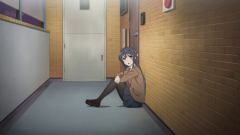
After some hyper melodramatic development for several weeks, this episode unfortunately stumbles on another issue: too plain, with confusing messages all around. The main plot taking a backseat as the final match between Ayano and Nagisa is nowhere to be seen, thus this episode mainly plays around with the boy’s prelim – whom we never spend any time with. Most surprisingly plain is Ayano. After last week in which she went through some sort of a trance figuratively, this week she meets the Bad Mama and guess what’s she doing? She ignores her Mom and acts pretty normal. Which makes sense but it doesn’t justify everything that goes before it. If there’s a period where she can go nuts, it’s this time. If you tell me she acts over-confident and cruel after she sees her mother, I would have believed much better.

This episode is one of the few times where get into Nagisa’s headspace again and Hanebado reminds me how much better it handles Nagisa’s mindset compare to Ayano’s. Nagisa has all the good reasons to not playing her best in this final. It might sound weird come from me but since they’re qualified for the National tournament, it’s one of the player’s role to not overtax themselves, especially regarding her injuries. Yet she decides to push on for her own confidence. Regarding how their last match affects Nagasi severely, this match is the one where she wants to try her best in order to move on.

Nagisa’s development is the only one part I can recommend, sadly. The rest of this episode we focus on two boys at school and we have some confusing messages from Hanebado that I’m not quite sure what they want to bring across. In one scene, Coach Tachibana asks Nagisa to consider her knee in fear of permanent injury. We then learn that he had the same experience in which he stops – and loses his Olympic privilege. What?? It’s contradicting. Yuu’s crush for her upperclassman goes the same way too. Hanebado shows us how Yuu cares for him in many instances, cries for his lose and all that before it turns its head into she confessesing but not really “confess”, saying it’s her love for badminton rather she likes him. What? Come again? I don’t get it at all since the show isn’t quite clear on how it wants to approach the characters. Bad Mama has little involvement for now, but I expect she’ll turn Ayano’s head around before the match. I know it sounds strange but if I have to pick between Hanebado’s “BIG melodrama” and plain Hanebado then I prefer the former because at least then I still have something concrete to talk about them.

Shoujo☆Kageki Revue Starlight – 08 [Towards the Light]

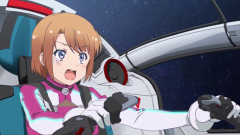
Last week, with the earth-shattering revelation of Banana’s secret, I expected Revue Starlight addresses 2 developments. First, Nana and Hikari’s chemistry in the present now that we see the true reason why Nana is so fixated to Hikari and Second, why does Hikari crashes this timeline which she doesn’t in previous loops. As it turns out, we learn most about the Second part this week (and next to nothing on the First part) given this episode plays out through Hikari’s perspective. One important detail in this world-building this episode manages to spill out is that the Revue Audition doesn’t strictly happen at Karen’s school. The extra-dimensional duels occur in London where Hikara studies as well. It becomes quite clear to me that these auditions are a manifestation of all these Takarazuka Revue trainee girls’ drive and competitiveness to be a Top Star and that talking Giraffe is like a guard of that world (but why Hikari? Torture him more! I want to hear him speaking English more).

While this episode isn’t as crucial in term of changing the plot into another direction like last week’s, it’s still a perfectly fine episode that moves the narrative forward. We see again how important Karen and Hikari’s childhood promise that guide them to basically give their all. I was struck at first how Hikari was too energetic earlier compared to her stoic current self, so imagine my satisfaction to learn the reason behind her lack of enthusiasm. She literally has her ‘drive’, or ‘radiance’ (depend on which subs you watched) taken away from her. It’s a high price to pay for the auditions, given that Hikari wasn’t aware to all that. Through her big slump of why she’s doing all that in a first place, the only thing she can hold onto is that promise. So she makes a deal with the devil almighty giraffe, thus appear in Karen’s world and single-handed destroy Banana’s perfect world.

But then, when we learn about the ultimate cost the losers will have to pay, isn’t that what Nana been doing all along is to protect these smiles? Keeping the status quo so that no one can lose their power. What can be more noble than that? Hikari and Nana’s fight isn’t simply a clash between past vs present, it also a conflict of self-ambition vs team mentality. In addition, I particularly enjoy the contrasting in weapons’ choice this week: Hikari with her dagger and Nana with double swords. The duel has a nice dynamic, and the stunning compositions with strong dark red color and shadows motif certainly give a strong impression. Revue Starlight also set itself up for a melodramatic climax, with Karen and Hikari have to fight one another in the end. While we have strong development from one of our main lead, I still feel the way this episode cuts from Hikari’s backstory to their duel a bit abruptive. Hikari and Nana’s clash is certainly interesting in theory, but the lack of their on-screen time together means that we can’t get behind them as much as I like. I also want to see more of Karen – Claudine duel. With 4 episode left I guess it’s time for Claudine to be in the spotlight very soon.

Planet With – 09[Messenger of Awakening]

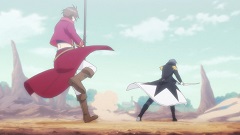
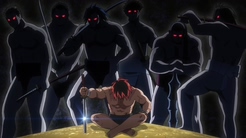
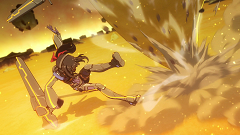
This week on Planet With, wimpy paladin decides to take on a sealing device, becomes an antagonist and…wins? I mean wow, I never saw this coming. Yousuke generally felt to me to be the gentle sort who was looking out for others but once Benika fell prey to her own sealing device causing her to lose all drive and motivation, Yousuke just went full villain. Not that I don’t understand his motivation here, he lost his brother and now the woman he loves is stuck in a eternal dream with that same brother so the only way he can see himself being happy is joining Benika in that dream. Of course the sealing faction won’t do that for free so Yousuke needs to seal the earth in Benika’s place, essentially fulfilling her last wish before falling to the sealing device. The parallel between him and Souya’s current mental state is interesting as both lost everything they care about and no longer care what happens to the world. So I love that Yousuke actually turned out to be the greatest threat to the earth despite being the more timid paladin solely because he didn’t approach the objective of sealing the earth with half hearted feelings. Benika didn’t truly want to seal the world and the sealing faction themselves seem torn on the idea with Generalissimo holding great respect for cat sensei’s wishes and Shiraishi not quite keen on the idea herself as she didn’t really want earth to go down without a fight. Yousuke on the other hand has strong conviction, kicks all the other paladins ass and accomplishes the goal.

If there is some spirit being channeled in this episode it’s hot blooded robot anime as what happens after this is true super robot action with all it’s cheesy glory. I am a little disappointed that Nozomi’s role remains firmly in the love interest alone category but damn if the second half of this episode was some truly hype action. Seeing what happens to a world that’s been sealed was interesting as it felt as though time had stopped and the direction from that to Souya pulling everyone out of the dream was excellent. Souya’s new found conviction was a little on the sudden side but I can see how he reached it and hopefully the people of paradise don’t end up some massive deus ex machina for the rest of the series but looks like this will be the one and only time they will lend a hand. It’s been very much an unsung hero of the series but the sound design is absolutely excellent. It can be easy to overlook such a thing but it can really make the difference when action is on screen. I have been taken out of the moment at times when I happened to recognized a stock effect being used.

I recall a show I watched were it showed a laser about to fire and I noticed that the power up noise was literally Samus’s arm cannon charge sound effect from Metroid Prime. Here through you can really feel those blows and the impacts. I recommend watching this series with headphones as it is certainly an experience. It’s a shame that the CGI cannot match that level of quality, I have gotten used to it for the most part but I find myself thinking of how much better things would looking if they animated the fights in 2D instead of 3D. My apologies to the CGI team of this show but these robots just don’t fit in this series they are far too out of place so it would have been better they someone made some filter to help them blend better or just scrapped CGI entirely. Well the Paladins are all down and that leaves just the sealing faction and the Dragon left to take down. So how hype will those fights be? Considering the scale of escalation it’s looking like the Generalissimo fight will be in space with them ending with fighting the dragon on the moon, which sounds pretty hype to me.

Chio-chan no Tsuugakuro – 09 [Chio-chan Changes Her Image/ Flat Cut]

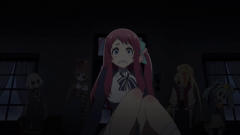
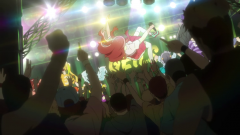
So… the sequence which I’m waiting the most from the PV made its to the screen this week, and it underlines both the strengths and the weaknesses I found in Chio-chan so far. The sequence in question is Chio pole dances by herself. On a dark side, since that arresting dance sequence was basically the first thing I watched in Chio-chan, I expected it more outrageously over the top. Imagine how awesome Chio-chan would have been if it embraces its wild nature more. I mean, I would love to see Chio actually has to do real pole dancing in some pub. As it stands, this version we have in Chio-chan is a slice-of-life show with Chio – a slightly more eccentric and acrobatic than normal girl. Both two fragments this week are mundane in its concept, which occasionally elevated by some amusing gags and rock-solid chemistry from Chio and Manana. Chio-chan might turn out NOT that special than I’d love to be, but as a slice-of-life comedy with mild situation-based gags it does its jobs nicely.

For the first segment, the main joke lies in how bland Chio looks without the glass (“it’s like your entire personality is on the glass” Nicely put, Manana), so Manana and Master Kushitori has a chance to out multiple crazy wigs onto Chio. Apart from multiple references that range from Jojo’s Bizarre Adventure to GTO to Gabriel Dropout, I find its most amusing when she resembling Marilyn Monroe (and nice callback to that hairstyle in the second half). As Chio innocently thinks her image has improved (it’s not. To the frustration of Manana and Master), she pole-dances at a freaking shrine flawlessly with that Showa-era wig. Despite as I said earlier I felt a bit underwhelming as I wanted her to do it for real in a club, this sequence is still the episode’s high point because A) everything about her appearance doesn’t match at all with the pole-dance. She does it at a shrine. She has traditional outdated hairstyles AND she wears a freaking school uniforms. Just the thought of her doing it like that brings a smile on my face and B) she manages to do it effortlessly (I tried it one time and it’s insanely difficult). It’s the more amazing when later on we learn that she picks up naturally after watching it on her games repeatedly. She a natural acrobatic girl for sure.

Although as silly as the premise sounds, I pretty much enjoy all Andou’s wayyy too on-the-nose plan to get Chio’s attention. The jokes boost up nicely when we get all those in the point of view of Manana, whose head isn’t as thick as our Chio, and whose taste is “normal” enough so that she can see something absurdly wrong (or put it better, niche appeal) in Aidou’s plan. Her dream sequence is absolutely the segment’s best gag. Imagine Chio in her convertible car with that outrageous wig and annoying accent is so much fun to ignore. In addition, the way Manana tries to sabotage that not neccesarily because of Chio’s wellbeing (Chio’s quite happy in the dream, the one who is miserable is Manana), but from her “jealousy”. It also helps that Aidou does all that with a straight face, and Chio’s fascinating reactions are on point. He seems to have a good grasp of what Chio likes (boys who smoke, for example), but one thing he does wrong is Chio’s love for BL. It closes up with some of the best closing pun of Chio-chan in awhile, that both Manana and Aidou’s underlying behave like some yuri/yaoi characters (well, our girls did kiss before, right? RIGHT?)

To sum it up, what is the moral of this story this week? Be extremely be careful when you make an homage. It’s a double-edged sword.

Banana Fish – 9 [Save Me The Waltz]

Ladies and gentleman, for the first time writing these posts, I legitimately do not know where to being. This week Banana Fish proved itself, unequivocally, the best drama of the season. I am willing to admit, I started crying a bit this week. So let’s just jump in.

So, right off the bat, I was not expecting what happened this week. This felt like a finale for another anime, which since we are nearing the end of the cour sorta makes sense. But the fact that Banana Fish was willing to kill off one of its central characters in the 9th episode? And in such a brutal way. I am impressed. Banana Fish does a great job of making sure none of the characters feel safe. Sure, Ash and Eiji may survive, but at this point there’s no guarantee they will get through in one piece. That 4 characters have died in 9 episodes only enhances that feeling of unease. Its this kind of buildup that makes every confrontation with the villains tense. Because, unlike say a Shounen like Fairy Tail or Naruto, Banana Fish has proven that actions have consequences in its story. Consequences like say, Shorter.

Continue reading “Banana Fish – 9 [Save Me The Waltz]”

Steins;Gate 0 – 19 [Altair of the Cyclic Coordinate -Time-leap Machine-]

Hello and welcome to another week of, I don’t really care anymore. Apologies for the lateness of this, but I have simply been so… un-enthused with Steins;Gate 0 recently. So without further ado, lets jump in and see why.

So to start off, Steins;Gate 0 has become boring. And here is why. With easy access to limited time travel removed, it is afraid to commit to anything that shakes the status quo. It took us 19 episodes to get to the lock-down point. The moment that Okabe is supposed to dedicate the rest of the season to fixing, the big “wow” moment. And now that we are finally here, what do we get? A “are they aren’t they dead” scenario where Steins;Gate 0 is afraid to actually commit and kill off any of its titular characters. Hell, the only characters Steins;Gate 0 IS willing to kill off onscreen are Reyes, who is criminally underused, and Kagari, a character whom I hate even exists. There are no stakes. Steins;Gate 0 has backpedaled or reversed every major event with nary a scratch on our leads. It’s boring.

Continue reading “Steins;Gate 0 – 19 [Altair of the Cyclic Coordinate -Time-leap Machine-]”

Mirai (2018) Movie Review – 81/100

Watching Mirai, there are two observations that spring right up to my mind: Mirai is Hosoda’s most grounded, personal film and it plays out completely different from what I expected based from the promotional materials. My feeling is confirmed when I later learned that Hosoda based the concept from watching his own children’s react, and that his daugher is indeed named Mirai. The film centres around the 3 to 4-year-old Kun and details how he cope with the appearance of his younger sister, Mirai. While the PVs play as if this is an escapist adventure in the vein of Peter Pan between Kun and Mirai the teenage version, Mirai is instead an episodic film where Kun meets various family members in different timelines and come to learn some “life” lessons. Its more realistic setting and its small-scale family drama are a stark different from his more fantastical (and messy) previous works, but it should relate well with kids and moreover with parents who have experienced these before. To put it better, Mirai is a perfect family-oriented feature that respect the child’s point of view with all the mature sentiments behind it.

Mirai’s episodic segments all share the same formula: Kun is dissatisfied with how the baby sister takes all the attention from his parents, he throws a tantrum, he’s miraculously thrown into another timeline where his relatives live and he grows a bit in the process before transport back home. If it sounds a bit like a gimmick, it doesn’t because all Kun’s issues are very believable for the kid his age. Children always feel left out when their “prince” status fall apart with the appearance of some annoying baby. Mirai really nails it when it exaggerates Kun’s outburst with comical distorted face that can only be done effectively in this medium. The film also understands the kid’s imaginative mindset. Kun’s at the age where everything seems possible, where dog can talk and act like a prince, where his Mama is just as messy as him when she was young, where Mirai appears as a high school girl.

It helps that the episodic segments feel like true adventures with many different settings. There’s a sense of wonder everywhere, and the production has a chance to stretch their muscles by breathing life and details to these different era. In one instance Kun is lost in a Hell-like train station, the art appropriately goes impressionist and nightmarish. In other instance (and the only time where it happens in the present), Miral the high-schooler, along with Kun and their dog in human form have to find a way to take down the dolls (Hinamatsuri) to save Mirai from “late marriage”. These moments like this not only help the members of this family bonding deeper, it also helps Kun to appreciate his family more, especially to his younger sister who he seen at nothing but a burden. If I have one minor nitpick, it is that I find the segment where he meets his great-grandpa a bit far-fetched since he doesn’t even meet the old man in real life. But in Mirai’s defense, it’s actually one of the most meaningful story in the film so  well, it’s deserved to be there after all. There’s also some moments where the film take on adult’s perspective. Especially the time where the father has to do real houseworks for the first time, thus he learns how he had been slacking on helping his wife all these years. These instances ring so true here.

But the most impressive thing Mirai pull off is how all these stories add up to paint the same family bond theme. It’s like different branches of the same tree – an apt metaphor for this film given the film frames these stories as threads connected by the grand tree that transcends multiple generations. It’s an ode to the family where every family member’s life sounds just as wonderful and epic like famous figures; where every action, every decision connect and interweave that result in the present-us just as we are now. The settings themselves have a lot of personality in Mirai, especially their house with multiple levels and see-through glass and big garden that easily triggers any kid’s imagination. You can also spot some of Hosoda’s directional trademarks like his lateral camera movement that detail members (usually the father) doing housework in a nice flow of time. There isn’t a lot of dynamic animation, but the character animation is top-notch, especially when the film deals with children expressions since they have much more movements than the adults. The most stand-out sequence for me is the one where there’s only visual storytelling about his great-grandfather and his running challenge. Just seeing how that scene play out brings tears down my eyes. It’s powerful precisely because it keeps the moment “small”.

After a string of movies that entirely focus on grand, fantastic story, I understand why some of you might be let down by this small-scope film. It’s a film with almost no real ambition but I beg to differ on that. Here’s where I like to compare Hosoda with Shinkai’s previous inputs. While Shinkai’s latest expands his scope and finds himself in tune with the general audience’s appeal, Hosoda limits his scope to the theme that he knows most; and cares the most. And that is perfectly fine. Every auteur has at least one personal film in which they disregard any artistic or financial merit and just make something that meant the most to them at the time. It’s the small cozy real-world brush that makes Mirai so enjoyable, relatable and feel almost like home.