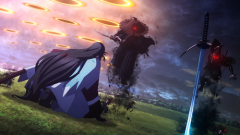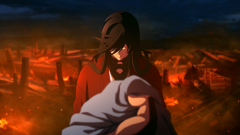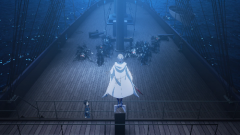
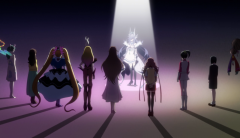
18if (Summer 2017) Review – 68/100

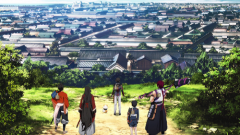
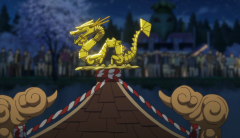
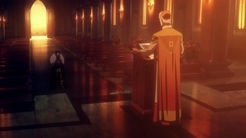
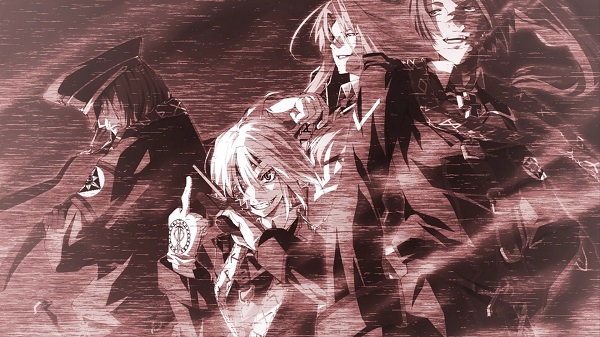
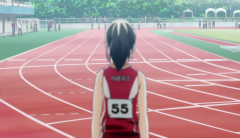
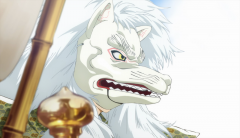
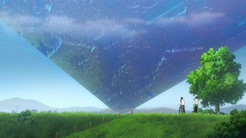
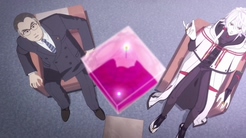
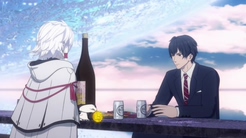
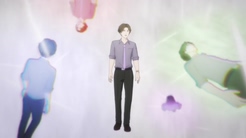
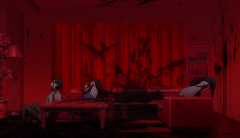
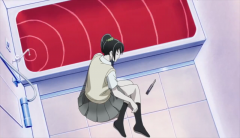
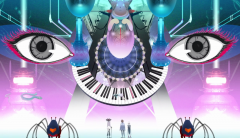
Allow me to skip over the last episode coverage for this full review of 18if, since I was too underwhelmed by the finale to have anything concrete except pointing out how messy the ending was. The first thing you need to know about 18if is that it’s a multimedia project (along with a mobile game and VR game), which can probably signal you about the overall quality of the anime version. The concept that each episode our main character Haruto will need to save a Witch of the week – make her confronting with her dark and learn more about herself – in a dream world could lead to interesting places. Here’s the main catch for 18if: each episode is handled by different directors with different animation styles AKA the directors’ own take to the world of 18if. This format results in 18if as an inconsistent show by design. The quality of each episode is like a box of chocolate, you never know what you gonna get. That unpredictability in plot, the surreal nature of dream world and the diversity in animation styles are what I was personally looking for coming to 18if. For the most part, 18if stays true to itself, albeit below-average. The ending, however, tries hard to connect the dots and runs out of its steam fast with confusing tone, weak writing and nonsensical message.

For one thing that 18if does quite consistency despite its format, it’s that the show explores the real-world issues of multiple teenage girls in a dreamy surreal fashion. These girls have a nervous breakdown and struggle to find happiness in the real world, thus succumb to the dream world in the form of Sleeping Beauty Disease where they can do whatever they like, most of the time destructively. Those issues range from the pressure of being idol, bullying or even witnessing their family members murdered. They don’t often succeed on bringing the girls’ negative emotions to light, but their personal issues work as an emotional core for each passing episode. In addition, Haruto’s job is to confront those witches and only casually does he have some chemistry with the girls. In some episodes he only serves as a witness to watch the story unfolds.

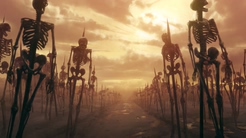
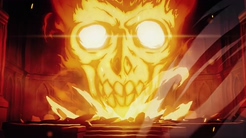
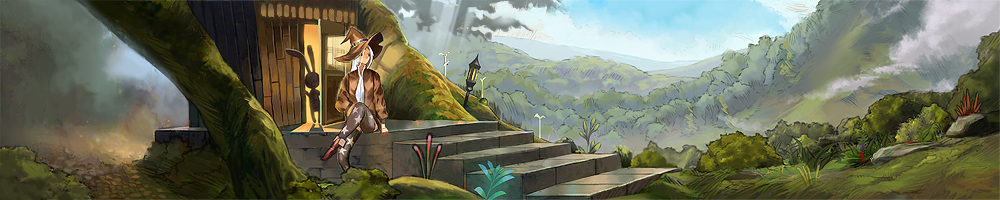
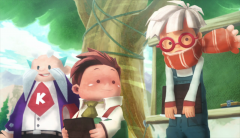
Its episodic nature, where different directors handle different episode, is what 18if’s most unique factor. You can see the styles change in the character designs of Haruto. Most notably, in episode 7 the show hits the mark in full force with its European-influence aesthetic and tells a beautiful children story about the broken friendship that would be right at home with the classic works like The Little Prince. The genres and the tones change randomly as well as in one of the episode, 18if went full horror, other time it became an arthouse animation-showcase and at times it’s just flat out goofy. The quality of each episode also ranges from plain bad, “WTF did I just watch” to really great. As of now, I’d only recommend a handful of episodes instead of suggesting a whole package. Although possess a wide range of animation style, judging the show as a whole, the episode doesn’t add up much to the grand picture. There are no set rules (like in episode 4 the girl’s still fully awake despite the rules imply that all of them having Sleeping Beauty syndrome), there’s no deeper implication to takeaway after each episode (like episode 2 shows us that the dream world can affect the real world, which ends up being wasted). Each episode hardly connects to each other except for the main cast and the trouble climax. Since nothing adds up at all, most of them fall flat on their faces.

The main leads – consist of Haruto, his mysterious sister Lily and his mentor the anthropomorphic cat – don’t develop at all despite appearing in all episodes. Haruto, in particular, changes his personality from each passing episode in accordance with the Witch and frankly that makes it hard to get invested in him. There are some attempts, however, to give Haruto a backstory but the end result is so absurd it can’t be taken seriously (Adam and Eve nonsense). I’m personally all in for having a proper closure and it’s always welcomed to see those girls back for action but18if further loses its sparks when it tries to close up the arc with a very patch-up jobs of writing: unnecessary new characters (the new doctor, the Cult Leader), Eve the main antagonist that has no personality whatsoever and the tone is messy and disjoined. It hurts as well that the closing arc is one of the weakest in term of productions. The budget for the show wasn’t that much and it shows; you can argue the lack of consistent character designs and even the frame rates are all artistic choice, but more often than not the show looks poorly done and uninspiring. The dream world doesn’t receive a good treatment either, since it functions like a setting for Haruto saving the girls, with the only consistent rule is “Anything can happen in the dream world” – which is why it’s messy and all over the place.

In the end, 18if is an intriguing mess. It attempts to do something different by trying out variety of genres and styles. This concept sounds good on paper but only a handful of episodes succeed at bringing something new on the table (I’d recommend you sample episode 7, 10, 2, 3 in that order), the rest is below the line. After 13 episodes, 18if still struggles to find a right tone for itself, result in tonal wreck that never quite sure if it wants to take itself seriously. Ultimately, when you consider if 18if can leave any lasting impact, the answer is a resounding “No” – it lacks the punchline, lacks the sparks to become something special.

“Fun quiz: Can you spot out the missing Witch?”
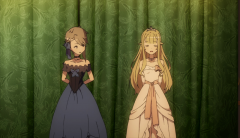
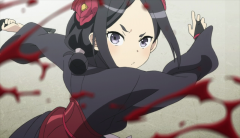
Princess Principal (Summer 2017) Review – 82/100

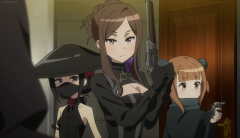
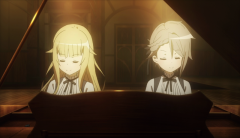
Princess Principal has emerged as a true sleeper hit for this admittedly sloppy Summer Season. A joint project from indie studios that bring us my favorite anime of last year Flip Flappers (3Hz) and “better than it has any right to be” Girls und Panzer (Actas), Princess Principal records the missions of five cute spy girls in an alternate Britain (known as Albion) in the early 20th century. As ill-advised as it might sound, the cute girl designs don’t really bother me that much. If you are looking for a true espionage story; however, you bound to be disappointed because they’re more like James Bond flashy action, somewhat superpower ability and whenever they have a chance, they’ll announce “We’re spy” with pride. Yeah, it’s that kind of mindless over-the-top action series that we need to believe the unbelievable but as an action-spy-steampunk series, Princess Principal delivers what it promised.
The first strength of this show lies in its intriguing world settings. I might have personal issues with Ichirou Okuochi as a whole, but even I don’t deny that he can create an interesting setting that triggers my curiosity. Princess Principal has such fascinating world. In this vision, Albion monopolizes a powerful substance known as Cavorite that made the Kingdom the dominant country in the world. Such development creates a rift between the Royalty and the lower people and as a result, the Wall of London was built in the middle of London where the country is split into The Commonwealth and the Kingdom. The tension between the two nations, however, never really addressed at all and only serves as a backdrop to generate dramatic development for our two main leads, Ange and Princess. In addition, the steampunk setting makes for an aesthetic pleasure and I would argue that it’s Princess Principal’s strongest characteristics.

However, Princess Principal isn’t just merely an action show. The five girls have some interesting developments and each of them is given a solid backstory. Moreover, they have solid dynamic altogether that make the interactions between them a joy to watch. Noticeably, in the latter half when the cases become less prevalent, and the show slowed down the fast tempo mission-heavy established in the first half for more character-focus episodes. The change might turn off some of the viewers who look for quick-paced, entertaining action but it’s a welcoming sign that the show gave a proper time to flesh out the five girls. The relationship between Ange and Princess serves as the show’s central emotional arc and while the swapped-identity backstory had its merits, the show pad it out way too thin during the climax that it couldn’t transfer the emotions to its fullest. Other girls, especially Chise and Dorothy (sorry Beatrice! You have a voice… but nothing else) have so much personality to them and they all add necessarily perspectives (Chise- from the outside perspective; Dorothy- friends come first) to the Principal team. Not that they’re a deepest bunch around but I’m quite happy to spend time with them anytime.

Another factor that add to Princess Principal’s identity is its use of non-chronological order. This technique works for the show’s benefits most of the time because these episodes feel like a piece in a jigsaw puzzle (which admittedly doesn’t add up much at the end), and up in till the climax we can watch these episodes in any order and it still makes sense. This format will work well on re-watch as well since there are some already-established relationships or a piece of information that will make more sense now we know the context. But presenting it non-linearly doesn’t mean the episodes were arrange randomly. The flow from one episode to another is present and moreover, this format helps us gaining context on certain themes, on certain character developments that otherwise would be insignificant in a linear way. For example we gain an extra layer on Chise struggling with the social-class issues through the backstory of Ange and Princess established a week before, something that won’t have much impact if they tell the story in a linear fashion.

Thus, Princess Principal is at its best in episode 5 (the introduction of Chise) where it focused on the exciting mission, while never forget to give our girls an extra depth. In that episode, the fluid animation, flawless fight choreography and the lively character movements help bring the mannerism of our characters to light.  On the other spectrum, the last two episodes bring the show down a notch with its safe open-ended closure that resolve almost nothing. In addition, they introduced new characters (Zelda, the General) and new conflict (the coup) too late in the game without any proper foreshadowing beforehand. Remember Princess wanted to fight that battle till the end? Flashforward and we see her lying on the beach in Casablanca, while holding hand with another girl. It’s a let-down, of course, especially when they hint for a second season which might never come, but to be frank the first 10 episodes were so solid that in the end I consider this show a critical success.

Technically, the production is on the bright side. Off-model here and there, cheap-cuts sometimes and they do have some questionable over-cute character designs, but the action always hold its ground, characters move in their own ways that fitting to their personality and the killer soundtrack, coupling with beautiful steampunk aesthetic and you have a winner all around. Princess might not dig deep to the political conflict between two countries, or develop its Cavorite theme and the enemy side is frankly, weak and underdeveloped; but Princess Principal offers some entertaining action set-pieces, at the same time care enough to develop properly the main cast and their relationships.  Second season- coming might not look promising and the ending lacks bite, but I don’t argue that I had a great time following it the past season. Can’t never get enough of Chise’s precious facial expressions, it appears.

Katsugeki Touken Ranbu Review – 45/100

Every Anime season we the viewers are shown a number of adaptations, often made after Light or Visual Novels. It’s an already written story with an established base, a smart business decision. In recent years studios have also begun pulling from the Video Game market for their shows. Pieces like the Idolmaster series, Kantai Collection and Akibas Trip. I bring this up not because this is a new event, but because the anime I want to talk about today, Katsugeki/Touken Ranbu, is one such anime.

Ranbu is based off of the online video game Touken Ranbu, along the same lines as Kantai Collection. It focuses on a group of warriors who are the human personification of famous weapons, sent back in time. Their task? To protect history from the forces of the Time Retrograde Army, who seek to change history for an unknown reason. Ranbu focuses in on the 2nd Unit, newly minted and formed from a group who have never worked together before. Together they will face the hordes of the Retrograde Army and defend the past from the future!

Let’s jump in.

Continue reading “Katsugeki Touken Ranbu Review – 45/100”

VN Recommendation – Doki Doki Literature Club

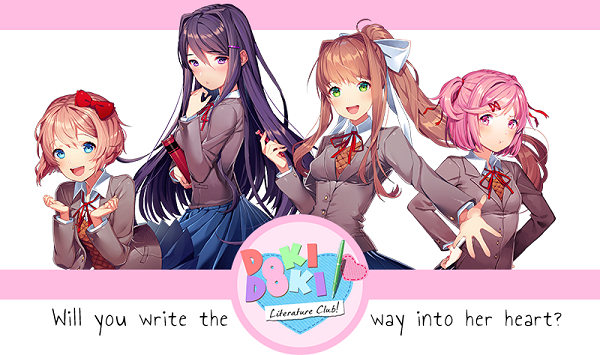
I don’t plan to do this often but after playing this I wanted to make a post recommending it. I could have done a review like I usually do but in this case the story is so short and the VN can be downloaded for free so if I was to write a full review of it i would most likely spoil the experience. The length of the game is about 3 to 4 hours and while it likely doesn’t look like something all that interesting I can guarantee that it is well worth reading. The first hour is a bit tough to get through as it is rather dull and starts up slowly. But once things get going this story picks up immensely so power though till you get to that point. The visual novel was made in 2 years by a former Smash Bro’s Modder and despite it’s style it is an English Only Visual novel, meaning that it is not made in Japan. You can download the game from this site but it will also be available from Steam here. I highly recommend checking it out as it’s certainly a fascinating experience.

Kakegurui Review – 61/100

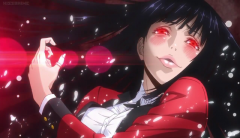
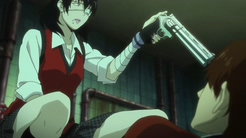
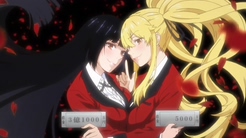
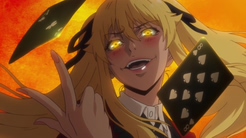
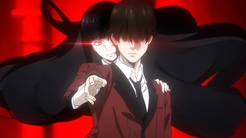
This show is one that makes conventional reviewing difficult as your enjoyment of your series will likely determine on highly subjective factors. For if I was to put this under scrutiny on matters of f-plot, setting and characters then it will end up lacking in all categories. The plot is just watching Yumeko face members of the student council in a series of gambling games. The setting is absolutely ridiculous with a unnecessary school setting that makes no sense whatever considering what happens in the series. The cast is made up of people whose main trait is being crazy in some form or another and go over the top with facial expressions. Yes to judge this show on these qualities would have it fall low indeed but that is not what makes a show enjoyable. I believe that style over substance is what I am getting at here as Kakegurui works mainly due to it’s presentation.

While gambling is the focus of this anime, the games themselves don’t really amount to much as we never really get a chance to look inside Yumeko’s head and see her work out plans or countermeasures. If you have just finished Kaiji and walk into Kakegurui expecting something similar then you will be undoubtably disappointed. For the common factor here is to see how smug the opponent is in how they rigged the game and having Yumeko eventually unveil that she knows about it and manages to win. Often putting her previous smug opponent down a peg.

Thus the satisfaction is in seeing the over exaggerated fashion at which this all goes down. The music, animation and art are often as over the top as possible with the soundtrack sporting trumpets and jazz like music while the characters faces distort into vile contortions be it in victory or defeat. Every character is crazy and none are crazier than our lead who often elapses into sexual excitement over the idea of risk. This aspect can get admittedly too much as it’s used to push fanservice as characters essentially orgasm over gambling and there are quite a few times where in female characters seem to be visually seducing each other in what would be otherwise a normal conversation. Yuri undertones are apparent here quite blatantly despite none of the character being made clear to be homosexual nor interesting in anything besides gambling and their own ambitions.

As such this is a series that I can’t really provide value through words, instead I say if you show interest then check out the first episode as that acts as an example of what you will receive for the entire series. However I would warn you to not expect something more than that as Kakegurui is only good at one thing and it will not move far from that one thing. This is a series about a crazy gambling girl showing smug assholes their place. That’s all you are going to get. But if you are fine with that then this is the show for you. Personally while i enjoyed it at first, I began to grow tired of it in the final episodes of the shows run so my rating for it’s that it’s a decent distraction but not one I will return to.

Sakura Quest (Summer 2017) Review – 79/100

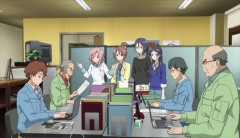
Conceived as a third installment in a loose P.A Works trilogy about young adult girls in working environment, Sakura Quest both knows its target audience well, and has some big shoes to fill. After all, many have considered Shirobako an install classic for good reasons. As it turns out, Sakura Quest is more on the level of Iroha than Shirobako, and it still has some of the same issues from its predecessors, namely it’s still too optimistic, hence comes off as sometimes unrealistic outlook to its subject matters; and it tends to rely on sitcom slice of life format (mainly in the first half) that feels unfocused and inconsistent at times. Despite these issues, the truth remains that Sakura Quest had never been bad. The show has some snappy, realistic dialogues, easy humors and it never treats their characters lightly. The show is at its best when it creates problems that force the main cast to reflect on their own issues, then learn and grow from their own issues.

Sakura Quest’s structure is split into two distinct halves. The first half focuses on several mini-arcs, where the Tourism Boards undergo many events that attract more tourists visiting Manoyama, at the same time give each of the main girl a character arc to flesh out who they are. Many events, from assisting filming production, matchmaking tours, to the TV programs about our girls and hosting a popular rock band to town, are exciting and at first glance, it gives an illusion that the Tourist Board has achieved its success. In part, yes, as the number of visitors consistently goes up, but when all is said and done, the town remains a ghost town with no lasting impact whatsoever (I love this image: the next morning, all the tourists are gone, only trash and coupons flying around). The decision to concentrate on main leads’ own problems and their dynamic together in the first cour, now in retrospect, actually serves its purpose since we come to care and root for them well before the second cour pushes forward its main storyline.

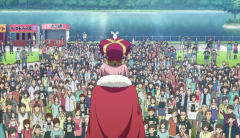
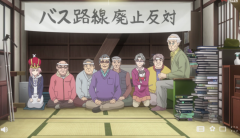
If you consider the first cour as “inward approach” (forgive me for the lack of more academic term), which is attracting tourists to visit Manoyama town, the latter half can be seen as “outward approach”, as the Tourism Board reaches to the local needs, goes to rural mountain where a small elderly community lives, reviving an abandoned school for public use, and strengthen Shopping District’s business. For me, it’s a much more realistic approach and the journeys along the way are all worth spending time for. You can compare two festivals – the Manoyama Founding festival and the revival Mizuchi festival for their differences in approach. The Mizuchi festival is made for the locals, by the local and achieving that level of enthusiasm from the villagers is something worth rewarding. While there are still some unnecessary plot points (here looking at you the merger of Manoyama town), Sakura Quest did indeed end on a satisfying note. This might be the end of the Queen’s run and all other girls, but it’s clear that it’s just a beginning for the Manoyama’s local to grow stronger.

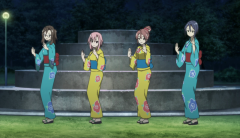
Our five girls: Yoshino, Sanae, Maki, Ririko and Shiori play a big part of adding Sakura Quest’s identity. All these girls have their own charms, play off well with each other, and most of own develop greatly at the end of the show. Sakura Quest’s biggest strength lies in its ability to address the insecurity of young adults regarding their jobs, their place to belong, and their choices of life. Many issues it touches (most notably Maki’s unsuccessful acting job) feel achingly true and honest. The supporting cast, from Kadota, Chitose, to that kid Erika, add their own marks to the show’s big picture and it’s a joy to watch such a huge cast coming together for a big project. I bet Sandal-san will enjoy a great fan following as he steals the scene every time he appears onscreen. Thanks Alexandre Cena Davis Celibidache for compiling such a fantastic artbook about Sakura Quest.

P.A Works does a pretty decent job production-wise for Sakura Quest, although in some episodes (especially the final episode) the character models are a bit off. The soundtrack and the voice acting are all pretty spot on. Only a year has passed in this Manoyama town but it has been quite a journey. Every girl has their own dream to follow now, and life continues to go on and I know there will be a time that the five of them will meet again under that sakura tree they planted together. As a conclusion, allow me to quote the final preview speech from Sandal-san because it sums what I feel so well: “It was a long, long trip, and we’re coming finally to the end of the journey. Thank you, Manoyama and Chupacabra. And thank you, 5 EURO”

Castlevania Season 1 Review – 70/100

Upon hearing that Castlevania would be getting an animated TV series my first reaction was that of unpleasant surprise. Part of the reason was because of the video games infamous history with adapting their stories to other mediums but my main reason was that being familiar with the Castlevania games, I knew the story was by far the weakest aspect. I have played a number of Castlevania titles though my main experience is with the so called “Igavania” titles which helped birth the Metroidvania genre. Let me say that story was not the reason I came to love the franchise, as a matter of fact the story rather went beyond “Dracula has revived, go kill him again.” However against all odds this series has managed to pull a rather enjoyable story out of the bare bones that was present in the game it was based on, Castlevania 3. I believe the main reason behind this story turning out to be a good video game adaption has to do with the writer being a famous comic writer by the name of Warren Ellis. Not being much of a comic fan I have only read a couple of his works like Planetary, Transmetropolitan and Crecy but based on those I can tell he has skill.

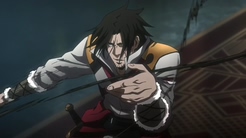
The story of this series isn’t anything to gush over but does serve well in using the little story in the games and fleshing it out to a better degree. It reminds me a lot of old anime ova’s from the 80s with its high level of violence and gore while sticking to a simplistic but enjoyable story. Make no mistake this animation isn’t for children with swearing and corpses abound. I admit that with the large amount of anime I watch it is rather refreshing to experience something that doesn’t have the usual Japanese tropes. Our main character Trevor Belmont is the one to get the most screentime in this short hour and a half season and he certainly makes for a fun main character. Starting your introduction with a drunken brawl is certainly a plus in my book and he is a good mix of playful and skilled without delving into overpowered territory. Other characters didn’t quite get as much screen time to really get a grasp on their characters but they were believable enough to get invested in.

The main cast only really assembled in the final minutes of the last episode. The villains on the other hand were on the weak side with the demons being sidelined by the church who really get treated as ignorant and greedy as all hell. Not saying it’s an inaccurate depiction but they do come off as rather one dimensional when any priest is automatically a murdering scummy psychopath. I hope that with this there role in the story is more or less finished with the end of the season as the first episode does nicely make Dracula’s motives much more compelling. He sadly didn’t get much of a role in this season but clearly the story wanted to focus on a minor villain first before taking on the main one. Our main villain for this season happens to be a bishop and I can pretty much sum him up as the same character as Frollo from Disney’s the Hunchback of Notre Dame. Religious, insane and so mistakenly sickeningly self righteous that he makes you want bash his head in with a sledgehammer.

This “Season” is only four episodes long and feels more like a hour and a half pilot episode. If I had to guess I would say that these four episodes were to gauge interest in the series due to the negative view of video game adaptions and considering just how quickly a second season of eight episodes was greenlit it looks like the response was quite positive indeed. In the continuation of the series I hope they keep up this level of quality but I also hope that they have much more monster variety as the enemies were primarily variants of demon creatures. Part of what makes Castlevania great is the huge cast of enemies from monster movie and myth. You didn’t just fight demons in Castlevania but ghosts, goblins, fishmen, werewolves and a whole host of monsters including Death himself. It would be a massive shame for the series to not capitalise on that and instead keep the monsters as dull demon creatures.

Animation for the most part is excellent with some occasional stumbles but excelling when it needs to. Music overall was fine but I do wish for a rendition of the iconic Bloody Tears or Vampire Killer songs. For fans of the games there is details sure to make you smile such as platforming on clock gears which I am sure any Castlevania fan is familiar with. However this doesn’t require knowledge of the games to be enjoyed either as the story very much stands on it’s own. Overall I would consider this to be one of the strongest Video Game adaptions to date though that may not be high praise considering it’s competition. If you happen to be burned out on anime or just looking for a nice change of pace then I do recommend checking this show out as it’s short and sweet.

Dies Irae ~Amantes Amentes~ Video Game Review – 80/100

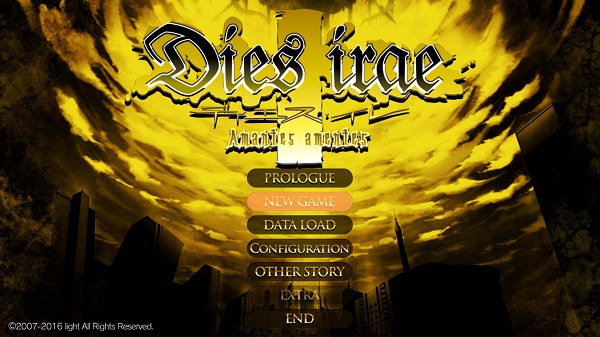
In the Visual novel fandom there are certain titles referred to Kamige.(God(ly) games) I previously thought the term referred to the best the medium has to offer but in recent times come to realise that a game can be referred to as a Kamige while not necessarily being the best. So Kamige as I understand it are Visual novels which stand out from the rabble and sadly many of these cannot be experienced by those of us who don’t speak Japanese. Fortunately due to the efforts of localization companies we now have several Kamige on the way. Baldr Sky, Subahibi and more are coming. Thus the first to grace our shores is Dies Irae and believe me that it wasn’t easy. As a backer of the kickstarter I watched this thing go through hell to reach our shores, from horrible mismanagement of the kickstarter to the embarrassing moment where Dies Irae had yet to reach it’s goal when a Nekopara anime kickstarter running at the same time raised one million in funds. It was dark days, truly dark days, but now we have it. A title once called untranslatable and forever out of gasp is in my hands. Now having played it, what do I think of Dies irae?

Dies Irae has four main routes and five side stories and while this version has the option to lock you into a girl’s route before starting a new game, I highly recommend that you don’t make use of it. I used these buttons to lock me into each girl’s route and encountered a glitch where I couldn’t unlock the final side story due to having missed dialogue in choices. So I recommend you use the common route button and get to the girls routes using a walkthrough. On that note as a very important rule of this visual novel is that while you can chose any girls route from the start, you should complete the girl’s routes in the following order: Kasumi, Kei, Marie, Rea. The reason for this is that later routes expect you to know knowledge from previous routes and playing them out of order can leave you confused as to just what is even going on. More importantly is that Rea’s route is clearly the finale of the entire story so playing it first would lose it’s impact. The strict route structure is a bit of pain, in particular as the quality of the story goes from worst to best. However it is interesting to see events of earlier routes subconsciously affect events of later routes. Things which previously didn’t make much sense or felt out of nowhere take on new meaning when you take into account the matter of eternal recurrence. But alas, what is the story of Dies Irae? It’s difficult to go into detail without spoilers but lets say it starts with a matter regarding a serial killer which evolves into a full blown battle which pits our main protagonist Ren against a group of superpowered nazi’s from the remnants of World War II known as the Obsidian Round Table.
Continue reading “Dies Irae ~Amantes Amentes~ Video Game Review – 80/100”

Tsuki ga Kirei (Spring 2017) Review – 88/100

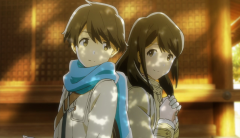
It’s hard for me not to go overboard on Tsuki ga Kirei: out of all the show I’ve followed this season, I resonated the most to this one; but even when I’m judging this show objectively, Tsuki ga Kirei is one of the most perfect one, in a way that it achieved exactly what it set out to do, and achieve it flawlessly most of the time. The story that they tell – detailing the first love relationship of our young Kotarou and Akane – is decidedly simple, mundane but honest that it feels more like a love story taken from young best mates. It has that “sincere” quality, something that the anime medium often cranks it up to the max with “moe” and exaggeration everywhere. Not here. Tsuki ga Kirei has great flair of visual storytelling (something that benefited from being an original show, they don’t tie up to your usual LN and manga visual cliché), using show-don’t-tell approach that often focus on small moments and little gestures than big emotional melodramatic scenes. The characters never play off their roles, they’re the most natural group of kids that feel exactly kids their age: naïve, inexperience and pure. This show ends up at top of its genre as I consider it the most effective romance anime out there. In short, I freaking love almost everything about this show.

What Tsuki ga Kirei will be remembered the most for lie in real depiction of first love relationship. The more you watch romance anime, the more you surprise at how simple, yet distinctive achingly honest this show aim for. Ordinary romance anime would spend its entire time on how boy gets girl, throw in some other love interests that make them realize how much they mean for each other, and if we’re lucky we might actually see they confess to each other in the end. Tsuki ga Kirei is an entirely different beast, we got the confession right at the end of episode 3, and from there we follow every stage of that relationship and see their love progressing. Moments like Kotarou had to search the internet on what people do when they’re dating, finding a way to spend time alone together, or thinking how to continue their love after graduation – all feels so real and progresses so naturally that I suspect anyone who have been in relationship will find a thing or two from this show that speak directly to their experience.

Moreover, they understand that in order to make this relationship work, we have to relate to Akane and Kotarou and they did a damn fine job at that. Both have their own lives and their own troubles to deal with, so we can see them as characters who have distinctive personality, with well-defined goals and struggles. In one of the episode, they both reach a new low in their personal dreams, as Akane underperformed her track competition and Kotarou got a call from a real publisher just to receive an advice that he had no talent in serious writing. Then in small moments when those characters act without much thinking, it’s a treat to see how their personality plays out: I love how every time Kotarou get excited he will punch the light’s chord in his room, or Akane whenever she gets nervous she will press that pushie hard. Their circle of friends also adds to the naturalism of the story and although they aren’t developed much, they clearly belong to this universe.

The visual storytelling is another great strength of the show. As both Kotarou and Akane are introverts and tend to keep their feelings inside without saying out loud, it’s showing their subtle gestures, their glances that we get to know a lot about them. As a result, this show is decidedly quiet, there’s not much monologue going on but that is the reason why this show feels just like in real life. The designs are simple, again emphasizing on subtle over excessive details. Great shot compositions everywhere. This is one of the rare show where I can argue that the visual components play as an important part of the show and they achieved it almost exactly what they’re aiming for.

Another factor that feel like a character itself that I feel the need to acknowledge, it’s LINE. Just like kids their age, Kotarou and Akane’s main communication is through LINE and we witness a huge chunk of amount that they exchanged through LINE, as they are, no shortcut. It’s just like how real kiads would do and to achieve this effortlessly is no small feat at all, so congrats to Tsuki ga Kirei for its respectful use of social chatting. The shorts in the end also a part of this show’s identity, as they depict the love relationships from Kotarou and Akane’s friends with more bawdy and comedic tones, which in turn made that world so inviting to watch.

Although the show succeeds most of the time in term of production values, I can still see some production troubles from the show and the delay in airing in later half further reflected that. Tsuki ga Kirei does suffer from that as in one of the episode the production values just fall apart. But I’m genuinely surprised that after that disaster episode they managed to keep up a consistent quality and the more I know about their trouble backstage, the more I’m in awe about their efforts. It’s obviously a product of many sleepless nights from the production team so I thank studio Feel for their outstanding performance.

And all of what I was written above was just how I access the show objectively and that kinda demerit one of Tsuki ga Kirei’s most appealing factor: it’s right down charming that touch the hearts of viewers with its bright and delightful portrayal of pure love – I don’t deny I fall under its spell, actively care for the couple and goddamnit I just want them to be happy together. Tsuki ga Kirei is breathtakingly intimate in narrative scope and I know I will remember the show and its characters very fondly. Arigatou.

Seikaisuru Kado Review 51/100

Seikaisuru Kado was a title which caught my attention for a number of reasons. For one it’s visuals showed not a single teenager in sight and a cast mainly consisting of working adults. Another is that it deals with a premise not often tackled in anime, Philosophical Science Fiction. The story features an alien being who lands on earth and gifts humanity with revolutionary devices which could throw the economic, social and political climate into pure chaos. Our main characters are a Japanese Negotiator by the name of Shindo and an Alien being from something known as the anisotropic who refers to himself as ZaShunina. While I wouldn’t call the cast great, I do say they perform the needs of the plot well and are interesting enough to engage the viewer. Well up until the point where there characters are forced to change due to the direction of the story. There are examples of anime tropes which only cheapen the serious atmosphere of the stories tone such as a scientist girl who eccentricity is at a far too unbelieveable level. Though sadly anime tropes show up in other parts of the show as well, mainly in the rather rushed romance of the second half.

A positive aspect of this series is that it has some of the best CGI integration I have seen to date in a anime. In most series CGI is jarring and breaks immersion but here the CGI is included well enough to keep things looking natural. It does use a combination of 2D and 3D visuals and it is noticeable when it changes between the two. However I never had a moment watching this series where I was just taken out of the experience completely by shaky 3D work. The CGI also works wonders in displaying ZaShunina’s alien nature as his cube structure is a pure prism of visual marvel. The music likewise processes a grandiose and majestic feel which illustrates how this is the turning point of mankind. On the technical side of things I would consider Kado to be a success.

But when it comes to a storytelling standpoint this is where Kado fails. At first things look good as there is a focus on the diplomatic systems reaction to the sudden arrival of an Alien entity, while the Alien itself is slowly growing accustomed to human ways and learning about human culture. From the outset it feels like Kado is revving up to really dive into some deep topics but as the series continues you will find that these topics continue to get pushed into the background and not addressed. The series focuses more on ZaShunina introducing the amazing device and then implementing it. But when it comes to the long term ramifications to integration of such advanced technology, then this series instead decides to ignore it and move on to the next gift. You see the introduction and integration of the device, but never the conclusion. It appears as though the writer was never interested in these ramifications but instead in pushing some generic themes of humanity instead.

In the end Kado is a story that starts with a lot of potential and looks to bank on that potential within its first six episodes. However it moves away from a multifaceted issue to have a more black and white conflict instead. The story and characters suffer for it and it concludes in an ending that’s nonsensical, disappointing and terrible. As a result Kado is a series which most would likely regret watching as you see great ideas tossed aside to portray a stereotypical good vs evil conflict. Ultimately Seikaisuru Kado is evidence that just because someone is writing the story does not mean they know the best road to take it and in the future I hope there are those who see just what this series could have been so that they can fulfil its lost imaginable value.