Some Quick First Impressions: Cop Craft, HenSuki and Arifureta Shokugyou de Sekai Saikyou


Cop Craft

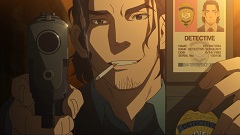
Short Synopsis: A human policeman is forced to partner with a female alien and track down a kidnapped fairy.

Mario’s review:

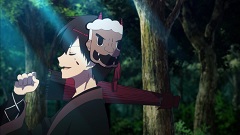
Despite its formulaic premise, Cop Craft’s first episode is such an enjoyable ride. It has an interesting settings for one thing, and while in concept it reminds you of Blood Blockade Battlefront, it does have many elements to make it its own. Then the two odd couples have their own distinct personalities and they bounce off each other nicely. On top of that the dialogues are on the better side of the spectrum, both does its job to establish character’s motivation, and each character has their own way of speaking. The production can be a bit shaky at times, but for now it manages to hold up. The gritty tone also brings a lot of potential, and a right mix between real world and fantastical elements are explored in just correct amount. I’d say that its best quality so far is the right mix of all its ingredients, make it a show that is familiar enough but still has its own personality.

Potential: 60%


Wooper’s review:

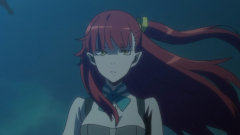
There were a lot of visual choices here that I didn’t like. The drab color palette, featuring mostly brown and gray environments, is rescued only by Tilarna’s elaborate red outfit. There are moments when the series feels like it was animated in Flash, especially when side characters are put through their stiff walk cycles. The ship on which Tilarna arrives has a rough, sketchy quality to its illustration that doesn’t match the rest of the art. But you know, I kind of dug this episode. It’s another buddy cop show like Double Decker, but it aims for a grittier tone right off the bat, and mostly manages to hit the right notes in the process. The supernatural element and Tilarna’s curiosity about human technology give the script a little flavor, without which it would have felt too familiar. Most importantly, it quickly established who the main characters are and what they want, generating a clash of personalities that it can resolve as it progresses. In short, it didn’t waste my time.

Potential: 50%


HenSuki

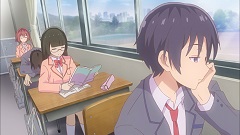
Short Synopsis: A gutless high school boy must figure out which of his smoking hot clubmates gifted him a pair of her panties.

Wooper’s review:

Are you willing to fall in love with a pervert, as long as she’s cute? This is the literal translation of HenSuki’s full title, as well as the philosophical quandary at the root of the show’s deftly-woven narrative. Japanese society is largely conservative (I know this for certain because I am an anime blogger), so even mild sexual deviance on the part of an individual can have lasting ramifications in their life. With this in mind, our potato-faced main character must approach the girls in his after school club with caution. One of them has left him a love letter, which would be scandalous enough on its own, but to include a pair of her panties alongside it? Such a woman could drag him into moral degeneracy! Nevertheless, such a bold maneuver could indicate a favorable temperament with regard to such lewd activities as hand-holding. Thus HenSuki establishes its central theme, exploring the personal cost of pursuing an anime gf with big tiddies. Subplots include incest teasing, breast envy, and sexual slavery. You won’t want to miss this thoughtful, daring, and not at all pandering look at modern teenage romance!

Potential: 0%


Mario’s review:

I expected this show to be trashy but I didn’t expect it to be this boring. This premiere’s main flaw is that it focuses entirely on romance aspect and not too much about comedy. Up until the very last reveal (which put this show into interesting direction, I admit), it feels not unlike a dating sim game or dating visual novel where all girls have a hot for this totally plain male lead. That sense of visual novel extends to its production too, as there isn’t much actual animation and the show’s hanging there with key still frames. The decision to play it straight with romance could have been fine if the dialogue weren’t this boring. Every conversation comes from boy’s wet dream, in which if my memory serves me right he was dreaming in the beginning (See, I already forgot). In theory, this show could serve as a dating genre-reconstruction where all the girls have hidden sexual fetishes that are way beyond this guy’s head but when you care nothing about this faceless dude, you have a hard time getting invested to what it’s trying to say.

Potential: 10%


Arifureta Shokugyou de Sekai Saikyou

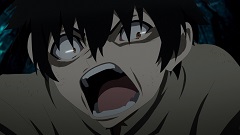
Short Synopsis: An adventurer from another world is betrayed by his classmates before eating monster flesh and turning into a badass.

Wooper’s review:

“Incompetence” is the word that kept springing to mind during this episode. It begins in a cave so dark that the main dude’s hair had to be traced with a white outline, because otherwise you can’t tell where he ends and the background begins. Every combat scene, including the one where he loses an arm, depicts the slashing of claws and blades with limp effects animation. As a result, it’s hard to care about any of the fighting, especially the bits with CG skeletons that hardly interact with the characters. All of the flashbacks seem to have been placed in the script just to emphasize the hero’s weakness and his former classmates’ cruelty, setting the stage for his rise to power. Sounds exciting, right? Nope, he promptly attains this power by getting really pissed off and eating monster meat, rather than by training or learning anything. And then the show has to trot out the concept of in-game stats and skill trees to show how much he’s leveled up, so that even people who don’t leave their rooms can understand how awesome he’s become. If you still remain unconvinced that this show is a turd, check out this climactic moment from the ending. In case you’re wondering, that clip isn’t slowed down, darkened, or modified in any way. The show is just that bad.

Potential: 0%


Mario’s review:

Anime medium is known for its entertainment, but once in a while there are shows that aim for something much more profound, something of a life lesson. Watching Arifureta reminds you time and again that life isn’t all rose-tinted color and that in life, many people have it way worse. Our hero’s innocent outlook of life is shattered through harsh reality. Yes, life is cruel, life is unequal but that makes his transformation all the more powerful. I felt shocked, but I also felt sort of uplifted to see him bounce back and claim his life back. Yes, that is the strength of humanity: To never give up, to enjoy every piece of food you found, and to look Death in the eyes and say: “I will kill because I am hungry”. Arifureta is a story about survival, Arifureta is a story about revenge and Arifureta is a story about breaking your own weak self. Beneath the shocking content, I can see the layered messages that work together perfectly. Its thematic complexity is something that blows away any other contender of this season, Hypeland Saga included. It’s too early to say anything in terms of how the story will go from here but I have no doubt that Arifureta will change the way I view life forever.

Potential: put Vinland Saga into a pit of shame!!!!!!!!

Some Quick First Impressions: Vinland Saga, Re:Stage! Dream Days and Ensemble Stars!


Vinland Saga

Short Synopsis: For a thousand years, the Vikings have made quite a name and reputation for themselves as the strongest families with a thirst for violence. Thorfinn, the son of one of the Vikings’ greatest warriors, spends his boyhood in a battlefield enhancing his skills in his adventure to satisfy his desire for vengeance.

Lenlo’s review:

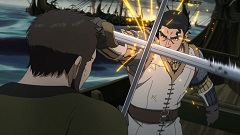
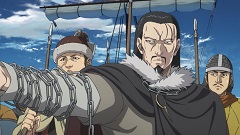
This is it Wit, this is everything I wanted. Sure I could nitpick that the CGI isn’t perfect 100% of the time. Or that the OP by Survive Said the Prophet isn’t my style of music. But you know what, I don’t care. Everything else is gold for me. From the downright stunning background art, to the great soundtrack and stellar character designs. These detailed designs and backgrounds don’t get in the way of animation either. Wit knows when to focus on what aspects, and I love it. The VA’s don’t always match what was in my head while reading either, but I will chalk that up to vikings speaking Japanese. As is though, Wit have proven themselves with this opening 3 episodes. Going so far as to alter the chapter order to better fit an anime format. This is the kind of adaptation everyone wants. Constructive changes, rather than destructive ones, showing they know and care about the source material. If Wit can keep this up throughout the next 21 episodes, this is easily my AotS, with this being the best premiere in a while for me. The hardest part will be the 3 week break between now and the next episode. My body is ready Wit. Don’t let me down.

Potential: All the %. Infinity %.

Armitage’s review:

Studio Wit has been on a roll lately. With the recently concluded season 3 of Attack on Titan, they already surpassed all expectations fans of that manga would have had from the anime. Yup, they knocked that one right out of the park and then some. But it seems like they aren’t satisfied by just patting themselves on the back. Enter Vinland Saga. A manga, epic in every sense of the word, widely considered as unadaptable because of its godly art (which might arguably be second best only to Vagabond, in the entire medium). A solid adaptation seemed like a herculean task. And what do Wit do with it? Well, they knock it out of the park again! There’s so much to like about this adaptation as a fan of the manga. The lush backgrounds, the choreography of the fight scenes, the impeccable sound design, the choice of the (inevitably japanese) seiyuus. Oh, and did I mention we have best OP and ED of the season? Yup. It’s all here. And it all, somehow, just clicks together so beautifully. For anime only viewers, I can’t sell this enough. It’s one of the most gripping tales of revenge, hope, history and loss, told with a real flair for the epic, by Yukimura-sensei. The kind we rarely come across, anime or otherwise. If you have to watch only one anime this season, make it this one.      

Potential: 100% is selling this short.

Helghast’s review:

Unlike some of the writers here, I’m going into this blind so I don’t have any expectations other than its reputation of it being an epic saga set in the age of the Vikings. With each and every one of their previous shows being well-animated, Studio Wit doesn’t disappoint at all by showing off their trademark rotating action sequence in the first five minutes. From that point on, the action dials down to ease us into a world where ruthlessness and violence is the way of life for the people of nordic countries. So often in anime, violence is used a means to be edgy but it suits Vinland Saga just fine as it doesn’t even bother to tone it down while being historically accurate. If you are disillusioned with how infrequent the Berserk manga updates or its terrible anime counterpart, Vinland Saga is a perfect choice to scratch that itch with its faithful adaptation, a bombastic OP and another great ED from Aimer which I’m sure that fans will love. I can see why they decided to release three episodes in a row in order to capitalize on the hype by quickly reaching the crux of the prologue without rushing the pacing and dragging out from week to week. However, this bold strategy is also a double-edged sword as now we wait for a painful three weeks to see how it all it plays out for Thors and his son, Thorfinn.   

Potential: 85%


Re:Stage! Dream Days

Short Synopsis: A girl transfers to a new school and joins an Idol club.

Lenlo’s review:

If nothing else, Dream Days is clearly the superior idol show between the two I watched for this post. It looked good, the art was clean and the animation better than I had expected. In particular the 2D animated dance sequence that is normally relegated to 3D CGI for Idols. There were also some clever shots and scene decisions made. Such as the OP switcheroo into an actual character introduction that caught me off guard. The worst I can say about Dream Days is that it simply isn’t my kind of show. It was never going to appeal to me because it was a quintessential Idol show. If that’s not your cup of tea, turn back now. However based on what I have watched, I feel comfortable saying its a good fit for anyone who enjoys the genre. Everything it needs to be successful is there. It’s just not my kind of show.

Potential: 25%

Mario’s review:

I give it 20% for animating the dance routine in hand-drawn style, and another 5% for occasionally beautiful shot composition (just look at the second screenshot), otherwise we have a fairly generic set-up of what would be a right-on-average idol show. As it is the case now in almost every idol show, when you get to the performance part, the disastrous CG models stand out in a bad way. Re:Stage (a little sister of Re:Zero and a daughter of Re:Life and maybe distant cousin of Re:Creators) reminds us once and again that it is much more effective when you stick with the traditional hand-drawn. The story department, however, is pretty much formulaic so far. We have lead girl gets introduced to her new school, to her new club and suddenly she can dance very well because “my body just moves by its own”. Fans of idol show will have lots to like it, as the characters are fun to watch and from the ED it looks like 3 more (some of them already appear in the background) will join the club and so far it does make some attempt of fleshing out the main lead. For those who aren’t fond of idol shows or CGDCT there’s not much to see here.

Potential: 25%


Ensemble Stars!

Short Synopsis: A group of low-ranking male students at an idol academy aim to overthrow its draconian student council.

Wooper’s review:

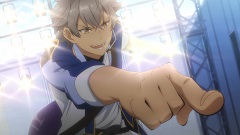
You know, I reserved a tiny spark of hope for this project coming into it. I’ve never seen a good bishounen idol series, but that doesn’t mean they’ll stay bad forever. Unfortunately, Ensemble Stars won’t be the one to snap the genre’s losing streak, as it’s prone to all the same cliches as the rest. The female lead has only two lines of dialogue that aren’t “Huh?” or “Eh?” or parroting something the boys have said. The guys are all super cute, but their sparkly appearances are wasted on stock character types: genki boy, bookworm boy, loner boy, macho boy, etc. There’s no hint anywhere in the series that they’ve lived outside of this school, so the whole production feels one-dimensional. The plot is a familiar mash-up of idol aspirations and student council machinations that left me struggling to care. Only the visuals have any polish, and it’s limited to one combat sequence and a handful of poses. Look forward to those moments only if you’re a fan of idol boys – otherwise, skip this show.

Potential: 5%


Lenlo’s review:

For anyone that has read almost anything I have written on this site, I am sure my opinion on this show is already known. It’s an idol show without even the eye-candy. That’s a rather rude thing to say, but I don’t like Idol Shows inherently, and I find their sole purpose is to put cute girls on a screen in skimpy Idol outfits. It’s a fanservice genre to the end. Ensemble doesn’t even give me that. Instead throwing generic stock male characters into a room, giving them a VA with a decent singing voice. Ensemble is, at its core, a generic anime made for a generic game. That David Production is somehow producing Fire Force in the same season as this confounds me to no end. This is a hard pass for me. The first episode alone was almost impossible to get through.

Potential: 0%

Some Quick First Impressions: Araburu Kisetsu no Otome-domo yo, Lord El-Melloi II’s Case Files: “Rail Zeppelin” Grace Note and Naka no Hito Genome [Jikkyouchuu]


Araburu Kisetsu no Otome-domo yo.

Short Synopsis: A coming-of-age of five high school girls curious about sex and all the awkward and beautiful things that come along with it. 

Mario’s review:

Now, that’s more like it. When you reach a certain age you get into an awkward phase where everything and anything would link you to sexual reference and Araburu so far understands it completely. The fact that it doesn’t make light of this issue, at the same time still manages to squeeze humor out of it, is something of an achievement. Mari Okada is in total command of her story here, although I must note that her works are always better in the beginning than when she wraps it up. What I enjoy the most out of this premiere is how brutally honest it feels, when our female cast gets swept away by hormones and where they find themselves in one embarrassing situation after the next. The scene where our main Kazusa catches her friend in the act is where this episode best delivers its theme of adolescent awkwardness, but Okada has a tendency to go overblown and we also get that in the form of club president’s sudden outburst. The art is also pleasing with round facial designs and soft outlines, which totally works for the show’s benefit. I don’t know how the show will go from here but at least this first episode stands apart by addressing the genuinely honest adolescent experience of coming to terms with their own sexual urges, in a medium where we have plenty of this but rarely dare to dig down deep enough.

Potential: 85%

Armitage’s review:

Yup. No Middle ground here. You are either gonna love this or hate it. Considering it’s an adaptation of a Mari Okada manga, it’s no surprise either. For me personally, the premiere of O Maidens in their Savage Season resonated resoundingly. It’s the kind of story that never sees the light of day, especially in anime. A story brave enough to comment about the hush-hush parts of our society and which dares to go to places only portrayed in other anime for cheap laughs. Yes, to tackle the elephant in the room, this story is about five high school girls and their curiosity about sex. Now, in less able hands, the delicate nature of the subject matter would have led the story to come off as cringy or even exploitative. However, Okada-sensei treats it with utmost care and maturity. These girls are going through puberty. Their bodies are changing drastically and they feel like losing control over it. Sex, which is always an enigma, seems like it’s staring in the face for Kazusa and the other members of the Literature group. One day, they are discussing the one thing they would like to do before dying and one of the girls, Niina, the prettiest in the school, says, ‘Sex’. And that’s what the central hook of this story seems to be. 

The character designs too stand out really well, fleshing out each character’s personality and their quirks. The cast’s chemistry already seems pretty great but it will only improve in coming episodes. The one thing that I feel some people might pinpoint as off-putting is the humor. But I think it is integral for this story to not come off as too heavy or preachy. This episode portrays incidences that tackle bullying, a girl exploring online sex-chat sites (which serves as a harsh reminder of the lack of sex education in teens) and a scene involving a girl walking in on another person masturbating. The latter was such a delicate moment to portray because it’s a tightrope. Even the slightest of missteps and the entire scene would have lost its impact. Yet, it is again handled with such maturity that it almost feels real. The awkwardness, the reluctance to make eye-contact, the shock, the over-reaction. All of it. Sure, moments later, a little humor is infused but that’s only to provide the audience with a sense of ease. And that’s what I liked the most about this show. How it knows that the themes to be explored are going to be uncomfortable. But it wants to tell a story that’s important and necessary. And for that, you can’t help but admire it.             

Potential: 95%


Lord El-Melloi II’s Case Files: “Rail Zeppelin” Grace Note

Short Synopsis: After the events of Fourth Grail War, Waver purchases the El-Melloi class and eventually becomes its Lord.

Lenlo’s review:

I have to say, this first episode of El-Melloi works a lot better than the episode 0 introduction we got prior. For one, Waver and Iskander’s relationship was easily my favorite part of Fate/Zero. So I love that El-Melloi is putting so much focus on that. How it shaped Wavers character, his motivations moving forward, how it turned him into who he is for this series. Parts of it are fanservice no doubt, but it’s fanservice I love. Not the usual ecchi variety. El-Melloi also seems to be taking a much more interesting approach to combat. With Waver focusing on winning the war, not necessarily the battle. Knowing he doesn’t have to fight every battle with brute force, etc. It’s the kind of battles I enjoy, knowing there is more to it than increasingly large lazer beams and such. Story wise, El-Melloi is also avoiding one of my biggest problems with the Fate franchise with this focus. That being the sheer ridiculousness/minutiae of parts of its lore, like all of the Alter’s and how every historical figure is just another Saber. El-Melloi instead focuses more deeply on the world surrounding the Grail Wars. All things considered, if your like me and you enjoy the concept of the Fate series more than Nasu’s actual writing, and don’t mind less shounen-ey kind of show, El-Melloi seems like it will be right up our alley.

Potential: 80%

Mario’s review:

This Fate spin-off starts off on a pretty strong note. In a way, this premiere works better as a prologue than the episode 00 did, where this episode focuses entirely on filling the gap on Waver Velvet from when he was after the Fourth Holy Grail War until the present and the pact he makes with Reines as a true successor of this El Melloi family. With that focus, while we don’t have any “case” this week (which I believe to be the show’s true format), we get plenty of backstory from Velvet and the chemistry between him and other characters. It’s a solid trick since this episode successfully establishes Velvet as a compelling character who is in the middle of his own personal crisis. He has an intriguing goal the way he’s still struggling with self-worth provide plenty room for character development as the show goes on. It’s also a neat choice to call back some of the key events in Fate/Zero, although I am not sure if non-Fate/Zero watchers can pick up the details. All in all, this series has the right ingredients for a solid package (at least so far): a main character worth caring for, intriguing side characters that help expanding the Fate world, but until next week should we see if the cases Waver is dealing with are worth it or not.

Potential: 60%

Helghast’s review:

For those who are weary of the Fate franchise going down the route of magical girl spinoffs, gacha game adaptations and confusing extra stories, Lord El-Melloi II’s Case Files is a refreshing return to its core narrative. Serving as more of a sequel than anything else to the excellent Fate/Zero, it’s going to follow Waver Velvet, survivor of the fourth Holy Grail War, as he grows into the shoes of his former mentor and teacher of Kayneth. The first episode certainly does an excellent in setting up his progression from being separated from Iskander to being a major player within the Mage Association with all the callbacks to Fate/Zero and its pivotal moments for our main characters. Now, instead of powerful historical servants smashing into each other, I’m excited to see an in-depth look into the politics and inner workings of The Clock Tower that other series have only shown small glimpses of. 

Studio TROYCA, who animated Re:Creators and Sakurako-san, is more than up to the task of making a well-produced show as its look something ufotable would produce minus the crazy special effects and shovel face character designs. Even Yuki Kajiura is back to score the music and that is a good sign that this just might be a show to add in the essential viewing of Fate instead of being another piece of waifu bloatware. 

Potential: 80%


Naka no Hito Genome [Jikkyouchuu]

Short Synopsis: A group of Let’s Players are sucked into a video game, and can only escape once they hit 100 million views.

Amun’s review:

“Trapped in a game world” is kind of an older brother to the standard rebirth Isekai genre – in both cases, worlds and characters are make or break for the show.  Naka no Hito Genome does neither well in the first episode. This looks like a poor man’s Danganronpa, which to me was fairly low on the tier list to begin with. The flaws start with the underlying characters – somehow we have managed to find an archetype less enjoyable than normal shut-in gamers – then move on to the animation (what are those background effects?), choppy direction, and generally sloppy storytelling.  I’m really not that interested in sitting through each character’s back story followed by a nonsensical, poorly animated big baddie with an ambiguous cliffhanger. I might give this another episode to change my mind, but this one is probably a pass from me.

Potential: 10%

Wooper’s review:

Trapped-in-a-video-game series are a dime a dozen. Without fail, the main draw of the genre is the virtual worlds themselves, so it hardly matters how the characters get there. Maybe some malevolent puppet master traps them in a VR session, or maybe they die and their souls wander into the digital realm. Or maybe they sneeze so hard that they end up inside a game, as is the case in Naka no Hito Genome. Sure, that moment may have been preceded by a mysterious email promising to spirit them away, but the most important thing is that the main character closed his eyes to sneeze, then woke up in a virtual world. Things only got stupider from there, with a llama-masked teacher explaining the rules of the game in a shoehorned classroom setting. The show strikes out in terms of characters and visuals, as well. The bargain bin designs and bizarre black streaks peppered throughout the exterior scenes had me scratching my head regarding the appeal of this series. As far as I can tell, the only reason to try Naka no Hito would be that you dream of your favorite IRL Let’s Play person getting sucked into a game. If that’s you, please watch this so I don’t have to.

Potential: 10%

Some Quick First Impressions: Dr. Stone, Enen no Shouboutai and Granbelm


Dr. Stone

Short Synopsis: A teen self-proclaimed scientist and his loud sidekick try and revive humanity after being turned into stone for thousands of years. 

Lenlo’s review:

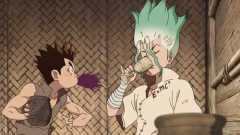
My biggest worry about Dr. Stone going into it was how the anime would adapt Boichi’s art into animation. For the most part, it seems to have gone well. Occasionally the complex designs get in the way, but Dr. Stone handled itself well. And in place of flashy animation, Dr. Stone has some clever tricks up its sleeve. Such as the timelapse near the end, which did more in 2 minutes than some series do in 23. Now, the only issue facing Dr. Stone is its slow start. The series doesn’t really get going until after this introductory arc, where Senku starts going wild and playing with science. The way it was handled in this episode though makes a good impression for the future I feel. Suffice to say, if your going into this expecting classic Shounen battles and such, then Dr. Stone may not be for you. However if you enjoy all the regular Shounen tropes and want a chance to watch them work in a mostly non-battle setting like I do, then I see no reason not to stick with it.

Potential: 75%

Armitage’s review:

This is a series which really needs no introduction. One of Shounen Jump’s most prized properties. A manga that seems to have only been growing in popularity since it started being published and one that barely misses out a spot on their Big 3 in terms of sales. But, that’s to be expected, as it involves some good ol’ Science!! Finally, we have Dr. STONE: The Anime. The story is actually pretty interesting and has a real catchy hook (not as much of a gut-punch as Neverland, but that’s an unfair yet inevitable comparison). Humanity being turned to stone, for thousands of years. Well, 3780 years to be exact. How do we know that? Because our boy Senku, counted every goddamn second! Yup. The kid’s wicked smart. 

His plan, is to revive all of human civilization and have them progress from stone age to modern day, but you know, at real breakneck speed. Looks promising! The art and animation too are mostly competent for most parts. My only issue is our other main character, Taiju, who seems to have been brought into anime form with the ‘Asta from Black Clover’ syndrome. He is obnoxiously loud. And at some points, that really started to get on my nerves. Also, I know that the early few episodes won’t be as stellar, since the manga goes through a soft reset in vol. 2 and from that point on, things really pick up. Still, if you can ignore these minor quibbles, this should be a fun ride!

Potential: 75%


Enen no Shouboutai

Short Synopsis: A new recruit joins a squad of supernatural firefighters in order to become a hero.

Lenlo’s review:

Whew, is it hot in here, or is that just Fire Force? Seriously, if nothing else, the show looks good. If David Production can keep this up for all 4 cours, I will be impressed. That said, it was a rocky start for me. Fire Force had a lot it wanted to get across in a single episode. From its tragic backstory and its world building, to not one but 2 fantastically animated fights. It tried to shove a lot in there and this resulted in some… sudden tonal shifts, for me. The actual content was fine, it’s mostly your usual Shounen fare, though with a rather interesting twist this time. It just seemed to me to be a bit cramped. However if Shounen or fantastic fight animation is your game, I think this series from the creator of Soul Eater will be right up your alley. I know it’s up mine. I mean c’mon, 4 cours of beautiful fire animation? I have to see this.

Potential: 90%

Wooper’s review:

I read the first volume of the manga for this one, and the anime adaptation is off to a solid start. That may seem like faint praise, but given the striking nature of Atsushi Okobo’s art, an accurate translation to the TV screen indicates a hell of an effort by the creative team. The linework in particular is really crisp, so the characters are fun to watch even during their tropiest moments. There’s a bit of SHAFT flavor here, too, as some of the people on staff are refugees from that studio. The shots that place pipes and other machinery in the foreground to obscure the characters provide a slightly darker atmosphere, and the morphing shadows of Shinra’s relatives amplify the cruelty of their gossip regarding his tragic past. And then there’s the main attraction. While there’s a smattering of computer-generated flames during the big fight scene at the end (as well as a couple backgrounds that are entirely CG), the show’s treatment of fire is awesome. Combustion this impressive-looking lends believability to the series’ Solar Era future, where people pray to the sun god and an unlucky few spontaneously burst into flames. Even if this premise fails to spark my interest going forward, the art and animation should carry me through.

Potential: 80%


Granbelm

Short Synopsis: A girl finds herself in the middle of cat mecha fight before pilots one herself.

Lenlo’s review:

Granbelm has me more than a little confused. It’s like Madoka Magica with a hint of Fate and a dash of chibi Mecha, all wrapped up in Re:Zero’s character designs. Yet with none of the magic those series had. It feels like it was adapted from a gacha game really. I can’t decide if it’s a terribly generic mesh of a bunch of successful series, or some authors attempt to stand out. Don’t get me wrong, Granbelm is pretty enough I suppose, it didn’t look bad in motion, though the Mecha felt pretty weightless. And the Re:Zero character designs still look great, regardless of what show they are in. Its just that there was never a single moment in this episode where I felt invested in what was going on. No singular aspect stood out to me as interesting. Maybe that’s just my predilection against Cute Girl shows. Maybe it’s the mecha designs. I dunno. Granbelm doesn’t look bad, it’s not the worst show I have seen so far this season. It’s just the most… average.

Potential: 30%

Mario’s review:

It’s rather refreshing to see hand-drawn mecha fights in the time where the industry tends to cut corners with CG animation… if only I have a reason to care about those fights. Having extended battle from the two sides we haven’t known, nor cared about, is a pretty bad idea. Add to that we have the plain main girl hasn’t established any distinct personality before being swept up to all this. The general plot doesn’t push the envelope as it goes pretty formulaic (for example the main girl is “the one” or she takes literally 2 minutes before mastering her moves), yet I don’t dismiss it entirely because the core concepts of these girls as mages piloting robots to retrieve magic could become epic on its own way. So in the end we have an episode with solid mecha animation, one-note characters all around and the plot that could go serious as the story pans out. I can see the ambitions from the staff, the question remains whether they can pull it off.

Potential: 30%

Some Quick First Impressions: Maou-sama Retry!, Uchi no Ko no Tame Naraba and Joshikousei no Mudazaki


Maou-sama, Retry!

Short Synopsis: A game developer is taken to the world he created following the game’s shutdown.

Amun’s review:
No two ways about this – Maou-sama Retry should take a mulligan on that first episode. As a moderate fan of the Isekai genre, I feel this is a case study in what not to lead with. Isekai’s major strength is that it gives an excuse for a fantastic world – Maou-sama did absolutely nothing to interest me in this world or these characters. While posturing as self aware, Maou-sama Retry seems to misunderstand what core strengths made other Isekai titles like Konasuba or Re:Zero enjoyable: unique characters in a well-built world. This anime just seems poorly done all around – sloppy writing, forced voice acting (props to whoever is doing the subs though – they are trying mighty hard to embellish this wooden dialogue), poor environment, and really blatantly shoddy animation. This young studio brought us Crossing Time, which I have mixed feelings on, but this episode highlights clear weaknesses that do not bode well for future projects.
Potential: 5%

Lenlo’s review:
Maou-sama managed to impress me with just how terrible this first episode is. Literally everything bores the crap out of me. This is below even your bog standard Isekai. The world is dull. The character designs, are dull (And who thought putting a mafia boss in a fantasy world was a good idea?). Maou-Sama even managed to make its opening showy fight, dull. At least with last seasons One Punch Man I could sense the passion behind parts of the project. At least some people clearly cared. But this? I don’t want to watch 5 more minutes of this, let alone an entire season.
Potential: 0%


Uchi no Ko no Tame Naraba

Short Synopsis: A local adventurer finds a lost demon girl in the forest and adopts her.

Amun’s review:
On paper, Uchi no Ko no Tame Naraba, Ore wa Moshikashitara Maō mo Taoseru Kamoshirenai (or roughly translated, If It’s For My Daughter, I Could Defeat The Demon King) seems similar to another current show, Maou-sama Retry: both have devils in the title, both have abandoned little girls, both are made by extremely new studios, and both are adventure shows at heart. However, the similarities with Maou-sama Retry end there, because If It’s For My Daughter sparkles in its first episode. Sure, there’s a bit too much close up Moe Eyes, sure there are some plot holes and suspensions of disbelief (let’s overlook kidnapping and child endangerment), but this is how to kick off a season right: clearly define characters with room to grow, introduce a nice world setting and mechanics, and show some clear problems to keep the viewer interested – looks good so far!
Potential: 85%

Mario’s review:
If you regard this one as a lesser-Usagi Drop, or even a lesser Udon no Kuni, you’re pretty much on track. It offers the same feel as those titles, with much less subtle and even less production quality. On the bright side, the chemistry between the main guy and Latina is solid and Latina IS CUTE. The show also adds some extra flavor of raising the child not in the real world like its predecessor, but in a fantasy world where they can explore the “race” issues. And while Latina’s cute appeal is the show biggest asset right now, the same doesn’t apply for the other lead. The main guy is undoubtedly likable, but he’s also unmemorable and the casual remark that he’s just 18 leaves me somewhat baffled (AN 18 YO KID CAN’T POSSIBLY RAISE A CHILD, LET ALONE THIS DUDE WITH NO EXPERIENCE). Add to that my biggest concern is the production values as it already looks stiff in this first episode, especially the facial expressions of everyone except the little girl. Still, the healing feel is right there so if you’re a fan of this particular genre, or you just want a feel-good show in your weekly dose, then this remains a solid pick.
Potential: 40%


Joshikousei no Mudazukai

Short Synopsis: A teenage girl starts high school and pesters her friends about wanting to be popular.

Wooper’s review:
Joshikousei’s title translates to “Wasteful Days of High School Girls,” but if I were in charge of its localization, I’d call it “Wasteful Time Spent Watching This Show.” And that’s kind of a shame, because I wanted to like it. If anybody remembers Nichibros from 2011, this show is a more straightforward, less energetic version of its High School Girls are Funky segments. In both cases, the emphasis is on satirizing the eternal CGCDT trend in anime and manga, which isn’t a bad concept. Unlike the characters from those side stories, however, Joshikousei’s main cast comprises three dead fish whose dry deliveries had me wishing for the end of the episode by its midpoint. The main girl, whose non-sequitur dialogue consumes most of the script, can’t carry the unimpactful gags on her own. This issue is compounded by her friends’ disdain for her shallow personality, so it’s not as though the show can use them to bail itself out. There are two bright spots on the visual end, though. Both the character designs and background art nicely emphasize the idea of wasting your life; the girls’ simple appearances make them look bored at all times, while the pretty backgrounds provide a pointed contrast to their idle chatter. It’s a good trick, but I’d rather take a stroll through town myself than watch these characters do it a second time.
Potential: 30%

Mario’s review:
I remember checking out the first few chapters for the Preview and bailed out because the jokes don’t work at all, so I’m glad to say that it translates quite well in the anime format. Joshikousei falls comfortably in a same range as Nichijou and Daily Lives of High School Boys (Nichibros – that makes it Nichisis??), a parody to countless slice-of life High School and CGDCT shows, but it manages to stand apart. Part of the success lies in its witty exchanges from its varied cast, and these three mains (another wink to its inspirations) bounce off each other nicely. There’s a level of self-awareness in its humor and I enjoy the talky, loose nature of their jokes which reminds me a great deal of Kouji Kumeta’s (Sayonara Zetsubou sensei, Joshiraku) works. The art and character designs are pleasing and so far with the large cast of archetypal girls, they have more than enough room for parodying these characters in the future.
Potential: 50%

Some Quick First Impressions: Katsute Kami Datta Kemono-tachi e, Kanata no Astra and Dumbbell Nan Kilo Moteru?


Katsute Kami Datta Kemono-tachi e

Short Synopsis: In the wake of a civil war, a squad of shape-shifting soldiers become murderous beasts, who are hunted by their former leader.

Amun’s review:
To the Abandoned Sacred Beasts starts off their first episode with typical war anime exposition and setting – supernatural squad turns around impossible situation with immense personal cost.  However, a twist! We now have our former war heroes become villains (with a side of an odd love triangle, which inevitably spawns the main big baddie). The daughter of a squad member also is innocuously introduced, implying immense imminent importance.

Overall, not a bad first episode – however, I’m wary since the quality (almost) always deteriorates after number 1. Personally, I think the fighting animation is fine (typical MAPPA), but the character designs are surprisingly from the wrong decade…I haven’t seen hair like that since the 80s X-men.  If you watched Fairy Gone last season, this will probably be very similar (thankfully without the random CGI). I’m also getting some real Darker than Black 2 vibes from the main character pairing and some whiffs of Golden Kamuy for the plot progression (probably without the humor, sadly). Overall, I would say this is shaping up to be your forgettable, albeit enjoyable B-tier action/revenge show for the season.
Potential: 50%

Lenlo’s review:
Holy exposition Batman! I joke, but this first episode was actually alright. It did a good job of getting me interested in the company and their plight. Introducing us to most of them first as people/characters before they become monsters of the week. Assuming Sacred Beasts uses them right, doesn’t make them all bloodthirsty monsters and properly explores aspects of the horrors of war and what is does to a person by metaphorically turning soldiers into monsters, I think there could be a lot of value in it. That said, its MAPPA, so I don’t expect any sort of consistency in production, and the Manga is still ongoing so we won’t be receiving a concrete ending anytime soon. Both of those make me hesitant to recommend it because I believe there will be better action fare this season. However, if your up for a war story and willing to take a chance, Sacred Beasts may fill that niche. At the least, I will be giving it a shot.
Potential: 55%


Kanata no Astra

Short Synopsis: A group of nine students get stranded in space on their school trip.

Armitage’s review:
Alrighty, then! We have our first one of the most anticipated shows this season, in Kanata no Astra. And even though I am not familiar with the source, I know that it is regarded very highly in manga circles. The premise is about a group of teenagers who get transported to… nope, not another world. Space! Because if it ain’t isekai, it ain’t gonna sell! Nobody wants to watch a classic, by the books space opera. LoTGH, you say? Pfft! Boring. Though, in all seriousness, Kanata no Astra takes its premise and runs it home. I loved how some of the conversations were just called out for being cliche and also appreciated the comc timing of some of the jokes. Though, the manga is by the author of SKET Dance, so it’s no surprise really. The characters by themselves aren’t that memorable. Out of all, Kanata and Aries stood out the most. Though, over more episodes, everyone should get their time to shine. 

But for me, the highlight of the premiere was definitely the OST. Issogood! It’s upbeat and sort of Jazz influenced but it’s been a long time since I listened to an OST so memorable. I can remember four standout tracks from just one episode! That’s no small feat. My only issue with this premier was how the animation was lacking in parts. Lot of still frames and lack of character expressions at points. Now, Lerche isn’t exactly known for their fluid animation work, but if it gets too bad, it sort of distracts from the story.  Hope it doesn’t come to that. But all in all, I really liked this premiere! Can’t wait to see where Astra takes these kids! If nothing else, I hope we get a few more gems like “UNTIMUT DAIBAMOMO!!” XD
Potential: 85%

Mario’s review:
Despite the occasional hiccup, Kanata no Astra’s strong premise makes the double-length premiere well worth it. On the plus side, this show has a strong sense of direction (it knows where it’s going), and the thrilling part works decently most of the time. The main lead has a fair share of backstory in this episode, which I expect will be the case for the rest of the cast as we spend more time with them. They have already planted some dynamics between this diverse cast, which is nice, but it also leaves me many concerns in that regard. First, the comedic bits aren’t the show’s strong suits, as every time the characters make some silly remarks or reactions, it falls flat. Second, the dialogues aren’t that memorable either. Some are intentional (especially when it comes to Kanata the male lead), but overall these exchanges are rather typical. Consider how Kanata no Astra will rely on these chemistries between their characters as one of its themes, they will have to work more in that department. The action part is mostly well done, although at the expense of some logical leap. For example, they totally forget about “the rope” when the cast attempts to save the leads (Note: I just found out in the manga version the leads did use the rope. Aghhh. Stupid lousy alteration). Overall, Kanata no Astra is worth checking out and there’s still space (pun intended) for developments as we know the cast better in later episodes.
Potential: 75%


Dumbbell Nan Kilo Moteru?

Short Synopsis: Two high school girls join their local gym for different reasons, and develop an unlikely friendship.

Wooper’s review:
A show about cute girls lifting cute weights? My gym experience is limited, but I guess I’ll give it a shot. What’s that? The show is full of advice regarding exercise form, eating habits, and even workout supplements? The characters are super entertaining thanks to their fitness-related quirks and overreactions? The OP and ED feature a peppy personal trainer chanting English phrases such as “Yes muscle!” and “Nice form!” along with the music? Alright, you sold me. In all seriousness, this premiere was quite good, and a lot of it has to do with the characters. Things aren’t made easy for female lead Hibiki, who joins a gym in order to lose weight and snag a boyfriend, but discovers that muscle training is much more difficult than it looks. She reacts to fitness culture with a mix of confusion, intimidation, and horror, but by the end of the first episode, she’s already formed a bond with Akemi, a health nut with an amusingly intense muscle fetish. With a girl like Akemi around, the show’s exercise goals for Hibiki will probably deepen over time, which provides a clear road for its story to travel. The one criticism I have is that Hibiki looks like a typical slim anime girl for the majority of her screen time, despite the declaration that she’s on the heavy side. Maybe she’s just extremely body conscious? Even if the show doesn’t address this issue, the comedy is still strong and the visuals are above par, so I’m down to follow this for a full season.
Potential: 75%

Armitage’s review:
Right. So all you body-conscious girls and boys, raise your hands, if getting off your ass and going to the gym sounds like a pain!… No? No one? Oh, right. Raising your hands is kind of a workout too. Ah, my kind of people. So, here we have our run of the mill cute-girls-doing-testosterone-fueled-masculine-exercises anime of the season. You know, the usual. We have our MC, Hibiki who just wants to enjoy her 6-7 meals a day, stay slim and have a nice ass. Is that too much to ask for? Nay, I say! But still, as our goddess Britney Spears has aptly mentioned in her popular hymn: “You want a hot body? You gotta work, B**ch!” 

So, Hibiki decides to join a gym. You know, the girly kind with slender, pretty trainers and couples clicking selfies. But the gym she ends up enrolling herself in, turns out to be quite the opposite. And what we get in the rest of the episode is some pretty neat information about gym exercises and correct posture. That too is presented in a very non-male-gazey way. Except for when it’s played for laughs (which works hilariously). So, yeah. All in all, I had a real good time with this premiere. This very well has the potential to be the sleeper of the season! And hey, if nothing, we’ve got two really upbeat songs as the OP and ED to listen to. while working out at the gym. Whenever that happens. (In the near future, promise!)
Potential: 80%
Some Quick First Impressions: Kenja no Mago, Carole & Tuesday and Sarazanmai

Kenja no Mago

Short Synopsis: Some guy dies in a car accident (how many times has it been already?) and is reincarnated into an overpowered wizard.

Mario’s review:
As I mentioned in the Seasonal Preview, Kenja no Mago obtains a deadly combination: it serves as both an isekai and a magical high school harem. The result? The most blatant, shameless show that embraces all the tired tropes with zero tact. First, not only the protagonist is already overpowered, he has the knowledge of an adult and he has the memory of modern world. The level of he learning new magic reaches a ridiculous level as he literally blows everyone away with his power. So it sucks out all the fun when we know he will overcome everything, with ease. The supporting characters fare no better as they are cliched with familiar tropes, even down to their designs and their dialogues. The production is horrible as you can see in the above screenshot where the main character just floats around the still background. The world building is samey-samey with nothing interesting of note and guess what, cute girls with big boobs already line up to be his future classmates. When the show that only cares for making things easy for the protagonist, why should we care?
Potential: 0%


Carole & Tuesday

Short Synopsis: A runaway rich girl and a street-smart orphan meet in a bustling Martian city and decide to compose music together.

Wooper’s review:
This was undoubtedly one of my most anticipated shows of the season, and I’m happy to report that it’s pretty good! The animation is top notch, with attention being lavished on moments both big and small. From shots as complex as Carole’s hoverboarding scene down to the way a guitar case shifts when you pop one of its latches, the team at Bones really pushed themselves for this episode. The characters’ outfits are particularly stylish, with fancy dresses, belts, piercings, and the coolest pair of overalls Mars has to offer on display. The main characters themselves are well-worn types, but they’re backed by strong showings from two hungry young seiyuu. By the end of the episode, their passion for music makes their bid for stardom feel worthwhile, but there are some potential hang-ups surrounding the jam session near the end. The all-English lyrics are repetitive and simple, and pop music won’t be everyone’s bag, despite being Carole & Tuesday’s bread and butter. Luckily, there are already subplots and side characters populating the script, from an actress who wants to break into the music biz to the friction between A.I. composers and the old guard of record producers. Without these stories to offer extra information about C&T’s vision of the future, the series might have felt too conservative. Thankfully, its detours are doubly exciting due to the show’s colorful, detail-heavy nature. Check this one out if you haven’t already.
Potential: 75%

Helghast’s review:
Netflix is back to save anime once again by throwing a ton of money behind the very well-regarded director of Shinichiro Watanabe (Cowboy Bebop, Samurai Champloo, Kids on the Slope, Zankyou no Terror) and enlisting Studio Bones to do the animation. That kind of support pays off in spades when it comes to the glorious production values and soundtrack that would find little trouble in appealing to both Japanese and international audiences. For example, the character designs takes cues from contemporary anime and western influence to create a visually alluring cast that embraces the ideal cosmopolitan future of a terraformed Mar. While Yoko Kanno isn’t scoring the music, the Canadian composer of Mocky is more than capable of crafting the OST with his background of R&B, Funk and Soul that would complement the upbeat and futuristic tone of Alba city. I’m glad they went with the route of switching the VAs from Japanese to their English counterparts when it came to singing the songs. While it comes off as a bit jarring, it is a far better solution than having VAs attempt to sing at the musical levels that Carole & Tuesday demands. Speaking of VAs, I can hear Shinji (Fate/Stay Night) taking on the role of the all-knowing producer with his AIs and predictive algorithms. This sets up the multiple character threads that will no doubt end up intertwining together and clashing between the assembly-line manufactured songs and unrestricted freedom of Carole and Tuesday.
Potential: Should have streamed on a Tuesday but would still watch on a Thursday.


Sarazanmai

Short Synopsis: Three boys are transformed into kappa after angering Keppi, the successor to the throne of the Kappa Kingdom.

Mario’s review:
IKUHARA IS BACK. He’s one of my two favorite directors working in this industry (the other is the late Satoshi Kon), so I had a ridiculously exorbitant expectation for this one, and this premiere manages to match it with flying colors. Well, I still regard his Penguindrum premiere as the better one (in fact, one of my favorite opener of this decade), but this one comes very close to that bar. There’s his visual quirks, there’s his heavy symbolism, there’s his irreverent humor that is both bizarre and charming at the same time. His distinctive style won’t be for everyone, though. The sequences where our characters pop out from Kappa King’s butt can easily turn viewers off; and this episode lacks the dramatic weight (another one of his trademark) that only hinted very slightly at the end of the episode. Everything else though, is a knockout. The premise is so weird and fun that it’s refreshing to see how it folds out. The visual is simply sublime that at no point the REAListic backgrounds become a distraction, and the layers of symbolism so far work for the show’s benefits. I’ll be frank, Sarazanmai is everything I could ask for. Keep this up and I am a happy Mario.
Potential: 1000%

Wooper’s review:
This episode was an achievement in both visual presentation and symbolic saturation. The first of those two items is a straightforward compliment, but the second may be backhanded – Ikuhara and MAPPA have packed this thing to the gills with metaphorical objects, to the point where it feels overstuffed. We’re entering Penguindrum territory after just one episode, and your preparedness for this series will be a lot greater if you’ve seen that earlier work. There are cardboard boxes, cucumbers, bridges, and dishes all over this episode, representing the secrets and connections held by the three main characters, but they hardly pose any interpretive difficulties. The real wrench comes when the boys’ shirikodama are wrenched from their anuses, and we pass through several layers of reality with different art styles and functions. One is a miniature musical number, one is a dimly-lit combat set piece (against a giant screeching cardboard box), and one is a melding of minds where a character’s deepest secret is revealed to the other two. By the time you come out the other end, the episode is nearly over, and you’re wondering what the hell you’ve just watched. But that’s when the show hits you with a post-credits scene featuring two sexy policemen and a giant taiko drum, which makes even less sense than everything that’s come before. What ties all of these crazy elements together are the nostalgic background art, beautiful animation, and double-edged sense of mystery and fun. There’s no way to predict where the show will go from here, but its visual magnificence is likely to persist.
Potential: 85%

Helghast’s review:
I don’t know what those two above me are smoking but if you enjoy cross dressing, yaoi, anal, scat and bestiality all mixed up in a drugged-fueled psychotic dream, then this is for you. For the rest of us, RUN AWAY.
Potential: 0.69%

Some Quick First Impressions: One Punch Man 2, Isekai Quartet and Sewayaki Kitsune no Senko-san

One Punch Man 2

Short Synopsis: It’s more One Punch Man. Don’t act like you haven’t seen the original.

Lenlo’s review:
The best thing I can say about OPM2 is that it isn’t as much of a disappointment as I expected it to be. There are definitely issues, from some weird shots and angles to some lines not landing quite right, but production wise it’s better than I thought. The animation is there, it’s not a slide show, and someone is clearly trying. Plus, ONE’s writing still shines through! My biggest complaint though has to be the artstyle. From the weak lines around characters faces to the weird gradients on Saitama’s skin and Genos’s arms, it just looks… bleh. I’m not a fan of it. These characters already have designs, styles, from the first season that I loved. That its being changed now and replaced with this weird hybrid CG cyborg body is just disappointing. Plus many of the “epic” fights have this weird layering technique, where instead of animation inbetweens it just fades to the next frame? I hate that. I hate that more than anything else in this first episode. I am sure I can get used to it, and I will because I am going to keep watching it, but I won’t enjoy it. My only hope is that ONE’s writing carries what is, visually, an otherwise meh show.
Potential: 40%

Wooper’s review:
My favorite thing about the first One Punch Man adaptation wasn’t its flashy fight animation, but its commitment to the series’ absurdity. Saitama’s goofy marching after a devastating practice match, Genos’s alert body language whenever his boneheaded master seemed ready to drop some wisdom, and Mumen Rider’s earnest cycling in the face of overwhelming adversity all marked the series as a satire, rather than a simple beat-’em-up. The premiere of season 2 focuses largely on King, and while his situation is ridiculous, it doesn’t carry that same absurd flavor. Shots of his terrified or bewildered facial expressions get the job done, I suppose, but they’re too far removed from the thing with which they ought to be contrasted: his position as a Class S hero. He just mentions it over and over, without getting into a situation where that status guides the story. While we’re on the topic of how these events were arranged, does anyone else find it strange that we open with Saitama, Genos, and King all in the middle of the city on the verge of being attacked? It felt like an abrupt start to the proceedings, especially since One Punch Man expanded its cast and scope with this episode. That move toward an overarching story has me sort of concerned, but at least it gives Sonic something to do apart from languish in the background. In fact, plenty of characters are moving closer to the forefront of the series, but it’s anybody’s guess whether J.C.Staff will be able to balance them to the satisfaction of a rabid fanbase.
Potential: 50%


Isekai Quartet

Short Synopsis: The main cast of Re:Zero, Overlord, KonoSuba and Youjo Senki get teleported into a high school and shenanigans ensue.   

Helghast’s review:
With all of four of these series either wrapping up their latest season or having their sequel released some time in the far distant future, this is a easy and fun way to keep their massive fanbases happy and entertained. The animation is on par with those silly flash movies last decade, but the strength of show comes from the voice actors and having the ensemble from each franchise size each other up. It’s the group of misfit low-level adventurers thinking they can take on the overpowered monsters from Great Tomb of Nazarick while Tanya is brooding over getting screwed over once more by Being X. I found it amusing that the studio decided to compressed her entire story inside of a minute, complete with chibi art of her most violent acts, since Youjo Senki has the smallest fanbase out of the four. In a season where there aren’t that all that many hit shows and plenty of disappointment to spread around, Isekai Quartet is the most fun you’re going to have with an anime short that flips the isekai meta on its head and gives it the crossover that no one asked for but everyone needed.
Potential: 65%

Mario’s review:
I’ve watched 3 shows out of the “Quartet” this show parodies, and I have to say those shows are amongst better isekai options out there. Re:Zero, Tanya and KonoSuba are all in my top 5 favorite isekai of this decade, and while I don’t know much about Overlord, these four proves to be an interesting mash-up: 2 shows from Fantasy, one from alternative history and one from inside the game. Even with the Fantasy shows the variation of races and social status can be an interesting angle for this chibi show to poke fun if. So far, the very concept of these characters get incarnated again to the highschool settings is a pretty darn good parody. In addition, the humor works so far. Every characters keep their most distinctive quirks and they bounce off each other with ease. Konosuba cast and Tanya shine in this first episode in particular. If the show knows how to make the interactions from characters in different series spark, this will be one hell of a ride.
Potential: 30%


Sewayaki Kitsune no Senko-san

Short Synopsis: An overworked salaryman comes back home late… to find out that there’s a fox spirit in his house.

Mario’s review:
Damnit, right before the last two shows everyone has been waiting for, we have two shows that are absolute garbage. This one has only one thing going on: raise the cute level of that fox-deity who acts like a perfect wife for some sad sack loser. Well, I might sound harsh, but is there any point of having all the comfort – cute girl appear inside your house, food fed to the mouth, all the physical touching, and the laps to sleep on – while you don’t have to work to obtain it? You said he’s overworked so he deserve this? He goddamned brought it all himself. Healing might be what this show aims for, but this is a toxic healing. Our Senko is a perfect waifu material, the show is a one big wish fulfillment with a hint of fetishism on top.
Potential: We all need a deity-fox as housemaid in our petty life.

Real Potential: The worst premiere of this season hands down

Some Quick First Impressions: Namu Amida Butsu!: Rendai Utena, RobiHachi and Gunjou no Magmel

Namu Amida Butsu!: Rendai Utena

Short Synopsis: Pretty boys who are deities and their jobs is to destroy negative energy from human.

Mario’s review:
When will this hot boys trend die down? Rendai Utena (not to be confused with Ikuhara’s Utena. That’s an insult!) spends 80% of its energy to introduce dozen boys with colorful designs who happen to be deities. What do they do in this entire episode? Cleaning the house, buying some goddamn milk and eating dessert together. The rest of its energy it addresses its main concept: they’re here to destroy vices, negative force within each human. I mean, dessert is nice and all but that’s the only entertaining part I can take out from this episode. The production is below par, the characters are nothing original and the concept isn’t that engaging or interesting. It doesn’t have anything offensively terrible, but at the same time it doesn’t leave much impact to me whatsoever.
Potential: 0%

RobiHachi

Short Synopsis: A down-on-his-luck freelance journalist flees Earth to escape a loan shark, but accidentally brings along one of his debt collectors.

Wooper’s review:
RobiHachi is Space Dandy by way of last year’s Double Decker, with 10% of the humor and 0% of the style. It sports a colorful sci-fi setting with flying cars and bustling city life, but only takes advantage of it once or twice in this premiere (the scene where Robby gets caught in an alien street crossing comes to mind). Apart from those rare moments of inspiration, it’s only a mildly amusing and below average-looking buddy comedy. Main character Robby takes life as it comes, while Hachi is obsessed with experiencing new things, and these traits envelop their entire personalities, rather than informing them. As a result, there’s a lot of bickering between the two, including a moment where Robby gives a lecture on smelling the roses, and a smooth sax solo starts playing as though he were Onizuka from GTO. Speaking of music, the second half of this episode takes every opportunity to cram boilerplate 80s rock into the background, even when characters are just talking to one another. I can only assume this choice was made to distract from the series’ limited animation, which punches below the standard of modern TV anime. Even Robby’s insulting rabbit butler is only good for a couple chuckles before the whole show collapses under its own weightlessness. Unless you’re really into space adventure/comedies, give this one a pass.
Potential: 20%

Mario’s review:
Hmmm, even the character design of Hatchi reminds me a great deal of last year’s Double Decker and the plot is a mashup of shows from the past (Space Dandy, Cowboy Bebop come to mind), so right at the first round the originality is already out of the window. Then the production isn’t something that I normally recommend, given it doesn’t impress me in any way. Furthermore, while I’d say the mains’ interaction is solid (hence the score), I don’t care much for either Robby and Hatchi individually. The brief callback to Robby’s misfortunate events is funny on paper, but when they display it on-screen, it falls flat. This premiere runs mostly as a prologue to the adventures between this duo as they travelling through planets, so I’d say that next episode is where the show showcases its true color. One important thing that the premiere fails to do, however, is that for a show that has “cool” factor written all over, it doesn’t offer half of the “cool” vibe it aims to achieve.
Potential: 20%


Gunjou no Magmel

Short Synopsis: A relief worker trained in supernatural combat travels to a mysterious continent to find a client’s brother.

Mario’s review:
Magmel is based on a Chinese manhua and it pains me to say that anime medium doesn’t have a good track with Chinese material. But I have middling expectation for this one based entirely one the first manga chapter that I read, with was a decent fun. Turns out that this first episodes material isn’t the same with the first chapter, but I’m still pleasant surprised on how much I enjoy Magmel so far. Its biggest strength right now is its setting that is both dangerous and inviting at the same time. The setting reminds me a bit of Made in Abyss, which is pretty decent praise in my book. It also succeeds on providing the sense of adventuring, of discover new area and monsters. This episode’s story works well as a standalone story and as a good introduction as how twisty this new continent can be. So far, I like the main characters well enough, and even the side characters have some legit moments there. The fact that it’s made by Studio Pierrot means that they can pad out this material with fillers and squeeze the most out of this show’s juice, but as far as “intriguing” goes you bet I am.
Potential: 50%

Wooper’s review:
The first thing I have to mention about this show is the background art, which is verdant and lush. It was really important that the series nail this aspect of its production, since it’s set largely on an unexplored continent where thousands of new species are lurking. That kind of setting should be as vivid on screen as it is in concept, and here Gunjou no Magmel succeeds. The second thing I have to mention is that everything else about the series bored me. The gigantic flashback to a one-off character’s backstory near the start killed its initial momentum, and his cluelessness until the moment of his death made him frustrating to watch. Main character Inyou’s stoicism isn’t a bad foundation for his character, and his willingness to kill a man he’d promised to save was appreciated (as opposed to the righteousness of most shounen protags). But he didn’t hold my attention despite his position in the dead center of the story, perhaps because of his overwhelming strength. The relationship between him and his robot-piloting maid wasn’t even deep enough to get my toes wet, either. I’ll admit that these are a lot of criticisms for a shounen series with a simple core concept. It ought to be judged largely on the strength and viability of that premise, and I think there’s lots of room for Magmel to do its thing in future episodes. That “thing” ought to look a lot different from this premiere, though.
Potential: 30%

Some Quick First Impressions: Fairy Gone, Mayonaka no Occult Koumuin and Hachigatsu no Cinderella Nine

Fairy Gone

Short Synopsis: A handful of fairy summoners must reenter society in the wake of a large-scale supernatural war.

Wooper’s review:
Getting into specifics about your fantasy world before fleshing out your characters is typically a bad idea. If you needed any more evidence to support this principle, Fairy Gone has you covered. Though its characters are all set against the backdrop of a recent war, they’re sorely lacking in personality or individuality. You might assume the show would hint at the psychological toll the war took on them, or their religious or spiritual lives (since fairies are so important to the story), or anything apart from their general stoicism, but it doesn’t. One of the characters, Marlya, is obsessed with meeting a friend from her past, but that’s about all we’ve got in terms of motivation. We’re sure to learn more as the story progresses, but this premiere doesn’t have a hook for propelling audiences toward those later episodes. Fairy Gone fares better on the technical front, sporting some decent action and P.A. Works’ pretty background art (the backstage room at the auction is especially noteworthy). Still, the show is grayer and grainier than their output has been in the past, marking something of a departure from their house style – even last year’s Sirius the Jaeger wasn’t this grim, despite its similar premise and tone. Director Kenichi Suzuki might be responsible for the change, but given his link to JoJo’s Bizarre Adventure and this show’s use of CG fairies as “Stands,” his involvement is likely to be remembered as a meme more than anything else. That’s kind of a shame, as there’s a decent show in here somewhere, but what came together in the premiere isn’t the best version of these ingredients.
Potential: 40%

Lenlo’s review:
3 minutes in and we have gone through 2 text crawls, 3 countries, 3 cities, and probably a time skip/flashback or 2. It’s hard to tell. Whew, is that not a good sign. Wooper hits the nail on the head when he says Fairy Gone cares more for its history/world than its actual characters. I hardly know or care about any of them, partly because the central goal is thrust on us so quickly. Marlya’s goal is to find Ver apparently, and she does so in the first damn episode. I don’t know these characters, am I supposed to care? As for production, the fights were… weird? There are elements of greatness there, the backgrounds and kinda CGI JoJo Stands. But once everything starts moving together and playing in the same scene, you start to notice a lot of jank. My read is, Fairy Gone clearly has someone who cares about it in PA Works, someone is passionate about it. But the actual production doesn’t really come together, all its separate parts just sorta… falling into place instead of being carefully placed there. If you can get past the jank, and not get bored to death after the exposition stops, then you might find something interesting here. But I wouldn’t expect it to be anything amazing.
Potential: 35%


Mayonaka no Occult Koumuin

Short Synopsis: A public servant in Shinjuku ward suddenly gets the ability to interact with supernatural beings.

Mario’s review:
Well, if you think tengu and angels eloping isn’t absurd enough, that’s just the tip of the iceberg of what Occult can offer. As the title suggests, it takes place at night, in Shinjuku ward. The show doesn’t really make this unique setting distinguishable enough, sadly. Most of it is because the visuals look unremarkable, and there’s no stand out element that could highlight the settings. The same can be said for its busy plot. The show introduces the main guy, establish its supernatural world before revealing, in the span of 10 minutes, that the protagonist has “special power” no one else has. It’s often the case that when the plot goes so fast, it has a harder time to let the events sink in. All in all, this is an alright but unremarkable entry. And be sure to check out the OP as it is one of the better moments out of the entire episode.
Potential: 20%


Hachigatsu no Cinderella Nine

Short Synopsis: A bunch of girls participate in their school’s baseball club.

Mario’s review:
This one turns out to be a nice surprise. While it’s in essence a CGDCT show, it’s charming enough and the execution is solid enough to make it an enjoyable ride. The visuals sometimes remind me of a lesser-KyoAni inputs, or more on point – Love Live’s level of visuals presentation, with cute character designs and bright backgrounds. The animation, however, is limited and there’s one point during the practice match the show is filled with powerpoint screenshots hovering up and down. The cast so far made up of girls with different individuality who come from different ground regarding baseball and so far I enjoy them well enough. This show won’t be a sport drama (hence lacks the competitive thrills), but if you regard it as a show where dozen girls with different traits join up for the same hobby in an Idol-anime fashion, you will have lots to enjoy here.
Potential: 40%