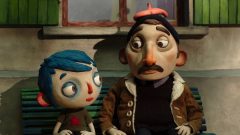
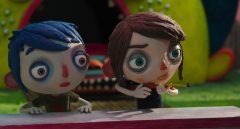
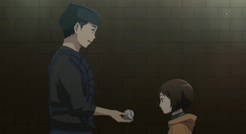
The Red Turtle Review – 93.5/100

Welcome to my first movie review on World Animation section, the column where I wholly dedicated to indie/ art-house animated features around the world that hardly got coverage anywhere really. And what’s a better way to start this section by reviewing one of the most talked about animation movie this year, the one that I believe will continue to gain more devoted fans for years to come. The one that debuted back in Cannes this year with rave responses. Yes, let’s get to The Red Turtle today.

The Red Turtle is a brainchild of the director Michael Dudok de Witt and Studio Ghibli. If you never heard about the director, he’s an auteur animator who directed award-winning shorts Father and Daughter, the short was so acclaimed that many big animation studios approached him to direct their blockbuster movies, all of which he declined. Then one day he received a letter from Ghibli Studio stated that they thought his shorts looked very Japanese and they wanted to make a film with him. If you think the involvement of Ghibli could make this movie a more anime influences, you got yourself in a bind there, because this is unmistakably a Dudok de Witt film with more of European arthouse sensibility, with the slow and deliberate but confident pacing, and the film is more about sense and experience and many details are more open to interpretation than offer any precise meaning.

Looking from the outset, the film sounds like a really challenging work. This is a dialogue-free film about a man who washed away to a deserted island. He tries every opportunity to escape from the island, but always get disrupted by the giant red turtle. Then the man and the turtle form a closer relationship to each other and ultimately the man finds a way to adapt to his new life. And that was just the first 15 minutes of the film. For a full length feature film with no actual dialogue, it’s a feat that the movie maintains the attention to the very end. Indeed, trying to explain the plot of a film, or trying to recapture it in words, is already a disservice to the film. The Red Turtle is a film in its purest form, a visual storytelling that will lost its impact if it gets portrayed in any other forms.

Apparently, Dudok de Witt initially planned to have a main character to speak to himself, like what Tom Hank character did in Cast Away, but then he scrapped the idea since he felt that the dialogue (monologue?) was too unnatural. But without dialogue doesn’t mean this is a silent movie. The sound of the movie, that include both natural sound and the score, is one of its greatest achievement. The sound helps assist us to follow every steps the main character takes, really put us in his shoes as we follow him around. Those sounds create a whole surrounding very detail too, close your eyes and you can hear the wind breezes, the waves of the ocean, the steps of the man and those animals at the same time. The score is equally impressive, at most times it’s slow and tender, but other times thrilling and exciting (like the very first scene or during the flood sequence). Visually, Dudok De Witt implies a very plain character designs against a natural but well-detailed and rich world the main characters inhibit. The background is expressive, with too much details was put on it. From the bush trees, the little crabs who seems to follow the waves, the baby turtles go around the bench, all these really create an atmosphere to the island. The animation and the shot selections are all top-class, which holds much of our attention throughout its 80-minutes length.

The film maybe about a man who float in an island, but the plot never feels plotless. Everything happens contribute to the main themes, which are the connection between human and nature and the passage of time. The film chronicles the man who struggles to find a place in a nature that clearly not for him, to him having a family and has something to hold on to. As the man got older and wiser, he himself realizes he’s just a small part of the world, like every plant, animals around him. His passed away in the end is just as well a part of that cycle of life.

It’s rare today that can give a work that are original, mature and ambitious as The Red Turtle, especially against the backdrop of the dominance of computer animation in feature-length movies for the last 20 years. The Red Turtle, with its simple hand-drawn techniques, already feels like a timeless production, and the film is even more significant given the fact that this is co-produced by the beloved Ghibli, now on its semi-hiatus phase. While this film bears little resemblance to Ghibli’s original outputs, this is clearly a production of both the director Dudok De Witt and Ghibli; in a sense that The Red Turtle would not exist without those two. With so much efforts were put on this picture, it’s the more astonishing to realize that the film had achieved something so difficult to attain: simplicity.

Next post in this column I will review the film that just won the Annecy Festival this year. Stay tune!

~SuperMario~
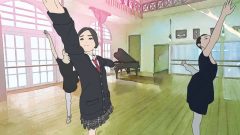
Some Quick First Impressions: B-Project, Love Live! Sunshine!! and Orange

B-Project

Short Synopsis: An idol show about a group of male idols.

I guess they are still trying to create the male equivalent of love live aren’t they. Well I say you should take pointers on what made it work. For one you should never introduce all your characters in one fell swoop, especially if you have a lot of them. Out of the ten characters introduced I can remember four at best but I can recall that pretty much all of them are utterly one dimensional stereotypes. This may be just me, but it feels like reverse harems tend to rely heavier on stereotypes than regular harems. I mean of course harems make use of stereotypes to a massive degree but at least they somewhat try to differentiate them(Obviously not always successfully but still.). Whereas here, I am fairly certain I have seen all these characters before under different names. So a completely amateur is thrown into a manager role despite having no previous experience or any idea of what the job entails. Luckily she has the power of plot convenience as she is able to spot small details and is able to vaguely explain them though ridiculously silly metaphors. The music is terrible but the series is certainly trying to distract you from noticing it by having the singers sparkle and shine which just looks very silly. I may be judging this a bit harshly as while my expectations of what this would be were not wrong, it’s still at least watchable. If you are a fan of this sort of show I think it might do the trick but I will pass on this.

Potentail: 20%


Mario’s thoughts:

A typical Idol show, and story-wise the story about rookie manager learning her job is nothing new as well. This episode starts the rookie manager up with a group of 2 guys, so next few episodes we could see her taking more challenging job with the other teams of 3 and 5 people, respectively. While the music is nice I’ll say that I’m not in its target demographic because I can’t stand 10 male characters that all manage to have different hair colors here. At least one thing I learnt was that in recording sessions, singers had to be separated, because I always assume they had to sing together in order to have a chemistry together. We do learn new things every day hey?

Potential: 20%

Love Live! Sunshine!!

Short Synopsis: An idol show about a group of female idols.

Well at least they captured the essence of what made the first show so watchable and it certainly does have that bubbly optimism that is contagious. We have a brand new cast but I must admit that some of them don’t feel all that new. Our main heroine feels like another Honoka in that she’s a happy go lucky person that doesn’t think things through. There’s a girl who plays piano who’s likely to become the music composer for the group. There’s a student council president who is deeply opposed but will likely join the group later. but there are some new faces giving a different dynamic though one is pulling a rather stereotypical Chunni act. One big worry on watching this series is that it may be just a retread of the first show with slightly different characters. Ultimately if you liked the first season this is bound to give you the same things you liked about it. What will be a challenge of the rest of the series is providing something beyond that.

Potential: 55%


Mario’s thoughts:

Here is another idol show, but this is the one that I can actually can get behind. Love Live has been one of the most successful idol show, and this new installment promises to be on a right track. This episode makes so many things right: a colorful set of characters, all the characters get introduced here and within its short time they all make an impression. But the biggest success is in its thrills: the sense of fun and exciting to form a group, to start something they passionate about. In that sense this is not unlike a sport show. While Idol show again is not my cup of tea, this first episode so far sold me on giving it another watch.

Potential: 50%

Orange

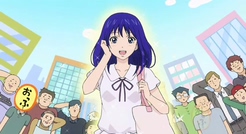
Short Synopsis: A 16-year-old high school girl received a letter from her future-self telling her to keep an eye on the new transfer student.

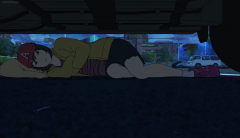
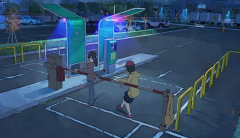
Theres still a possibility of me blogging this as the summer preview poll is open till the airing of the second episodes but if that’s the case then I am not looking forward to it. I don’t think there’s anything wrong with this episode, in fact the animation is quite expressive minus some still frame montages. But this really isn’t my kind of show. I have no love for my mundane memories of school so I can’t relate to stories that romanticize it. For if I wrote a letter to my previous self, I would tell myself not to be a dumbass and make good use of my time knowing full well that my over egotistical previous self wouldn’t take it into account in the slightest. When I watch this all I can think of is how utterly bland this main character is and seeing the telltale signs of a love triangle. We already have confirmed that Naho loves transfer student and that her friend is her husband in the future so we all know that’s coming to a head. Plus it looks like Naho’s female friend has a thing for Transfer student as well so it looks like it’s a love square with likely more incoming. It’s been too soon since Kiznaiver and I am too old for this shit. Plus that soundtrack is so melodramatic that it makes me retch, that piano is so sappy that it makes me embarrassed just to hear it. If this can control itself and keep the drama down to earth I say this could have some worth. However if this goes full Okada then well…watch Relife instead.

Potential: 50%


Mario’s thoughts:

This show really sets itself up for a melodrama here, but I do really hope it doesn’t get too overboard. Other than that, I happy with the entire episode. The cast is well defined and the dynamic between them is all natural. I actually care a lot about the main girl, more than any other main character this season so far, simply because I know exactly what she thinks. Timid, a bit shy and don’t want to be a bother to others, while only allow herself to get hurt. I understand that feeling all too well and I know this train of feeling could bound for many regrets later, on what things she could do better. All that to say this resonates to me on the personal level. The realistic settings and more mature character designs also help to make it look like a live-action series (indeed, Orange has adapted to live-action film last year). I’m afraid later on this show will get into tear-jerking territory, but at least for now, it has my full support.

Potential: 90%

Some Quick First Impressions: Momokuri, First Love Monster and Days

Momokuri

Short Synopsis:  Girl has a crush on boy, girl begins to stalk boy, girl decides to confess to boy. Naturally the boy accepts it. The show chronicles their love story.

They really need to make clear what is a Tv short and a full series before they start airing. Well today’s lesson dear readers is simple, stalking isn’t cute. It’s creepy. A girl becomes obsessed with a boy and proceeds to do all the things a stalker would. Takes pictures of him when he’s not aware, spies on him, knows way too much about him and even holds items used by him in certain reverence. Despite her confessing to him and it being accepted she still can’t quite get rid of her old stalking habits which pretty much makes that the main joke. It’s not really funny and I am not fond of the idea of somewhat romanticising obsession. The characters aren’t really all that interesting and it’s focus seems to be on being cute more than being funny. I say give this a pass as there are better school romances this season.

Potential: 0%


Mario’s thoughts:

This is actually an ONA and its episodes are just 13 minutes long. With that said, throughout the two episodes there’s only one hook from the show: that the two main characters decided to date together, the rest stretches out to how the girl becomes obsessed of the boy, and their shyness when being together. For me 20 minutes of doing just that is simply not enough, and I don’t find the lead endearing or anything. The only thing that I give a plus for this show is we get to know how each other feel, even the supporting ones, through their voice-over and it somewhat balances out the seemingly one-note first love story. But then again I don’t have any high hopes for this one.

Potential: 10%


First Love Monster

Short Synopsis: Girl was saved from a car accident by a boy and she immediately has a crush on him. After she asks to date him, she finds out he’s a primary school student.

There’s nothing quite as tragic as a unfunny comedy. The manga gave me the impression this would be a more straightforward shoujo show but the anime looks to be pushing for a more slapstick comedy approach. In regards to that it’s lacking a sense of dignity as the second half of the episode delves into humor so juvenile that it’s downright embarrassing. I get that the joke is that these children in teenager bodies are acting immature and childish but I suggest maybe not resorting to kids toilet humor. What’s more the actually maturity of these “kids” is questionable as one hand you have them talking about their wieners and then on the other you have them commenting about how the main guy could be cuckold which is certainly not something a kid would know. The first half had me yawning  and the second half had me shaking my head. This isn’t worth your time.

Potential: 0%


Mario’s thoughts:

And talking about first love, we have this one in its extreme spectrum that speaks so much about “crush”. The premise alone is stupid enough, and yes the show goes for full comedy so it means that they don’t take themselves seriously; but to see the kid starts to do all kiddie things, and worst of all they design them to look like a teen who wear kid’s clothes and doing kiddie things, it just sends me chills down my spines. All other characters tick all the box of archetype and anime tropes here so I don’t see any reason that I would spend more time with it.

Potential: 0%


Days

Short Synopsis: A boy who clueless about football decides to join a football club.

This is all pretty standard for this kind of sports anime. A clueless newbie joins a sport where he must be shown the ropes. Gains a deep passion and camaraderie with fellow players. And to the world of that show the only thing worth giving a damn is the sport it’s representing. In this case, football. I find it somewhat endearing as it makes the sport look as dynamic and lively as a football match somehow resembles a superhuman showdown with overblown sound effects and overdramatic reactions. Still there is a certain draw to this kinds of shows and I would be lying if I said I didn’t get drawn in partly. It’s simple but effective though the motto of try very hard and you will succeed is one I see as quite foolish. As a certain sportsman once said, “Hard work beats talent when talent fails to work hard.” It’s no Giant Killing but if you are looking for something watchable in between shows this is not a bad choice to go with.

Potential: 50%


Mario’s thoughts:

I have to say I have a soft spot for sports anime, mainly because a) I have a sport background and b) I had read many sports manga during my childhood. Days sadly appears to be typically underdog football show, where the main character is weak, don’t even know much about football so he has to try harder to be on the team, and his “pushing himself to the limit” attitude gonna inspire the whole team. There seems to be at least inspirational story but I had seen this many times before and for this episode the show doesn’t offer anything different. I’d say I like the character’s designs and I like how they include futsal here (they don’t often portray futsal in anime) but that’s all there is to it.

Potential: 20%

Some Quick First Impressions: Berserk, Relife and Rewrite

Berserk

Short Synopsis: After being betrayed by a dear friend, the black swordsman ventures out for revenge while surviving the demons chasing after him.

Let’s get this out of the way first, yes indeed. This show is ugly. It keeps switching between 2d stills and janky 3d animated models that look like a Playstation 2’s throwup. It never truly allowed me to adjust because the quality of the show was all over the place and thus I was left being nagged that after nearly twenty years without a continuation, Berserk is graced with this visual abomination. But to be fair it was expected considering the studio. Music felt equally off in some places as instead of medieval themed pieces we are graced with heavy guitar and what seems to be some electronic rock? The tune played when Guts swung his sword at the tree demon was especially jarring.  Let’s move on to what matters, the story. This episode didn’t fair well in that category either as the pacing was fast and wonky. This wasn’t a faithful adaption as the studio wishes to skip some story arcs to jump right into the conviction arc, so it’s hastily trying to gather the pieces together instead of letting it flow naturally. I am a good bit disappointed as one of my favorite arcs, Lost children is going to be skipped but we are short in time when it comes to this. But there are parts of this that held some potential, Guts dream sequence was done very well and I rather liked the end with Guts making a declaration and silencing the demons whispering to him. The original Berserk anime in 1997 also had a shaky first episode and I am hoping that once this settles into the arc proper, it will begin to shine.

Potential: 40%


Mario’s thoughts:

The long awaited Berserk has finally arrived with new material. I am a bit worry about the amount of CGI when I first heard about it but now after watching it I’d say the CGI is pretty serviceable. In term of actual story, this is more like a self-contained story to show us more about Guts and his curses, about the way he unfortunately has to walk on, paved with skulls and dead bodies of the weak and innocents. I’ll say we will get into the actual arc when the next episode kicks in. The biggest drawback for me in this episode is the overall tone, which they mix between gritty, harsh, dark material with the light-heart comedy, and frankly it feels very awkward. All the out-of- place comedy involves Puck so I’m a bit worry since he will be prominent from now on. The fighting sequence, like I mentioned earlier, still holds much tension and at least the CGI don’t distract the atmosphere. That aside I think we pretty have a solid new episode of Berserk and I’m hungry for more.

Potential: 70%


Relife

Short Synopsis: A 27 year old man is given a chance to relive his high school life.

Well despite this being only an impression of the first episode, I am surprised to say that you can view the entirely of the Relife anime right now.  All 13 episodes are available now to view on crunchyroll, making this the very first anime to begin and finish airing on the same day. Whether this is a blessing or a curse is up in the air for me as it’s great to have the full series at hand now but in that case how am I supposed to blog it? If this becomes the norm for anime I may be out of the job. Anyway what we have here is a pretty much perfect adaption of the Relife comic. It’s looks great and has captured the comedy of the series perfectly. As a man in my twenties I can certainly relate to Kaizaki’s troubles with finding work as it really wasn’t that long ago where I was a NEET myself. Can’t say I ever lied about having a job to friends though but man, that was rough. My own personal feelings may be heightening my enjoyment of the show as I can sympathise with the main character so much. However I truly feel like this is quite a good school life show and from ratings of the series as a whole, it looks to stay that way. An enjoyable little show and I give it a higher rating because you can binge right through it all now.

Potential: 90%


Mario’s thoughts:

Although the concept about a failed adult has a chance to return to his high school life has been done to death at this point, most glaringly we just had ERASED few seasons back, there’s still meat behind this show so I’m eager to see more from this. The first thing that this series done right is to make Arata the main protagonist as relatable as possible, and his failure from his current life is something that most of us has been through. 28-year-old without a proper job, still relies on parent’s allowance and see all his friends has been settled down is not a pretty picture. The second thing the show is really good at, despise just this first episode, is the power of the cast. Just in about 10 minutes I feel like I’ve learnt about most of the cast, all their traits and the chemistry so far is rock solid. With that said, the gags about Arata being under-prepared, his sometimes silly reactions don’t do well to me, and judging from the first episode here I can see that comedy is not this show’s strong suits.

Potential: 75%


Rewrite

Short Synopsis: Something something, murderous little girl with ribbons, something something, high school, something something, fairies and giant squid monster.

If it’s something I say this adaption isn’t botched like I was expecting though the animation could certainly be better. But I suspect that any viewer watching this is bound to be very confused. I will say I am not fond of the choice to just use the soundtrack of the visual novel for the anime, even if I do admit that Maeda is a fine composer if nothing else. The visual novel tracks were meant more for a reading experience and hearing them in the anime felt too intrusive and sudden. There is nothing wrong with the tracks themselves but it’s clear they are being shoehorned into the anime scenes.While the show isn’t making any effort to explain itself I admit that the supernatural elements lend a certain mystique to the anime and act as a good hook. As a forty minute first episode, it did it’s job. However I give this a low rating namely because I know what’s to come and the end of the episode is perfect indicator of that. First we go into the old typical Key comedy and school life first half and then things are gonna get weird. Sorry I mean weirder. Still annoys me how Key heroines tend to act more like kindergarteners than high school girls and the hints of mystery bug me because I know the answers and those answers are pretty dumb. You may get some enjoyment out of this if you happen to be a Key fan but I recommend that you keep your expectations low.

Potential: 30%


Mario’s thoughts:

We have a double-length first episode and they use these 50 minutes just to set everything up. I guess this is an essential part of time-loop series, just like Re:Zero last season where the first few episodes just to set things up, get us to know all the main characters and then wait for the plot kicks in. In that respect, there are still ways too many characters get introduced in this first episode, while the main hook still hasn’t presented. There are some underlying bits that will be relevance in future episodes: like the very nature of our main character, Kotarou; or the setting place itself, it seems like there is something going on behind those factories; and I especially like the first opening of displaying the ruined city and it’s interested to see how that part connected to the main storyline. On other notes, the character designs of making every one “cute” annoys the hell out of me, and I can’t even get behind these uniforms: it’s more like a maid uniform for all I care. In all, I’m not quite convinced with this first episode but I’ll give it a 3-episode test to see if it can still hold up.

Potential: 40%

Flying witch Review – 86/100

As I mentioned in one of my weekly posts, most of the reason why a slice-of-life anime show don’t work well is not because there’s nothing happen, but more because the cast isn’t interesting enough or the show tends to repeat the things that we already know. I’m happy to say that this is not the case for Flying witch. Flying witch has all the elements good slice-of-life shows have and moreover it presents itself as one of the finest in the genre in years. The slow and deliberate pacing and the strong sense of atmosphere maybe the whole reason why people keep coming back to watch it.

Story-wise, the show focuses on two main themes: the first theme is how Makoto the witch learns and lives her rural country lives. There are segments that as mundane as possible: Makoto learns to plant, the cast cooks hamburger, they go for herb-picking or thinning the apple trees. But the details they put in both show how they really care about the process, and help maintaining the relaxing atmosphere till the end. In Flying witch world, time will pass and people may get old, but growing plant, eating hot cakes and wandering around might be the best ways to spend your day. The second theme is to produce a mix of magical realism in this everyday life. By introducing new characters: The Harbinger, another witch, the witchcraft, the witch café or at the end the flying whale and Earthfish, the show showcases a sense of wonder, a touch of magic that feels almost like, well, actual magic. It helps that the introduced characters are endearing and have a very easy chemistry, they are both display on how each of us is different and have different purpose from each other, but ultimately we are all part of mother nature.

Aside from the atmosphere, the cast is easily one of the highlights of the show. Rarely in anime that I see a cast who feel really natural and thus, true to life like our friends around us. Chinatsu, for example, acts exactly like how 12-year-old girl would act. Her ever curiosity, her excited over whenever she encounters new things, are so natural and exactly herself. Chito the cat acts like any normal cat would, and then some. Indeed, one of the greatest strength of the show is how everyone in the cast are so consistent, yet each episode we could learn something new about them. Like we only learn that Nao is so clueless in kitchen on the last half of the show, or until the second encounter that we learn Anzu is really knowledgeable about history. Each of the cast also fits in the shows perfectly and it has been so long that I found myself enjoying so many characters like this one. Moreover, the chemistry between the cast is what makes this show shines so much. I always enjoy little moments shared between some of their cast: like back-and-forth conversations between Chinatsu and Inukai, or Nao and Chito the cat, or Anzu and Kenny the white cat. The chemistry between the siblings: from Kei and Chinatsu, to Makoto and Akame is also well-spot, they’re siblings and their personalities are so different, but they understand each other and I can feel the warm feeling they have for each other. All these little moments help build up the chemistry and make the show so rewarding to watch over and over again.

But the show not only shine for its laid back atmosphere, Flying witch is also known for its understated details. It furthers showcase how the staffs put so much effort to this show so that it feels almost effortless. Those little details that we can easily miss the first time we watched, like Makoto put her broom in “vehicle parking” section in one episode, or how the hamster shakes himself uncontrollably every time he finds himself near Chito the cat. Those details could indeed be very rewarding on repeated viewing. While the show is much more an atmospheric spectrum than comedy side, this show also has very solid understated comedy and always has a very good sense of putting a final punch. The quick remark from Chinatsu about her Mom for example “I heard that old people aren’t easily surprised” is both very whimsical and modest. The punch where Akame giving Chinatsu and Makoto her presents had to be one of my favorite part of the show.

Indeed, because of its relax tempo and slow pacing, it is destined for a lazy Sunday afternoon watch (which was exactly the time it’s available here in Australia), that’s feel true as in many of the episodes -for some characters – all they do is taking a nap. Ultimately, Flying witch is a celebration of the joy of everyday life, with a little touch of magic to create a sense of wonder that life and nature could bring to us.

~SuperMario~
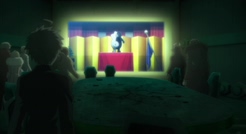
Bungou Stray Dogs Review – 62/100

Well, we don’t usually give a review on the first cour of anime show, given the fact that the second part will air next autumn season. But since I’m not certain I would cover its second half, plus I don’t think this series will improve itself, I might as well give Bungou Stray Dogs a proper review now.

Bungou Straw Dogs is an action show that follows a story of Atsushi, an abandoned boy who can transform into a tiger unconsciously. He got rescued and later recruited by the Armed Detective Agency, which contains a bunch other gifted characters. But things become more complicated as the Port Mafia – the local mafia – also want to take their hands on Atsushi and towards the end of the series, somehow the Guild – the North American counterpart for gifted people – involves to capture Atsushi as well. The show follows this main storyline, at the same time introduces each and every one of the Agency.

As far as action show goes, in term of production, the show has a lot to recommend on. The art designs, in highlights, feel like an essential component of Bungou Stray Dogs. This show has always put extra effort to create a strong personality for its settings. From under the bridge scene right at the beginning, to the abandoned hospital, to the various sights of the city, all are well-drawn and have an atmosphere of their owns. The last episode set-piece in closed space dimensional, in particular, showcase the art designs at its best as it has a very distinctive feel of dreamy and creepy, like a nightmarish version of Alice in Wonderland. The show goes for more of impressionist visual style, and I would say what they achieve here is impressive. The staffs show us that they have a great flair of shot compositions. This is one of a few anime series that whenever I freeze frame the screen, I can still find great shots for my screensaver. The impressionist visual also means that the color palette changes depend on the mood of the scene, but the show favors the use of strong color in its more ordinary scene: dark red, green, resembles many of classical paintings. The music of the show has always been very consistent, and sometimes it did take a little risk. In a bombing sequence for example, the score goes to unsettling and nausea approach, which in turns very fitting to the chaos and the nausea of the confusing crowd.

But in Bungou Stray Dogs, we don’t only have action. There are also some twists/ flavors mixed in with its action, and the results vary in many degrees. The first ingredient is to make the characters based on real life authors. This adds a little quirk to the characters, which is actually fun to watch, especially if you know the authors they are referencing to. Talking about characters, the cast in the show does have their own voices. Like the cast in shows like Baccano or Cowboy Bebop or directly from Tarantino’s movies, they never feel like a real person, but they’re damn fun to watch nevertheless. I have to point out Dazai and the girl Hyouka as the show’s stand out characters, the way Dazai’s charm his way out (even about suicide) and Hyouka tragic but grounded circumstances. Other characters are vastly over the top and when given a spotlight, they developed quite well but most of the times the cast is unfortunately bland and one dimensional. See, this is a fundamental problem of Bungou Stray Dogs, because the cast is so exaggerated and over the top, leaving them on their own could potentially affects the main storyline. As a result, in order to keep the story going the way the show wants it, the cast has to be as one-dimensional as possible and sometimes as inconsistent as ever. For instance, it’s nice to learn the truth behind Ranpo’s gift or Kanji acts up once in a while, but for the majority of time we will have to see the childish, selfish side of Ranpo or the happy-go-lucky Kanji. Bungou Stray Dogs, you need to constantly shed new lights to your characters, because if you don’t care fleshing out your characters then we won’t feel it either.

The inconsistency of the characters further highlights this issue and most of the times it feels like the characters act certain way just because the show wants them to. Like for example in the first few episodes it was established that the Agency is like a big family; but then Dazai got captured for several episodes and no one seems to care. I believe this supposed to show how Dazai is always ahead of everyone and he can take care of his own, but it feels truly bizarre that after all the trouble he went through, the next episode we have him sitting in a chair like nothing ever happened, and the cast treats him like he was never been captured before. There are also many times that the character Kunikida has a huge leap of personality, like in one episode when the Agency was informed that Atsushi has been abducted, Kunikida was totally oblivious to the news and kept babbling about the Agency’s current “important” ministry job. In the end of the episode, however, we have him rushing out to rescue Atsushi like it’s the most obvious thing in the world and it makes me feel dumped.

The second mix of ingredient is the mix of detective cases in several middle episodes of the show. Those cases are simple enough and they were presented to mostly showcase the cast’s members. But many cases are just plain, with our Detective solve it way too rushed with information we never even heard before (like the fishing tackle store, which if it blows up it could bring down all the big building nearby. How are we supposed to know it? Well, never mind!). Usually the new players introduced will have something to do with the case, and then when they finish their purpose they will get tossed out and we will never hear from them again. This is a minor complain but the number of innocent people who got killed off are jarring to me. I guess this is just me as I think the show doesn’t care much about this issue, but killing people just for the sake of raising stakes is a terrible writing.

All to say, in terms of production and character designs, there is a lot to recommended but writing-wise, the show needs a lot to improve on. As for the score, for me 60 is the line between exceptional and mediocre shows, and Bungou Stray Dogs is a slightly (very slightly!) above average show. This first half set itself up to be a three-way war between the Agency, the Port Mafia and the Guild. I’m interested to see how they handle the war and also curious to see the Guild counterparts and their gifts. Here’s hoping for the second half can deliver what this first half has been promised.

~SuperMario~
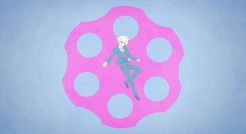
Kiznaiver Review – 60/100

Kiznaiver is a very different faire from Studio Triggers other works in that it takes a more serious tone and has a writer who tends to go more for the melodramatic. This is a tale about a group of very different people gathered together and have their pain linked to one another. In an effort to take a step towards world peace a system was devised to allow people to feel the pain of others as if it was their own and thus these group of people must learn to coexist with one another to complete missions given to them throughout the summer. This is the premise sadly lost in this show as it eventually gets lost in a love pentagram, excessive teenage melodrama and angst over the past. Kiznaiver is a polarising title in that it has elements of great worth and characters, while not particularly deep, that have good chemistry. However while it had a vague idea on the themes it wanted to touch and what it intended the characters to be, it purely gets lost when it comes to presenting those idea’s. What we are left with is a series which doesn’t know where it is going and wastes more than half its runtime in reach of a goal. Though once it finally decides on its direction it sacrifices all it has set up and it’s greater elements for forced drama and soap opera like developments. All to end on a climax with feels undeserved and rushed.

Kiznaiver is a bad story with excellent presentation as while the story developments are confused and lack focus, the presentation could fool you otherwise. Direction is particularly excellent in giving emotion to certain scenes and the visual aesthetic is quite appealing. The anime also sports a great opening with what may be the last song by the excellent band “Boom Boom Satellites”. The OST has some notable tracks and sound direction is spot on. The characters are quite likable and at times the comedy can work well but it falters when it sacrifices the comradery of the group for the cheap thrill of over emotional outbursts and vocal preaching. The plot gives special attention to certain characters only to abandon them to the sidelines afterwards and at times changing characters to fit what is demanded of the plot only to double back and have them return to how they were. At the beginning Kiznaiver was aiming to be zany and fun like any other trigger anime but halfway in it decided it was going to be Kokoro Connect. Then reaching its endgame without really deciding on which of the two it would prefer to be.

The show tries to act as a character study and tries to get across a deeper insinuation about the nature of feelings and connecting with other people but when examined it comes across as shallow and simplistic. Mainly resorting to a traumatic past as the cause of someone having communication issues instead of taking into account that maybe their are those of us who simply can’t connect with others. Or simply don’t want to. Two character get more focus in regards to this and one has their development more or less negated within two episodes of coming out of her shell. The other remains rather enigmatic and when it comes down to it, all that we truly learn of her is that she has a contrived tragic past. If it doesn’t affect you then sadly she has nothing else, besides acting as a love interest. Despite this it has moments; in both the forced drama and zany antics there were points when it comes across as genuine and heartfelt. Though this does make me lament just what this series could have been if had better planning. This is Trigger trying something different and as an experiment it is interesting. I would like to see Trigger tackle something like this again but if they do I hope they hire a better writer.

~AidanAK47~

Joker Game Review – 50/100

When experiencing the wave of new anime each season it can get rather tiresome to notice all the teenagers fighting supernatural forces while gathering a harem through seer luck or similarly tired concepts. So when something like Joker game comes along and takes a road less traveled with it’s story, naturally I am well on board. However the sad thing about entertainment is that even if you try something new, if you don’t succeed it amounts nothing more than a show which had a good idea and a lesson for others to not brand out from their tired concepts. In that regard I truly lament such anime but unlike them I don’t think Joker Game will remain as a lesson for others, for to do so it would have to be memorable. An idea with such promise, a tale about a team of Japanese spies sent out to gather info in the time right before World War II broke out. You could spin quite a tale with that setting but sadly Joker Game settles for a much more simplistic level.

The first problem with the show is it’s episodic format and it truly limits the plot when each episode’s story needs to be resolved in a short time frame. Each episode has a brand new cast and a brand new setting. This essentially prevents the viewer from becoming attached as there is rarely anything consistent to latch on to. But most importantly in episodic shows the show is often held up by the characters and their interactions. However Joker Games protagonists are completely interchangeable with little in defining characteristics. No matter the episode the main character plays the role of the super spy who never fails and in that regard is mainly a plot device. When looking over the story, Joker Game is style over substance and merely a spy power fantasy. The writing lacks the nuance to weave a compelling narrative around international espionage and often resorts to contrived or trite developments in order to make the protagonist look as good as possible. The villains in each episode range from the over the top evil to inconsequential, often any threat they pose is completely undermined by episodes end. The writer holds his protagonists in too high a regard which ultimately makes this a show about the triumphs of several Gary Sue’s and how much better they are than other people. It don’t take long for this aspect to wear on you and through the episodes the victories of the D-agency spies become less compelling and more boringly anticipated.

Through while the writing can reach unrealistically silly levels as the D-agents display skill bordering on the supernatural, you can still find some interest here. The show never truly drops to a level of becoming bad and to some they can come to enjoy the exploits of the spies and their missions. I found three or four episodes to have above average value and the show remains consistently watchable. However it never truly excels and in episodes can become quite boring as you wait for the inevitable cop out win of D-agency. The episodic structure continues right up to the end where the show simply stops instead of ends. The art and animation remain consistently good and the soundtrack is rather catchy and nostalgic of Noir fiction. Joker Game is a show that lacks the high points to be recommended and the low points to be outright hated, it’s middle of the ground which made the score of this series rather appropriate. Joker Game is a series destined to be lost to the ravages of time, soon to be forgotten.

~AidanAK47~

Mayoiga Review – 78/100

Mayoiga has to be one of the most misunderstood shows in recent years.

On a surface, the premise alone has a lot of potential. The idea behind putting 30 people, each of them has very different set of personalities, together in a bus to a mysterious lost village, in order to start over new life is an intriguing concept, because there could be lots of angles to explore, even within its mystery/horror fare. The show could use the setting to explore the internal conflicts between the cast, or the nature of those monsters that drive anyone insane or even dig deep to the mystery behind Mayoiga, or the show can go full cannibalism that was suggested many times in the first episode.

Instead Mayoiga goes off track very early and never looks back and the overall execution certainly stands out, in a very-bad-it’s-good way

Billed as a mystery show, Mayoiga contains many elements that feel like a recipe for disaster: over the top characters, awkward pacing, long and meaningless conversations. In the first 10 minutes of the show for example, literally EVERYONE in the cast got introduced (and that 20 plus characters to remember). The characters have a distinct and overall solid character designs; but most of them are way too over the top to feel like real people. Mitsumune, our main character, for instance, feel really bland and his only traits are unsure about himself and his affection towards Masaki. The conversation drags on, don’t really advance the plot or flesh out the characters. Worst of all, the pacing sucks, sometimes it drags for too long before moves too quickly, for example in the first half of the show, there are few episodes where nothing important happens except the cast arguing. The cast themselves uses their time wisely to talk about how to call rock, paper, scissor the most correct way, arguing over the name of one of the cast who just vanished, or lying asleep in the end without the care of anything else.  The cliffhangers, were presented in almost the end of every episode, just so that the stake returns back to normal in a very next moment.

Thematically, Mayoiga actually has its meaning underlying under the surface. The monsters are revealed to be Nanaki, which are part of each individual’s past psychological trauma, come to life. They are a symbol of all those ugly things that the cast left behind to start over their new life. They are not, as the series progresses, intend to harm the cast, but are a part inside each character, and the show made a point (as in your face as possible) that all of them need to face their own Nanaki (their traumatic past) in order to become a better person. The Nanaki monsters, represented in 3D animation, are both out of place and uneasiness at the same time, which actually fits to the theme very well.  But I have to say, reading this underlying message is a bit too much, as the series itself never attempt to dig deeper into its theme.

Which brings me to the next point, many of the above elements actually WORKED in favors of the show. One thing that Mayoiga truly excels, the one thing that Mayoiga will likely be remembered for years to come, is its ridiculousness. All the ridicuolous, awkward bits are intentional, majority of them are so well-aware that it becomes hilarious. Many of the Nanaki monsters, for instance, are just plain silly in concept, such as a big silicon boob monster (yeah! You read it right!), or a girl seeing a giant Mitsumune because he happens to look like her ex-boyfriend, so instead of seeing her ex she would see Mitsumune who she just met for 2 days. See the absurd sense of logic here? Indeed, most of the cast embrace that ridiculous sense of logic wholeheartedly that it’s actually refreshing to see them keep betraying our expectation. Lovepon would be nothing if not for her “execution” speech, and after a while it’s just feel so welcome to see her running for her life from the monster, still remain in character “We going to be executed!!”. The Driver and his bus also keep appear/ vanish without any explaination is also a good running gag. Other characters, like Mitsumune, Hayato, Koharun, Nanko, actually the whole cast also embrace their one-note traits to a bitter end, put it up to the max that they become so gimmick and fun to watch. The conversations, as I mentioned above, drag on and on; but there is a lot to enjoy there, mainly for their unique train of thoughts and the ridiculous topics they could come up to.

Like I mentioned in my review posts, Mayoiga is a masterclass of using anti-climax not only to twist our expectation out of the usual conventions, but also to reduce any tension whatsoever. Take the revealing about the nature of Nanaki for examples, in a sequence where 4 members of our group witness their own Nanaki, they seem defeated, had nowhere to run but somehow, all of them managed to escape from it, without any injury. In other scene we witness the group decided to tied Masaki up and attempted to stab her, just so that she got ambushed by the bus driver, who drove her away just to beg her to allow him to meet his daughter again. The extensive use of anti-climax might seem uneven, absurd and even laughable at first, but actually these are all intentional so that the show can screw you out of any conventional sense.

But self-aware or not, Mayoiga can’t hide a fact that, in a nutshell, this show is an incoherent mess. In fact, inconsistency is the only consistent trait the show has. Mayoiga always feels like a product of too many minds, too many ideas that crammed all together, that contributes to too many half-baked ideas, and the pacing is all over the place. This seems understandable though, as in the process of making Mayoiga, the director Tsutomu Mizushima (Girls un Panzer, Shirobako, Prison School) encouraged the team to come up with ideas, and Mari Okada responsible for putting everything together. On that note I have to say the ending is surprisingly conclusive. Yes we would never know what happen to the people before the cast arrived, or how the majority of the cast meet their Nanaki (they JUMPED straight from those guys sleeping to they being back to the bus), but all the main questions are addressed and I actually feel kind of satisfied with the ending. This is a show with lots of obvious flaws, but it is also a show that unlike most of our usual anime fare. I have a great time with Mayoiga and ’m happy that I got the chance to cover it.

~SuperMario~
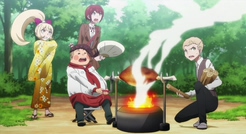
Stella Glow Game Review-60/100

I really should be getting Grand Kingdom or waiting for Mirage Sessions. My review of Stella Glow is way past relevancy being nearly 8 months late, but I finally completed this and it wouldn’t hurt to briefly wrap up my thoughts about the game created by the now-defunct Imageepoch. I somehow managed to get through Lord of Magna in little over a week but I couldn’t motivate myself to finish this game after chapter 6. So first, jumping into the game, I admittedly didn’t have too much experience with much of Imageepoch’s previous titles, I only played Luminous Arc 1+2 and thought the gameplay was pretty good (although I’ll always hate the story in these kind of games). Therefore, I expected Stella Glow to be much of the same. In terms of its gameplay, it’s even somewhat over-simplified/dumbed-down since my last Imageepoch game.

To be brief, combat is turn-based spread over a 3D grid ala Luminous Arc, separated by free-times in which your character can buy weapon upgrades, find loot, do odd jobs for money, and interact with party members in order to unlock new support abilities. With combat, the atrocious AI aside, it’s relatively vanilla and doesn’t rock the conventions very much. It’s blasé to say the very least, with an outdated concept of PP-based skills that is actually a regress with its lack of any equivalent to Luminous Arc’s Flash Drives aside from the conducting (which doesn’t do much for strategic depth). There is no more depth beyond these standard attacks and skill-attacks, so what you see is what you get all the way through your 50+ hour game. Moving your team members around a strategically-lacking battle area has never felt more unexciting as a direct result, and makes grinding all the more painful to do. And you’re going to have to do a lot of it.

Compounding the problems to combat are the enemies. The AI in the game utilizes little form of strategy or out-maneuvering. If it has a better shot at greater damage output (such as attacking my characters from behind) it doesn’t do it, and as is the case almost all the time they rush the nearest available frailest unit and zerg-rush them without any semblance for party-cohesion/roles. For example, even when my tank Archibald is quite vulnerable sitting at a low health, enemies still often rush my witch who’s at full HP because the AI simply cannot understand strategy and the benefits of knocking down selective units. The challenge instantly turns to frustration as early game I didn’t even bother using healing units very often, since they have to come close to another party member in order to heal, yet then become vulnerable to long-range enemies’ ridiculous ranges. On the other hand, some skills thankfully offer low-mobility characters like Archibald with long range attacks to attack past 2 squares, which is sorely appreciated for such a slow unit, and it theoretically gives these characters better usage early-game with stronger party cohesion. However, this does not work as well as it should, as you often cannot attack diagonal squares aside from magic skills. For me, that defeats the purpose of trying to give slower units a greater mobility. Yes, Archibald gets better later on in the game, but there is little logic to not allowing long range attacks in general, Archibald or otherwise, to hit diagonal boxes especially when terrain heavily limits your ideal range of movement anyways. Some elements of Fire Emblem would’ve been great here, like diagonal attacks and earlier long range healing skills. Otherwise, everything else about the combat system is solid, such as the satisfying range of roles in your party, and the activities that you can do in between battle times are varied and interesting.

As for story, it’s about a generic protagonist with a mysterious past who has the power to collect witches, in true harem spirit–as is plastered all over the back cover. I’m not going to complain too much about the generic plot as much as I hate it, it’s simply there to provide a backdrop for the challenges that our characters will face after all, and none of the party members felt forced or too out of place. However, any longtime JRPG player will recognize the story going through the motions in a half hearted attempt to try and set these characters beyond their archetypes to no avail, and the writers have every blame for this. In a game like this it’s imperative for it to be a worthy character story, with immersive character conflicts to make up for the lackluster backdrop concerning some generic kingdom under attack by some generic villains. Unfortunately however, by the end, there is very little characterization. Well, apart from “She’s not shy anymore” and “He’s less strict now.”

Lastly, the user interface is clunky and bare bones to put it lightly. Whilst in battle, you cannot access an options menu to adjust your game settings, it is only available outside of that and events. Even then, the options menu is simply pathetic. There are volume sliders, options to turn off combat animation (which is already available in battle), and little else besides it. No options for changing the controls to adjust the inversion, utter disuse of the circle pad, story recaps, turtle paced scenes, and the list goes on. But at least the game looks good for the 3DS and the soundtrack isn’t half-bad, even if the fan service is irksome as hell and never stops, but that point is rather moot with a game like this that lets you know what you’re in for with the cover. Overall, if you haven’t picked this game up yet I’d recommend you give it a try at least, it’s honestly far better than the likes of Lord of Magna.

Storytelling: 5/10 Average fantasy story
Gameplay: 7/10 Limitations aplenty, but otherwise strong system that remains familiar
User Interface: 3/10 Clunky and frustrating
Production values: 9/10 Looks and sounds great for the 3DS

Suggestions:

Fire Emblem Fates

Luminous Arc

Lord of Magna