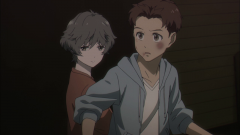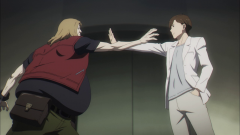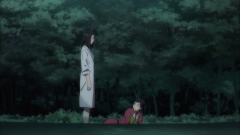
Summer Season 2019 Preview

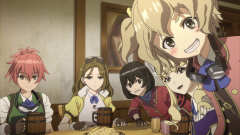
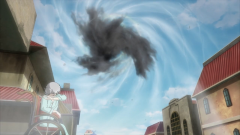
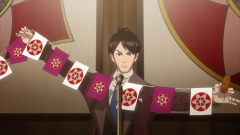
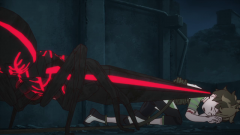
Wooper: The sun is shining, the temperature is rising, and the anime just keeps on coming. It’s time for our quarterly season preview, which we’ve trimmed down so it can look its best for the summer. Unlike previous editions, we won’t be examining every new show in this post. Instead, we’ve picked the 16 most promising and/or popular shows to preview (though there’s a bit of fodder near the start), and kept the rest confined to the poll down below. We’re still planning to give our thoughts on every summer series during First Impressions week, but when it comes to the season preview, we want to highlight the good stuff – or at least the stuff that won’t make you wonder why you’re an anime fan.

Most seasons have just a few great titles concentrated at the top, and this one is unlikely to be an exception. What’s interesting about this particular summer, though, is that the three most anticipated non-sequels are all action or adventure series. Two of them are big shounen properties, which our authors tend to have mixed opinions on, but these appear to have some serious promise. Will this be the miracle season where we all agree on what’s top tier, or will a handful of underdogs steal the spotlight once July gets underway? We’ll find out in a few weeks, but for now, let’s run down what might be worth your watch this summer.

What will you be watching this Fall?


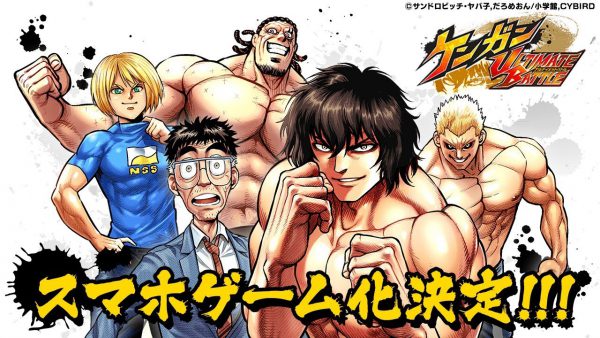
Kengan Ashura

Studio: Larx Entertainment
Director: Seiji Kishi
Series composer: Makoto Uezu
Source: Web Manga

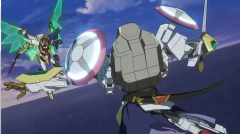
Mario: Another Netflix original offering and this show looks and tastes like Baki from last year, with the trailer focusing solely on their fights. Moreover, it’s an entirely CG show that sadly doesn’t look that polished. While all these are enough for me to discard this show, there’s one saving grace from the show that holds me back. The key here is the director Seiji Kishi, who directed popular hits like Angel Beats, Assassination Classroom, and MY TYPE OF SHOWS such as Humanity Has Declined, Tsuki ga Kirei and Asobi Asobase. That being said, apart from Assassination Classroom, this is the first anime where he ventures over to shounen action-centric material, and the fact that this is his first full CG project doesn’t spark much confidence. I don’t know. I grow mixed on the Netflix model when it comes to how they handle their original anime. It’s true that they have larger budgets and allow more creative freedom, but for me they aim for more mainstream tastes. Stuff like Baki, this one or Ultraman last season aim for specific fanbases, and their more flashy titles: Carole & Tuesday, Little Witch Academia, Violet Evergarden are products of famed directors/studios producing something weaker than their true talents. Maybe just like last season’s work by Kenji Kamiyama (Ultraman), this one will come and go with a weak splash before vanishing altogether.


Arifureta Shokugyou de Sekai Saikyou
Studio: Asread, White Fox
Director: Kinji Yoshimoto
Series composer: Shoichi Sato
Source: Light Novel

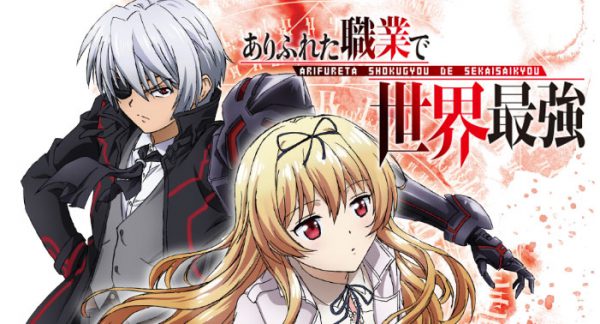
Wooper: I managed to sprint through a few chapters of the Arifureta manga before I had to bail out. It’s based on a light novel, but assuming the manga’s story and characters are the same, the author must have been playing isekai bingo when he conceptualized the series. The MC is an Average Gamer who somehow attracts the attention of the school idol, and is therefore hated by all the handsome, athletic bros in his class. One day, when their bullying gets particularly vicious, he wishes they’d all get transported to a parallel world – and that’s exactly what happens. Video game logic sets in pretty quickly, everybody starts dungeon crawling, and eventually the nice guy protagonist is betrayed by one of his classmates and loses an arm. Last year’s Shield Hero was insulting enough; I don’t need to read any further to recognize this as one of its clones. Really, the only reason I previewed this was to look back and say “I told you so” when its defenders get to the penultimate episode and realize it was a waste of time. Not even White Fox, who usually do good work with fantasy series, can save this premise. In summary, if you’re thinking about watching this, don’t.

Continue reading “Summer Season 2019 Preview” →

Announcement Time – Writers Recruitment #2

Applications are closed. To everyone who submitted, thank you for your interest!

In June of 2017, I applied to be part of the team here at Star Crossed. Now, nearly two years later, I’m writing our new recruitment post. Time flies when you’re blogging anime.
With Aidan’s recent departure, it’s time for us to shore up our roster a bit. More writers means we’ll be able to cover more series, include more perspectives in our First Impressions posts, and perhaps introduce new features like Lenlo’s Throwback Thursday. Seasonal anime will always be our bread and butter, so we’ll be asking new recruits to give us a hand starting with the Summer 2019 season. If you watch anime week-to-week and want an established platform to write about it, then we’d love for you to apply.

Text blogging isn’t a glamorous job in this era of video sharing sites and social networks. If your application is accepted, your only rewards as a writer will be a sense of accomplishment and the rare message from an appreciative commenter. Keep at it long enough and you may even get one or two not-so-appreciative messages! Mario, Lenlo and I will be grateful to have you, though. We’ve all got different tastes, so you’re sure to find somebody you click with. We’re also flexible regarding upload schedules and show selection, though we’ll begin to expect a bit more once you’ve settled in.

Still keen on applying? Hit the jump for details!

Continue reading “Announcement Time – Writers Recruitment #2” →

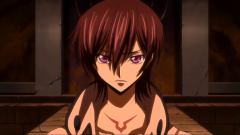
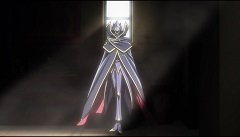
[Star Crossed Anime Exclusive] Code Geass: Lelouch of the Resurrection Review – 80/100

I was lucky enough to be at Sakura-con in Seattle on 20 April 2019 for the Funimation’s movie premiere of Code Geass’ third movie with the Director himself, Gorō Taniguchi, along with his senior staff in attendance inside a room full of raving fans. Was it was worth the decade-long wait to have a worthy continuation of the series? Read ahead and find out what’s in store for Code Geass’s future.

Warning: Full Spoilers Ahead!!!

Continue reading “[Star Crossed Anime Exclusive] Code Geass: Lelouch of the Resurrection Review – 80/100” →

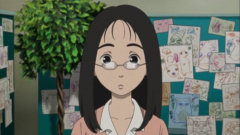
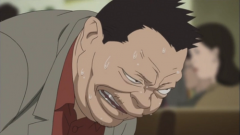
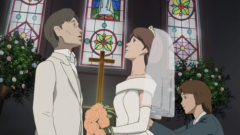
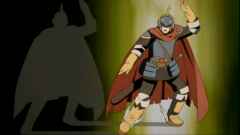
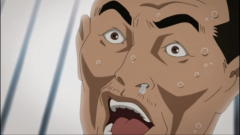
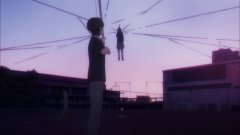
Paranoia Agent Anime Review – 67/100

In an era of the mundane, where every series is the same moe blob, the weird sticks out. Even the most mediocre series can get attention just by being weird. Paranoia Agent is not mediocre, and it is far beyond simply “weird”. Written and Directed by Satoshi Kon, Paranoia Agent is one of his last works before his untimely death. With only Paprika and Good Morning coming after it. Known for a radical style and a penchant for the odd, Satoshi Kon was an extraordinary director, unique to any other. Paranoia Agent lives up to this reputation, being unlike any other series I have ever seen. Its horror is Lovecraftian, its style chilling though as interesting as it is, this isn’t always in it’s favor. For the most part, the series is a joy, but when you try something new, it doesn’t all stick.

Welcome to Paranoia Agent, one of the hardest reviews I have ever written, lets jump in!

Continue reading “Paranoia Agent Anime Review – 67/100” →

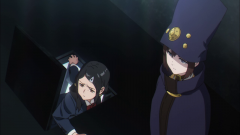
Boogiepop wa Warawanai (2019) (Winter 2019) Anime Review – 78/100

Just like the titular character, Boogiepop Phantom the series has become some sort of urban legend itself in this medium. Its Light Novels are amongst the first Light Novel ever released, dating back to mid-90s. Moreover, the franchise has endured the test of time, as it inspires anime, live-action adaptations and Boogiepop is a well-known face in Japan. This new version intends to adapt the Light Novels more faithfully as it goes through several arcs from the source. All in all I consider this an average adaptation to its classic source. It has tons of issues, both production-wise and character-wise, although the arcs themselves are all quite decent.

There are reasons why Boogiepop still remains in the conversation of the medium till this day. The most distinguished feature lies in its non-linear, puzzling narrative. There’s a saying of “style over substance”, but for shows like Boogiepop it’s the styles that become the substance. Introducing dozen of characters within an arc, some have more significant roles than the others, floating in and out of time, sometimes within a dream; Boogiepop’s narrative is like a jigsaw puzzle. There’s bits and pieces the show throws at us during the arc, but until the last pieces fit in, should viewers see the full picture. This narrative style demands viewers’ attention throughout, and if you miss one bit of information you might feel at a total loss, hence I can see why viewers would turn off by it. But it’s a rewarding process for those who decide to stick with it as the story starts to add up and sink in the more we explore its universe.

The very strength of this disjointed narrative is that it provides multiple points of view, each character has different issues, they have different ways to view the world and all add up to bring the multifaceted layers of this universe. I also appreciate how each characters have different goals in mind, even the ones who don’t contribute much to the main plot like repressed homosexual feeling from one character in “Vs. imaginator” arc, or Makoto’s feeling of his father in “The King of Distortion” arc. They might not be relevant to the events of the arcs they are in, but they all speak to the same theme that Boogiepop trying to address since the first episode…

And that theme is adolescent growth. In Boogiepop universe, there are supernatural beings that exist beside us. These supernatural beings, however, are products of teenagers’ insecures. People’s fear and myth that form a physical manifestation of these beings. While I certainly approve this underlying message, the way Boogie presents these themes are both obvious and hazy at the same time. As for the former, the speech between Suema and Aya Orihata in “Vs. Imaginator” arc when Orihata about to jump off the balcony are way too heavy-handed when Suema tries to explain the whole “what does this series mean” speech to convince her not to jump. On the opposite spectrum, sometimes this underlying message can be too unclear and pretentious for its own good. I still can’t make heads or tails what progress Shiro Tanaka the Archer been through in the last arc since there’s little to no emotional attachment whatsoever. Indeed, this is the main weakness of Boogiepop, it’s more interest at being intriguing and not much about building up emotions or characters we can care for.

Boogiepop consists of 4 different arcs and an unusual 18 episodes airing. Out of these arcs I would say that the first arc “Boogiepop doesn’t laugh” is its worst (and the premiere isn’t the good way to introduce the show), not because the source isn’t strong, but it condenses the plot to much it becomes too linear for the show’s nature. Take note that none of these arcs are bad, they are messy, yes, but they all hold up well at the end and they bring the right atmosphere to the show. The only issue I can point out, is the visual where sometimes the characters go off-model, and CG crowds that stand out like a sore thumb. The score is at least intriguing and unusual. It uses electronic score with sometimes just stop abruptly in the middle of conversations, which again bring out the off putting nature of Boogiepop.

Finally, as I mentioned briefly before, the characters unfortunately isn’t the show’s strong suit. Part of it because of the disjointed narrative, and part of it because there are no real protagonist in this show. That is the reason why “Boogiepop at Dawn” arc fares so well because Nagita is the clear main character who drives the events. The worst of the cast, unfortunately, is Touka Miyashita. We learn little to nothing about her own character (except from she having a family issue as well) and for the character who supposed to be a vessel for the titular character, this is just not enough. Boogiepop is a mess, Boogiepop is emotional distance, Boogiepop can be frustrating to watch at times but its puzzle-like narratives can sink in and be rewarding for those who have enough patience.

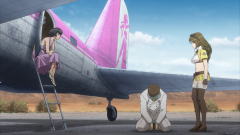
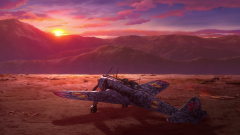
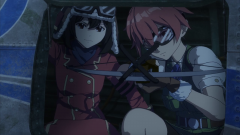
Kouya no Kotobuki Hikoutai (2019 Winter) Anime Review – 77/100

Coming to Kotobuki, there are lots of aspect that catch my attention: it’s from a famed director Tsutomu Mizushima who can turn the most trashable and genre-able concepts into something intriguing; it’s an CG show about air pilots: it has extended aerial combat set-pieces. Watching it till the end, I have to tip my hat off to Mizushima. Kotobuki certainly isn’t for the mass, nor does it ever intend to, but there’s always a clear sense that this version of Kotobuki is how Mizushima envisioned it to be. For the strengths of it are pretty clear, at the cost of its own narrative, its characters’ depth or any thematic context. The thing is, I believe this show is a success, as it fulfills all goals that it set out to do. As for those of you who didn’t follow the show, Kotobuki is about the titular Squadron, an air fighter team for hire to protects goods from air pirates and the likes. As with his previous Girls und Panzers, Kotobuki spends a good chunk of its time for the CG aerial combats. It also benefits on a tongue-in-cheek style where the show pretty much eschews all the tropey conversations we usually find in anime for more realism and natural take. Lastly, Kotobuki favors small characters dynamics as opposed to conventional developments, as the result it might not have any deeper layer, the characters might not feel that developed, they are still a constant fun to watch.

I figure that at the end of the day Kotobuki will mostly remembered for their extended CG aerial combats. Those set-pieces usually take up half the length of an entire episode, but to its credits the show makes it with styles. The lengthy aerial dogfights are well choreographed, the CG animation looks realistic and most of all, the sound designs are sublime. Whenever the bullets hit the plane, for example, we can hear the metal sound. That CG visual comes with a cost, however. The characters animation looks stiff and in some case, their facial expression and the way their heads move stick out like a sore thumb. Narrative-wise, the plot moves really straight-forward. Since it has a length flight sequences, the rest doesn’t feel flesh out enough. There are so much else that I want to know more, such as the dessert world building or the characters.

Another feature that differentiate Kotobuki show from the rest is its rapid fire dialogues in a casual manners. Right at the very first shot, we get that very sense. Characters go on and on in random topics, most of the dialogues are unimportant or have nothing to do to advance the plot or deepen the characters. So why include these lengthy conversations then? It is because it feels natural. Characters bounce off each other seamlessly, and they feel as if they’re belong to this very world. It’s also fun to see these characters having their own speech patterns, their own way of speaking and behaving interact with each other. It helps that Kotobuki’s smart enough to follow up those mini-conflicts with their own tempo (one such example: the drawing girl reappears in the Big battle to give the disloyal guy hell). The Squadron cast, like I said, doesn’t flesh out that much, but they all have their own distinctive personality traits, and Kirie or Reona can still carry the show by their own.

I’m not really sold on the final conflict, as I see the “holes in the sky” subplot kind of comes out from nowhere. But apart from that the show ties up its plot threads nicely. Kotobuki might not be a great show, but it never aims itself as one, instead it enjoys itself thoroughly.

Kemurikusa (2019 Winter) Anime Review – 79/100

Kemurikusa is your very definition of an overlooked gem, one that never really gain much discussion anywhere, but one that has a distinctive style from an up-and-coming auteur who has full control of his projects. Coming to Kemurikusa, all the attention it has came from the fact that it is created by TATSUKI, a mastermind behind global surprise hit Kemono Friends, in a season where the actual sequel of Kemono Friend also aired. While at the end Kemurikusa would never achieve the crossover status TATSUKI’s previous anime had reached, in an essence Kemurikusa is his more personal, more ambitious and overall a better one. It was his indie project back in 2012 for one thing, and throughout these years he consistently released short OVAs that help fleshing out the world. Kemurikusa’s style is so distinctive that it brings a fair share of goodies and baddies. Naysayers often point out the clunky level of CG animation style, but for me the production values look rather impressive.

It’s no wonder that with the amount of attention to details TATSUKI has over this project, the intriguing post-apocalyptic world building remains its biggest selling point. The Kemurikusa concept, about artificial energy and its variations based on the colour concept are highly-detailed, and add up to the mysteries of this world. It helps that we start through the point of view of Wakaba and the Kemurikusa girls, and they are as clueless as the audiences. Watching all the secrets unfold is like letting the worldbuilding sink in more and more. Episode 11, in particular, is a one big flashback that not only explains the current events, but also helps exploring the richness of the world that for me rank it amongst the most well-written settings in anime in years. In addition, the show successfully delves into the origin of Kemurikusa girls and their attributes with satisfying explanations that help deepening its concept.

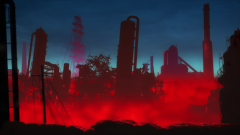
Production-wise, Kemurikusa is unique. It’s something that you don’t see very often in this medium, if at all, in both good and bad ways. On the negative spectrum, viewers who isn’t familiar with this CG style might pass it off as unpolished and amateurish. While I can argue otherwise, it remains true that whenever Kemurikusa depicts the “impact”, it doesn’t successfully land the force/gravity of the objects. There’s one sequence in episode 7 when Kemurikusa falling objects but it feels as if they are floating instead. In addition, the CG animation can be jerky at times. What it lacks for these production inefficiencies, it more than makes up by its attention to details to the backgrounds, the strong use of color palette and the score/soundtrack. There’s always little details or info in the world-building to the point you can see every bit in its world is there for a reason and  it can be satisfied to catch on multiple watches. Kemurikusa also has a strong penchant for bathing its world with strong blue tone mix with red mist. The result is a world with strong personality that says so much about the show itself. Lastly, the score remains solid throughout. It isn’t flashy by any mean, but it fits very well to the tone of this world.

The characters are mixed-bag. While they have very clear set of goals with established personalities (it says a lot that with limited screen-time the Kemurikusa sisters still manage to leave their marks) and at the end I legitly care for all of them, the dialogues in particular can be grating at times. Wakaba is super-annoying at the start that he was a turn-off point for many viewers, but he gets better as Kemurikusa goes. At heart, Kemurikusa is an adventure show with a keen sense of hopelessness. The world is in total destruction. Everywhere the girls go, the are red bugs that cause further damage. There’s absolutely no signs of life at all. It is then fitting that Rin has to say goodbye to the sisters in order to reach the final destination. Well, TATSUKI’s aesthetic isn’t for everyone and can take some time to get used to, but there’s no denying that his works have their own charms and the world he created here is simply impressive.

The Retirement of AidanAK47

To those whom it may concern this is a declaration of my retirement from the Star Crossed Anime Blog and this is a needlessly dramatic sentence. However when I consider my five years on this site blogging shows I feel that some dramatic gravitas is warranted. Now this post will likely be very long so I suspect that most will skim it at best or declare TLDR before moving on but I really feel like giving at least one last post to explain how I got here, why I kept doing this and why I am stopping. After Psgels abandoned the site without a word I felt it would be wrong to repeat that even if my leaving will be met with little lamentation. So bear with me as I take you back to the days of yore when the animated TV adaption of Fate/Unlimited Bladeworks was about to air.

I stumbled upon Psgels really out of nowhere after my old hangout of cartoon-world forums went dead and for some reason or another just stuck around talking to people on the shoutbox and commenting on posts. You may be surprised to hear that back then there was a rather thriving community on the site and we all basically knew each other. It was nice and gave me a place to talk about my interests when the place I am from people don’t even know what anime is, let alone talk about it. Then came the time psgels decided to make this site a multi-author blog and indeed it did seem to be his means of distancing himself from the site. He picked out a number of people from our Shoutbox community to carry on the site in his stead and let me say that I was not actually one of them. As a matter of fact I was put forward by someone else for the sole purpose of covering the new Fate show and nothing else. Seeing as I was the person with the most knowledge about the franchise and was interested in trying to cover it, I decided to offer to do so. With that Psgels reluctantly gave me access to post to the site. Yes, reluctantly. You see dear readers, psgels did not actually like me and don’t take that to mean that I hold it against him. I gave him plenty of reasons to dislike me, potentially even hate me. Nonetheless he gave me access to the site, though made sure to contact me through a proxy email and not his real email address which caused massive headaches down the line.
Continue reading “The Retirement of AidanAK47” →

Spring 2019 Anime Coverage

I must say, though the spring season is usually a heavyweight in both quantity and quality for anime offerings, spring 2019 surprisingly has a condensed amount of shows airing. This might be the fewest First Impressions posts we’ve done in a while. I’m optimistic about the season, however. There’s a clear cut between the 7 shows we’ve chosen to  blog (well, 6 shows and 1 carry-over) and the rest. That’s another way of saying that I’m happy with our schedule this season. Without further ado, here’s Star-Crossed Anime’s coverage for spring 2019:

Mario: Sarazanmai, Carole & Tuesday, Fruits Basket

Lenlo: Kimetsu no Yaiba, One Punch Man 2, Dororo (carry-over)

Wooper: Mix: Meisei Story

This is where I would finish with a witty remark, but since I’ve just been reborn as a dancing kappa through someone’s butt, let’s just end it right here before I burst out singing.

Some Quick First Impressions: Kenja no Mago, Carole & Tuesday and Sarazanmai

Kenja no Mago

Short Synopsis: Some guy dies in a car accident (how many times has it been already?) and is reincarnated into an overpowered wizard.

Mario’s review:
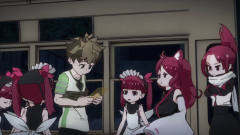
As I mentioned in the Seasonal Preview, Kenja no Mago obtains a deadly combination: it serves as both an isekai and a magical high school harem. The result? The most blatant, shameless show that embraces all the tired tropes with zero tact. First, not only the protagonist is already overpowered, he has the knowledge of an adult and he has the memory of modern world. The level of he learning new magic reaches a ridiculous level as he literally blows everyone away with his power. So it sucks out all the fun when we know he will overcome everything, with ease. The supporting characters fare no better as they are cliched with familiar tropes, even down to their designs and their dialogues. The production is horrible as you can see in the above screenshot where the main character just floats around the still background. The world building is samey-samey with nothing interesting of note and guess what, cute girls with big boobs already line up to be his future classmates. When the show that only cares for making things easy for the protagonist, why should we care?
Potential: 0%


Carole & Tuesday

Short Synopsis: A runaway rich girl and a street-smart orphan meet in a bustling Martian city and decide to compose music together.

Wooper’s review:
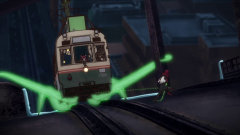
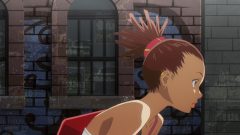
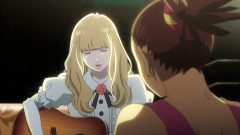
This was undoubtedly one of my most anticipated shows of the season, and I’m happy to report that it’s pretty good! The animation is top notch, with attention being lavished on moments both big and small. From shots as complex as Carole’s hoverboarding scene down to the way a guitar case shifts when you pop one of its latches, the team at Bones really pushed themselves for this episode. The characters’ outfits are particularly stylish, with fancy dresses, belts, piercings, and the coolest pair of overalls Mars has to offer on display. The main characters themselves are well-worn types, but they’re backed by strong showings from two hungry young seiyuu. By the end of the episode, their passion for music makes their bid for stardom feel worthwhile, but there are some potential hang-ups surrounding the jam session near the end. The all-English lyrics are repetitive and simple, and pop music won’t be everyone’s bag, despite being Carole & Tuesday’s bread and butter. Luckily, there are already subplots and side characters populating the script, from an actress who wants to break into the music biz to the friction between A.I. composers and the old guard of record producers. Without these stories to offer extra information about C&T’s vision of the future, the series might have felt too conservative. Thankfully, its detours are doubly exciting due to the show’s colorful, detail-heavy nature. Check this one out if you haven’t already.
Potential: 75%

Helghast’s review:
Netflix is back to save anime once again by throwing a ton of money behind the very well-regarded director of Shinichiro Watanabe (Cowboy Bebop, Samurai Champloo, Kids on the Slope, Zankyou no Terror) and enlisting Studio Bones to do the animation. That kind of support pays off in spades when it comes to the glorious production values and soundtrack that would find little trouble in appealing to both Japanese and international audiences. For example, the character designs takes cues from contemporary anime and western influence to create a visually alluring cast that embraces the ideal cosmopolitan future of a terraformed Mar. While Yoko Kanno isn’t scoring the music, the Canadian composer of Mocky is more than capable of crafting the OST with his background of R&B, Funk and Soul that would complement the upbeat and futuristic tone of Alba city. I’m glad they went with the route of switching the VAs from Japanese to their English counterparts when it came to singing the songs. While it comes off as a bit jarring, it is a far better solution than having VAs attempt to sing at the musical levels that Carole & Tuesday demands. Speaking of VAs, I can hear Shinji (Fate/Stay Night) taking on the role of the all-knowing producer with his AIs and predictive algorithms. This sets up the multiple character threads that will no doubt end up intertwining together and clashing between the assembly-line manufactured songs and unrestricted freedom of Carole and Tuesday.
Potential: Should have streamed on a Tuesday but would still watch on a Thursday.


Sarazanmai

Short Synopsis: Three boys are transformed into kappa after angering Keppi, the successor to the throne of the Kappa Kingdom.

Mario’s review:
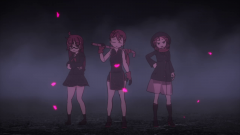
IKUHARA IS BACK. He’s one of my two favorite directors working in this industry (the other is the late Satoshi Kon), so I had a ridiculously exorbitant expectation for this one, and this premiere manages to match it with flying colors. Well, I still regard his Penguindrum premiere as the better one (in fact, one of my favorite opener of this decade), but this one comes very close to that bar. There’s his visual quirks, there’s his heavy symbolism, there’s his irreverent humor that is both bizarre and charming at the same time. His distinctive style won’t be for everyone, though. The sequences where our characters pop out from Kappa King’s butt can easily turn viewers off; and this episode lacks the dramatic weight (another one of his trademark) that only hinted very slightly at the end of the episode. Everything else though, is a knockout. The premise is so weird and fun that it’s refreshing to see how it folds out. The visual is simply sublime that at no point the REAListic backgrounds become a distraction, and the layers of symbolism so far work for the show’s benefits. I’ll be frank, Sarazanmai is everything I could ask for. Keep this up and I am a happy Mario.
Potential: 1000%

Wooper’s review:
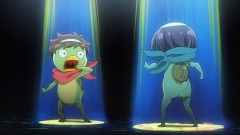
This episode was an achievement in both visual presentation and symbolic saturation. The first of those two items is a straightforward compliment, but the second may be backhanded – Ikuhara and MAPPA have packed this thing to the gills with metaphorical objects, to the point where it feels overstuffed. We’re entering Penguindrum territory after just one episode, and your preparedness for this series will be a lot greater if you’ve seen that earlier work. There are cardboard boxes, cucumbers, bridges, and dishes all over this episode, representing the secrets and connections held by the three main characters, but they hardly pose any interpretive difficulties. The real wrench comes when the boys’ shirikodama are wrenched from their anuses, and we pass through several layers of reality with different art styles and functions. One is a miniature musical number, one is a dimly-lit combat set piece (against a giant screeching cardboard box), and one is a melding of minds where a character’s deepest secret is revealed to the other two. By the time you come out the other end, the episode is nearly over, and you’re wondering what the hell you’ve just watched. But that’s when the show hits you with a post-credits scene featuring two sexy policemen and a giant taiko drum, which makes even less sense than everything that’s come before. What ties all of these crazy elements together are the nostalgic background art, beautiful animation, and double-edged sense of mystery and fun. There’s no way to predict where the show will go from here, but its visual magnificence is likely to persist.
Potential: 85%

Helghast’s review:
I don’t know what those two above me are smoking but if you enjoy cross dressing, yaoi, anal, scat and bestiality all mixed up in a drugged-fueled psychotic dream, then this is for you. For the rest of us, RUN AWAY.
Potential: 0.69%