

 This may be me, who hasn’t looked in the right places, but one thing I’ve noticed after checking out various anime movies is that there are nearly no good comedies among them. Most of them are dramas or thrillers, but I’ve yet to see a truly funny movie, despite how the movie-format seems perfect for this, as there’s less chance that the creators will run out of jokes to use when compared to tv-series.
My Neighbours The Yamadas is probably one of the funniest movies I’ve seen in anime, but still the comedic value is nowhere near that of series like Gintama, Excel Saga and Pani Poni Dash, to just name a few examples. Basically, it follows the everyday life of the Yamada-family, portrayed in a quirky way. Isao Takahata is the director, and indeed there’s lots of realism in this movie, and just like Only Yesterday, you’ll be able to find lots of scenes to identify to.
Unfortunately, this movie may have the good elements of a Takahata-movie, it also has the bad ones. Yet again, it goes on for too long, and yet again, I’ve seen no reason to emotionally connect with the characters. For some reason, I just couldn’t get myself to care about the characters. Those who saw Only Yesterday might recall ten minutes, being devoted to a character eating a pineapple; My Neighbours the Yamada’s does this with a banana. It’s realistic, I know; but I just can’t call it exciting.
One thing that also immediately falls to your attention when you look at the screenshots is the unusual art style. It might be a bit awkward at first, but it does work well enough. The animation is better than you’d think, and what you’d expect from a movie. There are also a few Miyazaki-influences here and there, where the surrealistic undertones start to take over and the characters get carried away in their imagination. The music isn’t anything special, though. It’s just simple, and what you can hear on an average tv-series as well.
I know I’ve been encouraging realism a lot in my latest reviews, but realism alone doesn’t make a good movie. Seirei no Moribito understood this, and it created an excellent atmosphere that sparkled with realism and yet had more than enough tension to make you care about the characters. Random antics of a family are fun and al, but the lack of a point becomes more obtrusive as I think about it. Studio Ghibli may have created a lot of memorable gems, for me, this isn’t one of them. If you want to see the antics of ordinary families, a better choice would be to check out Rumiko Takahashi’s Rumic Theatre.]]>
This may be me, who hasn’t looked in the right places, but one thing I’ve noticed after checking out various anime movies is that there are nearly no good comedies among them. Most of them are dramas or thrillers, but I’ve yet to see a truly funny movie, despite how the movie-format seems perfect for this, as there’s less chance that the creators will run out of jokes to use when compared to tv-series.
My Neighbours The Yamadas is probably one of the funniest movies I’ve seen in anime, but still the comedic value is nowhere near that of series like Gintama, Excel Saga and Pani Poni Dash, to just name a few examples. Basically, it follows the everyday life of the Yamada-family, portrayed in a quirky way. Isao Takahata is the director, and indeed there’s lots of realism in this movie, and just like Only Yesterday, you’ll be able to find lots of scenes to identify to.
Unfortunately, this movie may have the good elements of a Takahata-movie, it also has the bad ones. Yet again, it goes on for too long, and yet again, I’ve seen no reason to emotionally connect with the characters. For some reason, I just couldn’t get myself to care about the characters. Those who saw Only Yesterday might recall ten minutes, being devoted to a character eating a pineapple; My Neighbours the Yamada’s does this with a banana. It’s realistic, I know; but I just can’t call it exciting.
One thing that also immediately falls to your attention when you look at the screenshots is the unusual art style. It might be a bit awkward at first, but it does work well enough. The animation is better than you’d think, and what you’d expect from a movie. There are also a few Miyazaki-influences here and there, where the surrealistic undertones start to take over and the characters get carried away in their imagination. The music isn’t anything special, though. It’s just simple, and what you can hear on an average tv-series as well.
I know I’ve been encouraging realism a lot in my latest reviews, but realism alone doesn’t make a good movie. Seirei no Moribito understood this, and it created an excellent atmosphere that sparkled with realism and yet had more than enough tension to make you care about the characters. Random antics of a family are fun and al, but the lack of a point becomes more obtrusive as I think about it. Studio Ghibli may have created a lot of memorable gems, for me, this isn’t one of them. If you want to see the antics of ordinary families, a better choice would be to check out Rumiko Takahashi’s Rumic Theatre.]]>
Category: Other:
Anime 2 Manga's Blog Master of 2007 Award
I can still hardly believe it, but it seems that Star Crossed has finally won itself an award. The people from Anime 2 Manga have turned one year old today, and with that they gave out an award for the “Blogging Master of 2007”. I must say, congratulations on turning one year old, and thanks for the award. 🙂 I also love the banner, by the way, and how it consists out of some of the screenshots I made in the past. Some of them are actually quite old, and I’m surprised that Darren (who I assume photoshopped it) managed to dig it up. I especially like how the teddy-bear from Master of Epic was included. ^_^]]>
Baccano! Review – 93/100


 Anyone who tries the first episode of Baccano! will immediately notice one thing: the immensely huge cast of characters. I could be wrong, but this can very well be the 13-episoded series with the biggest amount of characters ever. While it’s incredibly hard to make a story with so many characters that stretches over three different timelines come together, the creators of Baccano! actually pull this off. And how!
Basically, Baccano! combines immortal alchemists with the American Mafia in 1930. It works quite well, because there are so many different characters, they just have to go beyond the clichés in order to prevent characters who look too much like each other. This results in the quirky thieves of Isaac and Miria, the psychotic Ladd and the charming Luck. While it’s of course impossible for the character to reach the same level of depth as, say, Toward the Terra, but the creators did manage to give every important character (if I had to guess, there’s about thirty of them) an identity, a clearly defined role, a small piece of development and an actual personality.
And I haven’t even started talking about the story yet. Basically, it goes from a completely incomprehensible first episode to a captivating mystery-series, where all the threads of the huge amount of side-stories end up resolved at the end of the final episode. It furthermore tells the story of three, sometimes even four, related timelines right through each other. Because of this, the creators are able to plan the climaxes really well, and they turn into one huge success, with a near-perfect combination between comedy, drama and action. I really mean it when I say that Baccano! has some of the best writing of the entire year.
In terms of production-values, this series also shines. Especially the character-designs: not only do the creators manage to give every one of the about thirty important characters a unique look, they manage to actually do this for even the unimportant and side-characters (if I had to guess, there are about eighty of them). The animation may not look crisp, but it’s detailed, never giving off a feeling of still-frame abuse. The soundtrack consists out of a bunch of catchy Jazz-tunes, which makes me wonder why not more anime turn to this, as it works great to give action-scenes a bit of a quirky touch.
Regarding the bad points, there aren’t really any true flaws about this series, apart from the sacrifices that had to be made for the good points. The first episode is basically one huge puzzle, and only later in the series will things start to make sense. The characters individually aren’t very special either. It’s only when they are combined with others that they become special and interesting.
Overall, there need to be more anime like Baccano! It’s not often when you run into a series that’s as well-written as this one. It’s a definite recommendation from me, provided that you can take a few gory scenes that pop up once in a while.]]>
Anyone who tries the first episode of Baccano! will immediately notice one thing: the immensely huge cast of characters. I could be wrong, but this can very well be the 13-episoded series with the biggest amount of characters ever. While it’s incredibly hard to make a story with so many characters that stretches over three different timelines come together, the creators of Baccano! actually pull this off. And how!
Basically, Baccano! combines immortal alchemists with the American Mafia in 1930. It works quite well, because there are so many different characters, they just have to go beyond the clichés in order to prevent characters who look too much like each other. This results in the quirky thieves of Isaac and Miria, the psychotic Ladd and the charming Luck. While it’s of course impossible for the character to reach the same level of depth as, say, Toward the Terra, but the creators did manage to give every important character (if I had to guess, there’s about thirty of them) an identity, a clearly defined role, a small piece of development and an actual personality.
And I haven’t even started talking about the story yet. Basically, it goes from a completely incomprehensible first episode to a captivating mystery-series, where all the threads of the huge amount of side-stories end up resolved at the end of the final episode. It furthermore tells the story of three, sometimes even four, related timelines right through each other. Because of this, the creators are able to plan the climaxes really well, and they turn into one huge success, with a near-perfect combination between comedy, drama and action. I really mean it when I say that Baccano! has some of the best writing of the entire year.
In terms of production-values, this series also shines. Especially the character-designs: not only do the creators manage to give every one of the about thirty important characters a unique look, they manage to actually do this for even the unimportant and side-characters (if I had to guess, there are about eighty of them). The animation may not look crisp, but it’s detailed, never giving off a feeling of still-frame abuse. The soundtrack consists out of a bunch of catchy Jazz-tunes, which makes me wonder why not more anime turn to this, as it works great to give action-scenes a bit of a quirky touch.
Regarding the bad points, there aren’t really any true flaws about this series, apart from the sacrifices that had to be made for the good points. The first episode is basically one huge puzzle, and only later in the series will things start to make sense. The characters individually aren’t very special either. It’s only when they are combined with others that they become special and interesting.
Overall, there need to be more anime like Baccano! It’s not often when you run into a series that’s as well-written as this one. It’s a definite recommendation from me, provided that you can take a few gory scenes that pop up once in a while.]]>
Mahou Shoujo Lyrical Nanoha Strikers Review – 74/100


 Judging continuations has always been tricky. Mahou Shoujo Lyrical Nanoha StrikerS is the third instalment of the Nanoha-franchise, which I personally loved. It’s hard to not get caught up in huge expectations, which can ruin a show. Still, despite knowing this, this series disappointed me, and I don’t think that my initial expectations are the only ones to blame.
Basically, in this series, Nanoha has grown up. She’s an adult now, and we join her and the other members of the previous seasons as they form their own division in the military, where their purpose is to protect people from accidents and magical incidents. The series starts as four new rookies have joined as new recruits, and get educated to become law-enforcement mages as well.
The original two Nanoha-series worked for me because of their antagonists. They were deep, and much, much more than just random people who wanted to destroy the world. They were all fighting for their beliefs, even knowing that what they did was ethically unjustified. StrikerS in its turn, creates two more of these villains: Zest and Agito. The two of them are deep and well-developed, and therefore they’re a delight to watch.
But there lies the major problem. This series doesn’t have two antagonists, it’s got freaking eighteen of them. I wish I could say that they’re as well developed as Zest and Agito, but alas: it’s far from that and the phrase “cookie cutter” fits them unfortunately much better. Some of them have only one-line personalities, others are just conveniently brainwashed good guys and while the villains who do get a bit of actual attention (Scaglietti and surprisingly Lutetia) have huge holes in their background story, shallow development and could have been so much more in the end. For a franchise that produced such sympathetic antagonist in the past, this is just unforgivable.
While it’s less apparent, the side of the good guys isn’t flawless either. With 26 episodes instead of the usual 13, you’d think that there’d be enough development to flesh them out well, but for some reason, the creators decided that it’d be better to spend too much time on one group of character, while overly neglecting another group of characters. This leads to quite an unbalanced cast. On one side we have Nanoha, Fate and the four new rookies. They’re fleshed out, developed and all, but the cast is filled with much more (very often more interesting) characters, who hardly ever get any serious attention, other than a few minutes at a time, and most of them lack any sort of background and development. The setting is also horribly neglected. Where does Section Six the section of the military where Nanoha and the others work, stand exactly in the world? After 26 episodes, I still have no idea.
It’s not like Mahou Shoujo Lyrical Nanoha StrikerS is bad. I quite enjoyed certain parts of it. The storyline is quite nice and complex, and the creators did well in creating a setting where difference in experience in combat is actually noticeable, due to the huge focus on it. The characters that were developed were worth the watch as well. But as the continuation of Mahou Shoujo Lyrical Nanoha and Mahou Shoujo Lyrical Nanoha A’s, it just fails and disappoints, making this by far the worst series of the franchise, despite the doubled length.]]>
Judging continuations has always been tricky. Mahou Shoujo Lyrical Nanoha StrikerS is the third instalment of the Nanoha-franchise, which I personally loved. It’s hard to not get caught up in huge expectations, which can ruin a show. Still, despite knowing this, this series disappointed me, and I don’t think that my initial expectations are the only ones to blame.
Basically, in this series, Nanoha has grown up. She’s an adult now, and we join her and the other members of the previous seasons as they form their own division in the military, where their purpose is to protect people from accidents and magical incidents. The series starts as four new rookies have joined as new recruits, and get educated to become law-enforcement mages as well.
The original two Nanoha-series worked for me because of their antagonists. They were deep, and much, much more than just random people who wanted to destroy the world. They were all fighting for their beliefs, even knowing that what they did was ethically unjustified. StrikerS in its turn, creates two more of these villains: Zest and Agito. The two of them are deep and well-developed, and therefore they’re a delight to watch.
But there lies the major problem. This series doesn’t have two antagonists, it’s got freaking eighteen of them. I wish I could say that they’re as well developed as Zest and Agito, but alas: it’s far from that and the phrase “cookie cutter” fits them unfortunately much better. Some of them have only one-line personalities, others are just conveniently brainwashed good guys and while the villains who do get a bit of actual attention (Scaglietti and surprisingly Lutetia) have huge holes in their background story, shallow development and could have been so much more in the end. For a franchise that produced such sympathetic antagonist in the past, this is just unforgivable.
While it’s less apparent, the side of the good guys isn’t flawless either. With 26 episodes instead of the usual 13, you’d think that there’d be enough development to flesh them out well, but for some reason, the creators decided that it’d be better to spend too much time on one group of character, while overly neglecting another group of characters. This leads to quite an unbalanced cast. On one side we have Nanoha, Fate and the four new rookies. They’re fleshed out, developed and all, but the cast is filled with much more (very often more interesting) characters, who hardly ever get any serious attention, other than a few minutes at a time, and most of them lack any sort of background and development. The setting is also horribly neglected. Where does Section Six the section of the military where Nanoha and the others work, stand exactly in the world? After 26 episodes, I still have no idea.
It’s not like Mahou Shoujo Lyrical Nanoha StrikerS is bad. I quite enjoyed certain parts of it. The storyline is quite nice and complex, and the creators did well in creating a setting where difference in experience in combat is actually noticeable, due to the huge focus on it. The characters that were developed were worth the watch as well. But as the continuation of Mahou Shoujo Lyrical Nanoha and Mahou Shoujo Lyrical Nanoha A’s, it just fails and disappoints, making this by far the worst series of the franchise, despite the doubled length.]]>
October Summary
+ October Rankings +
The start of the Autumn 2007-season did show one thing: the amount of great series just isn’t as large as you’d expect. Still, I’m glad that at least a few series managed to stand out for me, and now all that’s left is to hope that they’ll unexpectedly turn out awesome in their second halfs. Another advantage of a small season is that series that originally have been ignored can suddenly hope for a bit more attention than usual.
Oh, and in case this is the first time you see this, the series are ranked from worst to best, the number between the ( and ) indicates the place where that series was on last month, the rating is out of 10, with average being a 6,0 (and yes, I’m using the decimal comma).
#44 (new) – Goshushou-sama Ninomiya-kun – (3,9/10) – Ehm… No. Fanservice does not equal a good anime.
#43 (new) – Koharu Biyori – (4/10) – Only for people with a maid-fetish. How come crap like this gets animated, while truly captivating premises are ignored?
#42 (new) – Prism Ark – (4,9/10) – Way too much aimed at teenagers for its own good.
#41 (new) – Myself; Yourself – (5,6/10) – I really don’t remember anything about this series. All I know is that it was rather boring, so I never checked out episode 2.
#40 (35) – Romeo x Juliet – (5,6/10) – Well, I admit that it’s interesting that [spoiler] the bad guy’s dead, two episodes before the end, but things are still looking grim with an utterly predictable finale in store.
#39 (new) – Da Capo II – (5,9/10) – Just has too many stereotypes.
#38 (new) – Kimikiss Pure Rouge – (5,9/10) – I couldn’t really get myself to continue this. In the end, it’s just too generic. Dropped.
#37 (new) – Rental Magica – (6/10) – This series just feels too generic for me to continue. Dropped.
#36 (new) – Shakugan no Shana II – (6,1/10) – Halfway through the second episode, I found myself thinking: “why the heck am I still watching this bore-fest?”, so I dropped this series. Something I should have done ages ago.
#35 (new) – Dragonaut the Resonance – (6,5/10) – I’m still not sure what to think of this series. The storytelling is obnoxious, especially the best friend is getting predictable and the outfits are just outrageous, but the potential’s there.
#34 (new) – Majin Tantei Nougami Neuro – (6,7/10) – Okay, I know that this one could become good later on, but my inner-mystery-fanboy is screaming because of the shallowness of the first few episodes. Dropped.
#33 (new) – Hero Tales – (6,7/10) – A lot of people seem to think that the mangaka of Full Metal Alchemist wrote this series. Well, she didn’t. She just worked on the art. It’s perhaps because of this that I stopped caring about the plot halfway through the third episode and dropped it.
#32 (new) – Sketchbook ~ Full Color’s – (6,8/10) – While episode 1 was nice enough, episode 2 was rather boring and much of the same, so I dropped it.
#31 (new) – Minami-ke – (7,1/10) – On second thoughts, I dropped this. The comedy isn’t that funny, and it gets old soon. It’s a shame, I would like to have continued this, but my time isn’t endless.
#30 (new) – Maple Story – (7,2/10) – Say what you want, but I like this series. It may be rather childish, stupid and without much depth, it also is a fun series to watch.
#29 (new) – Clannad – (7,3/10) – This surprises me. In two episodes, the main character feels more as a part of the series than the main character for Kanon did in all ten episodes that I lasted for that one. It’s a shame that star-girl, book-girl and fighting-girl feel too much like unrealistic stereotypes, because this could be the very first Kyoani-series that I actually like.
#28 (36) – Kodomo no Jikan – (7,4/10) – Well what do you know? This series actually turned out good enough to continue. It’s just like Umisho: the fanservice is horrible, but beyond that, we have in this case a touching story about children with problems at school, and inexperienced teachers, having to deal with it. Based on the rumours, I really expected this series to turn into some kind of spawn of Satan, and I’m pleasantly surprised that it didn’t.
#27 (new) – Night Wizard – (7,4/10) – The thing with RPG-adaptations is that they’re bound to have a few clichés here and there. The thing that they need to worry about is developing their characters well, and making their setting so that the viewer will get interested. A great example is the game Golden Sun. It couldn’t get more clichéd, with the lighthouses and the jewels and all, but the world and villains still kept me interested until the final boss-fight. Still, I’m missing this a bit with Night Wizard.
#26 (31) – Mahou Shoujo Lyrical Nanoha – (7,5/10) – I’m honestly disappointed in Nanoha, though I’ll go into more detail for that once the series finishes. I haven’t seen episode 26 yet, but I should get the chance in the next couple of days. Episode 25 made up for a few things, and it did manage to turn out a bit touching in the end, but at this time, I consider StrikerS to be the weakest of the Nanoha-franchise.
#25 (new) – ef – a Tale of Memories – (7,6/10) – The story of the girl with the eye-patch has turned out great. I wish I could say the same about the manga-writer, though. His story is way too standard, and it doesn’t seem to get anywhere.
#24 (new) – Little Princess Sara – (7,7/10) – From now on, I’m also going to include this series in the rankings, as it looks like it’s going to take a while before it finishes. The first episode showed some great potential for the future.
#23 (new) – Gundam 00 – (7,7/10) – Right now, Gundam 00 has been building up for a good base to work with. It’s nothing special yet, but neither are there signs for total failure.
#22 (new) – Mokke – (7,7/10) – So it’s predictable, and the animation… well… sucks. The storytelling makes up for it, and creates a nice and relaxing atmosphere.
#21 (32) – Sky Girls – (7,7/10) – Hah! It’s just as I hoped. While the series is still annoying at times, the characters are starting to get developed, and the overall quality has risen considerably, compared to the first half of the series.
#20 (new) – Suteki Tantei Labyrinth – (7,8/10) – Okay, it’s not perfect, but it’s good and intriguing enough for now. But it’s too early to tell whether this will become a success or not.
#19 (18) – Perrine Monogatari – (7,9/10) – I was surprised to see a new member of the cast appear, in the form of a circus-boy. The messages about how wrong stealing is may have been a bit too emphasized, but overall it was a solid episode.
#18 (20) – Mushiuta – (7,9/10) – The ending created quite a bit of potential for the second season, with all the deaths and all. I must say, that while the series itself had its bumps here and there, I am looking forward to what the second half of this series has in store for us.
#17 (new) – Shugo Chara – (8/10) – While not the best beginning for a mahou shoujo out there, the potential is definitely there, and the past few episodes have been quite some fun to watch.
#16 (8) – Higurashi no Naku Koro ni – (8/10) – This month, Higurashi has been building up for the final arc. It’s definitely necessary, but not as exciting as the show used to be.
#15 (new) – Blue Drop – (8/10) – Blue Drop has been developing into a very nice series. The yuri is always welcome, and something tells me that the best of the series is still to come.
#14 (new) – Moyashimon – (8,2/10) – A well-scripted comedy with a unique premise. The different high-school anime really should take an example from this series.
#13 (new) – Bamboo Blade – (8,2/10) – Now this turned into a real surprise. Episode four was hilarious, and Tama is also shaping up to become a great character. The chemistry between the characters is just excellent.
#12 (new) – Ghost Hound – (8,2/10) – The Lain-influences are so noticeable, though the first two episodes have mostly been just building up. The potential’s there, though.
#11 (???) – Mononoke – (8,2/10) – Mononoke ended this month, and while the final arc wasn’t as good as the other arcs of the series, it was a worthy ending of such an interesting Noitamina-series.
#10 (29) – Kishin Taisen Gigantic Formula – (8,4/10)

 I’m glad I decided to stick with this series. I know I’ve been ranting against it, but the characters are starting to connect. Sure the plot is still hugely predictable, but the different characters are starting to make up for this.
#9 (16) – Shigurui – (8,5/10)
I’m glad I decided to stick with this series. I know I’ve been ranting against it, but the characters are starting to connect. Sure the plot is still hugely predictable, but the different characters are starting to make up for this.
#9 (16) – Shigurui – (8,5/10)

 It’s been a while since an episode evoked more mixed feelings with episode twelve. The episode itself was absolutely stunning, then it became disgusting and then it had me wondering what the heck happened to the enormous plot-hole that was left open.
#8 (new) – Shion no Ou – (8,5/10)
It’s been a while since an episode evoked more mixed feelings with episode twelve. The episode itself was absolutely stunning, then it became disgusting and then it had me wondering what the heck happened to the enormous plot-hole that was left open.
#8 (new) – Shion no Ou – (8,5/10)

 Shion no Ou has turned out surprisingly good after episode three, and into the second-best of the new series that aired this season. Shion and her strong character are a delight to watch.
#7 (14) – Sayonara Zetsubou-Sensei – (8,5/10)
Shion no Ou has turned out surprisingly good after episode three, and into the second-best of the new series that aired this season. Shion and her strong character are a delight to watch.
#7 (14) – Sayonara Zetsubou-Sensei – (8,5/10)

 Only one episode was released this month, but it was a hilarious one, about the class-president who doesn’t get noticed by anyone.
#6 (22) – Saiunkoku Monogatari – (8,6/10)
Only one episode was released this month, but it was a hilarious one, about the class-president who doesn’t get noticed by anyone.
#6 (22) – Saiunkoku Monogatari – (8,6/10)

 Now this is more like the Saiunkoku Monogatari I remembered. Most of the time is till spent on building up, but the upcoming arc sounds like it’s going to be an awesome one.
#5 (new) – Gambling Apocalypse Kaiji – (8,7/10)
Now this is more like the Saiunkoku Monogatari I remembered. Most of the time is till spent on building up, but the upcoming arc sounds like it’s going to be an awesome one.
#5 (new) – Gambling Apocalypse Kaiji – (8,7/10)

 For me, this is the best series of the Autumn-Season so far. It’s already after four episodes a fascinating look into human nature, and it’s one of the very few series which can be excellent, right from the beginning. Now let’s hope that it will keep up this level.
#4 (15) – Gintama – (8,9/10)
For me, this is the best series of the Autumn-Season so far. It’s already after four episodes a fascinating look into human nature, and it’s one of the very few series which can be excellent, right from the beginning. Now let’s hope that it will keep up this level.
#4 (15) – Gintama – (8,9/10)

 It was only a matter of time before Gintama went on to take the mick out of the censors, with hilarious results. I also remember complaining about how the endings of Ginrama-episodes are rather disappointing, but let me rephrase that: whenever an episode or half-episode of Gintama is entirely devoted to comedy, the ending turns out disappointing. With drama added, the endings are excellent, which is what the episodes that were released in this month proved.
#3 (11) – Dennou Coil – (9,1/10)
It was only a matter of time before Gintama went on to take the mick out of the censors, with hilarious results. I also remember complaining about how the endings of Ginrama-episodes are rather disappointing, but let me rephrase that: whenever an episode or half-episode of Gintama is entirely devoted to comedy, the ending turns out disappointing. With drama added, the endings are excellent, which is what the episodes that were released in this month proved.
#3 (11) – Dennou Coil – (9,1/10)

 This month has been an astonishing month for Dennou Coil, showcasing some of the best episodes of the entire series. It’s been one hit after the other.
#2 (6) – Baccano! – (9,3/10)
This month has been an astonishing month for Dennou Coil, showcasing some of the best episodes of the entire series. It’s been one hit after the other.
#2 (6) – Baccano! – (9,3/10)

 Baccano! has turned out awesome. Now that everything is coming together, you can see the incredible quality of the scriptwriting even more.
#1 (9) – Les Miserables – Shoujo Cosette – (9,6/10)
Baccano! has turned out awesome. Now that everything is coming together, you can see the incredible quality of the scriptwriting even more.
#1 (9) – Les Miserables – Shoujo Cosette – (9,6/10)

 With this month, I know for sure: Les Miserables is one of the best series of the entire year. The episodes that were aired this month were absolutely incredible.
+ Top 5 Episodes +
#5: Baccano! – 12
Now that’s what I call an action-scene! Fun, exciting and extremely well-written.
#4: Dennou Coil – 20
This was an excellent climax to the Haraken-storyline. Dennou Coil has really turned out into an excellent series.
#3: Ayatsuri Sakon – 26
I LOVE it when the final episode of a series turns out to be the best of the entire series. It couldn’t have been a better conclusion for the series.
#2: Les Miserables – 43
Now this is what you can do with some good build-up. There should be no doubt whether Les Miserables is worth of the title World Masterpiece Theatre
#1: Les Miserables – 41
This episode wins. Period.]]>
With this month, I know for sure: Les Miserables is one of the best series of the entire year. The episodes that were aired this month were absolutely incredible.
+ Top 5 Episodes +
#5: Baccano! – 12
Now that’s what I call an action-scene! Fun, exciting and extremely well-written.
#4: Dennou Coil – 20
This was an excellent climax to the Haraken-storyline. Dennou Coil has really turned out into an excellent series.
#3: Ayatsuri Sakon – 26
I LOVE it when the final episode of a series turns out to be the best of the entire series. It couldn’t have been a better conclusion for the series.
#2: Les Miserables – 43
Now this is what you can do with some good build-up. There should be no doubt whether Les Miserables is worth of the title World Masterpiece Theatre
#1: Les Miserables – 41
This episode wins. Period.]]>
Little Princess Sara – 01


 After Ayatsuri Sakon finished, nearly two years after I originally started blogging it, I’ve been searching for another anime to blog once every month or so. In the end, I decided to support Live-eviL, C1-Anime and Minor ja Nai in their attempt to revive interest for the World Masterpiece Theatre-production Little Princess Sara. Les Miserables has been turning into a true masterpiece by now, and the few episodes I’ve seen of Perrine Monogatari have been really good as well.
Little Princess Sara is also special, in the way that it’s based on the same story that Soukou no Strain was based on, though obviously the writers of the latter took a lot of artistic liberties by placing a story that originally happened in England, about a century and a half ago into a science-fiction setting. It’s also notable that Sara’s original last name is now Crewe, instead of the Werec, which later changes into Crewe in Soukou no Strain. Ralph also isn’t her brother, but her father, surprisingly. I also don’t think that Ralph is going to kill Sara’s precious friends in this one. ^^;
The thing that did remain the same, though is Sara’s huge respect for Ralph, but that’s naturally obvious, since her mother died when she was four, and he’s been taking care of her ever since. He’s also incredibly rich, and he’s been giving her whatever she wanted, hence the title of this series: Little Princess. Because of that, the Sara of Little Princess is rather spoiled, but I wouldn’t call her arrogant. She doesn’t fit in the stereotype that has been set by anime that the rich kids have to be the cocky bastards who look down on everyone at all. Instead, she’s incredibly innocent. Her father probably has been protecting her from everything harmful, but yet she tries to please everyone, and she looks incredibly naive as well. I’m not sure whether we’re supposed to hate her or like her at this point, but that probably will become clearer in the next episode.
This first episode was actually quite similar to the first episode of Les Miserables as well, if you ignore the fact that Fantine was incredibly poor and Ralph is incredibly rich. Ralph has been coming from India, and he’s about to get back, leaving his daughter in a local prestigious school in the middle of London. The rest of the episode basically focused on Sara, spending her last few moments with her father. Another interesting detail is that in the next episode, Sara will be purchasing Emily, making another link to both Soukou no Strain and Les Miserables.]]>
After Ayatsuri Sakon finished, nearly two years after I originally started blogging it, I’ve been searching for another anime to blog once every month or so. In the end, I decided to support Live-eviL, C1-Anime and Minor ja Nai in their attempt to revive interest for the World Masterpiece Theatre-production Little Princess Sara. Les Miserables has been turning into a true masterpiece by now, and the few episodes I’ve seen of Perrine Monogatari have been really good as well.
Little Princess Sara is also special, in the way that it’s based on the same story that Soukou no Strain was based on, though obviously the writers of the latter took a lot of artistic liberties by placing a story that originally happened in England, about a century and a half ago into a science-fiction setting. It’s also notable that Sara’s original last name is now Crewe, instead of the Werec, which later changes into Crewe in Soukou no Strain. Ralph also isn’t her brother, but her father, surprisingly. I also don’t think that Ralph is going to kill Sara’s precious friends in this one. ^^;
The thing that did remain the same, though is Sara’s huge respect for Ralph, but that’s naturally obvious, since her mother died when she was four, and he’s been taking care of her ever since. He’s also incredibly rich, and he’s been giving her whatever she wanted, hence the title of this series: Little Princess. Because of that, the Sara of Little Princess is rather spoiled, but I wouldn’t call her arrogant. She doesn’t fit in the stereotype that has been set by anime that the rich kids have to be the cocky bastards who look down on everyone at all. Instead, she’s incredibly innocent. Her father probably has been protecting her from everything harmful, but yet she tries to please everyone, and she looks incredibly naive as well. I’m not sure whether we’re supposed to hate her or like her at this point, but that probably will become clearer in the next episode.
This first episode was actually quite similar to the first episode of Les Miserables as well, if you ignore the fact that Fantine was incredibly poor and Ralph is incredibly rich. Ralph has been coming from India, and he’s about to get back, leaving his daughter in a local prestigious school in the middle of London. The rest of the episode basically focused on Sara, spending her last few moments with her father. Another interesting detail is that in the next episode, Sara will be purchasing Emily, making another link to both Soukou no Strain and Les Miserables.]]>
Ayatsuri Sakon Review – 85/100
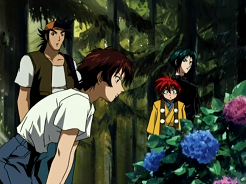
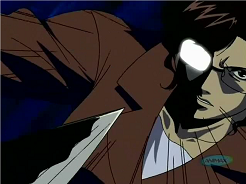
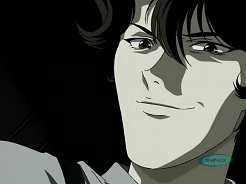 Ayatsuri Sakon is another one of these unknown series that nearly nobody has heard of, and which still is quite good. It’s an arc-based series, tackling murder mysteries. The main character is a pretty interesting one: he’s a puppeteer (Sakon). On his own, he’s really shy, but when he wields his favourite and most cherished puppet (Ukon), he becomes quiet, serious and quite cool. To make matters even better, he’s so good at ventriloquism that his puppet looks just too much like a person. Ukon is loud-mouthed, rude and nearly the opposite of Sakon’s personality, but together they form a solid base for this series to work with.
Basically, the arcs in this series consist out of three or four episodes, and in each of them, a person is killed and Sakon, who happens to be in the neighbourhood, has to solve them. These mysteries go far beyond the “Scooby-Doo”-murders, they’re committed quite carefully, and it’s very often that only the smallest details will give them away. The murderers themselves also often have quite some interesting reasons for their actions. As an added extra, because Sakon is a ventriloquist, the entire series is deeply rooted in the ancient Japanese puppetry, giving this series a unique look.
There is, however, one problem with the set-up. I’m personally a huge fan of arc-based series, but they’ve got one major drawback: the quality between the different arcs can fluctuate heavily. With Ayatsuri Sakon, it’s the arcs in the middle of the series that are a bit lacklustre, and not that interesting when compared to the other ones. It’s often obvious who did it, and they do a bit too little to really stand out.
Still, to make up for this, there are a number of astonishing arcs around the beginning and end. Especially the second and the final arc are true masterpieces in storytelling, and just about everything went right for them. These two arcs managed to become very emotionally charged, with great results.
There are a number of recurring characters here and there, and I’m glad to see that all of them get sufficient development to be more than just a two-dimensional one, and nearly all of them have an entire arc dedicated to them. Sakon is also an excellent main characters, who can, together with Ukon, perfectly carry the weight of the series. He may seem like a static character in the beginning, but don’t worry: as the show goes on, he’ll get enough development.
Overall, if you’re a fan of murder mysteries, you just have to give this series a chance. Don’t be scared away by the lesser middle part, both the beginning and the end contain some remarkable stories. It’s a shame nobody talks about this, because Sakon is definitely getting less attention than it deserves, and it’s a real underrated series.]]>
Ayatsuri Sakon is another one of these unknown series that nearly nobody has heard of, and which still is quite good. It’s an arc-based series, tackling murder mysteries. The main character is a pretty interesting one: he’s a puppeteer (Sakon). On his own, he’s really shy, but when he wields his favourite and most cherished puppet (Ukon), he becomes quiet, serious and quite cool. To make matters even better, he’s so good at ventriloquism that his puppet looks just too much like a person. Ukon is loud-mouthed, rude and nearly the opposite of Sakon’s personality, but together they form a solid base for this series to work with.
Basically, the arcs in this series consist out of three or four episodes, and in each of them, a person is killed and Sakon, who happens to be in the neighbourhood, has to solve them. These mysteries go far beyond the “Scooby-Doo”-murders, they’re committed quite carefully, and it’s very often that only the smallest details will give them away. The murderers themselves also often have quite some interesting reasons for their actions. As an added extra, because Sakon is a ventriloquist, the entire series is deeply rooted in the ancient Japanese puppetry, giving this series a unique look.
There is, however, one problem with the set-up. I’m personally a huge fan of arc-based series, but they’ve got one major drawback: the quality between the different arcs can fluctuate heavily. With Ayatsuri Sakon, it’s the arcs in the middle of the series that are a bit lacklustre, and not that interesting when compared to the other ones. It’s often obvious who did it, and they do a bit too little to really stand out.
Still, to make up for this, there are a number of astonishing arcs around the beginning and end. Especially the second and the final arc are true masterpieces in storytelling, and just about everything went right for them. These two arcs managed to become very emotionally charged, with great results.
There are a number of recurring characters here and there, and I’m glad to see that all of them get sufficient development to be more than just a two-dimensional one, and nearly all of them have an entire arc dedicated to them. Sakon is also an excellent main characters, who can, together with Ukon, perfectly carry the weight of the series. He may seem like a static character in the beginning, but don’t worry: as the show goes on, he’ll get enough development.
Overall, if you’re a fan of murder mysteries, you just have to give this series a chance. Don’t be scared away by the lesser middle part, both the beginning and the end contain some remarkable stories. It’s a shame nobody talks about this, because Sakon is definitely getting less attention than it deserves, and it’s a real underrated series.]]>
Pom Poko Review – 76/100


 Pom Poko belongs to the collection of animations and movies, meant to raise awareness about environmental problems. In this case: raccoons, who see their territories shrink by the minute, due to humans and their need of new homes. The links to studio Ghibli are obvious: they take the myths about how Raccoons are able to transform and change their shape, and create a unique culture for these little animals, who try to do something against the humans, despite their carefree nature.
The thing is, though, that the environmental messages may be good for children and others new to these kinds of problems, but for me, I felt like I’ve seen things like these a bit too many times in other movies, commercials and documentaries. The true reason you should watch this anime is because of the raccoons themselves. They’re quite hilarious with their short attention-spans, and it’s especially interesting how they’re portrayed in a human-like way. I especially loved how the newbies tried to practice transforming.
Because of this, the first half of the movie is a lot of fun to watch. There’s a lot of detail put in the dialogue, and a nice balance of comedy and drama. I wish I could say the same about the second half, though. Incidentally, the one who directed this movie was Isao Takahata, who also did Only Yesterday. Both movies felt like they’ve gone on for a tad too long. It’s a shame: the guy clearly has lots of talent, and his eye for realism is astonishing, but his direction really drags on a bit too much at times.
The second half of Pom Poko falls victim to this. It’s just too… one-sided, and feels like I’ve seen it many times before. Granted, this movie is already about fifteen years old, but I don’t really think that the issue at hand was very new at the premiere-date either. There are also a few story-inconsistencies here and there: at one time when a raccoon is injured from a small accident, he remains in bondages for a full year. Then when he’s hit the next time, he stands up and goes on like nothing happened.
One thing that I do have to praise this movie for is that it isn’t afraid to address death. Despite the fact that this movie is aimed at children, with its carefree nature, both humans and raccoons end up losing their lives. Overall, this really is a Ghibli-movie. The animation is very detailed and full of creativity, a lot of attention has been put into the dialogue. It’s just a pity that the lacklustre second half prevented this to become a classic.]]>
Pom Poko belongs to the collection of animations and movies, meant to raise awareness about environmental problems. In this case: raccoons, who see their territories shrink by the minute, due to humans and their need of new homes. The links to studio Ghibli are obvious: they take the myths about how Raccoons are able to transform and change their shape, and create a unique culture for these little animals, who try to do something against the humans, despite their carefree nature.
The thing is, though, that the environmental messages may be good for children and others new to these kinds of problems, but for me, I felt like I’ve seen things like these a bit too many times in other movies, commercials and documentaries. The true reason you should watch this anime is because of the raccoons themselves. They’re quite hilarious with their short attention-spans, and it’s especially interesting how they’re portrayed in a human-like way. I especially loved how the newbies tried to practice transforming.
Because of this, the first half of the movie is a lot of fun to watch. There’s a lot of detail put in the dialogue, and a nice balance of comedy and drama. I wish I could say the same about the second half, though. Incidentally, the one who directed this movie was Isao Takahata, who also did Only Yesterday. Both movies felt like they’ve gone on for a tad too long. It’s a shame: the guy clearly has lots of talent, and his eye for realism is astonishing, but his direction really drags on a bit too much at times.
The second half of Pom Poko falls victim to this. It’s just too… one-sided, and feels like I’ve seen it many times before. Granted, this movie is already about fifteen years old, but I don’t really think that the issue at hand was very new at the premiere-date either. There are also a few story-inconsistencies here and there: at one time when a raccoon is injured from a small accident, he remains in bondages for a full year. Then when he’s hit the next time, he stands up and goes on like nothing happened.
One thing that I do have to praise this movie for is that it isn’t afraid to address death. Despite the fact that this movie is aimed at children, with its carefree nature, both humans and raccoons end up losing their lives. Overall, this really is a Ghibli-movie. The animation is very detailed and full of creativity, a lot of attention has been put into the dialogue. It’s just a pity that the lacklustre second half prevented this to become a classic.]]>
Only Yesterday Review – 78/100


 Omoide Poro Poro, better known as Only Yesterday is a story of reminiscence. It features a twenty-seven year old woman who works in Tokyo, and heads into the countryside during her vacation. It is here where she starts getting nostalgic about her ten-year old self. It’s another Ghibli-production, directed not by Hayao Miyazaki, but by his best friend: Isao Takahata. While I haven’t seen much of his works, the guy seems to be famous because of his huge focus on realism.
And with Only Yesterday, this shows. Now that I’m writing this review, I can’t recall any other anime that had a higher degree of realism than Only Yesterday. Everything just feels so real, and if you’ve lived in Japan, this effect will probably be even clearer. The character-designs are simple, yet people really look lie Japanese people, instead of some crossover between Asians and Europeans, like you usually see. The voice-acting is terrific; you can actually hear that the characters are voiced by real people, instead of actors. Children are also children, and not thirty-year old adult who try to sound like children, something I’ve only seen a handful anime do as well.
But the thing that really shines is the dialogue. No matter who you are, there’ll almost certainly be at least one scene in the movie you can completely identify with, and the amount of detail it comes with is almost scary. Still, therein also lays a problem. I myself got lost a bit when the characters started talking about periods (you know… with women and all), and the main character’s father, who may be a normal person in Japan, was a bit hard to swallow for me, who grew up in Holland, which has probably an entirely opposite culture when compared to Japan.
Those who’ve been reading my blog probably know by now that I don’t really mind slow pacing, but with Only Yesterday, even I have to admit that the entire thing goes a bit too slow. Realism often comes at prices, and because of this, certain scenes just drag on forever in order to make them look as real as possible.
There’s also the lack of emotional tension. While I found it easy to identify with the main characters, I had difficulties sympathizing with her. That’s because there’s hardly any need for them to get emotional, not until the final few scenes of the movie. But with a total length of nearly two hours, the length of it may have been a bit too long. When the characters do get emotional in the end though, the scenes work out great.
I’m also surprised at the lack of background for the side-characters. They get fleshed out enough, but I would have loved to see how the old classmates of the main characters grew up after going to high-school and beyond, because they were quite interesting to watch. The main male side-character does also get a few lines of background, but it just doesn’t feel like it’s enough.]]>
Omoide Poro Poro, better known as Only Yesterday is a story of reminiscence. It features a twenty-seven year old woman who works in Tokyo, and heads into the countryside during her vacation. It is here where she starts getting nostalgic about her ten-year old self. It’s another Ghibli-production, directed not by Hayao Miyazaki, but by his best friend: Isao Takahata. While I haven’t seen much of his works, the guy seems to be famous because of his huge focus on realism.
And with Only Yesterday, this shows. Now that I’m writing this review, I can’t recall any other anime that had a higher degree of realism than Only Yesterday. Everything just feels so real, and if you’ve lived in Japan, this effect will probably be even clearer. The character-designs are simple, yet people really look lie Japanese people, instead of some crossover between Asians and Europeans, like you usually see. The voice-acting is terrific; you can actually hear that the characters are voiced by real people, instead of actors. Children are also children, and not thirty-year old adult who try to sound like children, something I’ve only seen a handful anime do as well.
But the thing that really shines is the dialogue. No matter who you are, there’ll almost certainly be at least one scene in the movie you can completely identify with, and the amount of detail it comes with is almost scary. Still, therein also lays a problem. I myself got lost a bit when the characters started talking about periods (you know… with women and all), and the main character’s father, who may be a normal person in Japan, was a bit hard to swallow for me, who grew up in Holland, which has probably an entirely opposite culture when compared to Japan.
Those who’ve been reading my blog probably know by now that I don’t really mind slow pacing, but with Only Yesterday, even I have to admit that the entire thing goes a bit too slow. Realism often comes at prices, and because of this, certain scenes just drag on forever in order to make them look as real as possible.
There’s also the lack of emotional tension. While I found it easy to identify with the main characters, I had difficulties sympathizing with her. That’s because there’s hardly any need for them to get emotional, not until the final few scenes of the movie. But with a total length of nearly two hours, the length of it may have been a bit too long. When the characters do get emotional in the end though, the scenes work out great.
I’m also surprised at the lack of background for the side-characters. They get fleshed out enough, but I would have loved to see how the old classmates of the main characters grew up after going to high-school and beyond, because they were quite interesting to watch. The main male side-character does also get a few lines of background, but it just doesn’t feel like it’s enough.]]>
Shigurui Review – 84/100
 Apologies for the lateness of this review, but more on that later. Let me first put up a warning: if you’re planning to watch this series and have some kind of little brother or sister: keep Shigurui AWAY from them. Nobody under sixteen should be allowed to watch this. Not only is this one of the, if not THE goriest anime I’ve seen, it’s also filled with over-the-top sexual reference.
Sure, a show like Elfen Lied may have had more blood, but that was also all it had: lots of blood and random limbs gushed over the screen, but it never really went further than that. Shigurui carries gore to an entirely next level. The amount of detail is astonishing; the creators have an amazing amount of medical knowledge, and they use al of it. When a finger gets broken, you see exactly which bones dislocate. When an arm gets cut off, you see exactly how the muscles grow back. And that’s what makes it such an effective horror-series.
Especially when you combine it with the storytelling. The pacing is very slow, but it uses the gore and very creepy sound-effects to create an extremely tight atmosphere. It’ll have you during its many and creepy climaxes. If it wasn’t for its flaws, this would have been one beast of an anime.
Because yes, it’s a shame, but there are a few things that went wrong here. Especially in the first half, the creators get carried away a bit too much and delve in pointless rituals, like cutting off a woman’s nipple and eating it. Only at episode six, the series gets back on track With a gripping and powerful second half. The role of women also isn’t too good in this series. Basically, every single guy in the series is a bastard, and nearly all the women are good for is to serve as sex-objects or helpless sword-targets.
My biggest gripe is with the ending, though. The ending, while it does resolve a few things, leaves huge amounts of plotholes open. The reason I’m so late with this review is that I kept hoping that there would be some kind of thirteenth episode that would wrap the entire series up, but there’s nothing. One of the two major questions asked in the beginning hasn’t even been answered, for goodness’ sake.
Still, despite this, Shigurui is a definite recommendation for those who can stomach the huge amounts of gore. The animation may be simple, and most of the series consists of still frames, but the art itself makes up for it, by being incredibly detailed, and it’s only when the creators turn to CG on very few occasions that it doesn’t look excellent. But seriously… isn’t there really not some kind of second season or OVA to wrap it up?]]>
Apologies for the lateness of this review, but more on that later. Let me first put up a warning: if you’re planning to watch this series and have some kind of little brother or sister: keep Shigurui AWAY from them. Nobody under sixteen should be allowed to watch this. Not only is this one of the, if not THE goriest anime I’ve seen, it’s also filled with over-the-top sexual reference.
Sure, a show like Elfen Lied may have had more blood, but that was also all it had: lots of blood and random limbs gushed over the screen, but it never really went further than that. Shigurui carries gore to an entirely next level. The amount of detail is astonishing; the creators have an amazing amount of medical knowledge, and they use al of it. When a finger gets broken, you see exactly which bones dislocate. When an arm gets cut off, you see exactly how the muscles grow back. And that’s what makes it such an effective horror-series.
Especially when you combine it with the storytelling. The pacing is very slow, but it uses the gore and very creepy sound-effects to create an extremely tight atmosphere. It’ll have you during its many and creepy climaxes. If it wasn’t for its flaws, this would have been one beast of an anime.
Because yes, it’s a shame, but there are a few things that went wrong here. Especially in the first half, the creators get carried away a bit too much and delve in pointless rituals, like cutting off a woman’s nipple and eating it. Only at episode six, the series gets back on track With a gripping and powerful second half. The role of women also isn’t too good in this series. Basically, every single guy in the series is a bastard, and nearly all the women are good for is to serve as sex-objects or helpless sword-targets.
My biggest gripe is with the ending, though. The ending, while it does resolve a few things, leaves huge amounts of plotholes open. The reason I’m so late with this review is that I kept hoping that there would be some kind of thirteenth episode that would wrap the entire series up, but there’s nothing. One of the two major questions asked in the beginning hasn’t even been answered, for goodness’ sake.
Still, despite this, Shigurui is a definite recommendation for those who can stomach the huge amounts of gore. The animation may be simple, and most of the series consists of still frames, but the art itself makes up for it, by being incredibly detailed, and it’s only when the creators turn to CG on very few occasions that it doesn’t look excellent. But seriously… isn’t there really not some kind of second season or OVA to wrap it up?]]>