Kurenai Review – 86/100


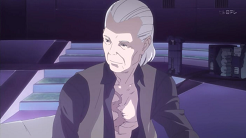
Kurenai is quite possibly the most solid of the series that came out during the past spring season. It’s a well-written series. If you liked True Tears and want to see how it would have been with a bit less romance and a bit more action, then it’s likely that you’ll like Kurenai. This series is not going to hit any heights, but it’s perfect for a quick watch.

Aside from the solid writing, Kurenai has another thing it can boast about: its voice-acting. It joins Mahou Shoujotai and Red Garden in the very short list of series that have their voices recorded before the animation-process. The result is that the voice-actors are less restrained, and have more freedom in portraying their characters, which leads to a number of excellent dialogues, with the highlight being episode six.

Unfortunately, because the writing is so solid, the inconsistencies tend to stick out like a sore thumb. There are two or three points in this series that make you wonder what the creators have been smoking, because they don’t make any sense at all in the light of the involved characters, especially around the second half of this series.

With Brains Base, you can of course expect gorgeously animated fight-scenes, and indeed, whenever characters start fighting, the animation shines. Overall, Kurenai is probably too short for the story to make any real impact, but it’s got a likable cast of characters, great dialogue, excellent animation and terrific voice-acting.

Overman King Gainer Review – 83/100


I first learned about Overman King Gainer through its OP that you’ll either absolutely love or absolutely hate. In my case, it was the former, so I just had to watch the series, hoping that it would be more than just a cheesy mecha-show. As it turns out, twenty-five years after creating Gundam, Tomino still knows how to make a good anime.

As it turns out, he left the realism as seen in Mobile Suit Gundam for what it is (after all, after creating 200 episodes and various movies of Gundam, how much more can you play with realism?) and instead he decided to focus on creativity. The result is a series that might be nothing special when concentrating on the big picture, but is filled with lots and lots of details that sparkle with creativity. The setting in the middle of Siberia, the Exodus where entire cities travel for hundreds of miles, looking to “break free”, the mobile suits designs, you can see that a lot of time has been spent to make the setting as original as possible, and it really works.

Tomino also didn’t forget how to pull off good action. In this series, there are no episodes dedicated to intermezzos or aftermaths. Every single episode has something fun in store for its viewer, leaving hardly any chance to get bored. So much is happening on-screen. This is really an anime that’s meant as entertainment, and I call this mission accomplished.

Interestingly, Overman King Gainer has the same weakness as Mobile Suit Gundam: both have a main character that becomes the pilot of the main mecha through very questionable reasons. This one needs a bit of minutes to get the hang of it, after which he can pilot the thing as a master, only because he happens to be good at video games. This will indeed give you improved reflexes, but there’s also the matter of getting accustomed to the new controls, and learning to endure the physical strain on your body while fighting.

The plot overall isn’t the most solid ones around by far. During some fights, the writers pull random powers out of thin air, just to keep the story flowing smoothly, and there are quite a few sloppy explanations that rely too much on the viewer’s imagination. The ending also goes on for too long. I really feel that this would have been perfect for 22 or 23 episodes, simply because the climax takes bloody ages, becoming a bit too serious for its own good. Thankfully, this series manages to finish with the bang that it was supposed to deliver, but the road to this descends to a generic “stop the world from getting destroyed”-plot that moves too far away from what made the rest of the series so enjoyable.

It’s interesting to see the evolution of such a prominent director. Overman King Gainer isn’t better than Gundam, but instead it’s fresh and fun. If you liked series as Gurren Lagann or Code Geass, you’ll probably like this one as well, and personally I enjoyed this one the most: it’s got the fun and down-to-earth factor that Code Geass seems to be lacking, and the engaging storyline that I was missing in Gurren Lagann. It’s far from perfect, but very enjoyable nonetheless. I wonder what Tomino’s up to right now. He hasn’t released anything since the Wings of Rean, has he?

Hataraki Man Review – 85/100


Hataraki Man joins Omoide Poro Poro on the very short list of anime with a female main character who’s older than 25. It’s another series to have aired in the famed Noitamina-timeslot. It’s an anime about a workaholic. I originally dropped this series because I didn’t think that such a concept wouldn’t be worth exploring. So I was wrong.

Hataraki Man is a series that’s always critical of itself and its characters. Throughout only eleven episodes, it shows how the female lead (Hiroko) and her colleagues deal with their jobs, how they manage their stress, why they work the way they do and what goes on inside their minds. Every episode focuses at a different side-character, along with Hiroko. What we have here is a well-written series with characters you can connect to. Some episodes also refer to events that happened in past episodes, creating a series that feels whole, instead of a bunch of random episodes.

It’s almost a shame when the final three episode take the focus more away from the side characters, onto Hiroko. Don’t get me wrong: it’s here where the series manages to deliver some powerful climaxes, but somehow it feels a bit out of place in this series. Because of the extra attention to Hiroko, several side-characters end up left behind without development, even though they had enough potential to be put under the magnifying glass. The final three episodes also try to stuff a bit too much bad luck for Hiroko in too little time, and the result feels sort-of soap-opera like.

Nevertheless, we’ve got ourselves a very fine example of Noitamina here. It’s got energy, a good rocky soundtrack, OP and ED, the setting is very original for an anime, and I feel like anyone who’s dealing with stress. Although the animators do need to pay attention to their romanji a bit. ^^;

DNA² Review – 81/100


There aren’t many shounen romantic comedies that I’ve actually liked. Most of them end up dull, stereotypical, clichéd, uninspired, too much focused on moe, et cetera, et cetera. Though once in a while, one comes along that’s actually worth it. Examples of this are Magikano, Umisho and of course Mahou Tsukai Tai. Thankfully, DNA² managed to join this list.

Really, how often do you run into a harem where it’s at least made plausible that every single female falls in love with the loser male lead. Him being shot by a bullet that turns him into a mega-playboy may sound a bit far-fetched, but it works surprisingly well in this series. It makes sure for a couple of hilarious situations, and the love-triangles that emerge from it are actually worth it. There are no fillers, and the creators know exactly how to use their time and keep things interesting, with a plot that continues to get pushed forward.

Unfortunately, there’s a rather large downside to DNA²… The comedy is hilarious, the romance is rock-solid, but the action downright sucks. These action-scenes have a nasty tendency of getting in the way of what’s really important in this series, and the characters turn into super-saiyan wannabes with way too exaggerated power-ups. This anime especially falls flat on its face during the OVA that concludes this series. The comedy is entirely taken out, in favour of a more epic plot, but at the same time it also degrades into a boring cheese-fest, and the actual climax is downright disastrous. I could have tried to sugar-coat this, but you know when the creators are having a bad day when they’re reaching out to use the power of love as a plot device.

Nevertheless, DNA² is among the better shounen romantic comedies. Especially the first half is really worth watching, and many of its current counterparts can learn a lot from this series, for example comedic timing, proper build-up, the avoidance of stereotypes and a bit of wit.

Kara no Kyoukai – The Garden of Sinners – 01 Review – 82/100


Ah, I finally got the chance to watch this one. If I recall correctly, The Garden of Sinners 01 is the first part of a series of seven movies, based on short stories by the creators of Fate/Stay Night and Tsukihime, produced by the Ufotable that did Manabi Straight and Tales of Symphonia. After watching the 45-minute long first part, I’m eager for the next ones, because It had quite a few good points.

It’s rare to see a mystery-movie nowadays, since most of them focus on either action or drama. The Garden of Sinners deals with the topic of suicide and adds a supernatural touch to it, and the result works quite well. A lot of effort has gone into the dialogue, and it ends up meaningful and thought-provoking, but the real highlight of this movie is without a doubt the gorgeous graphics. Ufotable received a big budget to work with, and they knew exactly how to use it. Yuki Kajiura’s soundtrack may not be among the best of her work, but it still manages to make The Garden of Sinners into a feast for the senses.

The storytelling is a bit sloppy, though. We hardly learn anything about the main characters: where did Shiki’s l33t-powers come from? How did the boy lose his consciousness? How did Shiki lose her arm? What kind of job does she do anyway? Why is she the only one who goes after the string of suicides? All questions that remain unanswered, and I hope that the next movies will at least answer the most basic ones, and give some much-needed background to the characters. At this point, I found it hard to sympathize with them, because I knew hardly anything about them.

And there is of course the matter of Haagen Dasz. The pizza hut references in Code Geass and Darker than Black is one thing, but these commercials always knew how to stay in the background. In the Garden of Sinners, a bunch of pointless scenes are wasted, simply because they only focus on a bunch of packs of Haagen Dasz.

Still, overall this movie made good use of its limited time to deliver a solid enough mystery-story. Now let’s see what the other movies will have in store.

May Summary

I noticed that this season, there are a lot of really good 13-episode series. Much more than usual. This trend seems to become more and more popular. In some cases, it’s unfortunate, because some series would be able to show their potential even more with 26 episodes.

#23 (16) – Allison to Lillia – (6,9/10) – Ugh, what a disappointment. In this month, the continuous amount of hard-to-take-seriously plot twists has destroyed my suspense of disbelief. A few errors in storytelling are okay, but in my opinion, Allison to Lillia is way too lazy in this.
#22 (12) – Persona – Trinity Soul – (7,6/10) – Persona is overplaying the traumatic parents way too much. Heck, did any of these teenagers grow up in a normal way? It’s a shame, but this series still feels like it’s missing something, and I doubt that the finale will be good enough to make up for this…
#21 (25) – Code Geass – Lelouch of the Rebelion – (7,7/10) – I’m finding it hard to force myself to not take this show seriously (why did nobody in the Britannian army for example get the idea of intercepting Lelouch’s phone-calls? How the heck did Lelouch collect 2 million zero-suits?), but Gode Geass is still good enough mindless entertainment.
#20 (11) – Blassreiter – (7,8/10) – Blassreiter: stay away from emo! The action scenes are still amazing, but the amount of emo-scenes has been getting out of hand now. Emo-distorted faces do NOT make a good anime.
#19 (15) – Wagaya no Oinarisama – (7,9/10) – The dialogue is surprisingly hard to understand, so I switched to the subs for this series. The episode about the main character’s love interest was really pointless, but apart from that Wagaya no Oinarisama has been enjoyable.
#18 (21) – Toshokan Sensou – (8,1/10) – I can’t help but thinking that Toshokan Sensou could have been better if it focused more on its plot, though it still can make up for this if the first half was just a simple build-up and it finishes with a strong finale.
#17 (13) – Macross Frontier – (8,1/10) – Macross has mostly been strange fluff this month, though the one action-episode that was included was pretty entertaining.
#16 (18) – Vampire Knight – (8,2/10) – Now I know what this series reminds me off: this is basically just the shoujo-version of Mushiuta. They also share the same strengths and weaknesses: both are solid and have a continuous melancholic atmosphere, and both hardly have any moment where characters are not angsting: so far, Vampire Knight has been all about angst angst angst angst, and nothing else. Angst can be great, but it shouldn’t take up the central focus in an anime!
#15 (23) – Chi’s Sweet Home – (8,2/10) – It’s getting a bit predictable here and there, but overall this turned into such a charming series. Much better than I originally expected.
#14 (17) – Soul Eater – (8,3/10) – It’s not deep, it’s not anything special, but it is fun, charming and it manages to keep my interest. Let’s hope things stay that way.
#13 (24) – Junjo Romantica – (8,4/10) – Well what do you know? Junjo Romantica is actually pretty good: it’s got a great sense of humour and it knows how to develop a romantic relationship. Seriously, I’m a bit baffled to say this, but a lot of straight romance shows can learn something from this series. :S
#12 (22) – Druaga no Tou – (8,4/10) – This turned out to be a surprise: it knows exactly how much it should take itself seriously. It’s not pure silliness, which would leave no room for a storyline, and it’s also not pure seriousness, as that would be rather hard to take seriously, considering the male lead and all. Thumbs up for Gonzo.
#11 (10) – Nijuu Mensou no Musume – (8,6/10) – Well, I think that episode six says it all. The beginning of this series was a bit buggy, though Nijuu Mensou no Musume has been getting better and better

#10 (9) – Itazura na Kiss – (8,8/10)

Excellent shoujo romance. I especially loved the end of episode 7.

#9 (8) – Kurenai – (8,8/10)

This was probably the quietest month for Kurenai, but it’s turned out to be a lot of fun. The characters are deep, and episode 6 was downright hilarious.

#8 (6) – RD Sennou Chousashitsu – (8,9/10)

Okay, so what if RD has turned out to be the opposite of what I expected. It’s fun, intriguing, varied, and clearly building up to something and I’m dying to know what that is.

#7 (7) – Crystal Blaze – (9/10)

Solid plot, both the main characters and villains are fleshed out well enough, great storytelling that doesn’t waste a single scene, great use of music, sympathetic characters. What more could you wish for? Great example of a great low-budget series.

#6 (14) – Gintama – (9/10)

And we’ve entered another serious arc of Gintama, and as usual with arcs like these: the quality increases drastically, and one moment will have you crying with laughter while the other will have you on the edge of your seat. Oh, and Kagura is the best hostage ever.

#5 (4) – xxxHolic – (9/10)

The different random stories on xxxHolic have been excellent so far. This is exactly why I’ve fallen in love with the first season.

#4 (5) – Amatsuki – (9/10)

I’m still not sure what it is with this show, but the dialogue has been incredibly well written so far, even though I only understand 60% of it.

#3 (3) – Himitsu ~The Revelation~ – (9,2/10)

This series is masterful in terms of storytelling I’m still not sure exactly how, but every episode feels complete once it forces you to see the big picture at the end. This becomes all to apparent when the more disturbing roots of the series come to surface (episode eight!)

#2 (1) – Porfy no Nagai Tabi – (9,2/10)

And so Porfy has started travelling. This series continues to be innovative, and it makes every single person Porfy runs into count. Such amazing attention to detail.

#1 (2) – Kaiba – (9,5/10)

Kaiba was simply incredible. A master in storytelling was clearly at work here.

Gilgamesh Review – 87/100


After the fun, light-hearted and brightly coloured Kero Kero Chime, the obvious next thing would of course be a mysterious dark and gritty horror-series. Enter Gilgamesh, a series that fits this description perfectly. Ad in the end, Gilgamesh turned out to be an excellent series, and a great recommendation for any Japanese-styled horror-fan.

In Gilgamesh, it’s not the storytelling or the dialogue that stand out (they both do their job, but they’re nothing extraordinary), but instead the story and characters themselves are the highlight of this series. A large part of the series is a character-study, backed up by an excellent story that knows how to build up and back up said characters. The characters are surprisingly down to earth and aside from some of the lesser important “villains”, every character is fleshed out and developed. This series continues to get better once it hits its second half, but the first half also has a couple of pretty memorable moments.

One thing I like about mystery-series is their ending: they’re either complete flops or pure excellence, depending on how creative the scriptwriters are feeling. As for Gilgamesh: you’ll either love or hate it, because the ending is unconventional to say the least. I personally loved the final episode, but if you prefer your endings to be along the lines of “Hero saves the world and gets the girl”, you won’t be too happy with it.

As for the bad points: the animation. The character-designs are actually gorgeous, and they will make you think that a good guy is actually a bad guy when you first see him (or her), but a number of shots in the first half have characters walking around like a bunch of thunderbirds, and this series also gratefully likes to re-use animation of previous episode. The storyline also has a few bugs here and there around the middle: in the world of Gilgamesh, computers are supposed to have stopped working, but at one point a character suggests to look up some information on a computer, but this is nothing major.

I also feel that the background of the lead children could have been a bit more elaborate. Don’t get me wrong, their backgrounds are complete, we just hardly get to see anything of it apart from a large number hints here and there. I guess that this was done to give these kids an air of mystery, but at the moment I’m still edging to know how Tatsuya’s mother changed, and in what kind of mess Fuko and Madoka were before the story began. Overall though, I had a great time watching this. I often had to force myself to stop watching in order to do other things, because the cliff-hangers kept making me hungry to see more of the storyline.

Summer Season Preview

Well, it’s time to start looking at what the next season has to offer again. The summer-season is again going to be relatively small, but there are quite a number of potential gems in it. There’s also a wide variety of different genres; there’s slice of life, action, adventure, mystery, romance, comedy, detective, there are historic series, there’s fantasy and science-fiction. It’s going to be a pretty diverse series, and I’m glad to see people as Ike Yoshihiro make their return as well. I’ll update this list when more anime get announced.

+ Not Really Looking Forward To +
Ikkitousen Great Guardians

Summary: Loosely based on the novel ‘Romance of the three kingdoms’, modern day Japan sees a similar struggle for power between different rival schools with the three strongest being; Kyosho Academy led by Sousou Moutoku, Nanyo Academy by Sonsaku Hakufu and Ryuubi Gentoku from Seito High School. Together these three tousei, each with their own mangatama, fight for the honour of becoming ikki tousen and fulfilling their fated destiny through battle and conquest. – (Taken from AniDB)
Thoughts: Oh god, not another one. Why this airs at 9:30 in the morning is beyond me. In any case, this one will most likely be the obligatory depth-less fanservice-show that every season seems to have.

Antique Bakery

Summary: Tachibana, grandson of a rich businessman and newbie in the world of managing; Ono Yuusuke, famous pastry chef and even more infamous “devilish homosexual”; Kanda Eiji, a retired young boxer with a thing for pastries; Kobayakawa Chikage, servant friend of Tachibana and current romantic interest of Ono, who is clumsy yet serious and stoic to a fault (most of the time). Together, these four men maintain a small yet elegant cafe known as “Antique”, where they and all their customers can come together to cherish one of the few but truly important things in life: cake. – (Taken from Anime News Network)
Thoughts: Okay, I have no problems with Junjo Romantica, but there are borders. I’m fine with Shounen Ai. But please let this be more than just a bunch of freakin’ bishies who like to serve cake. -_- The director of Bedaman doesn’t promise much good either, and I don’t think that even Natsuko Takahashi will be able to save this series.

RoboDz Kazagumo Hen

Summary: RoboDz Kazagumo Hen is an upcoming anime, co-produced between The Walt Disney Company and Toei Animation. It is currently scheduled to begin airing on Japan’s Toon Disney starting in June, 2008, with a possible chance of airing in future Asian Markets. Despite the close release date, little to no information has been given about the project. What is known at this point and time is the episodes will be animated in 3D. – (Taken from Wikipedia)
Thoughts: Well, this series is so obscure that even Anime News Network doesn’t have an entry about it. There’s just one thing you should really know about it: it’s being directed by the director of Dragonball Z. Stay away from this one at all costs!!!

Sekirei

Summary: Minato is a total loser. He’s failed to make it into college twice, he’s unpopular with women, and he’s unemployed. But suddenly one day he met a girl dashing inhumanely fast down the road he walked, chased by 2 bandits with electrical powers. From that day on Minato’s life changed forever. The Girl, Musubi was not any ordinary girl she was a “Sekirei”, and suddenly she just bestows Minato with the power of an Ashikabi, one of a mysterious set of “masters” in an awesome battle royale between hordes of cute girls (and males) with individual special powers called “Sekirei’s”. Eventually Minato’s true capabilities will release his useless self into truly understanding all of the Sekirei’s that he embarks to gather, and his own strength. – (Taken from Anime News Network)
Thoughts: Produced by the same animation production who worked on the Mahou Shoujo Lyrical Nanoha trilogy. They also seem to have brought over the same director and the music composer. The screenplay will be done by someone who’s been behind various fanservice-series as Dragon Destiny, Kakyuusei, Sky Girls OVA, Zero no Tsukaima, Mezzo, DearS, etc. With such a premise, is there really any hope for this thing?

Hidamari Sketchx365

Summary: Yuno has just begun school where she always wanted, Yamabuki High School. She moves out and into an apartment by herself in a complex called Hidamari-so, which is right in front of the school. There, she meets a classmate, Miyako, and a senior student, Hiro. Yuno’s days become hectic as she begins meeting the strange artists that live in her complex. Although she’s not used to her new life style, she begins to actualize her dream while being with these gentle friends. – (Taken from AniDB)
Thoughts: Shinbou’s next series, though I never really got into Hidamari Sketch when it first aired. Slice-of-life fans will love this, though.

+ Shows With Small Potential +
Nogizaka Haruka no Himitsu

Summary: Based on a light novel series by Igurashi Yuusaku, illustrated by Shaa. The main character, Ayase Yuuto is your average boy without any special traits. He attends a private high school where he is one of the many and doesn’t stand out, until, one day, he happens to discover the secret of the school princess Nogizaka Haruka, and his life changes drastically from there on. Haruka, the school’s most unattainable girl, is so idolized in the school for both, her looks and intelligence, that her classmates nickname her Nuit Étoile (The Silver Star of the Night) and Lumière du Clavier (The Shining Princess on the Piano). However, nobody knows that it is only a fake role she assumes to hide her true nature. In reality she is a die-hard fan of anime, manga, and otaku culture. Promising Haruka to keep this a secret, Yuko becomes her advisor and confidente of some sort and hangs out with her more, though earning some viciously envious glares from his fellow schoolmates. – (Taken from AniDB and Anime News Network)
Thoughts: Well, it doesn’t get any points for originality, but it does look better than the regular premise of a shounen romance. Studio Barcelona (the ones who did Kodomo no Jikan and Nanatsuiro Drops) is behind this piece that’ll probably never be anything special. The director who did Otoboku seems to confirm this.

Slayers Revolution

Summary: The May issue (released on March 19) of Fujimi Shobo’s Dragon Magazine has announced the official title of the upcoming fourth anime television series in the Slayers fantasy comedy franchise: Slayers Revolution. The announcement also hinted tongue-in-cheek, but not stated, that the character Xellos will be the main character instead of the popular female lead Lina. A major announcement will be made in Dragon Magazine’s July issue, which goes on sale on May 20. (Dragon Magazine has moved to a bimonthly schedule starting this month.) Dragon Magazine published Hajime Kanzaka’s original light novels that started the franchise. – (Taken from AniDB)
Thoughts: I’m a Slayers-noob: I’ve never seen anything whatsoever about the franchise. This series could be a good way to check whether the rest of the series are worth watching. I’m not at all positive about the director, though: apart from Slayers, he directed Shakugan no Shana, Ikkitousen and Lost Universe. Interestingly enough, he also did Boogiepop and wrote the storyboard for Death Note, but by the looks of the overly moe-ified promo-art, I’ll remain sceptical for now.

Koihime Musou

Summary: ???
Thoughts: Eroge adaptation alert! I took a look at the promo of the original game, and this seems to be a fantasy series where a bunch of cute teenaged girls ended up being the commanders of a huge army. Agh, why must these things be so lazy in their explanations!? Interestingly enough though, the director of Mahoujin Guru Guru is going to be directing this one. I hope that he realizes how hopeless the original premise of this series is, and ends up parodying it.

+ Interesting-Looking Series +
Chocolate Underground

Summary: “From 5 o’clock this evening, chocolate is illegal.” It is an amazing law. The story takes place in some present-day country. The Good For You party has won the elections and announced the Chocolate Prohibition law. They prohibit all sweet things, including chocolates, because they are harmful to one’s health. “We can’t stand such an absurd rule”. Two boys, Huntley and Smudger, stand up to fight against the law. With help from Louise and other friends, they begin to bootleg chocolate. – (Taken from AnimeNfo)
Thoughts: Production IG continues its string of series with very weird premises, though I think that Trans Arts is going to be doing all the work again. Still, I must say that the prohibited chocolate has more potential than that of Library Wars at the moment. Ironically, both series share the same director, and this “ONA” also shares a lot of staff members with Sisters of Wellber. Should prove to be interesting.

World Destruction

Summary: From the creators of Xenogears, it seems. An RPG and anime will be released at the same time. “The story revolves around two main characters named Kyrie and Morute who become a part of an organization called “Destruction of the World.”” – (Taken from Destructoid)
Thoughts: Production IG keeps coming with strange premises, which you wouldn’t expect from such a major animation company. Still, I like how they try to think beyond the box. World Destruction can go anywhere, all depending on how they’ll end up interpreting the “world destruction”-part of the title. The director of the Prince of Tennis and Tsubasa Chronicle OVAs will direct the thing, the supervision and scriptwriting will be done by the scriptwriter of Himawari, Reideen and Deltora Quest and Yoshihiro Ike (one of my favourite musicians) will be doing the music. I’ll keep my fingers crossed and hope that this won’t be another lazy RPG-adaptation!

Strike Witches

Summary: The world had received the attack from the existence of the mystery that appeared suddenly. Only girls who have magic can fight against them. They install arms in an own body, and fight in the sky, the land, and the sea. Fights of girls who defend the world start now. – (Taken from AniDB)
Thoughts: The first episode still has me intrigued, as in that it was nothing like I expected. I’m interested whether the creators can carry that style further in a fully fledged TV-series, and I hope that they keep the short episode-length. The director has never directed before, which means that this series really can go anywhere, depending on his skills. This seems to be backed up by the fact that this will be another Gonzo series.

Mahou Tsukai ni Taisetsu na Koto: Natsu no Sora

Summary: Yume Kikuchi, a girl who can use magic, goes to Tokyo to be an apprentice mage to the handsome Masami Oyamada (a professional mage). In Tokyo, Yume learns about magic, helping people, and various other things on her way to being a mage. but she soon also finds out that even just magic alone isnt enough to make someone truly happy… – (Taken from Anime News Network)
Thoughts: I’ve been doubting whether or not to check out Mahou Tsukai ni Taisetsu na Koto for ages, and this seems a good opportunity to check whether the original series is any good. Hal Film Maker is behind the animation, and the original mangaka will be doing the scenario, which always helps. The director will be the director of Paradise Kiss, Kimagure Orange Road, End of the World, Beck (which I haven’t seen yet, but it seems to be awesome), the seventh episode of Kemonozume and the infamous fourth episode of Gurren Lagann (but NOT the original MTnTnK). The art director will be the one from Good Witch of the West, and the music will be done by the guy who did Vampire Knight. Honestly, I have no freaking idea what to expect from this series.

+ Definitely Looking Forward To +
Natsume Yuujin-Chou

Summary: Natsume Takashi has the ability to see spirits, which he has long kept secret. However, once he inherits a strange book that belonged to his deceased grandmother, Reiko, he discovers the reason why spirits surround him. Containing the names of these spirits, a binding contract was formed between the spirits and the owner of the book. Now, Natsume is determined to free the spirits and dissolve the contracts. With the help of a spirit cat, his days are filled trying to return the names to these spirits. – (Taken from Anime News Network)
Thoughts: Brains Base is busy this year. This’ll be their next series, and it can really go both ways, depending on how interesting the creators can make the demons that Natsume encounters. For this series, it’ll really depend on the quality of the scriptwriters, and having the director of Jigoku Shoujo and Baccano really helps! The series composition is done by Kenichi Kanemaki, who worked on series as Pani Poni Dash, Jigoku Shoujo, El Cazador and various Hiroshi Watanabe-series. This could prove to be very interesting!

Mission-E

Summary: Chinami Ebihara is girl with a strange ability to generate electromagnetic waves when her emotions run high. However, since this ‘ability’ affects anything electrical, it resulted in her having to transfer from school to school when she was younger. As Chinami, now 18 years of age, transfers to a new school, she once again affects the electronic devices in the school, but this time, when another student, Kotaro Kannagi, sees her do this, he becomes obsessed in studying her “TYPE-E” ability. – (Taken from Anime News Network)
Thoughts: About the only really bad thing of Code-E was its ending, so I’m really glad to see the sequel. I seem to be one of the few who actually liked the first season, though. It had a cast of really charming characters and for that I’m more than eager to check out the sequel. The retro promo-art makes me even more intrigued as to what the creators have in store.

Ultraviolet: Code 044

Summary: Main character “044” is a female warrior who is genetically engineered with high combat skills and ordered by the government to annihilate a vampire army. – (Taken from AniDB)
Thoughts: The trailer looks really promising. The main female lead is drawn without any attempts to make her moe, and the music sounded great. This could be the next great 12-episode series from Madhouse. Osamu Dezaki is also a very experienced director who may have been behind some of the big flops in anime, but also directed rumoured excellent series as Rose of Versailles, Oniisama E, the original Ie Naki Ko and the Snow Queen. Let’s hope he goes back to his roots for this series. Just let it be more than “Vampire of the Week”.

+ Top-5 Looking Forward To +
Yakushiji Ryouko no Kaiki Jikenbo

Summary: Based on a series of light novels written by Tanaka Yoshiki and illustrated by Kakinouchi Narumi. The story revolves around Ryouko Yakushiji, a 27-year-old multilingual investigator that graduated from Tokyo University’s elite Department of Law, and the bizarre cases she faces while working for the Tokyo Metropolitan Police. Yakushiji not only has to deal with supernatural beings in her line of work, but also her rival Yukiko Muromachi, another equally talented and beautiful police investigator. – (Taken from AniDB)
Thoughts: Another police-series covering the supernatural. Sounds good! The writer of the original novel also wrote the novel for Legend of Galactic Heroes, which is supposed to be awesome beyond belief. The director can go all kinds of ways again. He did a bunch of random episodes on series as xxxHolic, Full Metal Alchemist, Gurren Lagann and Ghost Hound, and he was the episode director of Ookiku Furikabutte. This has the potential of being the surprise hit of the season.

Telepathy Shoujo Ran

Summary: Ran is a bright and energetic first-grader in junior high school who possesses supernatural abilities. Together with Midori (her friend who also has supernatural powers) and Rui, the threesome is constantly embroiled in mysterious circumstances. Ran is troubled by her powers because it seems to spark off the ill intentions of people in contact with her. However, with the support of her family and peers, Ran learns to deal with her ‘other’ side and accepts who she is. The threesome also learn how to team up as a whole and solve these mysterious events. – (Taken from Anime News Network)
Thoughts: Mystery? 26 episodes? Count me in! I’m really happy to see the musician Yoshihiro Ike in action again. His soundtracks are always subtle, yet awesome. Interestingly, the director for this series is still unknown, but the series composition will be done by the guy who did the script for the Snow Queen, among a bunch of other anime I’ve not seen. I’m interested to see what he can do with this concept.

Blade of the Immortal

Summary: Manji is a crass, violent samurai with a special ability: he cannot die. Cursed with immortality by the nun Yobikuni as punishment for his ruthless deeds, he has grown weary of his ageless life. The only way to lift the curse is to slay 1,000 evil men. So Manji wanders Japan, shedding the blood of the wicked on his quest to finally die. – (Taken from Anime News Network)
Thoughts: What? I’m a Bee-Train fan, so I’m obviously biased about this one. I’ve not read the manga, but I’m really interested in how Bee-Train’s style will work with such a bloody premise. An experienced writer (Hiroyuki Kawasaki) is behind the series composition, and the music is this time done by none other than Kou Outani, who did the music of Haibane Renmei, Gunslinger Girl Il Teatrino, Popolocrois Monogatari, Ayakashi Ayashi and Gundam Wing.

Detroit Metal City

Summary: Souichi Negishi is a shy young man who came from the rural Ota Prefecture to Tokyo for college and wished to become a kindergarten teacher. However, for some reason he became the singer and songwriter of a metal band named “Detroit Metal City,” with a stage name “Johannes Krauser II.” Whenever he wears the heavy makeup, Negishi becomes a completely different person, shouting the most vulgar profanities beyond anyone’s imagination. With the popularity of DMC increases, Negishi starts worrying his double personalities can have negative effects on his (romantic) life off stage. – (Taken from Anime News Network)
Thoughts: Another Studio 4C television series? Hell yeah! These guys always surprise me when I least expect it. I admit, that the idea of a metal-band sounds really promising, and it attempts to explore settings that don’t often get featured in anime. The fact that this is directed by the director of none other than MUSHISHI makes things even better. Really, I can only imagine what will happen when this guy and Studio 4C join forces!

Birdy the Mighty Decode

Summary: While pursuing a criminal, the pretty but reckless interplanetary police officer Birdy Cephon Altirra accidentally kills Tsutomu, an earthling high school student. To make amends, Birdy is forced to share her own body with Tsutomu’s spirit so that he can continue his own life. At first, Tsutomu knows nothing about his situation but soon discovers that his body is starting to take certain actions without his mind ordering it. In times of action, Birdy takes full control of their shared body, transforming it back into her original female form. – (Taken from Anime News Network)
Thoughts: When I first learned about this series, I had no interest in it whatsoever. Then I discovered that it’s going to be directed by what’s quite probably my most favourite director ever: Kazuki Akane. Take a look at my top 10 series: this guy directed two thirds of my top 3: Noein and Escaflowne. The guy behind the series composition of Noein will take care of the series composition, I’m really curious as to what these people can do with such a premise. I don’t like the excessive fanservice in the promo, but as long as the story won’t focus much on dull fanservice-jokes, this should be no problem at all.

Kero Kero Chime Review – 83/100


This time, I wanted to check out something I knew absolutely nothing about. So that’s why I went for a strange obscure shoujo-adventure from the 90s. Don’t ask why, I’m not sure myself. Anyway, to my surprise Kero Kero Chime actually turned out to be good. Talk about overlooked!

The way Kero Kero Chime sets itself apart from most other shoujo comedies is its sense of humour. Really, I can’t recall many shoujo-series that spend so much emphasis on sarcasm. Believe it or not, but Kero Kero Chime can be surprisingly witty at times. There are of course enough quirky characters in this series, but the added degree of sarcasm really adds an extra spice that makes this series much more enjoyable than your average comedy.

Those who’ve been following my blog will probably also recall my annoyance with a lot of comedies that get dull after their first ten or so episodes. Examples of this are Bamboo Blade, Zoku Sayonara Zetsubou-Sensei and Magikano. And here comes Kero Kero Chime, and it actually successfully avoids these flaws. Heck, it really stays enjoyable until the end and finishes off with an actually nice climax for such a series. The characters know when to be stereotypes and when to not be them, which allows them to get fleshed out and developed well enough to keep both their quirks and the comedy fresh for thirty episodes.

But yeah, I think you can already see from the screencaps that this series can be very childish at times. It’s not as bad as the pencil and eraser from Power Puff Z, but if you’ve got something against kiddie-shows then this series will be hard to get into. The comedy is also hit or miss: even though most of the episodes work, there are a few amongst them that are embarrassingly dull, especially around the middle of the series. There’s also a little issue with the voice-actors for the male and female leads: at times, they can’t carry their characters, so be aware of this while watching.

Seriously though, if you want a comedy that makes you laugh and don’t mind a bit of childishness, then you should consider checking out Kero Kero Chime. It’s also great to see a shoujo-adventure-series from the 90s that doesn’t involve a main female character with a “godmode-beam”. Instead, Minori only can jump very high and swim very well, while Aoi (the male lead) only has one power throughout the entire series: the power to turn into a frog when he comes into contact with water. Add a narcissistic crystal, a tea-serving forest-fairy and an obsessive doll-maker, and you’ve got lots of hilarious banter.

Just one warning if you do end up watching this: stay away from episode 23. Those monkeys fainted for a reason!!!

Mobile Suit Gundam Review – 85/100


One thing I like about watching a classic anime is to recognize the different anime that would pay homage to it in later years. Hayao Miyazaki’s Laputa: Castle in the Sky is another example of this. Mobile Suit Gundam (0079) brought the mecha-genre away from the cheesy giant robot-shows of Go Nagai to a more serious and realistic side, and traces of its influence can still be seen in today’s anime. Haro from Gundam 00 actually turns out to be one such example, and the three kids in Eureka7 have also been taken from the original Gundam.

After watching this series, I finally understand a bit why the post Universal Century-Gundam series are so shunned by the UC-fanboys, and at the same time I came to appreciate a series like Gundam 00 a whole lot more, but more on that below. The battles in Mobile Suit Gundam are indeed extremely realistic, and there’s one key element that made this possible: the great focus on logistics. With this, military bases suddenly don’t have limitless supplies anymore, and the fact that this series is mostly about just one battleship, instead of an entire fleet makes this one war-series that features some intense battles. It also never loses steam: every episode has at least one battle that fits in the story, rather than filling the audience’s need of action. And this intense attention to detail indeed seems to be missing in the other Gundam series I’ve seen so far (Gundam Wing and 00)

The second great strength of this series is the amount of attention it gives to the enemy forces. It’s not like they develop every single enemy soldier into a likable character, but this series gives a terrific overview of all the different kinds of enemies that you can run into the battlefield. All have their own priorities and agendas, ranging from low-ranked soldiers to high officials, none of them is ignored.

Still, the thing is that this series hasn’t been perfect. Based on the stories of the fans of UC, I expected Mobile Suit Gundam to be something like the epitome of realism, but this doesn’t turn out to be true, as it has a lot of points where it could have done better. The most obvious being of course Amuro, the lead hero. The guy just looks at a manual, and within three days he’s able to pilot a complex mobile suit like an expert and he also turns into a master tactician. Something that would take ordinary soldiers years of training. The reason this series gives for these abilities later on in the series is rather weak. If you want to god-mode your characters, you’ve got some good explanation to do, and the thing about Newtypes feels just like a lazy excuse to let a teenaged boy be the centre of attention.

Probably because of this, Mobile Suit Gundam also has a really weird difficulty-curve. In regular anime, the different enemies get tougher and harder to defeat as the series goes on, but here it’s just the opposite: during the first half, the enemies are all really tough and hard to beat. They come with interesting tactics and don’t let themselves get killed that easily. Then the second half hits and even though the enemies seem to get their hands on a more advanced mobile suit with every single episode, they also become a lot more stupid. At one point, they just become sitting ducks for Amuro to hit. I was rather disappointed by that, to be honest. When you realize that the enemies aren’t a threat anymore, the series does lose a bit of its tension. I think this is also the reason why the ending screwed up so badly.

Don’t get me wrong: Mobile Suit Gundam is a great series, but these flaws do remain. Of course, the following paragraph will be just speculation as I haven’t seen Zeta nor Victory Gundam, but I suspect that these two, despite whatever greatnesses they may hold, weren’t completely perfect either. The thing is that every Gundam-series seems to have its own strengths and weaknesses, and there’s no way you can be perfect at everything at such a large-scale series. Mobile Suit Gundam focused more on low-scale battles with a focus on logistics, while Gundam Wing on the other hand focused more at philosophy and large-scale politics. If you keep expecting the same thing as the originals, then you indeed will be disappointed.

That’s also what I find so interesting about Gundam 00, as only now I realize that it was partially an attempt to flesh out the areas in which Mobile Suit Gundam didn’t do so well. While the original series had a clear good and evil side with the Earth Federation and Zeon, Gundam 00 never depicts anyone as truly good or evil. Gundam 00 also never bothered to god-mode its characters, and instead only focused on upgrading its technology, and the closest things that resemble Newtypes have actually been explained well and don’t stand out too much. There also wasn’t really an explanation behind the huge level of technology of the White Base and Gundam on Mobile Suit Gundam, and Gundam 00 managed to find a pretty good explanation of a plot that took 200 years to prepare.

On the other hand, Mobile Suit Gundam shows more how the different battles affect the mentality of the pilots, it’s cast of characters is more dynamic. It also doesn’t have any characters that sit in their rooms for episodes after each other being emo, and whenever a character’s angsting, you’ll know that in the next episode that person will have already progressed past this angsting-stage. In this way, you can see that these two series complement each other pretty nicely. What you miss in Mobile Suit Gundam, you can find in Gundam 00 and vice versa.

Normally my reviews are geared towards readers that haven’t seen the anime in question yet, but in this case, I had too many thoughts I wanted to share. I tried to avoid spoilers as much as possible, but apologies if I ended up spoiling something. Despite its age, Mobile Suit Gundam is worth your time if you like war-stories. As it turns out, every war-anime is different and focuses at something different. Simoun had the religious influence, and showed what really happens if your technology is miles above that of your enemy; Heroic Age had space-battles of the highest possible epic-scale; series as Toward the Terra focused more on their characters and Flag was all about realism. I must say, that it’s a really diverse genre that you can’t possibly stuff into just one series.