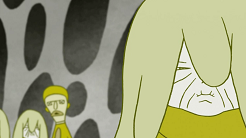
Itazura na Kiss – 01 – 15 – or: what the heck happened here?


I just finished watching episode fifteen of this series, and I’ve got too many thoughts about this series and I don’t feel like waiting for this series to end to share them. It’s just too much of a shame to see that a series that I once loved for its witty humour degraded so much in only two months. The first seven episodes of Itazura na Kiss, where Irie and Kotoko were both into high-school. My favourite moment was that kiss in episode 7. Strangely enough, as soon as the two hit university and started to develop, the problems began piling up and this series went South.

It’s a shame, since this series did manage to avoid the standard pitfall for such a series: it’s nice to see the characters develop, and Irie and Kotoko realize what they want to do later. The two of them becoming a couple of a doctor and a nurse may be a bit conservative (that wedding also came way too fast), but then again, this may feel awkward because I’ve watched too much anime, which seems to hate modern conservatism like this.

The smaller problem in this series are of course annoying, like the horrible Engrish (I can understand how Irie’s English is bad, but people who are supposedly English yet again speak with a horrible accent. I really wonder, in these days of outsourcing, why nobody got the idea to hire a bunch of English voice-actors to fill in for the English parts…). The inconsistent animation at times is also rather grating, especially in that new ED. It feels like a bunch of entirely different people made it.

But the biggest problem is that the writers suddenly seem to have given up… it’s strange, but their wit that made me fall in love with the first few episodes is entirely gone now. One thing I liked about these first few episodes is the fast transition from funny to dramatic, when either Kotoko or Irie’s pranks went a bit too far, for example. That’s what made that drama work. Ever since university, the creators seemed to have increased the drama in this series, but the problem is that… they just can’t write decent drama.

For the past eight episodes, the creators just kept throwing love-rivals and random illnesses at our couple, as an attempt to test their relationship. I mean, come on, think of something bloody different! Have a bit of faith in your characters. They’re funny as they are, without these contrived plot-twist. The creators keep hanging at the boring parts and skip the potentially interesting parts. I mean, that sex-scene really came from nowhere. There was no build-up, absolutely nothing, even though it was supposed to be a moment to bring Kotoko and Irie closer together…

I think that indeed the big mistake of the creators, was that during the development of the characters, they never developed their characters, or built up for that matter. There’s hardly any foreshadowing, storylines aren’t wrapped up properly, there is such a thing as getting over your love… why hasn’t that black-haired tennis-woman whose name I forgot found herself a new guy? This series hardly feels connected at all, and it feels like the writers are struggling to find something interesting for their main characters to do.

I’m really trying to like these romantic comedies, but they really make it harder and harder by continuing to disappoint me. I really hope that this series finds its groove back in its final third, because I genuinely liked this series when it first started. It feels like nearly every one of these love comedies I watch gets dull as it goes on and loses inspiration. I believe that the only pure love comedies that I genuinely liked so far are the ones who added something extra, so that they weren’t just about the adventures of a brand new couple. Yamato Nadeshiko Shichi Henge had lots of gothic horror references and bishounen-parodies; Moyashimon had its references to bacteria and in Umisho we got to see the chronicles of a local swimming-club. They may feel like plot-devices, but at least they provide the creators with enough inspiration to keep their series interesting until the end.

Mahou Tsukai ni Taisetsu na Koto ~Natsu no Sora~ – 03


Short Synopsis: The students are taught magic through various practical assignments at real clients.
Highlights: Sora may have been a bit too emotionally attached to her assignment.
Overall Enjoyment Value: 7,5/10
I’m pretty annoyed by Bonen no Xamdou, for its attempt to mess up my whole blogging schedule this season. Just when the final show this season aired and I decided which shows to blog, this one pops up. I don’t have a Playstation, and I’m not willing to buy one, so I haven’t seen its first episode yet. It’s not certain that I’m going to blog it, but there’s a pretty good chance that if it does pop up somehow, I’ll end up covering it. Especially since there are going to be 26 episodes.

One really annoying trend of 2008 is that, when compared to previous years, there are hardly any shows that go on for longer than 13 episodes. Only a select few went with a series length of 22 or 26 episodes, which is a real shame, in my opinion. In any case, if I do end up blogging Bonen no Xamdou, Natsu no Sora is probably going to be dropped. It’s obviously not a bad series, and I actually really like it, but everyone already seems to cover this series, and I’m not sure whether I’ll be able to say something interesting about each episode, considering the nature of this series. Either that, or Birdy the Mighty’s third episode has to be realy bad, but I doubt that one.

To go back on topic, this episode shows how the school in Natsu no Sora isn’t as Harry Potterish as I originally thought, and Sora is actually going to carry out many jobs as a magician in order to learn and develop her skills. It showed how in this world magicians are quite rare and not always admired. Sora’s also gets accompanied by some sort of manager or something. I’m not quite sure yet how this system works, but my limited Japanese may have been the cause of that. Do these people continue to accompany their magicians, or is it just for the first few months? Are these people magicians themselves? Does the school really have enough manpower to assign one manager to one magician?

Just as with episode 2, this episode again was very solid, with a bunch of forced plot-twists popping up from out of nowhere. Thankfully it wasn’t as blatant as that truck, but Sora suddenly decides to run off with the photo albums that she was supposed to get outside of a locked safe and bring them outdoors. This may have triggered the client to show a more personal side of herself, but I’d prefer it if was less forced, especially considering the nature of this series.

I’m also interested in whether the rest of this series will shed some more light into the world this anime is set in. I mean, in this episode we saw how easily Sora cracked that safe. What if there was a magician who suddenly thought that it’d be a nice idea to start robbing houses. If he’s talented enough, he’d probably get away with it, based on what I’ve seen in this series.

EDIT: aaand just after I make this post a sub of Bonen no Xamdou turns up. Does anyone know whether the .mp4-file is in HD or not?

Some quick first impressions: Koihime Musou, Nogizaka Haruka no Himitsu and Blade of the Immortal

Koihime Musou

Short Synopsis: Our lead characters finds a twelve-year old orphan who is a genius at fighting.
Highlights: Overglorifies its own setting
Overall Enjoyment Value: 6/10
This sort-of reminds me of Prism Ark, and although I admit that the writing is more solid, it does have the same weaknesses. At least there’s no country named “The Untied Kingdom” or “Poleland”, but as things look now, it seems that all the major army commanders are a bunch of little girls in frilly dresses. First of all, who in his right mind would take such a thing seriously? And second: what happened to the males or older females? Did some kind of disease wipe them all out or something? Still, this could have been ignored if it wasn’t for the little girl, mentioned above. She’s living in a regular village, her parents died, and she’s been living by herself for a while now. Then why the heck is she wearing the fanciest clothes in the entire village? How did she become so good at fighting? Who taught her? Why the heck is her house all nice and clean, why does she have a futon that’s not worn out in any single way? I mean, I know that this series isn’t supposed to take itself seriously, but in my opinion, being a comedy is no excuse to be lazy or historically inaccurate. Besides, this episode wasn’t that funny anyway.

Nogizaka Haruka no Himitsu

Short Synopsis: Our lead character discovers that the most popular girl at school is a closet otaku.
Highlights: Oh boy…
Overall Enjoyment Value: 3/10
I must say that I’m surprised at how the series this season featured a very low amount of stereotypes, even series as Seikirei, Koihime Musou and Antique Bakery had at least an enjoyable cast, with perhaps a typical loser male here and there. I was happy with this, but then Nogizaka Haruka came and ruined everything. Seriously, so many stereotypes come together in this series: horny teachers, a clumsy girl, a male lead who isn’t bothered by his hormones, the entire male school population who is, the perfect girl, and I could go on and on for a while. To make matters worse, these stereotypes don’t make any sense either. The above-mentioned horny teachers have the amazing ability to drink as much as they want and never get a hangover. If Haruka is so incredibly clumsy and a cry-baby, why did it take this long for her secret to be discovered? It’s not like this episode described her as a master of keeping secrets. How did such a shy girl become the most popular girl anyway? I could rant on an on about this series. The animation may have a considerable budget, but the characters end up looking dull and uninspired. The OP and ED are incredibly annoying. In other words, I don’t like one bit of this series. Every season has its worst show, and the worst show of Summer 2008 is for me without a doubt Nogizaka Haruka no Himitsu.

Blade of the Immortal

Short Synopsis: Our lead characters has a curse on him that makes him immortal.
Highlights: Awesome soundtrack, excellent atmosphere, terrific OP.
Overall Enjoyment Value: 8,5/10
I’m an absolute sucker for samurai-stories and Bee-train, so when the two are combined, there was no way for me not to love this series. The summer-season has already brought a lot of good stuff, but Blade of the Immortal has without a doubt delivered the best first episode of all the new series. It’s great to see that Bee-train is willing to experiment with new styles, because this series is absolutely nothing like their previous works, and the only similarity it shares is the same attention to the awesome soundtrack that this series has. The animation itself was quite decent, but especially the OP features some beautifully choreographed swordfights. Still, everything looks really nice. Great to see Bee-Train back!

Glass Mask Review – 45/100


The second half of Glass Mask is easy to review: a plot-hole here and there, but nonetheless evolving characters keep your attention till the end that comes way too abrupt. Nonetheless, standalone it remains an enjoyable though somewhat dramatic look at the career of a young theatre actress. So… why the abysmally low score? Well, you can blame that on the first half…

Because Glass Mask starts out downright terrible. It’s not the case of a series like NHK ni Youkoso, where the first half goofs off, after which a much stronger second half takes over. Glass Mask’s first half was much, much worse, an insult to theatre plays. At episode 13, I was ready to label this one amongst the worst series that I’ve managed to finish. Here’s why:

The first thing that will immediately catch your attention is the ridiculously overblown melodrama that would make Kannadzuki no Miko and Kyoshiro to Towa no Sora cheerful. Of course, a bit of angst is always healthy, but even during the smallest snide remark, everyone suddenly behaves like a Christian who just discovered that the pope is pregnant. Especially when the Mc Guffin play “The Crimson Goddess” gets mentioned, the melodrama gets blown to ridiculous proportions.

Then there’s the horrible botched-up storytelling of the first few episodes. There’s a reason why all stories have their light moments. They’re not only meant to give the audience a breather, but also to flesh out the characters, and show what they’re like when they’re not risking their lives/ trying their best/whatever. Glass Mask doesn’t think that these things are worthy of itself, and so it starts behaving like a soap-opera, diving from one disaster into the other. Honestly, the first half features obviously a number of plays that our lead character (Maya) has to act out, and only the last one had everything going smoothly. At the others, there was always someone or something with ill-intentions who tried to ruin the play somehow. Along with the melodrama… the result was a predictable mess.

And there’s more. I’ve always rather criticized those anime where the lead character finds his/her love a bit too easily, but all of that falls into nothing when compared to the sloppy excuse of romance that the creators try to showcase here. Maya’s boyfriend comes from absolutely nowhere. He’s just… there, without any explanation of how the bugger fell in love with her, or why he even got to know her for that matter!

But the thing that got under my nails the most was the following: this is supposed to be an anime about the rise of a talented actress, but the way she is presented shows all the signs that the staff behind this series didn’t know anything about good acting. Every time that Maya was on the stage, she caught the awes of her audience, where everyone comments and admires how good her acting is. All I saw, however, was a hopelessly overacting teenager without any sense of subtlety. One particularly bad scene showed Maya as an unimportant extra in a small movie. The result was a hospital-patient who had the time of her life while trying to climb a pair of stairs. How would you feel if you were watching a movie, and suddenly a close-up followed of some random dude who stands out way too much? What I watched wasn’t a immensely talented actress, it was a blatant Mary Sue with way too little experience to make any impact. This can also partly be blamed to Maya’s voice-actress. Who the heck in his right mind would cast someone who can’t act as the voice of a talented actress?

To my relief, the second half gives a notable attempt to fix these flaws, when the creators suddenly realize that a good story needs build-up and characters with weaknesses. The romance smartly turns into a romance with no future and the characters learn from their mistakes. The melodrama’s still there, but at least it’s better than before. Still, the question remains whether or not you want to sit through the pain for the better second half, and it’s not even that good anyway.

I’ve been wondering what makes a series really bad. I mean, I may have disliked series as To Love-Ru, but I can see how other can enjoy the light entertainment. Still, a series that fails to understand its own themes like Glass Mask… I don’t think that you can get much worse than that. I agree how the eighties brought a lot of good stuff to the world of anime, but this one was definitely not a part of it. The second half is just not worth it, because of that God-awful first half.

Storytelling: 3/10
Characters: 6/10
Production-Values: 6/10
Setting: 3/10

Glass no Kantai Review – 75/100


I’m surprised that it’s taken me this long to realize, but a common theme of a Gonzo-series seems to be subtle jabs towards aristocracy. The best example of this is Trinity Blood: in that series, the Vatican is an important party, and yet the Pope is a shy and incapable 12-year old boy and women have been appointed at high-ranking functions. Or take Hellsing: a series about a bunch of blood-thirsty vampires who justify themselves through the queen of England.

But also some of their other series show similar themes. The shinsengumi in Peace Maker Kurogane aren’t necessarily royalty, but they were a high-ranked organization, back in those days; and infamous for their immoral acts, and there they’re portrayed as the good guys in that show. The less subtle attempts can be seen in anime as the Seven Samurai and Romeo x Juliet, where the enemies are basically the aristocrats. Now I also understand why the setting in Special A was so overblown, since that too was a way to mock the upper classes.

The series where these themes are the strongest is without a doubt Glass no Kantai. At heart, it’s a space opera and a satire of the aristocracy: the entire series plays throughout the eyes of the aristocrats, and shows how in a futuristic setting, the nobles have taken back control over the democracies. It shows how they dress up in ridiculous clothes and act on their own selfish ideals, without much consideration for others. The pope may not be a twelve year old boy, but the guy does have a daughter, the emperor is gay and a shotacon, and the series is full with those kinds of references to make the aristocrats look ridiculous. Of course, it never tries to be a comedy.

This is indeed all behind a serious story. Like mentioned above, it’s a space-opera and shows how one of these nobles leads a rebellion for the common people. Throughout the series, we get treated to a healthy combination between space-battles and large-scale politics. The interesting thing is that there’s hardly any attention for small-scale politics, and there’s hardly any focus at the common people (again, this has probably been done to show how little the lives of common people mattered to your average aristocrat).

The storyline is a pretty interesting one, and it evolves as the series goes on. The problems with this series lie in the storytelling, however. The entire series is full of small inconsistencies and left-out scenes that feel like riding over a bumpy road with broken suspensions. They break the flow that the storyline is trying to create. The best example of this is the concepts of “air”. This series has actually managed to create quite an ingenious galaxy, where there aren’t any planets, but rather small chunks of land on which everyone lives, and which can be linked together. I personally loved this idea, but it’s as if the creators didn’t spend enough time to flesh them out and think of how these chunks of land would retain their atmosphere. The result that some random places in space suddenly contain air, and while others don’t.

And there is of course the animation. The animation in this series is horribly inconsistent, and ranges from pretty to downright abysmal. This series is like Hatenkou Yuugi or Kiss Dum: there’s a project with potential, which gets held down by one or more very lazy staff-members. In the case of Glass no Kantai, I think that te producers are to blame. They didn’t realize that creating an anime takes this much of an effort, and as a result the rest of the staff had to rush through their work in order to get their work done in time. As a result, this series lacks polish, since there was no time to check for any bugs or inconsistencies, which resulted in beauties like this one. It’s not that Glass no Kantai was held down by a small budget, but rather the time-constraints that worked against it, and a good producer should be able to have known this.

Despite this mediocrity, though, I liked Glass no Kantai. It had a clear vision, which is something that can’t be said of, say, Dragonaut. And the storyline, how botched up it may be, does come together in the end. It’s interesting: the past two series I’ve watched definitely had their flaws, and were at times tedious to get through, but their final episodes did end the series with a great enough climax; something which definitely can’t be said for every other series.

Storytelling: 6/10
Characters: 8/10
Production-Values: 7/10
Setting: 9/10

Mahou Tsukai ni Taisetsu na Koto ~Natsu no Sora~ – 02


Short Synopsis: Sora travels to Tokyo, has her first day at school and meets her classmates.
Highlights: Very detailed storytelling, but where did that truck come from?
Overall Enjoyment Value:7,5/10
Okay, so even though everybody and his dog will probably end up blogging this, I’ve decided to cover it. I haven’t seen the first season yet, but apparently you don’t need to have watched it in order to enjoy this one. It’s got a warm slice of life feeling, even though plenty of things are happening. Sora is quite a likable female lead, and I like how the creators gave everyone in Sora’s class his or her own identity. The backgrounds are also awesome: there were plenty of times where I couldn’t tell whether they were live-action or painted. It’s just going to be a bitch, trying to take screenshots of them, since there are hardly any good shots of the characters. The camera is either too far or too close the character’s faces. ^^;

This show does have its flaws, mostly in terms of coincidences. Out of all the houses in Tokyo, Sora ends up in the same as her potential love interest. But the really strange thing that was that accident that happened in front of Sora (where the SAME GUY was also present). First a car crashes, only for a truck to actually fly from a bridge somehow. I guess that the creators were trying to show Sora’s powers a bit, but this could really have been more subtle. Especially considering how solid the rest of the series is.

Sora’s classmates are an interesting bunch. Sora’s obviously talented, but this episode also showed that her magic is rather uncontrolled and not polished yet (especially when she lets her emotions take over, which I guess is a trait that 90% of all mahou shoujo leads have), but her classmates are either much more precise, or still need to learn how to use magic properly. In any case, this episode showed the beginning of good chemistry between them, which is always a plus.

Betterman Review – 77,5/100


When I first read about Betterman, and how it was set in the same world as GaoGaiGar (according to Anidb, at least, I expected this to be some kind of fun and GAR mecha action show. And with the same mindset, I started watching this series. What I got, though, was something slightly different. Sure, there is action, and there are mecha, but Betterman is much more suspense than that it is about action.

You can almost classify this series as horror. Throughout the series, the bad guys throw all sorts of huge monsters, creeps and psychological attacks at our protagonists, and the main focus is much more on trying to not die than to kill the enemy, because more often than not, they get saved by some outside force. This series does have its problems, but this series does succeed in never losing steam, making the action-scenes worth watching.

The big problem with this series, though, is that it doesn’t have anything that makes it really worth watching; it misses that final “oomph” that makes the viewer glued to the screen. Any area that it could have delivered in is flawed somehow. Take the setting: it’s surprisingly deep, spiced up with a lot of scientific analysis in order to explain all of the supernatural stuff that gets thrown at the viewer’s screen. A lot of interesting facts and titbits pass the screen. Unfortunately, the creators do tend to get lost in their own techno-babble, making their scenes unnecessarily confusing with all sorts of different terms and jargon. Especially the final episodes, when everything is supposed to get revealed, feel like a huge information-overload, due to the overuse of techno-babble.

Thankfully, the final episodes are saved by the characters, and they make sure that the series leaves on a good note, rather than an overly confusing one, but their problem is that their development starts awfully late for a 26-episode series. They only show a bit of depth to themselves around the final quarter of this series, and the villains are even worse off with no depth at all. Most of them feel just incomplete and uninteresting, and this series would have been much better if you actually were interested in the final villains. I do have to give credit to the male lead, though. For once, he isn’t a shy boy, or a voice of reason. The overall cast is also fun to watch in those few moments when they’re not serious, and my personal favourite was the rather eccentric Akamatsu.

Overall, because of these flaws, this series never hits any heights, but it is a very consistent one. The different parts fix each other’s weaknesses, making this enjoyable through the end, and because of that this series never hit any real lows. It always has some kind of creep that’s attacking our heroes, so if you’re into suspense series, you could give this one a try.

Storytelling: 8/10
Characters: 8/10
Production-Values: 8/10
Setting: 7/10

Some quick first impressions: World Destruction, Natsume Yuujin-Chou and Mission-E

World Destruction

Short Synopsis: Our lead characters form an organization to destroy the world.
Highlights: Nice ideas, but flawed (see below)
Overall Enjoyment Value: 7/10
This series has a lot to like, and at the same time a lot to hate. It’s probably the first time where humans are actually the oppressed race in a fantasy-series, especially if they’re oppressed by a bunch of cats. The different races that walk around the world are full of imagination, and the idea of a bunch of humans (and a bear, okay), joining together to destroy the world has some definite potential for the second half of this short series. The animation is really messy at times, but it looks excellent. Yoshihiro Ike, one of my favourite composers is behind the background music, and he delivers as usual, though perhaps it’s not his best work. Agh, if only the messages of this series weren’t so blatantly obvious! The lead characters themselves are fine, but it’s the way how they’re presented that gets me. This is one of those nationalistic anime that tries to shoves the message “humans rock, the rest sucks” down your throat, and the rest of the episode really need to work to develop the other races in this series. It would be interesting if through this series, the lead characters will actually be portrayed as the bad guys who will in fact destroy the world, but for that to happen, the cats need to stay away from stereotypes. Right now they’re funny, but I can already see this series go south in a couple of episodes if it doesn’t try to develop them.

Natsume Yuujin-chou

Short Synopsis: Our lead characters can see spirits and has a book of names of these spirits.
Highlights: Low budget, but very solid scriptwriting.
Overall Enjoyment Value: 8/10
The first thing that came to my mind when I started watching this is: is this really Brains Base? This really has to be their series with the lowest production-values to date, and things actually look pretty normal, and really different from their usual vivid animation style. Still, their sense of storytelling didn’t degrade one bit, and the director of Baccano and Jigoku Shoujo shows that he still knows how to tell a great story. This episode was nothing sensational or spectacular, but it was a very solid introduction for a series about spirits and ayakashi. This first episode already shows what the ayakashi in this series are made off, and like most of them, they act because of their grudge that was caused by something, and aren’t purely evil for the sake of being evil. I guess that that’s why I like stories about ayakashi so much.

Mission-E

Short Synopsis: Our lead character… has changed a lot since the first season.
Highlights: The huge character-development….; same fun climaxes as in the first season.
Overall Enjoyment Value:8/10
Holy crap! This actually takes place years after the first season! The lead characters have set up an organization to deal with the Type-E users, in order to protect them from the guys we saw in episode 11 and 12. Now here’s a twist you don’t usually see, and I’m really enthusiastic about how it was carried out. The interesting thing is that there seemed to have been no adult to guide them when they set up that organization, and it seems that they had to figure out everything by themselves. They also found a new girl to work with them in the meantime. In any case, before I start rambling, it was awesome to see how every character has changed during the absence of this series. The action-scenes were exaggerated, but they were fun and I can’t wait to see the rest of this series!

Takane no Jitensha Review – 70/100


This one can just be considered as both a first impression as a review, since there’s only one episode of Takane no Jitensha anyway. It can easily be considered as the brother-anime of Yume da Maya Kidan: both are only twenty minutes long, both are down-to-earth with supernatural elements, both have produced on a short budget, both are about accepting your younger sibling and both aren’t bad by any means, though they’re not really something special.

Takane no Jitensha offers a small look at the live of a boy called Takane, and the sort of problems that any boy of his age has: getting a new bike (jitensha = bike) because his current one is old and his friends keep beating him. The things here strike especially close at home. The other half of the airtime adds in a bit more excitement. The realism disappears a bit, unfortunately, but it remains an enjoyable story.

This review is short, because there’s hardly anything interesting to say about this series, but if you’ve got twenty minutes to waste, you might as well give this one or Yume da Maya Kidan a try. In terms of slice of life, Takane no Jitensha is better, while Yume da Maya Kidan is better with the supernatural stuff (especially the Tanuki in Takane no Jitensha came from nowhere and delivered one heck of a deus ex machina).

Storytelling: 8/10
Characters: 7/10
Production-Values: 6/10
Setting: 7/10

Some quick first impressions: Strike Witches, Birdy the Mighty Decode and Yakushiji Ryouko no Kaiki Jikenbo

Strike Witches

Short Synopsis: Our lead character becomes a witch that fights against alien forces.
Highlights: Lacks the style of the OVA.
Overall Enjoyment Value: 6,5/10
It’s a shame that the style of the OVA was abandoned for the tv-series. Still, overall Strike Witches did its job, I guess. Ironically, at the moment this seems to be the perfect series for Gonzo to get some of their funds back, because stuff like this definitely sells. There’s lots of fanservice indeed, but it’s nothing when comparing it to Sekirei. This episode was nothing special at all, but it did serve as a good enough introduction, although I wonder whether trucks can violently explode like that. There are lots of characters, which is going to be either this series’ saving grace or doom, whether or not the creators can develop them sufficiently within 12 episodes. I personally doubt it, but I’ve been surprised by such a series more than once.

Birdy the Mighty Decode

Short Synopsis: Our lead character gets killed and ends up sharing his body with a female alien cop.
Highlights: Great style, awesome action, fun characters
Overall Enjoyment Value: 8/10
This has been my most anticipated series of the season, and probably the weirdest most anticipated series I’ve ever had for a season. It doesn’t disappoint at all, though. What we have here is a fun action-series, sharing a deep contrast with the other action-series this season (Ultraviolet), which is much darker and melancholic. Birdy the Mighty is sortof like (and it rather disturbed me when I found this out) To Love-Ru done right. We’ve got an alien in a space-ship, but instead of the predictable princess, being chased, she’s a cop, after a bunch of bad guys. When she meets our lead character, she doesn’t instantly fall in love with him without any reason, but instead she accidentally kills him and feels sorry for her own mistake. She also has a dress-up robot, but he dresses up as a strange transsexual. Overall, it feels like much more imagination went into creating this anime, and it’s amazing what a bit of imagination can do to my opinion of a series. And of course, this is being done by the director of Noein, so of course: the fight scenes are bloody amazing. What surprised me the most during the summer previews is the bad reputation this series seemed to be getting, simply because of its name. I mean, what’s so bad about calling your series Birdy the Mighty?

Yakushiju Ryouko no Kaiki Jikenbo

Short Synopsis: Our lead character is a policewoman, who gets assigned to supernatural cases.
Highlights: Glamorous look at the way of a detective, but at least the characters are interesting; good luck at explaining that plot-hole at the end of the episode, though.
Overall Enjoyment Value: 7/10
Well, this one turned out to be different from expected. What I expected was a supernatural mystery-series, but what I got was a thriller: it’s pretty clear what the enemies are, and they need to be stopped. I may not work with the police or anything, but I do think that the depiction of inspector Ryouko could have been more realistic: she spends the entire episode buying bras, swimming and in fancy clothes, while doing her investigation that’s in no way systematic. That’s why her assistant is the interesting character in this series: he has to put up with her eccentric character, while trying to do his own job as well. I’d really wish for the bad guys to get some more depth in the next episode, because they were rather boring in this one. Ah well, at least this series is backed up by nice enough graphics and an interesting soundtrack that combines techno with eerie sounds.