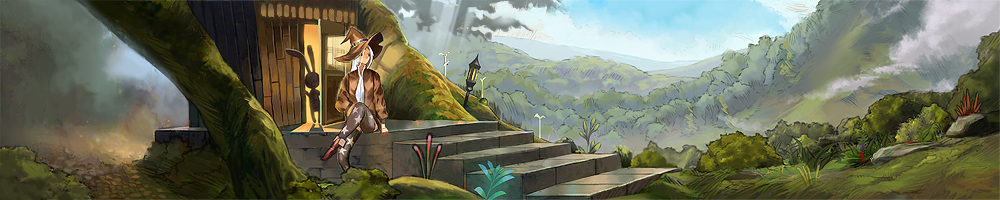
Tsuritama Review – 84/100


Back in 2006, Kenji Nakamura surprised probably everyone with his three episode masterpiece that was Bake Neko, part of the Ayakashi-television series. It was trippy intense and brilliaantly written and built up, Together with Kenichi Kasai’s adaptations, it defined and popularized Noitamina and brought it to a mainstream audience. Ever since, Kenji Nakamura has been releasing a new series every now and then, with 2012’s installment being Tsuritama, at which he completely diverges from the types of shows he normally does.

I loved all of his previous works, but they collectively all had one downside: the characters. Relatively little time was spent on fleshing them out, and most of them were pretty one-sided and didn’t really come to life. Tsuritama is entirely dedicated to attempt to do this correctly, and it works. The plot is simple on purpose exactly to allow the characters to play themselves out naturally. There are relatively few action-packed climaxes in this series, but all of them have clear meaning and kick ass and ultimately make it a really fun show to watch.

And even though this series takes it easy in terms of pacing, it definitely doesn’t take it easy in terms of the ideas it has. This series really thrives on originality: it may have a teenaged cast, but within that it has many fresh ideas, like an alien with a watergun, a duck named Tapioca, or how about an entire series dedicated to fishing? Especially in the second half of the series the scenarios get particularly creative.

A downside is that this series does take a while to get going. The first half of this series contains a lot of build-up and is pretty much fishing 101 as it drills the necessary fishing skills into the main charachter in order for him to function properly in the second half of the series. While this can get a bit boring at times, I can’t deny that this series has a really well written structure: it knows exactly how much story it should have to not get rushed, it knows how much time to spend building up an make its characters feel alive, while stil having enough time to actually deliver on the fun and action-packed bits. Noitamina-series are infamous for their pacing issues, but Tsuritama is a series that gets the balance and format just right.

Storytelling: 8.5/10 – Fun to watch and a greatly paced out structure and a creative scenario.
Characters: 8.5/10 – The series is fun because the characters are fleshed out well and get to play themselves out naturally.
Production-Values: 8/10 – Not as trippy as you’d expect from Kenji Nakamura, but still has a unique and colourful look and wild animation where it matters.
Setting: 8.5/10 – Really tries to be original amidst all of the teenaged series that try to see who can rip each other off the most.

Suggestions:

Lupin III – Mine Fujiko to Iu Onna Review – 86/100


As the spring season approached, it seemed clear what would be the series with the most interesting staff working behind it: Sakamichi no Apollon, the director of Cowboy Bebop coming back after many years of absence to work with some of Madhouse’s top animators and the always lovely music from Yoko Kanno. And then a new Lupin series got announced.

Seriously, the people involved in this project: it’s directed by Sayo Yamamoto, who directed Michiko e Hatchin, the scriptwriting powerhouse of the recent years Mari Okada wrote the series composition, Shinichiro Watanabe (the same director of Cowboy Bebop) did the music production, Takeshi Koike is behind the character-designs, and on top of them there are some episodes written by Dai Sato (the guy who wrote Ergo Proxy and Eureka Seven) and Junji Nishimura, the director of Simoun. All of these people are responsible for masterpieces, and here they were stuffed into one single project. The result is a breath of fresh air.

Now, I do have to admit one thing:: the influence of all of them is clearly visible, but don’t expect any of them to surpass themselves here. Mine Fujiko to Iu Onna is far from as good as the series that these people became known for. When you set the standard lower and compare it to the series that have come out in the recent years though, it really stands out as something unique that anime definitely needed.

This series just oozes style from beginning to end. The character-designs are just gorgeous and every episode is just chock full of inspired images and artwork that go completely against the trend of current anime. There is a TON of nudity in this series, but the fanservice is completely different from the juvenile fanservice you see in all the other shows these days.

This series is really focused on adventures, just like the Lupin series it’s based on. This time though, the one who stands in the center is Mine Fujiko. The episodes are all varied and very different from each other, and they all are chock full of references and homages to other works of fiction that use often-used female character tropes, which it then proceeds to subvert completely. Seriously, the huge amounts of boob in this series may not make it so apparent, but Mine Fujiko is a very strong and independent character.

Beyond this, this series is also a whole lot of fun to watch: there are some episodes that have great chase scenes, others have great action scenes, yet others are much more focused on well written dialogues and yet again others thrive on using weird plot twists. It’s a really well made series.

There are a few things that do hold this series back though. First of all there are the character-designs in this series: they look gorgeous and really detailed. But they also are really hard to animate consistently, and yet, the creators definitely try to animate as much as they can. The result is unfortunately a lot of jerky movements and facial movements that just look off or strange.

The second is that this series has little character-development, but that’s just a minor issue. The creativity that went into the characters and their re-imaginations, complete with how they play off each other more than makes up for this. This is why I love remakes for anime: a lot of them are really made by fans of the franchise who don’t care about trying to recreate them as accurately as possible, but want to give their own spin to them, and Mine Fujiko to u Onna is no different. the more I write about this series, the more complete it starts to feel, and that’s a sign of a really good series.

Storytelling: 8.5/10 – Loads of variety and a bunch of great scripts that come together really well.
Characters: 8.5/10 – The characters are used really well and play off each other wonderfully. This excuses the sometimes jerky acting more than enough.
Production-Values: 9/10 – Very artistic and unique. The art is where this series set itself apart among the many shows with gorgeous graphics this season.
Setting: 8.5/10 – Where this series rocks is how there is so much to be read in between the lines. It’s a homage and a parody at the same time, and it references a wide variety of different works and uses this really well.

Suggestions:
Michiko e Hatchin
Seikimatsu Occult Gakuin
Ultraviolet: Code 044

Jormungand Review – 80/100

Sometimes, a show comes along that has the best of intentions… but just seems to miss the boat by a few inches. Jormungand is scheduled for 24 episodes, this first season covering 12 of them and this seems to be enough time to cover its entire story about weapon dealers who travel all over the world. This should have been an awesome series, but instead this season had more than a dozen better series. So what happened?

Well first of all this season is awesome, that’s definitely a matter of bad timing for Jormungand, but even then there is a reason why it failed to stand out. I’ve seen quite a few comparisons between this series and Black Lagoon, but that’s not quite right. Black Lagoon had a cast of widely varied and colourful characters. Jormungand wants to have a cast of colourful characters, but gets a few things wrong.

The series definitely knows its basics: every episode is dedicated to give background and a story to at least one member of the cast. These backstories and developments are definitely interesting. It also fleshes a bunch of them out quite well, most notably Jonah. The problem though, is that it doesn’t do this with every character.

Now, that on its own isn’t a bad thing: the trick with a series that has a huge cast is to make every character feel unique and part of the story. And that’s where Jormungand falls down, especially with its villains. There is no big villain in this series: every arc has its own antagonists, and they’re all pretty much carbon copies of each other. The creators keep recycling two or three archetypes over and over again: the loud-mouthed complaining boss, the ditzy and spunky female sidekick and the silent soldier. After seeing the protagonists easily beat these characters over and over again with seemingly no effort, things get a bit boring. This series also really likes snarky characters, up to the point at which just about every bloody characters is snarky to some extent.

And that is a shame because a series with this concept is destined for greatness. The places that the characters visit are unique and beyond any cliches, and it really toys with the themes of weapon dealing and morality in a fresh way. And there are definitely interesting characters, but they’re just overshadowed by the unremarkable ones. But here is the thing though: it still has plenty of potential for its second season. It laid out more than enough build-up for that. The second season will have to put in much more emphasis on getting better villains, but there are plenty of hints that it will. There is plenty of interesting stuff in this first season, it just gets held back a bit. Remove that and who knows what you’ll get?

Storytelling: 8/10 – Fun action scenes and good pacing. Battles are too easy sometimes.
Characters: 7/10 – There are way too many similar characters and archetypes throughout the series. The few good characters don’t manage to save this series from being dragged down by this.
Production-Values: 8/10 – Funky soundtrack, its own visual identity and nice animation.
Setting: 9/10 – The most interesting part of this series, with still a ton of potential left for the second season.

Suggestions:
Madlax
Black Lagoon
Mobile Police Patlabor

Kimi to Boku Season 2 Review – 84/100

I remember that it was often a pain to sit through the first season of Kimi to Boku. Chizuru, the blond haired kid especially got on my nerves many times. The thing is however, that despite that, it did know how to build up and create good characters. And that’s the nice thing of second seasons: you’ve already done the introductions and fleshing out so you can fully focus on the good stuff.

As a result, Kimi to Boku’s second season is a lot more bearable. Chizuru definitely develops his own charm and the chemistry between the characters only gets better and better. Every episode takes one of the characters, whether this is a main or a side one, and does something clever with him or her. There’s a lot of character-development to be found in this series.

Another big difference is that the focus on drama is much greater, and by that I mean that the creators take up much more time in order to let the serious scenes play out as smoothly as possible. The result is very atmospheric. The first season had most episodes structured where most of their airtime would be random goofing-off, with some sort of redeemable twist at the end. The second season is more really slow development with you at the end realizing how much has actually been added to the characters.

You obviously need a bit of a thick skin for Kimi to Boku, because Chizuru can and will get on your nerves, but beyond that this is just an excellent drama with loads of interesting characters. The second season can be a bit slow at times, but heck: it’s been a while since a slice of life series came around that was this good with a predominantly male cast.

Storytelling: 8,5/10 – Great atmosphere, and loves to take its time to let events play out well.
Characters: 9/10 – Tons of subtle character development.
Production-Values: 8/10 – Solid animation: nothing special, but no abuse of still frames either.
Setting: 8/10 – A typical high school that for once doesn’t feel over-exaggerated.

Suggestions:

Zetman Review – 82,5/100


Anime as a medium has a lot of great points, but its system also has plenty of disadvantages. One of those problems: producing a full fledged anime series is expensive. Now try finding someone who’ll fund the production of a full fledged series for the adaptation of your obscure manga. This problem has been huge, especially after anime started to become more popular and the amount of series produced each season increased. Six years ago the common length of a series was 26 episodes. Today it is half of that. Zetman is another one of these series with a huge manga that had to be stuffed into just 13 episodes. This seemed like a recipe for disaster, but holy crap it definitely tried to make the most of what it had.

Let me get one thing straight though: this series is rushed. Incredibly rushed. But here is the thing: among the incredibly rushed series of only 13 episodes long, it is one of the best. The reason for that is tha the plot, while flimsy at times, never really falls apart: the story has a clear beginning, middle and end and it has a fairly good progression. The ending also doesn’t feel tacked on at the last minute and actually closes off the series properly. Sure, a lot of things had to be cut and rearranged for this, but at lest this series feels complete and not a cop-out.

This series stands out with how much raw passion has been put into it. The character designs look gorgeous when they are put into action due to all of the details that the creators put into the facial expressions of the characters. There is a lot of great animation in this series that attempts to bring the characters to life, and even though it’s clear that this series has a small budget, the creators tried to use their budget as much as possible and make every frame have a strong visual presence. Especially the first episode has some animation that deserves to be checked out, and even though the episodes after that never manage to be as well animated, there still are plenty of interesting visuals throughout the series.

This is a series about Superheroes and it pushes the limits of what it means to be a superhero throughout the series, but this series also has a lot of themes about family. Whether you should watch this series if you’ve read the Zetman manga.. I have no idea. If this isn’t the case though and you’re in for an over the top and expressive series and don’t mind many graphic themes as rape, then call this a recommendation because despite being rushed, Zetman turned out to be a very engaging series.

Storytelling: 8/10 – Should have been 39 episodes, but surprisingly this show doesn’t fall apart, nor leaves with a bad inconclusive ending.
Characters: 8.5/10 – Very expressive characters and this series loves to challenge the beliefs of its cast.
Production-Values: 8.5/10 – Amazing detail on the facial expressions. That’s the point where Zetman really set itself apart in terms of graphics this season.
Setting: 8/10 – Takes the concept of superheroes and does very interesting things with them. It just could have been so much more interesting if it had more episodes.

Suggestions:
Hitsuji no Uta
Mononoke
Shinrei Taneti Yakumo

Aquarion Evol Review – 82,5/100


There is one director out there for which I’m ashamed to admit that I’m a huge tsundere: Shoji Kawamori. No, it’s not Shinbo, because with him there is a well distinct line between his good stuff and his bad stuff. With Kaawamori though, I both love and hate his works. I know his tropes, I know wow he’s a huge troll, and yet I nearly always end up blogging his series. And this time he’s working together with Mari Okada!

The result is a completely bizarre mecha-epic that is chock full of sexual context. I mean, romance and mecha have been done plenty of times before, but this show really takes it up to eleven: everything in this series is about romance: the mechas in this series can fuse by having three characters enter orgasm mode, it’s chock full of love triangles and subplots that all have their own storylines, and there is a ton of symbolism in this series, everything relating down to some sexual context in one way or the others. This series really is about men versus women and the tensions between them and it does all of this over the top.

The result is a really fun and often bizarre and cheesy series that definitely has plenty of entertainment value. It’s got a solid script so everything fits together very well, and the themes connect well with the characters, the plot and vice versa. the plot is well built up, but has a few issues: being incredibly cliched at times, and making no sense whatsoever. The cliches are often played straight with a very conscious purpose, but this does lead to a bunch of cringe-worthy been-there done-that episodes, along with a completely useless female lead who fails to do anything throughout the entire series. The plot has a few nice twists, but ultimately it’s just too stupid and corny to really stand out.

This show will most likely be remembered through some of its bizarre symbolism, though. This show can get completely crazy at times and it has some of the most wtf-inducing ways of introducing new powers or have characters learn something new. There was a slight danger of the creators turning this too much into a formula, but this was neatly avoided with a plot that did keep changing.

A guilty pleasure? I wouldn’t really call Aquarion that. Aquarion knows exactly what it is and what it isn’t. It’s a show that’s heaps of fun to watch as it explored the sparks and chemistry between men and women. And for this, its main plot had to be incredibly corny and it refuses to make any iota of sense. the result is a series that is overall very entertaining, but does have a number of lesser parts when the script is trying to make sure that the plot and characters actually remain strong enough to carry the series. This show has plenty of creativity in any case, but it definitely could have balanced this out a bit better.

Storytelling: 8/10 – Silly, corny, creative and strangely enough well built up and really fun to watch.
Characters: 7.5/10 – Mikono… even for a Shoji Kawamori female lead she is useless. This show excels in its chemistry, but the characters remain two-dimensional.
Production-Values: 9/10 – Tons and tons of eye candy, plus a godly soundtrack that is the best of the year so far.
Setting: 8,5/10 – Excels in its themes that are often completely bizarre.

Suggestions:
Basquash!
Ben-To
Cobra the Animation

Avatar – The Legend of Korra Review – 81/100

Back when I was a teenager and not an anime fan yet, I used to watch way too much American cartoons. I pretty much suffered an overdose from it and all of the incredibly bad stuff I actually sat through back then. I wasn’t going to touch any of those shows anymore unless it had something really good to offer. Enter the Legend of Korra.

The premise of this series just sold me. Instead of going with the usual premises, it instead took things a step further: this series takes a look on what would happen after the world has been saved by an “Avatar”. What would the world look like after someone came along and united everyone? What would the new version of him look like and what would her part be? The result is that the creators stuffed a martial arts expert inexperienced into a big political battle with roots deep in racism and oppression by those who are stronger. It blurred the lines between good and bad by making both sides flawed, and Korra often ends up as a hypocrite due to her inexperience. Add in some terrific action scenes in which in particular the fight choreography stands out (which really was better than any of the other anime that aired this season) and you really have a series that could have become amazing.

There are two things that ended up holding this series back though. At first this series struggles with its romance. It’s inconsequential and annoying with a pointless love triangle that only serves to stall for time, rather than just spending time to flesh out the characters. The second flaw is that it’s got a really bad ending. I know that this is only the half-way point of the series, but the ending did try to wrap up everything that this season had brought forth, and failed miserably with a bunch of very blatant Deus ex Machina that render some of the build-up and most defining moments earlier on in the series rather meaningless.

Now, the Legend of Korra does have some very good individual moments and great concepts, they just don’t come together at the end and due to that ending I’m not sure whether I can really recommend it (endings for me are very important on fiction and often ended up changing my view on a work significantly) and my rating for this series would have been much higher without it. For those who don’t want to watch any of the other installments of the Avatar Franchise: don’t worry. This series is actually pretty standalone and an be watched on its own.

Storytelling: 7/10 – A bit of a wonky pacing with a bad ending mostly reduces the potential of this show.
Characters: 8/10 – It uses its characters very nicely and the age gap between the different characters along with their backgrounds combines very well. The romance doesn’t really work, though.
Production-Values: 9/10 – This season there really were a lot of series that stood out with visuals, all in their own ways. For Korra, this was the fight choreography that was un-matched.
Setting: 8.5/10 – Great ideas for politics.

Suggestions:
Last Exile
Mahou Shoujotai
Secret of the Cerulean Sand

Fate/Zero Season 2 Review – 86/100


Fate/Zero was one of the big titles of the past Spring Season. It already had an incredibly solid first season, and this promised to only get better as it fired off. And yeah, the second season indeed ended up trumping the first and using its build-up. I have some qualms with it, but really: this was an incredibly well made series.

In a season with so many series that stood out with their visuals, Fate/Zero stands among the best: its consistency is amazing: characters stay amazingly on-model, even after 25 episodes and there is a ton of eye candy with brilliant use of CG. The director, Ei Aoki is a guy who started in Photography, and it shows: just about every frame in this show looks good. To put this into a perspective: in a season with three Satelight series airing at the same time, this second season alone the eye candy surpasses that of all three of them combined.

The plot continues off where the first season left off and contains a number of very satisfying climaxes that are surrounded by an interesting plot that just keeps taking turns. There are a few issues with this plot, though, most notably that you really need to be familiar with the Fate Franchise, otherwise some plot points won’t make any sense. This series may be just a prequel to Fate/Stay Night, but even then there were events that happened before this series that this series refuses to line out.

Like the first season, this series again does a wonderful job to melt the setting from the European middle ages and the ancient middle east together, putting Chivalry on one hand and conquests on the other. The two mesh greatly as they clash, on top with the Fate franchise’s interesting system of magi and mages.

Now, as for the characters. I do feel that I need to clarify myself a bit after claiming that the emotions feel empty, and things indeed are a bit more nuanced than that. The cast of Fate/Zero definitely has a number of characters that are developed really well throughout the series. The second season in particular contains some really heavy scenes that show many of them completely breaking down and there definitely are a lot of big emotions in this series. What I feel like the creators could have done better is flesh out these characters. This series puts a lot of time into battles and explaining the actions of its characters, but not so much on the touches that make their characters more human or show them in different emotions. Balancing these scenes out could have been done better: when this show builds up, it’s usually very slow (there in particular is an arc devoted to the background of just one character that takes up 2 whole episodes, but in the end is a bit too focused on explaining why he is involved in the story and a bit too little on creating a dynamic character). I feel that this could have been built up a bit better and because of that things don’t come together at the end as well as I hoped.

This series is a bit overhyped, but still, Fate/Zero remains an excellent series. Even though some plot twists come from nowhere if you’re not familiar with the Fate franchise like myself, it’s a big recommendation and there really is nothing like it around. This series pushed what can be done with animation further and the people of Ufo-Table have really grown into a powerhouse of a studio at this point.

Storytelling: 8,5/10 – Great action-packed climaxes with many interesting plot twists that are best enjoyed when you’re familiar with the Fate franchise.
Characters: 8/10 – Excellent development and loves to make its characters break down.
Production-Values: 9.5/10 – The consistency of the amount of eye candy in this series is amazing. 25 episodes and it still manages to look amazing with very few weak points.
Setting: 8,5/10 – Great themes, blends different settings together really well. Make this a full 9/10 if you’ve seen Fate/Stay Night.

Suggestions:
Kara no Kyoukai
Berserk
Mahou Shoujo Madoka Magica