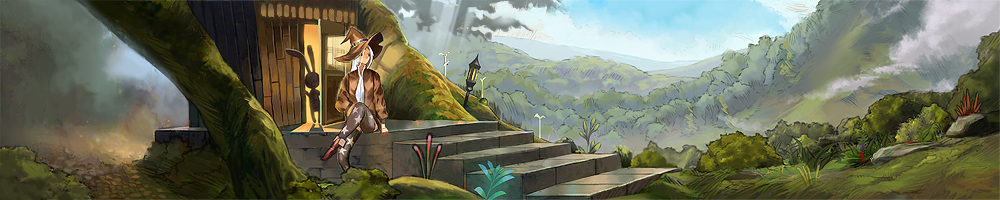
ef – a Tale of Memories Review – 86/100


After looking at the promo-art, it’s easy to label ef as another of those harem-series. I too, at the beginning, wasn’t really motivated to continue with this series. Still, ef proved quite early that it doesn’t care about stereotypes. It’s not even a harem: it’s just a story about one love-triangle and one tragic couple. On top of that, this production has been supervised by Akiyuki Shinbou, which provides excellent graphics that actually symbolize the story, and the music is absolutely terrific. Even those who aren’t into romance can give this series a try.

But the thing that really makes this series is the dialogue. It’s deep, it’s detailed, and it’s meaningful. Neither the characters nor the story are that special for this series, but the dialogue makes everything so much better than if it were written by a lazy writer who only cares about his pay-check. The first half of the series basically builds up and fleshes out the characters, while the second half drastically increases the dramatic tension, and with great results.

There lies my problem with this series, though. ef has an excellent middle part, but I’m a bit iffy on the ending. This series seems to want to go out with a bang, while I think it would have been more appropriate to have let it end more peacefully. The twists near the ending feel forced, and just there to get a happy ending together. I would have liked to see an approach more similar to that of Hitohira: just have one big climax, while the rest of the series either focuses on building-up or the aftermath.

Still, I consider ef as one of the best visual novel-adaptations I’ve ever seen. There is a lot of crap amongst this genre, especially the eroge-adaptations, but ef ignores this and delivers a moving story between multiple couples. While there were a few side-characters who lacked development, the others were just as deep as the main ones. If you don’t plan on watching this series, then at least try to get your hands on the soundtrack, because that one for me has been the best soundtrack of the season.

Kino no Tabi – The Beautiful World – Byouki no Kuni -For You- Review – 85/100


For my 200th review, I was looking for something special (because yes, this is currently the 200th review I’ve written for my blog!), and lo and behold, the second Kino no Tabi-movie popped up on Tokyo Toshokan at exactly the right moment. With a length of half an hour, it’s again nice and short, and those who have been disappointed by the first movie will probably be delighted by the second one.

While Life goes on too place a few years before the series, Byouki no Kuni takes place a few years after the series. You can see how Kino has grown up a bit. She’s less scared to be emotionally involved with the people she meets, and she has much more trouble to hide her gender when compared to the series. ^^; The graphics also look better than they have ever had, and especially Kino looks beautiful.

Yet again, the movie features another random story that could very well be a glorified episode. Still, unlike the first movie, it feels complete, and it’s an excellent way to spend half an hour. Ryutarou Nakamura (Serial Experiments Lain, Ghost Hound, the director of the original series, but not the first movie) returns to the director’s seat, and the result is some excellent storytelling. I think that it can be best compared to the storytelling of the original series, combined with that of Ghost Hound.

Another great thing about this movie is that it’s completely standalone. You don’t need to have seen anything of Kino no Tabi before if you want to enjoy Byouki no Kuni, and it’s actually a very good introduction to the concept of the rest of this series. Overall, Byouki no Kuni is a relaxing movie that manages to recapture the essence of the series, while being more than just a glorified filler-episode; something that very rarely happens with movies that are based on series. This is also why I believe that a Mushishi-movie would be awesome. If you’ve seen the rest of the series, then I see no reason why not to check out the second movie of this great series.

Aachi wa Ssipak Review – 70/100


Aachi wa Ssipak belongs in the categories of absurd movies, though this one has been made by Koreans. Right from the start, it’s clear what the purpose of this movie is going to be: breaking as many taboos as possible. Constipation, drug abuse and addiction, useless violence, crime, porn, you name it, and chances are big that Aachi wa Ssipak has got it. Especially if you’re into toilet-humour, then this should be a movie to consider to check out.

But yeah, the formula gets old very fast, and it doesn’t help that the characters are very, very hard to like. Every single one will probably get on your nerves due to their endless stupidity. The endless violence also gets old very soon, and after a blue mutant has been killed for the tenth time, then the fun quickly dies. (Seriously, how many of them are there anyway? It feels like thousands of them got slaughtered in the making of this movie).

Thankfully, later on the movie manages to redeem itself with a very entertaining mining-cart chase-scene. In fact, the action-scenes look overall very good, which prevented this movie from becoming a total waste of time. This isn’t the first time where a movie tries to be as gross as possible, and while it does add something new with the huge emphasis on defecation, it’s ot really my cup of tea.

Obviously, you should keep this one away from your little brother and sister. This is an interesting movie to watch with a bunch of friends while bored, though. The stupidity of the characters is enough to laugh at, and the action remains fresh. This is a Korean production after all, and these guys do have a knack for interesting action-scenes.

Kodomo no Jikan Review – 76/100


Here’s one thing I don’t get: Kodomo no Jikan has had to endure a lot of bad publicity, just because of its premise: a grade-school student who falls in love with her teacher. People were dismissing it immediately, without giving it a chance, labelling it as useless bait for paedophiles. The backlash even caused the license of the manga this series is based on to be cancelled. And yet, Moetan, which aired in this summer, was 10 times worse and yet nobody doesn’t even squeak at it.

I’m not claiming that Kodomo no Jikan is perfect. Heck, there is indeed a lot of useless fanservice (thankfully censored in the tv-version, though). The haircuts for the three main female characters are ridiculous. Sometimes, the children behave a bit older than what you’d expect from their age. And yet, unlike Moetan, this isn’t a series just to extract money from the paedophiles.

Kodomo no Jikan is about how to deal with traumatized kids. The teacher in the story is just starting out, and in his homeroom-class, there are three problem-children, who have been raised unusually, or had some traumatic experiences in their past. In Rin’s case (the main character for this story), this causes her to fall in love with her teacher, in an attempt to help her forget her horrible past. The teacher, in his turn has to learn how to deal with her properly, and how to not focus all his attention on her, while neglecting the other children in his class. Rin has a lot of problems at home, but what can a mere teacher do to solve it?

Unfortunately, not the entire manga was animated, so the answer to this question is quite rushed and unnatural. It’s a pity, because the rest of the series works quite well. The comedy in this series is of the feel-good type, and this series knows exactly when to be funny and when to be serious. And unlike Lucky Star, the show doesn’t get the chance to be stale. One complaint would be that one or two episodes are a bit too dramatic, but the others provide an excellent drama between Rin and her teacher.

Overall, this series would have been better without the fanservice. There’s also a lot of fowl language in this series, but that one hit surprisingly close to home, and reminded me of my own days in grade-school, where we just learned the new perverted words and tried to use them at every possible occasion. ^^; Kodomo no Jikan doesn’t deserve the bad publicity it’s been getting, as it’s a very capable series.

Hitsuji no Uta Review – 86/100


Oh my god… I’m amazed by this small OVA called Hitsuji no Uta. After watching 3×3 Eyes and reading the premise, I expected this to be another one of those action-flicks. “Boy lives random normal life, but then meets his sister and discovers he’s a vampire and together they bust up crime with lots of action”, or something similar. Heh, I couldn’t have been more wrong. The only “action” for Hitsuji no Uta takes place in the character’s minds.

It’s easy to hate this OVA, though. The animation ranges from mediocre to downright abysmal. There’s a huge amount of reused cells, and at times the animators just get too lazy to even move the characters’ lips when they’re talking. There’s one particularly ugly shot of the main character in the first episode that’ll have every cynic press the x-button as soon as it gets repeated for the third time. But seriously, the scriptwriting more than makes up for this.

First of all, this “vampire”-ability is nothing more than a disease. None of the characters have any superpowers. This is just a story about two siblings with an incurable mental disease: they freak out with a lust for blood. Hitsuji no Uta is how not only the brother and sister deal with their disease, but it’s also about the people around them. The few that wish to involve themselves to try and take care of the siblings.

The animators may have been just a bunch of monkeys, but the writers of Hitsuji no Uta are brilliant. They make sure that every single character is fleshed out and developed. They make sure that the dialogue is smart, that the characters feel more than just a bunch of idiots. The two main characters may have a mental disease, but that doesn’t prevent them from rational thinking. Even though they’ve been living apart for more than ten years, they feel drawn to each other because of their similar fate and blood-relation. And the writers did an excellent job in conveying this to the audience.

One thing I absolutely love about checking out these random series, movies and OVAs is that you never know when you hit an unknown gem. Hitsuji no Uta is one of these gems, when it provides an engaging realistic character-study about a curse-struck family. While it’s easy to label it as an emo-fest, those who look beyond it will be rewarded with two hours of excellent drama.

3×3 Eyes Review – 71/100


So since nearly every series is going to take a break for the Christmas Holidays, I decided that it would be a good time to watch a lot of movies and OVAs. 3×3 Eyes is an action-OVA that got released around fifteen years ago. It consists out of two parts: one four-episode release, and the continuation, consisting of three episodes. Unfortunately, both parts have their problems.

In the first part, the storytelling is all over the place. Especially the first and third episodes are a mess of random Deus ex Machina and convenient plot-twists that don’t make any sense. The main character is also one of those teenaged boys that meats a beautiful and special girl for a very weak reason. Still, despite all this the first part has one big advantage: it’s fun to watch.

Then the second part comes, which was released about three years after the first part stopped. It indeed does fix the storytelling-issues, and the story flows much nicer. But in exchange, it ends up taking itself way too seriously, not to mention that every single character that made the first part so fun to watch either just disappears, or in the main characters’ case develops into rather dull stereotype. The main female lead was fresh, strong and likable in the first part, but the second part turned her just into a boring damsel in distress. There is a lot of angst and sadness, but when the characters fail to connect it only ends up working against this OVA.

Still, 3×3 remains incredibly stylistic, and the first part offers a pretty nice blend of comedy, action, drama and romance. It also isn’t afraid to show the darker parts of action, and the villains don’t hesitate to use the most dirty tricks to overcome their enemies, with the best being episode two. The second part is also well-crafted and built-up. It’s just a shame that the characters don’t work when they take themselves too seriously.

Blue Drop Review – 83/100


For me, Blue Drop was one of the major series to watch out for for the Fall-season. In the end, I can’t really say that this is among the best series of the season, but yet there are enough reasons to give this one a shot. It’s basically about the captain of a ship that’s part of an alien-invasion who is on a reconnaissance-mission on an all-girl high-school, and the people she makes friends with.

The best thing about this series is definitely the cast of characters. The overall pacing is rather slow for a thirteen-episode series, but because of that it has enough time to not only flesh out and develop the main characters, but also the side-ones. At the end of the series, it feels that every character on the good side has gotten enough attention to be more than just a one-dimensional cardboard box. There’s a lot of angst in this series, but because the characters are fleshed out so well, it really works turning this series into an excellent tragedy.

I wish I could be so positive about the alien-subplot, though. It lacks fleshing out and explanation, and for some reason one huge outer-space-battleship can be piloted and maintenanced by just one person, which doesn’t really sound that realistic to me. Most of the aliens and especially the major villain also seriously lack development and aren’t fleshing out enough. In the end, it just feels incomplete, and the only positive thing I can say about it is that it provides enough dramatic tension for the characters to work with.

Thankfully, the characters don’t get dragged down along with the alien-subplot, though it remains a nasty thorn for this series. The music, while alone not that spectacular, does fit the overall mood perfectly, and there’s also enough eye-candy in this series. The ending also doesn’t leave a bad taste, so there are enough good points for this series. Too bad about the bad ones.

Tokyo Godfathers Review – 92/100


Tokyo Godfathers was recommended to me by Wyrdwad. According to him, it was a great movie to watch for Christmas. I originally planned to watch other movies first, but on the other hand Christmas only happens once every year, so I figured why not. So now that I’ve seen it, I must say that not only is this the perfect movie to watch during the Winter-holidays, but it’s also one of the best movies I’ve ever seen. Satoshi Kon is a true genius.

The brilliance of this movie already begins with the setting. I think it’s safe to say that no other anime features a bunch of homeless people as its main characters. This is probably also one of the first times where a homo gets a role beyond just comic relief outside of bishounen-series. The characters are all realistically drawn, in Satoshi Kon’s trademark. And yet, despite the dark and realistic setting, there has been lots of hilarious comedy inserted.

My major problem with a lot of comedy-series is that they tend to forget that a plot is important too. They either force some kind of overall storyline in, or forget about everything plot-related all-together, until the final moments of the series where a forced dramatic climax ends the anime with a bad taste in your mouth. Tokyo Godfathers is different, though. It’s got an excellent combination between plot and comedy, and Satoshi Kon really uses the comedy and quirky dialogue to flesh out the different characters. There is no single moment that feels annoying because of this, and during the later half of this movie I found myself crying over and over again, even though this is far from an angst-movie.

It seems that there’s one sacrifice that Satoshi Kon had to make, though. In order to keep the movie interesting and perfectly paced, we often see rather convenient coincidences here and there. But still, because of the quality of the rest of the movie, this will hardly form a problem, and I like how an attempt to explain them is given with the help of Kiyoko’s “angelic abilities” (note how I put this between quotes, you’ll understand after watching the movie).

Overall, this is just a must-watch. The fact that the characters are homeless immediately gives them interesting stories, and Satoshi Kon makes sure to show the viewer enough of it. The characters are fleshed out perfectly; all have plenty of background and are actually developed a bit through the hour and a half airtime of this movie, something that every movie should have. The side-characters too are all fresh and interesting. On top of that, the storytelling is amazing. What more could you want?

Neon Genesis Evangelion: The End of Evangelion Review – 82/100


I must say, I’m impressed. From all the stories I heard about this movie, I expected it to be filled with mainstream action, emo and screaming. After the public rage against the two rather weird final episodes of the series, I thought that Anno Hideaki would play it safe to please the fans, and go with something mainstream. Instead, he went along with the public for episode 25, but then happily decided to make the twenty-sixth episode into what the original end of the series would have been if it was given enough budget: strange, absurd, confusing and a work of art.

Let me get one thing straight, though: the End of Evangelion is very flawed in terms of storytelling. Almost nothing is explained, and some major scenes hugely lack in coherency. Don’t expect anything in the second half of this movie to make sense. The bad guys never get any explanation about their actions, and neither do we know where these other eleven angels came from. Episode 25 also starts out really disappointing, when it basically shows all of the new scenes of Death and Rebirth once more, making me wonder about the point of that movie in the first place. It then continues with the usual action-plot that just couldn’t grab my interest, with your occasional disturbing graphical scene and a bit of screaming here and there.

This movie starts to get really interesting with the arrival of episode 26 though, when the characters start talking to each other. It’s here where everything of the series comes together and this series slowly turns into a piece of art. A lot of things will end up not making any sense, but it turns into quite an interesting watch, that in my opinion beats the original finale of the series. The storytelling for this series may be messed up, but the dialogue between the characters is excellent.

Overall, if you hated movies like Tamala 2011 or Cat Soup, then you should stay away from this series, but otherwise the End of Evangelion served its purpose to give a satisfying ending to the original series. I feel that if this would have been a major action-packed ending, it would have failed, since Neon Genesis Evangelion was supposed to be strange and complex to begin with. Episode 26 fits Neon Genesis Evangelion perfectly, although it will be annoying to get through episode 25 to get there.

Higurashi no Naku Koro ni Review – 91/100


Some reviews are easier to write than others. With Higurashi, it’s going to be difficult, though, simply because of the huge contrast between the first and the second season. The fact also remains that this is one of these series that’s better than the sum of its parts. First, let me say that if you were interested in the concept of Higurashi, just to see “killer lolis” and cute girls, killing each other, then you will be disappointed. Sure, this is a disturbing series, but Higurashi no Naku Koro ni is so much more than a bunch of random massacres.

The first season is basically one incredibly well-developed mystery-series with lots and I mean lots of horror. Throughout six arcs, you see the different characters, as they discover more and more of the complex, multi-layered plot that forms the foundation of this series, while countless false tracks and red herrings are put on the screen, in order to confuse the viewer. You’ll never know who to trust at this point, and the same goes for the characters. There may be a few annoying moments here and there, including some pacing-issues, but overall it’s an intense and diverse thriller that keeps you hungry for more amidst the brutality.

And then the second season comes, and it’s completely different. The first season went so fast that it often didn’t leave any time for quiet moments and character-development; it sometimes went too fast that it nearly tripped, and then the second season comes and fixes this. The pacing continues at a very slow pace, but because of this, there is enough time to flesh out the different characters, to explain everything that need to be said about the story, and to build up for an incredibly solid finale. The characters actually start to realize that their bloodstained hands were a huge mistake, and they try to escape the horror. There’s also an incredibly huge emphasis on friendship and trust.

Obviously, the second season is less exciting to watch, but instead, the first season is less heart-warming. The second season is quite slow, while the first season thunders through its storyline to get it finished in time. Obviously, when you look at the individual elements, things feel strange, and for most people, it’s going to be hard to get used to the completely new road that the second season went into.

But boy, if you start looking at it from a distance, the entire package becomes so much better. In terms of storytelling, the story is closed off perfectly, even though there still is a third season on the way. It knows exactly how to build up well, and the storytelling for especially the second season has been flawless.

All in all, Higurashi is inconsistent, but it’s one heck of a special series. The cast of characters and the setting is definitely memorable, and there are more than enough different moments that make you care about them. Just one piece of advice: when watching episode 17, try not to eat or drink anything. You’ll understand when you watch it.