Genius Party – 01 – Genius Party Review – 75/100


Ah, why not? Who cares, I’m just going to write a different review for each part of Genius Party. I’m also reviewing the individual episodes of Kara no Kyoukai, so why not Genius Party? It’ll be an interesting experiment, to see whether these compilation movies are best reviewed as a whole of by their individual parts. Robot Carnival, The Animatrix, The Cockpit and Memories have always been difficult to review, simply because the quality of the different parts can be so incredibly different. When I watched Memories, I ended up not writing a review about it, simply because I didn’t know exactly what to say about the combination of Cannon Fodder and Magnetic Rose, and my review about the Animatrix probably doesn’t do justice to the amazing Second Renaissance.

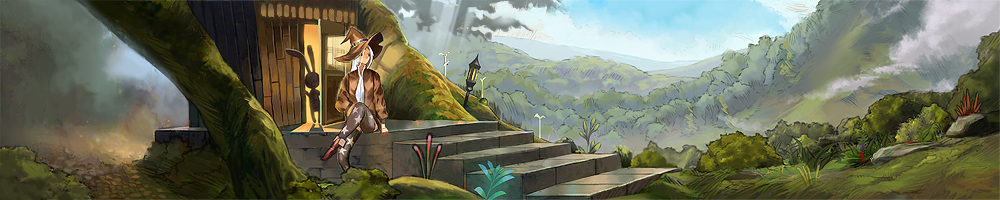
Anyway, enough blabbering, onto the review. This one’s more for completion’s sake, as it’s more of an introduction than an actual short movie. The honour of kicking off Genius Party goes to Atsuko Fukushima, which couldn’t have been a better choice, as she also did the opening and ending for Robot Carnival. The first movie is called Genius Party for a reason, as it basically serves as an introduction to the rest of the shorts. It’s probably the shortest of all the movies, and instead for a straight and concrete storyline, it goes for the abstract approach.

Genius Party was meant to be surreal, a piece of art in a way. It’s up to the viewer to give his own interpretation of what happened, and you may want to end up watching this several times in order to properly catch what the heck went on there. It’s a thought-provoking piece, that an have many different interpretations.

Obviously, there’s only so much you can do in just five minutes and apart from a great style and a cryptic story, this first movie hardly anything more than that. Alone this won’t leave much of a lasting impression, but as an introduction, it serves its purpose.

Storytelling: 8/10
Characters: 6/10
Production-Values: 9/10
Setting: 7/10

Kara no Kyoukai – The Garden of Sinners – A Study in Murder (Part 1) Review – 77,5/100


Apologies for the delay of this review of the second movie, I totally forgot about it until the third one suddenly popped up. The second chapter of the Garden of Sinners tells how everything started, and how Shiki and Mikiya first met with each other. It’s obviously a chapter that’s more about building up and establishing its characters than about its stories. Overall, I liked the first chapter more, but at least A Study in Murder Part 1 is a lot more solid.

The whole setting is a lot more down-to-earth, as the entire story is just about two rather strange high-school kids. The graphics look as good as ever, but that’s to be expected with a movie-budget, and the strange emphasises on different foods are still there. The best thing about this movie is the cast of characters. They’re well fleshed out throughout the hour of airtime and even though they won’t hit any heights, they remain enjoyable to watch, and add depth to their versions that we saw in the first movie.

The story is a bit hard to believe, though. It’s impossible to accurately describe this without going into spoilers, but let’s just say that this movie tells about a series of gruesome murders, and the motives of the eventual killer will feel rather strange, and especially the way that Mikiya reacts to this gives Elfen Lied-flashbacks. The message of this episode was a rather weird one: “it’s okay to murder, you won’t get put in jail for it, everyone will love you anyway.” Now that’s going to stop the children from stabbing their parents.

Nevertheless, the movie served its purpose: the characters are fleshed out now and they have a background, which makes them more than just a bunch of cardboard boxes. Now all that’s left to see is how the rest of the movies will use this.

Storytelling: 7/10
Characters: 8/10
Production-Values: 9/10
Setting: 7/10

Persona – Trinity Soul Review – 77,5/100


Watching Persona – Trinity Soul is like walking through a desert, complete with mirages and all, only to end up at an oasis. It’s a supernatural mystery-series, based on the persona-games, and its favourite habit was teasing the heck out of its viewers.

And I’m not kidding when I say that. Despite the fact that this series is full of mecha-like personas, the pacing is sloooooooow. It takes ages for something to actually happen, and when something interesting does happen, a cliff-hanger follows and the next episode acts like nothing happens and starts building up again.

Even after the first half ends, there’s still no sign of a speed-up in the plot, and the pacing even becomes even slower than it already was, as it reveals more and more of the mysteries that lie behind this series. And I must say that the overall plot is definitely interesting; you can see that a lot of imagination went into it. If only the pacing wasn’t so god damn slow.

Another flaw that pops up after the second half is the obligatory background for the main characters. A major problem with them is that these play around with coincidences a bit too much. Seriously, you’ll be hard-pressed to find a character that grew up normally, and didn’t lose his/her parents in some sort of gruesome way.

In other words, as the series went on, my interest in it became pretty low, and I had almost given up hope on it, and then those final five episodes arrived. And it’s exactly here where the quality of this series increases dramatically: the pacing finally kicks in, and everything that the entire series had been building up for finally comes together and delivers a very enjoyable finale that changed my entire opinion of this series.

Overall, I’m not going to recommend this series, but if you’ve started it, then you might as well finish it because of the excellent finale. I think that this series suffered from two major problems: it’s too long and it could have fleshed out its characters a bit more. If this series was just one season long, it would be a total roller-coaster ride, and even if there were only 22 episodes, this series would already have been much more enjoyable due to the lack of quiet parts. The characters can be blamed for these lacklustre quiet parts as well. I don’t mind a slow pacing at all, but if that’s the case, then the creators do need to keep the viewer interested during these quiet parts. I just didn’t feel like I could care about these characters. Persona is a good anime, but it could have been so much better if it weren’t for these small annoying flaws.

Storytelling: 7/10
Characters: 7/10
Production-Values: 8/10
Setting: 9/10

Rozen Maiden Review – 87,5/100


This review is about the first season of Rozen Maiden. I first came into contact with this franchise through a bit of a strange way: I never watched the first season, but when the second season (Rozen Maiden Traumend) aired, I decided to give it a whirl and watch it. If I recall correctly, I lasted five episode before dropping it, because it just didn’t seem to go anywhere, and the annoying characters weren’t helping much either. To give a small indication of the annoyingness of one of the characters… I think that this video says it all…

In any case, Solaris managed to talk me into giving the series a second chance, and I’m really glad that I did, because the first season made an entirely different impression on me. What I saw of the second season goofed off way too much, but the first season is actually a very focused character-study of a bunch of dolls that came to life, and the humans that they made contact with.

Right from the start, this series knows exactly how to use its limited time of 12 episodes. The story continues to develop, and there’s always something interesting going on. The different subplots flow very smoothly into each other and never feel rushed, and the series ends with good conclusion.

The results of this excellent storytelling can be seen in the characters. Characters that got incredibly on my nerves in Traumend turn into likable and adorable characters, right from the start. The Alice-games, which play a central role in this series, which cause the different dolls to fight each other are interpreted differently by each of the characters. Some become obsessed over perfection, others want to break out of that tradition, others want to win, no matter what and others don’t care about these games at all, and just want to play like a little kid. In the same way, each of the dolls has a different understanding of what the word “doll” means to them. My biggest surprise was that Hina-Ichigo turned out to be more than just an annoying little brat, and how she had a very clear purpose in this series.

Peach-Pit’s adaptations have often been plagued by strange production-decisions (Zombie Loan was good, but way too short, Shugo Chara had the potential, but turned out way too bloody long), but this first season of Rozen Maiden is pretty much without any major flaws. The graphics also look pleasing, and although I fully agree that the ALI project should stop making all these OPs and EDs that sound way too much like each other, I do admit that their work on Rozen Maiden’s OP is their best one. The rest of the soundtrack is also pretty much awesome, which all results in a really worthwhile series. Now, I hope that the second season is going to turn out better than what I remember of it.

Storytelling: 9/10
Characters: 9/10
Production-Values: 9/10
Setting: 8/10

Glass Mask Review – 45/100


The second half of Glass Mask is easy to review: a plot-hole here and there, but nonetheless evolving characters keep your attention till the end that comes way too abrupt. Nonetheless, standalone it remains an enjoyable though somewhat dramatic look at the career of a young theatre actress. So… why the abysmally low score? Well, you can blame that on the first half…

Because Glass Mask starts out downright terrible. It’s not the case of a series like NHK ni Youkoso, where the first half goofs off, after which a much stronger second half takes over. Glass Mask’s first half was much, much worse, an insult to theatre plays. At episode 13, I was ready to label this one amongst the worst series that I’ve managed to finish. Here’s why:

The first thing that will immediately catch your attention is the ridiculously overblown melodrama that would make Kannadzuki no Miko and Kyoshiro to Towa no Sora cheerful. Of course, a bit of angst is always healthy, but even during the smallest snide remark, everyone suddenly behaves like a Christian who just discovered that the pope is pregnant. Especially when the Mc Guffin play “The Crimson Goddess” gets mentioned, the melodrama gets blown to ridiculous proportions.

Then there’s the horrible botched-up storytelling of the first few episodes. There’s a reason why all stories have their light moments. They’re not only meant to give the audience a breather, but also to flesh out the characters, and show what they’re like when they’re not risking their lives/ trying their best/whatever. Glass Mask doesn’t think that these things are worthy of itself, and so it starts behaving like a soap-opera, diving from one disaster into the other. Honestly, the first half features obviously a number of plays that our lead character (Maya) has to act out, and only the last one had everything going smoothly. At the others, there was always someone or something with ill-intentions who tried to ruin the play somehow. Along with the melodrama… the result was a predictable mess.

And there’s more. I’ve always rather criticized those anime where the lead character finds his/her love a bit too easily, but all of that falls into nothing when compared to the sloppy excuse of romance that the creators try to showcase here. Maya’s boyfriend comes from absolutely nowhere. He’s just… there, without any explanation of how the bugger fell in love with her, or why he even got to know her for that matter!

But the thing that got under my nails the most was the following: this is supposed to be an anime about the rise of a talented actress, but the way she is presented shows all the signs that the staff behind this series didn’t know anything about good acting. Every time that Maya was on the stage, she caught the awes of her audience, where everyone comments and admires how good her acting is. All I saw, however, was a hopelessly overacting teenager without any sense of subtlety. One particularly bad scene showed Maya as an unimportant extra in a small movie. The result was a hospital-patient who had the time of her life while trying to climb a pair of stairs. How would you feel if you were watching a movie, and suddenly a close-up followed of some random dude who stands out way too much? What I watched wasn’t a immensely talented actress, it was a blatant Mary Sue with way too little experience to make any impact. This can also partly be blamed to Maya’s voice-actress. Who the heck in his right mind would cast someone who can’t act as the voice of a talented actress?

To my relief, the second half gives a notable attempt to fix these flaws, when the creators suddenly realize that a good story needs build-up and characters with weaknesses. The romance smartly turns into a romance with no future and the characters learn from their mistakes. The melodrama’s still there, but at least it’s better than before. Still, the question remains whether or not you want to sit through the pain for the better second half, and it’s not even that good anyway.

I’ve been wondering what makes a series really bad. I mean, I may have disliked series as To Love-Ru, but I can see how other can enjoy the light entertainment. Still, a series that fails to understand its own themes like Glass Mask… I don’t think that you can get much worse than that. I agree how the eighties brought a lot of good stuff to the world of anime, but this one was definitely not a part of it. The second half is just not worth it, because of that God-awful first half.

Storytelling: 3/10
Characters: 6/10
Production-Values: 6/10
Setting: 3/10

Glass no Kantai Review – 75/100


I’m surprised that it’s taken me this long to realize, but a common theme of a Gonzo-series seems to be subtle jabs towards aristocracy. The best example of this is Trinity Blood: in that series, the Vatican is an important party, and yet the Pope is a shy and incapable 12-year old boy and women have been appointed at high-ranking functions. Or take Hellsing: a series about a bunch of blood-thirsty vampires who justify themselves through the queen of England.

But also some of their other series show similar themes. The shinsengumi in Peace Maker Kurogane aren’t necessarily royalty, but they were a high-ranked organization, back in those days; and infamous for their immoral acts, and there they’re portrayed as the good guys in that show. The less subtle attempts can be seen in anime as the Seven Samurai and Romeo x Juliet, where the enemies are basically the aristocrats. Now I also understand why the setting in Special A was so overblown, since that too was a way to mock the upper classes.

The series where these themes are the strongest is without a doubt Glass no Kantai. At heart, it’s a space opera and a satire of the aristocracy: the entire series plays throughout the eyes of the aristocrats, and shows how in a futuristic setting, the nobles have taken back control over the democracies. It shows how they dress up in ridiculous clothes and act on their own selfish ideals, without much consideration for others. The pope may not be a twelve year old boy, but the guy does have a daughter, the emperor is gay and a shotacon, and the series is full with those kinds of references to make the aristocrats look ridiculous. Of course, it never tries to be a comedy.

This is indeed all behind a serious story. Like mentioned above, it’s a space-opera and shows how one of these nobles leads a rebellion for the common people. Throughout the series, we get treated to a healthy combination between space-battles and large-scale politics. The interesting thing is that there’s hardly any attention for small-scale politics, and there’s hardly any focus at the common people (again, this has probably been done to show how little the lives of common people mattered to your average aristocrat).

The storyline is a pretty interesting one, and it evolves as the series goes on. The problems with this series lie in the storytelling, however. The entire series is full of small inconsistencies and left-out scenes that feel like riding over a bumpy road with broken suspensions. They break the flow that the storyline is trying to create. The best example of this is the concepts of “air”. This series has actually managed to create quite an ingenious galaxy, where there aren’t any planets, but rather small chunks of land on which everyone lives, and which can be linked together. I personally loved this idea, but it’s as if the creators didn’t spend enough time to flesh them out and think of how these chunks of land would retain their atmosphere. The result that some random places in space suddenly contain air, and while others don’t.

And there is of course the animation. The animation in this series is horribly inconsistent, and ranges from pretty to downright abysmal. This series is like Hatenkou Yuugi or Kiss Dum: there’s a project with potential, which gets held down by one or more very lazy staff-members. In the case of Glass no Kantai, I think that te producers are to blame. They didn’t realize that creating an anime takes this much of an effort, and as a result the rest of the staff had to rush through their work in order to get their work done in time. As a result, this series lacks polish, since there was no time to check for any bugs or inconsistencies, which resulted in beauties like this one. It’s not that Glass no Kantai was held down by a small budget, but rather the time-constraints that worked against it, and a good producer should be able to have known this.

Despite this mediocrity, though, I liked Glass no Kantai. It had a clear vision, which is something that can’t be said of, say, Dragonaut. And the storyline, how botched up it may be, does come together in the end. It’s interesting: the past two series I’ve watched definitely had their flaws, and were at times tedious to get through, but their final episodes did end the series with a great enough climax; something which definitely can’t be said for every other series.

Storytelling: 6/10
Characters: 8/10
Production-Values: 7/10
Setting: 9/10

Betterman Review – 77,5/100


When I first read about Betterman, and how it was set in the same world as GaoGaiGar (according to Anidb, at least, I expected this to be some kind of fun and GAR mecha action show. And with the same mindset, I started watching this series. What I got, though, was something slightly different. Sure, there is action, and there are mecha, but Betterman is much more suspense than that it is about action.

You can almost classify this series as horror. Throughout the series, the bad guys throw all sorts of huge monsters, creeps and psychological attacks at our protagonists, and the main focus is much more on trying to not die than to kill the enemy, because more often than not, they get saved by some outside force. This series does have its problems, but this series does succeed in never losing steam, making the action-scenes worth watching.

The big problem with this series, though, is that it doesn’t have anything that makes it really worth watching; it misses that final “oomph” that makes the viewer glued to the screen. Any area that it could have delivered in is flawed somehow. Take the setting: it’s surprisingly deep, spiced up with a lot of scientific analysis in order to explain all of the supernatural stuff that gets thrown at the viewer’s screen. A lot of interesting facts and titbits pass the screen. Unfortunately, the creators do tend to get lost in their own techno-babble, making their scenes unnecessarily confusing with all sorts of different terms and jargon. Especially the final episodes, when everything is supposed to get revealed, feel like a huge information-overload, due to the overuse of techno-babble.

Thankfully, the final episodes are saved by the characters, and they make sure that the series leaves on a good note, rather than an overly confusing one, but their problem is that their development starts awfully late for a 26-episode series. They only show a bit of depth to themselves around the final quarter of this series, and the villains are even worse off with no depth at all. Most of them feel just incomplete and uninteresting, and this series would have been much better if you actually were interested in the final villains. I do have to give credit to the male lead, though. For once, he isn’t a shy boy, or a voice of reason. The overall cast is also fun to watch in those few moments when they’re not serious, and my personal favourite was the rather eccentric Akamatsu.

Overall, because of these flaws, this series never hits any heights, but it is a very consistent one. The different parts fix each other’s weaknesses, making this enjoyable through the end, and because of that this series never hit any real lows. It always has some kind of creep that’s attacking our heroes, so if you’re into suspense series, you could give this one a try.

Storytelling: 8/10
Characters: 8/10
Production-Values: 8/10
Setting: 7/10

Takane no Jitensha Review – 70/100


This one can just be considered as both a first impression as a review, since there’s only one episode of Takane no Jitensha anyway. It can easily be considered as the brother-anime of Yume da Maya Kidan: both are only twenty minutes long, both are down-to-earth with supernatural elements, both have produced on a short budget, both are about accepting your younger sibling and both aren’t bad by any means, though they’re not really something special.

Takane no Jitensha offers a small look at the live of a boy called Takane, and the sort of problems that any boy of his age has: getting a new bike (jitensha = bike) because his current one is old and his friends keep beating him. The things here strike especially close at home. The other half of the airtime adds in a bit more excitement. The realism disappears a bit, unfortunately, but it remains an enjoyable story.

This review is short, because there’s hardly anything interesting to say about this series, but if you’ve got twenty minutes to waste, you might as well give this one or Yume da Maya Kidan a try. In terms of slice of life, Takane no Jitensha is better, while Yume da Maya Kidan is better with the supernatural stuff (especially the Tanuki in Takane no Jitensha came from nowhere and delivered one heck of a deus ex machina).

Storytelling: 8/10
Characters: 7/10
Production-Values: 6/10
Setting: 7/10

Junjo Romantica Review – 82,5/100


2008 came with an interesting trend: actually good shounen-ai series…. what? At least I liked them…

Granted, there’s no denying that this series is aimed at fangirls. Nearly every episode features some gay sex scene that… will feel rather awkward for any straight male like myself. The characters are way too quick to jump into bed with each other and make some hot steamy love. But at the same time, this series can brag about some very good romance, that even teach a lot of straight love series a thing or two.

Because the characters are nearly all adults, which shows an interesting difference with all the teenage romances out there. This series’ outlook on love and relationships turns out to be quite realistic. It’s about understanding your partner, (obviously) how they deal with sex, the sacrifices you make for each other and what it means to be in love with someone. Sure, the characters in this series are gay and all, but this series wouldn’t have been that different if it talked about straight couples. Apart from the fear of breaking the taboo of loving a member of the same sex, perhaps.

Because this series deals with three different couples, it can really take an in-depth look at gay romances, despite how disturbing this may sound, as it can take a look at different scenarios and situations and develop them. What really sold me in this series is the fact that it’s critical of itself. There’s plenty of self-jokes in this series and the pieces of comedy here and there are hilarious, preventing this series from becoming too dramatic for its own sake.

The graphics could have used a bit more work, though. Obviously, the visuals aren’t the most important thing in this series, but the character are very hard to keep apart for the first few episodes, which is the sign that the character-designer needs to feel ashamed of himself. The music does the job, although I do want to give attention to the excellent OP that this series has.

Obviously, if you’re one of those people who hates gays with passion, you should stay far away from this one. However, if you’re looking for some quality romance, Junjo Romantica is a pretty good recommendation. It’s an interesting look at how three different romantic relationships form and develop. The dialogue is witty and to the point. It may be a bit too angsty at times, but in terms of romance, it delivers. There seems to be a second season somewhere in the future, and I’m scared to say that I’ll be looking forward to it…

Storytelling: 9/10
Characters: 9/10
Production-Values: 7/10
Setting: 8/10

Batman – Gotham Knight Review – 77,5/100


For Batman – Gotham Knight, four of my favourite studios Studio 4°C, Production IG, Bee-Train and Madhouse came together and delivered a collection of six short movies about the comic book legend of Batman. Much like The Animatrix, all have different art styles, though unlike the Animatrix, they’re much more tied together. They’re all action somehow, and share the same dark tone.

First up is Studio 4°C, with the movie “Have I got a story for you”, which is probably the most down-to-earth and different of the six stories, and yet it’s typical Studio 4°C, as they show a Batman adventure, through the eyes of four street-kids. It’s a great introduction, that gives a bit of mysterious air to the concept of Batman, especially for those like me, who haven’t seen too much of the guy. The next movie, Crossfire by Production IG continues this trend, by only showing a very few scenes of him, and instead focusing on a couple of cops. It’s perhaps the movie that makes the least amount of sense, and the ending feels like a rather Deus ex Machina. It’s a nice idea, but there are too many plot-holes in this one.

The rest of the movies then shed the air of mystery, and start focusing on Batman himself. Two show a bit of his background, and the other two show how he takes care of a bunch of bad guys. Field Test by Bee-Train tries to explain the things that happen in Crossfire. In this, it fails, but it does build up Batman’s character into more than just a main character, with the characterization that Bee-Train has always been good at. Next up is In Darkness Dwells, which is excellent for those who want action. The villains are a bit dull for those unfamiliar to the Batman universe, but at least they make the action-scenes tense, and a feast for the senses.

Studio 4°C then brings the fifth movie: Working Through Pain, which is probably the reason why this movie earned its PG-13 rating. It’s the most imaginative of the six movies, as they show how Batman deals with the concept of “pain”. The final movie is called Deadshot, which ends with a thriller. It’s the only one of the six where the main villain ends up actually interesting, and the extra bit attention to Batman’s character is also appreciated.

Overall, my personal favourites were Working Through Pain and Field Test, because they show something about the man behind the mask, and turn Gotham Knight into something beyond “just another action movie”, and they make the rest of the stories fun and interesting to watch. The movie isn’t perfect by far, and most of the villains are just one-dimensional, and uninteresting. The stories aren’t the most solid either, and sometimes they rely too much on the comic books, alienating those who haven’t read them. However, as a dark action-movie, it does deliver.

Storytelling: 7/10
Characters: 7/10
Production-Values: 10/10
Setting: 7/10