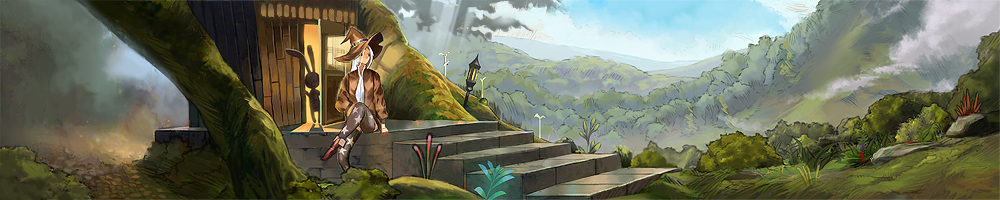
King of Bandits Jing – In Seventh Heaven OVA Review – 85/100


Okay, so usually I don’t write reviews for OVAs that are based on a series, because often they’re just too similar to the series they’re based on, or just random side-stories that aren’t meant to be judged as standalone products. There are exceptions of course, when an OVA goes into completely its own direction, and improves significantly on the series it’s based on, I do want to promote it a bit and say a few things about it.

And an excellent example of this is King of Bandits Jing’s OVA. The TV-series itself was all over the place; some episodes were awesome, though most of them were very simplistic and unimpressive. Now here the OVA comes, and it takes the best parts of the series, and just goes all out into an awesome mindscrew.

The visual direction really is amazing. It takes place in a semi-dreamworld, and just about every shot is creative, and beautifully drawn. There’s so much creativity put into just three episodes. If you finished the TV-series and liked its weird stuff, then you owe it to yourself to take a look at it, because it’s entertainment at its finest.

The three episodes are also completely different from each other. The first is chock-full of visual comedy and uses its creativity and unique direction to create a very entertaining adventure through a dreamlike world. The second episode is more serious, and actually tells about Jing’s past. While he doesn’t exactly gain much depth, it’s still very interesting to watch. The third episode in its turn is a character-study of the major villain, which was very interesting and well scripted.

Thanks to Jing’s tongue-in-cheek personality this OVA has a unique feel, but it’s not to the point where the style gets in the way of what’s important. The characters’ antics and the visuals are just as important and the animation is actually really good. Add to that that one of the best character-designers out there has worked on this, and you’ve got something consistently entertaining.

Storytelling: 9/10 – Tongue-in-cheek execution with tons and tons of creativity.
Characters: 8/10 – Great emphasis on character background despite the weirdness.
Production-Values: 9/10 – Absolutely stunning designs.
Setting: 8/10 – Tons of nice and neat ideas, though the concept of the series remains questionable.

Armored Trooper Votoms – The Brilliant Heretic Review – 77,5/100


The Brilliant Heretic OVA was made in 1994. It never actually got subbed, but a raw version is available, so I decided to check out its content. It’s set about 30 years after the end of the television series and so it’s the only OVA so far to be a sequel to the series, rather than a prequel. As a series from the Votoms Franchise, it just isn’t as refined as Ryousuke Takahashi’s other works, however it’s still an interesting watch.

One thing that will be hard to swallow in this OVA is that the main focus doesn’t fall on any of the lead characters. Instead, we have Chirico doing what he does best (fighting), Vanilla providing support, Gotho has degraded in some sort of a mad old man, and Fyana really has gotten the short end of the straw because she’s nothing more than a damsel in distress throughout the entire OVA. A role that she avoided so well in the TV-series! The rest of the cast doesn’t appear at all, and instead the depth in this series comes from the setting, and in particular one new female character.

This new character is actually pretty interesting, in the way that she fits in the political system of the setting, but she’s not perfect. She’s quite a bit cliched and her *sigh* romantic feelings fail to make any impact. The relationship with her father is very interesting, though. I think my favourite part were the ones that focused on the politics: at first sight they’re simple but they’re actually quite interesting.

The animation is very inconsistent: it ranges from very stiff to really good, though most of the animation edges to the former. There are a number of scenes that have the same kind really smooth animation that Ryousuke Takahashi would later perfect in Gasaraki.

However, because of one final twist this really is a must-watch for any Votoms Fan. I’m not going to spoil exactly what’s going to happen, but while this series doesn’t live up to Ryousuke Takahashi’s usual high standard, and the new characters while they have their times of depth also have their times of shallowness, it really doesn’t deserve that it’s not gotten subbed.

Storytelling: 8/10 – A bit disjointed, but interesting politics, the same dark atmosphere as Votoms.
Characters: 7/10 – A bit of a mixed bag.
Production-Values: 7/10 – Again: mixed bag.
Setting: 9/10 – Interesting setting that tries out many new and different things.

Gag Manga Biyori Review – 82,5/100


Okay, so I got interested in the rest of the Gag Manga Biyori after watching the first episode of its fourth season, so I tracked down the first season (unfortunately, the complete second and third season are nowhere to be found). I’m glad I did, because it really is an awesome comedy. Good luck finding a series with more energy than this one.

To give a bit of an indication of the chaos of this show: imagine one of the fast paced episodes of Gintama. Make that pace twice as fast, and you’ve got your average episode of Sexy Commando Gaiden. Double the pacing yet again, and you’ve got an average episode of Gag Manga Biyori. It’s just insane in every single way. After watching this series, I actually tried watching an episode of Hetalia Axis Powers in between. While that usually was an energetic comedy, it suddenly became incredibly boring and slow paced in comparison.

Every episode is five minutes long and shows a standalone story that shows a bunch of random people doing something random. About half of them take place in the past and show famous historic people, while the other half takes place in modern times and parodies something to the extreme. Every episode is funny in its own way, and three in particular were absolute classics for me (the sticker, the end of the world and the death episode). There are a few episodes that drag on a bit too much, but the set of brilliant episodes more than make up for it.

This type of humour of course isn’t to everyone’s tastes, but if you liked Sexy Commando Gaiden then you’ll also like this, because it’s taken its randomness much, much further. I really urge people to at least not ignore the fourth season that’s currently airing. Somehow get it subbed, because it’s a unique comedy. I also loved how every episode has a different ED, where only the… um… lyrics… remain the same. I really wonder what mindset the performers were in when they recorded them…

Storytelling: 9/10 – Insane. Just insane.
Characters: 8/10 – Nearly every episode has completely new and unrelated characters.
Production-Values: 8/10 – Looks simple, but the animation is surprisingly fluid for a comedy.
Setting: 8/10 – Instead of taking the more obvious historical figures, this chronicles the people that most western anime fans have never even heard of.

Maria-Sama ga Miteru – Haru Review – 82,5/100


I now see that it’s not exactly right to call Maria-Sama ga Miteru a shoujo ai series. If you want lesbians, there’s Aoi Hana, Sasameki Koto, Blue Drop or Candy Boy. Instead, it’s more like a relation-focused drama series that just hardly has any male characters in it. The second season continues pretty much where the first one left off, but it focuses more on drama than on the slice of life.

And it’s really the same typical drama of this series, that tends to make an elephant out of a mosquito. Because of how elegant the culture inside the school and especially the “student council” that this series focuses on is, the creators can really make the simplest things seem like huge problems, without overdoing it and delving into melodrama. Though granted, the second season seemed to be edging for that line a bit more than the first season did.

However, it also continues developing its terrific set of characters, who still remain the selling point of this series. What’s special about this season is that various characters come and leave, and so the main cast at the end of the series looks quite a bit different from what it looked like in the beginning. There’s a ton of background, extra depth and character-development in this season, which makes it worth watching if you enjoyed the first season.

I still think that my favourite episodes are in the first season (the Sei episode), however on average the second season is superior: it’s more consistent and overall more interesting development, although the final arc may have taken things a bit too much overboard. The graduation arc however rocked. It was subtle yet touching, and so many characters were developed in that arc alone.

Storytelling: 8/10 – Elegant atmosphere, subtle drama.
Characters: 9/10 – Tons of extra development, background and depth for the cast of characters.
Production-Values: 8/10 – Great character-designs, gentle music.
Setting: 8/10 – An unique portrayal of a catholic school, unlike most stereotypical portrayals of the elite you see in your average anime.

Hi no Tori Uchuu-Hen Review – 90/100


You know these really good athletes, performers or artists? And how they make what they do, whether it’s sports, acting, acrobatics, painting or whatever, look so incredibly easy? Well, that’s this movie. I mean seriously, I can wind a long story around it, but it’s just a brilliant movie. In fact, the Uchuu-hen and Houou-hen have a very good chance of becoming my favourite movies of the seventies and eighties!

It was a real eye-opener: to see how good the story of a movie can be if it’s small enough to fit into such a small time-frame without being rushed. This is exactly the example of how you should tell a story in a movie right, and I’ve only seen a select other movies that had such a solid storyline as the Hi no Tori movies.

The Uchuu-chapter of Hi no Tori takes, like its title makes you suspect, place in space. Where the Houou-hen focused on folklore, the Yamato-hen focused on romance, the Uchuu-hen is a full fledged mystery story. There’s a lot of emphasis on the past and backgrounds, with the eventual answers turning out very imaginative, like you’d expect from Osamu Tezuka. Again, Rintaro did an awesome job in building up the tension, and slowly revealing this backstory. It’s an excellent example of mystery done right.

This movie has the same elements that made me such a big fan of the Hi no tori franchise in the first place: lots of emphasis on character-development, characters with huge flaws, themes of betrayals and punishments and the celebration of life and progression also is prevalent in this movie. The creators yet again manage to weave them into a gripping science-fiction story. Even though it doesn’t exactly have a big budget to work with, it’s a terrific example of how to correctly write a movie.

Storytelling: 9/10 – Truly excellent mystery and build-up.
Characters: 9/10 – Lots of terrific character-development.
Production-Values: 9/10 – Good animation; awesome soundtrack.
Setting: 9/10 – Tons of nice ideas and details thrown into the setting.

Anyway, this concludes my movie spree, and it’s probably going to be the last one I’ll be having in a long time. It’s been a great way to close off the decade and start a new one, especially considering how I’m getting less and less confident to find eight bloggable shows for the new season.

Hi no Tori Yamato-Hen Review – 82,5/100


The Yamato-hen is a bit of a step back from the Houou-hen, but really: who cares. With such a brilliant franchise as Hi no Tori, it’s still a very good and enjoyable movie!

I think that the biggest flaw for this one is that it becomes a bit too preachy in the end, the morals and values it tries to push on in the end are a bit too obvious, and the love story between the lead male and female just doesn’t live up to some of the other stories of Hi no Tori. It just misses something.

However, it has plenty of good stuff to boast. Like all of the Hi no Tori stories: it’s a great celebration of human evolution and progression. It tells of conflicting ideals, difficult choices that have to be made, betrayal and tragedy. It again puts a huge emphasis on character-development (something that a whole lot more movies should do!), which is powerful and creative.

I have a lot of respect for Osamu Tezuka, but that’s mostly because of his creativity, and his will to go with things that nobody else would think of. With Hi no Tori, however, he established himself as a truly brilliant storyteller, and Rintaro again did justice to this story, even though it’s not as good as the Houou chapter.

Storytelling: 9/10 – Tons of creative twists, despite the simple story.
Characters: 8/10 – Well developed, but some of them are a bit preachy at times.
Production-Values: 8/10 – Good art, animation and music.
Setting: 8/10 – One of the very few stories that tells about Japan’s tribal age.

Hi no Tori Houou-Hen Review – 90/100


One thing that I’ve noticed with movies is that they’re often too short: they just don’t have the luxury of TV-series, which can take their time in building up their story. It’s much harder to create an awesome movie than an awesome TV-series because of this. I think that Movies tend to be a bit too ambitious for their own good at times. They should be excellent mediums to adapt short stories, but instead I’ve seen tons of them that try stuff much larger stories into their airtime than what’s good for them.

Now, this may just be me who has a bias for folklore, but holy crap, this movie is really amazing. The Houou chapter of Hi no Tori is THE example of how a movie can be done right.

This movie doesn’t exactly have the best animation (though it’s pretty good nonetheless), and even the setting isn’t that big, the action also isn’t why you should watch this, but on the other hand: it really is storytelling at its finest. Osamu Tezuka wrote a brilliant original story, and Rintaro did an awesome attempt in putting the story into an hour-long movie.

It basically follows two men, with completely different backgrounds, around the 7th century AD. What makes their stories awesome is the way its told, and the excellent characterization of these two. It plays around with tons of morals and values, and both these lead characters go through some very powerful developments. They’re complete anti-heroes, and yet you can see the reasons for their actions and their development.

The pacing is slow, but through one of the best soundtracks I have heard of any movie from the 70s and 80s it really gets the best out of the characters. It’s one of those rare movies that just “works”, thanks to its excellent source material. You also don’t have to worry about overlap with the TV-series of Hi no Tori, which was produced in 2004: apparently Osamu Tezuka wrote so many awesome stories for his Hi no Tori manga that there was plenty to choose from from the anime creators. And here I thought that there couldn’t possibly anymore brilliant stories aside from the ones that the TV-series adapted!

Storytelling: 10/10 – Clever, powerful, excellent pacing. Just about everything went right here.
Characters: 9/10 – For a movie they’re really impressive, and shine in their character-development.
Production-Values: 9/10 – Beautiful art, good animation, fantastic soundtrack.
Setting: 8/10 – In what other anime do you get to see the rise of Buddhism in Japan?

Black Jack The Movie Review – 80/100


Black Jack is a medical thriller, and one of the most popular characters that Osamu Tezuka created. For this movie, one of his stories was adapted by Osamu Dezaki. The combination of these two makes it into quite a unique movie, which is actually pretty good.

This movie can boast well-drawn surgical operations (and quite disturbing ones at that!) that really show a significant amount of medical knowledge. It’s also got great characterizations for every character involved. Even the smallest side-characters stand out with their own character-designs, role and personality, which really is typical of Osamu Tezuka. The lead villain’s story is also well explored, and she feels complete at the end of only 90 minutes.

The story itself has quite a few interesting ideas thrown into it. The concept of super-humans was fascinating, and it’s well developed throughout the movie. My biggest complaint is that it doesn’t always flow too well. Some events in the movie feel forced, and just there to keep the story going. One particular plot twist involving wine is just downright stupid.

Overall, I like this movie a bit more than the Two Doctors of Darkness, but the difference isn’t large. This one just has a better direction (courtesy of Osamu Dezaki), but they’re both pretty interesting movies. The one thing that I’m not sure about is whether Black Jack really needed this many adaptations. I mean, he’s gotten three movies, 14 OVA episodes and 78 TV-episodes. Isn’t that a bit overdoing it?

Storytelling: 7/10 – Good direction, though a tad forced at times.
Characters: 8/10 – Good characterization.
Production-Values: 9/10 – Great art and visual effects.
Setting: 8/10 – Very nice amount of medical knowledge for the creators to work with.

Air The Motion Picture Review – 85/100


Many of the criticisms and praises I had for the Clannad Movie also go for the Toei version of air: their big disadvantage lies only in their length. They’re short, and therefore not as engaging as the Kyoani-versions. But they’re still excellent movies that did a great job of cutting up their stories in only ninety minutes. If Osamu Dezaki would have gotten the same amount of episodes as with the Kyoani series, then I’m sure that the end result would not have been inferior to them. Both Air and Clannad have wonderful story-lines, and both Toei and Kyoani did a wonderful job in adapting them.

The visuals: also pretty much the same story. In technical terms, Kyoani did a more fluid and consistent job, but on the other hand the Toei version loves to play with different camera angles, visual direction, filters and interesting screenplay, that makes it a visual feast in its own way, and yet it doesn’t get in the way of the storyline unlike some of Shaft’s productions.

The characters? The same can be said again: the side-characters are still wonderful, and the lead female is actually much more strong-headed than she was in the Kyoani-version, which gives a completely different dimension to her. In exchange, the male lead again just isn’t as interesting as he was in the Kyoani version: again, instead of the male lead helping the female lead amidst his own problems, this movie shows the female lead as she helps the male lead amidst her own problems. It actually works really well.

Air again cuts away all of the side-stories, to focus completely on the main storyline of Air. It’s much more of a straightforward romance story this way, instead of a strange pseudo-harem, and it works pretty well. But yeah, the climaxes just aren’t as emotional due to the small airtime. In any case though, Key really was lucky that its works were adopted twice, by people with great but completely different talents. At this point, I hope that Genji Monogatari wasn’t the last we’ve seen from Osamu Dezaki, because this guy is a truly unique director, and he shows it in this movie yet again.

Storytelling: 9/10 – Great cut and paste job to fit the story into 90 minutes.
Characters: 8/10 – Needed more time to flesh out characters, otherwise excellent in a different way from the TV-series.
Production-Values: 9/10 – A visual feast thanks to Osamu Dezaki’s visual direction.
Setting: 8/10 – Pretty nice, but not the main focus.

Clannad The Motion Picture Review – 85/100


I’m not exactly sure what’s up with Kyoani and Toei’s key rivalry (when one of them adapts a key work, the other one does at well and vice versa), but the Clannad movie premiered about a month before the start of the TV-series. It took me this long to watch it due to the spoilers, but I’m glad that I did in the end, because Osamu Dezaki did the story a surprising amount of justice, considering how he managed to stuff such a huge story that took Kyoani 50 episodes, into just 90 minutes.

When you look at the big picture, this movie is obviously inferior to the TV-series, because it has far less time to flesh out its characters. Nevertheless, when you look at the individual details, there’s quite a lot to like about it. In fact, even though the movie and the TV-series have the same story, the execution, focuses, themes and characters are so completely different that they’re both worth watching in their own ways.

First of all, the graphics. The TV-series actually has better animation, but the screenplay of the movie, with typical Osamu Dezaki effects, camera-angles and filters is far more interesting to watch. The visual direction may be less consistent, the budget of the movie is actually smaller than Kyoani’s version, but it’s much more interesting to look at.

As for the characters, the movie dumps most of the side-stories and instead gives its full focus on the main characters (while not forgetting to spend about a minute of background on the major side-characters, in order to make them more than just one-dimensional paper bags). I was especially surprised by Nagisa and Sunohara, who are actually more interesting to watch than their versions of the TV-series. Nagisa is a much stronger character here in this movie, so much actually that she reverses the entire role of her Tomoya: where it was Tomoya who looked after Nagisa in the TV-series, here Nagisa looks after Tomoya. Sunohara is actually much more of an extreme character here, but the visual comedy around him makes him actually quite charming.

The after story also has quite a different approach to it. While not as impressive as in the TV-series, I liked it, as well as the role that the side-characters played in it. Overall, these people were really enjoyable to watch, even though the movie had very little time to really explore them individually. They do a great job in supporting the main storyline without overtaking it.

Where this movie drops points, however, is with Tomoya himself, especially his angst. He’s just too gloomy throughout nearly the entire part of the movie, and doesn’t really feel like the dynamic character he should be, for the role that was given to him. And that’s a bloody shame, because he’s the main character!

The thing with Osamu Dezaki is that his works are either brilliant and imaginative, or they flop gigantically. The Clannad movie belongs to his better side, and he showed that the Clannad Story even works in movie format with the right amount of cutting. This is really what recap movies should realize: you can’t tell a story just by cutting things randomly, you have to create a good standalone story as well.

Storytelling: 9/10 – Well paced, creative and actually puts 50 episodes into 90 minutes while standing on its own as a solid story.
Characters: 8/10 – Tomoya is too angsty, but all the other characters have their charms.
Production-Values: 9/10 – The animation quality itself isn’t special, but the visual direction makes more than up for it.
Setting: 8/10 – Simplified, but it works.