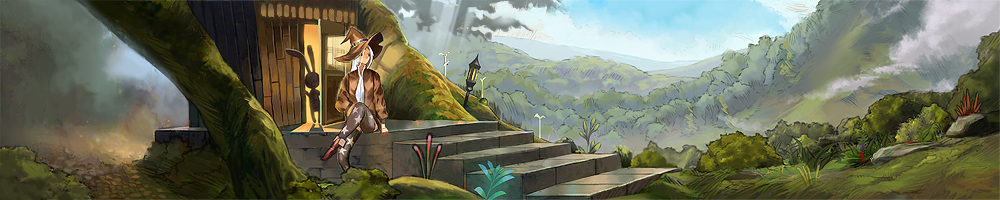


 The Yoshinaga-family has won a rather strange prize in a local lottery: a talking gargoyle who acts as their gatekeeper. Through the course of 13 episodes, it explores the lives of the Yoshinagas, this particular gargoyle (also hilariously nicknamed “GAR-kun”) and the people from their neighbourhood, with some very strong references to the practices of ancient alchemy. With a lot of writer’s freedom, that is.
My main problem with Yoshinaga-chi no Gargoyle is that it has a number of the most excellent characters, but refuses to use them well. Futaba is a true delight to watch when she is in action. Too bad that this only happens in three or four episodes. Osiris and her owner make a perfect team. Unfortunately, they never get the chance to truly show their personalities for more than ten seconds. Gar-kun is one of the most original characters I’ve ever seen. Too bad he also has a dull side, which he shows more often than not. Futaba’s mother and father also make a perfect team. It’s just too bad that it’s only till the final episodes that the two of them get any decent development. Takahara Iyo works great if she’s the main focus of the episode. Too bad that only happens once of twice.
Ironically, most of the time in this series is wasted on a character who actually works best as a side-character: Hyakushiki. His background is also one of the more unbelievable of the series, and especially the middle episodes keep on dabbling about useless things that don’t even matter. Other episodes focus on rather dull cases, and only the first two episodes and the final two episodes are the ones in which the characters are really showing the best sides of themselves.
If there ever was a series in need of a remake, it’d be this one. It’s got some of the most amazing characters. If they’re actually used well, they’ll definitely make for an awesome series. But because it dabbles away too often in dull elements, it turned out merely above-average. Still, this anime was definitely worth seeing. The good episodes were a delight, and even the bad episodes showcased at least a bit of the different characters’ brilliance, making them a tiny bit enjoyable after all. :)]]>
The Yoshinaga-family has won a rather strange prize in a local lottery: a talking gargoyle who acts as their gatekeeper. Through the course of 13 episodes, it explores the lives of the Yoshinagas, this particular gargoyle (also hilariously nicknamed “GAR-kun”) and the people from their neighbourhood, with some very strong references to the practices of ancient alchemy. With a lot of writer’s freedom, that is.
My main problem with Yoshinaga-chi no Gargoyle is that it has a number of the most excellent characters, but refuses to use them well. Futaba is a true delight to watch when she is in action. Too bad that this only happens in three or four episodes. Osiris and her owner make a perfect team. Unfortunately, they never get the chance to truly show their personalities for more than ten seconds. Gar-kun is one of the most original characters I’ve ever seen. Too bad he also has a dull side, which he shows more often than not. Futaba’s mother and father also make a perfect team. It’s just too bad that it’s only till the final episodes that the two of them get any decent development. Takahara Iyo works great if she’s the main focus of the episode. Too bad that only happens once of twice.
Ironically, most of the time in this series is wasted on a character who actually works best as a side-character: Hyakushiki. His background is also one of the more unbelievable of the series, and especially the middle episodes keep on dabbling about useless things that don’t even matter. Other episodes focus on rather dull cases, and only the first two episodes and the final two episodes are the ones in which the characters are really showing the best sides of themselves.
If there ever was a series in need of a remake, it’d be this one. It’s got some of the most amazing characters. If they’re actually used well, they’ll definitely make for an awesome series. But because it dabbles away too often in dull elements, it turned out merely above-average. Still, this anime was definitely worth seeing. The good episodes were a delight, and even the bad episodes showcased at least a bit of the different characters’ brilliance, making them a tiny bit enjoyable after all. :)]]>
Category: Anime Reviews
Otogi Juushi Akazukin Review – 92/100


 Otogi Juushi Akazukin is a children-aimed fantasy-series which can be fun for every age. It’s deeply rooted in the old European fairytales, with characters such as Little Red Riding Hood, Sleeping Beauty, Snow White, the City-Musicians of Bremen, Rapunzel, Hansel, Gretel and the violinist of Hameln making cameo-appearances. The story is simple, an evil which had been sealed long ago broke free, and needs to be resealed again by our main character: Akazukin. Still, despite this fairly simple concept, I found myself mesmerized by this anime again and again.
For starters, it’s got some of the cutest character-design ever. The animation may range from flawed to good, the character-designs and imaginative background-art more than make up for it. The music also gives a perfect fairy-tale feeling to the whole atmosphere. Thumbs up.
Still, the parts where Otogi Juushi Akazukin shines the most are the characters and the storytelling. The series comes with a set of characters who complement each other perfectly. They start out as one-dimensional characters, but they soon gain lots of depth as the anime continues. Each with his or her own story. Overall, these characters were adorable, as they were featured in both serious, funny and cute moments.
Through the course of the anime, lots of different stories are shown. Even though some side-characters just serve the purpose of fleshing out some of the main characters, they worked out quite well. Still, the best stories were the ones who focused on the group of main characters. Especially after the second half kicks in, the show picks up steam, and some of the episodes were just amazing to watch. Each character got enough time to show his or her background, and near the end, there’s given enough time to close of their stories, some of these stories ending in the most amazing episodes. My personal favourite was the surprisingly sad Randagio-episode.
Any bad points? Well, the ending. Or episodes 36 and 37 to be exactly. After most of the stories have closed, and only the main storyline remains. Through the course of the series, this anime has done well at keeping its level of cheesiness just low enough for it not to be annoying, but these efforts all fail when it goes and uses some of the biggest clichés in the book. Thankfully, the final episode closes off the series well enough, but the fact remains that these episodes left a nasty thorn in an otherwise excellent series.
Excellent as it may be, I can see a lot of people disliking it. Especially people who believe children’s shows are too childish. There’s no denying that the series is childish at times, but for me, that was just part of its charms. If you’re not bothered by the fact that this is a children’s show, then it’s definitely worth it to give this a try, as the characters were just amazing.]]>
Otogi Juushi Akazukin is a children-aimed fantasy-series which can be fun for every age. It’s deeply rooted in the old European fairytales, with characters such as Little Red Riding Hood, Sleeping Beauty, Snow White, the City-Musicians of Bremen, Rapunzel, Hansel, Gretel and the violinist of Hameln making cameo-appearances. The story is simple, an evil which had been sealed long ago broke free, and needs to be resealed again by our main character: Akazukin. Still, despite this fairly simple concept, I found myself mesmerized by this anime again and again.
For starters, it’s got some of the cutest character-design ever. The animation may range from flawed to good, the character-designs and imaginative background-art more than make up for it. The music also gives a perfect fairy-tale feeling to the whole atmosphere. Thumbs up.
Still, the parts where Otogi Juushi Akazukin shines the most are the characters and the storytelling. The series comes with a set of characters who complement each other perfectly. They start out as one-dimensional characters, but they soon gain lots of depth as the anime continues. Each with his or her own story. Overall, these characters were adorable, as they were featured in both serious, funny and cute moments.
Through the course of the anime, lots of different stories are shown. Even though some side-characters just serve the purpose of fleshing out some of the main characters, they worked out quite well. Still, the best stories were the ones who focused on the group of main characters. Especially after the second half kicks in, the show picks up steam, and some of the episodes were just amazing to watch. Each character got enough time to show his or her background, and near the end, there’s given enough time to close of their stories, some of these stories ending in the most amazing episodes. My personal favourite was the surprisingly sad Randagio-episode.
Any bad points? Well, the ending. Or episodes 36 and 37 to be exactly. After most of the stories have closed, and only the main storyline remains. Through the course of the series, this anime has done well at keeping its level of cheesiness just low enough for it not to be annoying, but these efforts all fail when it goes and uses some of the biggest clichés in the book. Thankfully, the final episode closes off the series well enough, but the fact remains that these episodes left a nasty thorn in an otherwise excellent series.
Excellent as it may be, I can see a lot of people disliking it. Especially people who believe children’s shows are too childish. There’s no denying that the series is childish at times, but for me, that was just part of its charms. If you’re not bothered by the fact that this is a children’s show, then it’s definitely worth it to give this a try, as the characters were just amazing.]]>
Ghost Hunt Review – 74/100


 Ghost Hunt is an arc-based anime, focusing on a group of people who exorcise haunted buildings, like mansions, houses and school-buildings. Every arc ranges from one to four episodes, in which some kind of supernatural being has to be taken care of, sometimes resulting in rather bloody scenes. The series clearly did its homework, as it’s able to present the viewer with complex cases, and if offers some quite complex ghosts and exorcism rituals. Interesting premise, but does it deliver?
First, let me say that the best episode of the series is arguably episode five. It’s a masterpiece of fast pacing, tension and great characters. After that, the anime tries, but it never quite manages to reach the same heights of that fifth episode. This is mostly due to the main character of this series: Mai. She’s a normal schoolgirl, who gets recruited for the group in order to handle some of the smaller tasks, like paperwork, fetching coffee, installing cameras, etc.
Mai’s character is quite useless throughout a major part of the anime, apart from some prophetic dreams she has, perhaps. All she does is wander around, talk to people, get scared, and let others do the dangerous work. It’s such a pity, as her character works best when she’s actually in danger and has to fight for herself. But when she keeps getting saved by others, the fun quickly dies. Only two arcs bring an exception to this: the second and the final arc. Because of that, these two arcs showcase the best of the series, and possibly the only arcs which I really enjoyed.
Ghost Hunt also messes up its side-characters a bit. They work good on paperwork, but they aren’t just used to their full extend. In one particular arc, some of them also end up baking cakes, in order to conveniently have them out of the scene for a bit. Attempts are given to give them a bit of background, but apart from one case, these backgrounds are never finished. Speaking of finishing, a lot of questions also are left unanswered after the final episode.
In terms of graphics and music, however, this series shines. Character-designs are crisp and detailed, the use of CG is brilliant and the animation is very acceptable. (Someone also noted that the different characters end up wearing something different for each single day.) The OP and ED are definitely something to remember, some of the monsters and ghosts look very creepy, while the music fits the tension-full series perfectly. And I could go on for a while longer.
About the question whether this anime was worth watching, well, it is. The second arc, the final arc and also the small fifth arc were definitely enjoyable. The other arcs were just decent stories, nothing special.]]>
Ghost Hunt is an arc-based anime, focusing on a group of people who exorcise haunted buildings, like mansions, houses and school-buildings. Every arc ranges from one to four episodes, in which some kind of supernatural being has to be taken care of, sometimes resulting in rather bloody scenes. The series clearly did its homework, as it’s able to present the viewer with complex cases, and if offers some quite complex ghosts and exorcism rituals. Interesting premise, but does it deliver?
First, let me say that the best episode of the series is arguably episode five. It’s a masterpiece of fast pacing, tension and great characters. After that, the anime tries, but it never quite manages to reach the same heights of that fifth episode. This is mostly due to the main character of this series: Mai. She’s a normal schoolgirl, who gets recruited for the group in order to handle some of the smaller tasks, like paperwork, fetching coffee, installing cameras, etc.
Mai’s character is quite useless throughout a major part of the anime, apart from some prophetic dreams she has, perhaps. All she does is wander around, talk to people, get scared, and let others do the dangerous work. It’s such a pity, as her character works best when she’s actually in danger and has to fight for herself. But when she keeps getting saved by others, the fun quickly dies. Only two arcs bring an exception to this: the second and the final arc. Because of that, these two arcs showcase the best of the series, and possibly the only arcs which I really enjoyed.
Ghost Hunt also messes up its side-characters a bit. They work good on paperwork, but they aren’t just used to their full extend. In one particular arc, some of them also end up baking cakes, in order to conveniently have them out of the scene for a bit. Attempts are given to give them a bit of background, but apart from one case, these backgrounds are never finished. Speaking of finishing, a lot of questions also are left unanswered after the final episode.
In terms of graphics and music, however, this series shines. Character-designs are crisp and detailed, the use of CG is brilliant and the animation is very acceptable. (Someone also noted that the different characters end up wearing something different for each single day.) The OP and ED are definitely something to remember, some of the monsters and ghosts look very creepy, while the music fits the tension-full series perfectly. And I could go on for a while longer.
About the question whether this anime was worth watching, well, it is. The second arc, the final arc and also the small fifth arc were definitely enjoyable. The other arcs were just decent stories, nothing special.]]>
Master of Epic Review – 89/100


 Master of Epic is really recommended for all the MMORPG-fans out there. Basically, it’s just one huge parody of nearly all aspects of a MMORPG. Things like fighting monsters, shops, reviving, clothes, haircuts, quests, dungeons, cooking, weapons and item-collecting are just a small collection of all these things it pokes fun at. Heck, most of the characters have some sort of recycled clone with different hair-colour of themselves running around, in true MMORPG-fashion. Oh, and let’s not forget the sentai-team parodies.
Master of Epic definitely is a unique anime. If you’re looking for a continuous story, then you should stay far away from it, as every episode is a collection of the most random sketches. No overall story is present, even the final episodes don’t introduce some kind of dramatic element for the show to close on. The best you’ll get in terms of a storyline has to be the Waragecha, who return in nearly every episode and do something random. Apart from that, other sketches feature former characters returning, but an overall storyline is nowhere to be found.
I’m probably the only one who thinks so, but I found these sketches, with a few exceptions, very funny. They either made an aspect of MMORPGs look ridiculous, or they were just plain random. Certain sketches also were just plain wrong (imagine a couple of tough guys doing silly dances, or a male orc-like creature dressing like a female), while others were too cute at times. My personal favourites were the sketches which featured Bukotsu and Chuu. The first episode already starts them off with Chuu eating a live bat.
In terms of animation… well, Master of Epic was produced by Gonzo. With Gonzo-anime, the animation either is incredibly good, or incredibly bad, and this is the same with Master of Epic. Some episodes have some great animation, while others look horrible. (Small note: especially the earlier episodes feature bad animation, while the latter showcase the better animation, unlike most other anime which feature beautiful animation for their first few episodes, only for the rest of the episodes to look horrible). The soundtrack features a selection of J-pop. It’s not really my taste, but it does fit the mood of the anime well enough.
Aired in the winter-season, Master of Epic quickly became the black sheep. I’ve seen very few people who actually gave it a chance. While I did see this coming, (after all, it’s based on a MMORPG, and it has all looks of a cheesy moe-show) the fact does remain that this is another one of those neglected anime which doesn’t deserve it. The MMORPG- and moe-elements are perfectly parodied throughout the series, and a good balance is kept between male and female fanservice. Another interesting note is that this is one of the very few anime without a main character. The closest person you could call a main character (the orange-haired girl who shows up in the centre of all the promo-art and the OP) never really has a major role in any of the sketches. Heck, she appears in probably the most sketches of all character, but her only role is that of a random passer-by. She’s got like 3 seconds of airtime at most, before she disappears again.]]>
Master of Epic is really recommended for all the MMORPG-fans out there. Basically, it’s just one huge parody of nearly all aspects of a MMORPG. Things like fighting monsters, shops, reviving, clothes, haircuts, quests, dungeons, cooking, weapons and item-collecting are just a small collection of all these things it pokes fun at. Heck, most of the characters have some sort of recycled clone with different hair-colour of themselves running around, in true MMORPG-fashion. Oh, and let’s not forget the sentai-team parodies.
Master of Epic definitely is a unique anime. If you’re looking for a continuous story, then you should stay far away from it, as every episode is a collection of the most random sketches. No overall story is present, even the final episodes don’t introduce some kind of dramatic element for the show to close on. The best you’ll get in terms of a storyline has to be the Waragecha, who return in nearly every episode and do something random. Apart from that, other sketches feature former characters returning, but an overall storyline is nowhere to be found.
I’m probably the only one who thinks so, but I found these sketches, with a few exceptions, very funny. They either made an aspect of MMORPGs look ridiculous, or they were just plain random. Certain sketches also were just plain wrong (imagine a couple of tough guys doing silly dances, or a male orc-like creature dressing like a female), while others were too cute at times. My personal favourites were the sketches which featured Bukotsu and Chuu. The first episode already starts them off with Chuu eating a live bat.
In terms of animation… well, Master of Epic was produced by Gonzo. With Gonzo-anime, the animation either is incredibly good, or incredibly bad, and this is the same with Master of Epic. Some episodes have some great animation, while others look horrible. (Small note: especially the earlier episodes feature bad animation, while the latter showcase the better animation, unlike most other anime which feature beautiful animation for their first few episodes, only for the rest of the episodes to look horrible). The soundtrack features a selection of J-pop. It’s not really my taste, but it does fit the mood of the anime well enough.
Aired in the winter-season, Master of Epic quickly became the black sheep. I’ve seen very few people who actually gave it a chance. While I did see this coming, (after all, it’s based on a MMORPG, and it has all looks of a cheesy moe-show) the fact does remain that this is another one of those neglected anime which doesn’t deserve it. The MMORPG- and moe-elements are perfectly parodied throughout the series, and a good balance is kept between male and female fanservice. Another interesting note is that this is one of the very few anime without a main character. The closest person you could call a main character (the orange-haired girl who shows up in the centre of all the promo-art and the OP) never really has a major role in any of the sketches. Heck, she appears in probably the most sketches of all character, but her only role is that of a random passer-by. She’s got like 3 seconds of airtime at most, before she disappears again.]]>
Gakuen Utopia Manabi Straight Review – 81/100


 Every season comes with its surprises. The summer-season last year had Night Head Genesis and Chevalier, the fall-season had Bakumatsu Kikansetsu Irohanihoheto and Sasami Mahou Shoujo Club, and winter-season had Manabi Straight. I normally tend to dislike school-based slice-of-life series, and okay, the series wasn’t awesome, perfect, stunning or extremely heart-warming. But I still have to say that I had a good time watching this series.
The thing that immediately strikes about this anime is its energy. Seldomly I’ve encountered an anime which almost sparkles with its energetic characters. The unique art style, the great animation and the perfectly fitting soundtrack turned this into one of the few slice-of-life series which actually caught my interest.
Another strong point of this anime is how it quite easily breaks a lot of stereotypes that have been plaguing other school-based anime oh so often. The most striking is the student-council president: Manabi, the main character of this anime. Up till now, a student-council president either was an arrogant but rather stupid bitch who likes to abuse his/her students or a perfect human (you know, the rich, smart, talented, high-classed and uberpopular one). Manabi Straight finally puts a human being in the seat of the student-council president, someone who loves her school, and wants to keep it alive.
Not only Manabi, but also the four other main characters felt very refreshing. Usually, in a show of this nature, the story usually revolves around two characters, while you can replace the other main ones with paper bags and still not notice any difference in the story. Manabi Straight makes sure that each of the five heroines has a significant role in the story. Sometimes subtle, sometimes obvious. Also, even though Manabi is the main character, and the central person in the story, she doesn’t necessarily get more screen-time than the others. Mikan and Mei get just as much airtime as Manabi, while the other two also are quite present.
Okay, so the anime is not going to go down as the “best anime ever” anytime soon. At times, the drama was a bit too forced, and the ending was a bit cheap. And okay, for a show which is supposed to take place in 2035, the only thing we got to see to illustrate this were strange-looking gadgets. I still enjoyed the unique parts in this one. I liked the quirky humour which showed up once in a while a lot. The animation was excellent and full of creativity, I hope it’ll set a standard for future anime to work towards. It’s a show, perfect for a light watch, but don’t expect anything amazing.]]>
Every season comes with its surprises. The summer-season last year had Night Head Genesis and Chevalier, the fall-season had Bakumatsu Kikansetsu Irohanihoheto and Sasami Mahou Shoujo Club, and winter-season had Manabi Straight. I normally tend to dislike school-based slice-of-life series, and okay, the series wasn’t awesome, perfect, stunning or extremely heart-warming. But I still have to say that I had a good time watching this series.
The thing that immediately strikes about this anime is its energy. Seldomly I’ve encountered an anime which almost sparkles with its energetic characters. The unique art style, the great animation and the perfectly fitting soundtrack turned this into one of the few slice-of-life series which actually caught my interest.
Another strong point of this anime is how it quite easily breaks a lot of stereotypes that have been plaguing other school-based anime oh so often. The most striking is the student-council president: Manabi, the main character of this anime. Up till now, a student-council president either was an arrogant but rather stupid bitch who likes to abuse his/her students or a perfect human (you know, the rich, smart, talented, high-classed and uberpopular one). Manabi Straight finally puts a human being in the seat of the student-council president, someone who loves her school, and wants to keep it alive.
Not only Manabi, but also the four other main characters felt very refreshing. Usually, in a show of this nature, the story usually revolves around two characters, while you can replace the other main ones with paper bags and still not notice any difference in the story. Manabi Straight makes sure that each of the five heroines has a significant role in the story. Sometimes subtle, sometimes obvious. Also, even though Manabi is the main character, and the central person in the story, she doesn’t necessarily get more screen-time than the others. Mikan and Mei get just as much airtime as Manabi, while the other two also are quite present.
Okay, so the anime is not going to go down as the “best anime ever” anytime soon. At times, the drama was a bit too forced, and the ending was a bit cheap. And okay, for a show which is supposed to take place in 2035, the only thing we got to see to illustrate this were strange-looking gadgets. I still enjoyed the unique parts in this one. I liked the quirky humour which showed up once in a while a lot. The animation was excellent and full of creativity, I hope it’ll set a standard for future anime to work towards. It’s a show, perfect for a light watch, but don’t expect anything amazing.]]>
Seraphim Call Review – 78/100


 After Sentimental Journey and Human Crossing, the only natural next step would be Seraphim Call. This one tells the story of eleven girls between ages 12 to 25. I expected it to be similar to Sentimental Journey, but surprisingly, the romance-element is no central theme in this anime, you can only see it in two or three cases. Each of these girls has her own unique story to tell, some of them have worries, some of them have a rather strange quirk, some try to fool themselves, and some are just telling about something that happened to them.
But can Seraphim Call call itself equal or perhaps even above Sentimental Journey and Human Crossing? Well, for one, it was definitely enjoyable, but it had its bad points. While Human Crossing was consistently good, Seraphim Call had a few cases which weren’t as good as the others. The first two episodes also were goofy, while the following episodes were serious. I had trouble getting used to that. The music also lacked a bit. Sentimental Journey featured a great soundtrack which just screamed “eighties”, and Human Crossing’s OST wasn’t bad either. But I just didn’t really notice the soundtrack for Seraphim Call. The only interesting thing to point out is that every episode has a different ED, but for some strange reason I caught myself with the highly addictive ED from Sentimental Journey stuck in my head after watching this. The way this anime ended was also a nice idea, bringing all eleven girls together, but there is only so much you can do in a single episode. The final bad point is that about 50% of the character-designs just don’t look right. The hair is way too unnatural, not to mention that nearly every colour of the rainbow is represented in our eleven girls.
Still, you have to hand it to Seraphim Call, in terms of creativity, it really managed to beat Sentimental Journey and Human Crossing easily. There are some episodes which showcase some brilliant ideas. One of the best ones is showed entirely through the eyes of a stuffed animal, ingeniously named “Margarine von Half-Calorie”. Another one showcases a girl, and nothing but this girl. We never get to see or even hear the people around her. Another brilliant piece was episode 7, which starts playing with time and paradoxes. Episode five and six are incredibly subtle. They nearly show the exact-same footage, just with a few scenes swapped, and some few subtle differences added. And episodes 1 and 8 are just plain weird.
Nearly every case also seems to have a deeper message behind it. The stories are told, and while it’s told, it’s trying to give the viewer some sort of idea or message, which works quite well. There’s also a good deal of symbolism used at times. I’m also glad to see that this anime actually succeeds where Human Crossing failed, in terms of episode endings. Human Crossing just had to end its stories on a good note, while Seraphim Call just tried to make the endings as natural as possible. Heck, one episode doesn’t even have a conclusion, while other episodes are only halfly-solved. Still, this prevents the endings from being rushed, forced or incomplete, and they work really well, in my opinion.
Overall, it may have bad points, but if you liked Sentimental Journey and Human Crossing, you’ll definitely like Seraphim Call. Also, if you liked Seraphim Call and Sentimental Journey, you’ll probably like Human Crossing as well, and of course if you liked Human Crossing and Seraphim Call, you’ll like Sentimental Journey as well. Ah well, they were some great series. Next up are some more “normal” series.
(Note, don’t pay too much attention to the rating. I’m currently trying to find a good rating-system, as I caught myself handing out way too many ratings between 80/100 and 90/100. This anime was just as good, if not better than Sentimental Journey.)]]>
After Sentimental Journey and Human Crossing, the only natural next step would be Seraphim Call. This one tells the story of eleven girls between ages 12 to 25. I expected it to be similar to Sentimental Journey, but surprisingly, the romance-element is no central theme in this anime, you can only see it in two or three cases. Each of these girls has her own unique story to tell, some of them have worries, some of them have a rather strange quirk, some try to fool themselves, and some are just telling about something that happened to them.
But can Seraphim Call call itself equal or perhaps even above Sentimental Journey and Human Crossing? Well, for one, it was definitely enjoyable, but it had its bad points. While Human Crossing was consistently good, Seraphim Call had a few cases which weren’t as good as the others. The first two episodes also were goofy, while the following episodes were serious. I had trouble getting used to that. The music also lacked a bit. Sentimental Journey featured a great soundtrack which just screamed “eighties”, and Human Crossing’s OST wasn’t bad either. But I just didn’t really notice the soundtrack for Seraphim Call. The only interesting thing to point out is that every episode has a different ED, but for some strange reason I caught myself with the highly addictive ED from Sentimental Journey stuck in my head after watching this. The way this anime ended was also a nice idea, bringing all eleven girls together, but there is only so much you can do in a single episode. The final bad point is that about 50% of the character-designs just don’t look right. The hair is way too unnatural, not to mention that nearly every colour of the rainbow is represented in our eleven girls.
Still, you have to hand it to Seraphim Call, in terms of creativity, it really managed to beat Sentimental Journey and Human Crossing easily. There are some episodes which showcase some brilliant ideas. One of the best ones is showed entirely through the eyes of a stuffed animal, ingeniously named “Margarine von Half-Calorie”. Another one showcases a girl, and nothing but this girl. We never get to see or even hear the people around her. Another brilliant piece was episode 7, which starts playing with time and paradoxes. Episode five and six are incredibly subtle. They nearly show the exact-same footage, just with a few scenes swapped, and some few subtle differences added. And episodes 1 and 8 are just plain weird.
Nearly every case also seems to have a deeper message behind it. The stories are told, and while it’s told, it’s trying to give the viewer some sort of idea or message, which works quite well. There’s also a good deal of symbolism used at times. I’m also glad to see that this anime actually succeeds where Human Crossing failed, in terms of episode endings. Human Crossing just had to end its stories on a good note, while Seraphim Call just tried to make the endings as natural as possible. Heck, one episode doesn’t even have a conclusion, while other episodes are only halfly-solved. Still, this prevents the endings from being rushed, forced or incomplete, and they work really well, in my opinion.
Overall, it may have bad points, but if you liked Sentimental Journey and Human Crossing, you’ll definitely like Seraphim Call. Also, if you liked Seraphim Call and Sentimental Journey, you’ll probably like Human Crossing as well, and of course if you liked Human Crossing and Seraphim Call, you’ll like Sentimental Journey as well. Ah well, they were some great series. Next up are some more “normal” series.
(Note, don’t pay too much attention to the rating. I’m currently trying to find a good rating-system, as I caught myself handing out way too many ratings between 80/100 and 90/100. This anime was just as good, if not better than Sentimental Journey.)]]>
Sci-Fi Harry Review – 80/100


 Don’t let the title fool you. It may be cheesy, but there’s a good reason for the show to be named like this. Sci-fi Harry is a mystery-drama, focusing at a psychic named Harry. He’s an incredible social outcast, unable to talk even normally in front of people, who discovers that he’s got huge psychic powers. Through pressure of one of his few friends, he ends up in his own tv-show, called “Sci-Fi Harry” because people are so enthusiastic about him. The thing is, however, that he doesn’t know how to control his powers, which causes quite an incident. Ever since then, different people try to obtain his powers.
First, let me say that this anime features some great moments. It isn’t afraid to show some disturbing scenes (like people with their necks all twisted around), and Harry works as a great main character, due to his constant worries and inabilities. To add to this, Sci-Fi Harry comes with a multi-layered plot, where nearly every episode reveals a bit about a huge complot which is going on. Lots of storylines happen at the same time, ranging from decent to excellent.
A huge theme in the anime is betrayal. Nearly everyone who runs into Harry tries to manipulate him. Because he’s such a weak character, this actually succeeds most of the times. In addition to that, the other members of the rich side-cast also all have one or more instances where they betray, and are betrayed themselves. Especially Mother and Chinori turned into awesome characters because of this.
I liked the fact how this anime follows so many different storylines, but there lies also the problem. Managing all these different storylines which split up and get combined frequently is extremely difficult, and in the end, the creators of Sci-Fi Harry didn’t manage to do this perfectly. Because of this, some of the storylines are more interesting than others, and it’s annoying to see the more interesting ones get interrupted by the less interesting ones. John, an interesting main character in the beginning also gets condemned to the role of a mere unimportant side-character after the first half of the anime, which was a pity, actually.
The fact also remains that this anime took a bit more on its plate than it could take. Especially the final two or three episodes lose a bit of steam when compared to their predecessors, and yet they continue to introduce more plot-elements which could have been easily omitted. Because of this, the ending left a bit too many questions unanswered, and some answers that were given weren’t really satisfying. The identity of “Accuser” just didn’t fit right, and we never know who keeps sending the text-messages through the computer. The final episode itself also was a bit disappointing. Not because it was rushed, but it lacked a decent aftermath. Something very interesting happens at the end of the episode, and I would so have loved to see how people reacted to this, but instead the anime ends and left me with a bad taste in my mouth.
Still, despite this, I really enjoyed this anime. If you like dark mystery-stories, then this is definitely an anime that you should check out. Just be aware that Harry’s art style may be a bit annoying at times, but I think that that was what the creators had in mind. He really looks like a worthless person. And Chinori looked too scary at times.]]>
Don’t let the title fool you. It may be cheesy, but there’s a good reason for the show to be named like this. Sci-fi Harry is a mystery-drama, focusing at a psychic named Harry. He’s an incredible social outcast, unable to talk even normally in front of people, who discovers that he’s got huge psychic powers. Through pressure of one of his few friends, he ends up in his own tv-show, called “Sci-Fi Harry” because people are so enthusiastic about him. The thing is, however, that he doesn’t know how to control his powers, which causes quite an incident. Ever since then, different people try to obtain his powers.
First, let me say that this anime features some great moments. It isn’t afraid to show some disturbing scenes (like people with their necks all twisted around), and Harry works as a great main character, due to his constant worries and inabilities. To add to this, Sci-Fi Harry comes with a multi-layered plot, where nearly every episode reveals a bit about a huge complot which is going on. Lots of storylines happen at the same time, ranging from decent to excellent.
A huge theme in the anime is betrayal. Nearly everyone who runs into Harry tries to manipulate him. Because he’s such a weak character, this actually succeeds most of the times. In addition to that, the other members of the rich side-cast also all have one or more instances where they betray, and are betrayed themselves. Especially Mother and Chinori turned into awesome characters because of this.
I liked the fact how this anime follows so many different storylines, but there lies also the problem. Managing all these different storylines which split up and get combined frequently is extremely difficult, and in the end, the creators of Sci-Fi Harry didn’t manage to do this perfectly. Because of this, some of the storylines are more interesting than others, and it’s annoying to see the more interesting ones get interrupted by the less interesting ones. John, an interesting main character in the beginning also gets condemned to the role of a mere unimportant side-character after the first half of the anime, which was a pity, actually.
The fact also remains that this anime took a bit more on its plate than it could take. Especially the final two or three episodes lose a bit of steam when compared to their predecessors, and yet they continue to introduce more plot-elements which could have been easily omitted. Because of this, the ending left a bit too many questions unanswered, and some answers that were given weren’t really satisfying. The identity of “Accuser” just didn’t fit right, and we never know who keeps sending the text-messages through the computer. The final episode itself also was a bit disappointing. Not because it was rushed, but it lacked a decent aftermath. Something very interesting happens at the end of the episode, and I would so have loved to see how people reacted to this, but instead the anime ends and left me with a bad taste in my mouth.
Still, despite this, I really enjoyed this anime. If you like dark mystery-stories, then this is definitely an anime that you should check out. Just be aware that Harry’s art style may be a bit annoying at times, but I think that that was what the creators had in mind. He really looks like a worthless person. And Chinori looked too scary at times.]]>
Flag Review – 90/100


 Okay, so I just finished watching the second season of FLAG (thanks to w for pointing out that it already was released). I have to say that it looked much more like an anime, with multiple climaxes, a small break, and a bit more focus at the different characters, but still retaining its original style and narrative. Even though I missed a few points here and there, I have to say that the second season was even better than the first. Mostly due to a few very strong episodes, a great climax and a charming aftermath.
For those who haven’t seen its first season, not only is FLAG a unique anime who knows no equal, it also is probably one of the most realistic mecha and war-based anime out there. It’s a war-based documentary-anime, featuring a civil war in a fictional country, somewhere in Asia. Its main character, Shirasu is a photographer, who managed to take a picture of a flag, which became the symbol of peace for the country. Peace is finally about to be formed when this flag gets stolen by rebels. Shirasu has now been asked to report and record the mission of a military team, which has been assigned to retrieve the flag.
Among others, this anime sets itself apart from all other anime through its narrative style. The entire anime is seen through camera lenses. It’s basically one huge collection of movies and pictures. Heck, we hardly ever see Shirasu, because she’s behind the camera. The camera-movements are extremely realistic. You can really see that the Shirasu’s camera is controlled by a human, instead of a machine.
But that’s not the only thing that’s realistic in this anime. We get treated to a nice dose of politics and we get to see a number of investigational reporters doing their job. Also, the military has possession of a few mechas, which finally make an attempt to deviate from the stereotype that each mecha can just be piloted by a bunch of kids. Especially the first season of Flag shows that you need an entire team behind these mechas to make them do their job properly.
The animation also is gorgeous, like mentioned before. The only small remark I have is that the creators didn’t synchronize mouth-movement with the voice-acting, but this is a minor detail. The character design also has been done in a style which bothers to differentiate from the usual, giving some very interesting effects, and the background art is just absolutely beautiful. It’s needless to say that the pictures we see flashing on the screen were very interesting to see. In terms of the musical department, this anime also delivers. Most of the anime doesn’t have a background sound, but when it does (mostly during the climax), it comes with a near-perfect soundtrack for an anime like this.
If you managed to sit through the first season, then I definitely recommend you to check out the second season once it gets subbed. I’m hoping for this to happen soon, as this anime definitely deserves some attentions because of all the new things it tried out. Still, one of the few downfalls in this anime is that at times, it spends a bit too much time preparing and building up. Especially the first three episode are just one big introduction.]]>
Okay, so I just finished watching the second season of FLAG (thanks to w for pointing out that it already was released). I have to say that it looked much more like an anime, with multiple climaxes, a small break, and a bit more focus at the different characters, but still retaining its original style and narrative. Even though I missed a few points here and there, I have to say that the second season was even better than the first. Mostly due to a few very strong episodes, a great climax and a charming aftermath.
For those who haven’t seen its first season, not only is FLAG a unique anime who knows no equal, it also is probably one of the most realistic mecha and war-based anime out there. It’s a war-based documentary-anime, featuring a civil war in a fictional country, somewhere in Asia. Its main character, Shirasu is a photographer, who managed to take a picture of a flag, which became the symbol of peace for the country. Peace is finally about to be formed when this flag gets stolen by rebels. Shirasu has now been asked to report and record the mission of a military team, which has been assigned to retrieve the flag.
Among others, this anime sets itself apart from all other anime through its narrative style. The entire anime is seen through camera lenses. It’s basically one huge collection of movies and pictures. Heck, we hardly ever see Shirasu, because she’s behind the camera. The camera-movements are extremely realistic. You can really see that the Shirasu’s camera is controlled by a human, instead of a machine.
But that’s not the only thing that’s realistic in this anime. We get treated to a nice dose of politics and we get to see a number of investigational reporters doing their job. Also, the military has possession of a few mechas, which finally make an attempt to deviate from the stereotype that each mecha can just be piloted by a bunch of kids. Especially the first season of Flag shows that you need an entire team behind these mechas to make them do their job properly.
The animation also is gorgeous, like mentioned before. The only small remark I have is that the creators didn’t synchronize mouth-movement with the voice-acting, but this is a minor detail. The character design also has been done in a style which bothers to differentiate from the usual, giving some very interesting effects, and the background art is just absolutely beautiful. It’s needless to say that the pictures we see flashing on the screen were very interesting to see. In terms of the musical department, this anime also delivers. Most of the anime doesn’t have a background sound, but when it does (mostly during the climax), it comes with a near-perfect soundtrack for an anime like this.
If you managed to sit through the first season, then I definitely recommend you to check out the second season once it gets subbed. I’m hoping for this to happen soon, as this anime definitely deserves some attentions because of all the new things it tried out. Still, one of the few downfalls in this anime is that at times, it spends a bit too much time preparing and building up. Especially the first three episode are just one big introduction.]]>
Human Crossing Review – 86/100


 Human Crossing tells the tale of thirteen different people. Each episode is dedicated to one of them. All these persons are unrelated, but they all have some kind of worry, or something that occupies their thoughts. Human Crossing features these people, it explores them as they encounter events that make them see the light. We’ve got another highly unpopular series here. So far, only 18 people have voted for it on AnimeNewsNetwork, and AniDB has similar numbers. Does it really deserve this much negligence? Well, people who’ve been reading my blog probably know my opinion about shows like these by now. ^^;
The thing I really liked about Human Crossing is that nearly every episode features a heart-warming tale. This is one of the very few anime which features actual adults as its main characters (okay, 12 adults and one high-school kid), and it makes perfect use of this by portraying some of the worries that adults get through. This can go from as simple as forcing your own memories down to your 4-year-old son and being heavily abused by your husband to an old man who teaches younger people a lesson so that they don’t end up like he did. Some of the stories are very different from each other, but nearly all of them were full of atmosphere, and I couldn’t help but feeling along with its characters.
It indeed was a good choice to watch this one after trying out Sentimental Journey, as these two anime are very similar. It´s just that instead of high/school girls, Human Crossing uses all kinds of normal people, mostly adults. Instead of past crushes, the main characters are or were already married. Still, I have to say that overall, Human Crossing definitely was better than Sentimental Journey. Apart from a few cases, Sentimental journey never really made me feel the emotions of its characters as much as Human Crossing did.
I definitely recommend this anime if you’re into stories, but there’s one point in which Human Crossing messes up at times: the point at which a character sees “the light”. In about 50% of the cases, these work very well, but in the other 50%, the change is a bit too forced. It’s a pity, as the episodes build up perfectly, with many interesting cases. But yeah, there’s only so much that you can do in only 20 minutes. The background music also perfectly fits the atmosphere in this series, but you may have to get used a bit to the character-design. It’s obviously not something this anime focuses on, but it may lose viewers because the character-designs look a bit “standard”.]]>
Human Crossing tells the tale of thirteen different people. Each episode is dedicated to one of them. All these persons are unrelated, but they all have some kind of worry, or something that occupies their thoughts. Human Crossing features these people, it explores them as they encounter events that make them see the light. We’ve got another highly unpopular series here. So far, only 18 people have voted for it on AnimeNewsNetwork, and AniDB has similar numbers. Does it really deserve this much negligence? Well, people who’ve been reading my blog probably know my opinion about shows like these by now. ^^;
The thing I really liked about Human Crossing is that nearly every episode features a heart-warming tale. This is one of the very few anime which features actual adults as its main characters (okay, 12 adults and one high-school kid), and it makes perfect use of this by portraying some of the worries that adults get through. This can go from as simple as forcing your own memories down to your 4-year-old son and being heavily abused by your husband to an old man who teaches younger people a lesson so that they don’t end up like he did. Some of the stories are very different from each other, but nearly all of them were full of atmosphere, and I couldn’t help but feeling along with its characters.
It indeed was a good choice to watch this one after trying out Sentimental Journey, as these two anime are very similar. It´s just that instead of high/school girls, Human Crossing uses all kinds of normal people, mostly adults. Instead of past crushes, the main characters are or were already married. Still, I have to say that overall, Human Crossing definitely was better than Sentimental Journey. Apart from a few cases, Sentimental journey never really made me feel the emotions of its characters as much as Human Crossing did.
I definitely recommend this anime if you’re into stories, but there’s one point in which Human Crossing messes up at times: the point at which a character sees “the light”. In about 50% of the cases, these work very well, but in the other 50%, the change is a bit too forced. It’s a pity, as the episodes build up perfectly, with many interesting cases. But yeah, there’s only so much that you can do in only 20 minutes. The background music also perfectly fits the atmosphere in this series, but you may have to get used a bit to the character-design. It’s obviously not something this anime focuses on, but it may lose viewers because the character-designs look a bit “standard”.]]>
Magic School Lunar


 Okay, that was weird. When this anime showed up, I knew nothing about it, but the title was interesting so I decided to download it to try it out. So, what do I get?
Nine minutes of insanity.
Seriously, this is another one of those short 9-minute films. It looks quite old, I expect it to have been released somewhere around 1990. It’s another great example of a good old show. I definitely recommend this series if you like fantasy-stories. It’s basically one big parody of the fantasy-adventure genre. Due to its length, it’s impossible for it to get boring. The evil lord Memphis has kidnapped the students of the Magic School Lunar and he demands the power of the Blue Dragon for ransom. The only problem: the head of the school doesn’t know what the Blue Dragon is. It’s now up to our three main heroes to explain this to Memphis. It may be a story, but after the first sentence of this anime, it becomes clear that it doesn’t take itself seriously at all.
The best point about this short film? The pacing. It’s really the same as the anime: totally insane, which really becomes apparent in the first scene. A character also warns in advance that this anime may be over before you know it, and that’s the perfect way to describe it. If there ever was a roller-coaster ride, it’d be this one.
And guess what, despite the age, the animation is excellent. It makes great use of deranged character designs to accompany the insanity. If you need 10 minutes to burn at one time, then this one is definitely recommended.]]>
Okay, that was weird. When this anime showed up, I knew nothing about it, but the title was interesting so I decided to download it to try it out. So, what do I get?
Nine minutes of insanity.
Seriously, this is another one of those short 9-minute films. It looks quite old, I expect it to have been released somewhere around 1990. It’s another great example of a good old show. I definitely recommend this series if you like fantasy-stories. It’s basically one big parody of the fantasy-adventure genre. Due to its length, it’s impossible for it to get boring. The evil lord Memphis has kidnapped the students of the Magic School Lunar and he demands the power of the Blue Dragon for ransom. The only problem: the head of the school doesn’t know what the Blue Dragon is. It’s now up to our three main heroes to explain this to Memphis. It may be a story, but after the first sentence of this anime, it becomes clear that it doesn’t take itself seriously at all.
The best point about this short film? The pacing. It’s really the same as the anime: totally insane, which really becomes apparent in the first scene. A character also warns in advance that this anime may be over before you know it, and that’s the perfect way to describe it. If there ever was a roller-coaster ride, it’d be this one.
And guess what, despite the age, the animation is excellent. It makes great use of deranged character designs to accompany the insanity. If you need 10 minutes to burn at one time, then this one is definitely recommended.]]>