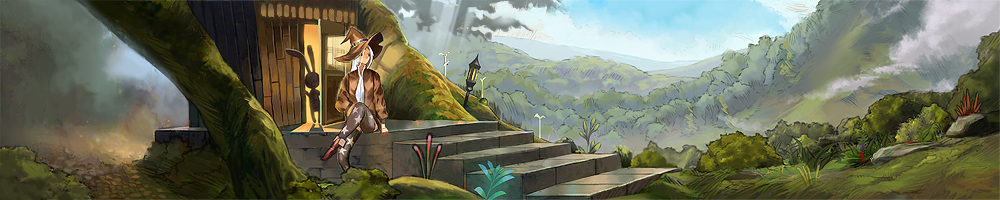


 Highlander is a movie that came out recently. It’s another one of these English-spoken anime, where the original voices are all in English instead of the usual Japanese. I’d like to describe this one as “Afro Samurai with personality”.
Basically, what this anime does is about the same as Afro Samurai, only a lot better. The main storyline focuses on two powerhouses, one of them is out for revenge on the other because the other killed someone important. There is the side-kick who provides your occasional commentary, and of course the female love interest. All it misses is the childhood friend, but I’m actually glad he was left out.
Anyway, on top of this, Highlander manages to add enough other elements to prevent this movie from becoming as dull as Afro Samurai. For starters, Colin, the main character actually has a bit of development up to the point where he actually becomes pitiful. I won’t spoil it, but I admit I laughed at how stupid, yet tragic his character is. The side-kick also has a sense of humour, which I quite appreciated. There is also a side-story focusing on oppression, which turned out really interesting near its climax. Overall, I wouldn’t call this a failure of a movie.
That doesn’t mean that it doesn’t have any flaws, though. Let’s start with the voice-acting. The cast comes with both Scottish and American ones. With the Scottish voices, there is no problem at all. Scotland and other Celtic settings are hardly touched upon by anime, which is a darn shame, since it has enough interesting background material to make for some interesting stories, and the parts of the movie that played in ancient Scotland were nice to watch, and especially the voice-acting was a delight.
I wish I could say the same about the part of the story in New York, though. The American accents just don’t fit in anime, and some particular cases of side-characters speak like a drunk Tarzan. Especially near the beginning, the dialogues just don’t flow right at all, luckily this gets better as the movie progresses.
There’s also this matter of this being an action-movie. Thank goodness it isn’t just one big excuse to display some action, but the fact remains that you can’t really get a good ending out of it, and indeed, the final scene is just one big Deus ex Machina whose only purpose is to close off the story at its climax. The major antagonist also is in dire need of some character-development.
Overall, I wouldn’t recommend you to go out of your way and check this movie out as soon as possible, as it’s not really that good. If you’re bored, though, and need an hour to burn, this may be a good choice. It’s nothing special, but at least it’s entertaining.]]>
Highlander is a movie that came out recently. It’s another one of these English-spoken anime, where the original voices are all in English instead of the usual Japanese. I’d like to describe this one as “Afro Samurai with personality”.
Basically, what this anime does is about the same as Afro Samurai, only a lot better. The main storyline focuses on two powerhouses, one of them is out for revenge on the other because the other killed someone important. There is the side-kick who provides your occasional commentary, and of course the female love interest. All it misses is the childhood friend, but I’m actually glad he was left out.
Anyway, on top of this, Highlander manages to add enough other elements to prevent this movie from becoming as dull as Afro Samurai. For starters, Colin, the main character actually has a bit of development up to the point where he actually becomes pitiful. I won’t spoil it, but I admit I laughed at how stupid, yet tragic his character is. The side-kick also has a sense of humour, which I quite appreciated. There is also a side-story focusing on oppression, which turned out really interesting near its climax. Overall, I wouldn’t call this a failure of a movie.
That doesn’t mean that it doesn’t have any flaws, though. Let’s start with the voice-acting. The cast comes with both Scottish and American ones. With the Scottish voices, there is no problem at all. Scotland and other Celtic settings are hardly touched upon by anime, which is a darn shame, since it has enough interesting background material to make for some interesting stories, and the parts of the movie that played in ancient Scotland were nice to watch, and especially the voice-acting was a delight.
I wish I could say the same about the part of the story in New York, though. The American accents just don’t fit in anime, and some particular cases of side-characters speak like a drunk Tarzan. Especially near the beginning, the dialogues just don’t flow right at all, luckily this gets better as the movie progresses.
There’s also this matter of this being an action-movie. Thank goodness it isn’t just one big excuse to display some action, but the fact remains that you can’t really get a good ending out of it, and indeed, the final scene is just one big Deus ex Machina whose only purpose is to close off the story at its climax. The major antagonist also is in dire need of some character-development.
Overall, I wouldn’t recommend you to go out of your way and check this movie out as soon as possible, as it’s not really that good. If you’re bored, though, and need an hour to burn, this may be a good choice. It’s nothing special, but at least it’s entertaining.]]>
Category: Anime Reviews
Earth Girl Arjuna Review – 72/100


 The world is in trouble. Everywhere in the world, Raaja start to appear along with the pollution, caused by humans and something needs to be done. This is the message that Earth Girl Arjuna tries to bring. It features a high-school girl who receives the power of the earth in order to protect it. Unfortunately, though, she remains a high-school girl, and so she also has her own problems.
And that’s where the problem with this anime lies. The two major focuses of this anime, the endangered environment and Juna’s personal problems don’t really mix together. They’re constantly trying to get the centre of attention, not to mention that the love triangle, that takes up quite a bit of airtime just gets nowhere because of this. The individual parts are good, yes, but this anime really had an identity crisis throughout its run of 13 episodes.
There’s also this matter of the rather disappointing ending, shamelessly ripped off from Nausicaa. If you’re looking for an anime about human pollution, Nausicaa definitely is a better choice, as Earth Girl Arjuna comes with a bunch of theories that just don’t make any sense at all. Also, we never really get to know why Juna got her powers in the first place. The closest reason we get is “there was no other choice”. It’s also a bit too coincidental that the “big boss” is caused by none other than Juna’s boyfriend’s father.
Still, Earth Girl Arjuna isn’t all that bad. One thing it did right was character-development. The cast of characters gets well developed and explored throughout the anime, and I overall had a good time watching. It’s just that now that I started writing this review, I’m beginning to notice more and more flaws and plotholes. You’ll probably enjoy this if you don’t get too much bothered by these.
The graphics look quite interesting, Juna’s designs are done with quite some creativity, and the entire anime sparkles with imaginative choreography. The music also is quite unique. It’s not really memorable, but I can see myself going after the soundtrack, as there are quite a number of interesting tunes worth listening to.
Overall, Earth Girl Arjuna is not a bad anime; it just has a lot of flaws. Let me just warn you to skip the final episode, though, as it’s the worst episode in the entire series, and the perfect example of a bad and rushed ending.]]>
The world is in trouble. Everywhere in the world, Raaja start to appear along with the pollution, caused by humans and something needs to be done. This is the message that Earth Girl Arjuna tries to bring. It features a high-school girl who receives the power of the earth in order to protect it. Unfortunately, though, she remains a high-school girl, and so she also has her own problems.
And that’s where the problem with this anime lies. The two major focuses of this anime, the endangered environment and Juna’s personal problems don’t really mix together. They’re constantly trying to get the centre of attention, not to mention that the love triangle, that takes up quite a bit of airtime just gets nowhere because of this. The individual parts are good, yes, but this anime really had an identity crisis throughout its run of 13 episodes.
There’s also this matter of the rather disappointing ending, shamelessly ripped off from Nausicaa. If you’re looking for an anime about human pollution, Nausicaa definitely is a better choice, as Earth Girl Arjuna comes with a bunch of theories that just don’t make any sense at all. Also, we never really get to know why Juna got her powers in the first place. The closest reason we get is “there was no other choice”. It’s also a bit too coincidental that the “big boss” is caused by none other than Juna’s boyfriend’s father.
Still, Earth Girl Arjuna isn’t all that bad. One thing it did right was character-development. The cast of characters gets well developed and explored throughout the anime, and I overall had a good time watching. It’s just that now that I started writing this review, I’m beginning to notice more and more flaws and plotholes. You’ll probably enjoy this if you don’t get too much bothered by these.
The graphics look quite interesting, Juna’s designs are done with quite some creativity, and the entire anime sparkles with imaginative choreography. The music also is quite unique. It’s not really memorable, but I can see myself going after the soundtrack, as there are quite a number of interesting tunes worth listening to.
Overall, Earth Girl Arjuna is not a bad anime; it just has a lot of flaws. Let me just warn you to skip the final episode, though, as it’s the worst episode in the entire series, and the perfect example of a bad and rushed ending.]]>
Hitohira Review – 88/100


 Hitohira is going to be a rather difficult anime to review, since most of its major merits are rather spoilerific, but I’ll give it a try. Basically, it’s one of these rare high-school dramas done right. It features Mugi, an extremely shy girl who even has trouble speaking up at times, who gets recruited for the local drama-club. Why? Because her voice can be incredibly hard when she’s not holding back.
When I first read this description, I indeed was sceptical. After all, many anime have come up with similar concepts, and failed horribly. Hitohira, though, proved to know exactly what it was doing. There are no stereotypes, no excessive fanservice, no harem, and no artificial student council. Nearly all of the clichés that we usually see in these school-based shows are gone. Instead, this anime delivers characters that go well beyond the stereotypes. They’re rich and versatile, and each of them gets a great dose of development through the course of only twelve episodes, ending with an actually good ending.
Hitohira turned out to be surprisingly genuine, but it does take two or three episodes to get going and show its full potential. Nono’s case is beautiful, and I loved how this anime didn’t try to keep its characters together. Life goes on is a major theme of especially the later episodes and it’s done beautifully. I won’t say anything more than that that the major climax was amazing, and it was a definite highlight of the spring-season. Just go and check it out for yourself.
The character-designs are done beautifully and unique, making the visuals a real treat. The animation itself usually remains minimal, though you won’t see any distorted faces or strangely drawn bodies. The background music doesn’t stand out, but it still contributes to the scenes perfectly.
I really hope for this series to get subbed soon, as it deserves to be watched. This series really is one of the spring-season shows that went right. The only flaw that I managed to spot was that especially in the beginning, the drama was a tad too forced, though as the show went on this became less and less apparent. It’s a great choice for anyone who isn’t bored too fast.]]>
Hitohira is going to be a rather difficult anime to review, since most of its major merits are rather spoilerific, but I’ll give it a try. Basically, it’s one of these rare high-school dramas done right. It features Mugi, an extremely shy girl who even has trouble speaking up at times, who gets recruited for the local drama-club. Why? Because her voice can be incredibly hard when she’s not holding back.
When I first read this description, I indeed was sceptical. After all, many anime have come up with similar concepts, and failed horribly. Hitohira, though, proved to know exactly what it was doing. There are no stereotypes, no excessive fanservice, no harem, and no artificial student council. Nearly all of the clichés that we usually see in these school-based shows are gone. Instead, this anime delivers characters that go well beyond the stereotypes. They’re rich and versatile, and each of them gets a great dose of development through the course of only twelve episodes, ending with an actually good ending.
Hitohira turned out to be surprisingly genuine, but it does take two or three episodes to get going and show its full potential. Nono’s case is beautiful, and I loved how this anime didn’t try to keep its characters together. Life goes on is a major theme of especially the later episodes and it’s done beautifully. I won’t say anything more than that that the major climax was amazing, and it was a definite highlight of the spring-season. Just go and check it out for yourself.
The character-designs are done beautifully and unique, making the visuals a real treat. The animation itself usually remains minimal, though you won’t see any distorted faces or strangely drawn bodies. The background music doesn’t stand out, but it still contributes to the scenes perfectly.
I really hope for this series to get subbed soon, as it deserves to be watched. This series really is one of the spring-season shows that went right. The only flaw that I managed to spot was that especially in the beginning, the drama was a tad too forced, though as the show went on this became less and less apparent. It’s a great choice for anyone who isn’t bored too fast.]]>
Rumiko Takahashi's Rumic Theater Review – 89/100


 Before I start with the usual review, I first have to say that this is the 100th review I’ve written for my site!
Okay, I’m finally back with my reviews of the interesting-looking 12/13-episode series. For the past few months, I’ve either been too busy, the series I downloaded turned out to suck (Gun Frontier), or the bittorrent files got stuck in the middle due to lack of seeders. Bittorent really isn’t the best way to get your hands on the rare series out there. Luckily, after a bit of searching, I found out that Vision-Anime still had this series on IRC-bots. Anyway, onto the review.
Rumiko Takahashi is a great writer, in my opinion. She just has one huge bad point: she doesn’t know when to stop. The first season of Ranma 1/2 was just classic, though I quickly lost interest with the second season, and to think that the entire series was seven seasons long! Inu Yasha also spawns lots of people bashing it, though based on the things I’ve heard, it would have been a great 26-episode series, and I can imagine something similar being the case with Urusai Yatsura. So what about her short stories? Well, they rock. 🙂
Mermaid Forest already showed this once, but the stories in Rumic Theater also were really entertaining. While not as good as Mermaid Forest, it’s a real recommendation to any slice-of-life fan.
Rumic Theater really fits perfectly along with three other series I’ve seen recently: Human Crossing, Seraphim Call and Sentimental Journey. If you liked any of these four, you’ll like the other three as well. Yet again we have a random story about a random person for every episode, unrelated to each other apart from a few references here and there. While Sentimental Journey showed how twelve girls deal with their past crushes, Human Crossing shows the problems and the worries of various adults and Seraphim Call centres around eleven rather unique girls in a futuristic setting, Rumic Theater features thirteen ordinary people or families, with extraordinary things happening to them.
These people really couldn’t be more normal, they actually could be your neighbour if you lived in Japan. If you’d ever like to see how normal families live, and what their problems are, Rumic Theatre is the perfect show for this, as it really takes a step away from all the usual stereotypes you see in anime that deal with modern Japan. The extraordinary things can be anything. Some of these events can happen to anyone, like being invited to a school reunion, after 25 years of absence. Others deal with supernatural elements, like a salaryman who keeps getting bothered by the ghost of his deceased wife, while some of them could happen in real life, but are just really improbable, like a housewife, having to take care of a penguin.
Enough blabbering about the contents. How does it deliver? Well, to be honest, Rumic Theatre has the best entertainment value out of all four series mentioned above. For starters it doesn’t really have any clear bad points, unlike Human Crossing, which had the nasty tendency to end its episodes forced and unnatural, or Seraphim Call, which was really inconsistent and a bit too unpredictable, or Sentimental Journey, which had a few boring cases.
And Rumic Theatre still manages to come up with thirteen individual, well developed and varied cases. Two or three episodes were really sad ones, while others really cracked me up at times, others were heart-warming and plain sweet, and all of them had some kind of hidden message. Each of the episodes, the better and lesser ones, were some great character studies, accompanied by a nice atmosphere.
Another interesting thing was that actually quite a few cases centre on a misunderstanding. While this was sort-of annoying in Sentimental Journey, they didn’t really mind me with Rumic Theatre, and some of these cases actually were brilliant, even though you knew beforehand that the main character’s view was completely wrong. Out of the four series mentioned above, it really felt the most natural, the stories fit the episode-format perfectly, and rarely was there a rushed episode.
In terms of graphics something needs to be said, though. Don’t expect any beautiful girls with bright hair and crisp and detailed character-designs. The character-designs are done in a typical Rumiko Takahashi-style, but they do look rather outdated. They by no means look bad, though if you need detailed and mainstream character-designs in your anime, you probably will get annoyed with Rumic Theater.
Overall, even though I’ve seen four series with almost the same premise, I still can’t get enough of them. If you want thought-provoking cases, then go and check out Sentimental Journey. If you want a thick atmosphere, go for Human Crossing. For lots of creativity Sentimental Journey is best, and if you want a bit of everything and a good dose of humour here and there, Rumic Theatre is the best. A few highlights were:
Sentimental Journey: Episode 6 and 10
Human Crossing: Episode 4 and 13
Seraphim Call: Episode 2 and 7
Rumic Theatre: Episode 6 and 12
Each of them are well worth watching. ^_^]]>
Before I start with the usual review, I first have to say that this is the 100th review I’ve written for my site!
Okay, I’m finally back with my reviews of the interesting-looking 12/13-episode series. For the past few months, I’ve either been too busy, the series I downloaded turned out to suck (Gun Frontier), or the bittorrent files got stuck in the middle due to lack of seeders. Bittorent really isn’t the best way to get your hands on the rare series out there. Luckily, after a bit of searching, I found out that Vision-Anime still had this series on IRC-bots. Anyway, onto the review.
Rumiko Takahashi is a great writer, in my opinion. She just has one huge bad point: she doesn’t know when to stop. The first season of Ranma 1/2 was just classic, though I quickly lost interest with the second season, and to think that the entire series was seven seasons long! Inu Yasha also spawns lots of people bashing it, though based on the things I’ve heard, it would have been a great 26-episode series, and I can imagine something similar being the case with Urusai Yatsura. So what about her short stories? Well, they rock. 🙂
Mermaid Forest already showed this once, but the stories in Rumic Theater also were really entertaining. While not as good as Mermaid Forest, it’s a real recommendation to any slice-of-life fan.
Rumic Theater really fits perfectly along with three other series I’ve seen recently: Human Crossing, Seraphim Call and Sentimental Journey. If you liked any of these four, you’ll like the other three as well. Yet again we have a random story about a random person for every episode, unrelated to each other apart from a few references here and there. While Sentimental Journey showed how twelve girls deal with their past crushes, Human Crossing shows the problems and the worries of various adults and Seraphim Call centres around eleven rather unique girls in a futuristic setting, Rumic Theater features thirteen ordinary people or families, with extraordinary things happening to them.
These people really couldn’t be more normal, they actually could be your neighbour if you lived in Japan. If you’d ever like to see how normal families live, and what their problems are, Rumic Theatre is the perfect show for this, as it really takes a step away from all the usual stereotypes you see in anime that deal with modern Japan. The extraordinary things can be anything. Some of these events can happen to anyone, like being invited to a school reunion, after 25 years of absence. Others deal with supernatural elements, like a salaryman who keeps getting bothered by the ghost of his deceased wife, while some of them could happen in real life, but are just really improbable, like a housewife, having to take care of a penguin.
Enough blabbering about the contents. How does it deliver? Well, to be honest, Rumic Theatre has the best entertainment value out of all four series mentioned above. For starters it doesn’t really have any clear bad points, unlike Human Crossing, which had the nasty tendency to end its episodes forced and unnatural, or Seraphim Call, which was really inconsistent and a bit too unpredictable, or Sentimental Journey, which had a few boring cases.
And Rumic Theatre still manages to come up with thirteen individual, well developed and varied cases. Two or three episodes were really sad ones, while others really cracked me up at times, others were heart-warming and plain sweet, and all of them had some kind of hidden message. Each of the episodes, the better and lesser ones, were some great character studies, accompanied by a nice atmosphere.
Another interesting thing was that actually quite a few cases centre on a misunderstanding. While this was sort-of annoying in Sentimental Journey, they didn’t really mind me with Rumic Theatre, and some of these cases actually were brilliant, even though you knew beforehand that the main character’s view was completely wrong. Out of the four series mentioned above, it really felt the most natural, the stories fit the episode-format perfectly, and rarely was there a rushed episode.
In terms of graphics something needs to be said, though. Don’t expect any beautiful girls with bright hair and crisp and detailed character-designs. The character-designs are done in a typical Rumiko Takahashi-style, but they do look rather outdated. They by no means look bad, though if you need detailed and mainstream character-designs in your anime, you probably will get annoyed with Rumic Theater.
Overall, even though I’ve seen four series with almost the same premise, I still can’t get enough of them. If you want thought-provoking cases, then go and check out Sentimental Journey. If you want a thick atmosphere, go for Human Crossing. For lots of creativity Sentimental Journey is best, and if you want a bit of everything and a good dose of humour here and there, Rumic Theatre is the best. A few highlights were:
Sentimental Journey: Episode 6 and 10
Human Crossing: Episode 4 and 13
Seraphim Call: Episode 2 and 7
Rumic Theatre: Episode 6 and 12
Each of them are well worth watching. ^_^]]>
Toki wo Kakeru Shoujo Review – 87/100


 The fansubbers labelled this as “the best movie of 2006”, and I’ve seen other sources claim this as well. Whether this is true, I can’t say for certain yet, because some of the big names as Tekkon Kinkreet, Gedo Senki and Eien no Hou have yet to appear. But one thing’s for sure: these movies are going to have to be reeally good in order to be able to top this one.
Toki wo Kakeru Shoujo, I think we’ve all read about its premise by now, but for those who haven’t: a high-school girl suddenly gets the power to leap through time. With this, she starts using it to alter the space-time continuum to her own advantage. When I read the premise for the first time, I thought that she’d go and alter major time events and really alter history, but she just sticks to making her own life better. Basically, it’s a high-school romance, but that description doesn’t really do it justice, as some pretty horrible things happen along the line.
I really praise this anime for that last part, by the way. It’s obvious that things won’t go as Mokoto (our main character) expects them. And it’s predictable for bad things to happen, but this movie developed its characters so well that the predictability didn’t matter, and that each major event felt like a huge shock. From my own experience, I’ve seen movies fail more often than series did, but this movie is just a must-watch.
The backgrounds that we get to see are what you expect from a movie: crisp, detailed and beautiful, although one or two scenes may be trying a bit too much (like a fridge which may have been a bit too stuffed for a random family). As we’ve got ourselves a romance here, there aren’t a lot of flashy action-scenes, but still the overall animation was really life-like and natural. The music was simple, consisting out of mainly piano-tunes. But it fits the movie perfectly. It was especially stunning during the heavy scenes.
Seriously, only if you really need some action in your anime, you may want to skip out of this. Toki wo Kakeru Shoujo has been a great watch for me, and I can imagine others liking it just as much as I did, and probably even better. I’m glad that this movie reminded me that a well-done anime movie can be as satisfying as a tv-series.]]>
The fansubbers labelled this as “the best movie of 2006”, and I’ve seen other sources claim this as well. Whether this is true, I can’t say for certain yet, because some of the big names as Tekkon Kinkreet, Gedo Senki and Eien no Hou have yet to appear. But one thing’s for sure: these movies are going to have to be reeally good in order to be able to top this one.
Toki wo Kakeru Shoujo, I think we’ve all read about its premise by now, but for those who haven’t: a high-school girl suddenly gets the power to leap through time. With this, she starts using it to alter the space-time continuum to her own advantage. When I read the premise for the first time, I thought that she’d go and alter major time events and really alter history, but she just sticks to making her own life better. Basically, it’s a high-school romance, but that description doesn’t really do it justice, as some pretty horrible things happen along the line.
I really praise this anime for that last part, by the way. It’s obvious that things won’t go as Mokoto (our main character) expects them. And it’s predictable for bad things to happen, but this movie developed its characters so well that the predictability didn’t matter, and that each major event felt like a huge shock. From my own experience, I’ve seen movies fail more often than series did, but this movie is just a must-watch.
The backgrounds that we get to see are what you expect from a movie: crisp, detailed and beautiful, although one or two scenes may be trying a bit too much (like a fridge which may have been a bit too stuffed for a random family). As we’ve got ourselves a romance here, there aren’t a lot of flashy action-scenes, but still the overall animation was really life-like and natural. The music was simple, consisting out of mainly piano-tunes. But it fits the movie perfectly. It was especially stunning during the heavy scenes.
Seriously, only if you really need some action in your anime, you may want to skip out of this. Toki wo Kakeru Shoujo has been a great watch for me, and I can imagine others liking it just as much as I did, and probably even better. I’m glad that this movie reminded me that a well-done anime movie can be as satisfying as a tv-series.]]>
Le Chevalier d'Eon Review – 91/100


 Le Chevalier d’Eon tells the brilliant story of the years before the French Revolution, during the reign of Louis XV in a setting with fantasy-elements. It follows d’Eon de Beaumont, a chevalier in service of the king (hence the title), who suddenly discovers the death of his famous sister, whom he admired.
If you’re interested in politics, realism, cross-dressers, historical anime, battle tactics or compassionate characters, then look no further as Chevalier brings a compelling combination of these elements. The storyline is incredibly detailed. Characters act because of complex reasons, and in most of the cases these reasons are explained as well. Through the course of the anime, the countries of France, England and Russia show a bit of their political system they used during the timeline in which the series takes place. And some of the characters get fleshed out incredibly well.
The second half of this series is a pure delight because of this. Starting from episode 15, there isn’t even one bad episode, and each one delivers, with four or five absolutely amazing episodes. Unfortunately, though, the first half is just too slow at times, and it spends perhaps a bit too long on building up. There are a few climaxes, but they weren’t really that special when compared to the second half, and I can imagine that they cost this anime quite an amount of viewers because of it.
The music is good, but forgettable. The graphics however, shine. Not literally, but characters are drawn incredibly detailed, and they’re greatly animated. Battle-scenes also are greatly choreographed as well. But the thing that really made this anime was its cast of characters. I probably won’t be able to forget the charming Durand soon, or the naive Robin, or the knightly Teillagory. Each of them was so worth to watch. It’s a shame you don’t hear so much about this anime, as it’s really the highlight of last year’s summer-season.]]>
Le Chevalier d’Eon tells the brilliant story of the years before the French Revolution, during the reign of Louis XV in a setting with fantasy-elements. It follows d’Eon de Beaumont, a chevalier in service of the king (hence the title), who suddenly discovers the death of his famous sister, whom he admired.
If you’re interested in politics, realism, cross-dressers, historical anime, battle tactics or compassionate characters, then look no further as Chevalier brings a compelling combination of these elements. The storyline is incredibly detailed. Characters act because of complex reasons, and in most of the cases these reasons are explained as well. Through the course of the anime, the countries of France, England and Russia show a bit of their political system they used during the timeline in which the series takes place. And some of the characters get fleshed out incredibly well.
The second half of this series is a pure delight because of this. Starting from episode 15, there isn’t even one bad episode, and each one delivers, with four or five absolutely amazing episodes. Unfortunately, though, the first half is just too slow at times, and it spends perhaps a bit too long on building up. There are a few climaxes, but they weren’t really that special when compared to the second half, and I can imagine that they cost this anime quite an amount of viewers because of it.
The music is good, but forgettable. The graphics however, shine. Not literally, but characters are drawn incredibly detailed, and they’re greatly animated. Battle-scenes also are greatly choreographed as well. But the thing that really made this anime was its cast of characters. I probably won’t be able to forget the charming Durand soon, or the naive Robin, or the knightly Teillagory. Each of them was so worth to watch. It’s a shame you don’t hear so much about this anime, as it’s really the highlight of last year’s summer-season.]]>
Tenpou Ibun Ayakashi Ayashi Review – 88/100


 Tenpou Ibun Ayakashi Ayashi was supposed to take over from Blood+ on the Saturday 18:00 timeslot, the number-one prime-time spot for anime, which also housed series as Full Metal Alchemist and Gundam Seed Destiny. For this, it had to live up to some great expectations, and it came with a story about Youma-hunters, during the Tenpou era of Japan.
If I had to say so myself, then Tenpou Ibun Ayakashi Ayashi definitely lived up to these expectations, but it’s so not suitable for the prime-time spot. Timeslots like these are meant for popular shows with lots of fanboy-pleasing action, not an intelligent show like this one. Because of this, the series’ original length of 52 episodes was cut in half, leaving only 26 episodes for this anime to work with. This, in fact, is the only really bad point of this series.
Like I suggested above, this series’ great strength is its storytelling. It consists out of small arcs, ranging from usually two or three episodes, which all centre on themes, deeply rooted in the history of Japan and its religions. I’ve almost never encountered an anime which did so much research for its stories. As a result, the individual tales just sparkle with creativity and originality, while they still hold a large amount of realism. To give a small indication, brothels have often appeared in historical anime (to name a few, Samurai Champloo, Peace Maker Kurogane, and quite some more), but never was this concept so fleshed out as in the three episodes Tenpou Ibun Ayakashi Ayashi dedicated to the subject.
Because these stories have such a good base, the characters also can be really fleshed out. Every important character has at least one arc in which he or she stands in the spotlight, and even though the character-development is incomplete, because of the reduced anime-length, the development that we do see is truly fascinating. To add that, nearly each arc has one major climax, and perhaps with exception of the first arc, each of these climaxes turns out to be really captivating, and full of tension.
Even in the graphical and musical department this series delivers. The background music makes sure that the climaxes work even better, while the character-designs are really lifelike. I remember commenting about how these characters looked so standard when I first saw them, but the fact remains that every single character looks unique in this anime, instead of being a clone of character A with different hair and eye-colour (something which seems to plague other anime). Add in a couple of great special effects, and you’ve got yourself a visual treat.
Because of the reduced length, I can’t rate this 90% or higher, because I feel that this anime would have been even better if the remaining 26 episodes were added (and not to mention the rushed ending), but I definitely recommend giving Tenpou Ibun Ayakashi Ayashi a try. It’s probably one of the few anime with a guy in his fourties as a main character, and this works perfectly. Just be aware that the dialogue can be quite intensive, so this isn’t an anime that you can just watch leisurely]]>
Tenpou Ibun Ayakashi Ayashi was supposed to take over from Blood+ on the Saturday 18:00 timeslot, the number-one prime-time spot for anime, which also housed series as Full Metal Alchemist and Gundam Seed Destiny. For this, it had to live up to some great expectations, and it came with a story about Youma-hunters, during the Tenpou era of Japan.
If I had to say so myself, then Tenpou Ibun Ayakashi Ayashi definitely lived up to these expectations, but it’s so not suitable for the prime-time spot. Timeslots like these are meant for popular shows with lots of fanboy-pleasing action, not an intelligent show like this one. Because of this, the series’ original length of 52 episodes was cut in half, leaving only 26 episodes for this anime to work with. This, in fact, is the only really bad point of this series.
Like I suggested above, this series’ great strength is its storytelling. It consists out of small arcs, ranging from usually two or three episodes, which all centre on themes, deeply rooted in the history of Japan and its religions. I’ve almost never encountered an anime which did so much research for its stories. As a result, the individual tales just sparkle with creativity and originality, while they still hold a large amount of realism. To give a small indication, brothels have often appeared in historical anime (to name a few, Samurai Champloo, Peace Maker Kurogane, and quite some more), but never was this concept so fleshed out as in the three episodes Tenpou Ibun Ayakashi Ayashi dedicated to the subject.
Because these stories have such a good base, the characters also can be really fleshed out. Every important character has at least one arc in which he or she stands in the spotlight, and even though the character-development is incomplete, because of the reduced anime-length, the development that we do see is truly fascinating. To add that, nearly each arc has one major climax, and perhaps with exception of the first arc, each of these climaxes turns out to be really captivating, and full of tension.
Even in the graphical and musical department this series delivers. The background music makes sure that the climaxes work even better, while the character-designs are really lifelike. I remember commenting about how these characters looked so standard when I first saw them, but the fact remains that every single character looks unique in this anime, instead of being a clone of character A with different hair and eye-colour (something which seems to plague other anime). Add in a couple of great special effects, and you’ve got yourself a visual treat.
Because of the reduced length, I can’t rate this 90% or higher, because I feel that this anime would have been even better if the remaining 26 episodes were added (and not to mention the rushed ending), but I definitely recommend giving Tenpou Ibun Ayakashi Ayashi a try. It’s probably one of the few anime with a guy in his fourties as a main character, and this works perfectly. Just be aware that the dialogue can be quite intensive, so this isn’t an anime that you can just watch leisurely]]>
Paprika Review – 74/100


 Satoshi Kon comes with another movie, called Paprika. This is the same person who directed Paranoia Agent, so I undoubtedly looked forward to it a lot. So, after having seen it, how did it turn out? Well, disappointing. It’s not bad or anything, but I expected something more.
Paprika comes with another psychological theme: dreams. About 50% in this movie happens in dreams, and they show what happens when humans start messing with them. Overall, it was quite interesting, but I’m surprised to say that the pacing was rather slow, compared to Paranoia Agent, which continuously kept the flow of events high. Paprika definitely is different, as it seems to more focus on its characters than paranoia itself. When you look at it this way, it turned out pretty good, with interesting choreography at times, and all accompanied by very unusual characters that you probably won’t see in any other anime.
Still, there are two rather bad points about this movie. It’s repetitive, and it doesn’t use its amazing soundtrack enough. Seriously, if you loved Paranoia Agent’s soundtrack, you’ll love the theme song. It’s a great song, but the rest of the anime is filled with rather mediocre background sounds or just plain silence. I kept longing to hear the opening track again, which unfortunately only happened when the ending credits rolled. Regarding the first point, it’s quite a few times that we see scenes that we’ve already seen before. I guess these scenes were meant to illustrate the changes in the anime, but when a strange parade passes the screen for the fifth time, its novelty has worn out.
Overall, if you’ve got some time to burn, you can check this out, as it’s quite a good watch, but there definitely are better movies out there.]]>
Satoshi Kon comes with another movie, called Paprika. This is the same person who directed Paranoia Agent, so I undoubtedly looked forward to it a lot. So, after having seen it, how did it turn out? Well, disappointing. It’s not bad or anything, but I expected something more.
Paprika comes with another psychological theme: dreams. About 50% in this movie happens in dreams, and they show what happens when humans start messing with them. Overall, it was quite interesting, but I’m surprised to say that the pacing was rather slow, compared to Paranoia Agent, which continuously kept the flow of events high. Paprika definitely is different, as it seems to more focus on its characters than paranoia itself. When you look at it this way, it turned out pretty good, with interesting choreography at times, and all accompanied by very unusual characters that you probably won’t see in any other anime.
Still, there are two rather bad points about this movie. It’s repetitive, and it doesn’t use its amazing soundtrack enough. Seriously, if you loved Paranoia Agent’s soundtrack, you’ll love the theme song. It’s a great song, but the rest of the anime is filled with rather mediocre background sounds or just plain silence. I kept longing to hear the opening track again, which unfortunately only happened when the ending credits rolled. Regarding the first point, it’s quite a few times that we see scenes that we’ve already seen before. I guess these scenes were meant to illustrate the changes in the anime, but when a strange parade passes the screen for the fifth time, its novelty has worn out.
Overall, if you’ve got some time to burn, you can check this out, as it’s quite a good watch, but there definitely are better movies out there.]]>
Jigoku Shoujo Futakomori Review – 88/100


 Jigoku Shoujo Futakomori, the second season of Jigoku Shoujo, which features a website. If you access it at midnight, you can enter the name of someone you want to send to hell. The only price: you’ll get sent to hell after you die yourself. For the second season, Hajime and Tsugumi have buggered off, while the series continues with its usual formula, though with a very different focus.
The second season has two major focuses. The first is Ai’s dolls, Ichimoku Ren, Hone Onna and Wanyuudo. In the first half, they start to get personally involved in some of the cases, while the episodes that follow reveal their background, and how they actually met Ai in the first place. The second focus is people, getting more and more lenient to send someone to hell. At the start of the season, I actually expected the cases in the second season to be even more extreme than the first season, but I was quite surprised when the opposite happened. Quite an amount of cases are way lighter than most of the latter half of the first season.
The cases in the second season were definitely more character-based. While the first season tried to create cases as extreme as possible, or to illustrate Hajime’s and Tsugumi’s differences of opinion, the second season tried to delve a bit more into the main characters of the different cases. In about 50% of these episodes, this didn’t work, but the other 50% were amazing. There are some beautiful stories among them, all accompanied by some of the most amazing plot twists.
There actually isn’t a main storyline like Hajime and Tsugumi, until very late in the anime. Still, even though this storyline has been getting less development than you would expect, nearly each of the final episodes is a beauty, giving the second season a definite better ending than the first season had.
If you got through the first season, there’s no reason why you shouldn’t check out the second season. Heck, it’s probably even possible to continue with the second season, without having finished the first one, all you miss is a bit of development. Still, I have to say that even though the second season has been excellent, the repetition did kick in at some moments. The usual formula did get annoying at some of the worse episodes, though that didn’t stop the good ones for really working out.
The graphics were of the same high quality as the first season, but a definite improvement has been made in the music-department. The first season already featured great music, but the second season takes another step further, and delivers a truly memorable soundtrack, with some amazingly catchy tunes. Overall, though, I had more enjoyment out of the first season, but that’s only because of the repetition. The final episodes definitely make for an interesting watch, and, unlike the first season, there’s actually a lot to discuss about with others.]]>
Jigoku Shoujo Futakomori, the second season of Jigoku Shoujo, which features a website. If you access it at midnight, you can enter the name of someone you want to send to hell. The only price: you’ll get sent to hell after you die yourself. For the second season, Hajime and Tsugumi have buggered off, while the series continues with its usual formula, though with a very different focus.
The second season has two major focuses. The first is Ai’s dolls, Ichimoku Ren, Hone Onna and Wanyuudo. In the first half, they start to get personally involved in some of the cases, while the episodes that follow reveal their background, and how they actually met Ai in the first place. The second focus is people, getting more and more lenient to send someone to hell. At the start of the season, I actually expected the cases in the second season to be even more extreme than the first season, but I was quite surprised when the opposite happened. Quite an amount of cases are way lighter than most of the latter half of the first season.
The cases in the second season were definitely more character-based. While the first season tried to create cases as extreme as possible, or to illustrate Hajime’s and Tsugumi’s differences of opinion, the second season tried to delve a bit more into the main characters of the different cases. In about 50% of these episodes, this didn’t work, but the other 50% were amazing. There are some beautiful stories among them, all accompanied by some of the most amazing plot twists.
There actually isn’t a main storyline like Hajime and Tsugumi, until very late in the anime. Still, even though this storyline has been getting less development than you would expect, nearly each of the final episodes is a beauty, giving the second season a definite better ending than the first season had.
If you got through the first season, there’s no reason why you shouldn’t check out the second season. Heck, it’s probably even possible to continue with the second season, without having finished the first one, all you miss is a bit of development. Still, I have to say that even though the second season has been excellent, the repetition did kick in at some moments. The usual formula did get annoying at some of the worse episodes, though that didn’t stop the good ones for really working out.
The graphics were of the same high quality as the first season, but a definite improvement has been made in the music-department. The first season already featured great music, but the second season takes another step further, and delivers a truly memorable soundtrack, with some amazingly catchy tunes. Overall, though, I had more enjoyment out of the first season, but that’s only because of the repetition. The final episodes definitely make for an interesting watch, and, unlike the first season, there’s actually a lot to discuss about with others.]]>
Bakumatsu Kikansetsu Irohanihoheto Review – 89/100


 Bakumatsu Kikansetsu Irohanihoheto takes place in the Meiji-era, where supernatural events can occur. It follows Akizuki Youjiro, a very talented swordsman who has been tasked to seal an item called “the Lord’s Head”. This item is able to fully control others, and has to be sealed no matter what. A theatre-troupe, meanwhile is out on revenge.
One thing that immediately strikes with this series: its awesome production-values. Seriously, this series showcases some of the highest-quality art and animation for a tv-series. Characters move extremely fluid, the CG is terrific, and especially the background art is extremely detailed. The graphics just ooze with realism like no other series has managed to do before. And if that wasn’t good enough, this anime comes with an absolutely smashing soundtrack, which doesn’t lose focus for even an episode.
On top of that, it comes with a very detailed storyline, featuring both historical as fictional characters, based around Enomoto Takeaki’s mission to found the republic of Ezo, on what is now known as Hokkaido. Be warned, though, as the storyline does require some afford in order to actually understand it. A lot of references are made to the Meiji-period of Japan, and without sufficient knowledge, you’ll need to look up things a lot in order to get all the references.
Still, as the anime moves on, the story will become clearer and clearer, and it results in one of the more solid storylines I’ve seen in anime. Still, with that, perhaps one of the few problems with this anime lies. Bakumatsu Kikansetsu Irohanihoheto may be a really solid story, it also lacks plot-twists. Most of the series is pretty straightforward, and only episodes 13 and 18 provide a number of very juicy plot twists (which, in the end, turned out to be the best episodes of the anime).
Overall, though, it may be a bit too straightforward, but it’s one hell of an entertaining series. The solid plot and great production-values more than make up for this flaw, and Bakumatsu Kikansetsu Irohanihoheto has been one great watch.]]>
Bakumatsu Kikansetsu Irohanihoheto takes place in the Meiji-era, where supernatural events can occur. It follows Akizuki Youjiro, a very talented swordsman who has been tasked to seal an item called “the Lord’s Head”. This item is able to fully control others, and has to be sealed no matter what. A theatre-troupe, meanwhile is out on revenge.
One thing that immediately strikes with this series: its awesome production-values. Seriously, this series showcases some of the highest-quality art and animation for a tv-series. Characters move extremely fluid, the CG is terrific, and especially the background art is extremely detailed. The graphics just ooze with realism like no other series has managed to do before. And if that wasn’t good enough, this anime comes with an absolutely smashing soundtrack, which doesn’t lose focus for even an episode.
On top of that, it comes with a very detailed storyline, featuring both historical as fictional characters, based around Enomoto Takeaki’s mission to found the republic of Ezo, on what is now known as Hokkaido. Be warned, though, as the storyline does require some afford in order to actually understand it. A lot of references are made to the Meiji-period of Japan, and without sufficient knowledge, you’ll need to look up things a lot in order to get all the references.
Still, as the anime moves on, the story will become clearer and clearer, and it results in one of the more solid storylines I’ve seen in anime. Still, with that, perhaps one of the few problems with this anime lies. Bakumatsu Kikansetsu Irohanihoheto may be a really solid story, it also lacks plot-twists. Most of the series is pretty straightforward, and only episodes 13 and 18 provide a number of very juicy plot twists (which, in the end, turned out to be the best episodes of the anime).
Overall, though, it may be a bit too straightforward, but it’s one hell of an entertaining series. The solid plot and great production-values more than make up for this flaw, and Bakumatsu Kikansetsu Irohanihoheto has been one great watch.]]>