A Place Further than the Universe – 12 [A Place Further than the Universe]

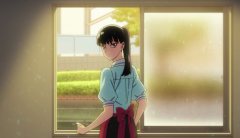
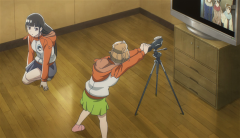
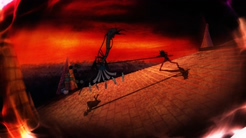
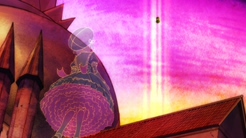
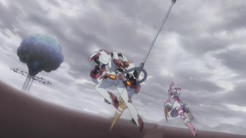
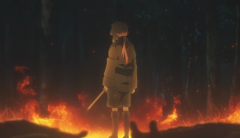
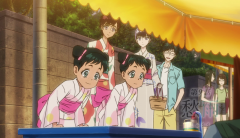
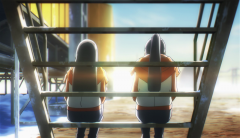
For a show that sells on the idea of turning your normal life upside down and enjoy the youth to the fullest, the second half of Universe instead delved a bit too much on the friendship side that don’t speak much to that central theme. In this episode, the theme comes back with a bang, results in arguably its most emotional effective episode yet. Appropriately, the title of the episode is the same as the series’: A place further than the universe. The last place of Shirase and the expedition’s team’s goal. The place where Shirase’s Mom disappeared 3 years ago. The final destination. It’s also appropriate that Shirase is the main focus of this, because she’s the main drive for this trip to happen after all, and I’m glad that Universe pulled it off. For Shirase, the moments she got call out of class and received the news of her Mom disappearing, it all happens like a dream. A long dream she couldn’t wake up. I can relate to that not only because I’ve gone through this before, but also because it marked a point of no return for Shirase. Nothing would ever be the same for Shirase after that and ever since then, she pushed herself hard so that she can come to the place where the spirits of her Mom is still around.

But there’s also this other fear in Shirase, the fear the she would feel nothing. The fear that once she reaches the goal, there won’t be anything special and there won’t be any thing left to reach. Like, what’s next after that? Chasing her Mom dream to Antarctica has always been her own goal, probably to escape the pain of losing her at such young age and being left alone. If she can’t find anything there, will she be in that dream forever? She admits that she doesn’t feel anything special or overly connected to Antarctica, it’s just… like in a picture book. I like the way Universe acknowledges this. The most alluring aspect of a trip to Antarctica is the idea of going to a place faraway, not necessary the place itself. If you aren’t prepared, you’d end up disappointing, and even if you are, like Shirase, there’s no guarantee that you’d end up enjoying the place. That said, Mari offers a valid counterpoint to Shirase’s crisis. It’s about the journey rather than the destination. It’s about going together and experience these things together that make this trip worth it. Admittedly, that message is nothing new, every other show does this but I prefer the way it presented here. Mari’s point isn’t meant to change the way Shirase feel, it’s only serves as one’s perspective. Just like the way Gin told Shirase that she wanted to come back to Antarctica is for herself, “But when we run around on the injustices of reality, they’re the only things that can break through, make the impossible possible, and allow us to proceed on.” Shirase ultimately is the one who has to overcome her doubts herself.

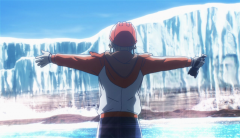
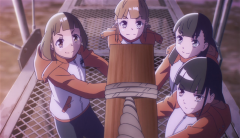
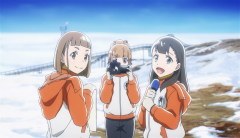
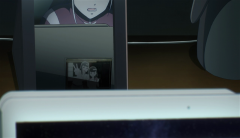
And the girls, plus Gin and that other girl go to the inland trip to build an observatory deck, the idea that was originally from Shirase’s mom. In there, the girls experience the weather condition that I would have expected when I hear about Antarctica: extremely cold, vast ice of nothingness, and blizzard that could easily claim one’s life and change many other’s lives, and godlike sun pillar. The closer to the place where her Mom disappeared, the more Shirase sees fragments of her Mom here and there. It’s just like these moments still linger there, stuck in times. Everyone would claim (and rightfully so) that the episode’s climax where Shirase opens her Mom’s laptop is the most effective moment, but for me, it was the sequence before that. It was when the other four girls rush out to find out something, anything that could tell them the past existence of Shirase’s Mom. Now it isn’t her own journey anymore, but her goal is aligned with other girls. Now it is when the friendship theme merges together flawlessly with “finding goal and achieve goal” theme. The moment from Shirase saw their own photo sticking in the laptop, to when she types correctly the password the second times (it’s her birthday) and her own emails keep flooding up the screen, together with that soft, tender song are such a great way to conclude in high notes. Those unread emails are the statement that her efforts in those 3 years are indeed, real, and now she has to face the fact that Tanako is truly gone, and its’s the more heartbreaking when you notice that the reason her Mom went back to the base and disappeared might be because of this laptop and those emails (one thing though that bugs me is that they have wifi there in the middle of nowhere?). Also appropriately for an episode that feel like a closure, we don’t have any OP or ED this week. Everything ends in such tender note, and… we still have one more episode left. Now, what’s next?
After the Rain – 10 [Sudden Shower]

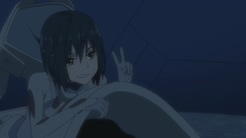
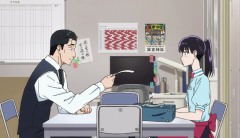
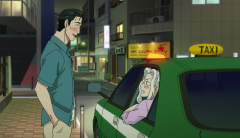
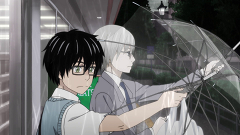
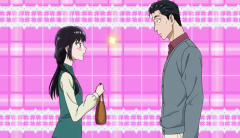
At this point I can safely say that I will enjoy whatever direction Ameagari will wrap up. It has transformed from a merely love story between two adorable individuals with a huge age gap into something much deeper, more refine and more poetic. This episode is another stellar showcase in a way it feels entirely real, the compliment I can’t say in most of anime out there. Many moments from the show reminds me of real life through the way people interacting with each other and in many subtle glances and gestures. Maybe I’m at the same wavelengths with these characters, or maybe I’m just the same sad sack who let the things I love slowly slipped away, but I can relate all to well with both Tachibana and Kondou’s current situation. Kondou mentioned in the past that he regarded himself as “a 45-year-old boy with no hope or dream”, but in truth it’s not that he doesn’t have any dream, it’s that he had a long-lost dream. He devoted himself to literature and write novels until he got marriage, and the pressure of both pursuing his dream and maintaining his role in the family ended up at him losing both, and like the cicada shell he saw in the park, Kondou loses the nature that makes him “Kondou”.

The same can be said for Tachibana and her track career. The doctors mention that with a proper rehab, she could get back on track, but she decides not to. We know that running used to be her passion, we know that she still cares about running through her frustration when seeing other teammates practice, or through her buying a “Running” photobook. In an essence both Kondou and Tachibana try to look away from the passions, one keeps hanging on with life, the other pursues another (unhealthy) path. As the story progresses, the love story has evolved from “girl gets boy” into them support each other finding what they really love, and in turns, who they really are.

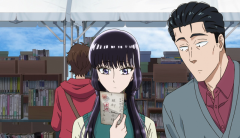
And I still haven’t mentioned some wonderful moments between them. First with the book fair where Kondou meets his old bookseller, wanders around mindlessly by himself and exchanges the shortest texts ever with Tachibana. I do find them repeating the same symbols kind of obvious, but well, the message is still rewarding. You can also see the more Kondou loses himself to his own thoughts, the more impressed Tachibana has for Kondou. She comes to the point of knowing him AND still love everything about him. Their exchanges towards the book she read, the swallow and then her speech in the end play out near flawlessly. Let’s delve a bit into Kondou’s own thought on the last swallow who has trouble flying. The manager comments that even if the bird can’t fly, he’d find happiness in the place he stays, but still looks up to the sky sometimes. It’s no doubt that there is a parallel between the bird and Kondou’s own feeling about his life. He accepts the life he’s living now, although he knows he’s leading a boring life with lost dream and no future, and maybe it’s Tachibana who can crack this and makes him write again.

This episode also addresses the on-going fallout of Tachibana and Haruka, as the two of them clearly still care for each other, as they check out each other’s posts but feel awkward to even make a move. Last episode, I took it as they need some time off (10 years!) like Kondou and Chihiro before they can feel comfortable to talk to each other again, but the way I see it now, they will get back sooner; and I hope Ameagari gives us a satisfying ending for both this plot thread, Tachibana’s running, Kondou’s writing and most of all, Kondou and Tachibana’s relationship. They might not be together in romantic sense at the end of the day, but they come to understand each other more and giving each other a necessary push to embrace life again. And for me that relationship is hundred time more precious than they’re romantically interested in each other.

PS: just the other night I listened to Ameagari’s scores on Youtube (what little of them anyways), and the soundtrack is mesmerizing. I could totally picture Tachibana in the rain, or moment when Kondou sees himself in his teen self. It’s not often a piece of music can carry you to such a specific place and time and mood so I treasure every second of it. Certainly one of the finest soundtrack in recent years. And to think that it’s just one part that makes Ameagari so excellent: the story, the direction and the visual (for those of you who aren’t aware, Wit Studio has their own “make-up animation” team, which is a team who apply special effects to certain scenes, as you can see in one of the screenshot) are all special in its own ways. This show is truly exceptional.

Violet Evergarden – 10 [Loved Ones Will Always Watch Over You]

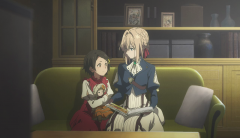
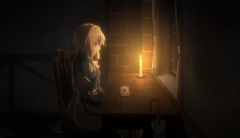
It’s a neat (and cruel) trick Violet Evergarden pulled this week. I always have a soft spot for mature undertone story from a point of view of kids (that’s why I am always fond of To Kill a Mockingbird, for instance) so this story is right within my wheelhouse. Violet Evergarden’s melodrama approach can be a hit or miss but when it hits, it sweeps you away. This episode is one glaring example of melodrama that done right and it’s up there along with “the play” episode as one of my favorite chapter of the series so far. I must say though, bedridden character, KyoAni is in its comfort zone here. From Anne’s perspective, the appearance of Violet is nothing but bad news. Anne feels that our titular doll stole away her mother – all the amount of time that should have spent with her instead. What Violet Evergarden done right, however, is that this feeling never drives her narrative. She’s still a kid and she wants someone, especially her mother, to play with. Despite considering Violet “a bad news”, she grows on Violet and spends a great deal playing with Violet. I consider her one of my favorite character out of this series.

Ann’s furious comes from an understandable ground. She knows that her Mother will leave her someday and she wants to spend little time they have left to be together. Who cares about these letters anyway but it frustrates her that not only her mother sacrifices the time with her, she sacrifices her heath to do so. Violet assures her that writing those letters is for greater cause, but frankly, it sounds like an excuse since she refuses to tell the kid the content of the letters. Violet’s job, as it turns out, is to ghost-write letters for “someone faraway”, and as we learn later on, for Anne for the next 50 years on her birthdays. Those letters serve as the messages for Anne to carry on with life, but more specially, for her to know that loved one won’t never truly leave you away, that they will always by your side, spiritually. That is such a heart-warming message.

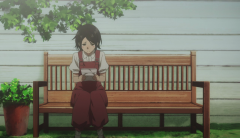
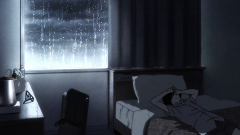
The visual motif is another winning factor of this episode. I like the repetitive nature displayed in many scenes, from Anne repeatedly calls out Violet name, to her mother says her name and to Anne stays in the middle of the field and she sits on the chair reading the letters as time passes. The match cuts of several background in different time frames also serve the same purpose to show the passage of time and it speaks very well to the unrequired love and loss and growing up. As Anne continues to grow up, meet a boy and have kid, those letters are still there, the place is still there and the feeling from her Mom is still apparent there. I am also affected by fact the that while Anne is someone special to her Mom and to Violet, she grows up to be a perfectly normal girl with a normal life. A girl that you might pass on the street or someone you always say hi to.

After her own arc for the last two episodes, I’m glad to see that the focus this week isn’t about Violet, yet we can still see how much she has grown since the beginning. Violet cries, and better yet, she shows empathy. Maybe what it takes is the smile of a young kid to crack this tough nut, but I don’t lie when I say I prefer this version of Violet than the robotic Violet or the moping Violet. At least now she feels like an actual human. I have been quite harsh about the show, but this episode marks a nice transition to it.

A Place Further than the Universe – 11 [Bash That Drum Can!]

Another episode of Universe that delves into friendship issues. While I can see many hiccups along the way, I can still say the ride is worth it. Not that I think this episode stands out, rather that I don’t know exactly how I feel about this episode’s resolution. This episode features my favorite girl, a bullying/ lousy one of the group, Hinata, the most mature girl in the group, and at the same time, is up there as the most stubborn member. She had an issue with her track friends back in her middle school, an issue that (in her point of view, I must stress) was entirely her upperclassmen’s fault. At the end, you would expect she come to forgive her friends and you would expect a happy ending, right? Except it’s not. The climax is… refreshing to say the least. I respect the show for going another way other than happy route, where every fault can be forgiven and forgotten. This climax may sound mean-spirited, after all Hinata isn’t exactly a hero type and Shirase is always mean as hell; but Shirase can go to that level of meanie because she does care deeply for her friend.

I’m not sure what to feel about Hinata’s personal problem this time. Universe claims that she already moves on to the new adventures and now has many true friends, enjoying life that those girls couldn’t have experienced. The way I see it, however, the only person who is still stuck to that painful past is Hinata herself. She’s the one who refuses to talk to her ex-track team members, she’s the one who doesn’t want to deal with the issue head-on, she’s the one who is still in anger despite how many years had passed and she’s the one who still doesn’t forgive them in the end. That is fine, I guess, since it’s her decision and she make it clear every time that it’s her own issue. But it’s kinda problematic for me that the whole group, even Gin, support this. You don’t truly hear the story in the other girls’ point of view beside the email (and Hinata straight-up refused to talk to them), and they mean good so I don’t think they’re deserved to get dismissed like this. And when the adults not only don’t sort these things out, but also act like things going fine. It’s another kind of bullying, isn’t it?

But the tough case to crack is Shirase. In this episode, I am constantly reminded that Shirase is overstepping her role as a friend. I understand the intention: for someone who is headstrong and always act like nothing happened like Hinata, the stubbornness of Shirase is the only thing that can make Hinata opens up. They had a history back in Singapore; so they know a great deal about the other’s characteristics. I get it but reading others’ personal email is A NOT OKAY in any situation regardless if you are friends, partners, siblings or even married couples. A friend can be a shoulder for you to cry on, a friend is someone who has your back, correct, but Shirase has no right to act for Hinata regarding Hinata issues towards Hinata’s friends. She’s being stubborn, she said what Hinata feels, right, but who she is to judge other people “You can’t live your life in this half way state forever”?

But the point is, despite those issues above, I enjoyed this episode for start to finish. I feel the anger Hinata felt, I feel great when Shirase speaks up and the group members produce some rather unique chemistry together. Universe has spent a great deal of focus to the friendship dynamic. First with the surprising dark and sharp Mari – Megumi childhood friendship, to Hinata – Shirase the battle of stubbornness in Singapore, to Yuzuki friend complex and now the hidden past of Hinata. Each of this adds something more to the group’s chemistry, making them a total delight to watch. The girls, furthermore, have a chance to explore Antarctica so every place presented here is a treat by itself, whether it’s a stream so fresh that you can drink directly, a mountainous landscape that looks like a chocolate cake or the daylight sky that is bright and vast. The background designs are made-only-by Antarctica and it’s magnificent. Only 2 episodes left, while I do feel Universe losing a bit of its steam towards this final run, I still feel its foundation is strong enough to deliver what it promised.

Fate/Extra Last Encore – 07[A Story for Someone’s Sake ― Nursery・Rhyme ―]

Thus ends the Nursery Rhyme two episode arc and that certainly was more confusing than it needed to be. The fight was once again, anticlimactic and rather lacking strategy wish as well. I mean our protagonists kept talking like they had a plan but it pretty much amounted to just climbing the tower and fighting the monster again. Then on off chance the protagonist managed to pick up a book which convinced the monster to let them win instead of turning back the clock yet again. So it’s back to the game of figuring out just what the hell is even happening again. From what I can gather it appears that the story has been jumping between two different Hakuno’s. The Hakuno of the past who met Alice, sympathised with her and got her to give up so he could ascend to the next level, promising that he would come back. Then god knows how much time has passed and a new Dead Face Hakuno is climbing the floors. But in the time he was gone, Alice has been consuming materials and masters in order to stop herself from fading away, resulting in her turning into a monstrous amalgamation that no longer remembers what she was waiting for.

So our Dead Face Hakuno learned of his previous versions interactions with Alice and climbs the tower in order to put her out of her misery alongside Rin and Nero. WIth RIn providing truckloads of exposition and Nero admitting that she has been through this all before while suggesting that Hakuno was her master back then too. While it has been apparent for quite a while, Fate/Extra Last Encore does have a problem with characters dialogue almost consisting of pure exposition and little else. After all, we meet Nursery Rhyme in this episode and all she does is spout more exposition and when it comes to character motivations that too is told by the individuals themselves. This may be a result of the Nasu being the author as it is important to note that he is a Visual Novel writer, not a anime writer. Nasu doesn’t seem to be taking advantage of the medium to show rather than tell, instead treating it like a visual novel where stretches of exposition can be more forgiven due to limited visuals and the binge nature of the medium. Even Gen Urobuchi has this same kind of exposition heavy storytelling but in his case he writes exposition so well that it hardly becomes an issue. Nasu on the other hand isn’t quite as good at writing engaging exposition and I honestly feel his strengths lie more in his character writing and action setpieces. With this anime it feels like Nasu is focusing far too hard on the mystery of the story rather than the characters going through it with may be the primary reason for it becoming rather dull despite the actual story being told having interesting aspects.

You can write the most interesting story in the world but if you don’t care about the characters in that story then nothing that happens within it is going to engage the viewer. Spice and Wolf proved that with enough character chemistry you can make even the most boring of subjects engaging just by the interactions between them. Nero, Rin and Hakuno just lack that as Rin exposits, Hakuno may as well be a walking plank and Nero seems to be there to fight, make small musings and say umu while being the fanservice. So for this show to get interesting, we need these characters to lighten up, the action to get better and more show with less tell. Cause I got to tell you, as for the mystery of this series, I don’t give a damn anymore. As a last note, Nasu you give Rin the ability to install Cu but not put Cu into the story? Cu could have been the perfect ice breaker for all these serious scenes. I would have loved to see him throwing Rin off balance and teasing her. Also we can install in the extraverse now? How does that even work?

Darling in the Franxx – 09[Triangle Bomb]

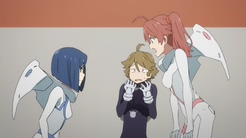
Today on Darling in the Franxx, death flags averted. I admit that throughout this episode I fully prepared myself to see Goro die. The signs were everywhere with him confirming to Hiro that he was in love with Ichigo, the mission leaving him stranded with a trolosuar, the hair clip as well as the base fully admitting they were ready to leave him for dead. But low and behold Goro gets to live another day and even goes as far as to confess his feelings to Ichigo. The beginning of this episode had me worried that this series was heading in the direction of KIznaiver but Goro essentially did the one thing the Kiznaiver kids couldn’t manage to do even after a full cour. As for my thoughts on it I am in favor of Goro nuking this silly love triangle Ichigo has going on with Hiro. For let us be realistic here, Ichigo is not getting together with Hiro as the boy in question has pretty much fully decided on Zero Two. He’s made his feelings clear about Ichigo and while Goro revealing Ichigo’s feelings to him have made him more conscious of her, I doubt he would feel for her that way. To begin with Ichigo’s feelings seem very much like a first crush kind of deal that is a mixture of admiration for his younger self. If we are to judge purely on relationship compatibility, Hiro and Ichigo just feels awkward while Goro and Ichigo are ridiculously compatible. Goro takes care of Ichigo when she’s overreaching while Ichigo stops Goro from taking on everything himself. As far as I am concerned these two are perfect for one another and I am hoping that Goro’s confession helps get Ichigo off the doomed ship that is Hiro and move on.

The monster of the episode is quite fascinating being what looks to be a similar to that of a human brain with does seem to hint that these monsters may be related to humanity in some way. After all they have never been referred to as aliens which suggests their origin is on earth and with the human experimentation that’s going on here, it wouldn’t be a stretch to say these monsters were inadvertently created by humanity. Not the most shocking plot twist, I know, but this show hasn’t been all that surprising with it’s plot direction. Well discounting the odd unexpected fanservice. EIther way we had some good action and I would consider this a pretty strong episode that helps flesh Goro out, even if the majority of his fleshing out is just confirming his romantic feelings for Ichigo. It’s also fun to see Miku start a catfight with Ichigo, prompting Zorome to take the wise road of sneaking off frame before sparks fly. It is hypocritical of Miku though as the whole reason Goro got trapped in the first place was due to them jumping in to attack.

I have always had this feeling with Darling in the Franxx that it would take a darker turn and that feeling still persists here even if shaken by the current episodes events. It wouldn’t be out of the norm for this show to turn at the halfway point as Kill La Kill and Gurren Lagann did take on a more serious storyline as they hit their middleground. It’s isn’t baseless to think this show would go in this direction as there have been several hints to darker aspects and a general idea that these kids are destined to die one way or the other. Either in battle or what is a more likely candidate, shortened lifespan. It does feel like someone is going to die here but it wouldn’t be the first time for a show to hint at dark developments only to take the light road. I would say I will have my answer on where this story stands in a few episodes.

Junji Ito Collection – 10[Greased/Bridge]

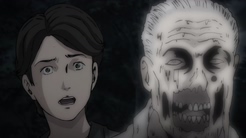
Ugh, I was lucky I ate before that first story started. Not so much scary but very disgusting with the oily dirty house and that brother with the pimples…ugh. This story is more gross out factor than actual horror as there isn’t really a plot besides this girl living with her horrible family in a house so disgusting that it’s amazing that she has not run away from home yet. The big twist involves the father killing his son and serving him up as meat for his restaurant.(Holy hell, the health inspector would have a heart attack at this place.) The meat prove popular and the father starts trying to fatten up his daughter by forcing her to drink oil while she sleeps.(Um…how can you sleep when someone’s forcing oil down your throat?) Daughter catches on so the father ends up chopping off his own foot to be cooked. End of story. You may think I left out some sort of conclusion their but really, that’s how the story ends. no resolution. I originally thought the father would start hunting people to sell as meat in his restaurant and it exploding into some kind of pandemic with oil polluting the neighborhood like in the girls dreams but nope. Father starts eating himself, end of story.

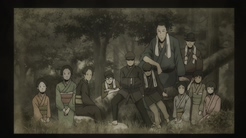
The second story is equally lackluster as it details about a village with a strange funeral ceremony of floating their dead down a river and the dead calling to a girls grandmother to come join them. There are implications that the dead end up trapped on earth when the corpse falls off the mat it’s placed on and judging from the three funerals shown, this appears to always happen. Again there is no real conclusion to the story besides the grandmother being floated down the river and joining the other spirits. I guess the idea of the dead calling out for you to join them could be a scary prospect when you are close to death but there does seem to be a lack of threat here. The ghosts are not really attacking or being dangerous, more mild annoyance. The final twist appears to be that the girls recently dead grandmother reached out to her through her dreams to try and get her to stop her corpse from being floated down the river.

Fat load of good that did, she watched the whole thing from start to finish without interfering at all, no wonder her grandmother’s corpse looked pissed. These two stories have the common aspect of having main characters who are more just obseversors to the tale rather than participant which does happen often in his tales. There are plenty of his tales where the main character more or less acts as a tool to explain the strange happenings rather than interact with it. There sole purpose being to encounter or explain about the horrific things Junji dreams up. They are not the main driving force of the story, more an avatar to get an outsider’s perspective on it. Hence why his tales don’t really include an arc or some sort of conclusion for the character in question as the goal is more to expose the horrific nature of the situation.

Violet Evergarden – 08/09 [Violet Evergarden]

If I haven’t known beforehand that Violet Evergarden has 14 episodes, I would easily assume that this is the conclusion of Violet Evergarden. And in some ways, there is a strong sense of closure in this latest episode. This last two episodes have their full attention to the core development of Violet, that includes an extended flashback that makes it way too clear about Violet’s time with Gilbert, and Violet moping around in the present. I’ll be franxx that I’m not a fan at all with this extended flashback, in fact I consider it amongst the worst episode we’ve seen so far in Violet Evergarden. Its faults aren’t in the details. These sequences are carefully constructed, and the visual presentation is always at the better side, but these flashbacks add extremely little new things to the table that we haven’t known before. We already knew that Violet is a war tool, a killing machine many times before and the army beside Gilbert treat her like a tool, so is it necessary to have a random captain repeat that same point to Gilbert? We already knew Violet received the brooch as a present from Gilbert and it was the only object that remind her of him, so why repeating this whole festival night again? We already knew the event led to Gilbert’s death so I feel rather repetitive and dull to see the night unfold again. “Dull” because I don’t know how I should feel when the bullet gone through his eye in that Hollywood-tearjerking-inspired moments (It’s a lie. I laughed). The only new detail I learn is Violet indeed lives in Gilbert’s house, but then again it adds so little to what we already know. It pains me to say this but I consider the whole flashback a huge waste of time.

Episode 9, appropriately titled “Violet Evergarden”, fares better because we see Violet in a present day. At first, she’s in the state of denial, refusing to believe that Gilbert is gone for good (well, there is 10% probability that he still makes it alive, in which case I swear I’ll drop this show for good). And then she realizes she’s metaphorically burning. It’s important because she was merely a robot in human form before, and like robots she had no guilty conscience towards the people she kills. Becoming a full-fledge human is to feel remorse towards her sins. But like Hodgins puts it, Violet needs to learn about her dark past not because she needs to know what is wrong or right, but to embrace her scars as part of herself and keeps on living.

Apart from realizing the deeds of her dark past, her other issue has always been Gilbert himself. She’s over-reliant to her boss to the point of totally dependable to him, emotionally. Imagine what would Violet do if she learns Gilbert’s death right after she wakes up? I bet she’d lose it. She’d kill herself for good since her life before had only one purpose: to follow Gilbert’s orders. She does try to strangle herself in a state of desperation and does lock herself up for few days even after becoming a Doll. While I was rather cranky with the flashback, the sequence where she learns to get over it, for me, redeems the show greatly with many nice, warm moments that rely more on visual-storytelling than saying it out loud.

And Violet Evergarden knows how to pull an effective resolution to Violet’s conflict. Let’s take first, the letter from Erica and Iris to Violet. The first letter she has ever received. Suitable to the spirits of the show, that letter transfers those feelings that cannot express by words to Violet. In addition, Violet learns about the importance of letter – the meaning behind deliver those letters to its destinations, not unlike bringing pigeons back to their homes. And moreover, she receives a request from her friends, the people she has influenced for the better, and the people still care about her and think fond of her. Violet’s presence is there, she learns about the love for writing letters that bring people together, and the people that through her assistance, becomes more willing to embrace life. It’s now her turn to take that step.

After the Rain – 08/09 [Quiet Rain/ Rain of Sorrow]

We take a side road from our main romance between Tachibana and Kondou in this last two episodes, instead focus on each own friendship, short story Rashomon and pimple. Not that I consider Ameagari anything less than stellar, the show moves with confident pace with so much lovely subtle details. After the unforgettable event where Tachibana “somehow” caught a flu from her manager (or should I put it, an unforgettable night where the two umbrellas fall on top of each other), Kondou tries his best to keep their relationship in the safe “just friends!” zone, and throughout the course of these two episodes we come to learn what true friendship really entails. As much as I consider Ameagari a lean product, as there isn’t much fat in the storytelling and everything onscreen is there for a reason, I do find focusing on Haruka and the ex-captain football ace Yamamoto a bit off-focus. Haruka is a tertiary character so I don’t necessary care much about her inner emotions beside her chemistry with Tachibana. Granted she comes to learn about Tachibana’s mindset through Yamamoto, but consider the drama unfolds afterward, I have a feeling that both her, and Tachibana’s understanding of each other have taken a step aback.

And then we have Tachibana doing her literature homework. With Kondou’s fondness for writing, it’s a good opportunity for more quality time between those two. And indeed, we have. There are cute awkward reactions from both Tachibana and Kondou during that time, but moreover, the way the Rashomon short story weaves together to the main plot, ala their romance is rather impressive. The story is a moral tale about the young servant, while witnessing an old woman stealing hair from dead body, decides to steal rather than stay righteousness in order to survive. The lenses of focus here is the young servant’s attitude, and both Kondou and Tachibana say their own thoughts on how they feel about the servant’s action. Kondou asserts that if he were the servant, he’d stay out of the rain, out of all the trouble – signifies that when he has to deal with sensitive issues (like certain age-gap relationship), he would not do anything risky.  Tachibana, on the other hand, just contents with whatever decision the servant is about to make – signifies that she’s okay with whatever Kondou chooses for their relationship, that she puts his well-being over her own wish. The pimple, in addition, represents the youthfulness. The youthfulness that Kondou thinks he had lost a long the way, the gap between him and Tachibana; as a result; I bet everyone found it whimsical to see the manager got a pimple himself. He can always feel young again, it seems.

Coming to the festival, Haruka and Tachibana seems to be perfectly fine with each other until Tachibana spots Kondou, and things get out of control pretty quickly. Haruka feels hurt not because that all Tachibana’s attention is squarely to the old guy, she feels hurt because Tachibana won’t talk about her issues to Haruka like they used to, a clear sign of a broken friendship. I can see where Haruka comes from, when their friendship used to be that intimate, it’s tough for her to know there is something going on with her best friend, but that friend refuses to open up. Tachibana puts more salt to that open wound with “we can’t go back to how we used to be” speech. Insensitive maybe, but it’s the truth nonetheless.

Still back on the topic of friendship, Kondou meets his old friend, turns out to be the author Chihiro we learned for the past few weeks. And things were nice. The night was warm, the food was oishii and they picked up where they left off after 10 plus years like nothing ever happened. Kondou has a chance to open up about writing books, in which he still manages to not entirely giving up, and a further reminder of his long-lost passions. They get along well, and Chihiro’s declaration that got to me the most. “We’re not adults, but classmates”. Like the fight between Tachibana and Haruka, we learn later that there was a rift between them: Kondou ditched his friend on the trip to India in order to marriage his now ex-wife. The decision that singlehanded separates them into two different lives, and make them unable to talk to each other. But like how Kondou said later to Tachibana in a glorious super-Moon fashion, the friendship may grow apart, but what happened before still exist. Those precious moments they did share to each other never going to disappear, and friendship might come back around when they grow apart, and sometimes relationship needs time and space to grow apart to make it stronger. Maybe that could apply to this rather special relationship, as well.

3-gatsu no Lion – 37/38 [White Storm/Restart]

If you had to take a wild guess at the atmosphere of these two episodes based on the above screencaps, you’d probably settle on, “Somber, with some levity near the end,” and you’d be exactly right. Given the typhoon that dominated this doubleheader, and the snowy theme associated with Meijin Souya’s character, it fell to Nikaidou and the Kawamotos to inject a bit of color into the proceedings here. That’s not to say that there wasn’t good material in the Rei/Souya match, or their ensuing adventure through storm-stricken Japan, but I got the most joy from watching Nikaidou celebrate after his post-hospitalization victory. While it’s true that 3-gatsu adapts its source manga in a straightforward manner, its careful arrangement of the Souya and Nikaidou matches creates a big contrast not just in style, but in their impact on the series’ protagonist. Rei typically alternates between viewing shogi as a curse and a beacon of salvation, but with these episodes, a new dichotomy emerges. In his match against Souya, shogi is a safe, quiet world unto itself; in observing Nikaidou’s game, it’s a raucous, jubilant affair that reflects the best parts of the real world. As he is right now, I think Rei would describe his ideal game as closer to the first of these options, but I hope that, given time, he’ll pick the latter.

The match against Souya has an odd structure to it, with little time spent over the board, and the game’s conclusion being told to us, rather than shown. I can’t say that I prefer this method, as if Souya is a “final boss” of sorts, we ought to see Rei’s defeat in full, so his eventual victory (hypothetically speaking) would be that much sweeter. But 3-gatsu isn’t a typical sports anime, since it treats the game’s post-mortem as more significant than the match itself. When Souya nods and flashes the slightest of smiles after Rei realizes how he might have moved differently, the show establishes a connection between the two characters, which is both promising and frightening. It’s nice to witness a bit of kinship between the current Meijin and the boy who has been following in his footsteps since childhood, but Souya’s life is a lonely one, and not just because of his position atop the shogi world. We learn in the first of these two episodes that he suffers from intermittent deafness, which forces Rei to act as the adult when they have to find lodging during the typhoon. The Meijin’s silent gazes point Rei in the right direction as they aim to leave the train station, so he’s clearly competent, but when you combine his hearing loss with a detached personality and possible social disorder, he’s also a tragic figure. That Rei is so drawn to him and his solitary existence is just a little troubling, given Rei’s own history of isolation and depression.

Of course, it was good of Kiriyama to care for Souya the way he did, and their cooperation during the storm was fun to watch. Episode 38 even puts a spin on things by reusing footage from the previous episode, but removing all the dialogue, demonstrating again that the two competitors have a certain wordless connection. After the typhoon has passed, Rei continues to think about their match, and even begins to study Souya’s old game records, which this show often uses as a clue that a character has discovered more fun or motivation within shogi. When Shimada delivers the news that Nikaidou is out of the hospital, Rei goes to the hall to await the result of his friend’s match, but continues to study those game records, still absorbed in Souya’s quiet mastery of the game. But as time passes, he sets his papers aside and looks in on Nikaidou’s match for a while, which I was quite happy about, especially since it meant that he caught the moment his opponent conceded. What followed was two minutes of pure exhilaration, as Nikaidou bragged about the new move he’d been working on for ages, and wondered at the top of his lungs whether the tactic would be named after him. Nikaidou wasn’t always a favorite of mine, but it’s tough not to like him when even Rei (who usually brushes off his rival’s weird behavior) bursts into laughter at his antics. Seriously, that scene may have contained his longest and most genuine laugh of the series thus far, and I hope he remembers it for a long time to come. Watching Rei chase the Meijin dream is great, but knowing he’s in for this sort of happy, colorful future is how I hope everything ends someday.