Darling in the Franxx – 13[The Beast and the Prince]

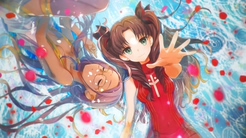
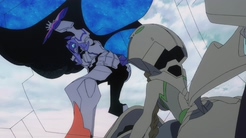
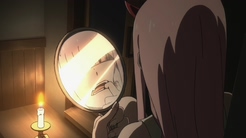
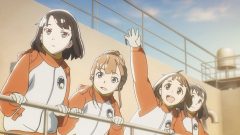
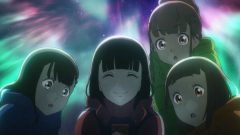
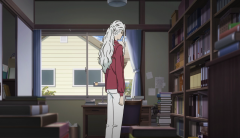
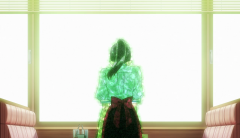
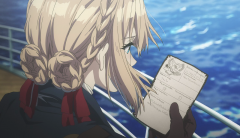
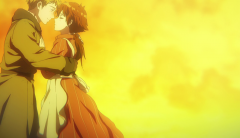
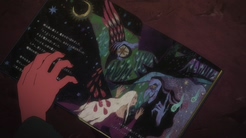
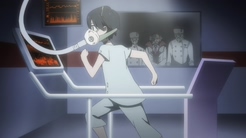
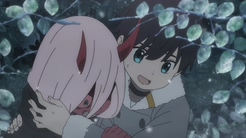
That was the best episode of Darling in the Franxx to date. Truly I am impressed with this though it may be perhaps because the fanservice aspects of the show were not present at all during this episode. Todays episode was spent entirely on the past of Hiro and Zero Two. When this episode is over it brings a whole new light on events before this. All the strange disconnected things that Zero Two did throughout the series just suddenly click and you realize just what she was trying to do. Her distaste for tests, her love for sweet things, searching for picture books in the library, her insistence on Hiro calling her Zero Two over giving a new nickname and even why she calls him Darling. It all connects right back to when they were children as Hiro is the one who influenced all of this. Well the picture book seems influenced by what we can assume is her creator which appears to not be the plantation. They were shocked to find a creature as humanlike as Zero Two.

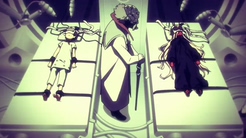
On that front Dr Franxx certainly lost a lot of points today. Up till now he seemed like the voice of reason within the society but seeing him torture Zero Two with delight over her Kalozuar characteristics certainly paints him in a new light. It’s possible that in the future he wishes to somehow atone for his actions but it’s just as likely that he’s motivated by pure cold scientific curiosity. HIro also could go through a massive character shift here as well as in his memories he certainly is more confident and motivated when compared to his teenage self. But the memory erase seems to have screwed him up bad. With the return of his memories by episodes end this could very well spell a return of the confident Hiro of the past which I would find most agreeable. But yes that moment, when Hiro confirms that he remembers to Zero Two and her turning back to realize that Hiro is indeed the boy she loved in the past. Damn that was a cruel cliffhanger. When taking into account Zero Two’s breakdown it does seem to be more the product of deciding that after all these hints with no results that Hiro wasn’t the boy she knew in the past which pushed her objective to “Becoming human.” So I suspect shes going to cool down quite a bit with his return. What’s more I wonder if the return of Hiro’s memories cause him to start responding more confidently to her advances. Now that would certainly be fun to see.

I will admit that it’s not as if the events in this episode were surprising or unpredictable as I pretty much knew where it was going the whole way through. What makes this episode work was the the execution was on point throughout and it didn’t matter if the events could be guessed beforehand, you were still glued to the screen to see them all unfold. This could very well be a changing point for Darling in the Franxx, where it stops being that strange enjoyable mecha show with weird fanservice and actually branches out into something truly taking note of. Or this could very well be a Little Witch Academia situation where episodes promise greatness only to let down once the next episode starts. Regardless I have found during the string of strong episodes this series is having that it is essentially the only anime I covered during the Winter season that I actually felt interested in seeing what it was to bring each week. Depending on what comes I may even start recommending that people watch this show and be frustrated that they can’t get past the ass controls. Yes, they certainly could have used more subtlety in that department.
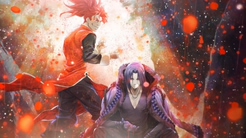
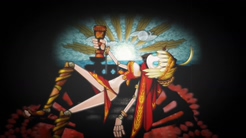
Fate/Extra Last Encore – 08-10[No Second Strike ― Dead End ― /Golden Theater of the Deranged ― Aestus Domus Aurea ― /Unlimited――― ― Unlimited/ Raise・Dead ―]

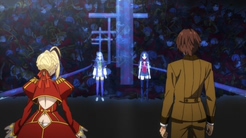
It hard to have an opinion on the last three episodes of Fate/Extra when the content has been quite similar to the previous episodes of the cour. For now the series has ended with the remaining episodes coming as a special later. Still unknown if that was the actual special broadcast that was originally considered a second cour. These three episodes mainly dealt with our protagonist getting through the fifth and sixth floors and yes, the fourth floor was rather shamelessly skipped over and only spoken about at the beginning of episode 8 as being “No big deal”. They essentially pulled a Katanagatari on it and to a degree I understand as the fourth master really was someone not really worth caring about. In fact depending on what route you took in the game the fourth master could be one of two different people, neither of which are particularly interesting. Only real thing of note was that one of the servants was actually Arcueid from Tsukihime which was rather neat.

Despite the different episode number the problems of the series remain the same. The fifth floor attempted to give some characterization to the protagonist and even featured female Hakuno for a brief time but ultimately Hakuno just remains a bland faceless void that you can’t really care about. Again the Scenario is interesting but the execution is lacking and it really does bug me about how that became a running theme. Really, looking at the story of Fate/Extra purely on paper it’s hard to imagine that it would be as lifeless as it is. Let us recap, the first floor had a city set up to harber masters that gave up on the war which culminated in the entire city getting flooded and Nero fighting a pirate ship on top of the ruined city. The second floor featured a forest with a sniper whose been killing people for a thousand years with a servant who can turn invisible. The third featured a cyber ghost girl in a weird wonderland who has been twisted into a monstrous abomination while waiting for the return of a friend. The fifth featured a master who was also a dead face, causing the protagonist to question his very existence and find new meaning to his mission all while finished with a battle on top of skyscrapers between master and master with servant vs servant. The ice landscape sixth floor had two masters who fought each other to a tie and ended up becoming the floor itself spawning hundreds of soldiers to fight each other for a thousand years only to finally gain enough sanity to guide Hakuno to the sixth floor just so he can end the long standing tie. Looking at all this , it all sounds very interesting and even great so why is it that I only remember feeling apathetic while watching previous episodes? By all accounts this should be engaging, it should have me anticipating the next episode with excited glee. Yet, much like the personality of Hakuno, I just feel it’s been a lifeless void.

I believe i have more or less covered why but seeing as this is the last episode for a while I might as well do a roundup. I can point three things that are messing up this story. One is that this story is almost 90% told through exposition. The exposition dumps are egregiously bad so as to have the setting, characters and current events all told through whatever is deemed to be the mouthpiece of the author. Too much effort has been put into explaining the story over telling it and despite all this it still remains a confusing mess at times because it fails to establish a foundation. Just when you think you know what is what, the story flings another conundrum for you to place and gives little motivation to do so. The second thing is characters with a big offender being Hakuno the blank nobody character. Nero admittedly is pretty tiresome as well considering her main roles is to do the fighting and be waifu fanservice. I am actually having trouble placing who is a worse protagonist, Sieg from Apocrypha or Hakuno from Extra but in truth they are remarkably similar in how they are both non characters with some existential dilemma of their manufactured existence that ultimately leads them to become stereotypical hero archetypes. Though while the main reason for hating Sieg is that he took screentime from much more interesting characters, the characters of Fate/Extra outside of Hakuno and Nero are really just exposition devices in human clothing. These creatures spout exposition about the nature of their character, the world and magic without much emotion. Indeed even in face of their own death they speak there last words like reciting a shopping list. That’s not how humans talk, we don’t just have prepared speeches and lectures ready to be fired off with perfect clarity and precision when first questioned. Our emotion comes out in how we speak, even how we respond to certain topics is within our character. Nobody stands like a mannequin reciting hamlet from memory. Of course some may argue that in this series everyone has lived a thousand years and their dehumanization is the result of dealing with a unwinnable situation for so very long. To which I say fair enough but it means that nobody here cares about what is going on and if they don’t care, why should I?

Then comes the third problem, the animation. Now it actually has be wanted by fans for quite a long time for Shaft to do an adaption of Fate/Extra, a sentiment that I never truly understood. Maybe it was because Shaft animated the openings for the Fate/Extra games but I honestly felt they were a mismatch. Shaft are about artistic animation saving techniques, you can have an opinion on the expression that Shafts style brings but the ultimate goal is mainly to present a show in a matter that’s least troublesome to animate. Considering that the Fate series has a pendant for ridiculously impressive animation it seems like a odd choice to go for a studio that uses style to cover for animation workload. Maybe it was because Fate/Extra was considered more avantgarde? Like hell it is. While exposition scenes are made a bit more interesting with their visual experimentation, ultimately it makes all the fight scenes of this anime feel ridiculously anticlimactic. I once thought Fate/Zero was too anticlimactic, oh what a sweet summer child I was for Fate/Extra truly embodies the word. Not a single fight in this series is remotely satisfying. So the fighting stinks, the story told primarily through exposition and the characters are too apathetic and soulless. So on a last note I will say I did at least like the presentation of Nero’s backstory, female Hakuno showing up briefly and that one small moment where Rin describes her hellish situation with a pained smile. Emotion, makes all the difference.

Darling in the Franxx – 10-12[The City of Eternity/Partner Shuffle/The Garden Where It All Began]

Three episode coverage this week as many things got in the way of my casual blogging, the much late preview being one of them. I must say that the last few episodes of Franxx have been quite strong as we have had a string of character development episodes which have really fleshed out the cast. As well as shed some light on the situation of the world itself. First up we have Zoromes episode where he manages to meet what may be his biological mother in the lower city plantation and through talking with her found that becoming an adult isn’t quite what he expected. My previous theory of there being no true humans in the city turned out to not be true and instead it seems that adults just spend their time in a machine that partially drugs them with doses of happiness. Social interaction has more or less disappeared as the woman states she hasn’t talked with her husband in years. Ultimately it seems that the children above are distinctly more human than the seemingly privileged adults living in the plantation. By episodes end it seems Zorome stopped caring about becoming an adult and prefers to enjoy his time up with the others, even mentioning his fondness for arguing with Miku. While locking away his memories of something devastating the woman told him and the way the officers treated him like some kind of contaminant.

Our second episode mainly focuses on Kokoro, Mitsuru and Futoshi with a rather disheartening route as Kokoro chooses to swap partners so she can work with Mitsuru, leaving Futoshi devastated. While in one way this could be considered a betrayal on Kokoro’s part as before there relationship was shown to be rather wholesome, it does bring some more context to those previous interactions. Futoshi is obviously head over heels for Kokoro but when examining previous interaction it does feel like a one sided arrangement. Kokoro very much puts up with Futoshi and his general overbearing affection most likely pushed Kokoro away. Whereas Mitsuru gives her space and doesn’t treat her like everyone else does. Seeing the greenhouse conversations I felt things were moving in this direction but you still feel bad for Futoshi. Though hopefully this is a good lesson for him. As for Ikuno this episode gave more credence to the theory of her being a lesbian considering her attempting a girl on girl control of a Franxx. I am not quite sold on her batting for the other team considering there is little evidence of her having sexual interest in women. I feel the internet is jumping to extremes again. It’s clear she holds a disdain for boys, likely thanks to Mitsuru, but just because she doesn’t like boys doesn’t mean she wants to pull ichigo under the covers. In the same way that just because Mitsuru is salty over Hiro forgetting their promise to pilot together doesn’t mean he’s secretly thirsty for man meat. Though considering that the mechs are often used as a metaphor for sexual intercourse I can’t say that people are wrong for coming to these conclusions.

The third episode focuses on Zero Two and has thrown the Red and Blue Oni theory back on the table. With her going increasingly more out of control and monstrous shes pushing aside her own teammates. Ultimately her fixtation to become human is pushing her to kill Klaxosaurs while being unaware that her fixation is only making her less human. But what makes this rather interesting is that Zero Two apparently met Hiro back then at a point where he was a golden boy and lost his memories. Theories are going around that Hiro might be a clone and that Zero Two is attempting to find the original Hiro who died through him. Either way we basically find that the squad of the series is indeed an oddball within the facility as they see children who go through much more rigorous testing to make them nice little puppets. The fact that the kids developed more human charistics may indeed be some sort of plan by Franxx, either because of curiously or some end goal. It’s clear the man wants these kids to be human and is slowly letting them know of society. Perhaps so they can judge it? We reach the middle point of Franxx and if there is to be a turning point, this is most likely it. This show could potentially become something else entirely in it’s next cour or we could just continue as things have been. What’s your move Franxx?

“I wallow in anime mediocrity”

For me a mediocre show is one that I can watch and enjoy, but which does not really break new ground in elements of animation, story, or cinematography, or does not “move” me. It does not if you will touch the “higher” emotions and faculties of who I am, but does leave me satisfied at having some fun. This season I followed three mediocre shows. These were B: The Beginning, Hakata Tonkotsu Ramens, and Classicaloid Season 2.  Here I will give brief reviews. All these shows score a C on my grading system.

B: The Beginning

The fun part of the show

What it claims to be about: In a fictional contemporary setting , the archipelagic Kingdom of Cremona, there are periodic murder sprees by serial killers. A special force of the Royal Police, together with the genius detective Keith try to solve the secret behind the crimes. At the same time a winged avenger directly interferes in the solution of crimes, engaged in a running battle with secretive group with government ties.  It turns out that Keith and the winged avenger also share a tie, which is part of a wider triangle with Keith’s college friend, and the murder of his sister years ago.

Essentially B: The Beginning tries to tell a series that combines a supernatural  action show, with a police detective story.

What is it really about: Two separate stories badly tied together.  The police detective story is not that bad.  There are attempts at resolving the crimes, and wider mystery behind. They use some of the recent Sherlock series gimmicks to spice things up. In general the characters in the police detective ark, that is the unit of which Keith is part of, are interesting (especially Lily, Kaela, and Erik), have good chemistry, and work well as a group. The supernatural action story is a mess. A already convoluted plotline is made more convoluted for cheap twists. None of the characters in that part are really interesting, and their interactions are boring. Now it is true the action scenes are well done, but again you do not really get the point of why this is part of this anime. Do not get me wrong. The anime tries to tie the two stories together in the face of the big bad. It just does a terrible job at it. The big bad itself is not too bad, but trying to shoehorn the supernatural  into his modus operandi just ruined the potential. Now, there are series that do this well. Full Metal Alchemist is ultimately an action series tied to a  political conspiracy thriller. It works for me. But it did not work here.

Why you should watch it: The detective part of the story is good, and the characters in the investigation unit are great with good chemistry. Animation, music (especially the ending theme song) , character art, and art in general are very good.  It is good enough I am willing to give a sequel a try.

Why is it mediocre: The supernatural action plotline is substandard, with boring characters. The attempt to mesh the two together fails. The ultimate villain is a boring idiot.

Hakata Tonkotsu Ramens

Did we tell you about Hakata’s great baseball?

What it claims to be about: A all-ensemble cast story in the vein of Durarara! and Baccano! Cool characters interacting in a city of crime and mystery! Cool action! Hakata is Cool! Lin, a cross-dressing assassin, teams up with Banba, a private detective, and his cute bunch of frenemies, including a genius hacker, a friendly torturer, a guy who gets paid to do revenge, and others, try to survive in the deadly, sunny, rather clean streets of Hakata,Japan. There is ramen!

What is it really about: An attempt to advertise the city of Hakata. Which is not that remarkable. By presenting it as a place were 1 in 10 people are professional killers. Come see our City! Don’t mind the body! Careful to not die. I have no idea why anybody thought this would be a good way to raise tourist interest about a city. Ah well, the show is not half bad. Essentially you have a bunch of people who are trying to be cool, and are self-conscious about it-so at least you get an answer about why some of the things they do are idiotic, doing cool stuff (at least in their eyes). Most of the cast does not get much development, and some of it really has no real purpose.  The problem here is this. The key to the success of a show like Baccano! was the chemistry of the characters. While not all were equally developed, the plot provide some common development that tied everyone together. Hakta fails at that. Some of the characters get good development (Lin, the hacker guy). Some of them have some good chemistry. But most of them are really just cardboards of “coolness”.  The action and stories are so-so, as the adversaries border on the ridiculous, and our heroes are just so “cool” that one never feels they are in danger. As a result this is not a show of tension. You can enjoy it as a mild entertainment with a nice beer, and then reminisce about how much more fun Baccano! was.

Why you should watch it: It is fun enough, and the some of the main characters interesting enough to provide some mild entertainment. You really want to know a bit about Hakata. The Opening song is not too bad. Animation is serviceable.

Why is it mediocre: Hakata is boring. Most of the characters are boring. The storylines are not really much to write about.  If the goal was to get me to read the light novels it failed miserably.

Classicaloid Season 2

Mozart, Wagner, Beethoven. Luminaries of Classical European Music.

What it claims to be about:  The first season was a show pgsels liked, but the rest of the blog group did not care much about. Since it seemed to be absurdist comedy, and since I like that a bit (Cromartie High FOREVER!), I decided to give it a try. It was fun. The 2nd Season continued the same story. A bunch of artificial humans that have the personalities of great classical conductors live in the same house and interact. The addition of a new character based on Wanger, and his attempts to win acclamation provides the central theme for these seasons, as Bach’s machinations did in the first. All characters come to learn something important, and young Wagner grows up. Or something like that.

What is it really about: Absurdist Comedy in the service of getting you to learn or care more for some of the great composers of the classical European music era. The first and 2nd seasons do not change much in style. Most characters behave the same, and I must confess in the second seasons some of those characters became irritating (Mozart, Sosuke and Schubert mostly). The show is still fun but the Wagner sub-story felt a waste of time. Ultimately this is mindless fun, and sometimes it dragged.

Why you should watch it: It can still get you laughing hard. It did get me to look more into some of the composers. The music is good and sometimes the variations on classics are very interesting. Art is colorful and fun.

Why is it mediocre: No real growth makes many of the characters irritating this seasons. A pointless and boring central plotline.


3-gatsu no Lion – 39/40 [Burnt Field]

Another month, another 3-gatsu post for episodes that aired a month ago. And what a couple of episodes they were – the “Burnt Field” chapters are among my favorite in the manga, and though the anime treatment didn’t stun me as the source material first did, it still managed to create an emotionally dense hour of television for which Shaft can be proud. The title of this miniature arc comes from the mouth of Yanagihara’s old friend Gan-chan, who describes his post-layoff sense of purposelessness as being in the middle of a burnt field. Something I’ve always appreciated about 3-gatsu is its presentation of diverse perspectives, and that continues here as the story chronicles the Kishou Championship fought between two older men, one of whom is the most senior Class A player in their region, if not all of Japan.

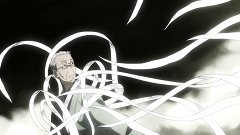
The night before the last game of their best-of-5 match, Shimada (the challenger) complains of the “away game feeling” that Yanagihara creates by inviting so many of his friends and contacts to drink at the championship venue. Despite the apparent advantage gained from that warm, lively environment, however, both Gan-chan and Yanagihara himself feel isolated by their age and circumstances. Gan-chan is uncertain of what his future will look like in the wake of his forced retirement, but Yanagihara has the opposite problem; as the oldest remaining player of his caliber, he is forced to carry the hopes and dreams of countless retired professionals. Umino-sensei visualizes these burdensome dreams as tasuki, best translated as “sash,” and that’s the word that Crunchyroll used in their translation of the anime. Seeing Yanagihara swallowed up by these white sashes is striking enough when you consider what they represent in 3-gatsu, but understanding their common use gives the scene a new dimension. Tasuki is (among other things) the term used for a sash passed between runners in long-distance relays, so Yanagihara’s possession of so many sashes indicates that he’s the only man still running in a race he once shared with dozens of competitors and friends. Contrast this lonely sense of duty with the fun party about which Shimada gripes, and it becomes clear that the older man is struggling with a burden his opponent can’t yet understand.

The tasuki metaphor isn’t the only sign of weariness that the show provides for us. We get an intimate look at Yanagihara’s morning routine, which includes the taking of various pills, medicines, eye drops, and the application of pain patches to his shoulders and back. He moves slowly through the entire process, and later, once the fifth and final game is underway, he slumps forward onto an armrest, his body wracked with pain and exhaustion. Though Shimada also lives with debilitating physical pain, he plays the role of young upstart in this fight, and seems at multiple points to have the upper hand. But the turning point comes when Yanagihara inwardly embraces his role as a representative for his generation, clutches the tasuki that once constricted him, and turns to run in the opposite direction (calling the “race” idea to mind once more). 3-gatsu has always done well at leveraging these metaphors so the uninitiated viewer can follow its shogi matches, and this episode was no exception. As Yanagihara brought his king further up the board, I was excited to see which player would triumph, even though I don’t possess an ounce of knowledge about the game. The poster for the Kishou Championship may have been on the dull side, but the contest itself was anything but.

After 169 moves, Yanagihara wins the game and the title of Eternal Kishou, having defended his position for ten consecutive years. With his legacy cemented this way, the moment must have been among the proudest of his life, and he opts to share it with all the people whose faith in him was rewarded. If I had been under that much external pressure, I can confidently say that my decision would have been to sit for the post-mortem and make everyone wait for me, their new shogi god, rather than spend that time justifying their abandonment of the game I love. The thing about Yanagihara, though, is that he plays not just for the love of the game, but for the love of others, difficult as that may be. He even invites Shimada to be in the photo commemorating his big win – but he’s not so gracious that he won’t bitch to the Chairman over drinks that everyone expects too much of him. It’s an interesting way to end the episode, given how profound his moment of acceptance was, but that’s another thing I really like about this series; nearly all of its characters are made to suffer at some point, but rather than escaping their pain and revolutionizing their lives, they must settle for merely continuing to live. Yanagihara’s aching bones won’t heal as a result of his victory, nor will the solitude of his position in the shogi world be abated. Instead, he’ll keep complaining to his close friends about whatever’s bothering him, and keep fighting for the people and things he believes in.

Violet Evergarden – 12

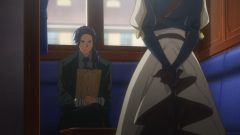
Violet Evergarden finally reaches its finale arc, and unsurprisingly, the Peace-opposition rebel and Gilbert’s brother Diethard come into play. In an essence, Violet is fighting two wars: the war against the bad guys who want disrupt the peace, and a war against Diethard to recognise her as something more than a war tool, as a human being. Not to say this episode totally won me over, but I can say at least I am invested enough to see how it all turns out. It’s inevitable to put Diethard as the main obstacle for our Violet here, as he has always seen Violet as a killing machine, and that conflict now is peppered with the pain that his brother died while she’s still alive. Diethard repeatedly regards her as “a tool”, and further despises her for her Doll job. He blames Violet for the loss of his brother, but we can see a lot more of emotions in him going on beneath the ground. Through the course of the mission, however, he can see that Violet has changed in a lot of ways. She’s more expressive, and now she refuses to kill anyone anymore. That is when the show lost me a little. Violet is basically going through Rurouni Kenshin’s arc now, and that makes sense. But the reason she gives, the reason why she doesn’t take orders from Diethard anymore, is because it’s an order from Gilbert entails that she had to live. WHAT? So all her development from previous episodes come down to this conclusion? That she still rely to some dead man’s words to live? Yare Yare

Putting that aside, I have a slight concerns with how Violet Evergarden portraits the Anti-Peace army. Most of them turn out just as ruthless, pathetic soldiers who can’t get on with the Peace because they stay too long at war. The bad guy from the last episode returns, and guess what, he’s even more merciless. It’s such a clear cut between good and bad that it leaves the ambiguity out the window. Nevertheless, the fights at the end really got me. For once, Violet decides not to kill any enemy, and it’s clear that it does her more harm than good. In a battlefield, basically everyone is an enemy and if she doesn’t kill them, they will all come fighting back at her. The way Diethard saves her was good because at a glimpse I almost think that it was Gilbert who saved her (thank God it’s not the case), and finally the closing shot where Violet saves him by her robotic hands really hit its powerful notes. It takes the mechanical hands to remind Diethard that Violet has grown into a fully-formed human. It takes the hands that write letters and save people in its own ways to save him. It’s certainly one of Violet Evergarden’s best moments.

Certainly not a bad way to start off the final arc, now that the anti-Peace soldiers are gone, the stakes might raise higher with the peace treaty (that might need someone’s letter here), together with Diethard and Violet’s own fights. She has done a tremendous development throughout the series, so it’s now the time for everyone to fully acknowledge it.

After the Rain – 12 [After the Rain]

So what happens after the rain? The sun will shine again, and the sun after the rain is the most beautiful. _quoted by me.

But it’s exactly a sentiment this show manages to pull off. For fans of romance or for those who wish the two of them will be together, well, you’re about to be disappointed. I don’t know if it was Amaegari’s intention all along (because I don’t think it is), but in the end it’s clear that romance between them is always an illusion. Apart from the Hug and Tachibana’s confessions, there isn’t much of a romance at all, but instead about the bond they share together. Ameagari has shifted its focus squarely to their own ambitions for the last couple weeks now, so it’s natural to see that the show ends on this note. But still, they manage to pull off beautifully. At first, I was a bit afraid that the first half was too slow that Ameagari might not have time to make any meaningful impact. But boy, they did it with style. At this moment, Tachibana and Kondou has established such a strong, solid chemistry that every moment between them feel like a treasure, and that precise moment when Tachibana turns back and sprints into him is amongst its finest. I’m already tearing up as I write this, damn it. That’s the moment where everything comes together perfectly, a moment where all the motifs the show has been set up so far come rushing in together in the best possible way. Tachibana running. Kondou embracing and accepting her love, all the while acknowledges his love. After the rain. Tachibana in her work uniform. That soothing score. That gorgeous visual. Everything was flawless.

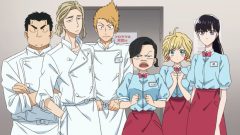
The rest of this episode isn’t that flawless, however. Here, in the final episode, Ameagari wraps up an unnecessary side story and produces many – for me at least- over-sentimental and obvious moment. Chief among them is the romance between spikey and blonde, the former doesn’t have much of a voice in an entire story. Its heart is in the right place, mind you, but when Nishida the blonde tears up after his not-confessions, it just becomes a little too much. The same can be said for the two freshman girls who reminds Haruka of her pass (isn’t it way too obvious? Look, they even sharing scarf like they used to) or the little flashback of Tachibana on the ground during the track competition, but still manages to finish the line. I had been watching real track competition before so I can certainly say to you that this is totally soap opera (This is how real life works). It’s nice to say the rest of restaurant’s members gathered together in this last episode, but it does raise me 2 concerns. First, we don’t get to see other faces beside this cast, makes me wonder how this restaurant can survive with the staffs this thin. And second, Kase’s role in the show is pretty under-used. I mean, Ameagari uses him up that one time for mainly negative impact, and then put him back to the background characters that doesn’t amount much. These are, for me, Amaegari’s most notable shortcomings.

Tachibana is again put into test how much running means to her, by ways of teaching Yuuto how to run properly. Witness her swinging her arms to show Yuuto how to run correctly is heartwarming and satisfying. Moreover, Yuuto has a chance to tell her about his promise with his Dad, the promise not to give up halfway and give everything his own. In other spectrum, Kondou put his best efforts to write. His matter now isn’t to write a good novel, but to dedicate his life to writing novels. Make it his poison (and cigarette ashes, it seems). Both Tachibana and Kondou have realized their fire and each of them has sparked that fire to the other. As they embrace, they promise to let each other know once they fulfil their own promises. A mature, lovely if a bit indecisive way to make a proper stop to this story, but then again life and relationship are indeed messy and indecisive that way. At least for Kondou and Tachibana, now they know what they want to do and try their best to achieve it. That’s a beauty.

A Place Further than the Universe – 13 [We’ll Go On Another Journey Someday]

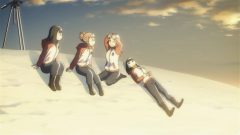
And Universe wraps up the best way it can. This finale, in truth, feels more like a victory lap where the plot can be simply summarized as the girls enjoy their last days in Antarctica before heading back home. Almost all the cast makes an appearance in some ways, and the girls have a chance to reflect how much this trip mean to them, how much they mean to each other and how much they have grown since the start, and of course, many goodbyes along the way. The first half turns out to be the most cute girls do cute things moments out of this entire show, where our girls go through the routine, enjoy the thousand year old snowcone, and play baseball with the rest of the team. There isn’t much arc for the girls anymore, consider that they have all gone through some kind of conflicts and have grown ever since. But nearly the end of the journey, Mari voices her (unreasonable) request: should they stay over during the winter as well? Of course, she knows better and Hinata quickly points out why they need to return to their world: they still have their own lives back in Japan, but nevertheless, all of them don’t want this journey to end. So they make a promise. A promise to go back here again, and a promise that their lives will cross again when that time comes.

Shirase, after the tearful arc last week, really grows up this time. She’s both mature enough to give a heartfelt speech to the expedition team (that brings the cold Gin to tears), the speech about the place further than the Universe make people face-to-face with their own selves, the thing that she had indeed experienced. In addition, Shirase manages to loose herself a bit. She manages to smile. A bright and worry-free smile, unlike her creepy smile at the start of the series. Shirase has always been a bit broken character, but now she’s truly embraces it and let her Mommy issues finally to rest. She moves on to the next stage, stressed by the way she cuts her hair short. At the end on their way back home, Universe proves once again they still have some tricks left to play. The aurora view is truly mesmerizing and otherworldly, but the emotional bang comes from the unsent message her mother left, probably hours, or even minutes before she disappeared. The view of the Southern night sky come into display, and for that very moment, I bet Shirase’s Mom felt that it was all worth it. And now the girls all know that for sure. A bit too much of a coincidence, perhaps, but it’s still well earned.

As the girls head back home, like Yuzuki afraid they may not have the time to be together again. They will go back to their normal lives, with some new old worries and some plans to overcome. But now they depart each other with the understanding that they had shared something unique to each other, and that won’t never change. The last moment, Universe finishes with a nice, pleasant surprise: Mari’s friend Megumi is in the up North Arctic now, enjoying the aurora just like Mari did. Isn’t it nice to see a side character still grows and matures outside the scope of this narrative? As a whole, while Universe doesn’t really win me over, I don’t deny they are pretty good with building up and resolve their little arcs, and the trip along them to the end of the world is pretty rewarding. The full review will come up soon so stay still, folks, and thank you for join in with me for the ride.

After the Rain – 11 [Passing Shower]

What does it mean to be special to someone else?

That question just bugs me when I watched the recent development of Ameagari. Maybe it has more to do with what I experience in my real life, but Tachibana and Kondou’s relationship has gotten to that “special” category so I might as well delve into it. The question, to be more precise, is about the extent of letting some stranger become a great part of your life, be it best friends, lover or somewhere in between. Most of these developments come natural, you don’t question it, it just happens. It takes a situation where it doesn’t work, or in this particular case, where the two seem to be in two different world, for us to really question the very nature of what ‘relationship’ entails. I am certain that this episode pretty much confirms that Ameagari won’t make them a couple, in fact last couple of episodes the show moves away from the romance into “friend” territory. But how have their relationship been shaping so far? It’s clear that Tachibana sees Kondou as someone special to her. I’m most impressed with Tachibana’s recent actions, she moves from aggressive, clearly invading Kondou’s comfortable space in the first few episodes to pushing him towards his most comfortable but long forgotten space – writing the novels. She has changed from a slightly negative to become a positive force for Kondou.

But what’s about Kondou? Is Tachibana someone special to him? I can’t tell since he’s always the one who goes with the flow, who is content with whatever direction he finds himself heading. The two impressions that he does feel about her though, that she reminds him a great deal to his own youth, and that she’s willing to read his novel. I reckson it makes sense that the last development Ameagari want to explore, is him telling her how special she is to him, and gets her literally back on the track. At this point, they produce such a strong and unique bond to each other that everytime they’re together is a feast to watch.

That is to say that the real magic of Ameagari is when the two of them together, so naturally this week, when the show digs into each character’s story, doesn’t impact me much like when they’re together, but it’s still a well-developed one nonetheless. On Tachibana’s side, after seeing another girl breaks her own personal record who had the same injury as Tachibana, Haruka visits Tachibana while she’s working, and lays everything down to the table. She wants her back. And when she’s back, they can be close friend like they used to. I don’t agree with Haruka’s method at all, but it does affect Tachibana, since she still isn’t quite sure what she likes better. Running or her love affair. Or even more pointedly, she’s afraid of going back and experiencing that loss again, the feeling of young hope crushed down by injury and disappointment. This for me is a grounded, albeit a bit late to the game, issues that Tachibana has to face.

Kondou’s side is a whole lot brighter, Chihiro visits his home uninvited and from there, they share a great times together reviving their old passions. Kondo always looks at his old pal as a more successful version of his, but in truth, Chihiro is far from happy. The install success of his book (that makes its way into film adaptation) makes him feel vary, both because he himself doesn’t regard it as his best, but also the on-going pressure from his publication and his fans. Visiting Kondou is a way for him to revisit his own passion, why he wanted to write in the first play. Once again, another people encourages him to write. The reason he has put writing off is not because he doesn’t have anything to write, but because he’s afraid that his writing will let his young, passionate-self down. But like his friend Chihiro said, the only solution to this is just write.

From what I gathered, there are still 40 plus chapters yet to adapt and we only have 1 episode left. There is a high chance that the anime (plans) and goes for original route, with honestly I think for the better. Whichever way the two end up going, I’m sure I will remember them fondly.

Violet Evergarden – 11 [I Don’t Want Anyone Else to Die]

It’s time for our doll Violet confronts the past with the present: accepting the job in the midst of the war zone. Seeing the war caught up to her while she begins to move on could serve as an interesting character study case, but in truth this episode runs much more straight-forward than that. She accepts the job (against the company’s decision) to meet the guy who happened to be named AIDAN whose whole unit, including himself, was ambushed right before Violet arrives. Violet Evergarden makes damn sure to tug your heartstring, I tell ya, and one of the easiest and most effective way is to make the characters likable and then kill them off. The only problem is, we don’t spend that much time to know this Aidan guy so it’s hard for me to feel for him on a personal level. To make a matter slightly worse, the whole time this guy was thinking about Maria, his childhood-turn-lover back home, but then when it comes to the time of writing letters, the show pulls stuff out of its ass and include his parents, whom we never have any proper introduction before. At first, the way he addresses it, I assumed that the parents are deceased but in the end, they have the same amount of screen presence as Maria, which for me is a bit weird on how Violet Evergarden decides to focus his feeling on only Maria beforehand.

At least Aidan experienced the true terror of war before he himself becomes a dead meat. Staying in busiest war zone, his team got ambushed and being killed one by one. Suddenly, Violet descends from the sky to save the day, defeating the whole enemy team without much sweat. If you have a feeling that Violet is playing a superhero type, let me inform you that the Light Novel does it in a way flashier fashion. In the book, she kills the enemies, writes the letter in the middle of the burning forest, and carries Aidan while killing the army units that surround them. This anime version tones down a lot of over-the-top set-piece, including the bits where Violet faces the enemies unarmed and manages not to kill any of them, and I’d argue it’s for the better. Having her transcript what he says in the abandoned shed at night, air-type his words work much quieter and more effective than if they go all out. The way the letters are formed, in a bit of stream of consciousness way where Aidan slowly slips away and where his memories blurs in with the present help transfer the emotional weight successfully. Aidan is also the first person to comment positively to Violet’s mechanic hands and asks for her hands in his final moments for a… ahem… human warmth. I believe the message here is that Violet has transformed from in robot in human body into a full-fledge human with emotions, and even now her mechanical hands have the warmness of human heat.

Violet Evergarden again makes a good use of it post-war backdrop. This week they delve on the anti-peace faction, which was first introduced on episode 8. I have a feeling they are going to be more prominent in later episodes, but for now I don’t like the way the show handles those characters. They’re one-dimensional as best and the only thing we learn from them is how ruthless they are. Maybe the existence of Violet the super-soldier mode was there for a reason: to kill those war-loving un-remorse bastards. But in here, we can see how far Violet has transformed. She’s not a soldier anymore (but these skills certainly help), she’s a Doll who would go ANYWHERE to meet the clients; and would do her upmost to write letter and deliver them. The last scene where she delivers the letters to Aidan’s parents and Maria, she meets with grief. She feels vulnerable because she can’t save life (she used to only taking lives), but as she learns from the thankfulness of the receivers, she has done enough. Without her, there will be no message and Aidan’s sentiments towards the ones he loves will be lost forever. Another job well done for Violet, and the show itself.