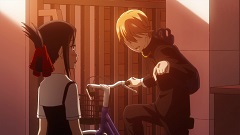
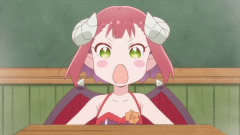
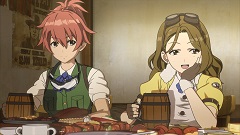
3-gatsu no Lion – 41-44 [Being Here…Child of March Town]

Alright guys, here’s my last post: a series of short takes on the final four episodes of 3-gatsu no Lion. These are a month late, as usual – it wouldn’t do to break tradition just before my departure. I might pop in for joint film reviews or special occasions, but apart from that, this is the end. Thanks for reading!

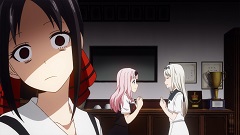
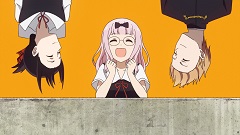
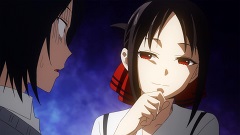
41: After the big showdown between Yanagihara and Shimada, 3-gatsu opted to decompress by focusing on its side stories for a bit. I’m of two minds about this episode. Everything involving Chiho-chan is a home run for me, so working her plum syrup into the festival story gave me a reason to care about the Kawamotos’ sweets business. Hinata’s determination to support her friend, plus her growing satisfaction at helping the family financially, are taking her character in a good direction. All the plans she has for special confections hint at a future where Hina takes over Crescent Moon, relieving her big sister of the burden left by their departed mother. Rei pitches in at the festival, too, and there’s even a cameo from Takahashi, lending a sense of community to the first chapter of this episode. As for the scenes from Hinata’s school near the end, I remain unimpressed by the series’ unwillingness to tackle Takagi’s character in detail. As her prospective homeroom teacher says, she doesn’t feel remorse for her actions, but if your goal is that she feel remorse, you won’t get through to her by instructing her to conquer her anxiety. See my post on episodes 35/36 for more on my issues with this subplot.

Continue reading “3-gatsu no Lion – 41-44 [Being Here…Child of March Town]”

3-gatsu no Lion – 39/40 [Burnt Field]

Another month, another 3-gatsu post for episodes that aired a month ago. And what a couple of episodes they were – the “Burnt Field” chapters are among my favorite in the manga, and though the anime treatment didn’t stun me as the source material first did, it still managed to create an emotionally dense hour of television for which Shaft can be proud. The title of this miniature arc comes from the mouth of Yanagihara’s old friend Gan-chan, who describes his post-layoff sense of purposelessness as being in the middle of a burnt field. Something I’ve always appreciated about 3-gatsu is its presentation of diverse perspectives, and that continues here as the story chronicles the Kishou Championship fought between two older men, one of whom is the most senior Class A player in their region, if not all of Japan.

The night before the last game of their best-of-5 match, Shimada (the challenger) complains of the “away game feeling” that Yanagihara creates by inviting so many of his friends and contacts to drink at the championship venue. Despite the apparent advantage gained from that warm, lively environment, however, both Gan-chan and Yanagihara himself feel isolated by their age and circumstances. Gan-chan is uncertain of what his future will look like in the wake of his forced retirement, but Yanagihara has the opposite problem; as the oldest remaining player of his caliber, he is forced to carry the hopes and dreams of countless retired professionals. Umino-sensei visualizes these burdensome dreams as tasuki, best translated as “sash,” and that’s the word that Crunchyroll used in their translation of the anime. Seeing Yanagihara swallowed up by these white sashes is striking enough when you consider what they represent in 3-gatsu, but understanding their common use gives the scene a new dimension. Tasuki is (among other things) the term used for a sash passed between runners in long-distance relays, so Yanagihara’s possession of so many sashes indicates that he’s the only man still running in a race he once shared with dozens of competitors and friends. Contrast this lonely sense of duty with the fun party about which Shimada gripes, and it becomes clear that the older man is struggling with a burden his opponent can’t yet understand.

The tasuki metaphor isn’t the only sign of weariness that the show provides for us. We get an intimate look at Yanagihara’s morning routine, which includes the taking of various pills, medicines, eye drops, and the application of pain patches to his shoulders and back. He moves slowly through the entire process, and later, once the fifth and final game is underway, he slumps forward onto an armrest, his body wracked with pain and exhaustion. Though Shimada also lives with debilitating physical pain, he plays the role of young upstart in this fight, and seems at multiple points to have the upper hand. But the turning point comes when Yanagihara inwardly embraces his role as a representative for his generation, clutches the tasuki that once constricted him, and turns to run in the opposite direction (calling the “race” idea to mind once more). 3-gatsu has always done well at leveraging these metaphors so the uninitiated viewer can follow its shogi matches, and this episode was no exception. As Yanagihara brought his king further up the board, I was excited to see which player would triumph, even though I don’t possess an ounce of knowledge about the game. The poster for the Kishou Championship may have been on the dull side, but the contest itself was anything but.

After 169 moves, Yanagihara wins the game and the title of Eternal Kishou, having defended his position for ten consecutive years. With his legacy cemented this way, the moment must have been among the proudest of his life, and he opts to share it with all the people whose faith in him was rewarded. If I had been under that much external pressure, I can confidently say that my decision would have been to sit for the post-mortem and make everyone wait for me, their new shogi god, rather than spend that time justifying their abandonment of the game I love. The thing about Yanagihara, though, is that he plays not just for the love of the game, but for the love of others, difficult as that may be. He even invites Shimada to be in the photo commemorating his big win – but he’s not so gracious that he won’t bitch to the Chairman over drinks that everyone expects too much of him. It’s an interesting way to end the episode, given how profound his moment of acceptance was, but that’s another thing I really like about this series; nearly all of its characters are made to suffer at some point, but rather than escaping their pain and revolutionizing their lives, they must settle for merely continuing to live. Yanagihara’s aching bones won’t heal as a result of his victory, nor will the solitude of his position in the shogi world be abated. Instead, he’ll keep complaining to his close friends about whatever’s bothering him, and keep fighting for the people and things he believes in.

3-gatsu no Lion – 37/38 [White Storm/Restart]

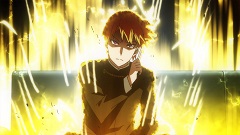
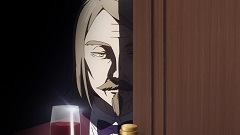
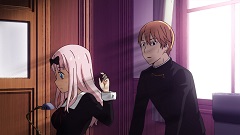
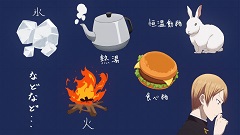
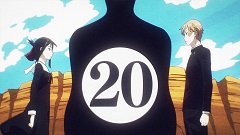
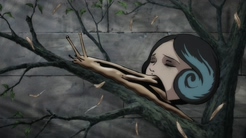
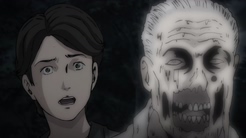
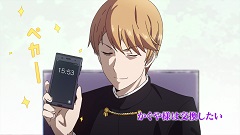
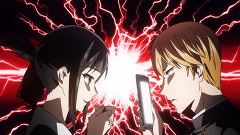
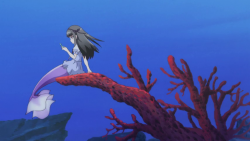
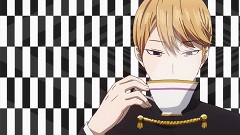
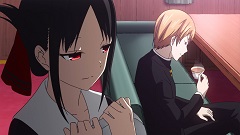
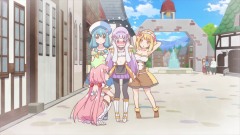
If you had to take a wild guess at the atmosphere of these two episodes based on the above screencaps, you’d probably settle on, “Somber, with some levity near the end,” and you’d be exactly right. Given the typhoon that dominated this doubleheader, and the snowy theme associated with Meijin Souya’s character, it fell to Nikaidou and the Kawamotos to inject a bit of color into the proceedings here. That’s not to say that there wasn’t good material in the Rei/Souya match, or their ensuing adventure through storm-stricken Japan, but I got the most joy from watching Nikaidou celebrate after his post-hospitalization victory. While it’s true that 3-gatsu adapts its source manga in a straightforward manner, its careful arrangement of the Souya and Nikaidou matches creates a big contrast not just in style, but in their impact on the series’ protagonist. Rei typically alternates between viewing shogi as a curse and a beacon of salvation, but with these episodes, a new dichotomy emerges. In his match against Souya, shogi is a safe, quiet world unto itself; in observing Nikaidou’s game, it’s a raucous, jubilant affair that reflects the best parts of the real world. As he is right now, I think Rei would describe his ideal game as closer to the first of these options, but I hope that, given time, he’ll pick the latter.

The match against Souya has an odd structure to it, with little time spent over the board, and the game’s conclusion being told to us, rather than shown. I can’t say that I prefer this method, as if Souya is a “final boss” of sorts, we ought to see Rei’s defeat in full, so his eventual victory (hypothetically speaking) would be that much sweeter. But 3-gatsu isn’t a typical sports anime, since it treats the game’s post-mortem as more significant than the match itself. When Souya nods and flashes the slightest of smiles after Rei realizes how he might have moved differently, the show establishes a connection between the two characters, which is both promising and frightening. It’s nice to witness a bit of kinship between the current Meijin and the boy who has been following in his footsteps since childhood, but Souya’s life is a lonely one, and not just because of his position atop the shogi world. We learn in the first of these two episodes that he suffers from intermittent deafness, which forces Rei to act as the adult when they have to find lodging during the typhoon. The Meijin’s silent gazes point Rei in the right direction as they aim to leave the train station, so he’s clearly competent, but when you combine his hearing loss with a detached personality and possible social disorder, he’s also a tragic figure. That Rei is so drawn to him and his solitary existence is just a little troubling, given Rei’s own history of isolation and depression.

Of course, it was good of Kiriyama to care for Souya the way he did, and their cooperation during the storm was fun to watch. Episode 38 even puts a spin on things by reusing footage from the previous episode, but removing all the dialogue, demonstrating again that the two competitors have a certain wordless connection. After the typhoon has passed, Rei continues to think about their match, and even begins to study Souya’s old game records, which this show often uses as a clue that a character has discovered more fun or motivation within shogi. When Shimada delivers the news that Nikaidou is out of the hospital, Rei goes to the hall to await the result of his friend’s match, but continues to study those game records, still absorbed in Souya’s quiet mastery of the game. But as time passes, he sets his papers aside and looks in on Nikaidou’s match for a while, which I was quite happy about, especially since it meant that he caught the moment his opponent conceded. What followed was two minutes of pure exhilaration, as Nikaidou bragged about the new move he’d been working on for ages, and wondered at the top of his lungs whether the tactic would be named after him. Nikaidou wasn’t always a favorite of mine, but it’s tough not to like him when even Rei (who usually brushes off his rival’s weird behavior) bursts into laughter at his antics. Seriously, that scene may have contained his longest and most genuine laugh of the series thus far, and I hope he remembers it for a long time to come. Watching Rei chase the Meijin dream is great, but knowing he’s in for this sort of happy, colorful future is how I hope everything ends someday.

Mary and the Witch’s Flower – 73/100 (Joint Review)

Mary's movie poster

Wooper: Mary and the Witch’s Flower is the first feature film from Studio Ponoc, which spun off from Studio Ghibli in early 2015. Given Ghibli’s towering reputation, the bar was high for this inaugural flick, which recently made its way to U.S. theaters, giving Lenlo and I a chance to see it on the big screen. Director Hiromasa Yonebayashi, whose previous work includes When Marie was There and The Secret World of Arrietty, selected a source novel (“The Little Broomstick”) that landed his newest film in safe, Ghibli-reminiscent territory. That choice works both for and against the movie, because while its familiar characters and motifs of magic and flight are visually arresting, many anime fans will have seen it all before. There’s hardly a single frame in this film that you couldn’t hang above your mantle, but its story never manages to generate that same impact.

Lenlo: Agreed. Mary and the Witch’s Flower managed to trick me with its Ghibli-esque style a few times. However that also means the comparisons to Ghibli are inevitable. It’s a perfect example of the limits of beautiful animation without a good story to back it up. It’s the classic “little girl finds magical land, saves it from some evil and is home in time for dinner”. I was never surprised by it and often let down. My biggest problem with it however was the criminal use of its characters. Flanagan and Great-Aunt Charlotte are underused and feel more like Director ‘Deus Ex Machina’ plot devices rather than real characters.

Continue reading “Mary and the Witch’s Flower – 73/100 (Joint Review)”

3-gatsu no Lion – 35/36 [Small Palm…White Storm (Part 1)]

It’s been exactly a month since my last 3-gatsu post, and the show has delivered a plethora of great material since that point. Or at least, I’m assuming it has, because I wrote this post without having seen the most recent pair of episodes. The series is on hiatus for the duration of the Winter Olympics, though, so I’m not in a big hurry to catch up. The anti-blogging bug made its way into my bloodstream several months ago, and at this point it’s hard to say whether it’ll leave before I do. But that’s enough about me – let’s kick back and chat about some weeks-old episodes of 3-gatsu no Lion.

The moment I saw Akari sorting through the mail in “Small Palm,” I paused the video and went to grab my tissue box. Having read the manga a few months back, I knew that stack of letters contained a message from Chiho-chan, and whenever she appears on my TV screen, my room is guaranteed to get a bit dusty. This time was no exception, as Asuka Nishi’s fragile voice work and images of Chiho smiling and meeting new people combined for a heartstring-tugging scene. When her teacher at the rehab facility suggests making friends with someone her own age, Chiho immediately remembers Hinata’s past kindness, and writes to the girl who may be her closest friend in the world, “I really miss you.” But the real killer is the way she asks Hina whether it’s okay to expect that she’ll visit during summer break. The phrasing of her request is so gentle and so tentative that it breaks my heart. I know they’re just characters in a silly cartoon, but I wish I could give a hug to her teacher, the kindhearted ranch workers, and especially her parents for continuing to care for Chiho, even after her sense of self-worth was brutally stripped away.

For me, nothing else in these episodes comes close to the high of that letter, especially not the material that precedes it. The ease with which Kokubu-sensei dispels the months of mistreatment and oppression in Hinata’s class is too miraculous, and what 3-gatsu leaves behind is a series of conversations where he implores Takagi to show remorse for her actions. Though Takagi’s issues with “ganbaru” culture are indeed a smokescreen to distract him from his mission, the way he brushes them aside goes against the show’s usual spirit of examining every character in detail. I hate what Takagi and her friends did to Chiho and Hinata, but I don’t hate her as an individual, and the series might have benefitted from a closer examination of her life (we know that her mom is a bully and a taskmaster) or her issues with Japanese society. The pressure of succeeding early in life with no guaranteed benefits, and working hard simply for hard work’s sake, must be troubling for kids who feel trapped by their circumstances, as Takagi probably does.

But hey, the series can’t juggle too many plates at once – this isn’t an Urasawa manga. It needs to leave room for a bit of fun once in a while, like Hinata baking cookies at a classmate’s house, or half of episode 36, which took jabs not just at the “old and frail” duo of Shimada and Yanagihara, but even at the Meijin himself. The guy kept it together for most of the pre-exhibition party, but he must have exhausted his supply of preloaded interview responses, because he wasn’t making a lick of sense by the end. Honestly, Souya’s behavior here caused me to wonder whether he’s on the autistic spectrum. I’m not a psychologist, and I know that speculating about fictional characters’ mental disorders is trendy in the worst way. But his non-reaction to the wine spill, the mismatched responses to the reporters, and the show’s branding of him as a “shogi demon” (hinting at savant-like obsession) seem to point in that direction. An anxiety-prone Rei spends most of this episode admiring the Meijin’s apparent poise, but he’s back to revering him as a force of nature by its end. When Souya enters the playing room decked out in a white kimono, the contrast it creates with Rei’s school uniform instantly tells you that our boy is about to get blown back. Personally, I’m interested to see not whether he can keep it close, but how he responds to his inevitable defeat at the hands of his childhood idol.

3-gatsu no Lion – 33/34 [Where the Sun Shines…Light]

It’s been three weeks since my last 3-gatsu post, a gap owed in part to the break the show took around New Years’. Perhaps it’s because of all that time away from the series, or maybe it’s due to the massive difference between these two episodes, but I had a tough time connecting with the characters here. Episode 33 revolved around the quirkier members of the 3-gatsu family, and came out mostly comedic, while its follow-up focused solely on Hina’s bullying drama, and came out mostly not. And while I consider myself a 3-gatsu anime apologist, both of these offerings were disappointing to me. Episode 34, in particular, is my least favorite adaptation of Hinata material yet, featuring a multitude of distracting shot choices and some phoned-in character animation. Shaft’s unmistakable, borderline-invasive style is often the first criticism that people lob at this show, and though I usually view that as a matter of taste, I have to join their ranks this time.

That’s probably enough negativity, yeah? On to “Where the Sun Shines/Small World,” which featured appearances from plenty of fun side characters, both shogi players and members of the Shogi Science Club. Though the most significant developments in this episode were the reveals of two upcoming matches, my favorite moment was a clash between Gakuto and Shimada. Their contrasting personalities were showcased not just visually, but sonically, as well. Listen to the full band that plays behind Gakuto’s mountaineering-based “special attacks,” and then the quiet woodwind performances that underlie Shimada’s calm, calculated moves. That switching of styles makes their face-off a lot funnier, but the show quickly moves to a more reflective mood after Shimada’s victory. He’s dehydrated and exhausted after the win, but also shivering with excitement at having secured the right to fight Yanagihara in the Kishou Championship title match. This mix of the comical and the emotional is where I like 3-gatsu best.

The impending Shimada/Yanagihara battle is only second in importance to Rei’s upcoming match, however. The Chairman has arranged for his young star to go up against Meijin Souya in a commemorative match, all for the sake of maintaining their sponsors’ interest in shogi. Though the event’s planning may be a result of financial concerns, just hearing the news stuns Rei to his core. He looks up to Souya as though he were a god, and because of the parallels that 3-gatsu has drawn between them in the past, we know that this will be the most important match of the series thus far. Later, Rei becomes even more flustered at the outpouring of support that he receives from his school club after earning the Newcomer King title. All of this is enough to drive him to tears midway through the episode, but even that emotional scene failed to get a similar reaction from me. Attached to this show as I am, it’s hard to put my finger on why that is, so I’m not going to spend a lot of words trying. I will note that Rei’s realization (that happy memories can always be called upon, even if your circumstances are unhappy) is a powerful one, though.

“Black Mist/Light” is much bleaker than what came before, what with the breakdown of Hinata’s teacher and the stress placed on Akari as her makeshift parent. The two characters who shine most brightly here are Hina herself (whose determination to “win” against her tormentors is almost feral), and her new instructor Kokubu-sensei, whose zero-tolerance approach to bullying marks a turning point in this story. Kokubu’s sudden need to juggle two separate classes leaves him totally overworked, but I’m guessing he was assigned to Hinata’s class because of his ability to handle these sorts of situations. Unlike his predecessor, he doesn’t let Takagi (or her mother) run him over, which is great news, but the anime’s treatment of his character is too worshipful compared to the manga. Still, this episode had its bright spots, most notably the love shared between the older Kawamoto sisters. Akari is still plagued by worries about her suitedness as a caretaker, which have even started to invade her dreams. The image of her mother on a hospital bed, crying and apologizing for leaving her oldest daughter with such a heavy burden, is hard to watch. But Hinata, full of appreciation for her sister’s appearance at her parent-teacher conference, manages to be strong for the both of them. As Rei pointed out weeks earlier, it’s thanks to Akari that Hina has that strength of character – I just hope she takes those words to heart before too long.

Ballroom e Youkoso Review – 65/100

In the weeks leading up to the summer 2017 season, Ballroom e Youkoso was one of the most buzzed-about new series. Produced by the Production I.G. team responsible for the smash hit Haikyuu!!, and set to air on Amazon’s brand new Anime Strike service, the series had no shortage of promotion or hype behind it. All that remained was for the creative staff to carefully transfer Takeuchi Tomo’s manga to the small screen, and they mostly succeeded – at least, in conveying its individual images and moments. But sports anime have evolved beyond an upper limit of simple panel-by-panel adaptations, and in the end, Ballroom didn’t manage to keep pace with its contemporaries. While its characters deserve some praise, both for their designs and their personalities, the series is limited by shounen clichés, haphazard progression, and an inadequate sense of movement during dance competitions.

The show’s lead character is one Fujita Tatara, whose general listlessness is gradually transformed into passion after he accidentally discovers ballroom dance. Tatara’s timid nature stands in stark contrast to the more dominant personalities he encounters throughout the series, and the show makes good use of that difference to portray Tatara’s personal growth in tandem with his improvement as a dancer. Though he is initially intimidated by rival characters both aloof and hotheaded, he learns from and ultimately befriends them as the series goes along. His relationships with three girls, all of whom serve as his dancing partner for some length of time, are even more central to Ballroom’s formula. Tatara struggles with the traditional notion of male-dominated performances, and aims to cooperate with his partners as best he can. There might have been some interesting social commentary to be had here, but the show smothered that potential during its second half by pushing the idea that its protagonist ought to become a perfect leader, but never satisfactorily explaining what that meant or how to do it.

Despite some muddled goal-setting, Ballroom’s characters are fun to spend time with, and worth learning about in detail. The show frequently explores performance anxiety, feelings of inferiority and stagnation, and even digs into the dark personal lives of its cast once or twice. But more common than these positive tendencies are competition-interrupting flashbacks and clunky comments from nameless observers, which become more common and more frustrating the longer the show goes on. Even Tatara’s biggest rival, an unflappable genius by the name of Hyodo Kiyoharu, begins seeing into the heads of other dancers by the show’s end, describing exactly what they’re feeling and perfectly evaluating their performances as a stand-in for the writers. This may have been necessary, however, in light of the show’s most glaring issue – for a show about ballroom dance, there isn’t nearly enough dancing to be found.

Many of the show’s problems intensify in its second half, but its poor dance animation is more noticeable in the early episodes. Even with an eventual uptick in the number of prolonged choreographed sequences, however, the damage is done at the start, with plenty of panning stills, reaction shots, CG dancers, and speed lines instead of honest-to-goodness dancing. Audience members aren’t given a proper introduction to the sport in motion, so we have to fall back on snippets of verbal speculation about whose stamina is giving out, or whether Tatara has finally learned how to execute a proper hold. This robs several key scenes of the impact they deserve, though others are bolstered by Ballroom’s frequent use of visual metaphor during competitions. If you cut your teeth on sports anime from the 90’s or early 2000’s, these techniques may not be too bothersome, but fans of newer titles in the genre may find the lack of dynamic movement disappointing.

This aspect of the show does improve as the series draws to a close, but there’s a trade-off to be made. Several characters are marginalized to make room for a brash newcomer, and her transition from manga to anime is less than seamless. The series also succumbs to a shounen tradition with which most anime fans will be quite familiar, though for the sake of potential viewers I won’t get too specific. Still, Ballroom ends well, and my original affection for the show did return for the final episode, so there’s reason to hang in there if you’re already halfway done. There’s little hope for a season 2, based on the lack of remaining source material, but if you’re reading this in the future and a sequel has emerged, you may be wondering whether the original is worth your time. My advice: if you’re a fan of sports anime, sample three episodes and see how you like it. Otherwise, give this one a pass.

Ballroom e Youkoso – 21-24

This is going to be a loose, informal series of takes on the last four episodes of Ballroom e Youkoso. We’re saving the professionalism for the series review post. If you think this show is the best thing since sliced bread, or just a competent anime series that you happen to enjoy, you’ll want to avert your eyes.

21: I recently had a conversation with my brother about whether art can be objectively labeled “good” or “bad.” Take anime, for example. Show the same episode to 100 different people, and you’ll get 100 varying ideas about how “good” it was. There’s no perfect metric that can be used to determine the quality of an artistic work – or so I thought, until I watched this episode. It is now my belief that you can fairly and impartially measure how bad an anime is by the length of its flashbacks and digressions. This episode was full of them, and it all started with a two-and-a-half minute free association exercise by our resident rival character, Hyodo Kiyoharu. We got scenes of him grilling his mom about her coaching technique, his opinions on the strengths of different dance partners, and a breakdown of stretches that can increase mobility, all in the middle of Tatara’s performance. This was just the beginning, as the show proceeded to bring Shizuku, Mako, Gaju, and a couple of sideline reporters in on the fun. No amount of metaphorical door kicks could save this episode from distracting itself to death.

Continue reading “Ballroom e Youkoso – 21-24”

3-gatsu no Lion – 31/32 [Kingdom/Silver Wings/River Scenery]

3-gatsu has been on the road for a couple weeks now, with much of the action taking place in Osaka and Kyoto rather than good old Tokyo. The results have been mixed, although neither of these episodes were bad by any means. It’s the two-part chapter “Kingdom” (which aired last week) where my issue really lies – nothing about it grabbed my eye or my heartstrings until the final scene, where Rei found Hinata by the river on her school trip. The bullying arc has been and continues to be spectacular, but fetching more water from that well right after an underwhelming final shogi match didn’t do much for me. Luckily, “River Scenery” from the subsequent episode elaborated on their meeting in Kyoto, which was just what the show needed. What it didn’t need were the two flashbacks in episode 31 that recapped conversations from just ten minutes prior… but rather than obsess about that dreadful technique, let’s address the elephant-sized shogi player in the room.

His name is Yamazaki Junkei, and he’s a buff, bald brute of a man. At least, that’s what 3-gatsu would have had you believe during his game with Rei. Their clash in the finals of the Newcomer Tournament begins with his towering appearance, gets smothered by a wall of loud, somber strings, and suddenly ends with Rei’s victory. I’m happy that our boy fulfilled his promise to Hinata by winning, but we hardly learned a thing about Yamazaki before or during the game to make it interesting for non-shogi players. It’s true that he took advantage of Nikaidou’s illness and timed him out in the semifinals, and my guess is that Umino-sensei gave his character as little attention as possible so we would root against him, but the result of that strategy was an underwhelming title match. Take Rei’s semifinal game against Hachi as a point of comparison – that scene gave us a full picture of the opponent’s character, and was much more involving for it.

Yamazaki’s backstory doesn’t come until “Silver Wings” in episode 32, but taken on its own, it’s a terrific slice of a series that excels at these sorts of character portraits. Though the man in question is merciless enough to push a sick child to the brink to keep his title, he’s not without a heart. If anything, his heart is too big and too weary to yield to a kid whose passion he can’t understand. Frustrated by his own lack of improvement, and fearing Rei and Nikaidou’s reckless dedication to the game, Yamazaki sees the two boys as “insane.” But it’s Nikaidou himself who inspires a change in his opponent’s attitude, as just before collapsing, he smiles ferally at Yamazaki, a sign of recognition from one competitor to another. That image is burned into the older man’s mind, and it seems to me that it rekindles his love for shogi (as indicated by his study of Rei’s game logs). That renewal is further symbolized by Silver the pigeon’s return, and the blooming of the chrysanthemums in his garden, which he gives to Nikaidou as a get-well present. Though Rei’s “Go to hell!” was appropriate, given the dirty way that Yamazaki sneaked into the finals, I was quite happy to spend these eleven minutes learning more about the man.

All of this brings us to Rei and Hinata, who have grown closer than ever after this week. I’m really appreciating 3-gatsu’s slow approach to romance, which it’s safe to say is the plan for these two characters at this point. Hina may not transform in a blushing, stuttering mess every time Rei is around, but it’s clear that she relies on and appreciates the great lengths that he goes to where she and her family are concerned. As for Rei, his momentary lust for Akari seems to have been a one-time thing, and his strongly-worded dedication to Hinata is looking more and more like love. It’s not the kind of love you find in supernatural high school love triangle series (thank anime god for that), but the kind that’s tentative and selfless, and doesn’t complicate their friendship. It’s especially nice that Rei knew where to find her based on his own history of isolation on school trips, and that he took a page from her grandpa’s book and praised her for hanging in there despite her troubles at school. Watching Rei learn from others and use his own struggles to empathize with them has been some of the most believable character progression in anime this year.

3-gatsu no Lion – 30 [Midday Moon/Adventurers]

Look at me, posting this review just hours after episode 30 showed up online! This must be the start of a new chapter in my blogging career, and my reward is a pretty good episode of 3-gatsu. I say “pretty good” rather than “great” because, as is often the case with this show, one of the manga chapters it covered was much better than the other. Thankfully, the team at Shaft seemed to recognize this, because they devoted a lot more time to Nikaidou’s story than to the dialogue between Rei and Hayashida-sensei. This is the second of these student-teacher chats that we’ve seen this season, and while they’re important for establishing Hayashida as a fatherly presence in Rei’s life, this one wasn’t as strong as the original. The close-ups, head tilts, and repetition of past jokes (countering “monster parents” with other monsters) were particularly distracting this week. Really, the only thing I gleaned from this scene was the way in which the Kawamotos’ father disappeared – he found a new girlfriend, abandoned his family, and started a new one somewhere else, just like that.

There’s more that could be said about “Midday Moon,” but the Kawamoto family wasn’t the real focus of this episode. That honor belongs to Nikaidou, who some 3-gatsu fans cite as their least favorite character due to his role as a loud, hotheaded rival character. If there were ever an episode capable of changing their minds, though, it would be this one, which explored his history as a shogi player, his struggle with chronic illness, and his fierce competitive mentality. Shimada is the perfect conductor for these flashbacks due to his status as Nikaidou’s shogi “brother” and his recent mentorship of Rei. Even more than his present relationship to their characters, however, his initial dislike of Nikaidou is what sells “Adventures” as a complete story. Shimada first dismisses him as a rich kid looking for kicks, resenting his wealth because of the poverty in which he himself grew up. But after perusing his semifinal match records, he realizes Nikaidou is an obsessive student of shogi, and that his sickness must have created the conditions where he’d be able to fully devote himself to the game.

Knowing this about Nikaidou, it’s easier than ever to draw a parallel between him and Kiriyama, his arch rival. Rei was essentially forced into shogi in both his biological and adoptive families, and continued to use it as an unhealthy mode of escape even after becoming independent. For both boys, the game functions as something of a curse, but it’s also a life preserver in an ocean of pain both psychological and, in Nikaidou’s case, physical. He can’t bear the thought of anyone going easy on him, because for him, shogi is the only contest in the world where he’s on a level playing field with everyone else. That’s why he begs Shimada not to tell Rei about his illness – not only does he want to avoid burdening his friend, but he also wants to maintain their rivalry as a means of personal growth. As I watched this scene, I remembered Kyouko’s past strategy of telling Rei about the strained family life of another shogi player, hoping to sabotage her stepbrother by generating sympathy for his opponent. The hurt that Rei experienced in childhood makes him scared of hurting others, so it seems Nikaidou was on the right track by concealing his condition from his best friend.

The question of whether Rei can still treat Nikaidou as a rival is left unresolved here. Shimada reveals that his opponent in the semifinals forced a second game after a threefold repetition, which has a direct equivalent in chess. In that game, such deadlocked board states are typically avoided, but can be intentionally pursued to manipulate the game clock, which appears to be what Nikaidou’s opponent had in mind. Whether he purposely took advantage of the boy’s poor health isn’t clear to us yet, but either way, Rei has an opportunity to avenge his friend in the finals. That match will function as a landmark moment in Rei’s shogi career, but Shimada is more interested in whether he can still be merciless Nikaidou, as his opponent was. And although Rei is determined to win his next match, he dodges Shimada’s question, which signals to me that he now sees Nikaidou in a totally different light. Even if the finals end in victory for Kiriyama, it’s going to take a lot more than a trophy and a promise of vengeance to bridge the gap that has formed between them.