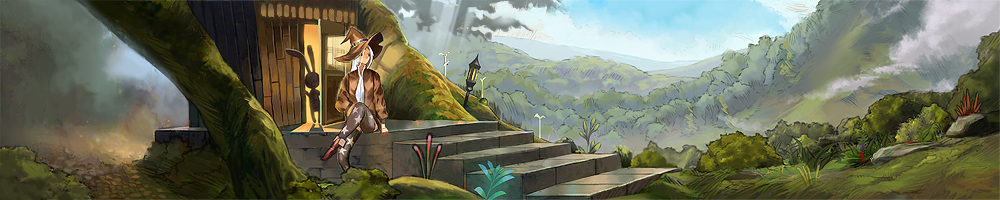
Yume de Aetara Review – 70/100


Next up in the category “so bad that it’s good”: if I see you in my dreams. Another very short series, with only 16 episodes of 7 minutes long, it tells about a love triangle between three people in their early twenties. Basically, it’s a kaleidoscope of what not to do when you’re dating someone. Both if you’re the one dating, and also if you’re writing such a character.

In a strange way, it’s pretty amazing: the episodes are only 7 minutes long, and yet the creators always managed to find some sort of excuse to stuff in some sort of Deus ex Machina and some sort of opportunity to show fanservice in nearly every single one of them. It’s pretty hilarious, how you can pretty much predict what’s going to happen in the big plot twist, and the series makes no attempt whatsoever to hide it.

But the strange thing is that the characters are all pretty enjoyable to watch. For such a love triangle, they’re all surprisingly genuine. Their reactions to the above-mentioned Deus ex Machina are also really cute at times, even though we’re dealing with fully grown adults. It still doesn’t excuse the very badly written plot, but it’s good to see that not everything about this series is terrible.

But what actually baffled me in this series was that final episode: Yume de Aetara actually closes off with a really sweet ending. This ending was really well written, and actually made the character-development come together in the end. For such a mediocre series to end on such a good note. It doesn’t happen often. But then again… I guess that that’s going to happen if you’re crazy enough to put Hiroshi Watanabe behind the series supervision.

Storytelling: 5/10
Characters: 8/10
Production-Values: 7/10
Setting: 8/10

Telepathy Shoujo Ran – 14


Short Synopsis: Ran, Rui, Rin and Midori now have to solve the mystery that lies behind the family curse.
Highlights: A bit of a questionable climax, but an impressive plot nonetheless.
Overall Enjoyment Value: 8,5/10
oh, this definitely was the best arc of Telepathy Shoujo Ran yet. The story was pretty imaginative and more complex than what you’d expect from such a children’s series. So, if I understood things correctly, the red-haired woman and the first victim’s employer were behind the whole thing. The red mask on your elbow originally was a curse, that would kill a daughter of the family, but this time, they created a fake one, and instead poisoned the poor girl. If guessed this correctly, this basically was a bit of an extreme way to get their hands on the family’s money.

It was a bit anticlimactic when the bad guy appeared, parading around with Rui and Midori tied up in ropes. It’s times like here when the censorship gets a bit out of hand, and it would have fitted much better if they were actually carrying some kind of gun. Or a knife, which was used earlier in the episode. I don’t understand these censorship-laws anyway. Guns are bad, but starting a huge fire in a house doesn’t get censored. At least be a bit consistent in this.

The ending also was a bit of an anticlimax, but it did fit. The big problem with detective children is that it’s very hard for these children to outsmart and overpower adults. So the plot device of having telepathic powers gives these children a bit of extra help to solve these mysteries, and it keeps the series going. In a way, it’s the lesser of two evils. After all, think of the plotholes that this series would need to introduce otherwise.

In other news, I’m glad that Midori’s gawking over Rin still isn’t getting old, even though we’ve passed the halfway-mark of this series. The creators also can’t use the same dividing-joke again, since they’ve now really run out of options, so they’re going to have to come up with something new.

Blassreiter Review – 85/100


When Blassreiter first started, it was met with a lot of doubts, which is of course natural after Gonzo’s escapades with the infamous Dragonaut. Blassreiter looked like it would be the same bloody thing again. But as it turns out, the creators pretty much managed to nail down a very entertaining action-series. I am very picky when it comes to action-scenes, but the ones from Blassreiter left me very impressed.

You do need to get used to the fact that the fights are entirely done in 3D CG. If you’re one of those people that hate CG with passion, then you’re not going to like this series. However, because the fights make optimal use of this CG, the creators are able to do things that would never be possible with just 2D animation. CG means that there are no still frames, constant and smooth movement, and complex camera movement. Blassreiter takes this, and produces some of the best 3D fight scenes of the entire year, and I wouldn’t be surprised if I ended up labelling it as the best action-series of 2008. The camera-movements, combined with the character-movements result into a number of absolutely beautiful fight scenes.

Action-scenes are one thing, but I personally can’t enjoy a good action scene unless I care about the characters. That’s where Gonzo screwed up with Afro Samurai, because the characters and plot were utterly retarded. Thankfully, they avoid the same mistake here. The first half of the series has a very creative storyline, which goes away from the tried and true formula. The second half is more straightforward, but to make up for it the characters develop, and you’ll end up caring about them in a strange manly genuine fashion. The two complement each other pretty interestingly.

Blassreiter is not without its major flaws, though. Especially in the first half, it tends to be a bit too melodramatic for its own good, to the point of a few scenes that are just way too emo. Especially bullying subplot is just too extreme to be taken serious. This series is just too emo while trying to build up. The results are pretty awesome, but I can imagine how you’d not want to watch an angsting teen over and over.

There’s also the fact that the 3D-scenes don’t try at all to blend in with the 2D art, which will take some time to get used to. Overall, it’s been an interesting series, despite its questionable start. I recommend it if you’re looking for an action-series. This series has the three ingredients for awesome fight scenes: excellent choreography, sympathetic characters and a great soundtrack. I can’t recall having seen any series that made as much of an optimal use of the capabilities of 3D animation.

Storytelling: 8/10
Characters: 9/10
Production-Values: 9/10
Setting: 8/10

Code Geass – Lelouch of the Rebellion Review – 72,5/100


Well, so it’s finally time for me to review this thing. Since I didn’t get the chance to review the first season, this review is about both seasons together. Code Geass is your typical Sunrise Mecha Trainwreck. It can be compared to the bastard child of Death Note and Gundam 00 gone horribly wrong, and the typical case of “the bigger they are, the harder they fall”. I personally consider it the most overrated series of both 2007 and 2008, but admittedly, it’s not an entirely bad series.

The big problem with this series is that it wants to create a sensation a little too badly, up to the point where it uses bad writing, just to create an as big shock as possible. The series starts out nicely enough, though. It builds up properly, but very quickly, the plotholes start popping up, one after the other. Too often to characters just “run into each other”, or happen to be at the wrong place and wrong time. A few instances of these plotholes would of course be okay, but this series just keeps using them, over and over.

The series could have made up for it in terms of characters, but even there things went wrong once they started “developing”, or at least, when they’re supposed to. More often than not, the characters suddenly start acting completely out of character, whatever happens to be convenient for the story, rather then what would be the most natural thing to do. People don’t switch sides because of complex political reasons, but more because the creators want them to.

To add to that, the creators also have a very nasty habit with killing off their characters. If you see an important character kicking the bucket, you can be 75% sure that he or she is somehow going to magically reappear again, later in the series. It becomes rather anticlimactic, when you just know that a character that dies is going to come back anyway (pretty much the dragonball-syndrome).

Then there’s an issue with the setting of this series, which mostly pops up in the first half of this series, in the form of its incredibly nationalistic messages: Japan is being oppressed by the evil Brits and Americans, and it’s up to the main character to vanquish the oppression. The second season also happily continues this tradition by portraying the Chinese as a bunch of fascistic pigs. It’s full of unnecessary stereotypes that make no sense.

So, with all of this criticism, why do you want to watch this series in the first place? Simple: the entertainment factor. The climaxes, badly written as they may be, do try their best to make a huge spectacle with what they can do. This is a typical series that you want to watch if you want some brainless action, and nothing deep or well written. You can mock the ridiculous plotholes and cheese and at the same time enjoy the action scenes for what they are.

But yeah, that doesn’t excuse the fact that Code Geass is a whole mess in terms of storytelling, and wants too much too fast. The character-development is ridiculous, it’s full of plotholes and unable to really create something memorable (not in a good way, at least). I’ve read somewhere that even the director thought that this series has turned crappy, so I hope that he learned from his mistakes and that his next series will be a “bit” more solid.

Storytelling: 7/10
Characters: 7/10
Production-Values: 8/10
Setting: 7/10

Nijuu Mensou no Musume Review – 82,5/100


A major theme of the past half year was fooling the viewer, and the uncrowned king (or queen in this case) of this theme definitely is Nijuu Mensou no Musume. In this series, Studio Bones tells about a twelve-year old girl, who gets adopted by a glamorous and world-famous thief, in the period of right after the second world war. That leads you to expect that this is going to be some sort of thief-series, where Chiko and Nijuu Mensou (the girl and the thief) spend most of its time to steal a number of precious artefacts. Well, no.

I refuse to spoil what’s exactly going to happen, but expect a lot of points where the storyline in this series will just take 180 degree turns as the series progresses. This is really one series that keeps you guessing, and wondering where the characters will go next. And that’s the charm of this series for me.

To accompany the storyline, the series also has a number of very solid characters. Chiko works really well as a female lead: she’s smart and composed, although in the first few episodes, she does lean awfully close to a Mary-Sue. Thankfully, as the series progresses, she develops away from that trope. The side-characters are also excellent, though there are a few oddballs among them. Characters as Ken and Haruka never really can seem to find their place in this series.

Unfortunately, as this series enters its final third, its quality decreases dramatically. Up till that point, the series had been wonderfully unpredictable, and then it decides to close off with a drawn-out rip off of one of its earlier arcs, and a final antagonist who just lacks development for the big role he’s supposed to have, turning him into another one of those villains that are evil because they’re evil. The development in this arc pretty much stagnates, a few deus ex machina pop up here and there, it takes several episodes to do something that could just have been done in one, the final climax is a string of clichés, and overall it just took the potential this series had and threw it away.

Because of that, I just can’t label this as a great series, since it could have been so much better if a bit more time was spent to tweak that final arc. What could have been a masterpiece went rather downhill during its finale. Because of that, Nijuu Mensou no Musume still is a good series, but nowhere near the best of the season.

Storytelling: 8/10
Characters: 8/10
Production-Values: 9/10
Setting: 8/10

Nijuu Mensou no Musume – 22


Short Synopsis: The aftermath of Nijuu Mensou no Musume, where Chiko has moved to London, and the detective girls finally have the chance to solve one mission.
Highlights: Chiko’s growth.
Overall Enjoyment Value: 8/10
Ah, thank goodness. The climax was disappointing to say the least, but at least the aftermath was excellent, as it showed what everyone’s been doing, two years after said climax. It’s interesting how Chiko chose her own way, and stopped getting herself involved with dangerous stuff, and instead just concentrated her time on studying. It’s also good to see that Ken got some proper development. He’s always been the odd character in this show, ever since the train incident, but at least he’s now able to move on, and not get held back by Chiko.

that masked murderer and ken really came from nowhere, but at least we got to see a nice fight to close off the series in this way. The lost boy also formed a nice way to conclude the series, pointing back to Chiko and Akechi’s lost nephew. Haruka also has grown up very nicely (and actually didn’t get married at her sixteenth ^^;), although her character-design felt a bit off. She had a bit of a “Kimikiss”-face, as in a face where the eyes are a bit too far apart from each other for their own good.

Overall, because I was able to blog more series than usual this series, I ended up blogging Nijuu Mensou no Musume on a whim, in an attempt to become a Bones-fanboy. Okay, so that attempt failed when both their contributions to the past spring-season ended up disappointing a bit. I still consider them a good production-company, which managed to nail a few very good series, but I still just can’t label it among my favourites. I had a lot of fun when this series was good and unpredictable, but the final parts were just too uninteresting for what it built up for.

Birdy the Mighty Decode Review – 82,5/100


My three personal favourite series are the following: 1) Mahou Shoujotai, 2) Noein, 3) Visions of Escaflowne. Because Mahou Shoujotai wasn’t directed by just one guy, but a whole bunch of directors and the latter two were directed by the guy called Kazuki Akane, it’s pretty safe to say that he’s my favourite director. So, when he comes with a new series that plans to revive an old OVA from the nineties, then I obviously had to watch it. Overall, it doesn’t live up to his other work, but it’s an impressive series nonetheless.

Although it doesn’t always show this, this series knows how to build up. The first half of the series might goof off at first sight, but once the second half kicks in, everything slowly starts coming together, and the tension is very smoothly built up until the actual climax, and it becomes apparent that the first few episodes were definitely necessary, to flesh out the different characters and settings, and make them believable.

What impressed me the most, though, is the way that this series uses its production-values. There’s time enough for the story and characters to develop, with the second season and all, but both the graphics and music are very well done. The budget of this series is obviously limited, but the creators managed to save most of it in order to treat the viewer to a very small amount of beautifully animated fight scenes, which I’d classify as the best 2D-fight scenes of the past half year. When a character sprains his ankle, or gets his or her arm twisted, you see exactly the bones and muscles that move out of place, which is something most other anime tend to neglect.

There’s just one minor point about this series: it doesn’t have the most exciting main character to work with. Senkawa really is your typical fourteen year old brat, which love issues and impulsive tendencies thankfully the creators do manage to develop his character sufficiently, but he does whine a lot in the process.

Apart from that, I can’t really say much more about this series. It’s a typical series that’s meant to really take off in its second season, and for that it built up really well. There are some clichéd characters here and there, but the director has an excellent sense of timing, and knows what to say when, where and how to make the best out of them.

Storytelling: 8/10
Characters: 8/10
Production-Values: 9/10
Setting: 8/10

Birdy the Mighty Decode – 13


Short Synopsis: The finale of the first season of Birdy the Mighty: Stop Ryunka and save Nakasugi.
Highlights: Predictable, but satisfying.
Overall Enjoyment Value: 8,25/10
Well, this episode turns out exactly like you’d expect: at the end of the episode, Ryunka is sealed, Nakasugi is saved and Senkawa is back in Birdy’s body. However, I still like this ending, because of the way it took the creators to get there. They succeeded to make the ending too straightforward, first by playing around with Mind-Games with Senkawa and Nakasugi, by keeping switching Nakasugi and Ryunka like someone with a bad personality disorder, followed by Senkawa finally getting the guts to kiss Nakasugi, taking over the Ryunka and thus sacrificing his own body, which he knows can be easily restored.

Seeing the relationship between Senkawa and Nakasugi coming together with that kiss really made up for the predictable finale, although I’m sceptic about the memory-reset the creators gave to Nakasugi. Memory loss can either work incredibly well or flop entirely. The creators really need to use the fact that she lost her memory, and not make it some convenient reset-button like on a gaming-console. For the second season, the creators also need to find a way to get rid of the fact that dead bodies can just be restored. It’s not going to make for good drama if characters can just be revived like it’s no problem. The creators need to find some sort of “Great will of the Universe”-solution (for those who watched Excel Saga) to keep this from happening.

Overall, when compared to Escaflowne and Noein’s halfway-climaxes, this one pretty much sucked, but with the standard of the past season, then it’s an above-average ending, based on the endings I’ve seen so far. It could have been better, but at the same time it also didn’t screw up at all, and I’ll be looking forward to that second season.

Shigofumi – Stories of the Last Letter – 13


Short Synopsis: Fumi still gets bullied, which catches the attention of one of her classmates.
Highlights: Good to see more of this series.
Overall Enjoyment Value: 8/10
Okay, so I’m not sure whether this is THE Shigofumi-OVA, or just a regular DVD-special, but more Shigofumi is always welcome, since the original series was just too damn short. This episode basically tries to involve all of the main characters, and focuses more on fleshing them out, rather than it just being another random case.

The main bullies were a bit stereotypical, but I liked the idea of trying to fake the Shigofumi. Especially that red envelope was a nice touch. This episode also shed some light on where the name Shigofumi came from: it’s another play with numbers: 4(shi)5(go)2(fu)3(mi). I also don’t think that the final two numbers are randomly chosen, as they also spell out Fumi’s name. The first number also makes sense, since “Shi” can also mean “death”. That only leaves the five, of which I’m not sure what that points at.

Overall, while it wasn’t the best episode and a bit unfocused, I’m glad to see a bit more about this series, and especially to listen to this series’ awesome soundtrack again. It’s ironic: this series has a very haunting soundtrack, and yet it has to settle with such a mediocre ALI-Project OP.

Now, where are those Gunslinger Girl – Il Teatrino DVD-specials?

Bonen no Xamdou – 11


Short Synopsis: The Zanbani is attacked by a number of humanforms.
Highlights: Only 11 episodes and the cast is already developing.
Overall Enjoyment Value: 8,5/10
I must say, I’m very impressed with this episode. The cast is already connecting to a level that takes most series at least five episodes longer. This episode was really meant to develop the cast of the Zanbani, to push them to their limits and use time that the previous episodes spent on fleshing them out, with some awesome results. I think that from now on, we can expect this series to really get fired off, and I’m really curious whether the creators are able to get the best out of this series’ potential.

This episode confirms what I’ve been suspecting: the Zanbani isn’t just a regular postal ship with a bunch of strange members on it. It makes perfect sense: why else would a postal ship carry guns and a Hiruko-priest? It’s the same as Eureka7, where the main characters pretend to be a bunch of trendy people on surfing mecha, while they’re in fact an underground rebellion. The question now remains: who is Benikawa, and why is she carrying out her mission with a bunch of children on board? It seems to suggest that she has a lot of personal issues in whatever she seems to be trying to do, if she really wants her friends and loved ones to accompany her.

I really loved the situations the creators put the characters in in this episode, every single character was awesome in this episode, and especially Benikawa got a lot of depth, as she started yelling at Yunbo because her motherly worries annoyed her. It’s also typical for her gun to suddenly stop working after two shots. She never striked me as the type to take good care of her guns, so it’s natural for them to get clogged up once in a while. Nakiami also completely lost it, after seeing so many killed Humanforms. We still don’t know exactly why she takes them so personal, but my guess is that she once lost a loved one, who became a humanform.

Kisel-jii also shined as he tried to perform maintenance on the ship (a role often neglected, but at the same time very important). Meanwhile Akiyuki and Raigyo played a surprisingly small role in this episode, and this episode mainly showed Akiyuki was he continues to grow and learn to control his powers. There’s also a strange chemistry between Ahm and Hinokimaru, as in a strange father-and-son relationship while they’re actually not related.

What I loved about this episode was the creator’s amazing ability to make every character count. Most of the time in anime, you see the focus falling on one or two characters, and the other characters could just as well merge into one big character, without much of a difference. In Bonen no Xamdou each character has his or her individuality. There were no two characters who did the same. It may be a pet peeves, but I love it when a series manages to accomplish this. I can really see Bonen no Xamdou turning into my favourite series, once all spring and summer-series finish airing. It all depends on what path Porfy no Nagai Tabi decides to choose, and whether or not some amazing short series pops up in the upcoming fall-season.