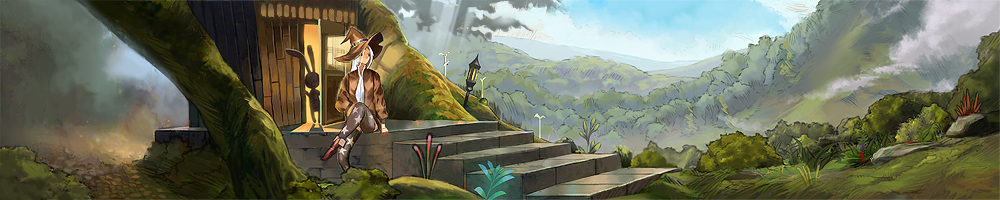
Porfy no Nagai Tabi – 41


Short Synopsis: Porfy goes along to the salesman’s home and wrecks a potential marriage.
Highlights: The pacing really gets faster and faster as the show goes on!
Overall Enjoyment Value: 8,5/10
Well, there you have it. A few episodes ago, I wondered whether the soundtrack would change, now that Porfy’s in France. And here you go: this episode starts playing the accordions; I should have known.

In any case, the salesman grabs Porfy firmly, but he does offer him a ride to his house. There, it turns out that he has a daughter and two sons, who are living in a rather poor house. They offer him a couch to sleep on, and when he wakes up, the two sons have drawn a moustache on it. The salesman has already left for another job. Porfy then goes with the two of them (after having washed his face of course) into the town, to ask for Mina. He then finds out that they too don’t have a mother. When they look at one of the cars at the local toy store, he decides to make one from wood for them.

Back home, it turns out that Cecile, the daughter, is quite similar to Mina. She’s gentle, and likes acting and movies. She also dreams to become an actress, but she knows that she’s never going to make it. She even recites her favourite movie in front of Porfy just like Mina did. When she does, however, the owner of the house they’re living in pops up and tells her that her father is three months behind on rent.

A little while later, Porfy’s done with the car, and the two sons are very enthusiastic to see it, especially because it’s modelled after their father’s truck. Cecile offers Porfy to stay for as long as he wants, but Porfy leaves immediately after he realizes that he’s taking food from a very poor family, especially after the little sons start complaining that they haven’t had enough dinner.

We then see Porfy as he walks across a (beautiful) lake, and he sees a boat there. The only problem is that his money has finally run out, so he just goes there to look. He there meets a couple that’s about to marry, though the guy is telling a bunch of lies about his supposed family in Greece that was struck by an earthquake, in order to get some money from the woman, Matilda. Porfy, coming from Greece and having endured that earthquake, unknowingly exposes these lies while worrying about them, and Matila slaps the guy. But as it turns out, Matila was the one who was rejected because of Porfy’s meddling, and not the other way around. Matilda actually liked how he was nice to her.

Still, Matilda ends up buying a ticket for Porfy. (At this point, we don’t hear Porfy telling about his sister anymore, so I assume this gets omitted from now on). Matilda asks him what he’s going to do next, and so Porfy says that he needs to work for a bit of more money, and she happens to know someone who can hire him. The episode then ends as the boat arrives at yet another beautifully drawn town.

That beginning of the episode was really a nostalgic moment, which anyone will probably recognize from their childhood. That “oh, I screwed up and he’s going to punish me”-feeling, while the salesman just kept silent. He’s quite an interesting character; he hardly said anything and just accepted that he was fooled by Porfy.

This is also a thing that only took me so long to realize, but the pacing of this series just keeps going faster and faster. The series started off with a very sloooooooow slice-of-life arc that took up 12 episodes. The disaster-arc was also pretty long. Then came travel-arcs from three to four episodes, until Rome, after which the show became episodic. And now, as the series enters its final quarter, the stories become even too short for individual episodes, and every episode shows Porfy as he meets two different places. The only exception was when Porfy met the car mechanic and the woman in the abandoned city, but if you consider those as one standalone arc, then everything falls into pieces perfectly. Let me just say that this definitely ISN’T something I expected this series’ finale to turn into!

At this point, I consider Les Miserables to be a bit better than Porfy no Nagai Tabi, but that’s only because of the longer travel-arcs. Not only was their pacing slow, but their writing was just way too sloppy for this series, whereas Les Miserables was very thoroughly built up through its entire story, and had some very effective climaxes because of it. I don’t expect Porfy to become better than Les Miserables in its final quarter, simply because Les Miserables surpassed itself in just about every aspect for its final quarter, but it’s nevertheless getting interesting where the creators will be going. The pacing will definitely something to look forward to, as it removed just about the only flaw of this series out of these travel-arcs: the incredibly slow pacing. The creators have also shown that they’re masters at building up, so really… what the heck could they be planning?

Shikabane Hime – 03


Short Synopsis: A number of people get killed after hearing the cries of a baby.
Highlights: Makina and Kagami
Overall Enjoyment Value: 8/10
I think we’ve got ourselves a record here: it’s episode three, and the male and female lead still haven’t become a couple. Sure, they might meet each other a lot, but that doesn’t have anything to do with the bond between the two, but rather that cat which keeps pulling the strings from behind the scenes. The two of them are being fleshed out pretty nicely overall, with this episode giving a cold for Kagami to deal with. It’s also nice to see that his whining actually was justified in this episode, where the baby actually wasn’t the culprit. That removes the one-sided part about their relationship, where Makina was the strong one and Kagami the weak one. I believe that they’re going to grow nicely so that they can complement for each other’s weaknesses.

What I also like about this series is that apart from Makina and Kagami, there are actually lots of different and more characters. These first three episodes have introduced a significant amount of returning characters, even though we’re talking about episodic stories here. The cat and the strange guy who killed this episode’s bad guy, what are they plotting? This series is especially going to be interesting if the creators manage to give everyone on Kagami’s brother’s organization his and her own identity (the unimportant ones still feel too much like one single character at this point: replace them with one guy and you’d never know the difference).

I must say that with this, Gainax has clearly shown that they can make more than brainless action-shows, which I like a lot. What it needs to pay attention to is that male lead, Kagami. So far, he hasn’t been that annoying, but the FACT REMAINS that he’s an angsty teenager. The guy needs to develop quickly before the angst gets annoying.

Casshern Sins – 03


Short Synopsis: Casshern meets a man who travels alone.
Highlights: Subtle drama rocks!
Overall Enjoyment Value: 8,5/10
Am I the only one who finds it ironic that the series with the most original and appealing character-design of the season is a remake of a series that came from the 1970’s? In any case, I really liked this episode. It’s a quiet, yet very powerful one. The past few episodes have shown us nothing but robots, and yet at the same time they suggested that humans were still alive. In this one, Casshern finally meets a human, and the episode is basically a character-study of this human.

He’s basically a human that continues to run away from the robots, and is critical of his own existence. He already has a bad health (probably due to that nasty apocalypse Casshern caused), and I guess that at that point, the company Casshern can offer the guy is like a godsent. He dies of his own accord, at the end of the episode, and yet the coincidence of which it happens only contributes to Casshern’s nickname of “Death God”.

It’s also a great episode for Casshern: we’re only at episode three, and the guy is already developing. This episode was really meant to silence the emo inside of himself, which is always appreciated. What was up with the dog, though? Why did it suddenly have a change of heart? That was a downside of this episode.

Then there’s that ending theme, which I’m certain that it’s got some double meaning. Why exactly does it show the little kid and that woman together, and ends with the notion that Casshern is gone? It could be pulling off the same thing Soukou no Strain did, where the ED was basically a well-camouflaged aftermath of the series.

Kurozuka – 02


Short Synopsis: A violent killer visits Kuromitsu.
Highlights: Production-values are less than in the first episode, but nonetheless gorgeous.
Overall Enjoyment Value: 8/10
As for One Outs, I’m very surprised at how underrated that series has become, considering how well-received Akagi and Kaiji were. Nevertheless, I still remember the pain it was to blog Kaiji, so I’m just going to sit back and watch it without blogging.

Anyway, I guess I’m going to be blogging lots of different horror-series this season. Kurozuka, Mouryou no Hako, Jigoku Shoujo, Casshern, Blade of the Immortal, Shikabane Hime. Heh, I originally didn’t intend to blog so many of them, but all of them have proved to be surprisingly good in their own way, and all of them explore different sides of the genre, from the flamboyant Jigoku Shoujo to the upbeat Blade of the Immortal, to the subtle Shikabane Hime, the charming Mouryou no Hako, and the depressing and thought-provoking Casshern.

Kurozuka promises to be explore the action and raw psychological side of horror. It definitely has the best action-scenes of the season, as well as the best OP. If the creators can get the characters right, then this series promises to be something very interesting, especially with the director of Death Note behind it. My big problem with Death Note is how it felt very unbalanced, and the creators never really seemed to exactly know what kind of direction they wanted. I’m really curious what his style can do to such a short, focused and series.

There’s also plenty of mystery in this series. Where does the cut-off head come into play? Why bother showing that killer in the first place? What was that strange room he ended up in? What happened to that main character’s best friend? Who were those monsters that were after Kuro anyway?

I think that this series needs to pay the most attention to giving the bad guys a bit more background and personality. Right now, they feel a bit too stereotypical. Kuro and Kuromitsu will probably be fine, and slowly grow throughout the series, but when it comes to bad guys that die within one episode, this series really needs to pay a bit more effort to make their deaths count.

Mouryou no Hako – 02


Short Synopsis: Kanako’s family and relatives rush over to check whether she’s okay.
Highlights: I really hope that rumour of 13 episodes is wrong.
Overall Enjoyment Value: 8/10
Okay, so it was pretty obvious that I was going to blog this series. As for the ones I’m not going to blog:
– Vampire Knight Guilty: no way.
– Ga-Rei Zero has been very good so far, but the schoolgirls who are all awesome at handling swords still give me a few doubts here and there.
– Skip Beat is awesome. If some of the shows I’m planning to blog turn out to be disappointing, I’m probably going to pick that one up.
– Macademi Wasshoi at least didn’t lose as much inspiration as the rest of the shounen-comedies did in their second episodes, but I still don’t see much future for those perverted teachers.
– Oh, and I think that this is also a good point to note that I’ve finally managed to use this season as an excuse to stop watching Soul Eater. I don’t want to continue wasting my time on it if there are so many better series this season. I really think that it would have been better as a 39-episode series, because it’s taking way too long. Instead of filling up its extra time with cute slice-of-life moments, the creators decided to go with pointless exposition and dragged-on fight scenes to fill up their extra time.

There’s a LOT to like about Mouryou no Hako, and it’s at least my favourite new series of the season. It’s one of these very rare series that only pop up about half a year, that try to beyond the usual genres (Real Drive was this in the previous half year). While it’s technically a mystery-horror, it doesn’t feel anything like the other mystery-horror series I’ve seen so far. It’s got a bit of Shoujo-ai here and a bit of humour there. It’s got a story that saves its cards and doesn’t play all of its trumps at the first episode, and STILL it had one of the best starts of the season.

The second episode was much less dramatic than the first, probably because the focus shifted from teenagers to adults. It starts out as a basic aftermath, but soon continues to progress the overall plot like crazy, introducing important relative after the other that seem to suggest that there’s more to Kanako’s suicide attempt than we might think. Especially since a famous actress ran all the way from her busy schedule.

Another thing is this series’ subtle characterization. This series uses a lot of subtle non-verbal communication to flesh out its characters, like the incompetent policeman that worked on the lead policeman’s nerves, or his fascination with that lead actress. The subtle hints that suggested that the actress is hiding something.

And then there are those heads in boxes. I finally read the premise of this series, and it turns out that it’s all one big murder mystery around a bizarre serial murderer, and here this series starts with a seemingly unrelated suicide attempt. What’s the link between these two, and why did the creators decide to open the series with this?

The characters also look great. This is what happens if you combine Madhouse, Clamp and the character-designer of Simoun. They all seem to fit. I’m not sure what went wrong with Clamp when they designed the characters from Code Geass, but this series shows that they can also go for a much more down-to-earth style. They’re very versatile indeed.

(oh, and *note to self: Mouryou no Hako + Horrible Raws = bad idea. It’s not the lower quality, but those overly sugary Japanese commercials that keep interrupting it DO NOT FIT the overall mode of this series AT ALL*).

Mobile Suit Gundam 00 – 27


Short Synopsis: Setsuna recruits a new and an old Celestial Being.
Highlights: Good to see some build-up for the new setting.
Overall Enjoyment Value: 8/10
As for the shows I’m not blogging:
– Kannagi has excellent production-values, but at the same time the characters move like robots with weightless hair.
– To Aru Majutsu no Index… the freaking building was on fire, complete with fire alarm and sprinklers. Why the heck did nobody notice anything? Why was the building still in one piece?
– The sister in Kemeko Deluxe downright sucks. The second episode already shows that the inspiration (and budget) was running out. There are enough better comedies this season.

In any case, this series is quite refreshing after Code Geass and Macross Frontier of the past season. I like the 4-year time-skip a lot, and it has a lot of potential, but there still are a few questionable parts here and there. It’s great to see that Setsuna has grown up, but at the same time Saji is turning into the new Setsuna: the central immature character who questions everything and grows as the series continues. Ah well, at least he is just of the type that needs to calm down, but at the same time, I really don’t hope that he’s going to hijack a Gundam to kick Nena’s behind…

The different growth of the characters really differs from character to character: Soma didn’t change a bit, while Sumeragi lost all of her confidence in the past few years. Louise also surprised me that she turned into a soldier, but at the same time Tieria still feels pretty much the same as he did in the first season. I think a huge task of the first half of this season is going to be to establish the development for every single one of them, and make them feel more complete. Marina Ismael: what has she been doing for the past four years, really?

The OP and Ed are pretty much the same stuff. I really don’t get it: this series has a great soundtrack, which became even better with the second season, and yet it’s stuck with the OPs and EDs full of cheesy J-Rock. And to think that Gundam Wing had an such excellent OP. Ah well, at least the battles got some extra budget when compared to the first season, but I’d just wish that the creators would spend it on something other than flashy Solar Furnaces. The sparkles are nice and all, but they don’t really add anything.

Oh, and while it may seem that I’m criticizing a lot here, I actually really liked this episode. With a huge setting also come huge risks, and I appreciate this series to take a gamble and go with such a complex setting. It can fall apart very easily, but when it works, the results can turn out very interesting. And I guess that that’s the appeal of this series: it may make a few mistakes here and there, but it never forgets to remain solid and consistent. Really, the two mecha-epics this season promise to surpass the mecha-epics of previous season in every way, apart from perhaps Macross Frontier’s huge budget, but let’s not get too ahead of the facts.

Full Metal Alchemist Review – 85/100


Yeah, yeah. I’ve been blogging for nearly three years, I’ve written more than 300 reviews so far, and I still haven’t checked out the “big three” of anime: Cowboy Bebop, Ghost in the Shell SAC and Full Metal Alchemist. Well, at least I’ve got one of them down now. I finally managed to complete what could possibly be the most popular anime of the past decade.

Of course, I did try to watch this series at one time; twice, actually. But I kept getting stuck on that surprisingly boring first part. It didn’t make any sense. People were praising this series to heavens, and at the same time it was a pain to get through that first quarter of the series. It basically consists out of either flashbacks or a number of random stories, with the biggest problem being that the flashbacks were just boring, and the random stories never really worked. The creators just weren’t good at writing them.

The thing is, that this series played way too much with coincidences. Wherever Ed and Al came, there was some kind of Timmy who fell in some kind of Well, at exactly the right time for Ed to demonstrate his awesome child-prodigy powers. In whichever town they came, the creators would make sure that they’d coincidentally meet people who were related to some sort of gruesome secret behind this town. This especially returns ad nauseam in the first quarter, but the entire series is also plagued by this.

Thankfully, after that very dodgy start, the series picks back up when the big storyline starts for this series. Thankfully the creators prove that they’re good at writing a continuous storyline, and they slowly develop the story into a multi-layered mystery intrigue. You can see that a lot of thought was put behind it, and the series’ final quarter especially shines in the story-department. Much like Full Moon wo Sagashite, actually.

The characters are a very mixed bag, actually. Characters like Rose and Archer are incredibly shallow, and feel a bit too much like underdeveloped plot-devices. Other side-characters, however, absolutely shine when they’re standing in the spotlight. People like Scar, Sensei, Armstrong and the Humonculi really made this series for me, and showed that behind their simple look, they’ve got a complex and interesting story lying. Unfortunately, Hughes was overrated. Based on the things I’ve heard about his… spoiler, I expected something much grander, which he never really delivered.

That’s not the biggest problem here, though. Unfortunately, I never really could care about the main characters in this series: Ed and Al. Every time this series was exploring an interesting side-character, they’d take over again. In a way, this series suffers from the “bad main character”-syndrome. The two of them are developed, they’ve got more back-story than any other character in this series, but they’re just nowhere near as interesting as some of the other characters in this series, and their teenaged whining can become annoying at times.

Overall, Full Metal Alchemist shines through some of its side-characters and the messages it tries to convey. While the series is without a doubt very much a Christian series, it asks some interesting questions from its viewers, and shows various different beliefs on these questions. That’s why I handed this series a 10 in the setting-department: despite the flaws of the series, it’s an excellent and complex world for this series to play in that also makes you think. And I agree, it’s a very good series because of these things. However, it just isn’t the best thing since sliced bread. I just can’t call this series as superior to for example Gilgamesh, Rescue Wings or Ooedo Rocket. I liked it overall, but at the same time I do consider this one to be overrated, and it had some major problem that held back its potential.

Storytelling: 8/10
Characters: 8/10
Production-Values: 8/10
Setting: 10/10

Jigoku Shoujo – 54


Short Synopsis: A boy who has a crush on a female store owner calls Jigoku Shoujo.
Highlights: Nice ending.
Overall Enjoyment Value: 8,5/10
Am I glad to see this series back or what? In any case, as for the series I’m not going to blog this season:
– Akane-iro ni Somaru Saka… err… no.
– Every single new character of Kuroshitsuji’s second episode was dull and uninspired, the servants I liked so much in the first episode are turning into one character and the two main characters are also getting pretty dull. That shouldn’t be happening after just two episodes!
– I like Clannad, but I’m a fan of the climaxes. I don’t feel like writing about the lesser comedy-bits.
– I already had trouble following Noramimi during a light season, let alone a heavy season as this one.
– The drama in Yozakura Quartet’s second episode felt shallow and uninspired.
– Tentai Senshi Sunred already turned from hilarious to dull within two episodes. I knew that this was going to happen, but not THIS fast.

In any case, I’m getting really excited about this third season. I would already have been happy if this season would be more of the same, but the creators are really showing that they’re evolving this show. It now makes perfect sense that the second season was less extreme than the first season: it was basically one big season, meant to flesh out Ai’s three dolls, and flesh out the show’s premise by showing how people are getting more and more easily able to send someone to hell.

Now in this season, people are suddenly beginning to see themselves that sending someone to hell might not have been the best thing after all. The previous episode showed a high-school girl who banished her teacher (really, that’s something I can imagine that would happen a LOT if Jigoku Shoujo would exist for real), and this episode features an abused woman who doesn’t want to be rescued. It’s about a boy who tries to help her from her incredibly abusive boyfriend. It’s interesting how the first two seasons started with straightforward cases, but here in the third season, the creators have already started with a thought-provoking case, which goes beyond the usual good and bad.

The strange thing about this third season is… there doesn’t seem to be a director for the thing. According to ANN at least. Apart from that, there’s absolutely no change in staff, which really makes me wonder: was the missing director just a simple mistake, or did he really leave the project, so that the ones who are left opted to do the series with a more chaotic style of “direction”? I really expected when I first saw this episode that huge staff changes were made, but instead it’s the same animation directors who went with the new visual style, and both punishments in this and the previous episode were much more extreme than what we’ve seen in the previous seasons.

I also wonder what the exact role of the girl is going to be, but it’s still going to take 20 more episodes before we get to find that out. It makes sense to start her off with such an extreme case, so that we now get to see her initial stance on revenge (as in, she hates it). I think that she’s going to become the new Tsugumi: because Ai uses her to get back to her original job (the question of course is: why?), she can see exactly what’s going on. I think that she’s going to go against Ai, to try and stop the revenges.

Telepathy Shoujo Ran – 16


Short Synopsis: While Rui continues to fake amnesia, Ran and Midori try to get him back.
Highlights: This is EXACTLY why Yoshihiro Ike is amongst my favourite composers!
Overall Enjoyment Value: 8,5/10
I must say, that Telepathy Shoujo Ran has been a delightfully consistent series so far. Really, my experience with most arc-based series is that some of their stories can differ significantly in quality when compared to the others, but the opposite is the case in Telepathy Shoujo Ran: no story has stood out for me as the best, and neither was there a story that clearly less in terms of quality. Every single story so far has had interesting mystery, engaging scriptwriting, nice production-values and awesome banter. No exceptions.

The bad part about this is that I’m not going to expect to be blown away by this series. It’s not of the kind to take huge risks. The good part is that with this set-up, I just know what I’m going to get with every single episode. While this is not as well-written as in a series as Kaze no Shoujo Emily, it’s definitely something to look forward to every week.

In this episode, it was the soundtrack that was exceptionally good. Ike Yoshihiro showed some of his new tracks, and they were excellent. The guy may not be exceptionally good at writing good standalone songs, but he’s a master when it comes to creating an atmosphere with his works. The animators were also on fire again for this episode. It wasn’t as noticeable as in the arc with the dead girl, but nonetheless the episode was full of nice poses and creative animation. It was just “fun” to watch everything that went on on the screen.

In a way, it’s very good that the creators decided to go for cheap Photoshop-effects for this series. In a way, it fits, and at the same time they didn’t end up blowing half their budget on flashy beams of the sort that you find in many other series. In this way, they could really add to the characters’ expressivity. I really never understood why creators have to make those CG-beams as flashy as possible. I mean, they don’t really add anything to the series.

I’m really hoping that in the autumn-season, another series will pop up that manages to choose where to focus its animation on so well. Obviously, after episode 1 it’s still too early to judge: you never know which series blow up their entire budget within one episode, and which ones instead decided to save most of their budget for later.

Yume de Aetara OVA Review – 82,5/100


I’m not really sure what the creators really intended by airing both an OVA and a TV-series for Yume de Aetara at the same time. Furthermore, while Hiroshi Watanabe merely supervised the TV-series, he took it upon himself to direct the OVA. The series already was a string of ridiculously overblown deus ex machina, so with the king of cheese now behind the director’s seat, my expectations definitely weren’t high.

But what a surprise: the OVA turns out to be much better than the TV-series; it’s a really sweet romance story, and it’s actually really well written. It’s basically an alternative retelling of the series: the basic set-up is still there, but the storyline’s entirely different. It both fills in the holes of the series’ background, and it also advances its own storyline.

Nearly all of the deus ex machina of the series don’t return in the OVA. You can still spot a few here and there, but it all falls within the limits. In exchange, it really feels like the creators know their characters. They’re able to create subtle nuances in their behaviour, and also succeed in creating an effective atmosphere for the story to work with.

But the best part: Hamaoka plays a much smaller role here. She’s still there as a potential love-rival, but her number of appearances has been greatly reduced. In the OVA, she really feels like a side-character, in comparison to the TV-series where she actually got more screentime than the girl who was SUPPOSED TO BE the lead female for the story. For the OVA, you can really feel that it’s a story about Fuguno and Nagisa, as it explores both of their doubts about going into a relationship.

So overall, I’ve been pleasantly surprised here. Nearly the entire OVA basically had the same feel as the final episode of the TV-series (as, the only part of that series that was really good). The romance worked really well, and it’s one of the few times where a series has a loser protagonist, and the creators can admit that he’s a loser, and use that in their storytelling, rather than using a loser to appeal to the otaku-crowd. It’s one of these stories where you’ll really want the main couple to come together (or that was the case with me, anyway). It’s a very subtle series. Yes, subtle; a word I thought I’d never mention when talking about a Hiroshi Watanabe-anime.

Storytelling: 8/10
Characters: 9/10
Production-Values: 8/10
Setting: 8/10