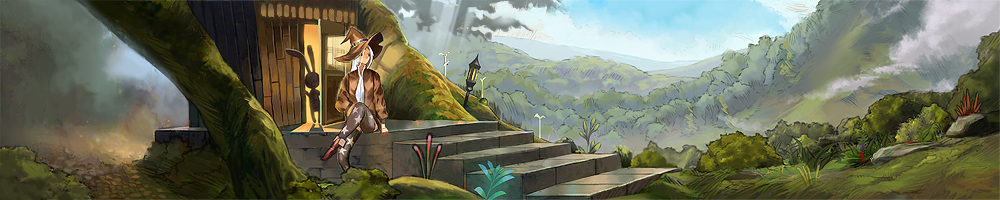
Wooper: The upcoming summer season could accurately be compared to fresh milk, in that it won’t take long for the cream to rise to the top. That’s true for most new crops of anime, of course, but usually there are a few shows that briefly hang with the top dogs before settling into mediocrity. Not so with this bunch – I can’t imagine more than six or seven of these non-sequels making even a temporary mark over the next three months. Those half dozen shows look very good, though, including a retro spin on a classic fairy tale, a long-delayed KyoAni project, and two historical manga adaptations set prior to 1400 CE. As for the sequels, they’ll surely make some waves (especially Youjo Senki, returning after seven years), and there’s also the spring-summer series Smoking Behind the Supermarket with You, which I omitted from the preview since I wrote about it here. You can vote for that show in the poll at the end of this post, as well as everything else you’ll be watching, so let me know whether I’ve missed any worthwhile series once you’ve perused the preview!
Middling Expectations
Grow Up Show: Sunflower Circus

Studios: A-1 Pictures, Psyde Kick
Director: Kanta Kamei
Series composition: Takeshi Kikuchi
Source: Original
The Premise: A gymnastics prodigy joins a struggling all-female circus troupe in 1950s Japan.
Sunflower Circus is one of three original anime releasing this summer, so it’s part of the preview despite not being a big top attraction. Its most attention-grabbing aspect is its mid-50s setting (placing it near the start of Japan’s post-war economic surge) – or it would have been, if not for the show’s entirely modern sensibilities. There’s little difference between the cast’s mannerisms and those of a modern moe-oriented series, and the same goes for their designs, which scream P.A. Works (a decidedly 21st century style). Even more disappointing are the soundtrack snippets in the PV, which do showcase march and swing music, but feel very much like unstudied mimicry. This will be the director’s first TV series in nearly a decade, and he’s been paired with a video game writer whose past anime credits include shovelware like Night Wizard the Animation and Ragnastrike Angels. Not an inspiring duo, but gymnastics-themed stories do offer opportunities for tense, high-flying animation, so I’ll try Sunflower Circus’s first episode, at least.
Kimi ga Shinu made Koi wo Shitai
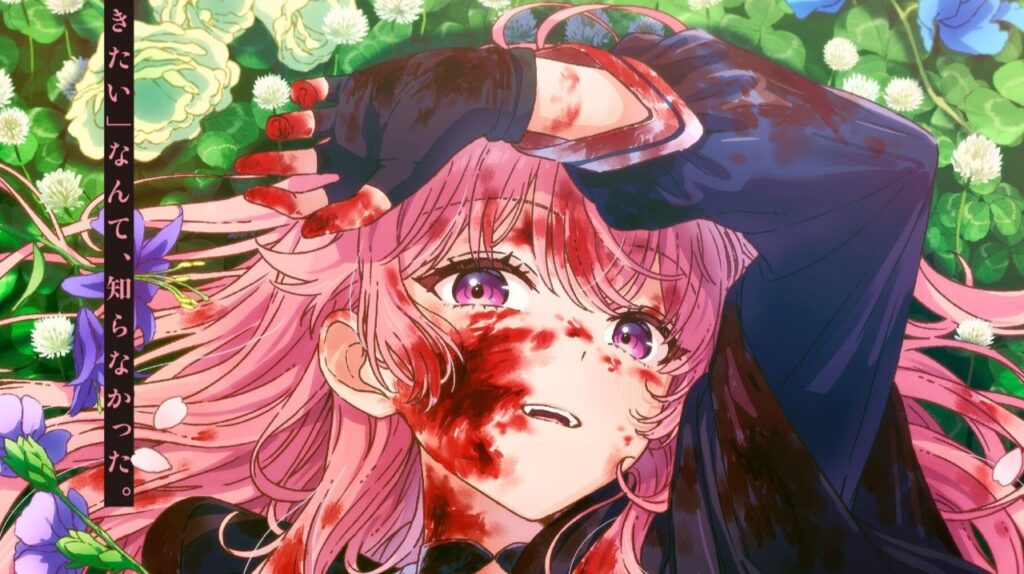
Studio: Roll2
Director: Yasushi Tomoda
Series composition: Jukki Hanada
Source: Manga
The Premise: Two future soldiers, one of whom is rumored to be immortal, develop feelings for each other at a girls’ military orphanage.
This is studio Roll2’s second ever anime series, and thankfully it’s a little more promising than their first. The appeal of KimiShinu (localized title “I Want to Love You Till Your Dying Day”) seems to lie in the contrast between the slice of life scenes at its orphanage and the bloodiness of its wider war, for which the characters’ studies are preparing them. The wands and levitating objects in the trailer indicate that the series has a magical component, which will likely contribute to both its mundane and murderous sides, and from the chatter I’ve read online, the girls’ love element seems to be more than a bait and switch. My fear is that all these elements will spread the series too thin, but series composer Jukki Hanada is a veteran who’s adapted more difficult material in the past, including last year’s ensemble time loop drama Gnosia. And even though the director is a first-timer, the PV looks professional (albeit more focused on the characters than their comparatively plain surroundings), so I’ll be approaching KimiShinu with a sliver of optimism this July.
Kore Kaite Shine
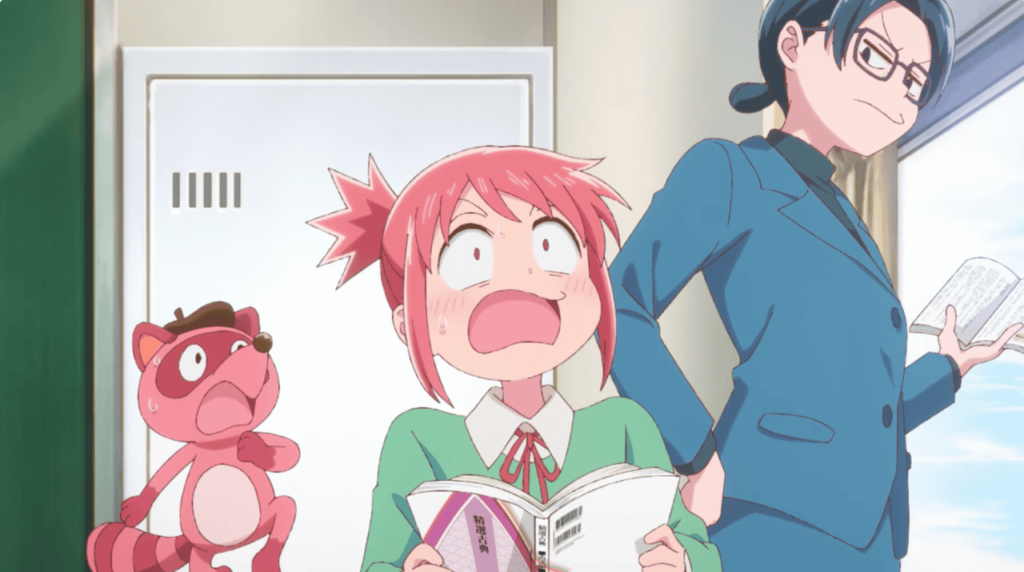
Studio: Shin-Ei Animation
Director: Hiroaki Akagi
Series composition: Hiroko Fukuda
Source: Manga
The Premise: A manga-obsessed high school girl with no artistic training decides to create a manga of her own.
Kore Kaite Shine (“Draw This, Then Die”) is the summer show whose potential I’m least sure of. The question isn’t whether it should have been included in this preview at all, but how much stock should be put in its source material, which won the Manga Taisho in 2023 (among other prizes). Sometimes these sorts of highly-awarded series receive lavish adaptations (Frieren), and sometimes they get the opposite (The Darwin Incident), so a great manga as a basis isn’t a clear indicator of how good an anime will be. The director’s past work is a surer sign, but in Hiroaki Akagi’s case, I find myself at odds with the consensus opinion of The Dangers in My Heart, his biggest success. Will his sweet and sour approach (also visible in Teasing Master Takagi-san) translate well to a story about the delights and frustrations of comic book artistry, rather than teenage puppy love? I have my doubts, but perhaps the challenge of adapting Kore Kaite Shine’s dual protagonist structure will see him rise to the occasion.
Love Unseen Beneath the
Clear Night Sky
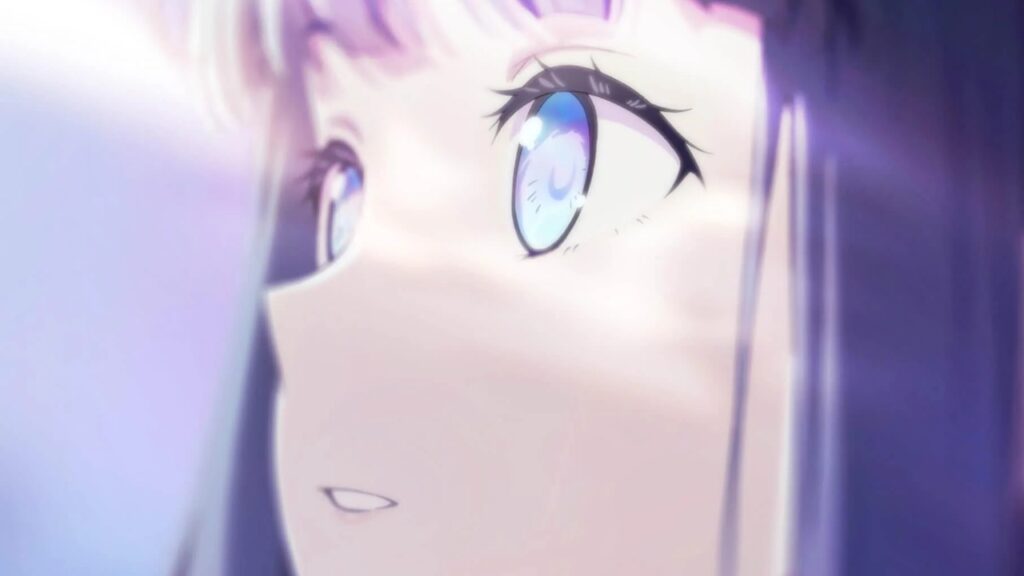
Studio: Makaria
Director: Jou Yoshizaki
Series composition: Yuuko Kakihara
Source: Light novel
The Premise: An introverted university student falls in love with a sociable blind girl who loves fireworks.
Whether they be anime, films, or especially TV shows, Japan seems to love disability-themed dramas. I’m not qualified to comment on the reason for that cultural fondness, nor have I seen a representative slice of the subgenre – the few I’ve watched, though, have been pretty good. A Silent Voice is the obvious example, and the 2024 series A Sign of Affection made our top 10 list that year. There’s also an early 2000s J-drama called Orange Days, about a violinist who loses her hearing, that I watched from start to finish (despite being unable to get past most doramas’ first episodes). Love Unseen Beneath the Clear Night Sky addresses blindness rather than deafness, which on paper has my interest, but the PV doesn’t offer much promise, particularly in the realm of character design. The show has two such designers, both of whom have very little industry experience predating Love Unseen, and the instantly forgettable framing of their creations in the trailer makes me think the story is this series’ only hope. College age casts are always appreciated, though.
Mebius Dust
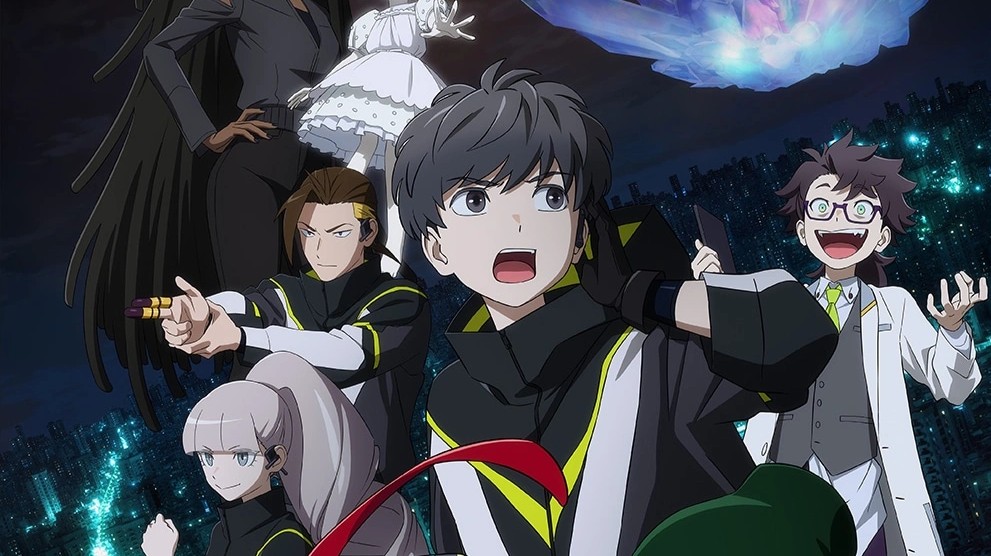
Studio: Doga Kobo
Director: Tarou Iwasaki
Series composition: Yoriko Tomita
Source: Original
The Premise: Superpowered teenagers form teams to compete in a real-life city conquest game.
This series was announced around six years ago (with a slightly different title, Möbius Dust) after winning a contest to have entrants’ original stories adapted for the small screen. Its initial delay lines up with the pandemic, so while correlation doesn’t equal causation, I’m guessing it was pandemic woes rather than a lack of confidence that displaced the show. But how confident should we be in Mebius Dust now that it’s finally about to see the light of day? I nearly left it off the preview before realizing it was technically an original work, which should be an indicator of my enthusiasm (or lack thereof). Sci-fi and fantasy stories about meteorites granting people superpowers are nothing new, but using that trope as an excuse to animate glorified games of Capture the Flag? I know there’s a mad scientist character whose experiments will eventually push the plot in a different direction, but something about this setup feels wasteful. The PV didn’t showcase any ear-grabbing tracks either, which makes me wonder whether whiz kid musician De De Mouse will be doing his best work here. I’ll sample pretty much any original anime at this point, but unless I’m misreading things, I’m expecting to sweep Mebius Dust off my watchlist after a single week.
Red River
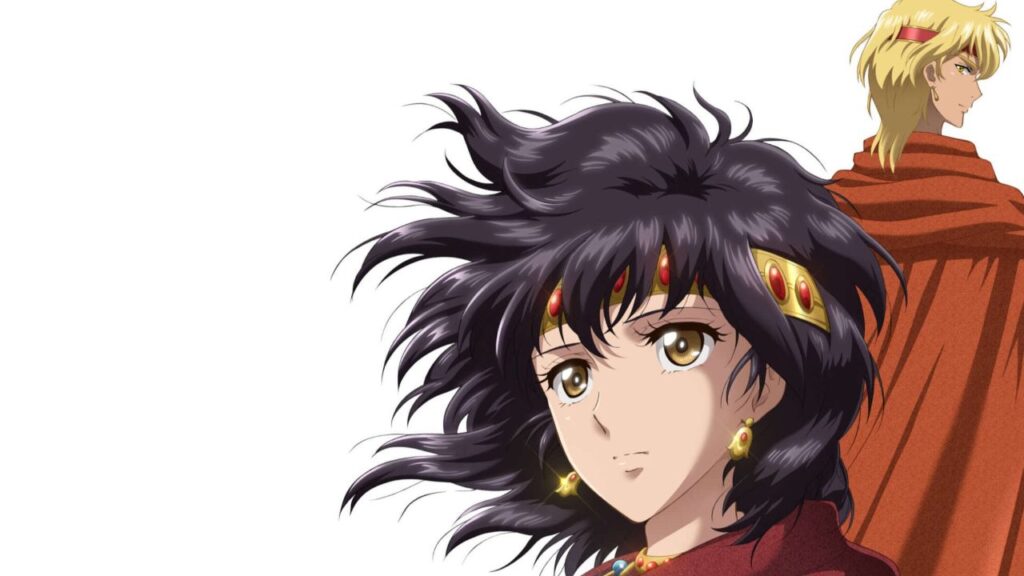
Studio: Tatsunoko Production
Director: Kousuke Kobayashi
Series composition: Yoriko Tomita
Source: Manga
The Premise: A teenage girl is inexplicably transported to 14th century BCE Anatolia, where she and a Hittite prince fall in love.
A historical shoujo fantasy anime? Sign me the hell up – is what I would say, if the PV for Red River (Sora wa Akai Kawa no Hotori) didn’t look like this. You may already be sick of me judging these series by their trailers, but this one is particularly damning, with its brief depictions of swordplay and horseback riding looking like they were animated when the Red River manga began publishing 30 years ago. And that shot of the heroine and the prince’s faces .png-sliding toward each other to precede a potential kiss? Rough. Nevertheless, I’ll be giving this one as many episodes as I can muster, because it presents an opportunity to learn about a period of history I’m unfamiliar with. The Hittites occupied much of the Mediterranean region during the later Bronze Age, and it doesn’t seem fair that I only know about their eventual conquerors (the Assyrians) when they were a major power in their own right. For those of us who plan to brave Red River’s out-of-date visuals, blood magic, bishounen, and the betterment of ancient civilization via modern knowledge await. See you in the 1300s (BCE)!
Though I Am an Inept Villainess

Studio: Doga Kobo
Director: Mitsue Yamazaki
Series composition: Yoshiko Nakamura
Source: Light novel
The Premise: A beloved imperial consort-in-training swaps bodies with the jealous rival who attempted to murder her.
First an isekai (Red River) and now a villainess anime? Is the summer season really that thin? Sort of, but at first glance, Inept Villainess doesn’t seem to be as barrel-scrapingly bad as its contemporaries. Character design is the big draw here, as both Reiren (the sickly princess) and Keigetsu (the jealous princess) are drawn quite expressively – a must for a body swap show, as their personalities need to come through despite their mismatched faces. The colors are more varied than in other palace dramas (looking at you, Apothecary Diaries), and I’m expecting above average background art, given Studio Pablo’s involvement. On the narrative side, Inept Villainess will need to provide a solid foundation beyond its initial body swap hook if it wants to keep people watching – if it boils down to nonstop assassination attempts, whether by Keigetsu or other suspects, audiences may not stick around for long. Personally, I hope to make it all the way through this one, though, since I’ve finished all three of director Mitsue Yamazaki’s previous works (Sleepy Princess in the Demon Castle being a sneaky favorite).
Young Ladies Don’t Play
Fighting Games
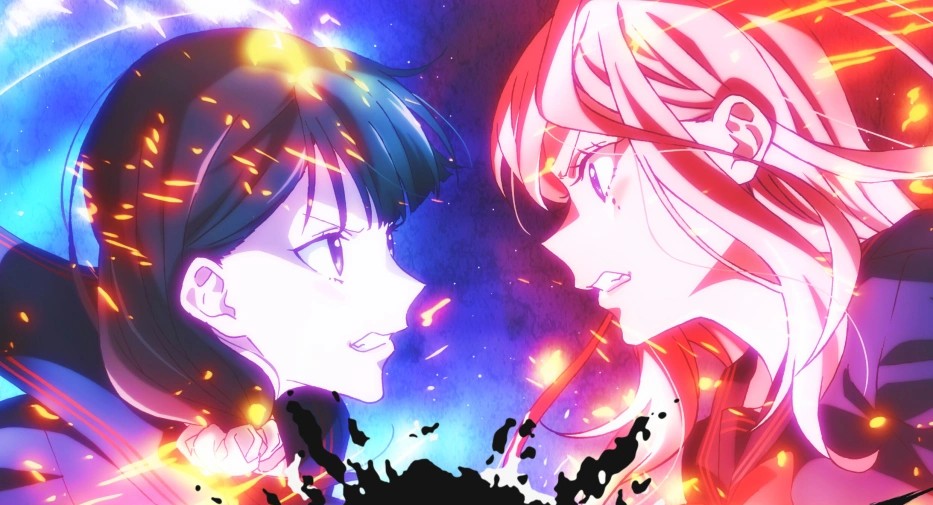
Studio: Diomedea
Director: Shouta Ibata
Series composition: Wataru Watari
Source: Manga
The Premise: Young ladies do play fighting games!
I didn’t make it far into Rock is a Lady’s Modesty, the previous “private school girls with plebeian hobbies” anime, and there aren’t a ton of reasons to believe Young Ladies Don’t Play Fighting Games will be much different. Still, we’re going to give it a go, if only for the novelty of seeing actual Street Fighter 6 gameplay integrated into the visuals. If they’d done a one-to-one manga adaptation, I wouldn’t have caught the barely-veiled Street Fighter references in “Iron Senpai 4,” the characters’ game of choice. Put Ryu, Ken, and Chun-Li right in front of my stupid face, though, and I can ooh and ahh along with everyone else. I sort of doubt that the rest of the show will be as fun to look at, especially with the historically mediocre Studio Tulip on background duty, but we can still hope for the best. In terms of story, it’s interesting to note that Wataru Watari, the author of the Oregairu light novel series, is handling the scripts for this show. Will he do justice to this foundational entry in the DGDUT (Dignified Girls Doing Undignified Things) subgenre, or will this adaptation be more of a button masher?
Shows We’re Anticipating
Chainsmoker Cat
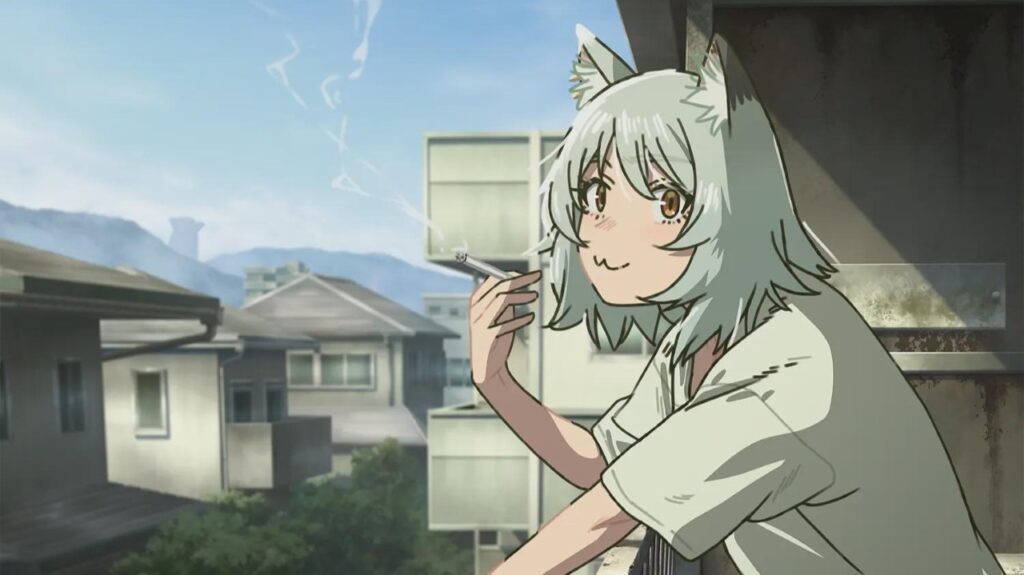
Studio: Bibury Animation
Director: Taku Kimura
Series composition: Takashi Aoshima
Source: Manga
The Premise: A slovenly catgirl repeatedly tries and fails to kick her nicotine addiction.
This is my pick for dark horse (or should I say black cat?) of the season – a gross-out comedy about catgirls and their vices, including cigs, booze, and video games. I’m a non-gaming neat freak who’s been sober all his life, so I can’t relate to the show’s subject matter at all, but the atmosphere of this trailer convinced me to give it a second look. Turns out Chainsmoker Cat (Yani Neko) is being headed up by Taku Kimura, a first-time series director with a wide range of industry experience, from short films for billion dollar franchises to episode direction on art movies like the recent Toritsukare Otoko. Guys like Kimura who take nontraditional paths to director-hood tend to put out worthwhile work, even under the restrictions of the TV format, so I’m interested in what he’ll make of the source material here. The character animation looks strong, and the involvement of reclusive musician Keiichi Suzuki is intriguing, so I’m willing to brave Chainsmoker Cat’s scatological sense of humor for a potential payoff.
Nijuuseiki Denki Mokuroku
Studio: Kyoto Animation
Director: Minoru Oota
Series composition: Tatsuhiko Urahata
Source: Light novel
The Premise: Two teenagers embark on a quest for an educational tome in a steampunk version of the late Meiji era.
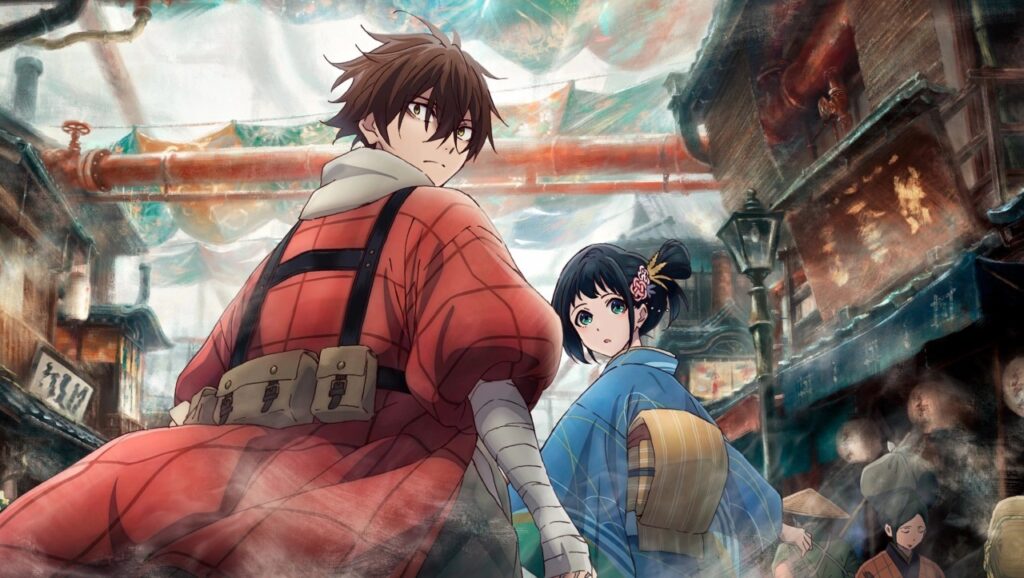
Does anyone else remember this KyoAni commercial from 2021? Its bursts of 3D background animation felt ahead of the curve upon first watch, so when I learned that its characters and setting originated from Nijuuseiki Denki Mokuroku, a light novel published by KyoAni itself, I was excited for its inevitable anime adaptation. Years went by with no news, but the CM remained lodged in my memory, until word finally came that the series was on its way, bearing the localized title “Sparks of Tomorrow.” The promo material for the full length Nijuuseiki anime bears little resemblance to the original commercial, but it looks fabulous in its own right – given the studio, that was virtually guaranteed. What’s more interesting to me at this point is the story, which is set in an alternative 1907 where Japan never adopted electricity. The protagonist is an inventor whose brother disappeared along with a book called the “20th Century Electric Catalog” (a literal translation of the series’ title), which otherwise might have been the key allowing Japan to transition away from steam power. That disappearance will offer a central mystery to complement the technology motif and sense of adventure, which is a lot to synthesize – let’s cross our fingers that the show can manage it.
Sayonara Lara
Studio: Kinema Citrus
Director: Takushi Koide
Series composition: Anna Kawahara
Source: Original
The Premise: A centuries-old mermaid princess searches for her true love after being reborn in modern day Japan.
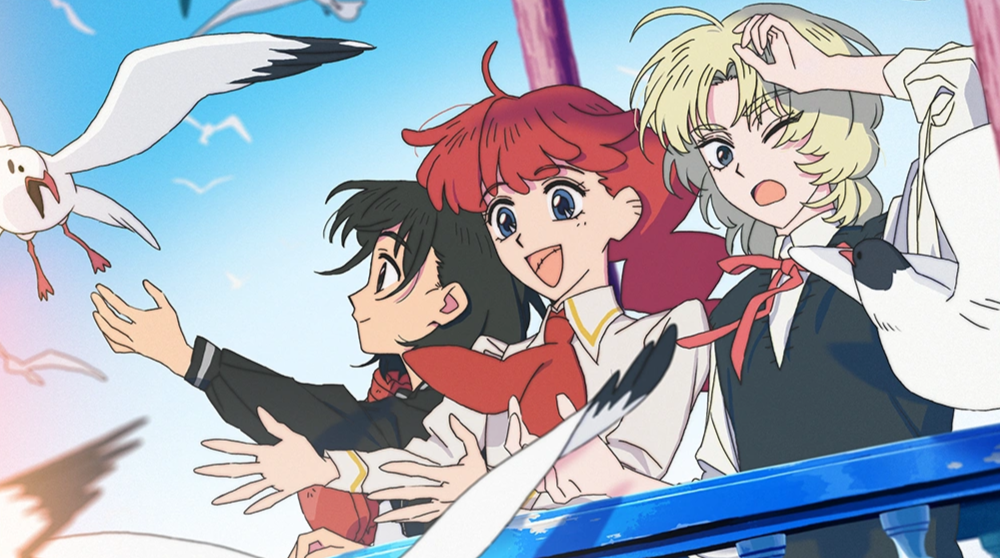
Sayonara Lara (or “Goodbye, Lara” if you prefer the inferior non-rhyming version) looks to be summer’s most promising original series. It offers a twist on Hans Christian Andersen’s The Little Mermaid where, instead of turning from sea foam to a sylph at the end of the story, she remains as foam for a couple hundred years before returning to her original form in the 21st century. From there, whether she’ll search for the reincarnation of her original love interest, find herself smitten with somebody new, or end up in a tropey love triangle is anyone’s guess. I’m not familiar with any of the J-dramas that Anna Kawahara has written for, so all I can do is cross my fingers that hiring a live action writer works out better for Sayonara Lara than it did for Wonder Egg Priority. Aesthetically, the show aims to recreate an analog feeling, with reduced color gradation (harkening back to when physical light was used to alter the color of painted cels) and character designs inspired by the work of Akio Sugino. A variety of PVs have been released to promote the series, and they all look fantastic, so if you’re not already anticipating this show, fire up a trailer or two before adding it to your watchlist.
Sequel Showcase
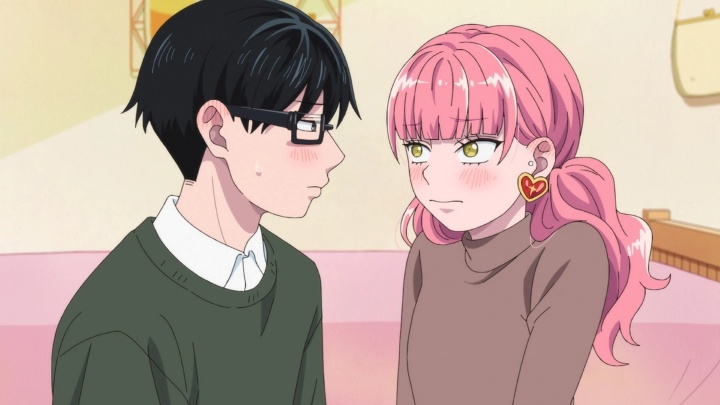
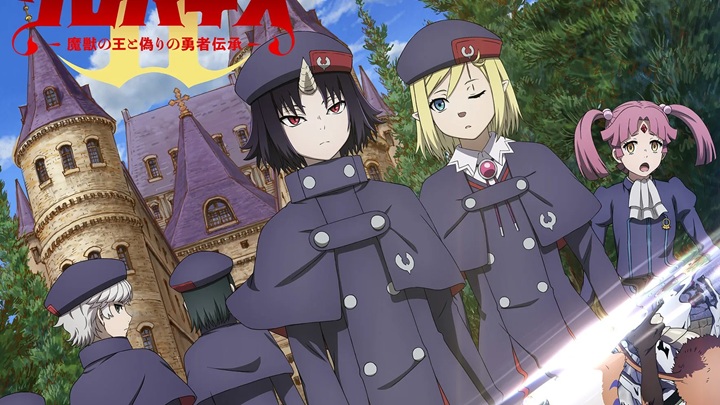
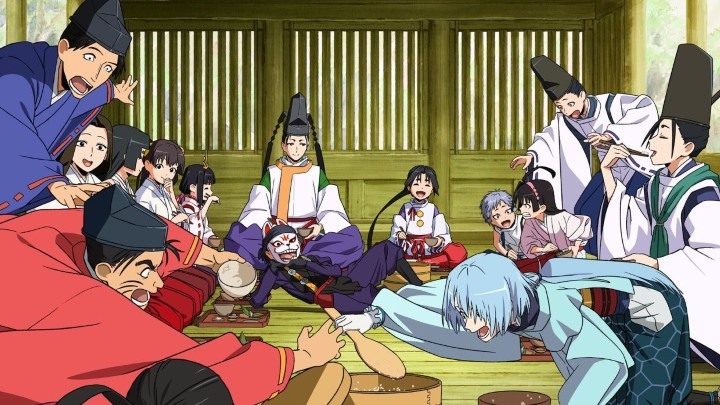
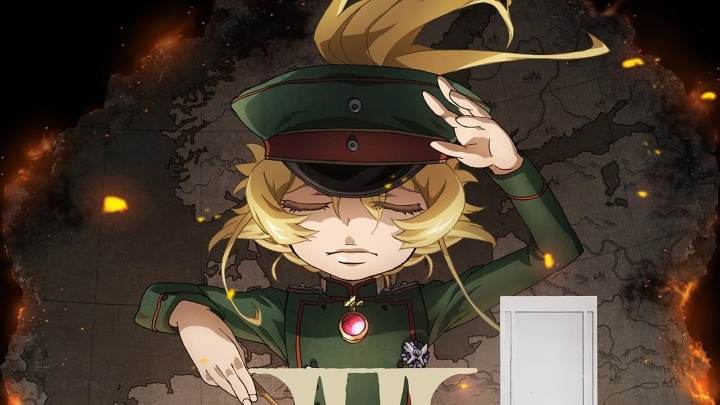
Top left: You and I Are Polar Opposites
Top right: Clevatess
Bottom left: The Elusive Samurai
Bottom right: Saga of Tanya the Evil
These aren’t the only sequels airing this summer, of course – we’ve also got Mushoku Tensei, Bleach, Grand Blue, 100 Girlfriends, etc. – but they’re the four I’m most interested in. (Actually, I’m only planning to watch two of them, but image grids look better in fours.) At the top of my list is Polar Opposites, back after just a three month break, which is so much faster than we deserve given its thoughtful approach to teenage social dynamics. Topping far more lists, however, is Youjo Senki II, which military and isekai nuts have been anticipating for years. Its new director wasn’t involved with the first season, but the rest of the core staff is the same, so Tanya the Evil fans should expect only minimal turbulence heading into July. Another Roman numeraled sequel is Clevatess II, which is set to cover the source material’s magic academy arc. That sounds derivative as hell, but the little I saw of season 1 was reasonably imaginative, so I’m still vaguely interested in catching up. And then there’s The Elusive Samurai, which I expect will be one of the year’s best-looking anime just as the original was in 2024. Whatever cultural gap prevents me from appreciating its comedy is negligible compared to its boundary-pushing storyboarding, so I’m keeping my fingers crossed for more of the latter this summer.
Highest Expectations
The Ghost in the Shell
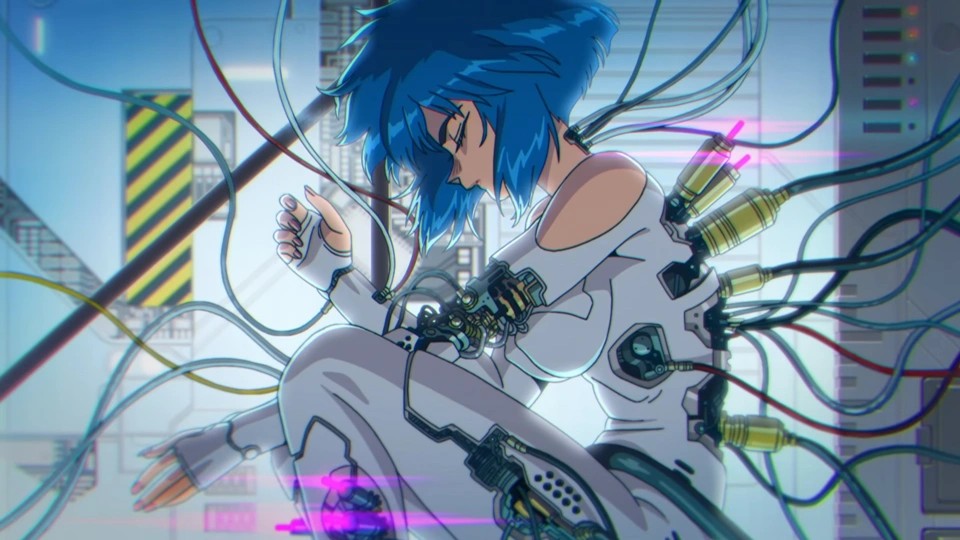
Studio: Science Saru
Director: Moko-chan
Series composition: Tou Enjou
Source: Manga
The Premise: Major Kusanagi and the rest of Public Security Section 9 return to combat cybercrime in their fourth animated timeline.
Mamoru Oshii’s films, Stand Alone Complex, Arise, and now “The” Ghost in the Shell. Over the past two decades, this franchise has been passed from team to team before finally landing outside the Production I.G umbrella, where it will receive its most manga-accurate adaptation yet – at least, that’s the word on the street. I haven’t read the comics, but over the years I’ve heard about their less stoic, more tongue-in-cheek tone (as well as their elevated level of fanservice), same as everyone else. Those differences definitely come through in the many trailers available online, all of which promise a brighter coat of paint than the series has ever received, both visually and metaphorically. The filmic atmosphere of Oshii’s initial feature is my favorite version of GitS, but I’m down for a different (and simultaneously back-to-basics) spin on the material. Director Moko-chan may be green, but he’s worked on most of Science Saru’s high profile projects over the last few years, so he’s clearly been groomed for this. It’s Tou Enjou whose involvement I’m less sure of, since his previous anime gig was the ultra technology-dense Godzilla: Singular Point. If any franchise could benefit from that style, it’s this one – I’m just hoping his infodumps don’t clash with this new adaptation’s more colorful approach.
Jaadugar: A Witch in Mongolia
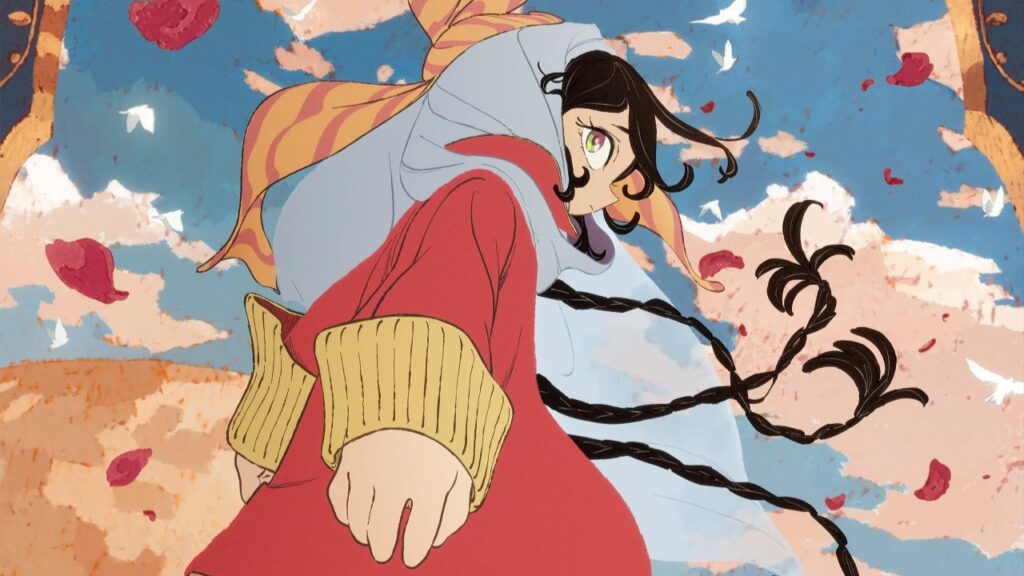
Studio: Science Saru
Directors: Naoko Yamada, Abel Gongora
Series composition: Kanichi Katou
Source: Manga
The Premise: A servant girl with intellectual ambitions and the wife of Genghis Khan’s third son collaborate to shape the Mongol Empire.
Bad news for Red River and Inept Villainess – there’s another historical court intrigue anime premiering this July, and it comes from a much more prestigious studio and director than either of those series. Jaadugar: A Witch in Mongolia (or “A Witch’s Life in Mongol,” if you prefer) is being overseen by Naoko Yamada at Science Saru, with a design philosophy reminiscent of the storybook-inspired Ousama Ranking. The use of Persian textiles and architecture give it a unique look even in PV form, and the cute character designs will likely provide balance in a period of mass bloodshed. It’s not clear how much of the Mongols’ Eurasian campaign will be included in the story, especially since the manga is ongoing, but both protagonists are based on real women from Mongolian history, so I’m expecting period accuracy. (Don’t look them up on Wikipedia unless you’re willing to spoil part of the anime for yourself.) The expansion of the world’s largest land empire, the political ascension of clever women in a society predicated on strength, and a visual style unlike anything else that will debut in 2026 – Jaadugar has all the necessary ingredients to contend for AOTY honors, even in a strong year like this one.
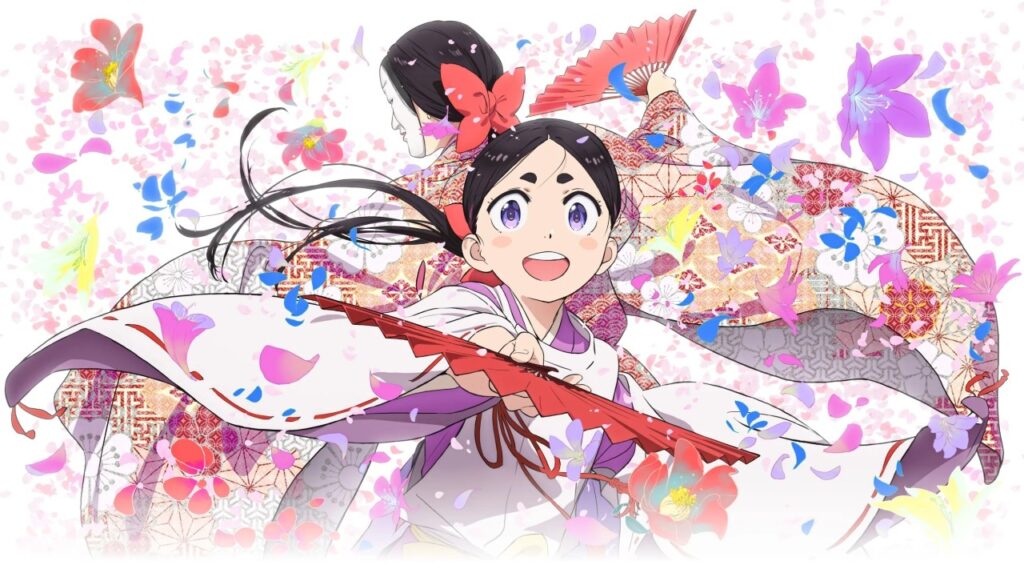
The World is Dancing
Studio: Cypic
Director: Toshimasa Kuroyanagi
Series composition: Sawako Kawamitsu
Source: Manga
The Premise: A young performer’s relationship with Shogun Ashikaga Yoshimitsu alters the development of Noh in 14th century Japan.
I wouldn’t blame anyone for mistaking a scene from The World is Dancing for one from The Elusive Samurai, whose second season will be airing alongside this show’s first. Both series are set in the same era of Japanese history; in fact, Elusive Samurai’s primary antagonist (Ashikaga Takauji) is the grandfather of World is Dancing’s deuteragonist (Ashikaga Yoshimitsu). Additionally, both series have wide-ranging color palettes and eerily similar character designs, and both have gorgeous animation. The crucial difference is that while Elusive Samurai’s flashiest scenes are set on the battlefield, World is Dancing’s animation is dedicated to the arts – specifically the dance-oriented form of theater known as Noh. I know next to nothing about Noh, so this show presents an opportunity to learn about both Japan’s oldest surviving theatrical tradition and the early Muromachi period as a whole. Plus, the production is being led by Toshimasa Kuroyanagi, one of the most underappreciated anime directors of the modern era, particularly for his efforts on Fune wo Amu (which tackled many of the same themes as Ikoku Nikki a decade before that show’s release). Given the obscurity of its subject matter, The World is Dancing may not find a big English-speaking audience, but I’m sure to be part of it no matter its size.

Frankly, I’m just more skeptical about GitS’s retreat into nostalgia with adapting the manga 1:1. Honestly, why didn’t they just adapt The Human Algorithm? That was written by Junichi Fujisaku who worked on Stand Alone Complex after all and is basically an interquel to the Oshii film (while taking elements from the Shirow manga). They can work with a complete adaptation there. And then I realized that production committees wouldn’t be interested in it because it doesn’t feature The Major and I let out a deep sigh.
So far most people have done nothing but complain about the new ghost in the shell adaptation. Mostly the dub and it’s decision to cast a young man to play Aramaki. Frankly I find this silly. Did anyone complain about Hank Azeria playing Apu for years? No (at least until the late 2010s butbI digress). Did anyone throw a fit about Michael Clarke Duncan playing the Kingpin in the 2003 Daredevil film? No. Honestly I find it ridiculous that people are complaining when the anike dub hasn’t even aired yet. The man is an actor and he has one job. To act! If he can pull off more power to him. In the 1940s Wolfman film? Claude Rains played the father of Lon Chandy Jr ‘s wolfman but Chaney was older than Rains. Despite their performances as father and son was so convincing no one cared!
Fans have wanted a more accurate adaptation of Gits for years. They finally get it and of course there is one person in the crowd complaining.