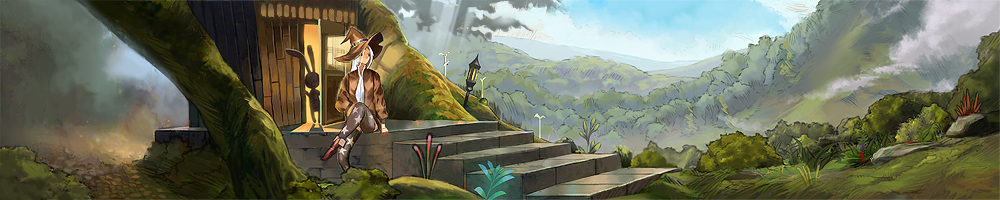
Angel Beats – 13


Well, what do you know? The creators actually did it. Talk about an awesome ending here, they really surprised me with the direction they went in, and yet it’s typical Key. It’s an episode that’s sentimental as heck, but it fits perfectly as an ending. It really shows that the creators were building up entirely for this episode, and had very much in mind how they wanted to end the series right from the start.

I really like how the creators used the time in which Yurippe was out cold in order to vanish all of the other characters: at this point, everyone has pretty much reached the point in which they fully understand the situation, and any sort of conflict is pretty much gone now. With this episode, we just have five characters remaining, mostly because Otonashi wanted Yurippe to have a smooth exit. It was far less dramatic than I expected, and I really want to thank the creators for that: Yurippe’s background was already way too angsty. Having her just accept the situation she’s in without trying to relate it back to that experience is a great way for her to go.

The entire first half was just one huge chunk of sentiment that worked surprisingly well. After everyone was gone except for Kanade and Otonashi however, the creators decided to pull THE final twist. Should’ve seen it coming, it was a bit cheesy, but who cares. It really fitted as a heart-warming climax to the series that was down to earth at the same time. As confusing as the series was, I love how this entire episode was so incredibly down to earth, without trying any twists beyond the mere necessary.

In fact, this entire season has excellent endings. I’ve yet to see one bad or disappointing ending out of all of the shows that have ended so far, and it really doesn’t look like there’s going to be any change in this considering the series that have yet to end. It’s definitely one of the pluses of the past spring season. The big minus of the spring season unfortunately was that there were just too many series that were too short. Really, Angel Beats should have been 26 episodes. I really believe that anime should find some sort of model again that would encourage for a bit more longer series. But that’s a topic that’s been beaten to death by now.

The only thing that I didn’t like about this episode was the epilogue. Really, that was just unnecessary and felt like it was tacked on at the very end by someone who didn’t know what he was talking about. The climax of the show ended really ambiguously: you really had no idea what happened to these people, and that really was left up to your imagination. That epilogue felt like “yeah they reincarnated and got back together, bye.”
Rating: *** (Awesome)

Durarara Review – 82,5/100


I personally like those series who manage to make their setting come alive, and Durarara turned out to be quite a fine attempt in this. In the middle of Ikeburkuro, it intertwines the stories of all kinds of interesting people as they live their daily lives. From seemingly average teenagers to invincible fighting machines to Russian waiters at a sushi restaurant.

It’s at its best when it can really intertwine these stories with its a-linear pacing. Especially the first half of the series manages to bring a lot of colour to the combination of different characters that parade the screen. It’s fairly episodic, but that format really allows the creators to show a lot of different things about its setting.

A lot of character-development can be found in the second half, which for better and for worse, is completely different to these colourful first parts. The story becomes a lot more linear, it becomes a lot darker and a lot more straightforward. Personally I’m a big fan of character-development when used right, but it felt to me that in this part, the creators sacrificed a bit too much for the sake of this character-development. Be prepared for a number of characters who tend to act rather illogical, refusing to solve problems that can simply be solved by talking to each other. Personally, for me it just wasn’t as good as this first half: it lacked energy, and it tried to look a bit too much like Baccano, which it most definitely wasn’t.

The animation varies throughout the series. It really starts off excellent, and especially the background art is gorgeous, though you can see that the budget becomes a little tighter as the series goes on, and more shortcuts show up. The music is also pretty good, and it has some excellent tracks for both the lighter parts and the darker ones.

Overall, this series has been created by the creators of Baccano, and the director had done a ton of other stuff including Jigoku Shoujo, Fancy Lala, Natsume Yuujinchou and Koi Kaze. Durarara isn’t among the best of them, and in that way it turned into a bit of a disappointment. From most other directors however, this series would have been gold. It suffers a bit with its characters (quite a few of them have their unlikable moments), it has a bit of a wonky pacing in the second half, but it has a pretty inventive plot, a ton of nice ideas and while not the best, it’s definitely worth your time.

Storytelling: 8/10 – The disjointed format in the first half has a great effect, so much that it feels empty when it’s not there in the second half. Tries to give too much pointless hints to Baccano.
Characters: 8/10 – Some characters are well developed, but the show ends too fast to actually use this, and others remain rather stereotypes. The teenagers aren’t really that likable throughout large parts of the series.
Production-Values: 8/10 – Some great stuff, some standard stuff.
Setting: 9/10 – Ikebukuro (a neighbourhood in Tokyo) is well fleshed out and especially comes to life in the first half, but also gets well fleshed out in the second half with a number of pretty interesting ideas and concepts.

Suggestions:
Birdy the Mighty Decode
Kaze no Youjinbo
Mobile Police Patlabor

Durarara – 24


This episode did exactly what the past arc should have been doing for bloody ages now: having people actually talk to each other. So yeah, I liked this ending quite a bit.

I expected something epic or over the top, but this works too. The conflict between the yellow scarves was actually solved quite quickly. There were a couple of bugs here and there, like how Shizuo knew where those punks would flee to, but overall I liked how the Dollars were indeed still acting on their own even though the website had shut down, and that under the lead of Kyohei they organized a mob to get back at the yellow scarves. It’s interesting to see that in the end, they did go to the path of violence.

But I liked what happened afterwards best. It allowed everything to wrap up for the series’ conclusion, so that it could leave an as good impression behind as possible. That particular background tune with the flutes also finally returned, as if to suggest: everything is back and peaceful like it used to be, yet characters have visibly matured and moved on. The past arc would have been perfect as a middle arc to flesh out characters, though not so much as a conclusion. It just lacked the energy and variety of the first half for that for me. I really appreciate that Brains Base is finally getting to work on 24 episoded series instead of just single season series, but it still isn’t enough I’m afraid. I’ve said this plenty of times by now, but there really need to be more series that go beyond 26 episodes.

Overall, Durarara certainly isn’t my favourite series from the director Takahiro Omori, but nevertheless it was pretty good. My main problem was that it just failed to live up to my own expectations, for which I only have myself to blame. Oh, reviewing the entire series is going to be quite difficult.
Rating: * (Good)

Ookiku Furikabutte – Natsu no Taikai-hen Review – 85/100


I’ll just kick in the door immediately with this review: having only 13 episodes hurts. Ookiku Furikabutte was a show that set itself apart with its gruelingly long baseball matches. Take that away, and you take one of the essential parts of the series away. Nevertheless, don’t write this sequel off, because it also has a lot of points at which it actually surpassed the first season.

For those uninitiated, Ookiku Furikabutte is a baseball show. We often see series that focus on a bunch of teenagers that try to make it to Koushien, but they all have something that sets them apart. Ookiku Furikabutte has the incredible detail it puts into all of its matches. Every single detail is paid attention to, matches are complex and realistic.

A-1 did an even better job at the animation here. The animation is just consistently smooth and detailed with very few (if any) hiccups. Movements, especially during the baseball match are all very finely detailed. You especially have to love some of the far-away shots: in this series, those aren’t cheap excuses to draw less detailed, they are opportunities for animators to animate even more fluidly than they’re already doing. This has been by far the most detailed portrayal of baseball I have ever seen in anime. Screw the length of this show, it’s an excellent adaptation in which the creators succeed wonderfully in bringing the manga to life.

Compared to the first season, the biggest disadvantage of the second season is that the enemy teams just aren’t as colourful: due to the shorter length, they receive way too little attention in favour of the lead characters. These guys however, do get pushed into the right direction. The sequel successfully manages to iron out the few bugs it still had in the characters, and added quite a bit of interesting stuff to the most important ones.

It doesw have the worst match of the series: the first big match of the second season failed to live up to expectations, even when considering the shorter length of the series. However, the second match totally makes up for it. It had to be cut incredibly short (I doubt that the creators themselves even knew about this limited airtime when they first planned out the series), but still retained the essence of the match to make it just better and better with every episode.

Storytelling: 8/10 – Excellent attention to detail in its baseball, only held back due to a warped pacing and short length.
Characters: 8/10 – Very good characters, though the enemy teams could have used more details and colours.
Production-Values: 9/10 – Consistently excellent animation. A-1 really put their best into these visuals.
Setting: 9/10 – The best portrayal of baseball I have seen in anime so far

Suggestions:
Touch
One Outs
Princess Nine

Ookiku Furikabutte – 39


Excellent epilogue of an excellent series. Overall, I’d really rate this as high as the first season: both have their own points at which they stood out: the first season really had an awesome climax with the second match. The second season in its turn trumped it with an even greater attention to detail. It’s a shame, because it really would have been superior if it weren’t for the limited episodes.

In any case, this episode stood out in that conversation between Mihashi and Abe. It was very genuine, it developed the relationship between them, it showed what kind of development has occurred between them through the past season. It’s great to see that the creators really took their time to show that particular scene.

One part I also loved was the very end, at that clip show in which we see how every character spends his evening. I was surprised at how much it added to their characters by showing in what kinds of homes they live.

In any case, even though a third season will be unlikely, my eyes are still upon aniplex here, thanks to news messages as this. It’s very interesting to see a producer company being headed by the founder of an animation company, and this might bring in even more interesting potential for Aniplex’s future.
Rating: ** (Excellent)

Sora no Oto – 07,5


Okay, so apparently an extra DVD episode was released for Sora no Oto. It’s numbered as 7,5, so I assume it takes place between episode 7 and 8. So, what did the creators decide to focus on? Was this episode meant to flesh out the setting a bit? Did a specific character get taken under the loop? Did it add some subtle details to the series as a whole? Ehm, no. It was just pointless.

I get the idea behind it, however. I really like that, because anime tends to be incredibly scared with alcohol. Especially when it comes to teenagers, while plenty of teenagers at the age of the lead characters are already drinking. I would really stand behind an episode that was dedicated to a drinking party between these characters. But the execution of this episode, and the context it took place in… they didn’t work at all for me.

So basically Kanata and Yumina find out about the distillery, so Felicia turns them drunk in order to make them forget what happened. It’s logical when it just remains to that, but the medieval paintball… what was the point of that? It could have been fun if the creators actually executed it well, but the way in which everyone started horribly overacting in a way that I don’t even think would be possible. Not to mention that it was incredibly annoying.

I actually don’t drink myself, so I can’t say this for sure, but is this really how teenagers behave after only a few glasses of liquor? To me, it feels like the creators were just looking for a cheap excuse to make the characters act really moe.

This episode wasn’t entertaining; it dragged on horribly at times, but I think that my biggest gripe would be that it didn’t really add anything aside from two lines of backstory from Yumina that didn’t really lead to anything. Everything that happened in this episode is just forgotten afterwards with alcohol as an excuse. And later, we found out that Kanata figured out about the distillery anyway, so there essentially was no point to this episode. I guess that you could say that this was the episode in which Kanata found out about the distillery because she simply did not forget what happened, but even then: out of all the things that the creators could have chosen, they choose to elaborate on something that didn’t really need any extra attention? There are a ton of stuff that the creators could have done here, to explain a bit more of that incredibly rushed ending, and in the end the creators pretty much waste it.

Overall, this pretty much reflects on my general opinion of Sora no Oto: it really has a number of terrific and excellent ideas that made me love how well they were making use of Anime no Chikara’s framework of coming with original premises. But some of the other decisions it made… were completely pointless.
Rating: – (Disappointing)

Rainbow – 12


These are my favourite types of episodes: those who completely blow my expectations out of the water. This episode was fantastic. I wouldn’t hesitate to put it among the top three most emotionally charged episodes I have seen this Spring season. The places this episode went… I never expected it to get this good. Obviously major spoilers are coming up, so do not read this entry if you haven’t watched the episode yet.

In my posts about the previous episodes, I always assumed one thing: An-chan would make it out alive. There was no way for the creators to just kill him. The previous episode’s ending seemed to confirm this, in the way that he was finally discovered again. It seemed that we would see another upcoming arc in which the lead characters again try to fend off that pedophilic doctor. And yet… he dies. Seriously, he doesn’t even last five minutes.

This episode also did exactly what I’ve been hoping that it would do: the time-skip! Everyone has grown up now, giving a complete new dimension to the story. Talk about character-development! I especially loved what Ishihara had turned into. It’s just fantastic to see that everyone has moved on now, even that doctor.

And that really begs the question here: everything looks set on wrapping the jail arc up at episode thirteen! We’ve still got an entire half left for this series, and here everyone is out of jail, everyone has grown up. Ishihara is gone, the pedo doctor will also probably go out of work in the next episode. That just leaves THIRTEEN EPISODES full of pure character-development. This is even better than I could have hoped for!

I know I often bitched against this series, but this episode just made up for everything. Madhouse, you once again demonstrate that you have BALLS.
Rating: **** (Fantastic)

Senkou no Night Raid – 12


Hmm, this episode violently pushed the motives of Yukina’s brother into a different direction. A cliched one, I’m afraid. “I need peace so for that to happen I will blow things up.” (By the way though, this episode did blow out any hint of nationalism out of the water. For those who were still doubting the intentions of this series at this point: it features a Japanese guy who plans to send an atom bomb into the middle of Shanghai).

So let me get this straight: the blasts that the Englishmen saw were an illusion. That seems to be the power of Yukina’s brother. We already knew that he’s desperately trying to prevent the atom bomb to drop on Japan. So, what does he do? He sends an atom bomb into Shanghai! If I understood correctly, he understood that it was the atom bombs and the fear of them that gradually lead to peace: in the way that countries would begin to think twice to attack a country that could devastate entire cities with just one bomb.

As a stuck-up nationalist Japanese however, he figures that the way to prevent it is to show the world what an incredible force they are playing with, as long as it doesn’t affect Japan. There are… so many things wrong with that. Yet at the same time, was this what Japanese nationalism must have felt like back then? This is an incredibly radical decisions that was made not just by him, but also several lead characters: even Sakurai let’s him just do his business here.

I must say, this series has surpassed Sora no Oto with the way that it has been so thought provoking. The motives of the villains here are just wrong, and yet they remain interesting. When watching this series, I learned a ton of new stuff that I didn’t know about the Chinese history at that time, and it’s a bit of a shame that Anime no Chikara is going back to high schools and teenagers again in the upcoming season. There really need to be more series like this.

But yeah, it does remain noticeably unrefined at times. I mean, dude. You have a gun. USE THE BLOODY THING!
Rating: ** (Excellent)

Giant Killing – 12


I think that the only criticism I can give on the way that the anime creators adapted this manga (from the perspective of someone who hasn’t read it, of course) is the recap at the start of this episode. They’re getting longer and longer now, and this episode just went a bit too far with THREE MINUTES of recap. But then again, it could also just be a way to kill time. Just about everything here was very well planned out, and you can see that a lot of thought went into it. My guess is that when this arc was planned out, it didn’t fit into a full amount of episodes, so who knows whether, instead of dragging the individual scenes on, the creators just put a number of recap minutes at the beginning of each episode.

In any case, I now very much understand why the creators took so much time for the match against Nagoya, even though the rest of the pacing was so much faster. Due to the predictability of this match, they really NEEDED to take their full time to get their point across. And I must say that they handled it very cleverly: all of the previous episodes, while hinting at how this would be the turning point, also kept suggesting that Tatsumi was going for a draw here. Only at the last possible moment did he reveal his strategy, and Tsubaki indeed lived up to his promise by scoring in his signature way.

But even then that doesn’t mean that they won, due to that cliff-hanger: the episode ends with the former star player, dead-set on returning the favour. We here have a guy who is dead set on scoring a goal, which is also a thing that the creators have been building up through the past number of episodes: it’s still nowhere near certain that this will indeed be the ETU’s first win. This effect would entirely have been lost if the match was just played within one episode.

Another upside of this is that we get a lot of insight about the Brazilians here. They’re nowhere near the stereotypes that they were when they first were introduced, they really are formidable and have a lot of insight into the game. What’s also interesting is that this doesn’t even show them at their best: we never really get to see Carlos, the best of the three, shine, because Tatsumi is consciously avoiding him. Most other sports series would have gone for the entire opposite: draw out some sort of confrontation with the most skilled player at the center of the conflict.
Rating: *** (Awesome)

Uragiri wa Boku no Namae wo Shitteiru – 11


“Muaha, I am the bad guy of this series. I currently dislike this group of people with annoying powers who have been killing off all of my comrades and subordinates one by one, so they need to be taught a lesson. So what do I do? I shoot one of them with an energy ball. Hah, now that should keep their healers busy for a couple of hours! I am a genius!”

… I mean… I think we’ve found ourselves the most pathetic bad guy of the season here. Even considering that he did intend to kill Tsukumo and did not know about the crosses that Yuki made, isn’t it just common sense to just… you know… check whether the body really is dead? There’s a ton of magic in this series here that has unexpected effects, that energy ball could easily not have been fatal. So far, that girl at least has come up with a pretty solid plan to take care of the good guys. All he has been doing is trying to look cool, poking people and dropping wine glasses.

This series really has parts at which it’s very good, but others at which it leaves so much to be desired. I mean, the lead cast still is excellent: every episode so far has continued to add more to these people, and this episode was no exception in the way that it pushed Zess and Hotsuma to new levels. The soundtrack is still really good, and this episode added even more great tracks for this series, and it also knows how to create an atmosphere.

The bad guys however… nah. There’s also no originality here whatsoever (I mean, you can compare this show to a ton of other series and concepts and it only stands out in the way that it used the things it stole from all sorts of other stories.

But yeah, I have to give credit where credit’s due: I’m beginning to like Zess more and more. I first didn’t really like him, but the way this episode showed him all eager to get some action made up for a lot. He had this smug air of “I’m gonna kick ass and there’s nothing you can do about it, bitches”. In the quiet moments around Yuki he also was much calmer, compared to the obsessive stalker he was in the first few episodes.
Rating: * (Good)