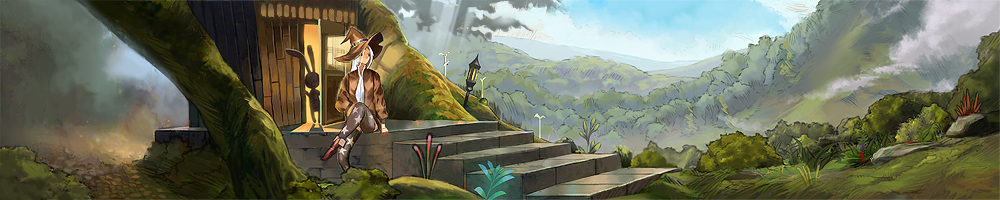
Densetsu no Yuusha no Densetsu Review – 82,5/100


Denyuuden… was definitely an interesting series. It’s the kind of anime that you normally wouldn’t expect anything great of at first sight (or at least I didn’t), and yet delivers some episodes that completely exceed expectations. The first thing I want to say to people who are planning to give this one a chance: wait until episode three.

This series is a typical example of a series with its ups and downs. About half of it is a bit of a boring fantasy, the other half is an excellent character study. The boring half resides unfortunately around the middle of the series, starting at episode five and lasting for around twelve episodes. They’re basically a long string of building up, filled with uninteresting side-characters and scenarios that have potential, but never really get interesting to warrant the amount of time this show devotes on it.

The final third is where the things get interesting, though: those with patience will be rewarded with some excellent character development: just about every character, even the most annoying ones, gets better, the plot finally spices up and develops as well, abandoning most of its generic fantasy tropes in favour of a much more character-based progression. It ends with a strong conclusion, albeit a very open ended one (and unfortunately the chances for a second season are looking slim).

In terms of graphics, this is a Zexcs production, meaning that a lot of the series looks rather generic. They did surpass themselves in this series at several areas, though. For once, some of the background art is just gorgeous, but there are also these select few episodes that finally ditch the generic looking characters that have been plaguing Zexcs for ages now and deliver some really good animation here.

Denyuuden is definitely unbalanced. For a 26 episode series, it spends too much of its time on building up that’s rather boring. It both makes it very hard for people to get through it, and takes time away from the parts in which this series gets really good. It definitely annoyed me for a couple of months when I was blogging it. And yet, I just can’t say that it left a bad taste. While not quite of Kobato-levels, the final third did make up for the boring parts. It’s a recommendation for people with patience who are looking for an interesting fantasy title.

Storytelling: 8/10 – Pacing could be better, but can really pack a punch when it wants to.
Characters: 9/10 – All characters have their moments of annoyance, especially side-characters like Milk will get on your nerves. Yet, the character development here is really good, especially for the three main characters.
Production-Values: 8/10 – Mostly nothing special, with some very notable exceptions.
Setting: 8/10 – Is at its best when it takes a back-seat and lets the plot and characters guide it. Standalone it’s pretty much your average fantasy setting.

Suggestions:
Tytania
Senkou no Night Raid
Pandora Hearts

Densetsu no Yuusha no Densetsu – 24


You know what? If this wasn’t the final episode, it would really have been a great halfway climax. And in fact, I still consider this to be an excellent episode. And as an ending: things could have been much, much worse.

This episode was in no way rushed: it really knew what it wanted to do. The main problem with this ending is that expectedly, it leaves a ton of plot threads unresolved. At the end of this episode, the war is still going on, people are still fighting and people still have plenty of things to do that unfortunately will probably never be animated due to the low DVD sales.

And yet, for a show that just cuts off in the middle, it actually had a very good ending: the things that it wanted to close off were closed off well, and this final episode really feels like a conclusion: it both wraps up Ryner, Shion and Ferris, AND it actually develops them some more. With this episode, it feels like we’ve gotten the final pieces of the development in these three.

Compare that to Koukaku no Regios: that one was put under similar conditions, and what did it do? It pulled a huge amount of desperate plot twists that made no sense whatsoever and didn’t really resolve anything. I’m really impressed at how the creators (both the director and Zexcs as well (because yes, this episode looked really good)).

Oh, and yes. Ferris finally being genuine was awesome as well. Kiefer’s appearance on the other hand was a bit coincidental, but I guess it was a necessary evil to also close off her story a bit.

Overall, Densetsu no Yuusha no Densetsu had its downs, most notably after episode four followed a huge stream of uninteresting episodes. But here’s the thing: Ferris, Ryner and Shion are both well rounded and excellent characters in the end. As for the side-characters, though… they got better. Let’s just keep it at that. ^^;
Rating: ** (Excellent)

Shiki – 20


Holy crap. The finale here turned out as good as I hoped here. It’s not the way in which this episode came with some amazing twists that made it so great; it pretty much continued with the counterattack as it portrayed two sides who are in the middle of a death match in the most literal sense of the expression. But damn, the way in which it did this was just utterly gripping.

Tomio Ookawa… just about everything about this guy is awesome. For most of the series we’ve seen him as this eccentric old man, but he gets absolutely brutal here, being the one who keeps the morale going of the people who are still alive. He’s got enough balls put his own son back into the grave, and is pretty much the co-leader of the counterattack along with Toshio. And at the same time, this episode also turned him into a murderer here, when he even kills the pople under simple hypnosis. I never really expected him to get such a prominent role in the end, but I love it. The tension between him and Toshio should make for a very nice climax that’s really going to make it a close finish. That’s also the beauty of this battle between the humans and the Shiki: neither side feels overwhelming, and both sides continue to successfully kill each other.

On the flip-side, this episode had surprisingly little of Natsuno. I really expected him to play this big role, but it seems that the creators are saving him for last or something. All this episode showed of him was this very weird cliff-hanger in the middle of the episode in which Seishiro was about to get killed. In the rest of the episode, people talk about how something happened, but we never get to see what that exactly was.
Rating: *** (Awesome)

Otome Youkai Zakuro – 11


This is the episode in which the creators decide to reveal the past, and what happened to Zakuro’s mother. It’s pretty much the episode that explains it all, right before the final climax of this series. And with this episode, this series got even more solid than it already was.

This episode was both very tragic, as surprisingly deep. The role of Zakuro and her mother turned out to be much more at the centre of the entire story than I thought, with Zakuro’s mother’s existence even being the reason that these half spirits exist in the first place, all thanks to these disturbing corrupt practices that were going on in order to try and use her powers. I mean, this episode never explicitly stated it, but it’s pretty obvious at this point that Zakuro’s mother was raped multiple times in order to attempt some good off-springs.

There is a bit of the romantic cheese: Zakuro was born out of true love and therefore has inherited some incredible powers. This is obviously a bit of a flaw, but after this backstory I don’t mind, because this episode brought more than enough to make up for it. Especially Omodaka became a much better villain after this episode: after this episode I really hate this guy as an asshole, rather than this cheesy shoujo villain.

I’m also glad to finally see an actually justified hints at incest. Anime with incest nowadays are nearly all of the type “hey we have a boy who has this hot sister. Let’s make them fall in love with each other!” Zakuro’s family in contrast is so completely broken; Omodaka has been corrupted by his father from the start, he now turned out to constantly lust after Zakuro’s powers. It’s miles away from the lazy and shallow incest we usually see.

In any case, in the end this series did turn out to have just 13 episodes, which thankfully means that Mari Okada only has three series to worry about in the upcoming fall season. She’s an amazing writer, as shown by how well she treated Otome Youkai Zakuro, so I really hope that she can give all three of Hourou Musuko, Fractale and Gosick enough justice instead of rushing through all of them. Only once I’ve seen a more extreme version, this was in the Autumn Season of 2007 when Natsuko Takahashi wrote a whopping four series at the same time. The results were still good, but really unbalanced at times (but then again, that’s pretty much Natsuko Takahashi: she’s either really solid or makes really strange design decisions).
Rating: ** (Excellent)

Shinryaku! Ika-Musume – 11


What…. was the inspiration for that first segment? This show has this tendency to sometimes use really creepy jokes, and this was another one of them. I mean, Squid Girl is one thing, but even I would be disturbed if I had to sleep next to such a creepy doll. Just shows the bizarre things that kids get into at a young age. Oh, and of course Eiko as a child was awesome.

The other two segments mainly stood out because of some hilarious standalone jokes. The American researchers have always been a bit corny, but I have to admit that I laughed really hard when that black guy put on that invisibility suit and started toying with Squid Girl and Eiko. In the same way, I loved it when Squid Girl got attacked by all kinds of animals in the third segment. My favourite was the bear.

Oh, and that first segment was also good in the way that we finally saw an entire segment of Sanae without these obsessive tendencies of her. That was really needed to balance out her character, and remind us that she used to be just a normal girl and childhood friend of Eiko.
Rating: ** (Excellent)

Nurarihyon no Mago – 24


As the penultimate episode, this episode convinced me: next week is going to be a really bad point for this series to end. Out of all of the reviews that I’m going to write this month, Nurarihyon no Mago’s will likely be the most difficult one, because while it isn’t exactly a bad series, I also see no way to recommend it in this state. I didn’t really get anything out of these past 24 episodes.

The anime creators really made some crucial mistakes here. The extra time for Rikuo’s classmates was actually very good at first sight. They took what could have been the single most annoying characters of the series, fleshed them out and made them enjoyable. The main problem however is that this series completely failed in terms of building up.

This series spends a lot of time focusing on all kinds of different backstories, creating characters, most notably Gyuki and Rikuo and his classmates. The rest of the cast however is completely ignored, not fleshed out at all and therefore feels as flat as a pancake, not to mention that this finale has ignored just about all of the fleshed out ones. Tamazuki is a horrible villain: we know his backstory, but what do we know about him as a person? He’s evil and wants power; that’s all. We know a lot about small Rikuo now, but how much exactly have we gotten to know big Rikuo? This guy still is this guy who just comes and kills evil youkai. The rest of the cast is the same: beyond their basic personalities, they’re all just the same static people over and over again.

Now, as for this episode: it was a bit of a weird point to suddenly reveal that Rikuo’s classmates have once before been saved the child version of large Rikuo (who sounded really strange with the same voice actor, by the way), but my main issue here lied with the way it tried to wrap up everything, because it exactly illustrates how it completely failed at building up something. In the end, Tamazuki does what most generic villains do and kills off all of his subordinates in order to gain power. The only thing that Rikuo and the other youkai manage to retort this with is that you can’t control people with fear, but with respect. In the end, it’s all come down to these cheesy and shallow morals, after 24 episodes of airtime. I really expected better from this. Both from the anime creators and from the original story. I mean, someone tell me that the manga was more than just “let’s all beat the stereotypically evil Tamazuki here”.
Rating: – (Disappointing)

Shinrei Tantei Yakumo – 11


In a season in which so many adaptations are heading towards an incomplete ending, Yakumo feels incredibly refreshing. This is EXACTLY what I mean by proper build-up!

These are the kinds of stories that make perfect use of their build-up, rather than either doing the same thing over and over again, or just failing to do anything with it. Koichi Mashimo has always been terrific at this, but with this series, it’s awesome to see that more and more people are walking around in bee-Train who know the ins and outs of Bee-Train. That’s pretty much the thing that made me a Bee-Train fan, and why I don’t mind their slow pacing at all. Their music is of course amazing, but what really sold me on them is how well they manage to lay out their series in terms of the big picture. There are exceptions, of course, like Blade of the Immortal (way too short!) and .Hack//Roots (tried way too much and shot itself in the foot by that), but the vast majority of their series come together wonderfully in the end. While not a Bee-Train series, the anime that really showed me that was the Irresponsible Captain Tylor that I watched a week ago. With Yakumo too: instead of focusing for too long on the boring stuff of the manga, they really wanted to rush through that in order to do the great parts of the manga justice and that’s working wonderfully so far.

The “death right before the finale”-trope has been used often enough before, but I really like the effect that this had on both the characters and the plot. At first I thought that Yakumo’s uncle’s message that he’s going to die of cancer was just there to instill some sympathy. Instead, it caused him to just throw away his life in an attempt to try and talk to Yakumo’s father (who is turning into a more and more interesting villain, by the way). The result is that he’s now in a coma of which we won’t know whether he’ll wake up or not.

A lot of time really went into the repercussions of this, and especially the two people on which his coma made the biggest impact: Yakumo and Noa. Especially Noa was just amazing to watch, having her father in a coma at such a young age, and I loved how everyone tried to help her here. Yakumo meanwhile just sat at the same place. He’s no child anymore, but at the same time this is the second time at which he’s about to lose the most important person in his life.

At the same time, the plot also really moved forward here, with Nanase Miyuki suddenly getting attacked by Yakumo’s father, and more and more people finding out that he’s actually a ghost. This episode really showed many different scenes of different people together, and that gave it a very interesting dynamic here. There are two episodes left, and I can’t wait for this one to end.
Rating: *** (Awesome)

Heartcatch Precure – 43


The start of this episode showed Tsubomi rushing into the hospital for her mother. My first thought was “ah damn, here we have the sick mother trope again, along with the tendency of series to put random characters in a hospital near the end of the series for some extra tension”. However, when it turned out that Tsubomi’s mother was pregnant, it completely made my day. What an awesome twist.

Of course the idea that Tsubomi is going to get a little sister is adorable beyond belief, but it also completely ties in with the major themes of this series: family. The entire series has been establishing the importance and warmth of a healthy family, and this really is a great time for the main family of this series, Tsubomi’s, to get expanded. And not to mention Tsubomi’s character development! You could really see that this episode changed her into an even more responsible girl. A lot of this episode was spent on Tsubomi filling in for her mother at the flower shop, exactly for that reason. And to make things even better, you always see Tsubomi blossom up when she gets to talk about her passion: flowers.

I could get worried that there is little time left for this series to spend on un-plot-related episodes, but with episodes like this I just can’t fault the creators. Nevertheless, I do want to poke this show and remind it that it does have a cast of villains that it needs to take care of. At the same time though, the way in which these past episodes have been so down to earth at this stage in the series could be a hint that the creators have planned something very interesting for the finale. Since Suite Precure starts at February 6th, and this series will probably have one more hiatus (the infamous new year hiatus that every show has), that means that we’ve got six episodes left. Enough for a smashing ending.

And on a side-note: it’s also great that we learned how Tsubomi got her name. Could that perhaps be a shout-out to how moronic some of the parents of the previous Precures must have been? “Yes, when I looked at your mother and realized how much I loved the English language, I decided to name you Love. Deal with it.”
Rating: *** (Awesome)

Star Driver – 11


And finally, we’ve gotten to the second part of the Kanako arc, this time focusing on her female servant, Simone. And it’s this point at which you can really see that this series is getting better now that we’re moving into the interesting back-stories. This episode really did some justice Simone, and turned her into quite an interesting character, not to mention also giving Kanako some extra depth here.

The interesting thing with Star Driver is that at the beginning, I thought that all of the character arcs would have the same format as Kanako’s. Instead, everyone is different. Kanako’s arc is probably the most Utena-esque: developing her both through stories of her and the people close to her. Midori and Benio meanwhile are running are both running after guys, but the latter does so to control everyone while the former is interested in them for a whole different reason. Keito meanwhile only acts behind the scenes and doesn’t seem to have anyone close to her and the biggest mysteries are Head and his replacement, You.

All of them don’t just have completely different characters, they also have completely different roles in this series, are explored in completely different ways and influence the plot in completely different ways. Utena had the advantage that it had 39 episodes to really go in-depth with its cast. This was vital because this way, it could give all of the major supporting characters three big arcs. Since Star Driver doesn’t have that luxury, I like the solution it found for that. Whether it’s actually going to work though, we’ll have to wait for that until the second half. This episode in any case was a neat pointer to the right direction.
Rating: ** (Excellent)

Letter Bee – 36


I’ve sat here for more than ten minutes now, thinking of something sensible to say about this episode. It was completely amazing, and yet in completely different ways that I expected. And it’s one thing for the twists to be stunning here, but this episode really ended up shining because of the results of these twists. Talk about atmosphere here!

Of course it’s a bit strange that Hazel and Garrard sent this young girl to poison Connor because it wouldn’t cause suspicion, only to blow up the entire abbey, but apart from that I really loved this episode. Tings really started with that new piece of soundtrack with just a piano playing, and I’m still amazed at how well the creators did justice to the story of that cookie baking girl. The main event of this episode, the Gaichuu eating the hearts of all of the nuns, went off really well because of that.

And then Gauche suddenly popped up! And he actually got shot by Lag. I really hate the creators for pulling the cliff-hanger card in order to make us wait on what it exactly did to him for next week. In fact, this episode pulled a lot of cliff-hanger cards here: what will remain of the giant Gaichuu? When will Nichi come back? What will become of the nuns who lost their heart?
Rating: *** (Awesome)