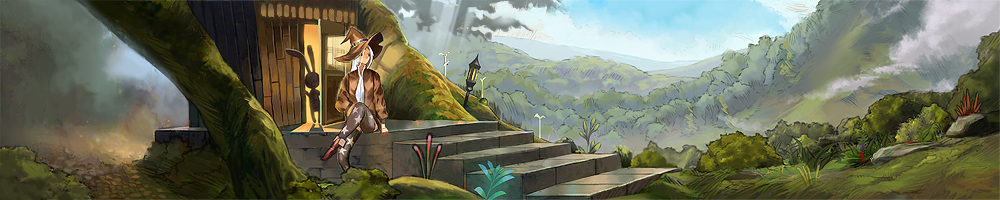
Letter Bee Reverse Review – 85/100


Letter Bee as a series that’s difficult to recommend. I mean, the heights it can reach is amazing, but its quality does tend to fluctuate and it tends to waste time, the fillers of the first season being the biggest example of this. The second season of Letter Bee is a huge improvement over the first, though, let there be no mistake about that. The amount of amazing episodes has pretty much doubled and the cast of characters grows into an amazing one that plays off each other wonderfully. It’s just not as good as what it could have been, but more on that below.

First of all, the first Letter Bee Left with an absolutely amazing cliff-hanger. It was tedious to sit through that series at times, but everything just came together in those final ten minutes. The second season immediately builds further upon that, and does so wonderfully. The creators just come with episode after episode of character-building that makes the main cast a delight to watch, with some of the most gorgeous artwork and very imaginative episodic stories that are just full of charms. The first half of the second season shows Letter Bee at its utter best.

And then… the creators found out that they only had 50 episodes to work with. With a manga that’s still ongoing, they had to make the choice to continue adapting the manga that this show is based on, only to cut off somewhere in the middle of the story, or make up their own finale. They chose the latter.

Now, I know that anime original endings are notorious, but Letter Bee actually does a very good job of wrapping up its story: a breath of fresh air after all those countless series that just refuse to end because the manga or light novels that they’re adapting doesn’t fit into 13, 26 or 52 episodes. Most of the storylines that needed to be wrapped up are wrapped up pretty decently while at the same time most of the characters also get a good closure.

This really could have gone wrong terribly, but the end result is a cohesive and enjoyable series. But the fact remains that the creators of the anime just aren’t as good storytellers as the writer of the manga. The adventure parts feel a bit sloppy and lack detail, and the emotional turmoil dies down a lot in the anime original parts. The tension becomes just less dynamic and interesting and overall it just never really manages to reach the height it once got to. It’s not bad at all, it’s just… less good. That’s one disappointment that you do need to take into account when watching this series.

Overall, today it’s very rare for series to have 50 episodes. Letter Bee’s biggest fault was that it didn’t use them well. Make no mistake, though: when this series is at its best, it really is amazing and this last for more than a dozen episodes. The big difference between the first and second season is that even when the second season is disappointing a bit, it’s not like it becomes too annoying, boring or unwatchable: there’s definitely enough interesting stuff happening, it’s just not as interesting or well executed as it once was.

Storytelling: 9/10 – Excellent at building up and closing off its story. Especially the first half is wonderfully told with a lot of creativity.
Characters: 9/10 – The main selling point of this series: at this point in the series the characters have received some excellent development that is used wonderfully.
Production-Values: 8/10 – Gorgeous at times, but unremarkable at others. The soundtrack still is very good.
Setting: 8/10 – Dulls in a bit after a while, but still good and full of moral dilemmas.

Suggestions:
Popolocrois Story 1998
Argento Soma
Natsume Yuujinchou

Letter Bee – 50


Nowhere near a great ending, but this also wasn’t a complete disaster. Really: this ending had both its good and bad parts.

Let’s start with the bad points: the climax of the series looking much more like an anti-climax. This is one thing that the creators of the anime just got wrong and it was a flimsy way to end the series. I can imagine what they wanted to do: bad guy sacrifices himself, the person that the lead character looks up to gets mortally wounded and so the lead character summons his inner powers in order to get rid of it. This was told very sloppily, though. It just doesn’t fit in the story. What really would have fitted much better was to exit this series with an exciting chase scene that involved all of the important characters.

At the same time though: that short climax did allow the aftermath to be very good. I mean, this series did not magically bring back Gauche’s heart, but explicitly stated that Lag gave him a new purpose in life. I mean, that pretty neatly wraps up his story here and I applaud the creators for that. Sunni meanwhile has the chance to recover (probably because she only got half-eaten by the cabernet), but again I like how the creators didn’t magically make her better, and instead made her recovery something that could happen over time, if it even would have happened at all.

Overall this series left some questions behind, but with most of them I actually don’t mind that they were unanswered. Lag’s mother for example had no business being inside this climax: there just wasn’t enough time to really focus on her character in detail, and instead this series gave enough hints to who she was and why Lag ended up the way he did. The rest of the details, we can fill in for ourselves. This episode has this “life goes on”-theme that I appreciate a lo. I’ve certainly seen much worse endings than this.

In the end, the big mistake that the creators made is that some of their key ideas just backfired on them. Of course the climax of this episode was one I’m referring to, but the biggest of them all was how they decided to put Gauche’s return at the end of the first season. I can definitely understand why they did it: the finale of the first season was one of the best hooks to a second season I’ve seen in a long, long while. At the same time, though they had to waste a lot of time in order to accomplish that, and because of that they ran out of time near the end when it became clear that they only could get 50 episodes.

If the creators would have chosen to continue with the story of the manga, I do think that I would have whined a lot more at this series, simply because there is no way that it could have been wrapped up in time. What the creators did here is commendable. It’s just a shame that they just aren’t the best storytellers.
Rating: * (Good)

Bakuman – 24


Aah, it’s like Kimi ni Todoke all over again!

Leaving that aside though, I liked what this episode did with its pacing: it went fast, then slow, then fast, then slow again, alternating between the developing the romance and the manga publishing. This show has always had its fast paced and slow-paced moments, but I don’t think that they ever meshed together as well as this episode, especially its first half. This kind of balance was especially missing in the first half of this series.

The worst part of this episode was the way in which the creators tried to introduce this new characters. “Oh no, I’m not conspicuous at all. I’m just reading a magazine here”. I mean, I can understand hiding the face of your villain for building up tension, but in a manga writing anime it just has no purpose and just ends up looking silly, especially when they try to play it straight like that.

Overall, if I had to congratulate the creators of the anime for one thing, it’d be making me think that the pacing of the anime went up during the past episodes, while in fact they animated even less of the manga for each episode. To me, someone who hasn’t read the manga, it did not feel out of place, unlike the first half that was in retrospective rather boring to sit through. At this point, I don’t think that I’d recommend this series, but that mostly is because of the reason that this series doesn’t feel complete at this point. With that, the first half just isn’t worth it. It’ll be up to the second season to change that.
Rating: ** (Excellent)

Fractale – 10


Okay, I have to admit: while this show may leave a lot to be desired in terms of building up, at least it knew what it was building up for. That’s not something you see every day. It’s true that the Fractale System completely lacks the depth that it could have had with the right execution, but the past few episodes… they really have been excellent adventures. Starting with the bizarre city episode, this series grew a beard that thankfully made it much wore worthwhile than I imagined.

It’s a good thing, because I was really getting Kannagi Flashbacks at that point. This episode again though: it did what an adventure climax is supposed to do. It’s exciting, the characters have become a lot more interesting to watch. Sopme of the scenes here, like with Phryne and her parents, really kicked ass here. This really could have been much, much worse.

On a more serious note, this piece of news just popped up, confirming that Fractale is very out of place on Noitamina (heck: this means that it had lower ratings than Sarai-ya Goyou). In terms of the long run though, I still think that this is good for the time-slot if it can manage to recover from this dip: experimenting with new formats and reaching out to new audiences was definitely an interesting idea, and something is telling me that upcoming summer will be especially good to the Noitamina Ratings. Which only leaves the rather risky Spring Season.

Oh, and on a side-note: I consider a good OP song to be a song that I can listen to over and over: one that remains fun to watch throughout the entire airtime of its series. At this, Fractale’s OP really succeeded with its simple but unique visuals and surprisingly catchy song.
Rating: ** (Excellent)

OVA Impressions: Bannou Yasai Ninninman


Bannou Yasai Ninninman shows off the junior department of PA Works. After watching this third installment of the Young Animator Training Project, I find it interesting to see that all installments have their own target audiences. Ojii-san no Lamp was meant for an older audience, while Kizuna Ichigeki was food for animation fans. Bannou Yasai Ninninman is targeted towards children.

Remember how Bugs Bunny always gnawed on carrots? Or how Popeye used Spinach as steroids? These things were all done in order to get kids to actually eat these things. I can only imagine that that was the inspiration for Bannou Yasi Ninninman, in which a little girl gets haunted by a very annoying carrot, paprika and milk spirit because she faints after eating them.

This OVA does a fine job of portraying the lead character as a little girl with her own problems, but where it really drops points is at how badly it wants to shove its message down the viewer’s throats. I mean, to go back to Bugs Bunny: he never outright told kids that they should eat carrots. Instead, what kids saw was this cool and cute animal with an unforgettable catchphrase that really liked carrots. In comparison, Bannou Yasai Ninninman goes: “yeah, you can save your friends lives if you eat your vegetables. It won’t taste nice, but it’ll solve all your problems!”

It also doesn’t really help that the titular Ninninman tries desperately to be funny. You know, that guy who keeps overacting in the hopes of being liked, only to end up as really, really annoying.

Like Kizuna Ichigeki, Bannou Yasai Ninninman only has one thing that makes it worth watching. For Kizuna Ichigeki this was the animation, for this it’s the characterization of the lead character: that is one thing that the creators nailed, and they did put forward a cute and innocent lead character. Oh, and that squid of her mother too, I guess.
OVA Episode Rating: 7,5/10

Yumekui Merry – 11


Well.. that was one heck of a villain fail. “I’m about to kill you! So that’s why I’m going to let you go and wait a few days.” I’m sorry, but you really can’t use those lines anymore in fiction!

The direction still is excellent. This show does a terrific job at bringing its characters to life with interesting camera angles and dialogue that lets them play off each other really well. The concept of dream demons taking people’s hopes and goals hostage still is rock-solid. So imagine how amazing this series can be when it has an actually good backstory here. This series will end in two episodes, but that really IS NOT going to be the right time for it to end!

The soundtrack in this episode was exceptionally good, and really, before that downer climax this episode actually looked like it was able to make something out of its cliched villain. The build-up was just terrific as well and Mistletain worked together really well with the teacher. But yeah, if you’re just going to make her retreat in that anti-climax after having previously established her as ruthless…

Way to go in making yourself even less threatening than you already were.
Rating: * (Good)

Hourou Musuko – 10


I am confused here. Basically, this link explains how this week showed a compilation of episodes 10 and 11, with the real episodes 10 and 11 being released when their DVDs get released. that’s nice and all, but what the heck is next week’s episode going to be about? The preview says that it’ll be episode 11 again. If I had to guess, then that will probably be a compilation of episodes 11 and 12. AIC probably ran into some delays in the same way that Madoka Magica has been delayed.

Setting that aside though, this episode was brilliant. It was just an amazing aftermath to last week’s episode and made even better by a time skip along the way that showed Nitori actually growing up. The condensed nature of this episode left out quite a bit, but the added a whole bunch of new stuff to this series. Never did this series address Nitori’s anxieties and the people who make fun of him so directly. This episode rocked because it did a truckload of new things for this series, and yet nothing felt out of place. Or apart from those guys who confessed to Takatsuki, perhaps.

Overall though, this has been an excellent season, and it has set the bar for the rest of 2011 very high in terms of romance, comedy and mahou shoujos. Hourou Musuko, Madoka Magica and Level E: all have just been brilliant. Hourou Musuko took a while to get going, but it can really call itself equal to Aoi Hana: they’re both amazing series, but both are in their own distinctive ways.
Rating: *** (Awesome)

The Hakkenden Review – 85/100


The Hakkenden is an OVA that I decided to check out because it’s something like an animation fan’s wet dream. Seriously, it was a series that just kept returning on the resumes of famous, well known and very talented animators. To just name the most notable people who worked on this thing: Masaaki Yuasa (Mind Game, Kaiba, Yojou-han), Takashi Nakamura (Fantastic Children), Shinji Hashimoto (Kid’s Story, Black Heaven’s OP), Satoru Utsunomiya (Animation director of Gosenzosama Banbanzai), Shinya Ohira (Wanwa the Doggy). And if that wasn’t enough already: among the key animators were Mitsuo Iso and Takeshi Honda (Dennou Coil) and Kenji Kamiyama (Seirei no Mobirito, Ghost in the Shell SAC) was one of the art directors.

Seriously, outside of anthologies like Genius Party, I don’t think I’ve ever seen such a large amount of ridiculously talented animators and animation directors come together on one project. The producers really took both up and coming talent with the intention to make an incredible visual masterpiece.

And indeed: the animation in The Hakkenden is exquisite. It’s got thirteen episodes in total, and just about every scene looks gorgeous. The amount of still frames is kept to an absolute minimum, but what makes this show really stand out is its truly excellent inbetween animation. Let me tell you: this OVA has been one of the first, if not THE first, that managed to successfully and consistently animate small armies, never giving up any kind of detail on even the most insignificant soldier.

Beyond that, the animation also manages to bring its characters to life. The amount of detail that is in their movements is just completely amazing throughout nearly every episode, but the ones that really stand out are episodes 4 (Masaaki Yuasa and Takashi Nakamura actually worked together on that one), 9 (Satoru Utsunomiya has a unique style that focuses on many subtle movement and incredibly fluid framerates and gets total freedom to use it here) and 10 (Shinya Ohira and Shinji Hashimoto are both wild and vivid animators and show this off in an absolutely stunning episode) are absolute visual masterpieces.

As for the story and setting: the Hakkenden is a very authentic series: backgrounds are all excellent, the stories that it tells about its characters create a wonderful atmosphere of the darker days of Japan’s history.

This OVA basically has two major problems. The first is that it is a fervent supporter of a guy named Murphy. Seriously: whenever you find yourself thinking “this could go wrong really badly”, it does. This show really tries to drag its characters to hell over and over, and that does get a bit one-sided after a while. Especially considering how it paints the picture that anyone who held even the slightest amount of power in Japan was a total bastard over and over.

The second flaw is that sometimes, it really feels like complete scenes are missing. There are parts that this series refuses to explain, leaving huge holes in the story. The story jumps around way too much: at one time the eight titular dog warriors are together, then they’re split up again, then they magically are together again. The worst is how it just refuses to explain how they all meet each other: they just get introduced, they tell their story, and suddenly they’re all travelling together.

It’s definitely worth the watch, though. I’ve seldomly seen animation this consistent and this good at bringing its characters to life. The Hakkenden was an incredibly ambitious project, especially when you consider what some of the people involved all ended up accomplishing after they finished their work on this series.

Storytelling: 7/10 – Great atmosphere, but a bit disjointed and one-sided in terms of the big picture.
Characters: 8/10 – Solid characterization (also really helped by the animation).
Production-Values: 10/10 – Absolutely fantastic. Amazing and life-like animation.
Setting: 9/10 – Very authentic picture of the old days of Japan, with roots deep inside folklore.

Suggestions:
Genius Party
Bakumatsu Kikansetsu Irohanihoheto
Robot Carnival

Supernatural The Animation – 09


… and now, for something completely different.

Supernatural’s episodes so far have all pretty much followed the same format: something supernatural is going on, the two brothers run into it, they research, and at the end is a serious conclusion that gives more depth to the supernatural thing in question than what it seemed at first sight. Not any more, though. This episode opts for the silly route.

This episode was obviously out of place, but that’s not necessarily a bad thing: it’s good to break up the pace like this. As long as there aren’t too many episodes like this, it’ll work pretty nicely to bring in some variety in this series. In any case this episode did its job of fleshing out Sam and Dean.

The problem with this episode was that it may have picked a bit of a dead horse to fool around with. Bad luck charms, oh dear. When was the last time we saw one of these? They were already overused ten years ago. The worst part of this episode however was that it just didn’t make any sense whatsoever: before, this series tried to be realistic and believable, but some of the things it pulls here are just downright impossible. At times it tried to get away a bit too easily by blaming everything on a god… The worst part was probably how, near the end of the episode, they just “happened” to end up this narrow ledge, right above the casino’s safe, just as people were trying to break into it. Where did that come from?

Nevertheless, it’s another good example of how an original scenario can make up for a cliched premise: something may be overdone, but if you bring it in the right way it can still be fresh. Dean was really funny in this episode, but what really saved this episode was the ending. That really made up for a lot by just how completely out of left field it was, breaking quite a few tropes around the “sexy dealer” in the process.
Rating: * (Good)

OVA Impressions: Black Lagoon – Roberta’s Blood Trail – 04


I expected this episode to be full of action. It wasn’t. The action scenes were small and instead this episode was full of dialogue and build-up. And strangely enough it was just as good as I hoped.

Roberta’s Blood Trail shows the strength of OVAs. I mean, it really feels like Black Lagoon has matured even more since the I last watched it. In any case the pacing of this OVA allowed the creators to really take their time: the slow pacing is used quite effectively to give just about everything extra detail. Seriously, this episode was full of people talking about themselves and each other. This really feels like one of those arcs that would not have worked at all as a TV-series, and therefore it fits the OVA format perfectly.

What’s also very typical here is that the creators pretty much put Revy out of the picture for the climax here: with both of her arms shot she won’t be part of the big climax of this OVA. At first I really thought that Roberta’s Blood Trail would be much in the same alley as the first Roberta arc, which was very much hinted by the first episode. Instead the ending seems to be turning out much deeper than expected, with everything depending on whether or not Rock’s huge gamble turns out well. It goes without saying that if the creators play it right they can reach an amazing conclusion with that.
OVA Episode Rating: 8,5/10