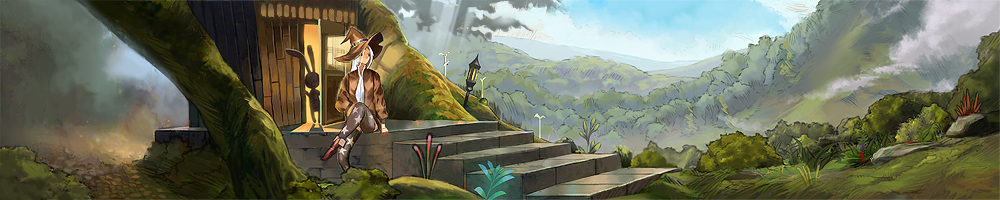
Mouretsu Pirates – 10

And again this show has gotten better. This was the most dangerous episode of this series so far, and it really shows how much time this series spent on build-up now. This episode showed just one simple encounter between a small unnamed fleet, but the build-up, the tactics and the way in which everyone had a different different reaction to everything that went on: it all rocked.

Marika really is the best lead character of the Winter Season, perhaps with the exception of Natsume (who did already have 3 seasons of build-up). When I first saw the promo image for this series, I really feared that she’d be another moe blob, but the contrary has really happened. In this episode she again showed that she’s intelligent and level headed and I really liked how she considered that the fact that they had a princess on board was a great trump in terms of negotiations which should be saved for later. I like how this is one of those shows who doesn’t treat its audience like idiots, yet still remains it light-heartedness and innocence.

Also, for the people complaining that this show isn’t really about pirates: isn’t that the entire point of fiction? To give different interpretations of known facts? I mean, it’s in the same way that people complain about Naruto not being a ninja: the classic image most people have about ninjas (wearing all black with a face-mask on) are also completely different from the real ninjas. You can criticize Naruto for a lot (dragging on, having a really annoying set of main characters), but it did create its own universe based on the ninjas. Same as with this series: it ignores image of the “RRR”-pirate, and instead takes another part of pirates (them being used as mercenaries) and creates a setting around it with the premise of putting this into science fiction. I love it so far.
Rating: ** (Excellent)

Last Exile – Ginyoku no Fam – 21

Here’s an interesting twist: Fam actually admitted that she was wrong when all she did was trying to figure out a way to bring the grand race back. I’d almost praise, her if it wasn’t for the fact that we’ve still got a climax left. I mean, it’s not certain, but there are an awful lot of arrows pointing into the direction that she’s going to be shoe-horned into saving the day and getting rid of that giant Exile that was activated in this episode. If the creators pull that twist, then all of this build-up would have been for nothing. It’s because of that that I’m not going to judge this series yet, because that ending will be really, really important for this series.

And yeah, this episode was fairly straightforward build-up. It was a bit strange when Luscinia just walked out with an unconscious Augusta and nobody found it strange, but then again he also holds a very high position. It’s the same here: if the ending is good, then this episode is also good. If the ending is bad though, then this episode was just delaying the inevitable.

Still, I liked that the creators succeeded in portraying that that doomsday weapon really is a doomsday weapon. These are themes very heavily lifted from Gundam, of all things and it makes me wonder why Luscinia spent so much effort in getting this war going if he could have just fired off that thing a few ties, but ah well: he has been proven to be a deranged ruler who believes that he can bring peace as long as he is the ruler of everything, so I probably shouldn’t look too deep into the meaning behind his actions.
Rating: * (Good?)

Tantei Opera Milky Holmes – 22

This show is the product of deranged minds. I… this episode… what just happened?

For some reason the intro for this episode showed different images. It turned out to be a preview for this episode. It all looked fairly normal there. but holy crap, talk about taking things out of context.

That pig guy was the single most annoying character of the second season. His speech impediment got old quite fast and I found it a bit distasteful of what they did to him. Fat people are way too often the butt of bad jokes in just about every form of entertainment out there. This episode however, took all of that to the extreme, absurd, and completely crazy by suddenly have him become the center of the show by absorbing every single Toy that Sherlock Holmes captured as a crime fighter save for one.

He then proceeds to steal all of the fat and oil from the entire city, gathers it in one place, and uses his powers to turn into some overblown bishie leaving everyone but Milky Holmes as a shriveling static electricity-prone mess. I thought that that black haired girl with that really creepy voice would steal all of them or something, after having lead Milky Holmes to it, but she only needed one of the Toys that were set free.

This pattern seems to be all over the second season: having a very dull first half in each episode, only to go completely crazy in the second half of each episode. This episode had it too: the pig guy in particular got particularly distasteful. If only I knew at the time what the creators were building up for… That’s the bizarre part of this show: it’s completely insane, yet it puts a ton of focus on building up its jokes beneath the randomness.
Rating: ** (Excellent)

Guilty Crown – 20 – Or an excuse to ramble about TV-Ratings

Gasp! Could it be? Guilty Crown actually observes some basic rules of storytelling for once? The flashback that took up the majority of this episode was pretty much the best part of Guilty Crown so far, because 1) it actually bothered to explain things rather than pulling whatever is the most convenient out of its ass, and most importantly 2) it had no bloody Shu in it. Of course the ending of the episode ruined things again, with Shu still being in Jesus-mode and all.

That’s not why I decided to devote this week’s Kaleidoscope to what is in my view the worst Noitamina show ever made. Instead, I found out something interesting that I’d like to share and talk about: Noitamina’s tv-rankings. For a while, I was really afraid when I found out that Guilty Crown was selling so well. I really feared that this show will set horrible standards for the future of Noitamina. However, the success of Noitamina isn’t just based on sales, isn’t it? What made the timeslot big in the first place wasn’t the sales at all; it was the ratings it got. I mean, at its height, the timeslot was by far the most popular late-night timeslot out there.

Because of that I decided to look up the ratings of the different Noitamina-shows. They were by all means weird and very inconsistent, but also very interesting. I made a compilation of the average ratings for each pair of series (unfortunately I couldn’t find ratings for each individual show for the double-slots), using data gathered from here, here and here. This season’s Noitamina shows are up to last week’s episode. All of these ratings are in percents.
Honey & Clover – 3,04
Paradise Kiss – 3,19
~ayakashi~ – 3,5
Jyu Oh Sei – 3,5
Honey & Clover 2 – 3,2
Hataraki Man – 4
Nodame Cantabile – 4,39
Mononoke – 3,48
Moyashimon – 4,56
Hakaba Kitarou – 4,8
Library War – 3,47
Antique Bakery – 3,45
Nodame Cantabile Paris – 4,62
Genji Monogatari Sennenki – 3,32
Eden of the East – 3,96
Tokyo Magnitude 8,0 – 3,56
Kuchuu Buranko – 2,66
Nodame Cantabile Finale – 3,25
Sarai-Ya Goyou/Yojou-Han – 2,08
Shiki/Moyashimon Live-Action – 2,56
Shiki/Kuragehime – 2,38
Hourou Musuko/Fractale – 1,76
C/Ano Hana – 2,63
No,6/Usagi Drop – 2,12
Un-Go/Guilty Crown – 2,18
Thermae Romae/Guilty Crown – 2,17
Black Rock Shooter/Guilty Crown – 1,86

Let’s first look at the decline of these ratings, which started with Kuchuu Buranko, and really set through when the timeslot went double length with Sarai-Ya Goyou and Yojou-han Shinwa Taikei, where it reached staggeringly low numbers when you compare it to the previous ratings. After Shiki which aired right afterwards, this also was the last time where Noitamina lost a lot of its experimental touch in terms of animation and scenario and series structure. Quickly afterwards, their strategy of appealing more to a teenaged audience started, with Fractale. This is where the timeslot reached its all-time low with a rating of 1.76.

C and Anohana meanwhile managed to lift up the ratings again slightly, by being overall really well made series (Ano Hana was my favorite series of 2011 for a reason), but the focus at a younger audience remained, culminating in this season, which pretty much is the worst that in terms of actual series (for me at least). The thing is though, that Noitamina’s audience seems to agree. Last week’s ratings were really, really low for the timeslot and that landed it a on the second worst spot, just before Fractale and Hourou Musuko. In other words: the experiment of appealing more to a younger audience… has pretty much failed in terms of rating.

Now, if we look at the kinds of series that in the past did lead to really high ratings, things get a bit weird, because these numbers are rather inconsistent at times. There seems to be one red thread amongst the top performers though: fandom. What’s the best rated Noitamina series out there? It really surprised me when I found out for the first time, but it’s Hakaba Kitarou of all things. The one thing that series did was appeal to everyone who grew up with Gegege no Kitarou, while also giving it a new look and feel. After that comes Nodame Cantabile, which also has a very big built up fanbase, and it also really helped that the first season was incredibly good, solid, and really hard to dislike.

When looking at the series after that though, things get really weird. By far the strangest is how well Ayakashi Japanese Classic Horror did. Out of all the Noitamina-series, that was by far the most experimental and yet it didn’t alienate its audience and delivered a really solid rating of 3.5, the best of the timeslot so far, and until Hataraki Man surpassed it with a random story about a working lady.

And I think that that’s also one of the appeals of why the early slice of life series of the timeslot scored so well: they were really easy to relate to. They were written in a very down to earth way. The latest Noitamina shows however? you can’t really relate to those. Except perhaps for Usagi Drop. Even Anohana: I obviously loved it, along with a lot of other people. But mainstream appeal? It was just too dramatic for that.

And here is the thing: the audience of Noitamina can very much appreciate a good series. Of course I don’t agree with the relatively low ratings for Sarai-Ya Goyou and Yojou-Han, but I love that there is an actual audience for Ayakashi, Mononoke, Nodame Cantabile, Hakaba Kitarou, Honey and Clover, Hataraki Man, Eden of the East, Tokyo Magnitude, and even Genji Monogatari and Antique Bakery. It’s a shame that a lot of the audience was lost during the move to the double time-slot, but it’s also very interesting that another part of the audience doesn’t agree with the move to a younger audience.

You see Noitamina, the reason why that doesn’t work is simple: competition. You started with enabling a hole in the market: series aimed at an older audience at ta time when they are easy to watch, yet they contain a lot of substance to actually make it worth the limited time that adults have inbetween their jobs and studies. However, when you move over to a younger audience, you’ll enter a much more saturated market, in which it’s much harder to stand out. That market is completely different in the way that they consume anime, as shown by the really high dvd sales of Guilty Crown, yet really disappointing ratings.
Rating: (Enjoyable)

Natsume Yuujin-Chou – 49

This show is such a troll. First it promises a Reiko episode, only to be about something completely different. And now it turns out that the hints for Matoba being involved again also are false and instead some random exorcist was the one who sealed off Houdzuki. I can understand why this is done though: the fourth season is really dedicated to expanding the world of Natsume Yuujin-chou. It’s episodes like this that show that this series isn’t just about the main characters and that they live in a very expansive world.

In this episode, Natsume really pushed himself to his limits. Physically, at least, to the point of exhaustion. Where the third season focused more on his growth as a character, in the fourth season he seems much more scared of something bad happening and puts in much more effort to prevent that from happening. I also loved Nyanko-sensei in this episode Where I previously complained that he was a bit repetitively getting removed from the plot, here he was an active part of it. I especially loved how a the end of the episode, he got back at Natsume for abusing him so much in his rush to solve things.

Now, I also am going to have to be a bit negative, though. The fourth season had the best opening episodes of all four Natsume seasons, but after that things changed a bit. In particular, there has not been a stand-out episode like the Hotaru episode or the episode where Natsume meets Touko. ?The past episodes were still really good and among the best of the season, but for Natsume Yuujin-chou’s standards, they were missing something. That little edge in storytelling that makes you leave episodes with a heart-warming feeling.

The third season would have been a great point to actually end the series. The manga was incomplete, but that incredibly heart-warming ending was awesome and well built up. The fourth season though, is building up for something that still needs to arrive. It’s fleshing out the world of Natsume Yuujin-chou for awesome stuff, but with these kinds of things it’s always a matter of hoping that the producers will green-light a fifth season, a treatment that only the most popular series or shounen fighting shows manage to acquire. The thing is also: the more episodes that this show takes, the harder it becomes to recommend it.
Rating: ** (Excellent)

Chihayafuru – 22

Holy crap, Chihayafuru. Out of all of the minor characters that Chihaya had to face so far, this was by far the best match against it, and it totally went against my expectations. Yamamoto Yumi was wonderfully fleshed out in just one episode, and as a first I actually found myself rooting for both, rather than the match being a simple “protagonist versus non-protagonist”.

I really thought that at this point, Chihaya would get to the queen finals, but then again that may also be because the story is nowhere finished, I kept hoping for some sort of finale with Arata and the Queen. At this rate that ending is not going to be about an important match at all, but who cares? With this series’ writing talent they can still find a ton of great points to end on.

I loved how this episode was even more full of emotion than usual. The hot sun had a lot to do with that, but also Yamamoto and her coach really brought life to this episode, and did so in a way that I’m really not used to for characters who only appear in one episode. And as an added bonus, she wasn’t one of those “I’m really pretty”-girls like you see everywhere in anime, and yet she still looked great. The thing with anime is that it’s so focused on “hot” looking characters that more often than not, it’s the plain looking characters who stand out (and more often than not, the supposedly “hot” characters try way too hard to look good). In this case the animators gave her just as much attention as the rest of the cast, and it showed here.

Also, Chihaya: I really thought that she learned by now. And yet she was taken over by her instincts again. It just shows how hard it is to get rid of things that you’ve been doing for years. Just one tiny incentive is enough to get back to your old patterns. This episode was a great point for Chihaya to actually mess up on the show’s title card “Chihayafuru”.
Rating: *** (Awesome)

Another – 09

This series really loves its red herrings. It doesn’t really work to make this show unpredictable (the two deaths of this episode had it coming from a mile away), but ti does make the episode ery nerve-wrecking. It cannot keep pulling this forever, though: all deaths in this series have happened right at the end of each episode. This cannot carry the series forever at this pace.

I like the use of the tape, but it’s too simple. Because of that the creators had to pull that weird twist of one of the characters screwing up before the most important parts were revealed. If you’re going to do that, then build in some extra challenge in trying to find the tape or something. Instead, this just screamed “oh no, we need to pad out this story a bit longer!”

In any case, Misaki was acting a bit weird in this episode by almost playfully nearly triggering accidents. I doubt that she is the real shost, though: that would be too obvious. My biggest candidate for this right now is Naoya, that blond kid who broke the tape. After all, that action does make perfect sense if he was the ghost, and either consciously or uncosciously wanted to prevent people from finding out about what stopped him. And with this episode, I also think I have an idea of what that might have been, after he called it a “sin”: he probably ended up killing the ghost student somehow. In the wy he told it it probably was a fortunate accident, but that would also explain why no student turned out to be the ghost that year.

There was also one particularly interesting twist that I realized just as I finished writing up this entry and taking screenshots. I’m not going to say it right now because I think it’s something everyone should figure out for himself, but I finally realized the link between a lot of the deaths.
Rating: ** (Excellent)

Aquarion Evol – 10

I’m reviewing this episode a day late, but still: there are two shows who, on the same day, decide to air an episode that feature an alien just arriving and goofing off while trying to make sense of this new world.

The big difference between the two is that the alien in question had never met a girl in his life, and therefore was constantly dazzled by all of the girls here. The creators also waste no time in creating another couple in this series, as the frog doll girl immediately starts hitting on him (and vice versa).

With this, it really seems that this show is going for the couple root. That leaves a few oddballs: Shrade, the fangirl, Mikono’s brother, and the green haired girl. I do not feel like looking up all of their names right now. Aside from the fangirl, there strangely hasn’t been any hint that they will hit it off somehow, but I can really see this series trying. Especially Shrade seems weird in a series like this that is so focused on romance. Mikono’s brother and the green-haired girl meanwhile are just pointless love triangle bait for the main characters. They should just hook up together and everything will be solved. (Well, maybe not everything, but you get the point).

What also surprised me here was the complete lack of action in this series. This is Satelight. I’d at least have figured that the creators would stuff in a random reason to show another overblown fight, but instead this was all character-building. It wasn’t exactly the most interesting or exciting episode of this series, but this show will be 2 cours long. I’m intrigued in how the build-up will pay off.
Rating: * (Good)

Phi Brain – 22

I really am amazed: this show was already doing incredibly well. And here it surpassed itself yet again. This episode once again was stunning, acting like there’s not going to be anything such as a sequel, and packing some awesome plot twists. I mean, this is the episode where everything comes together. Seriously, I’m not kidding when I say that Phi Brain has just become my favorite Sato Junichi series since Kaleido Star.

At my February Summary, I remember someone asking whether the puzzles in Phi Brain improved somewhat. Like, a big criticism of the first few episodes was that we as the viewer weren’t given an opportunity to solve the puzzles ourselves. And to that, I have to say: at this point, that doesn’t really matter anymore. This episode had no puzzles whatsoever. At this point it’s not about solving puzzles, especially once the puzzles changed into actual battles. Right now what’s important is how this completely warped organization exists who trains kids into puzzle solving and making machines.

Jin’s background was awesome. He really changed many times in the different flashbacks in this episode. There was a point at which I really thought that he’d be Baron Pythagoras, but with this episode that theory also seems dead. Speaking of which: him being dead was a great twist for Rook, not to mention how in the visions of the future, it was Kaitou who stood there, rather than Pythagoras who apeared in Jin’s visions.
Rating: *** (Awesome)

Rinne no Lagrange – 09

And yet again this show is building up. Thankfully the creators did give a reason for it: everyone is pretty much waiting for back-up to arrive. So yeah, in the meantime nothing much is gonna happen. It’s a stark contras with Aquarion, which figures out a big battle in every episode. If this show can pull it off in the end, it will be the better approach, because it can put more focus on the individual battles, rather than them turning into some sort of unity sausage (is that a proverb in English as well? I’m not sure…).

The big pitfall of this approach is that the series isn’t going to pick up enough momentum. In the end, what really happened in this episode? Some of the villains wandered around and met a bunch of people. The direction and timing made for some funny moments and Madoka’s past was nice, but it’s still missing something. If this was just one episode I wouldn’t be worried, but this has been going on for quite a few weeks now. Still, this is a Tatsuo Sato series. In the end, this series too puts emphasis on letting characters play out, it just does this a bit later than Mouretsu Pirates. Because of that, Mouretsu had a dull beginning, while it’s getting really interesting now, whereas Rinne no Lagrange’s start was excellent, only for it to catch up on the build-up right now in order to prevent the characters from turning into underdeveloped stereotypes.
Rating: * (Good)