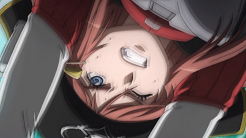
Zetman – 07

The conclusion of this arc is fairly straight-forward. After all of the tension created in the previous episodes, this episode is all dedicated to a big fight against the remaining Player Brothers,in order to balance things out. The main point that this episode tried to make was probably restoring the bond between Jin and Kouga, andpushing Zetman’s factors to a new level, to the point where his Zet factors don’t drop.

The fight was up to Zetman’s standards, though not the best of the series. After all of the rush in the early episodes, I’m pretty surprised how straight-forward and fairly slow-paced this episode was. It’s interesting how this show is the most interesting when it’s building up.
Rating: * (Good)

Hyouka – 04

People actually do research i this serise. People do background checks and look through records very carefully to piece together the puzzle of what happened. It really has been ages since the last “lots of talking” series that was done right, a genre I’m a huge fan of. It’s not the best among them, but just seeing such a series hit the mark again is very satisfying.

What this series still lacks the most compared to the best of the genre is emotion. It’s all very neutral and composed. That’s wonderful as a build-up, and this series can use it, because it’s 21 episodes long. The next step will really be to go wild. But this will come into the picture later on in the series. For now, I loved how each character took his or her time to present what he/she found and the theories he/she had based upon it, and how they all conflict together.

Still, I cannot for the love of me imagine how they would turn this into 21 episodes, or at least without resorting to lots and lots of random stories. This episode looked like it solved about half of the mysteries in this series. THe end of the episode seemed to suggest that about one more episode, perhaps two, would be enough to cover the rest and the deeper meanings behind it, and yet it is the main mystery of this series.

What I also really like is how even though the characters look like the typical idiot teenagers you see everywhere, they actually quite aren’t. Houtarou is at times used as a writer’s vehicle for formulating the right theories, but the rest of the characters feel human in the way they investigate and try to formulate theories, they’re flawed but they really try to use their heads and think over all sorts of possible scenarios. And even Houtarou was wrong in this episode (or at least that is very much hinted).
Rating: ** (Excellent)

Aquarion Evol – 20

Really Aquarion, this is more like it. Finally your plot is developing significantly. Ideally this episode should have been earlier, allowing for more time for all of the things to develop, but this was nevertheless glorious.

I am really surprised at Andy by the way. He started out as the typical best friend: the guy who is just there to support and never stands out. And here his subplot with Mix has actually been quite interesting. I feared that it’d turn into yet another kidnapping story, but the twist of reversing her gender was really used well here. The real main characters, Amata and Mikono meanwhile served in this arc as support characters: finding out what’s going on, helping others. That’s actually quite neat and I’m glad that unlike Macross Frontier, Shoji Kawamori actually allowed this. It allows for much more interesting character dynamics if the roles of these characters aren’t so constrained.

This episode also finally turned into that emotional roller-coaster that the first episodes had been promising. Just about every character acted differently in this episode and there was a wide variety of emotions all coming together. Finally! The most hilarious of which was Yunoha and her sudden out of place male speech patterns.

And that glorious music! Seriously, my opinion of Yoko Kanno increased significantly after listening to this soundtrack. Her best work still is Cowboy Bebop, but this really is a good contender for second place. The action in this episode also was better than usual, and the interesting thing is that this was not because of an increase in budget, but rather better directed fights and a better use of shots and colours. Especially that Andy scene was a very interesting visual idea.

And then there is Fudo with his donuts again. And the weird thing is that his symbolism all oddly makes sense. It’s completely silly, but rather than being pointless symbolism for the sake of having silly symbolism, it does fit in to the context. This show is weird.
Rating: **+ (Excellent+)

Summer Season Preview

The upcoming season, there will be 25 series in total. A healthy number for a Summer Season. There will be interesting stuff to watch, however, it really looks like it will not live up to the currently excellent Spring season. The reason is the amount of series that have the potential to stand out. On a first look, I could only spot two series that had that, both Josei. The rest of the series all have their perks, but not enough to really set themselves apart in the way that the current season has done by looking different, unique or in any other kind of attempt to break a mold. I’m a bit pessimistic about this season, but that may also be because while I was compiling this list and gathering the right links on Anime News Network, I kept getting bombarded by ads for the Armed Librarians. I tried, but it’s hard to not subconsciously compare things to that after a couple of hours…

In any case though: this is a big season for Josei. I don’t think we ever got three josei series in just one single season. Beyond that, the science fiction and fantasy genres also have some interesting stuff coming out. The bad shows meanwhile are exactly the bloody same bad shows that we get every single season, unfortunately. AIC is the studio with the most series coming out, unfortunately. Sunrise, Studio Gokumi, Dogakobo and JC Staff also have multiple series coming out.

Again, this list is mostly about a quick look at premises, staff members and production companies. I have no idea how the original source material for these series are, because I haven’t read them.

Dakara Boku wa, H ga Dekinai

Summary: “The main character of the story, who lost his “erotic spirit” by making a contract with a beautiful Goddess of Death, struggles to regain that spirit back. Ryousuke cannot enjoy himself while living with the Godess of Death Risara under a contract, because he gave up his erotic spirit under the deal. He cannot get excitement from watching girls and wonders if his adolescent days are over. “ – (Taken from ANN)
Director: Takeo Takahashi
Series Composition: Naruhisa Arakawa
Other Notable Staff: Cher Watanabe (Music)

The Positives: Japan, why do you keep making these shows?
The Negatives: From the creators of the anime Yosuga no Sora… yeah you know the rest.

First-Glance Potential: 0%

Kono Naka ni Hitori, Imouto ga Iru!

Summary: “The story centers around Shougo Mikadono, the son of an industrial magnate named Kumagorou Mikadono who passed away. As a final wish, Kumagorou gave Shougo a condition before Shougo can inherit the family legacy — find a female mate at school. Shougo transfers into a school to fulfill that condition. However, he learns that he has a younger sister who was separated at birth. He does not know what his long-lost sister looks like, but she happens to be one of the students at his new school. “ – (Taken from ANN)
Director: Munenori Nawa
Series Composition: Go Zappa

The Positives: There are other series out there…
The Negatives: These incest shows just keep getting more desperate.. Plus, the director of KissXSis pretty much tells where this one’s going.

First-Glance Potential: 0%

Oda Nobuna no Yabou

Summary: “The historical romantic comedy follows a modern-day high school boy named Yoshiharu Sagara who is transported to Japan’s Sengoku Jidai (Era of the Warring States) — except the well-known warriors of the era are female. Oda Nobuna, a cute girl who happens to be a warlord, nicknames Yoshiharu “Monkey” and takes him under her wing. “ – (Taken from ANN)
Director: Yuuji Kumazawa
Series Composition: Masashi Suzuki
Other Notable Staff: Yasuharu Takanashi (Music)

The Positives: No.
The Negatives: No.

First-Glance Potential: 0%

Hagure Yuusha no Estetica

Summary: “The story follows an international training organization named Babel which protects the young people returning from another world. A wayward hero named Akatsuki has come back to the real world from a world of sword and magic called Areizaado, along with beautiful girl who is a demon king’s daughter.” – (Taken from ANN)
Director: Rion Kuji
Series Composition: Ryunosuke Kingetsu
Other Notable Staff: Kayo Konishi (Music), Yukio Kondo (Music)

The Positives: Interesting music choice with the soundtrack composers of Elfen Lied. Ryunosuke Kingetsu also is good… when he works for Ufo-Table. He adapted Manabi Straight, Tales of Symphonia and Futakoi Alternative.
The Negatives: It’s really a shame that this is one of the worst companies out there, Arms, which really won’t allow him to take the liberties necessary to make this premise work. That result lead to the horribly bad Samurai Girls. No, we want fanservice and stupidity here. That’s what sells. The director of the incredibly stupid Asu no Yoichi only reaffirms this.

First-Glance Potential: 0%

Ebiten: Kouritsu Ebisugawa Koukou Tenmon-Bu

Summary: “The story centers around Itsuki Noya, a boy who wishes to join his school’s astronomy club (tenmon-bu). However, he actually entered the similarly named Tenmon-bu — a club for fujoshi (female otaku) interests.” – (Taken from ANN)
Director: Hideki Okamoto
Series Composition: Yuuko Kakihara
Other Notable Staff: SCA-ji (Original Creator, Script)

The Positives: The original creator is working on the script so you can’t whine that it won’t be faithful.
The Negatives: Otaku jokes by AIC and the director of Sengoku Otome and the adapter of Sora no Otoshimono. Blegh, absolutely nothing of interest here. Moving on.

First-Glance Potential: 0%

La storia della Arcana Famiglia

Summary: “The story follows Arcana Famiglia, a self-appointed organization with mysterious powers that has protected a small Mediterranean island from pirates, foreign countries, and other threats. The only daughter of the family’s “Papa,” Felicitá, will be married to the next head of the family in two months — and the successor will be decided in a competition that Felicitá herself will take part in.” – (Taken from ANN)
Director: Chiaki Kon
Series Composition: Masanao Akahoshi

The Positives: At least until you start looking more carefully, it doesn’t look that bad.
The Negatives: Chiaki Kon, get back from directing bad bishie fiction to actually direct proper series again. You are a good director when you actually try. Or were.

First-Glance Potential: 0%

Yuruyuri ♪♪

Summary: “Right after starting middle school, Akari Akaza joins the Amusement Club which is composed solely of her two childhood friends, Kyouko Toshinou and Yui Funami. Chinatsu Yoshikawa, Akaza’s classmate, becomes a member after finding out about the dissolution of the Tea Club. The Amusement Club, situated at the tea room facility since the Tea Club disbanded, has no clear purpose, being free for the girls to do whatever they want.” – (Taken from ANN)
Director: Masahiko Oota
Series Composition: Takashi Aoshima
Other Notable Staff: Yasuhiro Misawa (Music)

The Positives: Well, this still is handled by right people: the director and scriptwriter of Minami-ke and Mitsudomoe. These guy know what it is to be funny. What’s more, Mitsudomoe’s second season was also pretty much better in every way compared to the first season. Hmm…
The Negatives: But really: the first season of Yuruyuri lost my interest within two episodes. I gave up on it when it turned out to be nothing… but bad lesbian jokes. Over and over. And they want to make a second season of that. Is there really enough material for that?

First-Glance Potential: 10%

Hakuouki Reimeiroku

Summary: “Based on Idea Factory’s romance adventure game: Yukimura Chizuru has come to Kyoto looking for her father, a doctor who has gone missing. While there, she witnesses a fight between an Oni and the Shinsengumi. Taking her into custody, the Shinsengumi debates on what to do with Chizuru when they discover that she is the daughter of the doctor they are also looking for. The Shinsengumi then takes Chizuru along on their search after the missing doctor, from adventures to adventures.” – (Taken from ANN)
Director: ?
Series Composition: ?

The Positives: Well, so with this, Hakuouki has three seasons, two OVAs and two movies coming up. Fans of the series: is it really worth so much airtime?
The Negatives: I’m getting tired to keep having to talk about Hakuouki in these previews. All that is to say about it has been said by now.

First-Glance Potential: 20%

Koi to Senkyo to Chocolate

Summary: “Koi to Senkyo to Chocolate follows the protagonist Yūki Ōjima, who attends Takafuji Private Academy a large school with over 6,000 students. Yūki is a member of the Food Research Club along with seven others, including his childhood friend Chisato Sumiyoshi. The members leisurely spend their time in the club not doing much activities. When the election of the next student council president comes up, the front runner Satsuki Shinonome proposes that clubs that have no merit should be sorted out and abolished. The Food Research Club seeks advice from the current student council president Yakumo Mōri, who suggests Yūki run in the election as an opposing candidate. Yūki learns about the issues facing the school and decides to run in the election.” – (Taken from ANN)
Director: Toru Kitahata
Series Composition: Katsuhiko Takayama
Other Notable Staff: Elements Garden (Music), Hiroaki Gouda

The Positives: Katsuhiko Takayama isn’t the best scriptwriter, but he can churn out good adaptations if he wants. The director is new. He did work as a unit or assistant director before (notably on the Big O and Argento Soma), so this will be his first chance to show what he can do on his own.
The Negatives: Unfortunately, this is AIC again. And unfortunately, some of the other works that the director worked on more recently… were Haganai and Ookami Kakushi. Combine that with that dull harem premise and we’ve got another show that very suspiciously looks like all those other uninspired school romance comedies that don’t try to stand out.

First-Glance Potential: 20%

Muv Luv Alternative: Total Eclipse

Summary: “In the year 1973, alien species known as BETA (Beings of Extra Terrestrial origin which is Adversary of human race) came to invade earth. During the next 30 years, they have conquered most of the Eurasian continent, effectively decreasing the world population by billions. In response to their unique behavior, a new type of mobile mechanical humanoid weapon was developed, known as Tactical Surface Fighter (TSF). In the year 2001, elite pilots from around the world start to gather at a UN base in Alaska named Yukon to participate in the Prominence Project. This project is a joint effort between Russia and America on research and development of next generation of TSF. The job of the pilots is to test the prototypes, which occasionally involves pitting them one against another… “ – (Taken from ANN)
Director: Takayuki Inagaki
Other Notable Staff: Yumiko Hara (Character Designs), Kouki Yoshimune (Original Creator)

The Positives: Satelight is behind this series (seriously, these guys are really packing out for 2012), so it’s bound to be action-packed and very pretty to look at. The premise with the right execution has the potential to become a nice mecha epic.
The Negatives: Terrible director… agh. We’re talking about the guy behind some of the most blatantly bad and stupid fanservice series as Rosario to Vampire, Baby Princess, Koharu Biyori and Marginal Prince. The bad character designs also really hint that this will be very focused on pandering to its audience. Let there at least be a good scriptwriter behind this, because I don’t see how letting this guy take the reins will lead to anything successful here.

First-Glance Potential: 30%

Kokoro Connect

Summary: “The teen comedy follows the strange phenomena at the Yamahoshi Academy’s Culture Club, starting with the five male and female club members switching bodies with each other. “ – (Taken from ANN)
Chief Director: Shin Oonuma
Director: Shinya Kawamo
Series Composition: Fumihiko Shimo

The Positives: That’s interesting here… after collecting one of Shaft’s sub directors, Silver Link has now also recruited one of Bee-Train’s sub directors. Let’s hope that he can show himself off here more than what Oonuma Shin did. Fumihiko Shimo adapted Air and Clannad for Kyoani. This definitely is a stronger team that what we usually see from Silver Link.
The Negatives: Speaking of which, Oonuma Shin: you are not Shinbo. You never will be, and you are far from knowledgeable enough to act as a chief director at this point. Come back when you learn a thing or two about good acting.

First-Glance Potential: 50%

Campione!

Summary: “The “battle fantasy” story follows an ordinary high school student named Godou Kusanagi who kills a god and claims its powers. As a result, Godou becomes a Campione who slays other gods.” – (Taken from ANN)
Director: Keizo Kusakawa
Series Composition: Jukki Hanada
Other Notable Staff: Masakazu Ishikawa (Character Designs), Susumu Mitsunaka

The Positives: Jukki Hanada: very solid, especially improved over the past year with his work on the script of Steins;Gate and Level E. Keizo Kusakawa meanwhile is an average director, but if the source material is good he can give it a pretty good portrayal.
The Negatives: Which leads me to the premise of that source material. It sounds really really corny, in a bad way.

First-Glance Potential: 50%

Binbou-gami ga!

Summary: “The story revolves around Ichiko Sakura, a girl whose blissful life comes from her bountiful “happiness energy” — gained by sapping that energy from other people. To restore the balance, the Binbō-gami (Poverty God) Momiji Binbada attempts to eliminate her.” – (Taken from ANN)
Director: Yoichi Fujita
Series Composition: Kento Shimoyama

The Positives: Okay, so you have the director of Gintama, the guy who took over after episode 100 doing a new TV-series. Personally that was for me the point where Gintama started to decline, but with this concept it’ll be interesting to see whether he can bring another comedy to life.
The Negatives: Kento Shimoyama is currently doing a horrible job with Rock Lee’s script. And before he adapted Bleach. I’m not sure whether that will work well.

First-Glance Potential: 60%

Dog Days’

Summary: “In the land of Fronaldo, the Republic of Biscotti has been aggressively attacked by the Lion Kingdom of Galette. Facing potential defeat, Princess Millhiore summons a hero who can save the country. What she gets is Izumi Shinku, a middle-school boy from Japan. Awaiting him in Fronaldo is the task of becoming hero enough to defeat his enemies while learning the peculiar rules of battle in this strange new world.” – (Taken from Dog Days)
Director: Junji Nishimura
Series Composition: Masaki Tsuzuki
Other Notable Staff: Masaki Tsuzuki (Original Creator)

The Positives: If there is any series this season where I have the most conflicted feelings for, then it’s this one. The first episode of the first season was terrible. The premise of this show is an insult to warfare. And yet, this is Seven Arcs: they have shown plenty of times that their second seasons are much better than their first seasons. On top of that, they changed directors here… into one of my favorites: Junji Nishimura. He doesn’t always hit the right mark, but when he hits, he hits HARD.
The Negatives: So yeah, I’m stumped here. This can either be great, or just plain mediocre and a waste of time. Agh! Fans of the first season: give me reasons to pick up this show!

First-Glance Potential: 60%

Joshiraku

Summary: “The story follows the behind-the-scenes dressing-room conversations of a group of female (joshi) Japanese verbal show (rakugo) performers.” – (Taken from ANN)
Director: Tsutomu Mizushima
Series Composition: Michiko Yokote

Other Notable Staff: Kouji Kumeta (Original Creator)

The Positives: Kouji Kumeta is the original creator of Sayonara Zetsubou-Sensei. It’s going to be interesting to see this without having Shinbo all over it. Tsutomu Mizushima is a great director for this type of show, teamed up with Michiko Yokote like they did with Squid Girl. . Backed up by Squid Girl, this seems like it’ll be a solid comedy.
The Negatives: The genre of “gather a bunch of cute girls and have them talk’ is very over-saturated. The creators will really have to try to set themselves apart.

First-Glance Potential: 70%

Kyoukai Senjou no Horizon 2

Summary: “In a distant future, Japan is divided into feudal territories, which have been conquered and are ruled by outside countries. The flying city-ship Musashi, which holds the remnants of the Japanese, is being targeted and has no choice but to keep its people safe by going to war. With the fate of the world resting on its hands, the students of Musashi may hold the key to victory.” – (Taken from ANN)
Director: Manabu Ono
Series Composition: Tatsuhiko Urahata
Other Notable Staff: Tatsuya Katou (Music))

The Positives: Well, here we get Horizon’s second season. It’s a series with a huge amount of creativity. This was up to the point where it got lost in its own convolution at times, and the battles just make no sense whatsoever, but it’s still going to be interesting where this show plans to go. Everything about this series is huge, and even though the character designs still are pretty terrible, there also will be a lot of stuff to look out for.
The Negatives: The source material for this series is HUGE. Will 26 episodes even be enough to do justice to everything?

First-Glance Potential: 75%

Moyashimon Returns

Summary: “College student Tadayasu Sawaki has a unique ability. He can see and communicate with bacteria and other microorganisms. Hijinks ensue. Sawaki Souemon Tadayasu is a freshmen in Tokyo agriculture university. He has a unique ability that worth the value of a 1 million yen electron microscope: to see microorganism with naked eyes. Together with his childhood friend, Kei, he begins a new and carefree life as a student.” – (Taken from )
Director: Yuichiro Yano
Series Composition: Natsuko Takahashi
Other Notable Staff: Takefumi Haketa (Music)

The Positives: Only four series in Noitamina have ever gotten sequels: Nodame Cantabile, Honey and Clover, Mononoke and Moyashimon. These really are the big ones who made the timeslot what it is today. Moyashimon out of those for is the least impressive, but it’s still a very solid and quirky comedy. Plus the characters are of college age, which is always a plus.
The Negatives: Now, a sequel in Noitamina is a very special privilege. What does this series hope to add to Moyashimon that hasn’t been said already?Just having “More of the same” will not be quite enough for Noitamina’s standards, you know?

First-Glance Potential: 75%

Arve Rezzle

Summary: “In this cyber science-fiction story, a boy named Remu goes to take back the soul of his little sister, who disappeared in net space. “ – (Taken from ANN)
Director: ?
Series Composition: ?

The Positives: Very little is known about this anime, and I do suspect that it’ll eventually end up getting delayed at this point, but still: I am intrigued by this premise. It’s simple, but if the creators develop it right it can become an interesting science fiction series.
The Negatives: At this point I can only say: Zexcs. They unfortuantely aren’t the most stable production company out there.

First-Glance Potential: 80%

Kingdom

Summary: “In the Warring States Period of ancient China (475-221 BCE), Shin and Hyou are war-orphans in the kingdom of Qin. They dream of one day proving themselves on the battlefield. One day, however, Hyou is taken to the palace by a minister. Winding up on the losing side of a power-struggle, Hyou manages to return to the village, barely alive. Shin then meets a boy who closely resembles Hyou, Ei Sei. For now he is the king of Qin; later he will become the emperor Shi Huangdi.” – (Taken from ANN)
Director: Jun Kamiya
Series Composition: Naruhisa Arakawa

The Positives: I am keeping my eye on this for one reason: Jun Kamiya’s direction of the Third made a huge impression on me, and that series still is among my favorite anime ever. Of course, afterwards he went on to direct Penguin no Mondai, but on the other hand his direction on Hikaru no Go was also amazing. I’m looking out for what he can do though because he definitely knows how to handle a good story. Naruhisa Arakawa is the kind of scriptwriter who is mostly working on random moe shows (and very bad ones at that), but he does strike me as someone who can also deliver a good story when he sees one, as evidenced from his work on Spice and Wolf, Legend of Black Heaven,Seraphim Call and Sentimental Journey.
The Negatives: Now, I am a fan of historical series. Strangely enough, the series based on Chinese history are a large exception to that. It probably has to do with anime’s tendency to make a complete mockery of the Romance of the Three Kingdoms, but I’ve yet to see an anime about Chinese history that really caught my interest.

First-Glance Potential: 80%

Jinrui wa Suitai Shimashita

Summary: “The story is set several centuries into the slow decline of mankind. Earth has now become the realm of “fairies” — 10-centimeter-tall (about 4-inch-tall) creatures with remarkable intelligence and an appetite for sweets. The human protagonist of the story serves an important duty as the international arbitrator between the fairies and humans, and she returns to her former hometown of Kusunoki. She chose this job because she thought it was an easy job she can do, even when she is as old as her grandfather. However, she learns that her job is anything but simple when she meets the fairies. “ – (Taken from ANN)
Director: Seiji Kishi
Series Composition: Makoto Uezu
Other Notable Staff: Kou Outani (Music), Kyuuta Sakai (Character Designs, Animation Director)

The Positives: Oh my god, an AIC promo that actually looks pretty? Seriously, I hate these guys with passion, but I have to admit here: this series actually looks very interesting and genuine. It’s got a potentially great pair of director and writer, and the ever awesome Kou Outani is perfect for this kind of series.
The Negatives: Seiji Kishi and Makoto Uezu. Both two people who can be incredibly good (Angel Beats, Seto no Hanayome, Sunred, Uchuu Kyoudai) or incredibly bad (Persona, School Days, Akaneiro ni Somaru Saka, Tayutama…), regardless of source material. This is either going to be great, or a complete disaster. And seriously.. why of all people, THESE two for a very cute and innocent looking series? Their styles are about the complete opposite.

First-Glance Potential: 80%

Tari Tari

Summary: “The story centers around five Japanese high school students who are too young to be called adults, but who no longer think of themselves as children. Wakana Sakai once took music lessons, but she withdrew from music after losing her mother. Konatsu Miyamoto is a positive-thinking girl who loves singing and spends time after school at the vocal music club. Sawa Okita is a spirited archery club member who dreams of becoming a horse rider. Taichi Tanaka is a chronically late badminton team member who lives with his college student sister. “Wiin” just transfered into Wakana’s class after 12 years abroad in Australia. Music brings Wakana, Konatsu, Sawa and the others together into an ensemble during their last summer in high school. “ – (Taken from ANN)
Director: Masakazu Hashimoto
Series Composition: Masakazu Hashimoto
Other Notable Staff: Shirou Yamaguchi (Music), Kanami Sekiguchi (Character Designs), Kazuki Higashiji

The Positives: So here we have PA Works’ new production, and the visuals immediately strike resemblance to Hana Saku Iroha. The character designer and animation director indeed is the same woman, and she really has been the visual ticket of many of PA Works’ series. This will also be completely original, and about what to expect of the plot: we’ve got the director of the Professor Layton movie behind this one, both behind the direction and the series composition. I have no idea what to expect of that, but if he has one vision then this could tun into a very interesting high school drama.
The Negatives: I have one issue with how the premise of this show is written: you’re describing the characters as stereotypes. Do not do that. Just create their characters, give them traits, but don’t immediately put them into one cube.

First-Glance Potential: 80%

Rinne no Lagrange Second Season

Summary: “Madoka is the lone member of her school’s Jersey Club. She is one day recruited by a mysterious girl named Lan to pilot the robot “Vox” and protect her city from space invaders. They are joined by a third girl, Muginami, who has a different goal than Ran. Meanwhile, they still don’t know their enemies’ true goal, or what “Rinne” might be.” – (Taken from ANN)
Chief Director: Tatsuo Sato
Director: Toshimasa Suzuki
Series Composition: Shuuratou Suga

The Positives: Well, with this we get to see the second half, and seeing as how Tatsuo Sato is on a roll with Mouretsu Pirates currently, it would be great to see how his work with Lagrange will turn out. The first season was definitely building up to something, and it’s up to the second one to really deliver.
The Negatives: Overall I do consider Rinne no Lagrange to be a bit below Mouretsu Pirates, mostly because of how the setting is really quite simple. This is something that the new season will need to improve on. Otherwise though, it was a very neat version of a mecha series with some good acting.

First-Glance Potential: 80%

Sword Art Online

Summary: “The story revolves around a boy named Kazuto “Kirito” Kirigaya who enters a virtual-reality, massively multi-player online (MMO) world called “Sword Art Online.” There is no escape from this world unless the player clears the game, but “game over” means the death of the player.” – (Taken from ANN)
Director: Tomohiko Ito
Other Notable Staff: Yuki Kajiura (Music), Takayuki Nagashima (Art Director), Yusuke Takeda (Art Director), Tetsuya Kawakami (Animation Director), Reki Kawahara (Original Creator)

The Positives: I’m looking forward to Tomohiko Ito’s next work. Occult Academy was a flawed, but very fun and interesting series to watch, and this series seems to be in the same vein. A lot of interesting people seemed to be gathered around him, including several talented Bones animators, and of course Yuki Kajiura behind the soundtrack is also a very big plus here.
The Negatives: Now, this was created from light novels, the same from the creator of Accel World, which I didn’t really like. It was too forced, there were many uninteresting characters. My big fear is that she is only very good at creating an interesting setting, while ignoring everything else. Let’s hope that Sword Art Online will be different.

First-Glance Potential: 80%

Chouyaku Hyakunin Isshu: Uta Koi

Summary: “The story is a “super-liberal interpretation” of the Hyakunin Isshu anthology of poems that were written between the 7th and 13th centuries in Japan. The anthology features 100 romantic poems from 100 different poets such as The Tale of Genji’s Murasaki Shikibu. The poems are also used as the basis for the karuta card game. “ – (Taken from ANN)
Director: Kenichi Kasai
Series Composition: Tomoko Konparu
Other Notable Staff: Aki Tsunaki (Character Designs), Yasunori Mitsuda (Music)

The Positives: Now this is a really interesting one to look forward to. With Chihayafuru we already got to see the 100 poems that were compiled together for the Karuta card game. Now here we have a story that is actually based on the subject of these poems. I am not sure whether the two series collaborated in any sort of way, but this show is perfect as a different look at these poems here. And then the people who are in charge of this: Kenichi Kasai is a wonderful director when he has the right source material (just look at Nodame Cantabile, Honey and Clover, Aoi Hana, and Tomoko Konparu is an excellent scriptwriter with series as Les Miserables, Nana, Nodame Cantabile, Kodocha and the Hi no Tori movies on her name. These are the perfect people to adapt this manga!
The Negatives: Yasunori Mitsuda has yet to compose anything noteworthy, and mostly did soundtracks for Inazuma Eleven. Does he have the talent to give this series a great soundtrack? It’d be great if he did.

First-Glance Potential: 90%

Natsuyuki Rendezvous

Summary: “the story of a love triangle between Hazuki, a young man who works part time at a flower store, Rokka, the widow who owns the store, and the ghost of Shimao, Rokka’s deceased husband.” – (Taken from ANN)
Director: Kou Matsuo
Other Notable Staff: Haruka Kawachi (Original Creator), Junichiro Taniguchi

The Positives: The big reason I’m looking forward to this one: Kou Matsuo. For those who don’t know: in producing his series he tends to record the voice acting before the animation process. The result of this leads to some absolutely fantastic voice acting. The best examples of this are Red Garden and Kurenai. I really hope that he will do this again for Natsuyuki Rendezvous, because it is a wonderful effect that he makes a brilliant use of. The creators also got a wonderful animation director here with the animation director of Madoka Magica and Ookiku Furikabutte’s visuals.
The Negatives: Dogakobo? Don’t they only do bland moe shows?

First-Glance Potential: 90%

Phi Brain – 31

Okay, so in the end the whole brainwashing subplot was all just a build-up. It wasn’t meant to give depth to the entire cast with its formula, but instead it was meant to show the Orpheus order as a formidable foe, explain what they were doing and why they were doing it. The fact that two side-characters got fleshed out was just a neat side-effect.

Instead this has very much the tendencies of a mystery story: inbetween the puzzles it really slowly continues to reveal a bit more about the Orpheus order. This episode was about Cubic again, who always struck me as the least interesting member of the cast. He’s genuine, but in comparison to the rest of the characters he lacks something. It probably has to do with how he is this series’ plot device: if something needs to be explained, he just goes “science!”, and things somehow become clear. This episode was about this too. The punchline of this episode was that he lost, yet he did manage to gather “data” which will somehow be of importance later. It’s all very vague, in a series that thrives on math.

In any case, this seems to be an arc in which the Orpheus order will show a bit more about their true characters; a way to flesh them out, in having a tournament-style match-up. I do wonder why Nonoha forced herself into the picture though, especially when Jikugawa would have been a much more sane choice to bring along. Right now she has no role in this series. Her role in the first searon was clear: support Kaito as he was having the living brains kicked out of him. Right now though.. Kaito doesn’t really need help… yet.
Rating: * (Good)

5000th Post! – My Top 26 Comedies

I didn’t think that I’d ever make it this far, but whoa: this really is the 5000th post I have made on this blog. It took me six and a half years to get there, but it was worth it. It takes up a lot of my free time, but I still really enjoy keeping up with writing and keeping up with all ongoing series. In any case, I really wanted to do something special for this occasion, and what I came up with is a list of my favorite comedies. I already did one before, but I’m not too happy with how that one turned out. It was too rushed and short, and a lot happened to change my opinion ever since I wrote it.

Of course, comedy is incredibly subjective. This is indeed meant as the list of comedies that I personally find to be the funniest. Your mileage may vary for everyone, but I do hope that this manages to include some inspiration if you’re looking for something to laugh at. Also note that this is really about the funniest series I have seen: the top comedies, not the top series that have comedy in them.

#26: PaniPoni Dash!

I was debating whether or not to put Pani Poni Dash on this list. In the end though, I did love this series when it first came out. It just hasn’t aged well, due to Shaft repeating themselves over and over. Nevertheless, when it first came out Pani Poni Dash was fresh in its artistic direction and creative situations and running jokes. I would say that these still are some of the most fun characters of a Shaft comedy. Other characters, like the “Normal” girl were unfortunately milked out way too much in its sequel Sayonara Zetsubou-Sensei (seriously, it’s the exact same character!).

#25: Detroit Metal City

Detroit Metal City made this list because of its ridiculous premise and ideas: a guy who likes innocent Swedish pop transforming into the heavy metal Krauser when he puts on a mask. There are times when the jokes could have been a bit less padded, but some of the ideas in this series are a hilarious and clever stab at the metal genre.

#24: Demashita! Powerpuff Girls Z

I really did not expect anything from this series when it first was announced: turning the Power Puff Girls… into mahou shoujo. Who the hell found that a good idea? And granted, this series really does take a while to get going. After that though, I was really surprised at how funny this show turned out to be as it grew into a parody that made both fun of the mahou shoujo genre, as the power puff girls themselves. I myself watched way too much of the original cartoon when I was a teenager, to the point where I got sick of it, so seeing all of these jabs felt like a godsend to me, especially with the Octi-episode. Power Puff Z is one of those rare comedies that lasts long (52 episodes), and gradually gets better and better, quitting where it’s at its height. Do note that it’s a very childish series.

#23: Tantei Opera Milky Holmes

At first sight this seems like a generic moe show with the same recycled jokes over and over, however this series stood out with its huge amount of energy it puts in its delivery. This is a perfect example of a show made on crack. The first season has the jokes flowing very naturally and unexpected, while the second season is just balls to the wall insanity, using the most bizarre ideas to garner laughs. The animation for this series was really good and creative, and really helped the jokes along.

#22: Mahoujin Guru Guru

Mahoujin Guruguru is an interesting one. It’s a series that is unfortunately troubled by being too long. It’s got 50 episodes, and unfortunately not enough jokes to fill up all of that time. However, the jokes that it does have, are really, really good. It’s an RPG parody that pokes fun on all sorts of fantasy cliches and tropes. And the jokes can be quite clever and witty when they want to. If this series had only been 26 episodes long, it would have been a classic.

#21: Master of Epic The Animation Age

In the past, I played my fair share of MMORPGs, which is probably why this series hit so much home to me. Master of Epic is an MMORPG adaptation, but instead of trying to force in some bad storyline, the creators decided to parody the heck out of it, making it look as ridiculous as possible. The hilarity of this series lies in its setting, and how the anime creators actually created an entire world around just this concept. The show is nothing more than a collection of random sketches without even any sort of recurring characters (heck, it’s impossible to know which characters are recurring and not because of how everyone looks like each other, an awesome jab at the character creation process of these games). There is a lot of bad acting here, but the total picture that this series manages to paint is a wonderful parody.

#20: Ben-To

Ben-Tou is an action-comedy. It is incredibly fun to watch, and about quite an unusual premise to boot: fighting over half-priced lunches. The jokes in this series are classic slapstick. They fall flat once in a while, but the ones that work are quite creative and really hilarious.

#19: Hyakko

If there is one genre that’s over-saturated in terms of comedies, then it’s the school life comedy: the type of series that follows a bunch of kids at school… and that’s it. Out of those Hyakko is one of the best. It’s weird; it’s not the best animated series or anything and it does have a few one-dimensional characters, but the characters themselves made this one very funny to watch. They all have this natural charm, and in particular the lead character is fun to watch. This series also knows exactly when to quit, and even though there are stereotypes, they feel real. Things are added to them to prevent them from becoming too bland. This is a great example of a character-based comedy done right.

#18: Marie & Gali

This is the series that’s aimed at the youngest audience of this list. It’s meant as a series to show how fun science can be to kids, and they succeeded so well that they even caught me up in it. The characters in this series have a huge passion for what they do, and it really shows in all of the hilarious ways in which they end up toying with the basics of all sorts of science. The subs are also finally moving along a bit, so if you’ve got children and they know English, go ahead and give them a look at this.

#17: Cromartie High School

Cromartie has an amazing concept. When you first see this series, you might think that this series is about a bunch of delinquents doing delinquenty.. stuff. Yet, that’s not true at all: instead, this series is about a bunch of morons who look like delinquents. This series often has the characters talking about the most bizarre things, and some very weird characters pass the screen. This series has a lot of dry humour. If you’re a fan of that, then by all means give this show a chance because I can’t think of any other series that has more of it than this series.

#16: Sayonara Zetsubou Sensei

This is very important: with this, I only recommend the first season of Sayonara Zetsubou-Sensei. If you like it: don’t give into the temptation to check out the sequels, because they are notably less good and they repeat themselves way too much. Unlike Pani Poni Dash, I still contest that Sayonara Zetsubou-Sensei is a unique comedy. Its big selling-point is its randomness, and the first season is just the right length for this to remain fresh. This series toys with depression in a delightful way, before it became a cheap gimmick in the subsequent seasons.

#15: Gag Manga Biyori

Out of all of the comedies I have seen, Gag Manga Biyori is without a doubt the one with the most energy. It is by far the most hyperactive. Yes, more than Gintama, the Excel Saga or any kind of Shaft work. It’s on a complete league of its own; it never takes a break. It’s 50 5-minute episodes of non-stop people talking incredibly fast, yelling hyperactively and trying to stuff as much dialogue as is humanly possible into as little time as possible; this show is on speed from start to finish. And on top of that it’s also hilarious. It uses its energy brilliantly in its delivery of some of the most bizarre jokes and set-ups, and it thrives on absurd humour.

#14: Yamato Nadeshiko Shichi Henge

This is the ultimate parody of the shoujo genre. With 26 episodes, this series succeeded in making bishies look as ridiculous as possible, often dressing them up like catalog models and poking fun at a lot of genre conventions by pushing these to the extreme. Most of the bishie series nowadays are badly acted, but what also made this series hilarious is how well acted and over the top some of the characters are. Especially Sunako shines in her rants and how she’s the complete opposite of your average shoujo lead.

#13: Jungle wa Itsumo Hare nochi Guu

Hale Nochi Guu was for me one of the best examples of a comedy that thrives on sadism. The show pretty much consists out of the main character, Hale, being tormented over and over. Very often this gets old fast, but this series makes Hale a much more redeemable character, not to mention that the people around him are just hilarious and always manage to tick him off in new ways. The titular Guu in particular is a unique character, and I think I lost count of all the times in which she gave him a nervous breakdown, but the interplay between the two of them really was one of a kind that many comedies afterwards never really got close to.

#12: Dororon Enma-kun: Meeramera

The fanservice comedy is a genre that I am really not often into. I find that way too often, they’re just stuck in bad boob jokes, or try to out-pervert each other, or just turn into fanservice for the sake of fanservice. And then Dororon Enma-kun arrived. Its opening two episodes suggested that it was again one of those juvenile and dull fanservice flicks. And yet, the subsequent episodes elevated it to the absolute best in its genre. The amount of crack that the creators put in it is very impressive, The fanservice gets completely bizarre at times and it also has a lot to offer beyond just nudity, with some completely ridiculous premises for its episodes. The height of the show is its absolutely fantastic ending though.

#11: Sugoiyo!! Masaru-san

Overall, in terms of comedy directors, there is one guy who I really consider to be the best: Daichi Akitarou. He has quite a few other works on this list, but what really sets him apart is how many different series he has made, and how all of them are just hilarious. Sexy Commando Gaiden is the series where his style of comedy is the most apparent: very consistent, very hyperactive, but always sharp and unexpected. This show is a parody of the school life fighting genre, the episodes are only eight minutes long, but the crazy characters who just keep making new jokes over and over, never leaving in a dull moment are hilarious to watch. I really wouldn’t be surprised if this series ended up as the inspiration for series as Gintama that followed afterwards.

#10: Skip Beat!

Skip Beat probably was the last of the really good shoujo comedies to appear. Afterwards the genre has been in a bit of a slump and none has really been able to reach Skip Beat’s level of creativity in its jokes. It thrived on strange set-ups and taking these to the extreme resulting in very wacky situations. The comedy in this series is particularly good at combining the characters’ wide variety of emotions in the jokes. As it goes on the show does lose its spark a bit, but the parts that are funny really are hilarious.

#9: Ooedo Rocket

Don’t let the looks of this series fool you: Ooedo Rocket may be a fun and energetic series, but it’s also a very clever comedy that on top of telling its own story, has great fun at poking holes in the historical genre.

#8: Kodomo no Omocha

Kodomo no Omocha made this list because of its amazing consistency: 100 episodes of hilarity, and it never dulls in. Unlike Gintama, which diminishes at a certain point, it delivered an amazingly consistent series, and then quit when it was still fresh, leaving the best possible aftertaste for such an incredibly long series. The humour in this series is very character-oriented, and with such a small cast for so many episodes, I really have to praise the creators for developing them so well that they lasted so long.

#7: Cross Game

Cross Game has a unique sense of humour; that’s why it’s so high on this list. It’s always subtle, and tries to make things look bigger than what they actually are in some very smart ways. It depends a lot on the interplay between the different characters and because this works so well, it can be very laid back. I admit that my favorite type of comedy is the hyperactive kind, but this show won me over immediately with its incredibly subtle jokes, that it can actually keep up for nearly 50 episodes.

#6: Gosenzosama Banbanzai!

This is one of the oldest series on this list, but still: this show is still more than able to measure itself amongst the most stand-out comedies. Its sense of humour is also unique. Gosenzosama Banbanzai is a very intelligent little series about characters talking over and over, trying to rationalize some of the most surreal things. It’s hard to explain what makes this show so hilarious, but just take note that Mamoru Oshii was behind it. His unique sense of dialogue that just goes on and on is used for comedic purposes here with some hilarious results.

#5: Mobile Police Patlabor

This includes the TV-Series and the two OVAs that were released. And really: most of the episodes of Patlabor aren’t exactly a comedy. I just had to include this series in this list for the episodes that were intended to raise laughs, though, because of how incredibly well written they were. The build-up for most of the jokes was exquisite, and sometimes this series dedicated an entire episode, just to build up to one single joke. This series is more than 20 years old at this point, but the amount of series with as much wit as these episodes…. there are very few of them. On top of that, this series just has a hilarious cast of characters.

#4: Level E

Level E is a collection of short stories about aliens. Now, I said before that this list is about the best “comedies” and now the best “series that have comedy in them”, but what makes Level E such a fantastic comedy is how well it puts that into its different stories. Every single one of its stories is a legitimate, imaginative and interesting story with proper and unique characters, but all of them would completely fall apart if it weren’t for the comedy: it’s so well engrained into this series. The laughs in this series also very much rely on the cast of unique characters, and these people are hilarious to watch. Especially the prince (whose name is a wonderful easter-egg by the way – only look this up once you’ve already finished a number of episodes) always cracked me up.

#3: Gintama

Gintama hardly needs an introduction at this point. It’s a series that can make you laugh uncontrollably one minute, but cry manly tears the other. And it does so for nearly 100 episodes. Its dialogue in particular is side-splitting hilarious when it hits its stride, almost in a monty python-esque way. The reason why it’s placed relatively low on the list is due to only one thing: this series didn’t know when to quit. It’s shounen jump. It kept going on, even though it already made its best jokes. Because of that, it doesn’t really leave the best final impressions. It really hit its height at episode 100. After that it declines, and yet it goes on for 150 more episodes that you have to sit through if you want to finish it. The bad taste afterwards is a shame, but really: the first 100 episodes accomplished so much and generated so many laughs, that id’ be a shame to ignore this one just because of that.

#2: Excel Saga

The Excel Saga has a special place in my memory. Together with .Hack//Sign, it was the series that really turned me into an anime fan. This really is the parody of parodies: everything about it pokes fun at something. Every single episode is dedicated to a different genre, making every episode a completely different experience, and on top of that the entire premise, especially for its time and my personal experience, was comedic gold. The characters were all wonderful in their delivery of the jokes, from the self-insert Nabeshin to the rambling Excel whose monologues were delivered with an insane pace, to some of the best running jokes out there: Pedro and Menchie.

#1: The Law of Ueki

I watched this series six years ago, but in the end, there hasn’t been any comedy that managed to top this one for me. It’s not like this series is perfect from start to finish: there are a number of duller arcs. But the good arcs are absolutely hilarious. The concept of having a bunch of middle schoolers with some of the most ridiculous powers battle each other has been incredibly well developed in this series, and especially the creativity that it uses with nearly every single one of these powers has made this my favorite comedy for years now. I have no idea where they got them from, but the ideas in this series are just side-splittingly hilarious.

Uchuu Kyoudai – 07

Hey everyone, I’m back. Paris was awesome.

Speaking of awesome: what an episode. There have been series that combine comedy and drama. This episode however was one of the best attempts at that in a long while. It combined the two seamlessly, and there were many scenes in which I was laughing and feeling sorry for Mutta, at the same time. This episode continued to add even more to his character, and his ability to follow many things at the same time was a hilarious yet wonderful side of him that we finally get to see.

The fire extinguisher plot thread was ridiculous, band yet it fitted so well. You’d have to be fantastically lucky to be in Mutta’s position in this episode, but after all of the build-up with that silly article about the fire extinguisher burglar, you’d almost have to include it somehow. This could have been incredibly corny, but the build-up for it was just perfect.

And in this episode, we also got the first look into Hibito’s head. It’s because of this that we got to see new sides of Mutta: the way Hibito sees him is completely different from how Mutta sees himself, especially when Hibito evolved into this neutral character, compared to Mutta’s over the top personality. Once again the portrayal of these two is amazing, and you really feel like they’ve known each other for ages. Despite that though, I feel like this episode only cracked the surface of Hibito’s thoughts: we only got to see inside his mind for a small part at the start of this episode. After that this episode went back to Mutta again. Really, this series is masterful at keeping you hungry: it knows just how long it should stall for something, and when it should deliver.
Rating: *** (Awesome)

Schedule Notice

Well, even though my schedule hasn’t been as consistent ever since I started working full-time, this week in particular will have a rather chaotic schedule for me. As I mentioned before, I took the upcoming week off for holiday and will be going to Paris tomorrow for a few days, but I also have a lot of other stuff planned to do.

What this means is that there will be no posts until Tuesday evening (GMT) nor will I be able to reply on the shoutbox or comments. The weekend after that I will also be completely absent, as I will be attending the biggest anime convention in the Netherlands, Animecon. Inbetween though, I’ve got a number of huge posts planned, on top of the series I regularly blog, so be sure to look out for that. It’s also time for Star Crossed to have its first match in the Aniblog tourney, which is going to be fun too.

For now though, take care everyone. I’ll be back in a few days. 😉

Mouretsu Pirates – 19

Yeah, this was without a doubt the best episode inbetween the major arcs for Mouretsu Pirates yet. I’m not sure why, but there is something inherently enjoyable about just watching Marika do random but necessary chores like cleaning, moving stuff and simple maintenance while the rest of the crew still is locked away in that bloody hospital. This is the kind of slice of life that I really enjoy. Mariko being tired also was really well acted.

And yet at the same time this show uses these really weird coincidences to keep its cat together. This time the plot device it used was Marika’s ring, of all things. Marika lost it, Gruiviere picked it up and that gave the members of the yacht club an excuse to meet the crew of the Bentenmaru. At first this seemed really weird, but then again we know this series by now. There is no way that the creators are not going to use that in the final arc. The final arc will really be a smörgåsbord of different characters.

Overall, I am very happy with how Mouretsu Pirates ended up handling its huge cast. I personally really like series where the amount of important characters can’t be counted on all your hands and toes, provided that it’s well done. With this series, the only characters who I just get mixed up are some of the members of the yacht club, and even they get more defined as individual characters with every episode since we headed into the second half of this series. The key here is good acting. It’s not like all of these people are well developed, but it still feels you know these people. Well done, Mouretsu.
Rating: ** (Excellent)

Fate/Zero – 19

A message to the commenters who have already read the Fate/Zero light novels: please do care to avoid spoilers here. This is not a blog about the Fate franchise, but rather this a place to discuss the Fate/Zero anime. If you’re going to spoil that Natalia dies it rather diminishes the impact of that twist, especially since that was the entire thing that this episode was leading up to. This is the one thing I dislike about adaptations of very popular works: it’s really hard not to get spoiled about things.

In any case though, the way in which Natalia did die… was pretty creative. It also tied in very much with Kiritsugu killing a few in order to save a lot, and the plane being taken over by an extreme version of killer bees: it showed another layer of what can be done with the magic in this series. It’s also interesting how professional the characters operated. It’s not often that you see professionalism to such a degree in anime. Although I do wonder who Natalia was able to smuggle guns on a plane. Is that something that magic can do as well?

Overall, I’m surprised that we get two whole episodes of Kiritsugu’s background so relatively late in the series. With this though we can understand his actions in trying to eliminate Lancer, and how his views are the total opposite of Saber’s Chivalry. And I guess that some sort of intermission was needed before the showdown between the four remaining pairs.
Rating: *+ (Great)