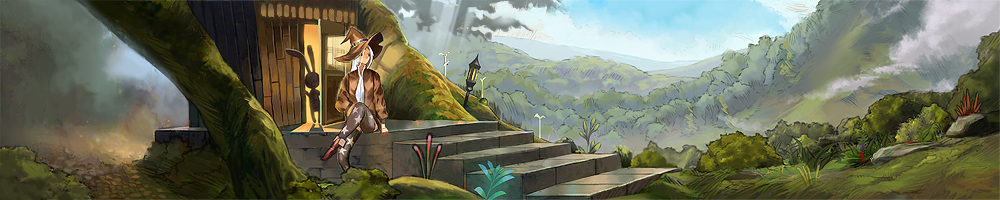
Jinrui wa Suitai Shimashita Review – 82.5/100


Okay, so the one way in which the Summer Season set itself apart was with its creativity. For one season, I wouldn’t have to worry about premises getting more generic, or a lack of initiative to try something different, because this season may not have been big, but we got series like Uta Koi, Kokoro Connect, Natsuyuki Rendezvous, Horizon, Moyashimon. All series that wanted to be different and brought in a ton of creativity in the process. The series in which this was by far the most apparent was Jinrui wa Suitai Shimashita, or Humanity has declined.

From the outset, you might suspect that this is a cute little series with fairies. Instead though, this series is a full blown satire that uses its setting of fairies in all kinds of creative ways to create surreal storylines and premises. The thing with the fairies in this show is that they can pretty much make anything happen, and yet they act based on the most random of whims. The result is a complete chaos when they end up going, and the lead character is usually stuffed right in the center of this, leading to the creation and destruction of civilizations, being stuck in a time loop and fighting an army of headless chickens and all kinds of stuff like that. Yes, this series prides itself in its creativity all the way.

The way in which the stories are told also takes a bit to get used to. This series follows a very fast, dialogue-based pacing, and most of the show is told through the thoughts of the main character, serving as a narrator. The dialogue is often erratic due to the fairies being so damn whimsical, and it also doesn’t help that the arcs air in a random order so at the start you’ll be completely lost on what’s going on. But on the other side it’s also the series’ charm: it’s very eccentric this way and you’ll never know through what kind of loop you’ll be thrown next. You’ll never know when something interesting hits you here in this series.

This didn’t all go without its issues, though. The erratic nature of this series results in that it tends to ignore the character department. It’s only until the second half that we actually see characters show different sides of themselves. The lead character’s past is only revealed in the final arc. It’s a distant series that isn’t looking for people to connect with the lead characters, which is a bit of a pity because the result is that the series is not as engaging as it could have been, especially in its first half.

So pick this one up if you’re looking for witty dialogue and creative settings with a good dose of dry satire. It’s good for a short watch with only 12 episodes and it may miss some depth in the character department, but there’s enough worth watching.

Storytelling: 9/10 – Very nice satire, quick witted and incredibly whimsical.
Characters: 7/10 – In its first half, the characters are way too one-sided, and that unfortunately hurts a bit too much, and the characters are just too likable to deserve this.
Production-Values: 8/10 – Kou Otani gives a nice soundtrack, though far from his best. The visuals are also very striking and full of bright and pastel colors that give this show a unique charm.
Setting: 9/10 – This show has ideas, and it’s not afraid to use them.

Suggestions:
Soredemo Machi wa Mawatteiru
Seraphim Call
Yami to Boushi to Hon no Tabibito

Jinrui wa Suitai Shimashita – 12

Well, I’m glad that at least in the final two episodes this series stuffed in some bits of character development. Whether it was a wise decision to save this for last is a different matter, though. I do think that it would have improved this series if this arc was shown somewhere around the beginning, so that we would have gotten a bit of a better feeling for Watashi. But ah well, the result is a strange and heart-warming ending and that the rest of the series put its focus more on its satire than on its characters.

But yeah, this episode showed how she grew up as an alienated teenager, to the point where she started to interact with others again. The way in which it did that was rather strange though. I mean, she was all happy, then she discovered that her classmates had severe psychological problems, then she spent a bunch of years with the white-haired girl, only to stop caring about it afterwards anyway. There was no drama whatsoever put into that point, even though the rest of the episode was pretty much the most dramatic that this series has ever been.

It worked well though, only the addition of the fairies felt a bit forced. They were completely absent in the whole episode until it felt like the creators suddely remembered their existence again and had Watashi sprint somewhere off for them. It felt unnatural, even in this series.

Still, great show. It’s not the best of the season, and the lack of characterization throughout most of the series definitely cost it some points, but its unique charm was enough to redeem it. And really: it’s great to see AIC do something good again.
Rating: 5/8 (Great)

Sword Art Online – 11

This episode made me realize something: there is this unwritten rule in Sword Art Online going on that everyone abides by: never talk about the life you had before you ended up trapped in the game. It’s like, everybody is too scared to remember those days and instead their lives turned to be just their lives in the world of Sword Art Online and nothing else. In .Hack//Sign in contrast, I actually loved how they dealt with this issue: most of the time the characters were characters in an mmorpg, and yet once in a while it would drop hints to their real identities. Now, I do wonder why Sword Art Online went with the route it took: to completely remove any life that the characters had before being trapped. I mean, nobody is reminiscing about those times. They only talk about getting out.

In any case, the new girl thankfully is different from the other girls in this series, in that she doesn’t immediately fall for Kirito. She definitely is the big mystery in this show and will likely be very important in solving everything. She’s got like “I AM MYSTERIOUS” written all over her, but with the right development she can bring a lot of good stuff to this series.

But come on, Sword Art Online. Stop using these overused cliches over and over. The scene in this episode that pissed me off was the one with the thugs. It’s something you see in a ton of different series, and I nearly always dislike how it’s done, and this episode was no different. It’s the standard type of scene that creators go for whenever they need some extra tension, but here it was completely pointless. The kids and the nun are likely never going to matter again after this and there would have been better points to show Asuna’s magic sword. I also always really dislike how stereotypically these thugs are portrayed. I mean, these guys are full grown men. I’d like to see a bit more detail on how they became that way, and who they are. Stop using them as excuses to make the main characters look cool.
Rating: 4.5/8 (Good)

Eureka Seven Ao – 20

This show just keeps coming with twist after twist here. A few episodes ago Generation Bleu was against the entire world and now this episode things have turned full circle again with all kinds of alliances being made. On top of that, it turns out that characters who died last episode have left a few parting gifts which also shook things up tremendously, with the most notable being Fleur’s father, who immediately lost that glorious part of his death last episode by basically forcing all his problems on his daughter. That scene in which she broke down. Yeah, I can really imagine that.

Most of the twists were all very nicely built up and continued from the previous episodes. There was one that I’m a bit iffy about, though: that giant super mecha that appeared from out of nowhere and contradicts every rule that Eureka Seven has previously established, by being able to run without Trappar. Perhaps this has been hinted before, but this part for me unfortunately crossed the line between plot twist and ass-pull.

Also, it seems like a quarter of the cast of this show is some kind of spy for something. Elena Peoples especially was being a bit weird in this episode, but with the way she has been behaving lately it surprises me that she took this long to abandon Generation Bleu. Her mental stability makes her a very strange pick to be a spy by the way, since you’d usually want spies to be hardly noticeable. I hope that the creators still have time to explain exactly how she ended up crossing worlds, and why she was the only one from her world who did so.
Rating: 5.5/8 (Excellent)

Moyashimon Returns Review – 81/100


The Noitamina timeslot and sequels don’t go well together. For a long while there were only three series that got a continuation: Bake Neko, Honey and Clover and Nodame Cantabile, the series that made the timeslot as popular as it is today. And then a Moyashimon sequel got announced. Yes: more antics with the guy who can see germs. But did they make a good use of this?

Well, here is the thing: this sequel is fun, it’s nice to watch, and it definitely has its merits. But it does have its flaws as a second season. The big reason is that it doesn’t really seem to know what it wants to do, and therefore rather forces in a story about arranged marriage and Paris. A transition that doesn’t happen smooth at all and makes this season feel more like a random side story than a proper sequel here. The germs are pretty much side-lined through the entire story, even though they were the main selling point of this series. I really feel like Noitamina could have spent its time better than on a sequel for this series.

But on the flipside, this still is a very enjoyable series. Apart from the germs, there is another thing that this series has that sets it apart, and that’s its chemistry, and this sequel has plenty of that. Caracters always have something interesting to talk about, whether it’s about fermenting, wine or relationships, and this show is at its best whenever a lot of characters are together doing all kinds of stuff at the same time. It brims with life when it does that so even when the story gets distracted on the unimpressive arranged marriage, the characters manage to retain your interst with their quirks and goofs. This season does a very good job of fleshing them out.

So if you’re a fan of Moyashimon and want to see more of the characters, then go for it because this show definitely delivers on that. However, this second season is no reason to pick the series up anyway if you haven’t seen it before. It’s definitely got some nice storylines, and the newly introduced characters have some good stories. The trip to paris was nice and fun, but ultimately this is just a glorified side-story. It’s nice that it’s there and all and definitely not boring… but did they really need to spend an entire slot on Noitamina for that?

Storytelling: 7/10 – Despite the many criticsms above, all of Moyashimon’s problems can be boiled down to just one big issue: Haruka’s arranged marriage is not fit to dedicate an entire season to, and yet that’s what they did. The side stories are very well told and do make this series worth watching, but the main thread throughout the entire series is dull.
Characters: 8.5/10 – This series understands character chemistry and brings a lot of it here. Characters are well acted and voice acted making them fun and interesting to watch.
Production-Values: 8/10 – Still has the same visual style as the first season. Meaning that at first the visuals may not seem like much, but when you start thinking about it the shots become surprisingly well drawn and creative. Yes, I just edited this in at the last moment.
Setting: 9/10 – Lots of interesting trivia about fermenting and wine brewing. The bacteria may be reduced to mere narrators, but this show hasn’t lost its educational value.

Suggestions:
Honey and Clover
Nodame Cantabile
Spice and Wolf

Moyashimon – 22

Hey, currently posting from an outskirt town in Cornwall, England and resting a bit from my trip to Napels, it sounded like a good idea to check out Moyashimon’s conclusion. In the end, it turned out that the climax of the series was last week. This instead was an aftermath. Everyone returned to Paris and all issues got settled. Haruka blew off the marriage and is back again like nothing happened.

Now, this episode did have what made me originally like the series: a lot of good chemistry between the different characters. Everybody got the chance to talk to each other and sort things out and the way in which it happened was quite down to earth. I just dislike a bit that some things about Haruka were a bit side-lined. Most notably, her future. This episode did bring up that she now lost any reason to stay at the school. That’s fine, but it made it seem like she was going to stay there forever. There was no mention of her future plans, or any kind of ambition. I think that’s a missed opportunity, and it’s what makes this series inferior to Nodame Cantabile and Honey and Clover, the only other two Noitamina-series to have gotten sequels.

Ultimately, this was fun, and Moyashimon’s sequel did get the Noitamina spirit, but in terms of structure it’s not a Noitamina-series. This second season feels more like a random side-story that got stretched into an entire season. To me, it doesn’t really feel like this was a necessary sequel, and while it was fun to watch, I would rather have seen a new series instead. I mean, the first season was inconclusive as hell, but it had its charms that way. The way in which they tried to stretch it out by moving Haruka to Paris feels… forced and not in the spirit of Noitamina by having series that are short but sweet.

There actually are only a few Noitamina-series that would benefit from a second season, I think. Hourou Musuko would be one to pull it off, because there still is a ton of potential left in that series, both if they went for the prequel and sequel route. That’s also the beauty of that series, because it still works as a series without that sequel. Apart from that, Toshokan Sensou with its movie will also benefit quite a bit, and I can also see Kuragehime 2 work when done well. Apart from that the only other kind of sequel that I want to see is a series set in the same universe as Fractale, but actually makes use of its setting.
Rating: 4.5/8 (Good)

The Manga Experiment – Week 37 + Short Hiatus

Okay, this is a bit of a weird entry. The thing is, that this will be the last entry for a few days. Tomorrow I’ll be on a holiday and I won’t return until upcoming friday. I do have internet connection starting tuesday, which I’ll probably use to submit a few entries, but expect some huge delays here.

Because of that, this week’s manga experiment is a bit different, because I’ve been busy packing my stuff and having a real life for a proper entry. I did visit a local manga library, at which I read a bit more of With the Light. Plus, I got a friend to loan me some manga that I can read while in the plane (all four volumes of Clamp’s wish to be exact, of which I already managed to finish the first chapter). But yeah, I can’t make any screenshots out of those, so no images for this entry.

With the Light – Vol.1: I finally managed to finish the first volume (which is like, triple the size of a regular manga volume), and I continued some of the steps in the life of the family while the titular autistic child Hikaru was in elementary school. A huge focus was on getting him to interact with “normal” people, instead of sending him to a place that only has autistic people, and I really liked that despite how hard it could be on him, that he’s improving slightly and slightly. The character-development here is top notch. At the same time, the author also takes her time to show some other problems of society, like domestic abuse, which is quite neatly woven into the rest of the story and used to relate back to the main characters. Quite well done.

Wish – Ch.01: I’ll have enough time to read this one while in my plane, but my first impressions of this are very favorable. I was a very big fan of Kobato’s last half, but so far the characters introduced here are completely different. And I like them a lot, especially the lead guy is likable and down to earth (not to mention in his twenties). This has got charm, of the same kind that made me such a big fan of Kobato.

And now for something completely random: what series would you like to see me blog next season? This is no thing definitive or anything, but I might use these results as a guide line.

What series would you like to see me blog?
  
pollcode.com free polls 

Natsuyuki Rendezvous Review – 91/100


The Noitamina timeslot started back in 2005, as an attempt to air series aimed at an older audience than usual. It was a wide success and spawned many awesome series. Then, in 2011 something happened: Fractale aired. It was alongside Hourou Musuko of course, but Fractale is the best symbol for the timeslot as it headed into a completely different direction, making shows about teenagers like what every other anime was doing. There were exceptions like Usagi Drop and Un-Go, but the general new shift in style was definitely noticeable. Until the Summer of 2012, that is. The past three months, we got to see Noitamina return back to its roots. And it was awesome.

Setting aside Moyashimon, Natsuyuki Rendezvous pretty much delivered one of the two best shows of the year, leaving every other series miles behind. It’s just so well made. The production company may be Dogakobo, these guys manage to deliver the best animation they’ve ever done. The characters are drawn incredibly expressive and they come wonderfully to life. And that can be added to the fact that this series is directed by Kou Matsuo, whose series often have this interesting habit of recording the voices before the animation is made. The result is fantastic acting with voice actors who instead of focusing on matching the flaps, can focus on interacting with each other. This show has brilliant characterizations overall.

And realyl, the story knows what it is. It’s deceptively simple from the outside, with very little unneccessary twists. It knows exactly what kind of story it wants to tell and has paced this out perfectly with hardly any moment wasted or rushed turing its 11-episode run. Instead of random twists, it thrives on letting the characters just interact with each other and create their own tension. It has nailed their background and gradual development, and it really succeeded in creating an awesome romance based on the three main characters who feel real and down to earth.

The thing also is, that I can’t think of any real criticism for it. Perhaps there are times at which one of the characters, Hazuki, becomes a bit too forceful, but really: we’re givern plenty of explanation for him to act that way and his acting is really consistent thoughout the series. Heck, if there is anything such as perfection, then this series comes closest to it this year. It’s a must-watch if you’re into realistic drama. It’s not for everyone obviously: if you want action, then don’t bother. However, I do believe that this is the kind of series that can attract people who normally aren’t into romance, but are interested into the genre.

Storytelling: 9/10 – Goldilocks pacing: neither too fast nor too slow. Really manages to let its characters tell its story.
Characters: 10/10 – Fantastic voice acting, amazing chemistry, wonderful drama.
Production-Values: 9/10 – Very expressive and detailed animation throughout the entire series.
Setting: 8.5/10 – Down to earth and very believable, with a great idea to base its romance on that it uses really well.

Suggestions:
Aoi Hana
Sakamichi no Apollon
Hourou Musuko

Natsuyuki Rendezvous – 11

And here we have the ending of one of the top shows of 2012. I mean, back during the Spring season I already was very impressed with Sakamichi no Apollon, but that series had its flaws: it at times tried a little too hard, and as a result the characters forced themselves a bit too much into romance and drama. This series however was just perfect. It made brilliant use of its length and its story was simple, yet so effective. My favorite shows usually are complex series with huge storylines, but this was done so well that it completely won me over.

The ending here was no different. Screw trying too hard, this was just perfect: Atsushi got his time to say goodbye to Rokka properly, pissed off Hazuki one final time with his threat to kill her, and afterwards Rokka and Hazuki officially become a couple. Atsushi really shook up both of them in his attempt to leave a lasting impression, and I love how well the animators captured their emotions at just that moment. Hazuki’s utter surprise and Rokka’s hopelessly sad face were incredibly genuine.

And after that, this series picked a very interesting epilogue. Usually we skip forward to a few years later. This time however, we turn to the point where Hazuki dies, living his life happily. We got to see his daugthter with Rokka all grown up, which really is not something you see often. In fact, I can’t remember any other epilogue that did that. Beyond that, we never see Hazuki or Rokka in the epilogue other than in pictures. Again, a wonderful idea.

At this point I can’t say whether Natsuyuki Rendezvous will be my top pick for 2012. I can however say with quite a bit of certainty that it’s in the top 2 of the year. Its exact placement depentds on how Space Brothers fares in its third quarter, and whether it keeps up the pace it created. Space Brothers has slightly better characters, but on the other hand its pacing and animation just aren’t as good as this series. Nevertheless, these two shows stand miles above anything else this year.
Rating: 6/8 (Awesome)

Summer 2012 Kaleidoscope – Week 37

#1: Hunter X Hunter – 46: It’s as I hoped: the creators really nailed Uvogin here. He’s not just your average strong guy, because in this episode he really showed that he also has a pair of brains that he can use. In the meantime Gon and Killua make their appearance again. While they definitely aren’t the stand-out characters of this arc, without them the parts with Kurapica and the Spider Troupe wouldn’t stand out so much. – 5.5/8 (Excellent)

#2: Kokoro Connect – 10: And with this the second arc of Kokoro Connect ends. To be honest, I liked the first arc better: it was sharper and lead to better drama, and the climax here felt like it would have happened even when Heartseed came up with something completely different (although it definitely sped up that process). Still, Inaba got a great conclusion to her feelings here. – 5/8 (Great)

#3: Saint Seiya Omega – 23: Saint Seiya isn’t the most complex series. This episode again was focused on a bunch of simple fights. But to be honest, it did get its build-up right, which is why I’m enjoying it quite a bit now compared to the first half. This episode was about Soma’s story again, and I must say that I like the direction that it’s heading into, now that we get a bit more detail in how he looks at his own quest for revenge. – 5/8 (Great)

#4: Kyoukai Senjou no Horizon – 22: A very enjoyable episode for this series. The insert songs were quite well used, and there were quite a few well delivered climaxes. The creativity also had a bit of wit added this time, which helped to differentiate this episode with the other episodes of Horizon (as creative as it is, creativity for the sake of creativity stops being interesting at a certain point; you have to do things with it). – 5/8 (Great)

#4: Polar Bear Cafe – 24: Ideally, Polar Bear Cafe should have been shorter. I’d say 20 episodes was fine, because then the creators could have skipped the boring parts and the good parts could have been more concentrated. The first half of the episode was nice and had some good laughs, but wasn’t good enough to keep my attention. The second half with the sports festival though was hilarious. This show again takes something completely normal, and puts talking animals in it and lets the chaos unfold, and this was one of the best examples of that. – 5/8 (Great)

#5: Tari Tari – 11: Um… okay. So this was supposed to be Tanaka’s arc. And what did he end up doing? He drew badly and accidentally saw the panties of one of the female cast members. Nothing about badminton whatsoever, there was nothing about his future or his past, and instead this show went on with this bafflingly random and forced twist about the school. Beyond how bad that twist was, what I really don’t like about these past episodes is how I get more and more the feeling that Tari Tari is looking down upon its male cast. They’re just there for comic relief and instead it’s up to the females to be all heart-warming. I mean, the past episodes have systematically avoided any kind of serious depiction of them in favor of comic relief, even though this was supposed to be their point to shine. PA Works, I expected better of you. – 3/8 (Mediocre)