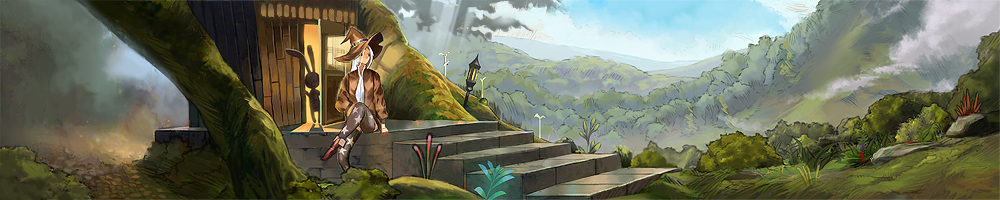
From the New World – 25

So after Psycho Pass I figured that I had already seen the best ending of the season. Tempest and From the New World did have a small chance in being able to match it, but not much, or so I thought.

Shin Sekai Yori just delivered the best ending I have seen since finishing Monster. That just was phenomenal, and it’s really been a while since a series managed to drive me as speechless as in this episode. I really thought that the show was over after Squealer was captured and Maria and Mamoru’s child was killed. But this episode really made its impact when it started with Squealer’s trial. And even the fight itself was pretty damn awesome due to the incredibly fluid animation that they showed there.

The way in which this episode exposed the humans for what they did. It was brilliant. There was all this talk about humans, and being human. And then it turns out that even the main characters just helped slaughter what once were basically just humans. Squealer was an excellent villain, and the ending he got makes it all the more sad, despite the things that he did. This show really knows how to hit hard with its gore.

Shin Sekai Yori was awesome. A-1 Pictures took a huge gamble with it, and it worked! It’s one of the most unique series of the past year. And yeah, there were some parts in which the animation was really wonky, but damn: it just did not care about conventions at all. Those are the series that I really like. I applaud you for it.
Rating: 7/8 (Fantastic)

Robotics;Notes Review – 77,5/100


After the complete disaster that was Guilty Crown last year, Production IG had to make up for something. They did so with Psycho Pass, that really was one hell of a ride. As for their other 2-cour Noitamina-series this half year, Robotics;Notes… it’s a bit more difficult. And don’t get me wrong: this is in no way as bad as Guilty Crown. It’s much better, but also very difficult to judge. This series is really ambitious… it just doesn’t work.

I actually liked Robotics;Notes in its first half. It had this ambition, yet at the same time it spent a lot of time fleshing out its characters and focusing on believability. It might sound weird to see this from a series that has a large robot on its promotional material, but that’s the point: one of the subplots in this series offers a bit of a deconstruction of Giant Robot building as it takes a look some of the issues of teenagers piloting these things that most other series tend to ignore.

Then there is a subplot about solar storms, a subplot about miniature robot fighting, a subplot about an evil conspiracy, and that list goes on and on. This is what I mean by the ambition: in the first half this show balances all of these subplots together that at first sight don’t seem to have anything to do with each other. This build-up for me was the best part of this series, and it’s always a question of what this show will focus on next… in its first half.

And then its second half comes, and it’s supposed to weave all of these subplots together… and it kinda fails. A lot. In many ways. There are some things that you’d think are related to each other, which actually totally aren’t, and the ones that are related to each other are brought together in such a shoehorned way that it breaks all suspense of disbelief that it has previously built up.

The show basically tries to run through a checklist of all stories that it needs to wrap up, without any care of making them flow into each other. Because of this entire subplots are conveniently forgotten until they are relevant again without much reason. But granted, the stories that it try to tell have some good concepts and ideas behind them. the character-development also works well enough and it has still enough to make it worth watching. And then the finale comes. I have no idea what happened, but things totally go wrong. All of the build-up just gets thrown out of the window and the show turns into a cheesy mess of plot devices. Talk about a let-down.

So yeah, solid show. Bad ending. That makes it really hard for me to recommend this series, because this series doesn’t just have a bad ending, it’s got a bad ending that invalidates much of the earlier build-up. Watch this if you want a different take on Super Robots. But then again, there are enough shows that also do that.
One-Sentence Review: Robotics;Notes is a very ambitious series that juggles around all sorts of stuff, which works well in terms of build-up, but not in terms of pay-off.
Suggestions:
Bokura no
Birdy the Mighty Decode
Dennou Coil

Robotics;Notes – 22

Well, there you have it. The ending of Robotics;Notes. Did they seriously just do that?

I really dislike these types of endings. I was hoping that they would at least put the focus on the robot battles and all, but that just came second place. No, at the first place in this episodes were the attempts to talk the big evil monster to death. This is exactly why I dislike brainwashing: you take away all free will, and it’s just vague enough to conveniently stop working at right the exact moment. After all that build-up, this sure was a big let-down.

What did the creators really want to show with this series? What was all of the build-up with the realistic looking robots good for? Why did Kimishima Kou really want to wipe out the entire earth and what kind of point would that have made for the story? I think that airing this series aside Psycho Pass was also a bad idea, because of how well that series wrapped itself up. Here we have a solid build-up that eventually just ignores everything and goes to end with a cheesy robot battle… yeah. I did not like this at all.

Judging this one is going to be hard, because by far the worst part of this series is its finale. But yeah, I keep saying that endings are really important for a reason. Perhaps not in the sense of storytelling, but they are the last thing you remember when you think back to a series. Now, when I think back to Robotics;Notes, I will think back to that cheesy ending more than the other parts. It hurts even more that in the end, it never really used its best parts to their full potential (the mecha deconstruction and all).
Rating: 2.5/8 (Lacking)

Psycho Pass Review – 87,5/100


Psycho Pass belongs in the category of series that base themselves on a futuristic world that center around a basic premise. Take for example Kaiba, in which people’s minds can be extracted from their bodies, Real Drive, with its evolution of the Internet or Himitsu, where people can download the memories of dead people. In Psycho Pass, it’s all about creating the perfect society without crime. Everyone is monitored and has their own “Psycho Pass”, and as soon as your mind starts to think criminal thoughts, you’re arrested. With that as a building block, it makes its story.

The story is set to explore this setting. I won’t spoil exactly how, but I will say that over its course, it shows many different opinions about this setting. And it doesn’t just try to answer whether the setting is wrong or right, but it goes more in-depth. Every character has some good or bad points to make, and every one of those points is open to interpretations. It’s a show that aims to make you think, and even the things it just spells out for you have a lot of depth behind them. This goes on for 22 episodes and I have to say that after Guilty Crown, this has really shown how a 2-cours Noitamina series should be done.

Especially at the end of the series everything comes together, and the build-up for the story really pays off. At the beginning of the series though, this series loses some points for focusing on the same things for a bit too long. The big problem is that it focuses too much on one particular aspect of the setting, so that it has to rush to get everything else in in its second half. It manages to do this somehow, but the transition could have gone smoother.

On the technical terms, Production IG delivered some really good choreography and camera angles that really make their impact when they need to. The soundtrack for this series also is really good, and it doesn’t just have one style. It just makes use of whatever track it thinks fits the best to the scene, whether this is classical music or techno. Oh, and that’s another thing that this series loves to do: quote some famous literary works. Call it pretentious. I call it interesting if it contributes to the story. Which to me, it did.

The characters in this series are perhaps not its most memorable parts, but even they have something to write home about. It’s got an excellent villain in the form of Makishima Shougo, who for once actually has some good and interesting motivation to back himself up. Akane also might seem out of place when you first see her, but she really shines in her character-development. The rest of the side-characters also manage to have their impact, even though this series does not have the “Let’s devote all our time to the backstory of this side-character”-episodes. Instead their depth is subtly woven into the story. If you like serious series and believe that anime is too cute nowadays, then this is one series that you shouldn’t pass up.

Note: I’m going to experiment a bit more with this review format, simply because of making the Storytelling, characters, production-values, setting”-list got a bit too annoying to write down every time.
One-sentence Review: Psycho Pass explores its unique sci-fi setting really well with thought-provoking dialogue, characters and a great plot, and mostly keeps true to its promise that there would be no moe included.
Suggestions:
Kaiba
Himitsu The Revelation
RD Sennou Chousashitsu

Psycho Pass – 22

Now that actually was an incredibly solid ending. I think that I could not have hoped better from this series, because it formed a terrific closure here. My memory is not good enough to remember whether or not it answered every question or not, but it did succeed in wrapping itself up in many different ways.

It really dawned here to me this episode: this series doesn’t really claim to be right with any of its characters. All it does is present a lot of different viewpoints on its setting, every one of whoch has some good points about it. This episode was meant as a chance for everyone to give his or her conclusion to what they have been preaching throughout the series. I really liked that idea to base your ending on this, and everyone actually the opportunity to make their final point in the debate without simply reiterating themselves.

The personal conflict between Shinya, Makishima and Akane also got a great conclusion, also helped by some great cinematics. The soundtrack was as sharp as it has ever been, and fields of grain made for quite an atmospheric setting for Makishima to die. Shinya managed to kill him in the end. Or at least, I hope he did. The only thing I did not like about this episode was that sequel hook at the end. That was a bit of a cop-out.

But the actual end of the episode. I thought that that was pretty brilliant: ending with the same way that the series has started. a

Overall, Psycho Pass was a really big success. Sharp from start to finish, and consistently interesting to watch. And I have to say: the past year for Noitamina has been its best since 2010. Apollon, Natsuyuki Rendezvous and Psycho Pass were all delights to watch, Tsuritama was really fun, and even the lesser shows of Moyashimon and Robotics Notes had enough to write home about. Let’s hope that it will be back in full force after its hiatus!
Rating: 6/8 (Awesome)

Robotics;Notes – 21

Robotics;Notes’ penultimate episode. Its main point was a romantic confession. Why?

I think that that symbolizes my big problem with this series. And don’t get me wrong, I like its ambition. You can really see that this series set out with a mission. It wanted to do so many things, and for that, I give it credit. It just didn’t really work out. I personally really like series in which everything comes together. The more ambitious the better. Robotics;Notes started out with a ton of different side plots and topics. But I see no link between most of them. They all just feel hacked together without much glue, as if they’re about to fall apart at any minute. The confession in this episode: what was the point? Why did it have to take up such an important part right near the end? It established nothing for the rest of the series. The main characters are a couple now, but how much did that change, really?

Also, with this it’s established that the final episode will be a big robot battle. It’s here where some subplots do come together, but if I have to be honest… it does feel rather flimsy here. Like, the creators tried way too hard to set everything up like that. Everything is build up and all, but it feels like some things were done only to get to this particular conclusion. The problem is that it’s not really an interesting one: it just screams been there done that. Was it really worth that build-up? Compare this to Steins;Gate, which meticulously set up ever single one of its plot twists as it went along.

That’s the key of storytelling: balance. There is not one formula to determine what works. You can do things right and wrong, but in the end it all depends on the harmony between all its different elements, and the soft spot is different for everyone. Robotics;Notes got a lot of points for its ambition and realism, but really lost a lot of them in the plot of its second half.
Rating: 3.5/8 (Mediocre)

Psycho Pass – 21

So, it’s time for the penultimate episodes again. Starting with Psycho Pass, which pretty much showed an example of such an episode done right. This definitely was a story headed towards its climax with the country at stake, but at the same time it never stopped developing its characters. In fact, it’s this episode where a lot of the characters come together, and get pushed further.

And this is for nearly the entire cast here. It’s because of this that the death scene made impact. Everyone can kill off a character near the end of a series. Making such a death count is an entirely different matter, but that is exactly what Psycho Pass did with Nobuchika here, and his relationship with the other enforcers. It fitted perfectly onto the buildup that he has had for the past episodes. But also Akane really surprised me as a really strong character. Plus Makishima Shougo again demonstrates what it’s like to be an actually good villain here. Yay!

Now that the series is nearly over, I’d say that Psycho Pass for me ranks above Blassreiter, Fate/Zero and Madoka Magica as a Gen Urobuchi series, and below Phantom. Although out of all his stories, I do think that this is the strongest. Blassreiter mostly stood out through its CG. Fate/Zero had some pacing issues (which to me, Psycho Pass didn’t really have that much…), and it’s longer than Madoka Magica, allowing it to put more detail into its setting. Phantom had a weaker story, but its characters still made it as my favorite Urobuchi Gen series.

And yeah, it’s a shame. But in a week we’ll have no more Noitamina for the next three months. Bummer.
Rating: 6/8 (Awesome)

Uchuu Kyoudai – 48 & 49

Damn you, Space Brothers! Damn you!

Uchuu Kyoudai is a brilliant and amazingly inspiring series, and at the same time it’s completely evil. Now that we’re back on a training mission again, this evil side of its has really shown again, in the form of some of the most addictive cliff-hangers I’ve seen since Giant Killing. The reason why this show is so evil is because it seems to make a sport out of it: how can it make the wait for next week as frustrating as possible?

These past two episodes. They were so chock full of hints for the future of this series. And this series didn’t even attempt to hide them: it’s like: “har har, you’ll only find out about this later!”, with “later” varying from five minutes to 20 episodes. As if the prophecy wasn’t enough already, these episodes just kept referring back to it, fully aware of what they did. Uchuu Kyoudai is a series that’s always looking to the future. And god, I love this series.

The thing also is: every time it hints at something, the eventual pay-off is something different from what it seems at first. This was most obvious with that snake (god damn whoever thought of that), but also Nitta and his brother at the end. I knew he had issues with his brother, but I never expected things to be as serious for him to blow off a survival mission like that. And then there are the little things. Like that shirt. Damn, it’s completely irrelevant, but I want to know what’s on that shirt!
Rating: 5.5/8 (Excellent)

Chihayafuru – 34 & 35

Let’s first talk about the story of these two episodes. Most notably, Arata. The creators used him for a story that involved two completely unrelated characters and at the start, I really had to wonder why they had to spend an episode on them. It could have easily be omitted… or so I thought. But even then, it looked like a bit of an odd choice to spend an episode on when you look at just the premise: Arata almost gets into trouble when he breaks the rules. It’s this kind of hijinks side story that is often used to fill up time or something.

But holy crap, the execution. These two episodes were roller-coaster rides. These two episodes just kept going with the mood switches and plot twists that just went completely against my expectations. At the start I really wondered what the heck the creators were thinking with such a random subplot. Then Arata nearly got expelled, and I wondered why on earth the creators would be including this. Wasn’t it in the benefit of everything if he just ended up playing? What are you doing here creating “pointless” extra drama? And then the Queen randomly appeared from out of nowhere, and I understood completely. The climax for that subplo really surprised me, but it paid off incredibly well. And in the meantime it did a brilliant job of fleshing everyone out: Arata’s feelings about not competing in the team matches, the Queen’s feelings over Arata, the headaches that everyone is having with the King. Not to mention how Arata’s shadow has been constantly looming over Chihaya and Satoru.

And then, there was the match against that ultra high-class school. That was pretty much one of the best told karuta matches against gimmick teams. The opponents were really interesting, but what really made it stand out is how it was brought, making clever use of how it appears to lump everyone together, only to do the complete opposite. It’s the kind of match that the team was bound to win due to the other team being completely insignificant, and yet Chihaya’s win just felt so incredibly good. The creators really cleverly just focused on one match: Chihaya’s. At the same time it just casually ignored that she pretty much was the only one in big trouble by the opponents’ playstyle, not to mention that she was up against their best player who really was a complete genius in terms of memorization.

The creators just kept throwing different twists and turns to the match. They gave some good characterization of the guy, Chihaya’s mix of admiration and fear was hilarious, the Queen’s random appearance was also perfectly timed and the moment when there were only six cards left and Chihaya’s strengths started to show: it was glorious.
Rating: 6/8 (Awesome)

From the New World – 23 & 24

From the New World has been a delight. It has been such a long while since I saw a fantasy series in which the characters were so cunning. From both sides. The past two episodes were all about trying to kill Yakomaru and Satoru and Maria’s child, and the creators realy took a lot into account here. All tactics really are clever. People make mistakes, but they are covered by their allies in order to balance things out and preventing from god-moding everyone. And that lead to some wonderful casualties.

It also helps that every character involved in these two episodes was one that I really liked. Perhaps Satoru was the weakest of the bunch for having the least to write home about, but Saki has been a fantastic main character over the series, bringing a great balance of inventiveness and insecurities. Kiroumaru expecially surprised me in these episodes when he showed where his intentions lied: the survival of his colony, and how he underlined the difference in mindsets between the humans and queerats: the will to give up. Maria and Satoru’s child is an example of a villain with little screentime done right: he has been built up for ages as an incredibly dangreous foe, and time and time again this has been re-established, without making him invincible in the way shounen series do it: impossible to kill aside from someone who is “stronger”.

Also, Shun. The creators brought him back at quite an interesting point in the series. What exactly is he? Is he Saki’s instinct, which she portrays as his memory? Or is there something else going on here? I think that it’s the former, seeing as how this series has been so down to business, and how there have been no hints against the fact that the dead in this series stay dead.
Rating: 6/8 (Awesome)