After the Rain – 07 [Heavy Rain]

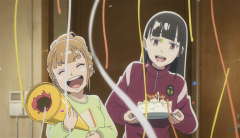
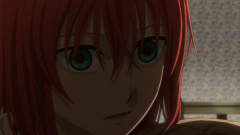
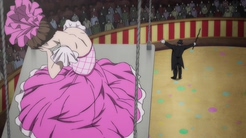
Dang it, this episode. Before you know it, a typhoon comes right in sweeping everything away. At first few minutes no one would never have guessed Ameagari evolve in such a complex way, even though we still know next to nothing about that Chihiro person. How should I take on the action of Kondou hugging his underaged employer while they’re alone in his house? I don’t know and none of the main duo seems to know either. But first, let’s tackle the episode’s earlier conflict. When Kondou is increasingly bothered by the book by that Chihiro person, Tachibana keeps blurting out about how wonderful a person Kondou is. Kondou knows he is everything but, so he straight up cuts their conversation short with “you don’t know anything about me”. He doesn’t mean any ill, but there’s a lot of truth behind that statement. The truth remains that they live in a different lifestyle that it feels like they live in two different worlds: Tachibana with her high-school life and lives in the centre of Yokohama, and Kondou lives alone in the crappy apartment trying to make ends meet and raise a kid. Even such a simple topic like a chatroom apps for staffs would remind her how difference a gap between her and the middle-aged Koudou is.

Moreover, Tachibana for the first time feels some resistance from her manager, and it pains her that she might become a nuisance to her crush. That thought totally wrecks the poor Tachibana (and I always think Tachibana isn’t the kind who let her personal feel affects her work) to the point she comes into his apartment, in the freaking typhoon, to… what exactly does she come into his house for? The depressed girl announces that she wants to know more about him, echoing her lines in last few episodes. But Kondou has his own reasons for feeling irritated with all the praises Tachibana says about him. For him, Tachibana holds the idealized version of him that he knows he never going to be. The version that everything about him, although flawed, is kira kira in her eyes. But maybe it’s her who sees through him, it’s her who see many great characteristics from the wear-down, failed and awkward middle-aged man. He doesn’t feel that Tachibana is a nuisance. Quite the opposite that it’s her youthfulness reminds him of many feeling he thought he had forgotten, in which he’s grateful.

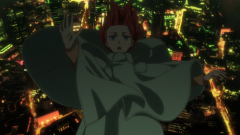
Seeing the crying Tachibana, in the moment of brief black out (which unassumingly creates a perfect mood), he hugs her – the first physical contact between them, all the while thinking to himself that he “will close my umbrella and get wet in your rain” – whatever that means. Is it then, the fleeting feeling of love from Kondou? It’s hard to pinpoint, and I’d argue that it’s best not to delve into it too much. The hug, even as a friend or more than that, is still just a hug (we just know one thing for sure that’s is how Kondou transferred his cold to poor Tachibana). Everything in that moment is perfect, from the music, to the lighting and the atmosphere. Definitely one of Ameagari’s best moments to date. We also have quite a treat to see Tachibana again fantasying about that moment hugging Kondou… naked. Gosh, those developments could easily become distasteful and too much in other series, so why on earth Ameagari delivers them so heartfelt and graceful here? As our commenters point out last week, the manga will end soon so there is a high chance Ameagari will finish as the manga approaches its last few chapters. Completed story is always a plus for me and judging how Ameagari performs so far (in other words, flawlessly), I have my high hope that we will have a satisfying ending waiting ahead.

Violet Evergarden – 07 []

It’s a full-blown soap opera in this week’s Violet Evergarden, in more ways than one. On one side of the coin, we have a playwriting and a process of bringing a children story to life, the story that tied very well to his feeling towards his deceased daughter. On the other side of the coin, this week marks a clear improvement for Violet’s emotional growth and put a catalyst into her personal arc. It’s the goddamn time that Violet need to learn about the death of Gilbert, but then why make him only disappearing huh? Learning and accepting the death of her love and moving on will be Violet’s own personal growth from this point on. One thing we did learn from Hodgins is that it’s Gilbert who pushed her away before the bomb exploded and saved her life. Violet Evergarden often deals with loss, and more specifically, the loss relationship between parent and their child. For once I believe that theme is appropriate within the settings of Violet Evergarden, the post-war era where there is a clear gap between young and older generation; the settings where the consequences of war still somewhat linger around, like in the form of the robotic Auto Memory with mechanical hands.

This episode is an adaptation from the very first chapter of the light novel, but if you catch on KyoAni’s pattern by now, yeah, they alter a lot from the original story. The playwright, for example, is completely original and it’s one of my favorite part of this episode. Maybe it’s just me who like children’s story but I like what we heard about their story so far: a girl who fight monsters, befriend with all kind of friendly spirits and she must get home because her Dad is waiting at home. Well, what makes this story resonates lies in how well it connects to Oscar’s own story. He’s not alright to begin with, he’s now in a pitiful state, drunken and messy. The play is obviously inspired and modelled after his lost daughter, and he determines to write a story to finish her one-day wish that he’s always longing for. In one of the show’s most beautiful moment, Violets cross the lake by jumping and hopping from fallen leaves on the lake. Oscar’s story is compelling in its own right, but this climax further elevates the drama and strengthen the emotions in the best possible way.

Violet is surprisingly active and expressive throughout this untitled episode. Not only she cares for the play she transcript (She actively asks how the story will go. The old Violet wouldn’t even care to bother), she expresses empathy towards the main character of the play. Empathy plays another big role in Violet Evergarden, as the whole premise is about learning other people’s feeling through the power of writing. It also struck me how the plays from Oscar personally parallel Violet. The play at the beginning ends with “I must live with my sin now for the rest of my life”, and Violet experiences exactly that. She has grown to realize the bad seed from her time at war, killing off countless people, ending countless “one day” dreams. She comes to feel the pain of her own action, and plus to the fact that now she realizes Gilbert is as good as death, it further pushes her into some sort of despair. That isn’t bad by any means, given at least she has a strong feeling towards something. This episode is a clear step up from last week and for me easily the strongest episode to date, coupled by strong visual presentation and a neat story, even it still feels heavy-handed at times.

A Place Further than the Universe – 08 [Howling, Maddening, Screaming]

Aah seasickness. It sure brings back some memory. I remember once I got so sick on the boat that I still had that hangover feeling several days afterward where every food into my mouth tasted like cat food. But enough about me and let’s talk about this week’s Universe, where our girls experience the toughness of Mother nature for the first time, even before setting foot into Antarctica. This episode of Universe tackles two main ideas: the huge gap in physical and mental preparation between our girls and the rest of the crew; and those hardness the girls experiencing right now is relatively nothing compare to the South Pole. But what makes it tick is how Universe does it light-heartedly, all the while still serious enough to let the drama sinks in. The girls’ interaction remains a pleasure to watch, as those little silly moments still strengthen each of the girls’ personality. I’m still pretty much on board with this trip.

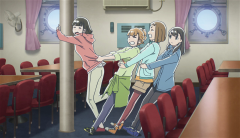
In the first half, we follow the girls adjusting to the life on board. Filming, doing a kitchen hand, following the crew’s daily routine (and it’s a harsh daily routine to boost, with all the timing and heavy workload). The girls find themselves out of their depth with all the running, weighting lift and only barely makes it there. And they were merely the preparation for the Antarctica trip to come. And things turn out even worse when the seasickness begins to kick in. Speaking of which, seasickness is a clear symbol to show how inexperience our girls are and serve as a great contrast between them first-timers to the rest of the team. Throwing up, unable to sleep, unable to eat, throwing up again. Les miserablés. And that’s not to mention the situation will eventually get harsher. The strong wind current and waves also cause the boat rocking, 50, 60 degree (That’s why we all need a hammock chair to prepare for these kind of situations). And all that was still relatively a child’s play compare to the extreme weather in Antarctica.

The girls have it worse, but they’re even more frustrated to see other crew members seemingly don’t affect by these conditions at all. As Yuzuki puts it, they have “different kind of organism”. Yeah, the idea of high school girls going to the South Pole is kinda fantasy-filled and unrealistic to begin with, but Madhouse team understands it and makes that premise utterly believable and relatable. It’s never easy for mere high-school girls to participate such a life-changing event without learning the hardness of all this. The girls feel themselves hard to keep up with everything, let alone contributing to the expedition team. But as Mari says it firmly in the end. It’s not that they don’t have a choice, it’s more like they always have a choice but they chose to go through all this. It’s just a change in the way you look at it. I’m quite surprised myself that Universe takes a sweet time in between (after their Japan’s stage, before the South Pole destination) but it’s a journey story and I enjoyed the journey thoroughly so far. Now the icebergs are in sight. Welcome to Antarctica, the place of true South where the sun rises and sets only once a year; and no official time-zone occurs given all lines of longitude emerge there. In a way, that makes the place timeless, doesn’t it?

Kokkoku – 6/7 [The Sixth/Seventh Moment]

Hello and welcome to another bi-weekly checkup of Kokkoku. This time we have one episode of action and mystery, while the other is the first dud of the season for Kokkoku. Apologies in advance, this is going to be a shorter one as there simply isn’t much to talk about. Lets jump in!

To start off, Kokkoku has been flagging recently. The cliffhangers for instance all fall short, as immediately upon starting the next episode they are resolved. Its like Kokkoku is afraid to leave the fate of its characters in question. Atleast in regards to the main cast. Then since this cliffhanger is over, Kokkoku chooses to throw more trouble Tsubasa’s way as he gives in to Stasis and slowly becomes a Handler. Really, if he was going to get pushed out or needed to be in danger, why not just continue it with the knife fight? I recognize that mystery of the Handlers and how Sagawa is planning to use them is central, but I don’t see the point of Tsubasa’s conflict anymore. The only interesting thing that can still happen to him would be for another spirit to choose him.

Continue reading “Kokkoku – 6/7 [The Sixth/Seventh Moment]”

2011 Anime Retrospective: Wandering Son & Tiger & Bunny

[slideshow_deploy id=’25632′]

It bares repeating for those of you who don’t know:

– For rating, I will use psgels’ 100 score system, but keep in mind that my barometer might be different than his. For instance, I consider 60/100 (not 50) as a line between mediocre and passable shows. 75/100 to 89/100 are recommended shows and from 90/100 upward are the masterpieces. In some rare occasions, I will include plus (+) and minus (-) but remember that they don’t have anything to do with the quality of the shows. (+) is awarded for shows that address the gender role thoughtfully, including shows that have strong feminine message. (-) is casted for shows with insensitive treatment to gender roles.

– There will be mild spoilers, as I will address the main theme of each show.

Wandering Son (AIC)

Boy, I know I’d come to enjoy this series given its thoughtful subject matter, but I’d never expect the show gets under my skin the way it did. Wandering Son turns out to be even better than what I expected. Yes, they nail it on the struggles transgender youth must face during their puberty, but at heart this is a coming of age story about coming to term with their own identity. Crossdressing is a way for the kids to express who they truly are, the self that they feel most comfortable with. One thing that struck me the most is how simple the show seems to be, but it’s anything but. From the soft watercolor background, to the simple and plain character designs (those are in the service of the show, as the main leads have their asexual appearances), to the way the story focuses on slice-of-life drama, to the equally soothing soundtrack. Everything seems light-weight at first glance, but inside it, there are many complex relationships and even more complex narrative. The transgender aspect never becomes to preachy or heavy-handed, for once, and the show makes itself clear that it never judges any of these characters. It’s just simply a normal growing up tale from a boy and his friends, nothing more, nothing less.

I also appreciate the anime for the fact that it left out entirely the first section of the manga, so many drama and characters have already been introduced before we get to know them. Fear not, since everything we need to know about the characters and their dynamic are showed and hinted subtlety over the course of its run. For me, the best parts of the show aren’t the subject matter it deals with, but the rich cast and their complex dynamic together. Take the latter for example, many characters form a very special relationship to each other (many has complained the characters behave too mature for their age, which I digress. We need more of these). And it’s these special bonds that made every single one of them interesting. Take Chiba’s love for Shuu: doesn’t matter how he changes, he will always be the special person to her. The same can be said for Yuki and Takatsuki. It often feels like they reach to a mutual understanding that other people can’t never comprehend. And I suppose sharing the same deep bonds as these makes up the reason why they can always rely on each other, even overcome their own issues to reach out for each other.

Shuu and Takatsuki made up two strong protagonists for this show, both because they’re trans who bothered by their own biological bodies, but also their special bond as well. Noted that while Wandering Son deals heavily in transgender issues, all the romantic relationships in the anime are heterosexual – most notably, Shuu and Anna’s love. Why? Because, of course Shuu loves her. Not in a physical attraction sense since I guess Shuu would never desired to kiss her, but in the intimacy sense where he loves her and cares for her like a sibling love. Is it make their relationship weird? Maybe. But it’s powerful nonetheless. Although I already enjoy the first half of the anime well enough, where they focus on the kids and their gender-bender Romeo and Juliet play, the second half is when Wandering Son hits me real hard. Insecurity plays another major role to these kids, as they are constricted by social norms, by the code of rules that dictates how boy and girls should wear and behave. Takatsuki comes a long way until she decides to cross-dress as a boy to school, but Shuu has it much harder by trying the same thing. The escalated tension when Shuu gradually believes that he should dress up in girl’s uniform because he feels comfortable doing so is one of the moment so powerful that it won’t leave my head anytime soon. It’s one hell of a statement right there and it’s more compelling than any LGBT campaign because it comes from very personal lenses.

As a side note, despite people often complain the show for the lack of proper closure, for me it ends in the best possible way. In that final moment, Shuu literally takes a step forward to the stage. That single image can signify many things: that he’s taking anew step towards the spotlight with his new body; that he finally let the dark and bullied past behind; that he moves on to the next puberty stage of his life. Shuu and his friends continue to live on beyond the scope of this little story.

Rating: 92+/100

Tiger & Bunny (Sunrise)

It’s amusing to note that these two shows received the same rating 87.5 here in by psgels, my opinions on these two couldn’t be more varied. Let’s start from its best components first, Tiger & Bunny is the show that has novel concept, a commercial Superhero reality TV show in the neo-modern city that looks like a glamourous version of Gotham. It’s a pretty cool idea and moreover, the concept of commercial superheroes and their ability “NEXT” have potential to develop into heaps of interesting scenarios. It helps that the show makes these superheroes and their moves as flashy and over the top as possible. Another plus for the shameless corporate sponsorship’ logos that pop up in the team uniforms. Flashiness and cool factor have never been this appropriate. The art design is awesome, especially the city itself that feels lush, noisy but gritty at the same time. The production values, for the most part, fulfil their roles quite remarkably. The fights are dynamic, and those action sequences are always damn fun to follow to say the least. The CG department, however, is wacky and looks out of place whenever the two leads are in the combat suits. Take Tiger & Bunny as a purely action show, it certainly satisfies your cravings.

But Tiger and Bunny is more than a mindless action show. It consistently develops into overarching arcs with more serious tone, and that, my friend, is where the show becomes hit and miss. On positive notes, these arcs make Tiger and Bunny more ambitious than your normal Superhero show and the main leads do grow a bit in their character development. The titular Tiger and Bunny, in particular, share some solid chemistry together. The show, on the other hand, has the Western Superhero and Hollywood as their inspiration and it unfortunately inherits the stupidity of Hollywood’s script as well. There is little to no grey area, the heroes are mostly your hero of justice and the villains get more and more evil as the story progresses. I don’t mind about some casual plot holes or some character inconsistencies because… you know, ACTION show, but the last arc, in instance, is so ridiculous and laughable bad that I have to mark the show down several notes. In this last arc, the whole superhero team suddenly becomes puppets with no personality, or even worse, betray their own personality. Kotetsu is being hunted by the police and being broadcasted live, and suddenly, all these developments are set aside for some more plot twists that go nowhere, fighting with Barnaby for no good logical reason and some other bullshits about androids. And I can never get why the main antagonist thinks it’s such a great idea to brainwash dozen of superpowered and influential people, instead of just eliminating Kotetsu in silence.

Character-wise, I regret to say that although spending 25 episodes with them, at the end of the day I don’t know, or care much about them. Both Bunny and Tiger are your stereotyped JUSTICED superheroes, with Barnaby’s backstory is the one we all heard before (Batman, anyone?). Other heroes each have their own episode that flesh them out a bit, but still ain’t enough to make them stand out at all. Villains are over the top in a no-good way and Lunatic (an anti-hero of sort) has never developed into his full potential. Overall, Tiger & Bunny is an adequate take on the same old Superhero genre that make some good use of the old ideas, especially in their brilliant main concept. The mixture of buddy actions, hero of the week, drama make this show consistently entertaining to follow, despite more often than not they follow the same old formula that been around since the creation of Western Comic.

Rating: 78/100

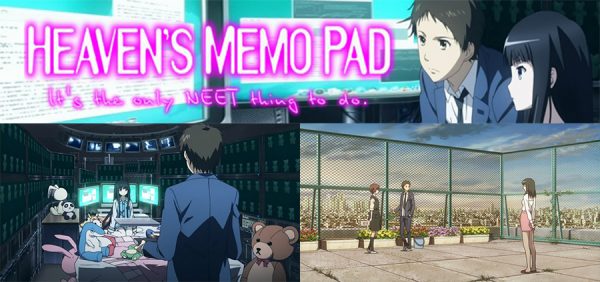
Welp, turns out I finished these two faster than I originally planned. Have you watched either Wandering Son or Tiger & Bunny? What is your take on those shows? Next time, we will meet a girl who plays karuta and a girl who is a NEET detective. Yep, I will review Chihayafuru and Heaven’s Memo Pad. See you in 2 weeks or so (this time is for real). Until then.
Fate/Extra Last Encore – 04[No Faith may King]

Well is it just going to be a thing from now on to have Nero take a bath in between floors? The large amount of Nero fanservice seems a bit of the excessive side and I feel like shaft is to blame for that. As a matter of fact now might be a good time to bring up cons with this series seeing as we have made it past the three episode guideline. So far I still remain somewhat invested in the story but I admit that we may be moving to a formula with how to approach the remaining masters. Seems that Hakuno and Nero will move to the floor, have an encounter with the master and his servent, meet some serventless master on the floor who clues them in with exposition before moving to take down the floor master. Then wash, rinse and repeat. Likely there is some changes to this coming but if this is to be the formula going forward this could get rather stale.

It wouldn’t be such a problem if the action was good but I find that Shinbo’s style doesn’t quite work well with the normally kinetic nature of Fate’s servant battles. It works when the characters are standing round having a chat so when it comes to exposition that this series is shoveling out heavily, Shinbo’s style works. But with it comes to action scenes, the quick cuts and odd determination to not show attacks actually hitting proves to be rather frustrating to watch. It might be rather unreasonable to expect Shaft to bring the level of fights Ufotable has trained fans to expect but even the likes of Prisma Illya and Apocrypha attempted to meet that expectation. For this however the style is clearly getting in the way of making the action work which is a same as the opening does show that Shaft can make some rather excellent fight choreography.

On that note I am disappointed to see that Drake wasn’t added to the opening and instead it remains being just Nero fighting off shadows. The song is growing on me but it does feel like a song that lacks an explosive chorus. Instead building throughout the song to just cut off suddenly. The endings are updated at least to show the master/servant duo of the week and the illustrations are quite excellent. For another previously mentioned con, the Nero fanservice is getting on the excessive side though I am surprised that they didn’t take the opportunity to show off Rin in the bath if that was the agenda. Look, Nero is such a narcissist that she thinks nothing about showing her naked body to people but having her walk out of the bath wearing nothing but a ribbon is just going far too far. In the first place, did I miss the bonding session where Nero became so comfortable with Hakuno in the first place?

Nero seems awfully attached for a servant that only knew her master for a day or two. Though yes this brings me on to my next con, Hakuno desperately needs some goddamn personality. All we got from him is that he has this vague hatred and a need to win the holy grail war. He still is the player character of the game and this is truly a missed opportunity to give him some characterization. At least we could have taken the route done with Persona 4’s protagonist which turned a normal mute player character into a deadpan snarker. Or even Gudako from Fate/Grand Order who has basically been characterised as a massive troll by supplementary content. (God I wish she was the protagonist of Grand Orders anime, could have gotten some amusement out of it then.)

Moving on to another con, we have Rin disappear and a new girl pop up called Rani. I am really quite surprised to see Nasu actually bring Rani into this as while she was a character in the Fate/Extra game, she wasn’t a fan favorite despite being a potential main heroine. Personality I always saw her being destined to join the backalley alliance in Carnival Phantasm featuring the unloved Sacchin, Sion and Riesbyfe.(Though maybe Sacchin wouldn’t be so unloved if she got her damn route in that Tsukihime remake that you should have been done writing about now Nasu!) Ultimately Rani’s purpose her is to shovel exposition which has gotten rather excessive with this series but we at least learn that this anime is set far into the future and that the digital humans within this virtual world may be the last remnants of mankind. Not sure what to make of that as I am still trying to piece together just what is going on too much to actually find the reveal all too shocking. I spent the majority to this post talking flaws but overall this episode was rather straightforward, new servant, new exposition dump and more questions.

A noteworthy aspect though is that this particular master and servant have done a completely 180 in how they were in the game. Before the old man was the one who wanted to fight fair and square which often worked against his servants style who is more accustomed to playing dirty. It’s a pity as i rather liked that dynamic in the games story but lets see just where this is going. As a last note it appears this series has two arcs, the first of which is this one named “Oblitus Copernican Theory” and a second arc named “Illustrious Ptolemaic Theory” which will be broadcast at a later unconfirmed date. It has not been clarified whether the second arc is a second cour of sorts though I am placing my bets on it being another 12 episodes. Some seem to believe that this is doing some sort of Danganronpa 3 Future/past arc broadcast with the future arc being broadcast first with the past arc answering questions. Though considering how unpredictable this series has been as of late, we really cannot guess as to what we are truly going to get.

Darling in the Franxx – 06[Darling in the FranXX]

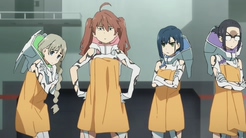
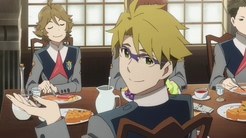
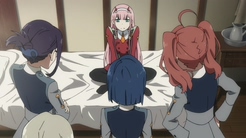
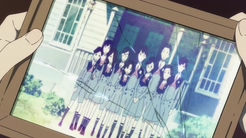
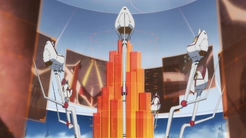
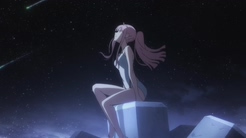
Today on Darling and the Franxx, Hiro pierces the heavens. Darling in the Franxx manages to carry itself on the action of this episode as it was quite the engaging spectacle. Nearly a constant episode of action which is bad news for me as these are often the hardest to blog. Animation remained pretty consistent throughout and things managed to get the viewer pumped alongside the visuals. I compare the execution of this to How to train your dragon, not storywise of course but rather that the story beats here were quite predictable but nonetheless it was enjoyable to watch due to the presentation. Much like predicted, Hiro managed to fight off his blue tumor with the power of friendship, lust or maybe general motivational speaking. Judging by the tone it appears that Hiro has managed to kick off this weakness for good and from now on will be able to ride with Zero Two however much her wants. Which sort of cheapens the drama and conflict of the previous episode even if Hiro did almost die in the process. Thus unless there is some transformation or development for this whole sickness business this plot point is going to feel rather contrived when looking over the series as a whole.

But well, why be a killjoy about it. I did quite enjoy this episode and while I don’t quite care about the revelations behind this whole organisation, I am somewhat caring for the characters. The team’s general feeling of inadequacy when seeing the teamwork of the more experienced Franxx pilots and how disorganised they are when working together. Got to say I was surprised to see the obvious cannon fodder actually survive the ordeal when things got tough and seeing Ichigo start to get them all to work together to take down the bigger threat was quite satisfying. But boy, poor Ichigo. I knew from the start that her feelings for Hiro were completely in vain but even I felt for the girl when she claimed that she only cared for Hiro as a friend and to have Hiro confirm likewise. You got to have respect for her in how she put the mission above her own feelings and her display her is much like a girl giving up on the person she loves to cheer him on as he goes with another girl.

She did lose her composure upon thinking Hiro was dead but Goro was there to get her together. There’s actual potential for Goro to be a rebound for her though from her reaction at episodes end it seems she still hasn’t quite given up on Hiro. Coming from me, her ship is doomed to sink and I just wish she would move on so I don’t have to see this series try to pretend that she has a even the slightest chance of winning Hiro’s heart. They already established that Zero Two and Hiro need each other so anything butting in on that is just going to be an annoying diversion. Still I wonder just where this series is heading now that the most pressing issue has been dealt with. Now that Hiro is Zero Twos official partner and has survived three runs its up in the air on just where they might take it. I see two paths, one where the series focuses on fleshing out the other members of the squad with individual character episodes or a path of delving into the mystery of the whole organization they work for. The second option is more endgame material though so I think the cast is going to get more development…provided they don’t dwell on Ichigo’s feelings and attempt another Kiznaiver situation of just love troubles. Relationship metaphors using mecha symbolism I can get behind. Teenagers getting all bent out of shape over love and yet still refusing to communicate is something I have come to loath.

Junji Ito Collection – 07[Used Record/Town of No Roads]

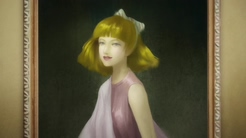
This has to be the weirdest episode of this show yet. The first story was rather standard, namely about a record that causes people to become obsessed with it upon listening and seems to lead to the owner’s death. Not much to say about this one as what you see is what you get. I would say the escalation was lopsided as the girl killed her friend over it within minutes of the start of the episode. Which does make it seem like a chunk of the story was missing. And yet again the story just cuts off abruptly without much of a conclusion. The only thing we learn is that the record was somehow made by a singer after she died and the story suggests that it has been passing from hand to hand, killing those it comes into contact with.

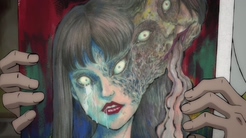
Then we have the second story and in this case a large chunk of the story is actually missing. I previously didn’t focus on the adaption of this series much as I have come to believe that even with top tier production values, i don’t think Junji Ito’s stories can really work outside of their medium, at least not without significant adaptation decay. But this is one time were I really think the adaption of this story was mishandled. For some remarkably odd reason they decided to cut out the entire beginning of this story and have it start right in the middle of the story. Watching this was a bizarre experience as I as somewhat reminded of Mirai Nikki with the girls trip to her aunt’s house becoming more and more surreal. The story itself starts off on a confusing not by citing Socrates and some method of appearing in people’s dreams by whispering in their ear as they slept. Let me fill in the blanks here. Basically a boy was sneaking into this girls room at night through her window and things grow dire when this boy is mysteriously killed. Her family suddenly grows concerned about her and mention that they saw the boy in her room that night. What follows is her family growing increasingly paranoid and concerned over her. So much that when she returns home she is integrated over where she has been. The anime starts at the height of this escalation where he parents just have disregarded any sense of her privacy at all.
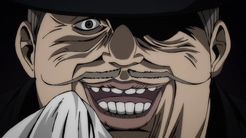
The idea is actually rather fascinating with the center of the town becoming a mad place where people’s privacy is nonexistent. Strangers walk through other people’s houses and even the act of locking ones door is enough to incite a mob to attack your house. It has become the social norm to have no privacy whatsoever brought to light by the girls aunt who walks around her own peephole filled house topless(If you watched the crunchyroll broadcast this was censored and she was given a sports bra. Odd that, violence is ok but boobs are not?) I do find having my privacy just abandoned and being constantly watched to be a terrifying prospect but this story takes it a step too far with weird eye monsters and of all things, jack the ripper? Much like many of Junji Ito’s other works we have a foundation for a good story but it really hasn’t been brought out to its full potential and that does seem to be a very recurring theme with this series.

Mahoutsukai no Yome – 19 [Any port in a storm]

Hello and welcome to a very… contentious episode of Mahoutsukai, at least for me. This week we have two halves of the same episode, with wildly different tones and quality. The first half being inconsistent and dull, while the second is interesting and successfully, but slowly, ramps up its tension. Overall concerning, but lets jump in.
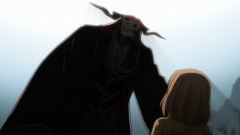
First up, I want to talk about Mahoutsukai’s tone this week. Specifically how ridiculously all over the place it is. I had no idea how to feel about this episode as we go from brutal surgery, to jokey side characters, to dream sequence and back to silly scientists. During the first half at least, nothing was consistent. There was no slow progression, just fast cuts up and down the spectrum. Add to that the general flop of the comedy in the first half, pretty much any scene with the scientists, and it just feels lacking. Easily the worst opening/12 minutes of Mahoutsukai across all episodes. Even the time with Cartaphilus in the dream felt lacking. Like it was condescend, that information was cut for the sake of time. It happens in every adaptation, but this particularly bad timing.

Continue reading “Mahoutsukai no Yome – 19 [Any port in a storm]”

After the Rain – 06 [Fine Rain]

This week is another light week in terms of central romance development between our leads, as the first half spends its time to Haruka, Tachibana’s childhood friend. Thank God, even with this segment that feels more like a side story, Ameagari still continues to hold up very well. Haruka always feels that she is left behind Tachibana, both in the field and in their relationship. It’s not just a figure of speech, as in one flashback we can clearly see Tachibana running ahead while poor Haruka following behind. Their relationship has been stalled since Tachibana left the track team duo to her injury. For Tachibana, she temporary shuts everything that reminds of track team, of the life she once felt belong to. Haruka feels the distance growing between them, and while there is argument on whether or not Haruka has a “romantic feeling” to Tachibana, it’s clear that she’s hurt that Tachibana seems to only regards her as “running friend”, and nothing more. From those flashbacks from Haruka (which are lovely, by the way, given we are treated to see Tachibana the middle-scholler and Tachibana the primary schooler), she has been admiring Tachibana from a long time, and their relationship had been tested once, briefly after she had to move to another school. And now she feels like it’s being tested again.

In defence for Tachibana though, I think she doesn’t think that much. She’s just too occupied to win the heart of Kondou. She again moves on to the new direction, leaves Haruka behind, and she’s afraid of Tachibana’s slipping out of her hands again. I guess both of them now are dealing with their own pains, Tachibana from not be able to run again and see everyone enjoys the things she once loved. In order to keep their friendship together, they just need to be honest together and the letter in the end (with the lucky but ugly charm Mukihiko to boost) is the right step into the right direction of being honest to each other. On other notes, I greatly appreciate the visual-storytelling of Ameagari, showing us the normal day of Tachibana missing her bus and walking all the way to the station, and later her sharing an umbrella with a stranger in a silent, quiet manner. The show is confident enough to just let the visual do the talking, assisted greatly by the wonderful violin score that I swear I could listen to all day. Even in the slow episode like this, there’s so much to love in this beautiful and tasteful show. Rain in Yokohama has never been this attractive.

In the latter half, we’re back to our duo Tachibana and the manager as she spots him in her local library. Her attempt to know more about Kondou’s taste proves to be in vain as he refuses to recommend books to Tachibana, prompt her to pick Botchan (arguably one of the most popular novels in Japan), and photobook about running (love it!). But his attitude changes when he sees the book written by Chihiro Kujo, which my guess for now is his ex-wife, or the person who had the same writing dream some twenty years ago. The latter especially could prove to be interesting, as this episode once again forces our main leads to look back on their past relationships, about their own shattered ambitions, in order to make sense of who they are now and what they really want to do. I am pretty much on board with that.