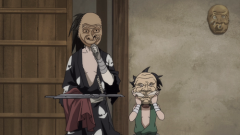
Paranoia Agent Anime Review – 67/100

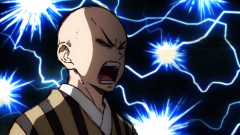
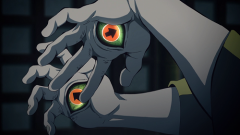
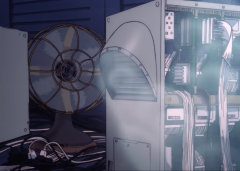
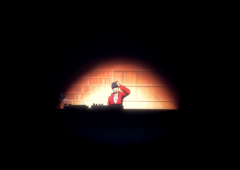
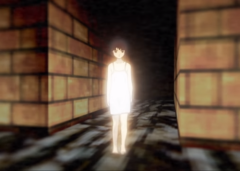
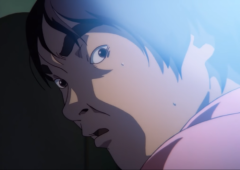
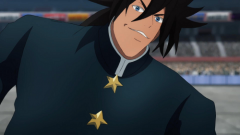
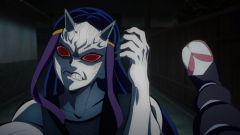
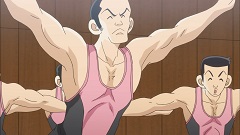
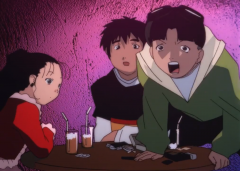
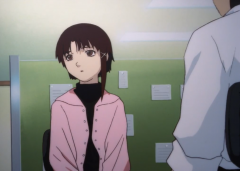
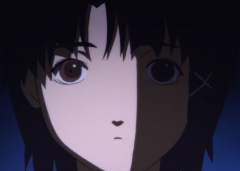
In an era of the mundane, where every series is the same moe blob, the weird sticks out. Even the most mediocre series can get attention just by being weird. Paranoia Agent is not mediocre, and it is far beyond simply “weird”. Written and Directed by Satoshi Kon, Paranoia Agent is one of his last works before his untimely death. With only Paprika and Good Morning coming after it. Known for a radical style and a penchant for the odd, Satoshi Kon was an extraordinary director, unique to any other. Paranoia Agent lives up to this reputation, being unlike any other series I have ever seen. Its horror is Lovecraftian, its style chilling though as interesting as it is, this isn’t always in it’s favor. For the most part, the series is a joy, but when you try something new, it doesn’t all stick.
Welcome to Paranoia Agent, one of the hardest reviews I have ever written, lets jump in!

Continue reading “Paranoia Agent Anime Review – 67/100”

Mix – 04 [I Want a Trade]

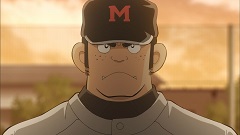
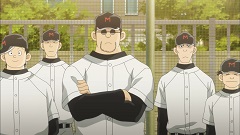
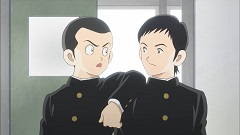
How long is this prologue going to last, I wonder? Not that I’m complaining – Mix is probably my favorite spring series so far, even if it’s not the boldest or best-looking of the bunch. My current assumption is that the bulk of the story will be spent chasing the Koushien dream, but with Meisei’s middle school having qualified for the Tokyo Tournament, that goal seems a long way off. And the main characters are only in their second year, so we’re likely to get a full season with Touma as a starting pitcher before he even enters high school. This is all sort of worrisome, as Mix has just 80 chapters under its belt, and 9 have gone into these first four episodes. I’d hate for a series like this one, which takes its time in peeling back the layers of its cast, to run out of material too quickly. But perhaps I’m thinking too long term, as before the story can move forward, Nikaidou’s stranglehold on the title of starting pitcher will have to be loosened.

Something is clearly up with Nikaidou, despite his winning streak. The Tachibana brothers are quick to make light of his pitching ability, but this is owed more to their prodigious talent than anything else. Souichiro’s head isn’t so high in the sky, though, that he can’t sense when his battery mate is having an off day. At a practice shortly after their victory in the prelim finals, Sou remarks to his brother that there’s even less juice behind Nikaidou’s pitches than normal. This doesn’t set off any alarm bells for the boys, but it should for the viewers at home. Coupled with his early departures from practice and his absence from the early innings of the team’s current game, it’s clear that Nikaidou is hurt. In fact, he may be dealing with a lasting illness, which would totally recontextualize the preferential treatment he’s been given thus far. His obnoxious father and nepotistic coach may simply want him to experience as much playing time as possible, before his sickness advances too far.

There are a handful of intriguing baseball moments here that don’t involve Meisei’s ace, such as the introduction of new rival Nishimura. He gets a freeze frame for his first appearance, signaling that he’ll be important down the line (an opponent lasting into the show’s high school years, perhaps). Nishimura takes an interest in Touma after watching him throw a bullet from third to first, which was one of the episode’s better moments from a production standpoint. I nearly felt first baseman Imakawa’s recoil through my screen, making Touma’s rocket arm a tangible trait rather than a subject of much conversation. Most of the non-athletic moments weren’t animated nearly as well, but they were a delight to watch anyway, as has been typical of Mix so far. My particular favorite was the teasing between Otomi and Touma, where she feigns surprise at his preparation for a big interim exam. The secret ingredient to this scene is that she enters the room twice: once to get homework help from Sou, and a second time after the reality of her stepbrother’s uncharacteristic studiousness kicks in. Their banter is kept light for now, but we’ll be in for some stepsibling romance down the line if this keeps up. Despite the taboo, that’s the element of the show that most piques my interest, so I hope none of it is omitted in the transition from page to screen.

Kimetsu no Yaiba – 4 [Final Selection]

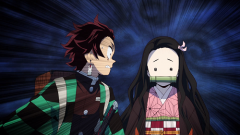
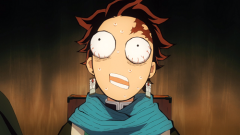
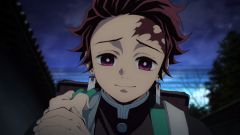
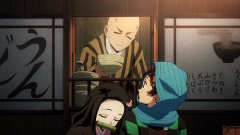
Hello and welcome to Kimetsu no Yaiba’s strongest week yet! Training concludes, the Yaiba starts the Selection begins and Tanjiro shows off his skills. Lets jump in!

Starting off, production! This was a good week for Yaiba, it looked and sounded fantastic. I’ve gushed about the animation/art before, so I’ll keep that part short this week. The water effects on Tanjiro’s sword were beautiful, and I love the thematic nature of them, as I don’t believe they have actual water powers. What I really want to talk about here though is the sound design. Both the VA’s and the music were fantastic, with Midorikawa (of Dio Brando fame) nailing it as the Demon. His whole counting sequence, and insane breakdown as to the era were chilling. Yaiba just had a lot of fun with everything this week, and as a viewer you could tell. Even going to far as to pay homage to the Dio Brando walking shot the internet loves so much. This isn’t the only place Yaiba excelled though, the story did as well.

Continue reading “Kimetsu no Yaiba – 4 [Final Selection]”

Fruits Basket (2019) – 04 [What Year Is She?]

As a complete novice to an already beloved franchise, I have little to no prior knowledge coming to Fruits Basket. Last week, I was wondering about the direction the show would take, whether it stays focused on the core cast, or it completely shoves them aside, giving more space to the side characters. As it turns out, Fruits Basket does a little bit of both. This week, they introduces another member of the Zodiac family, Kagura, with varying degrees of success. At first, it comes rather unexpected (hence took a chuckle out of me), when it’s reveals the timid, feminine Kagura has a violent side of her. It works for one, two times before the joke gets tired, unfortunately. It works first as an introduction to her character and the extent of which she would go for her affection towards Kyou. It still works as a flashback to informs us how long this affection had been going on. It blows up on itself when Fruits Basket levels it up later in the episode, resulted in ruining the whole family’s dinner.

Granted, Kagura has so much more in her characters. Behind her “charging head first into an issue – her Zodiac’s trait”, she is determined, yet insecure; expressive, yet never deceptive. As much as she loves Kyou and wants to marriage the poor man, she’s still conscious enough to understand Tohru’s good intention. But God, I don’t know what I would feel if she kicks Kyou everytime they are on-screen. With her appearance, we learn something interesting about the Souma’s family as well. They compose of both boys and girls (we’ve seen 4 so far), and as someone mentioned there will be more girls in the mix. Like their boy counterparts, if they get touched by the opposite sex that isn’t in the Zodiac family, they’ll transform into their original form. Before the reveal, I couldn’t have guessed the animal representing Kagura. Turns out she’s a little cutie boar (note: not a piggie), and I think I’m not alone when I say that I prefer her animal form much more than her human one.

At the same time, we still have another great scene between Tohru and Kyou when they’re in the rooftop. What Fruits Basket does best is keep peeling the characters’ personality and we keep seeing different side of them, what makes them who they are, what are their insecurities. This one in particular, we learn how enthusiastic Kyou behaves when he keeps babbling about his Master and martial art in general. Serve as a total opposite to Yuki, Kyou knows what he likes and isn’t shy from expressing it. I’ve heard that the side characters are one important element of what making Fruits Basket an endurable shoujo classic, so I expect more from these Zodiac members. The cliffhanger at the end suggests that it’s time for Tohru to decides whether or not she regards this new family as her own family or not, although I feel it’s a bit too early to delve on that angle. Fruits Basket’s strucutr can be conventional at times given how we can see how the plot going moles ahead, but it’s the adept character writing that makes the cast so enjoyable to watch. As far as this new comer Kagura goes, she’s still a good, albeit my least favorite one so far, addition to the cast. Despite my initial worry, this new adaptation of Fruits Basket has been solid so far.

Sarazanmai – 03 [I Want to Connect, but It’s Not Meant to Be]

Sarazanmai spends this episode on the remaining lead of the trio, Enta, and answers some questions, while at the same time, asks more question into the mix. I’ll be honest, while I still enjoy this episode immensely, I find this episode my least favorite so far of Sarazanmai, by a small margin. Most of that because I find Enta’s the least intriguing character out of the lead trio. If you are about to scream at my face with “WHAT”, I said that because apart from his queer crush (which is totally risque and admirable by the way) to Kazuki, there’s not much about him we can elaborate on. True, there’s also his older sister who gets herself into bizarre situation this time, which I will get to that later, but I don’t feel much of a emotional connection here. His mind is squarely about Kazuki and about wanting to express his love to Kazuki (to the point of multiple hilarious day-dreaming) that it overshadows everything else. A dealbreaker for me for now is that we don’t learn anything about Kazuki’s response towards Enta’s crush. When you think about it, the Memory Leaking would inform Kazuki very well about Enta’s affection towards him, but he acts totally oblivious. If by next week, Sarazanmai doesn’t address this issue I’d certainly feel very cheated and I’m gonna mark the show down for that.

The way Sarazanmai introduces the its bizarre theme of this week, on the other hand, is pure genius. It starts with Enta’s kiss, which was the cliffhanger from last week. It both serves as a continuity, and much later on do we learn that everything happens in this episode have to do with the “kiss” puns – kisu fish, the kiss, and the poor criminal named KISU who steals women’s kisses and transforms them into kisu fish. Ikuhara, you’ve got a perfect 100% score for originality here!! Of course, “kiss” theme here has to do with Enta’s affection towards his childhood friend, as they were together as a golden duo during their soccer team together, and he considers their playground as his sanctuary. It’s certainly praiseworthy to see him so determined to express his feeling for Kazuki, but for an Ikuhara show I would prefer them to deal with it right way, and not fake out by presenting them as Enta’s fantasy. It still works in this episode, I just hope that it won’t remain the case in the next ones. His sister, who we see interacts with him in several occasions, eventually gets mixed into this week’s phenomenal, but I feel that plot thread is under-developed in order to squeeze out some thematic relevance about it.

With this episode, we also learn that the Cops trying to capture and turn these criminals into Kappa Zombie in order to extract and store up their Desire, and they are served under sone Kingdom, which for now my take is that that Kingdom has totally opposite functions compare to that of Prince Kappi. We also learn that the person who becomes Kappa Zombie will have their existence erased if they get their shirikodama pulled out from their butt. At this moments, there’s a lot of mystery behind this world – with Ikuhara, nothing is ever straightforward – but at the same times, we get enough information and characters’ motivation that we don’t feel lost of overwhelmed over the huge amount of symbolisms. While narratively it’s not as complex or fresh than the first two weeks, this week gains a huge bonus point for its sheer determination of portraying queer crush of a middle-schooler kid. Speaking of that, Ikuhara’s latest interview, where he admitted that he didn’t mention “butt” in his pitch, but added later on instead, is pure bliss. It’s so Ikuhara thing to do and it is another statement for an auteur who isn’t afraid of back down on their own idea, even to a fault. And that is exactly why I always admire the man. We, as the audience, will have to follow their vision and whatever they cook up with, not the other way around.

Carole & Tuesday – 02/03 [Born to Run – Fire & Rain]

Just like any auteur, the moments you step into Shinichiro Watanabe’s world you’d immediately know it. The man has a distinctive visual flair, one that relies on fluid animation, expressive characters’ “mannerism”, and a great ear for music that ride the whole narrative. We can see all these aspects in Carole & Tuesday. In fact, with Netflix streaming, this might become one of his most mainstream hit, and that might and that is both a blessing and a curse. I’m talking about “accessible” here. More than any shows he has directed before, this one appeals to the widest range of audiences: the story is an underdog story at heart, and everyone loves a few-good story when our mains start from zero to hero; the music are catchy and appealing; the duo is likable and the visual is a feast to the eyes. But my (mild) issues for Carole & Tuesday lies in the fact that there isn’t many layers underneath the surface. Take the titular leads, Carole & Tuesday, for example. They’re wholy distinctive in designs and how they talk and move, but their encounter always feel a bit easy. The same can be said for their journey together so far, to the point in the third episode it feels as if they function as one entity. I’d love to see more conflicts between them, not a whole arc (I know this will come eventually) but more about small details that we can pick out and tell them apart.

The life-changing event for our main duo happens in the second episode when they decide to do a guerilla performance in the concert hall, in which it catches an attention of the sound technician Roddy, who then upload their performance online. That’s where Gus (the drunken narrator) storm in and self-declares himself as their manager. Unlike the lead duo so far (which mostly a matter of expectation – I expect so much more from them), I quite enjoy the roles both Gus and Roddy are playing so far. They serve as comedic relieves (especially Gus when we see all of his plans are either outdated or simply not working at all), but for now they’re the ones who move the plot forward. Another little details that I really enjoy surrounding their worldbuilding is that the universe they live in isn’t that far off from our current world. They still use wikipedia, for example, or they use many real-name bands/singers that it brings a smile on my face when they mention them. But come on, I would never have expected Justin Bieber and Bruno Mars are mentioned in the same breath as Motorhead. They are as world apart as it comes.

Speaking of song references, I feel the need to mention the titles of the episodes, which Carole & Tuesday paying tribute to all these classic timeless songs, and that bring up to one of my earlier concerns. These titles are dropped not based on their tune or meaning, but merely a literal adaptation so far. In episode 2, Bruce Springsteen’s Born to Run quickly translates into the girls constantly running away from the guards. In episode 3, the sad song “Fire & Rain” is indeed involves the moment where Tuesday loses it and burns her music sheet which triggers the waterflow. While there is meaning of why these songs are placed there, considering the fact that I know these songs by heart, and these songs bring the spirits and attitude like no others, it’s a bit of a letdown that Carole & Tuesday just borrows the surface and not the essence of the songs. I have no complains, however, about both the OP and ED, one brings one of the most gorgeous visually looking in recent years, the other is just an earworm. They are easily my favorites so far of this season, which saying a lot in a season where Mix’s OP and Sarazanmai’s OP are also airing.

At the same time with Carole & Tuesday journey, we follow Angela who going through her vocal training, which feels more like workplace abuse than actual training. Tao is a douchebag and he isn’t afraid to admit it. At the moment, Angela’s path and the girls’ haven’t crossed so far, but I expect it to happen soon in the future. Looking at it more closely, Angela emerges to be the exact opposite with Carole & Tuesday’s path. Tao, her so called “vocal trainer”, is more interested to create an AI song, the one where the song tune in which people’s heart so that the listeners will respond positively to the song, doesn’t matter who sing it. Whereas with our duo it’s all authentic here. They sing from their heart, they bust out into songs because they feel like doing it. Whereas Angela’s already successful when we met her, Carole & Tuesday have to work from the bottom ground. Speaking of Tuesday, we learn that her Mom running politics, which could be an interesting thread to follow. While I feel that the story beats so far are… straightforward, the visual direction still pretty much excellent. The earlier bit where Carole doing the fake moaning (well, this is real in Chinese culture), the visual bits of the Priest and the butterfly is very well-crafted, the timing in particular is exceptional. I don’t know if it’s a right comparison, but Carole & Tuesday reminds me a fair bit of Violet Evergarden last year, not necessary because they’re both Netflix-funded, but more about they are the most accessible works from acclaimed director/studio and it could work as a gateway for newcomers to get into their more distinctive, and more significant, works.

One Punch Man S2 – 3 [The Hunt Begins]

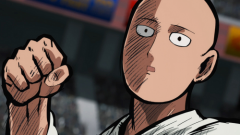
Alright OPM, credit where it’s due, you managed to recover a little this week.  Garou gets more screen time, the animation is a little less shit and ONEs writing is starting to shine through. Lets jump in!

Starting off, as fun as it would be to rag on OPM for another week, it’s improved. This is a great step up from last week, with legitimately good looking sequences. Yeah there are still issues, the terrible fade effects and direction are still there. For some reason JC Staff is unable or unwilling to animate faces. Cutting them off at their chins, or at terrible angles for the sake of not animating them. Saitama’s face is also still… weird, and the gradient still pisses me off. But credit where it’s due, this is a large improvement over episode 2. If OPM keeps this upwards trajectory in quality, it might actually not be an embarrassment by the end. One can hope, because this episode Garou actually got the treatment he deserves. Most of it, at least.

Continue reading “One Punch Man S2 – 3 [The Hunt Begins]”

Dororo – 15 [The story of the scene from hell]

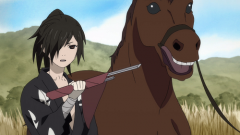
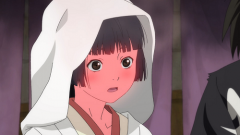
Fuck you Osamu Kobayashi. Your a terrible director and you ruin everything you touch. Welcome to another week of Dororo, where for once OPM isn’t the show I am most disappointed in. Lets dive in.

Let’s cut right to the chase, Dororo looked like shit this week. And all the credit goes to Osamu Kobayashi, the same man who butchered episode 4 of Gurren Lagann. He must have a fetish for blobs and faces, because it’s all terrible. Zoomed out, all the detail disappears into the aforementioned blobs. Meanwhile when zoomed in, while it looks fine, the direction is anything but. We cut from face to face at crazy times, mid speech or sequence, before randomly cutting to a wide shot of the cast. Its as if the man is deathly allergic to pan’s or stills. God, he even has me wishing for more pans and stills. This is how much the man has butchered Dororo this week. Luckily he only has this episode, so maybe Dororo will return to form next week. For for now, continue on if your ready to read a reaming.

Continue reading “Dororo – 15 [The story of the scene from hell]”

Sarazanmai – 02 [I Want to Connect, but I Want to Take]

And the wild ride is here. In turn for cardboard zombies last week, our three kappa-who-are-pooped-out-by-someone-else have to fight cat zombies, an acid bee-themed amusement park, a person with a cat face who clearly reference Buffalo Bill in The Silence of the Lamb, weeds and a (yuri) kiss at the end of the rainbow. It’s too much of Ikuhara’s quirks for sure. Does the whole episode make sense? Well, yes and no for me. There are still many unexplained threads, and sometimes it feels as if Sarazanmai is bizzare for the sake of weirdness, but there’s certainly charming and fun. First, It might not be clear what exactly are these cops, and what their true motives, but we do learn in this episode that they are in fact the ones who create the zombies. There is not enough information to classify them as villains, however. While it’s clear that they’re manipulative, for now I consider their action as trying to pull out something, whatever that something might be. Desire? Possibly since they shout “desire extraction” right there, but for what purpose? Nevertheless their theatrical performance inside the police station reminds me a lot of his previous works, especially when one pulls the heart out of the other, literally. Striking? Yes. Self-indulgent? Yes, as well. For this bit alone Ikuhara just repeats himself right there.

As with all Ikuhara’s features, well except maybe Yuri Kuma Arashi, there’s a big play on repetition here. At least, the formula pans out the same as with first episode. Kappa Zombies will appear in the sky in some bizzare forms (let’s take a random guess on what could appear next, I’d say, cucumber?), these three characters turn into kappa and do their musical sequence to get the shirikodama out of their butts. So what is the catch? Well, please welcome “the Dishes of Hope”, which can grant anyone’s wish. In fact, the main conflict of this episode lies not in the fight between them and zombie, but within the cast themselves. It’s where things get a bit more complicated, but more relatable. Kazuki wants the dish so that he can support his brother, Haruka, whom he has been crossdressing as an idol Sara Azuma for. It’s clear after two episodes that he would go for such length to protect his brother’s smile, but I still believe there are more than meet the eyes here. Whereas Toi has another sibling issue as well. His brother is a gangster and is apparently in some kind of debt, and within these two episodes we can see that Toi is playing with fire. He carjacks, he sells weeds and he has a gun (and doesn’t hesitate to use it). This sets off the first real character conflict and so far it’s nicely done.

That leaves Enta as the least complex character out of these three… until the revealing of the post-credit. Well, objectively he’s still the least determined to get the Dish for himself, but damn Ikuhara doesn’t beat around the bush this time. He’s in love with Kazuki and I’m curious to see how this angle is going to play out. Visually, Sarazanmai is IMPRESSIVE, especially in the sequence where Toi and Kazuki pretend to be a couple to catch the weed-eating cat in the amusement park. The layers, and the level of details are so detailed and a feast to the eye that this single screenshot (the top left) becomes my favorite single shot of this year so far (thanks Wooper for sharing the shot to me). Ikuhara himself said that Sarazanmai is about “connection”, and if you’re familiar with his works he isn’t subtle, nor straightforward about his themes. The characters will repeat that phase multiple times in an episode, there are tons of symbolisms will be thrown around our faces (case in point: the cops’ musical routine of touching pulling out one’s heart). But, let’s me ask my the earlier questions again? Does Sarazanmai make sense? Yes (thematically) and no (narratively). Does it really matter? Not one bit. Sarazanmai remains one of the most refreshing visual medium (not only anime) that I’ve encountered in recent years.

Fruits Basket (2019) – 02/03 [They’re All Animals! / Let’s Play Rich Man-Poor Man!]

I believe it’s safe to say that one of the main concern for this adaptation of Fruits Basket isn’t about the source, but more about whether or not the current staffs have what it takes to bring this classic to life (while at the same time pleases the original author, but that’s beside the point), and after three episodes, Fruits Basket does it considerably well. It knows its main strengths: Fruits Basket develops its characters with insight and sensitivity, making them both multi-dimensional and relatable. These first three episodes focus on (assumably) the main casts: our lead Tohru, the rat Yuki and the cat Kyou, and already within only first few episodes they emerge into characters worth spending time for. As a minor criticism, Tohru’s character isn’t that fleshed out after episode 1, but I understand that is entirely by design. We learn about the Soumas’ circumstances through her point of view, thus it’s always more about the boys she interact with, rather than herself. But it helps that 1) the premiere did more than enough about her backstory, especially when it comes to her current situation and her relationship with her Mom (which I reckon to be her guiding light throughout the series) and 2) she’s still a pretty damn solid lead who we constantly learn more about her personality through her narration and the way she interacts with the Soumas.

And Fruits Basket did a magnificent job to flesh out both Yuki and Kyou characters. One fun bit of useless trivia, the Vietnamese Zodiac (which is a variation of Chinese Zodiac), has Cat within the Zodiac in place of the Rabbit, so we Vietnamese pretty solved this Rat-Cat dilemma (another trivia, many Chinese people think that “Rat” isn’t an accurate translation, “Mouse” is a better term). Throughout these episodes, you can see their personalities play out, but the trick of it is that we can see their inner insecurity after peeling their projected image. For Yuki, he’s the perfect model student with a calm demeanor, however underneath that he’s too aware of the distance between him and the rest. For Kyou, he’s desperate to get into the circle, at the same time is short tempered. They serve as a total opposite to each other, in which they never see face to face about the other’s action. Yuki tries his utmost to be free from the circle he’s in by attending a co-ed school, whereas Kyou doing anything in his power to get in. Yuki thinks before acts, yet keep people in the distance. Kyou is a ticking bomb, yet make friends without much problems.

In fact, one has something the other lacks, and in the process of learning more about these two, Tohru learns that they are jealous of each other’s ability. Yuki afraids that if people find out about his secret, they would be “sickened”. That proves to be wrong as Tohru doesn’t really mind about that, and accept him for who he is. Production-wise, Fruits Basket so far is only competent. It holds the story so far, although nothing really stand out much in terms of delivery. At first, I was skeptical of the use the Zodiac transformation smoke (in which some source says that it’s live action filtered in), but now I feel it fits the show well. The smoke adds to the weird (and to a small degree, deadpan) effect. I’m not sure if this is the end of Yuki – Kyou conflict so that we can move one to other members of the Zodiac, but I’m fine with whatever direction Fruits Basket will go next. The structure might be conventional so far, but the complex character writing more than delivers. At least, there are some characters that make a brief introduction in these episodes, and I expect them to deliver as well when it comes to their turns.