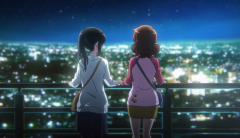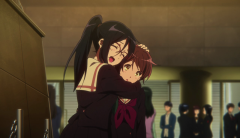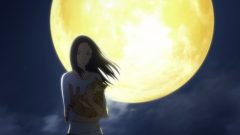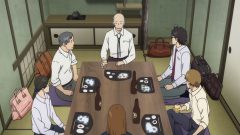
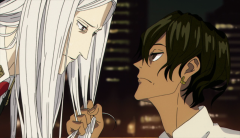
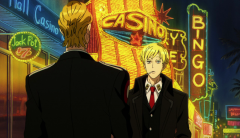
ACCA: 13-Territory Inspection Dept. (Winter 2017) Review – 83/100

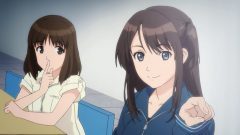
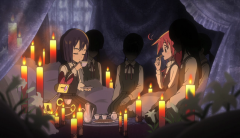
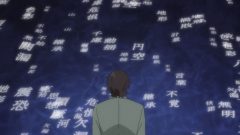
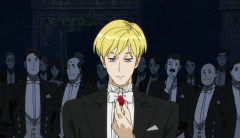
Imagine my utmost amazement when a show that I wasn’t that confident on taking in the beginning turned out to be one of the most solid offering this season had to offer. ACCA is the most recent anime adaptation from mangaka Natsume Omo, which despite isn’t a household name, many of her works (6 titles of them) have been translated to English, a privilege that rarely seen among this industry. Watching ACCA though, it’s easy to see her appeals: attractive and recognizable character designs, detailed world settings, complex yet laid-back themes and featuring characters that always in the move. ACCA embodies all those traits with slow but confident pacing that have an ending that perfectly tied up all the plot threads- for me one of the best ending I have seen in years. ACCA isn’t perfect by any mean, after all, adapting full 6 volumes into one cour of 12 episodes mean that they have to cut LOTS of extra details. Although I would’ve preferred more if the show has more time to focus on these 13 Districts and their ACCA’s representatives, the mere fact that they manage to make the plot points flows seamlessly, while still engage (or rather, enhance) viewers’ interest by each passing episode isn’t an easy feat at all; so a special shout out for Madhouse for this wonderful adaptation.

At first, what really makes ACCA compelling to watch is its rich world setting; as the show’s diverse settings is one of its identity itself. The 13 districts all have their own distinctive traits and are vastly different in wealth and their sub-cultures; which remind me a bit of the worlds in Kino’s Journeys. In fact, it’s too different from each other that the only thing that they all SHARE is its autonomy. I should remind you, the demand for putting background details for this show is insane, as they have to show the characteristics of all 13 districts in the little time they had without obstruct the pacing, but Studio Pablo (you might need to remember that name- They are an anime background company, the team who also handled the gorgeous visual backgrounds in Flip Flappers) did a marvelous job in putting as much details as possible from those districts. The two poorest districts were given more development than the rest with their own stories and struggles and as a whole, Dowa Kingdom is a place that I’m more than happy to spend more time to. The ACCA’s representative member in each district, likewise, all given just about enough personality to both inform us their own characters, and how the uniqueness in the district they work in starts to influent them. Regrettably, I still feel the show doesn’t have much screen time to flesh out those ACCA members but that is the sacrifice I’m willing to take…

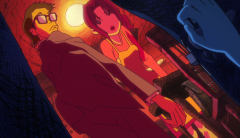
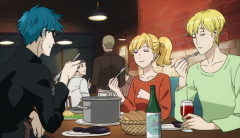
… Because ACCA is masterclass at its storytelling and pacing. Even now when I’m looking back at the series, I don’t see any wasted segments, any meaningless conversations or any useless developments. Everything the show puts in, they are there for a reason, either to advance the plot, or to flesh out the characters, or give the show more identity. All the plot developments were hinted subtly way ahead, so when the BIG ANOUNCEMENTS take place, we don’t feel like them pulling the rug under our feet, but instead we’re well prepared to take such twists in. Secondly, all the character’s usual habits like Jean’s constantly smoking, Nino taking pictures, or Lotta eating cakes all the times not only tell us their personality, but also those details suggest a deeper plot meaning (see the relevance of cigarettes here? Or the reason why Nino taking pictures all the time?). Moreover, for a show that mainly about the scheming, plan within a plan within a plan about the coup, there are surprising overloaded with breads, cakes and deserts. Characters in this show fall in love with breads, buying cakes when scheming about a plan, making friends through the love of toasts (which ultimately saved Lotta’s life), and to be fair, the love of bread is what give birth to Jean and Lotta to begin with (guess where their Mom met their father? A bakery of course), but strangely, those moments of cake-porn never feel out of place in this ACCA world. For me personally, cakes and toasts will be what I miss the most about this show. And then the pacing. While many would argue the ACCA is snail-moving slow, and they’re mostly right, this is one of the most confident pacing that I’ve seen this season. It’s slow, but it never drags. It’s slow, but it keeps getting more intense as it goes on; steadily to its final showdown.

Another attribute; however, that really sets ACCA well apart from other political thrillers, or any thrillers in that extend; lies in its almost non-existence of violence and dark intentions. ACCA is an idealistic show; characters in ACCA think and behave for the benefit of the kingdom, where sacrifice of individuals can be necessary to keep peace for the nation (That make the backstory of princess Schnee even more tragic). Even the show’s main villain’s thrust to destroy the throne wouldn’t necessary qualified as evil either; after all, all he wanted is the “rightful” power and control for his own district, one of the richest and most influential district. If shows like Berserk or Death Parade keeps addressing the dark and ugliness of human’s nature, show like ACCA is the opposite. It’s almost too bright, too optimistic about human, which is be no mean these characters aren’t complex. The characters are plotting plans within plans, and sometimes their actions are already manipulated by other’s, but more or less their objectives always aim for the better of the people, with little to no gain for themselves. While personally I don’t have much of an issue with it, I do feel portraying the world that devoid of violence or ill-will might split the audience on being unrealistic, and that ending where too much of good things happened (look, Pranetta hits gold) could turn some viewers off for being over-cheerfulness.

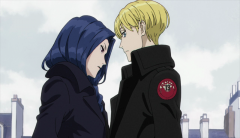
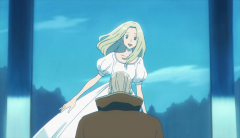
Madhouse’s execution to this series is overall top-notch. The use of strong color pallete, for example, gives the show so much texture and more impressively, they fit in with the tones so well that those color palletes don’t stick out like sore thumb. Episode 8, for example, detailing the one big flashback of princess Schnee through Nino and his father’s eyes is textbook example on how to use those colors the most effective. The music, likewise, is really on point most of the time and the shot compositions have great flairs, cinematic, and sometimes they convey the mood and tension just by showing one character’s position to another (like when Mauve informed Jean about his royal heritage) or putting the characters in the soft, blurred background (most prominently through the climax of the last episode). In one word, exceptional. But there is one minor issue, though. For a show that have high caliber of crafting like ACCA, the animation, the actual motions, is lacking. Characters stay at static positions most of the time, and even their expressions don’t change much. Which for me is fair, because ACCA has always been about the calm, about what beneath the surface so it’s only appropriate that we don’t get to see much actions on the surface, both in term of actual movement, or the plot itself.

ACCA also is extremely well-grounded in terms of underlining characters’ chemistry. Although I would argue that those characters don’t change/grow much in terms of character’s development (see, in the end, Jean is still the same guy we saw at the beginning, so is Lotta, or… gasp, Owl), but the show delivers such natural chemistry between the cast, especially the trio Jean – Nino – Lotta that it’s such a nice time to see them hanging around together. Each of the pair give off a different chemistry to boost, and they always feel so effortlessly to each other that when Jean and Lotta find out the truth about Nino, it’s bitter and sweet at the same time. For a show that is more about the detachment (everything flows underneath the surface), they understand that the underlying emotions of the show is the buddy relationship between Nino and Jean (and well, Schnee’s tragic past) so rightfully ACCA gives their final moments on those two as a sweet farewell to us.

But like I mentioned earlier, ACCA is not without its issues. One of it is that the show has to compress its source material to only 12 episodes, as a result in the last third of the show the sweet cakes and deserts just evaporated (but I can understand, we wouldn’t take the coup seriously with all those cakes and breads so they have to go), and like I said, more time to flesh out the uniqueness of each districts and their ACCA representatives would benefit the show greater. Secondly, by giving much attentions to the royal and the members in power, we don’t get to see the Dowa Kingdom in ordinary citizen’s point of view. I mean, we hardly know anything about Jean and Lotta’s father, a commoner, for example. Moreover, being slow and static and diplomatic-centric also means that when the show has to raise up its tempo; most notably during the Lotta assassination; they are clumsy in both storytelling and execution to the point of near-ridiculousness. And lastly, show with this deliberate pacing won’t attract much of the mainstream audience, in which if that is the case, the only think I can say is that they have missed out one of the best well written gem this year had to provide and trust me, this show will hold up well with time. I will definitely check out more of Natsume Omo’s works.
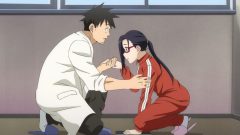
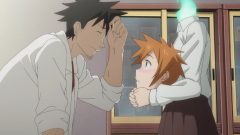
Demi-chan wa Kataritai (Winter 2017) Review – 62/100

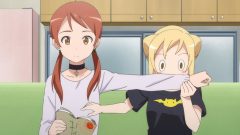
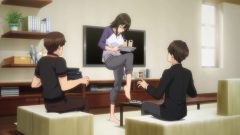
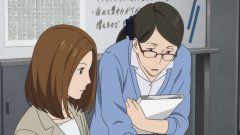
Demi-chan is one of the newest addition to the monster girl subgenre, which usually feature a human helpless male lead get stuck in a harem of mythical creatures, in form of oversized boob girls of course (why usually those monsters are in female forms anyways? Aren’t they sexless?). In this case, we have monster girls as high school students in an otherwise mundane ordinary world, where human begins to accept them as a part of society. With the help of a teacher who takes special interest in demi-human, those monster girls (called themselves as demi) starts to navigate their lives, opens up about their demi abilities and how they adjust those abilities to fit in with the environments around them. Demi-chan, as a result, tackles quite thoughtfully and sincerely about demi issues from multiple sides; from demi side, from those who do and don’t aware about them. The middle part of the show, however; dragged the show down by a passable but uninspiring slice-of-life tendency where nothing much happened. The final two episode picked up some of the show’s best spirits but as a whole, Demi-chan isn’t special enough or hard-hitting enough to really stand out in a crowd.

As you can probably guess from the title “Interviews with Monster Girls”, the show focuses on the main demi-human nature of our high school girls: vampire, dullahan, snow girl, succubus. By that the show comparing their true natures to those traits we all heard from mythology (Do vampires hate onion? How succubus work to attract male preys?), addressing their main concerns toward blending in with human world, and explaining their demi abilities so that those girls understand and be proud about their nature. One of the main moral question the show keeps asking throughout its run is that how we, the human people, should treat the demi girls most appropriately. Should we treat them like normal people, or should we care more about their monster’s attributes? Isn’t keep questioning about their “abnormal” nature a kind of discrimination itself? When you keep asking about those natures so many times it’d make the monster girls aware that they are different than the rest. For that Demi-chan argues that it is necessary for the girls to learn and embrace their own natures because those natures are a part of themselves and are what make them unique as a person. The human as well should learn and understand their concerns in order to really support them. Sometimes we do some discriminated actions to them without we knowing it (one of the lines from a recent film Hidden Figure really hits it home. The white boss: “Despite what you may think, I have nothing against y’all”. To which one of the black girl replied “I know, I know you probably believe that.” I totally agree with this thoughtful approach and to be frank this attitude is relevant to the people from ethnic groups in real life as well. I’m not going to touch on world political much but with Trump’s aggressive actions towards Muslim countries and border immigrations, sometimes what we should do instead is understanding each other’s points of views and acknowledge and respect their distinctive cultures.

Another strength of Demi-chan is this show has a lot of hearts. The show has its light-heart, sweet nature hanging in the air and many of those big emotional scenes are heart-felt and delightful. Well, you can argue that those moments (like Hikari confronts the bullied girls in the toilet, or Hikari encourages Tetsuo by the lake) are over-sentimental for its own good, but when its heart is on the right place I have no problem with that. It’s that sweet nature and the easy chemistry between those girls and Tetsuo that basically carry the show throughout its run. In addition, the sweet voice acting help elevating the chemistry as well. Of those characters, Tetsuo-sensei and Hikari are easily the best characters of the show. Hikari for her over the top but that’s-exactly-what-we-need carefree attitude, and Tetsuo for consistently helping out the girls with his kindness and he also grows from approaching the girls with curiosity into wholeheartedly caring about them. The second last episode where the show examines how close should he assist the girls is also a thoughtful, well-drawn conflict that help developing his character and making us see how much he means to other monster girls.

The introductions and then the interviews of our monster girls are easily the show’s best parts. After the interviews segment though, Demi-chan stumbles in finding a hook so it relies on some of its more questionable aspects: the romance and the slice-of-life approach. The romance is a totally dead weight, unfortunately, because this show doesn’t need any romance to begin with. Sakie’s crush on Tetsuo is more of a missed opportunity than a hit, because it’s awkward in tone and worse, gets pale very, very quickly. Kyouko the dullahan’s feeling towards her teacher is also the show’s low points, and there was more than one time that Tetsuo having a sexual tension towards her, which gives this show a rather bad taste. Secondly, after the interviews the show wanders around for “cute monster girls doing cute things” focus, that including the girls studying for the exams, enjoy reading old manga and swimming in the pool (really, we MUST have pooling episode in some ways). Those moments sure are cute and relaxing but they don’t really have much to say and it loses its steams by each passing episode. In fact, I don’t remember much what happens in those middle episodes because nothing really happened, nor mattered. Lastly, the new characters introduced in that period are unmemorable at best. The young boy and the detective adds little to the table, that Tetsuo’s scientist friend has no chemistry whatsoever with the cast, the human students don’t have much screen time to stand out and Hikari’s parents, while well-fleshed out, still remain underdeveloped. In fact, where is Himari in the second half of the show? It is a shame because she’s far more interesting than most of the core cast out there.

In the end, I’d only recommended the first 4 episodes and the last two, which would sum up to exactly half of its runtime. Except from its well-thought approach on the nature of the demon girls and the easy chemistry between our characters, the show leaves little impact and unfortunately, for me at least, the middle part really brings the show down to the point I feel it falls flatter and flatter as each episode passed. The last two episodes did regain some of its spirit but by then it was far too late. Still, I don’t deny that I have an easy time watching Demi-chan, it’s good to get sucked in their world and enjoy the band of demi-girls having fun times, but ultimately when it’s all done and gone I left without much personal attachments from any of this.

Seiren (Winter 2017) Review – 51/100

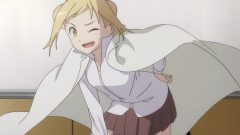
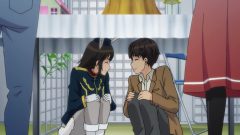
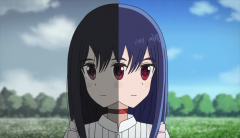
Let me say this out front, Seiren is NOT a good show, it’s a highly uneven one. Throughout its run, I can see some solid moments and fresh ideas that could potentially raise it above the bar, but ultimately, view it as a whole, Seiren is a show that isn’t worth recommending. At first, I’m actually intrigued by the premise of the show: an omnibus format on the romance between our protagonist and each of the girl (3 of them this season). Ya know, a harem without an actual harem. For me personally, I’m dread at the concept of “the one” in romance, that there is one person who specifically for you, your “true love”. I always believe that having a romantic relationship with someone is a matter of meeting them at the right time in the right circumstances, of course with enough chemistry and efforts. So, for a show like this (and Amagami, I’ll get to that later), showing multiple possibilities one could’ve have to be in love with different girls is actually interesting and more realistic concept, at least for me. Moreover, with 4 episodes for each arc, it is a perfect length to flesh out the characters, heighten the chemistry before the romance itself drags out for too long. That was in theory anyways, because what we got instead is a show that bugged down by a very inconsistent plot progression, awkward pacing and weak writing in general.

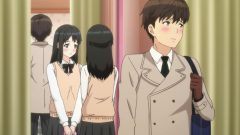
It’s hard not compare this to Amagami so I will address this issue first. Although Seiren is an original show, it borrows the same concept, the same structure and even the same settings with the latter, so like it or not we have to see if this show is better than its inspiration or unique enough to stand out by its own. For the quality, Amagami is way better and way more focus, they understand the romance is their central point so everything they put is mainly to flesh out the relationship between the main character and any given girl. Each of the route starts and finishes around the same time period, making us feel strong connection between each arc. Moreover, Amagami works because it adapts its Sim-dating format really thoughtfully (okay, enough about Amagami, I won’t address it again. Promise). Seiren, being an original show, doesn’t really need to follow Amagami’s footstep because frankly, why stick to a game format when you have an ability to do something fresher? Seiren achieved it in a way, because after finishing the show I wouldn’t call it a ghost of its predecessor. It is its own thing, but in an inferior way.

The first issue here is the route, because honestly I can’t call it a route. Each arc happens in a different time period, and sometimes without the knowledge of the previous arc, you couldn’t follow the details in later arc (like Tatsuya, Shouichi’s friend, who has a fetish for rabbit). Worst of all, except for featuring the same stock of characters in the same school settings, the three arcs are vastly unrelated to each other, be it in themes, in the romance, even in characters themselves. For that I mean the characters change in personalities during each arc that it’s hard to consider them the same person. Take Shouichi best friend, Ikuo for example. In the first arc, he appears as Shouichi’s close childhood friend but he’s more academic, he’s more serious about his life and spends a lot of time for study. In the second arc however, the show betrays his nerd side by putting him to become a game-buddy with our main leads; and in the last part I wouldn’t consider them close friend at all (how can you call each other best friend when you have no idea the girl that Ikuo crushed for so long) and Ikuo acts like a love-struck Romeo. The only thing that consistent is the show’s weird fetish for deer, in which I find rather fascinating.

Then to the big elephant in a room, the writing and the progress of the plot are all over the place. In Seiren, I have a feeling that there are too many chefs in a kitchen, thus the result is a hot mess tomato syrup. Sometimes it wants to be a game-buddy show with exciting mecha fights (really!), sometimes it focuses on magical girl- passion only for later it drops that storyline to focus instead on the girl baking and enjoying Christmas party, then it remembers that it had to develop a romance so it puts the characters alone together. In addition, normally you know the writing of a show is inadequate when a side character shows up and you had to think for a few seconds to remember who that person is. Well, I have the same problem with this series. Like, who is that girl in swimming club again? From the poster, I supposed she’d be one of the harem but where are the other two girls then? They might be around somewhere but at this point I lose all the interest to find out who they are. And not even characters, but the plots development as well. Let’s see, why Seiren keeps focusing on Hikari’s best friend backstabbing her subplot and then kind of drop it off all together? Why the subplot of the Student Council President (oh, my bad, it’s Public Morals Committee) forced the Home ec Club to build a Christmas tree? There were like dozen subplots in one arc without any proper development that it feels just like having a dream. I bet in few months all we can remember is the main plot points and some fragments here and there but we totally forget everything else.

But the show is not without its charms, mind you. First thing I should mention is the hilarious dialogues that bother self-satire, that actually make the show ridiculous and funny at certain points. Line like “Sorry, do you mind if I feed my deer” in a middle of a café date with deadpan delivery is something to behold. While the main male protagonist is plain, I like the all three girls Hikari (no, not the vampire), Toru and Kyouko (no, not the dullahan. What’s up with this show and Demi-chan?) and they are interesting and diverse enough to carry the show by themselves majority of the time (my favorite girl: Hikari). Lastly, I enjoyed the epilogue parts of each arc because I think it’s one of the rare cases where the randomness in details work in their favors. Watching Shouichi become a chief, a school bus driver (haha) or a magical girl mangaka is both hilarious, but also remind us the endless possibilities of our own future.

The technical aspect of the show is nothing to write home about, although it fulfills its jobs. There are some moments, most notably, during the “kiss in a beach” scene, where the visual and sound really elevate the whole sequence. Other time, the show did a decent job of choreographing an action mecha fight and the character designs, while attractive in general, sometimes I do feel like I was looking at fake wax statues (weird huh?). I think it mostly have to do with the character’s eyes, sometimes they just kind of staring too long without any emotion attached.

It’s note repeating that for my score, I consider 60 as recommendation line; as such Seiren falls short. The inconsistent in plots and sometimes in characters themselves are its most drawbacks. It’s a pity because I can see many of its plots have a potential to become a solid offering, but when they jam up everything they can think of together, the result is a half-baked resolution to most of its plots. If there will ever be a second season (come on, there are 3 more girls), I’m not exactly sure if I still care to watch it. At the end of the day, Seiren is a misfire romance show, it had potential to be a much better show, but all it need is to settle in some major plot points and develop them properly. To put it more precisely, Seiren lacks a sucker punch.

Sweetest Monster Video Game Review – 70/100

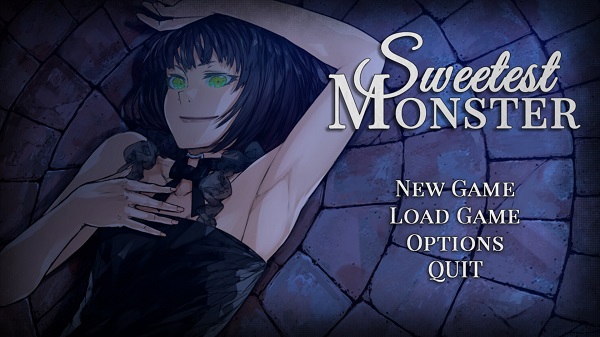
I admit my first reaction to this visual novel wasn’t a positive one. Maybe it was because of Nekopara having a hugely successful kickstarter when Dies Irae was struggling to reach it’s goal.(I mean Jesus Christ the Nekopara anime OVA kickstarter raised nearly one million dollars. People really want catgirls.) I more or least saw the cover art, briefly skimmed the synopsis and said nope. However I got word that there was more to this story that means the eye and I tend to be fascinated by turning innocent concepts dark. My review this time will be shorter than my average ones as this visual novel clocks in at about a three and a half to four hour read. So due to it’s short length, the more i talk about it, the more I risk spoiling it. In any case the brief rundown is that a man is in a rough point in his marriage. His wife won’t give him a break and his daughter avoids him. One night after a fight the man goes for a walk and encounters a mysterious catgirl who claims to be a cat from his childhood. The catgirl called Bell wishes to repay the man for a favor he did in his childhood while also proclaiming that she is in love with him. Thus the man called Robin tries to avoid the temptation of this catgirl while dealing with a ever breaking down marriage.

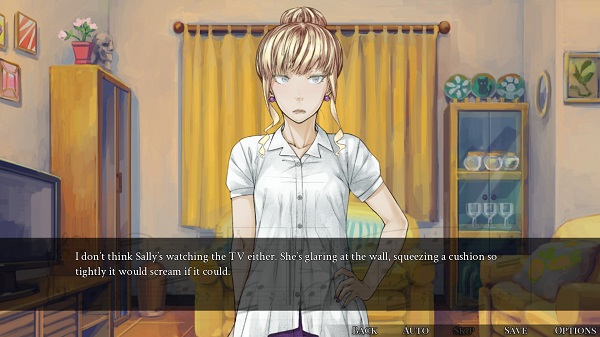
One thing I was surprised by is that this visual novel is remarkably well written when compared to your standard fare. It would be very easy to turn this kind of concept fetishitic and fanservicely but the story manages to avoid that for the most part. The writing focuses mainly on the moral dilemma of the protagonist. Though starting out wary of Bell, he finds that as his home life gets increasingly stressful while Bell gives him the attention he desires. Always seemly knowing just what he wants to hear. So essentially we have a sort of Fatal Attraction story with the protagonist getting tempted by a potentially dangerous individual while trying to mend problems in his current relationship. I like how the rift is portrayed in that it’s not the usual abusive drunk or shouting matches. More cold indifference and an unwillingness for either side to just give the other a break. Neither side is particularly in the right here as while Sally does get far too bent out of shape over suspecting her husband of infidelity, Robin tends to gloss over his own failings in his family life in his inner monologues. For example, Robin mentioned that he attempted to teach his daughter piano lessons when she was young. From the way he puts it, he just gently tried to teach her and then gave up when she showed that she had no interest. However from the way Sally remarks about it, it seems those lessons were not quite as pleasant as Robin makes them out to be. The characters feel realistic apart from Bell’s more anime like mannerisms in her attempts to seduce Robin. But that in turn does make it clear why this girl is alluring to him.
Continue reading “Sweetest Monster Video Game Review – 70/100”

11Eyes: Sin, Damnation, and the Atonement Girl Video Game Review – 45/100


When watching anime you are bound to come across a Chuunibyou character. The normal human being who acts like they are the protagonist of some terrible power trip anime. But did you ever wonder just what it was that gave them the idea to act like this? Well wonder no further because these people likely played 11eyes. This visual novel is essentially a distillation of every tired anime trope under the sun so your enjoyment of it will likely depend on how exposed to these tropes you are. Most would know this title from an anime adaption made in 2009 and I remember reading the anime’s synopsis and getting interested. However I heard that the anime adaption was poor and having recently got into visual novels I wanted to experience the story in it’s original format. Lucky for me, there was an ongoing fan translation of 11eyes so I waited patiently for it to be completed. Unfortunately that fan translation went the way of many a fan translation and ended up going silent with work stopping completely. It’s things like this that make me appreciate companies like Mangagamer and Sekai as while a kickstarter may be necessary and it takes time, at least it gets done. Eventually I just gave up on playing the story entirely when suddenly in 2016 an English patch for 11eyes was released. Thus I saw this as an opportune moment to see what I missed all these years. As it turns out, it wasn’t all that much.

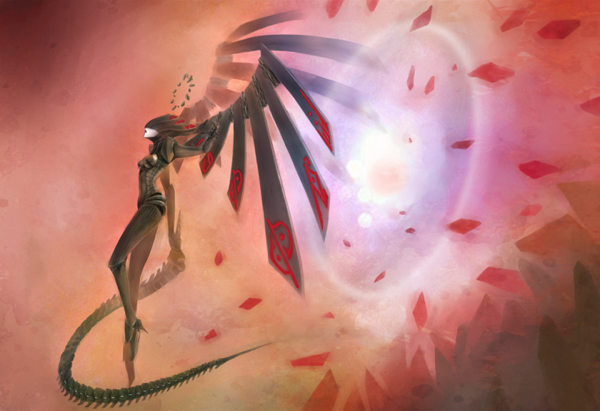
Our story involves a Heterochromatic eyepatch wearing boy called Kakaru who along with his childhood friend Yuka find themselves thrown into an alternate version of their town which they refer to as the red night. A world shaded in red with is filled with monsters that seek to kill them that disappears after a certain period of time. Soon they run into a group of monsters calling themselves the black knights who swear to kill Kakaru and Yuka as well as the four other people who were pulled into the red night. So they work to join the other people dragged into the nightmare, work together to beat the black knights and hopefully regain their normal lives. The thing that mainly intrigued me about this concept was that at any moment of their lives they could be pulled into the red night without warning and the idea of a bunch of superpowered teens fighting off a nightmare world on a regular basis is a rather interesting. However this story has serious pacing issues as the beginning really drags due to the characters. A big feature of this visual novel is something called crossvision. For you see the majority of this VN is read from the perspective of Kakaru and crossvision allows you to see a scene from the perspective of another character. In theory this is interesting as it allows you to see what the characters are thinking at particular moments and see things which happen to other people when Kakaru isn’t around. However in practice you find that you can only see certain scenes from a specific person’s perspective rather than the freedom to move between characters at any moment. In essence it’s like watching a movie where every now and again you have to pause and go to the scene selection menu to watch a scene that wasn’t included in the movie. This is a game with bad pacing as is so this certainly kills it. What doesn’t help that some scenes are  exactly the same as a scene from Kakaru’s perspective, just with some extra lines of inner monologue. For the best video games, why not find out more here and buy the best game units.
Continue reading “11Eyes: Sin, Damnation, and the Atonement Girl Video Game Review – 45/100”

God Eater Resurrection Video Game Review – 60/100


A good while back I bought a little game for the Wii called Monster Hunter Tri. After playing it for a bit I got tired of collecting bits of twig and not doing the monster hunting the title promised and left it on the wayside. Then one week I decided to put in my all and finished Monster Hunter Tri and came to find what made the series so appealing. Though I stopped keeping up with the game because every time I bought one there would be a Monster Hunter slightly better edition released and the games are so much of a time sink that I can never get around to playing them. Now you may be wondering just why am I talking about Monster Hunter when this is a God Eater review? Well that’s simple, God Eater wears its inspiration inspiration on it’s sleeve. To the degree that I was ready to label it babies first Monster Hunter within its first third of missions. For reference the copy I am reviewing is God Eater Resurrection steam version which comes free when you buy God Eater 2 on steam.

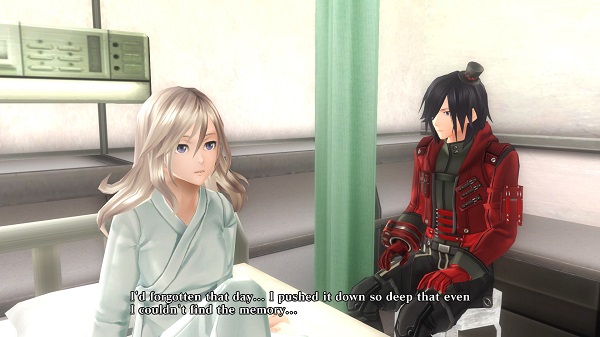
Thanks to my experience with the God Eater anime I walked into this game expecting absolutely nothing from the story. That was most certainly a good call. This story is just as bland and forgettable as the anime portrayed it so in that regard I guess it was a faithful adaption. Which isn’t really helped when you have a silent self insert protagonist. There was only one point I became somewhat invested in the story and that had to do with a girl who pretty much had the personality of Asuka Langley Soryu but was hit with a serious case of PTSD. Helping her work through it was a rather good part of the story for me but I may be projecting as she has the upward character arc that Asuka so desperately needed. Other than that I found it hard to really feel the levity of this world on the brink of destruction by aragami when everyone in it dresses like they came out of a cosplay convention. Forgive me but it’s a little hard to take the situation seriously when the woman giving me missions is wearing no top besides a jacket zipped down with no bra and pants that show off the sides of her thighs. I feel a serious disconnect as what she is wearing doesn’t seem to reflect her no nonsense personality at all. Everyone else is a bunch of standard stereotypes as well with Souma(Actually had to look up his name because I forgot it) being the worst offender as he is standard emo all the way. The presentation isn’t much to look at either seeing as this is a remastered PSP game and no matter how prettied up it is you can see the signs of it’s portable origin. The first part of the game is essentially about teaching a human aragami to love and stopping the plans of the evil director who you can pretty much guess is evil by the time he opens his mouth. After that it becomes a hunt to find a former mentor who goes missing and lastly just some powerful Aragami shows up and you have to kill it. The story tries to tug at you but I found myself purely apathetic which is funny because the way I designed my avatar it looks like he gave about as much of a damn as I did. I will say that the weird sense of style does give you a lot of customisation when it comes to your avatar. So naturally I fulfilled my dream of hunting monsters dressed like a pimp with a tiny top hat and a scythe.
Continue reading “God Eater Resurrection Video Game Review – 60/100”

Flip Flappers (Fall 2016) Review – 93/100

What makes Flip Flappers stand out from the rest of the anime field? I found a lot of people asking that question along the way. Well, first off, Flip Flappers isn’t your ordinary anime offering, that’s for sure. Its visual styles are too much and too incoherent for one thing, the narrative never really reveal anything until halfway point for another thing. At the same times, this is the one rare anime that inspired many analysis, essays trying to decode what it is actually about, drawing thematic relevance out of their visual motifs and symbolism. So, what’s all the fuss, really? Let me get into that now.

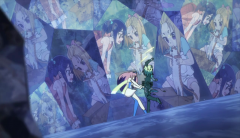
On the surface, Flip Flappers is an adventure stories between the timid, shy Cocona who was dragged by the impulsive Papika into “Pure Illusions” worlds, the alternative realities that might or might not represent the inner psyche of its human’s subjects; to collect fragments that would grant wishes. Originally billed as a magical girl, the show hops through variations of genre, settings to whatever it pleases. In one episode Papika and Cocona were in the middle of a wasteland for an action Mad Max-inspired adventure, to the next they were trapped in a Class-S circle that would actually surpass many psychological horror shows out there, to another episode where they mysteriously became one identity that would make any David Lynch’s fans proud. It’s that freedom to break the rules and pick whatever content and styles they see fit made the show refreshing and unpredictably, which actually very fitting to how adventures should be like.

Moreover, Flip Flappers is a very visually arresting show, a true “show, don’t tell” kind of series. We’re no stranger with shows that are more about styles, shows that are showcases for young, talented animators to experiment with new styles and visuals, Normally, I don’t mind those kinds of show because we do need something like this to push the boundary of anime medium, but more often than not those shows don’t have any proper storytelling at all. Great visual doesn’t mean great storytelling anyway. Flip Flappers walks that very thin line as the show seemingly try to overwhelm us with its abstract visual, vibrant imaginary; color and resonant emotions in an expense for coherent plots; but I will give the show this: while Flip Flappers not always make sense narrative, it more than makes it up thematically as those wild visuals and motifs are in service for of its adolescence themes.

In fact, if you look a little deeper behind its fun adventures, the show constantly addresses many of its coming-of-age concerns throughout its run. First and foremost is the theme of identity, as for its 13-episodes long our main Cocona had to figure out who she wants to be, whom she can be trusted. The identity theme is continuously directed in many forms, both visually and symbolically: from Cocona being a constant source of being manipulated and controlled by others, those two girls are trapped in a false, repetitive cycle of “safe” environment, the girls represent the same character or even to other extreme, Papika appears continuously as various different identities. Papika and Cocona’s relationship, on the other hand, function like two sides of the same coins of being growing up. The show is a constant adolescent journeys that make up from opposing force between the urge, freedom and emotional directness from Papika and compassion, responsibility, think before act quality from Cocona. It’s a legitimate fear of growing up and becoming an adult filled with responsibility and burden; but as the third girl Yayaka and our Cocona later figure out, maybe small steps like be honest to your feeling could be what it takes to become a fully-grown person and overcome that fear.

The show’s climax, while closing down nicely Cocona and Papika’s relationship and give Mimi just about enough development to become a fearsome antagonist; I still consider it a lackluster final arc that keep me from giving it a higher score, especially coming straight from a spectacular middle part. In fact, the only time I would consider as brilliant in this last arc was Yayaka kicks ass and getting a well-deserved transformation. The rest of the cast unfortunately don’t have much roles in the final showdown. Judging those side characters as a whole, we actually know very little about them despite the twins and the staffs from Flip Flap organization appear in nearly every single episode, which is a shame. The late addition of Nyunnyun and the very role of Bu-Chan are also hugely unnecessary, as they don’t add much to the big picture and moreover, the inclusion of them feel a bit awkward to the rest of the story. Dr. Salt, on the other hand, had a bit of development but the show still doesn’t know how to use him to full potential as his role in the show function towards Mimi only; as a result; although it’s pretty much confirmed that Dr. Salt is Cocona’s father, I have a hard time believing that because there was no chemistry between them. Maybe that’s a whole point as he felt awkward towards Cocona based from his guilt, but I have a feeling that the show doesn’t seem to try even that.

But as I said in my weekly post, judging the show by how well it plays the rule isn’t a right approach, for Flip Flappers is the show that determines to break free and walk its own path. So back to that very first question: What makes Flip Flappers special? Well, I will put it this way: the show is a sublime example of animation in its purest form. Shows like this further highlight what makes animation so unique and appealing (I’m not talking strictly about anime, but the whole animation medium) that others medium can’t be able to express. Story like this can only works in animation form and the show successfully remind us the pure magic of animation and really why we fall in love with animation in a first place. With show as confident and creative as this I have a pretty optimistic feeling for the future of animation. Cross my fingers.

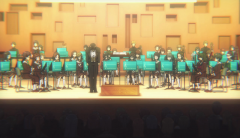
Sound! Euphonium 2 (Fall 2016) Review – 86/100

I must admit that out of all the series I was blogging last year, Sound Eupho 2 was the one I’m saddest to see it ends; not because it was my absolute favorite anime last year, but because the sheer amount of their attention to details and their ridiculously quest for perfection are something that out of this world, in this day and age, which I will get to that later in my review. This is a sequel to Sound Eupho last year but I will keep the comparison to the first season to minimum in terms of quality because this season is great enough to be judged by its own.

The story is a direct continuation from the end of last season, as the Kitauji high school concert band just qualified from the qualifying round, now heading to Kansai region competition and later on, the National competition. Unlike the first season where the main dramatic events like Aio pulled out from the music club to focus on her study; the audition to choose the best players for the competition or the challenge to pick the lead trumpet arise and resolved around the development of the band club itself, the second season concentrates more on the band members’ personal issues. This change of focus is more apparent in the second half, when the show completely drops the band practice, even to the point of not showing the national performance at all. I understand this bold choice can cause disappointment to many fans who want to see the band in action, and moreover focus on individual character drama can cause the lack of cohesive theme; this shift of attention, on the other hand, also brings out some of the best character developments and intimate moments the show has ever achieved.

I will get to the negative part first. When the show concentrates more on character’s heightened drama, those dramas can be uneven and doesn’t add up much to the big picture. Two of this season’s acts for example: Yoroizuka and Reina act don’t play well for me because they have the exact opposite problems. Yoroizuka (the only character that I used by surname here, as this is how Kumiko refers her) is a secondary character who was suddenly given the spotlight and while her final confrontation with Yuuko and Nozomi was effective, the drama was resolved too quickly, Yoroizuka changed so fast that I personally don’t see her grow as natural at all. Reina’s affection to Taki-sensei grow to another level this season, but I’m not alone to say that this was the show’s weakest act because almost everyone can see the outcomes. That drama isn’t much to speak of to begin with; it’s a shame because Reina was my favorite character the first season and I’d like to see other kind of developments for Reina, any other development but this.

Moreover, sometimes it does feel like Sound Eupho stumbles around those dramas in order to “create the situation”; as a result sometimes the show loses its focus because it has to cover too many grounds (like in episode 6), other times some of the conflicts feel forced and calculated (of all time, Mamiko choose she decided to tell her parents to quit college on that stormy night, and “she quited because it has to be now”. Why?). While the Mamiko act actually turns out pretty great, those issues speak to the lack of single unified theme that made the first season so tightly constructed. The last issue, which was also the show’s biggest flaw, lied in the fact that when they focus too much on one set of characters for the drama, other cast members unfortunately don’t have much roles so all they do is hanging around and making the best out of little screen time they had. Reina, before reaching her act, serves as a shadow behind Kumiko; Shuichi becomes the unluckiest guy in the world and worst of all, Hazuki and Sapphire don’t have any development anymore, given that they are still billed as the lead characters.

In contrast, if anything, this season will be remembered as the season of Kumiko and Asuka. They are the heart and the soul of this season, and it’s a blessing to see how far both of them have matured in the end. Asuka has been one of the most complex character in Sound Eupho’s universe and the show did a damn fine job to underline her struggles with both her parental figures, as well as gradually peeling off the mask to reveal her true feeling inside. The most brilliant part of it was that she never lose her strong side at all, never in many moments we are allowed to see her vulnerable side, because it’s more that she becomes honest to herself, embrace herself to what she loves most and comes out even stronger than before. In additions, most of Asuka and Kumiko moments develop into the highlights of the season. When Asuka played that Sound Euphonium piece to Kumiko in episode 9, it was one of the best moments of the whole show, period. When Kumiko poured her heart out to convince Asuka to come back to the band, it was one of the most effective drama the show could ever committed. As the two getting closer and more honest to each other, it makes a whole lot sense that we have that final confrontation between them that warmly tied up this whole season together. This show indeed ends on a high note.

Kumiko also deserved to be one of the year’s best character here as she has changed a lot from timid and passive with no real passion into the one who is really honest to what she feels. Aside from her interaction with Asuka, her moments with her sister, while soft and never overly dramatic like other acts, feel all too real ans intimate on how siblings care about each other. The last few episodes when we follow her through her quiet tears on the train, her outbursts, her confessions were a joy to watch and each step she made feel like a natural progression. I have to give extra gratitude Tomoyo Kurosawa, the saiyuu of Kumiko, for delivering such a deadpan, plain but strangely distinctive voice of our main girl.

But what make Sound Eupho stand head above the rest of the crop lies in its production values. That 10-minute performance in episode 5 simply outperformed everything else I watched in recent years. KyoAni’s always known for their gorgeous designs and their attentive to make every little detail right, but this is just another level of insanity the more you get to know what they achieved. Almost every performance you heard in the show was correctly timed to their single notes (meaning that if you hear the character hits the notes onscreen, they were the right notes), the position of their fingers, their postures, even down to the preparation of the members before hitting the notes, were all accurate. Now imagine all of these in animation with a band of thirty something characters for the whole two seasons. I can’t even think how on earth one could achieve animating all that, let alone making it all flawlessly. They even go as far as making the echo of the announcement on the firework scene in the first episode, because they wanted it to be real (the city Uji is surrounded by mountains). No, something as insane as this don’t happen often, especially on TV-anime level, so to see it finally at the end of its road suddenly make me feel a little sad.

This second season is indeed a worthy follow up to the Sound Eupho the series. Just a bit of note that the score I’m giving above is for this second season alone, if I have to give a score for the whole series it would be 93/100. Sound Eupho is an install classic and for me is up there as one of KyoAni’s best works to date. As of this writing right now, there is one more novel about our Kitauji school that is more of a collection of short stories (like the real reason Aoi quit the band, or the story of Shuichi finally confesses to Kumiko) so I think OVAs will be the most possible outcomes. Otherwise we have the spin-off novels that focus on Azusa (Kumiko’s childhood friend) and her Rikka high school marching band and for now I think there’s a high chance that in the future KyoAni will return back to that universe by adapting this spin-off. Well, they better adapt it, or on that note, why not adapting Haruhi season 3?

Fune wo Amu (Fall 2016) Review – 81/100

This series is, in retrospect, a really appropriate title that speaks to the very spirit of noitaminA block: an adult drama slice of life about the making of dictionary that surely don’t try to target the young audiences. Sound as dry as it is, Fune wo Amu’s actually one of the strongest noitaminA show come out for the last few years (not that the TV programming have been doing well to begin with). In Fune wo Amu, we follow Majime as he transferred to the dictionary department with the main mission is to publish a new dictionary called The Great Passage, along with the small team. That process, of course, taking time: 10 years, 20 years, you call it. The series is divided into 2 parts, the first follow him as he begins on the project and detailing how his normal workplace look like, the second part jumps 13 years later at their nearly-publishing phase. The decade-long efforts that he and the people he worked with delicate themselves in is something that you rarely seen in this anime medium.

I will be the first to admit that making dictionary doesn’t sound like an interesting subject matter to me, not because there isn’t anything great about it, but mainly because the subject will get dull very fast. But even I am surprised to say that the show keeps me hooked from start to finish. The tricks of how the show nailed it in making dictionary interesting are 1) the way the show managed to demonstrate how important dictionary is and 2) show us how those characters giving their all to make it possible and 3) point out to us the love for words and that each dictionary has, in fact, each own personality. For the first point, the show frames dictionary as the passage for everyone (not “everyone” everyone. Japanese people only) to communicate and connect to each other. Words are the way to express our thoughts, our feeling, so using the right words at the right time can make others understand the context completely. The Great Passage is one of a way to connect that gap between what we want to express and what we actually express, between one person to another. It is irony, but still fitting to that theme, that our main character Majime is a socially-awkward type. He has an extended knowledge about words, but he’s struggle to express what he wants to say. His love letter to Kaguya perfectly demonstrate his geeky nature, as even Kaguya herself can’t figure out it was a love letter, but being moved nonetheless.

But the beauty of dictionary means nothing if we don’t see the love and efforts of people behind it, and thanks god, this is where the show shines as well. Even in the wear-down corner of the otherwise-busy publisher, with so few people in it, it’s their passion to the project that counted the most. As in a line in La La Land (great film! Go watch it), people are enthusiasm about it because YOU are passionate about it. The love that you have can affect other people in the most positive ways. In the series, Nishioka, Majime’s co-worker, isn’t a type of person for this job. He’s socially active, care for others but never really interested in words. Through Majime’s passion though, he started to feel the joy of his works and committed himself fully to make The Great Passage the reality. Other characters, Mr. Araki and Mr. Matsumoto, we can feel their whole lives devoted in words, their meaning and they’re damn proud of what they’ve achieved. Last but not lease, the show successfully depicts dictionary as a creation, something akin to the work of arts. To be fair, think of it that way make the whole process makes much more sense too. The Great Passage is a brainchild of all the people behind the project, so everything has to be perfect, from the selection of words that eventually appear in the dictionary, the description process, down to how to choose designs, mascots and even page’s quality that best represent the personality of The Great Passage. That lead us to the painstaking task but ultimately rewarding of double-checking every single entry to see if there are any words missing. As the tasks done, the team (and ultimately, us) feel relieved that The Great Passage going to be a masterpiece.

Fune wo Amu, moreover, isn’t simply about dictionary-making process, it’s the show about people, too. As with the nature of dictionary, it’s a desire for connection that brings those people together. In the show, we witness how Majime and Nishioka, as vastly different as they are, can really bring the best out of each other. We can also follow Majime and his love affair, as quiet and poetic as it is, this is for me one of the best depiction of romance that I’ve seen so far for the last few years. The romance speaks to me because it grounded to reality, it’s beautiful because it is quiet, and isn’t it the best kind of relationship when you regard your spouse as a partner for life (well, for me it is). Even the new girl Midori fits into that pattern as well. Her struggle from being forced to transfer to the department that she had no idea of (you might not know but this happened regularly in Asian culture, especially 20,30 years ago, but I still have no idea why Nishioka had to hide his relationship with his co-worker partner), we see her from being distressed about the new workplace, come to really appreciate and love her job is nothing but a rewarding experience. Every one of the cast have their own different traits and characteristics, and that precisely the point that the dictionary (and the show by that extend) need all of their diverse voice in order to become multi-layered production.

If anything, the passage of time is the show’s main theme as it lingers in various forms throughout the show. The sudden time-skip, for example, signals us how everything is supposed to change (it’s 13 years for Peter sake), and yes, we can see there are some minor changes from the settings and the characters. But the sameness from the dictionary department’s office really tell us that in the room, time flows slowly; and really, that amount of time spent for making dictionary is nothing compare to how the dictionary might flourish for generations to come. In that 13-year gap, people leave, new people come in, it’s that cycle of life that make the show timelessness. Furthermore, Mr. Matsumoto unfortunate leaves us at the end of the show, but we know full well that the old plants gone in order for the new plants to blossom. Through every change, the words inside the dictionary will continue to live on and connect more and more people together as time goes on.

The show, although very well-pace, still has some flaws too. The subject matter is decidedly niche that unfortunately it will fly below the normal viewer’s radar. The passing away of Mr. Matsumoto before the time of the publishing is a tired cliché that for me bring an unnecessary regret to Majime. The animation as a whole, while serviceable enough and really don’t have many high actions, still a bit below par compared to your regular anime. Although we have a big time-jump, if the series meant to highlight the progression of making The Great Passage and the life of our main characters, I would’ve much preferred if they show us instead how they were doing along the way. I want to follow their journey from beginning to end (not the beginning and the end), and I don’t care one iota if they’ll successfully publish it or not, what I want is the ride to get there.

To sum up, Fune wo Amu, along with Shouwa Genroku Rakugo Shinjuu, are the titles that I’m really glad they are made after all. The older I get, the more I’m wearing off at high school comedy anime and high action anime, the more these titles speak to me on a personal level. I’m really glad anime still have platforms like this, the show that tripped out all the spectacular over the top visuals to instead telling the story it wants to tell. What we have in the end might seem nothing much plot-wise, but the sophistication behind the story and the love that the people behind it put into are something that I will remember fondly.

Your name. (2016) Movie Review – 82/100

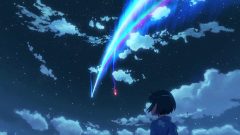
As of this writing, Kimi no Na wa, or Your name. has enjoyed a phenomenal commercial and critical success. It becomes the highest grossing film of the year in Japan, and broke many records elsewhere in Thailand, China, America… you name it. Even in the local theatre where I went to, we got a full house screening and even the friend that I took that day who is unfamiliar with anime told me she enjoyed the movie. The film also plays in many festivals around the globe (which is rare for an anime movie let me tell you) and I wouldn’t be surprised if Your name. was nominated for the Academy Awards for best animation in a month time. To say all that means I understand full well the appeals of this movie. This movie took the world by storm and somewhat becomes “a pinnacle” on what anime can achieve, or even to some extend what anime would be like to those who know little about anime beside the works from Ghibli studio. “it’s a matter of time before Makoto Shinkai make a masterpiece and with this he achieved it” I heard you say. Well, Your name. might be the work that he’d be known for throughout his career (I have my doubts that his upcoming movies will be as successful as this), but it doesn’t mean that this is his best, his masterpiece. Allow me to elaborate it in my review below.

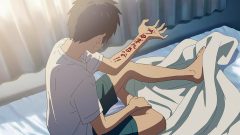
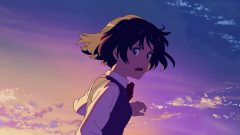
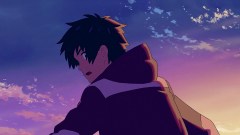
Your name. divides sharply into 3 sections with 3 different tones. The first part plays out like a Freaky-Friday style rom-com when our two protagonists, the country girl Mitsuha and high school Tokyo boy Taki, swapped bodies for a day. Those misfits’ situations allow room for many light-heart comedies detailing the two struggle with the body of opposite sex (leading to the hilarious-but-quickly-wear-out gags of Mitsuha grabbing her boobs), with the totally new life and new friends they’re encountering. After few times of behaving like losing their minds, they get on quickly with the switch, enjoy the new life and also write notes to each other to follow up what is happening. The second part is where the drama kicks in and for me this is the movie’s best part. Finally the closing part we return to Shinkai’s favorite territory: a quiet, romantic melodrama that keep building up to the moment where the emotions explode.

Speaking of Makoto Shinkai, there is two things that are signature of his works, namely his gorgeous and detailed scenery (AKA scenery-porn) and his overblown romantic drama. I’m always a fan of his first element, and in this movie it works really well and I could argue this is the most stunning backgrounds in any of his works. The little town of Itomori is vivid in its rural settings, with trees blowing in the wind, people having a quiet, relax life and there are still many traditions going around. Tokyo, on the other hand, is noisy and busy, with kids too busy with their cell phones and part-time job, parents have to rush to work. All those settings are so true-to-life that we can feel and taste the lifestyles in each setting. Even the mysterious landscape that divides the world and the underworld is breathtaking and surprisingly rich.
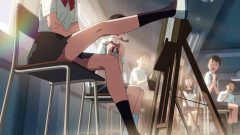
But his other tendency tends to give me a mixed feeling. For the record, the overblown climax in The Garden of Words for example is its weakest part. The main reason I don’t like those overstated drama is I always sense the movie dictates what I want to FEEL with a capital F, overdone music score and tissue-grabbing moments. In Your name. I have the same issues. Sometimes I just want to say to Shinkai: less is much more. Characters cry for the reason they themselves don’t know. More than once they shout about remembering the name of each other. Too many times they chase each other that while I’m totally fine when they do it once, repeating the heighten drama lose its impact after each time.
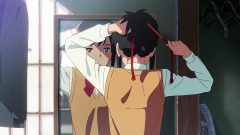
This is not the only issues though. I guess the other problem comes from “too much of a good thing”, which often the time original anime movies tend to confront (works from Makoto Shinkai and Mamoru Hosoda are the main suspects), and that problem is the way the try to put many plots going together that frankly it becomes a hot mess. Take the sequence where Mistsuha (the real Mistsuha) starting a new day in the beginning of the movie for example, you can see the movie planted many plot points ahead. When she comes to the table to have breakfast (rice for breakfast? Oh well! you need a healthy body for a full day after all), first obaa-chan reminded her that she’s acting normal today (indicates that Taki was in her position yesterday), then she hears the town announcement of the coming electoral (which links to her father and their tense relationship), then she switches on the TV and we have the comet news (which is essential to the plot point), and then she goes back to her room to tie the braided cords to her hairs (which is also essential to the plot point). As a detailed guy, little details like that should make me happy, but I only feel the movie tries to cram all the information up in order to connect all the dots later on. For once, I don’t really see the plot thread of her father’s a mayor affecting much to the story. Or Taki’s crush to his co-worker (especially not much later her role is changing to sidekick). Lessen those unnecessary plots down could make this movie more focus, and much tighter.

Even with the main theme of Kimi no Na wa, we have too many metaphors and symbols that in some ways they are overlapping the others and again, simplifying into one central symbol will make the movie much stronger. We already have the title about the name, which throughout the movie the main characters struggle to remember the name of each other. That meant to be the fate that their lives already intervened, that even you don’t know about the name or identity of “the one”, they can still feel the presence of that person inside their heart. We also have the symbols of thread cords, which she gave it to him few years ago. Threads also meant the connection the leads have together, and that connection will never be cut down even if they don’t recognize each other in real life. And then we have the notion of “Musubi”, which meant to be the things people consumed and then offering to the Gods to become a connection between the god and the people, between the afterlife and the current life, In order words, between the long lost-Mitsuha and the current Taki. You see, “connection” are the themes and those symbols have their well-meaning but when you put all of them together, it’s confusing and lose its focus. Also the different in tones between the 3 parts makes the movie as a whole inharmonious but for that records they did extremely well on establishing the moods in those separate parts.

Also, while I said earlier that the second part is easily their best part, when you witness the real weight of the drama and an attempt to save the one you loved is nothing but affecting; dealing with time-warp is always a very tricky part. Because when you really question the functionality of the timeline, logic starts to fall apart. You might simply brush it off that the main characters thought the whole experience as their dreams, but can’t they tell the different in timeline when they have to go to school everyday? Or even with 3-year gap Taki still looks the same, wearing the same uniform and doesn’t really have any memory about that girl, but keep on wearing the braided cords instead? Or the very convenient plot point when he tried to show his friends about the memos that the two shared, it vanishes right before his eyes? Those are small details of course but it does bug me and keep me away from enjoying the movie to the fullest.

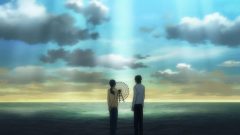
Sound like I have too much negativity about the movie in this review but the truth is I really enjoyed it. When Your name. is at its best, it can bring out the satisfying emotions like few anime I saw this year. The part where they eventually meet in a twilight landscape is emotionally-affecting and well-earned, and their chemistry with each other is surprisingly strong, consider they don’t actually meet each other that much. The two mains are refreshing and very likeable and I don’t mind spending more time with the two to be honest. The animation is top notch and the music, while overbearing at times, still does its jobs quite fittingly. Other everyday-life parts in the beginning are mundane and lifelike and full of personality as well, if I have to pick my favorite it’d be the sequence where Mitsuha doing the traditional dance with her little sister. Oh and the part that Taki drink the sake down the cave, Shinkai actually experienced with other animation-style and the brief montages towards Mitsuha’s past live (yes! Simple but affective) are simply the movie’s best moments and I really hope Shinkai can begin to experiment more with his own styles.

So back to that main question, is this Shinkai’s best work? No, I don’t think so but I would certainly say it’s his most accessible work and will likely to be the one that he will be famous for the rest of his career. For me with someone as talented as Shinkai, “accessible” isn’t an adjective I’m looking for, since if your work is for everyone, then it is for no one really in particular.