Flip Flappers (Fall 2016) Review – 93/100

What makes Flip Flappers stand out from the rest of the anime field? I found a lot of people asking that question along the way. Well, first off, Flip Flappers isn’t your ordinary anime offering, that’s for sure. Its visual styles are too much and too incoherent for one thing, the narrative never really reveal anything until halfway point for another thing. At the same times, this is the one rare anime that inspired many analysis, essays trying to decode what it is actually about, drawing thematic relevance out of their visual motifs and symbolism. So, what’s all the fuss, really? Let me get into that now.

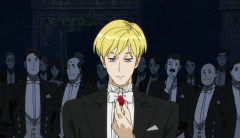
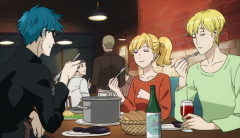
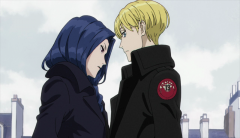
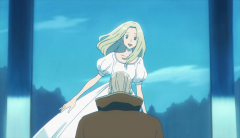
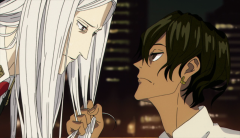
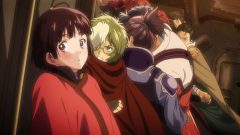
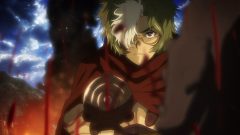
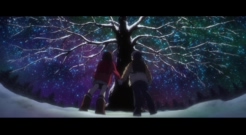
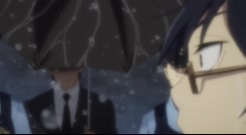
On the surface, Flip Flappers is an adventure stories between the timid, shy Cocona who was dragged by the impulsive Papika into “Pure Illusions” worlds, the alternative realities that might or might not represent the inner psyche of its human’s subjects; to collect fragments that would grant wishes. Originally billed as a magical girl, the show hops through variations of genre, settings to whatever it pleases. In one episode Papika and Cocona were in the middle of a wasteland for an action Mad Max-inspired adventure, to the next they were trapped in a Class-S circle that would actually surpass many psychological horror shows out there, to another episode where they mysteriously became one identity that would make any David Lynch’s fans proud. It’s that freedom to break the rules and pick whatever content and styles they see fit made the show refreshing and unpredictably, which actually very fitting to how adventures should be like.

Moreover, Flip Flappers is a very visually arresting show, a true “show, don’t tell” kind of series. We’re no stranger with shows that are more about styles, shows that are showcases for young, talented animators to experiment with new styles and visuals, Normally, I don’t mind those kinds of show because we do need something like this to push the boundary of anime medium, but more often than not those shows don’t have any proper storytelling at all. Great visual doesn’t mean great storytelling anyway. Flip Flappers walks that very thin line as the show seemingly try to overwhelm us with its abstract visual, vibrant imaginary; color and resonant emotions in an expense for coherent plots; but I will give the show this: while Flip Flappers not always make sense narrative, it more than makes it up thematically as those wild visuals and motifs are in service for of its adolescence themes.

In fact, if you look a little deeper behind its fun adventures, the show constantly addresses many of its coming-of-age concerns throughout its run. First and foremost is the theme of identity, as for its 13-episodes long our main Cocona had to figure out who she wants to be, whom she can be trusted. The identity theme is continuously directed in many forms, both visually and symbolically: from Cocona being a constant source of being manipulated and controlled by others, those two girls are trapped in a false, repetitive cycle of “safe” environment, the girls represent the same character or even to other extreme, Papika appears continuously as various different identities. Papika and Cocona’s relationship, on the other hand, function like two sides of the same coins of being growing up. The show is a constant adolescent journeys that make up from opposing force between the urge, freedom and emotional directness from Papika and compassion, responsibility, think before act quality from Cocona. It’s a legitimate fear of growing up and becoming an adult filled with responsibility and burden; but as the third girl Yayaka and our Cocona later figure out, maybe small steps like be honest to your feeling could be what it takes to become a fully-grown person and overcome that fear.

The show’s climax, while closing down nicely Cocona and Papika’s relationship and give Mimi just about enough development to become a fearsome antagonist; I still consider it a lackluster final arc that keep me from giving it a higher score, especially coming straight from a spectacular middle part. In fact, the only time I would consider as brilliant in this last arc was Yayaka kicks ass and getting a well-deserved transformation. The rest of the cast unfortunately don’t have much roles in the final showdown. Judging those side characters as a whole, we actually know very little about them despite the twins and the staffs from Flip Flap organization appear in nearly every single episode, which is a shame. The late addition of Nyunnyun and the very role of Bu-Chan are also hugely unnecessary, as they don’t add much to the big picture and moreover, the inclusion of them feel a bit awkward to the rest of the story. Dr. Salt, on the other hand, had a bit of development but the show still doesn’t know how to use him to full potential as his role in the show function towards Mimi only; as a result; although it’s pretty much confirmed that Dr. Salt is Cocona’s father, I have a hard time believing that because there was no chemistry between them. Maybe that’s a whole point as he felt awkward towards Cocona based from his guilt, but I have a feeling that the show doesn’t seem to try even that.

But as I said in my weekly post, judging the show by how well it plays the rule isn’t a right approach, for Flip Flappers is the show that determines to break free and walk its own path. So back to that very first question: What makes Flip Flappers special? Well, I will put it this way: the show is a sublime example of animation in its purest form. Shows like this further highlight what makes animation so unique and appealing (I’m not talking strictly about anime, but the whole animation medium) that others medium can’t be able to express. Story like this can only works in animation form and the show successfully remind us the pure magic of animation and really why we fall in love with animation in a first place. With show as confident and creative as this I have a pretty optimistic feeling for the future of animation. Cross my fingers.

Sound! Euphonium 2 (Fall 2016) Review – 86/100

I must admit that out of all the series I was blogging last year, Sound Eupho 2 was the one I’m saddest to see it ends; not because it was my absolute favorite anime last year, but because the sheer amount of their attention to details and their ridiculously quest for perfection are something that out of this world, in this day and age, which I will get to that later in my review. This is a sequel to Sound Eupho last year but I will keep the comparison to the first season to minimum in terms of quality because this season is great enough to be judged by its own.

The story is a direct continuation from the end of last season, as the Kitauji high school concert band just qualified from the qualifying round, now heading to Kansai region competition and later on, the National competition. Unlike the first season where the main dramatic events like Aio pulled out from the music club to focus on her study; the audition to choose the best players for the competition or the challenge to pick the lead trumpet arise and resolved around the development of the band club itself, the second season concentrates more on the band members’ personal issues. This change of focus is more apparent in the second half, when the show completely drops the band practice, even to the point of not showing the national performance at all. I understand this bold choice can cause disappointment to many fans who want to see the band in action, and moreover focus on individual character drama can cause the lack of cohesive theme; this shift of attention, on the other hand, also brings out some of the best character developments and intimate moments the show has ever achieved.

I will get to the negative part first. When the show concentrates more on character’s heightened drama, those dramas can be uneven and doesn’t add up much to the big picture. Two of this season’s acts for example: Yoroizuka and Reina act don’t play well for me because they have the exact opposite problems. Yoroizuka (the only character that I used by surname here, as this is how Kumiko refers her) is a secondary character who was suddenly given the spotlight and while her final confrontation with Yuuko and Nozomi was effective, the drama was resolved too quickly, Yoroizuka changed so fast that I personally don’t see her grow as natural at all. Reina’s affection to Taki-sensei grow to another level this season, but I’m not alone to say that this was the show’s weakest act because almost everyone can see the outcomes. That drama isn’t much to speak of to begin with; it’s a shame because Reina was my favorite character the first season and I’d like to see other kind of developments for Reina, any other development but this.

Moreover, sometimes it does feel like Sound Eupho stumbles around those dramas in order to “create the situation”; as a result sometimes the show loses its focus because it has to cover too many grounds (like in episode 6), other times some of the conflicts feel forced and calculated (of all time, Mamiko choose she decided to tell her parents to quit college on that stormy night, and “she quited because it has to be now”. Why?). While the Mamiko act actually turns out pretty great, those issues speak to the lack of single unified theme that made the first season so tightly constructed. The last issue, which was also the show’s biggest flaw, lied in the fact that when they focus too much on one set of characters for the drama, other cast members unfortunately don’t have much roles so all they do is hanging around and making the best out of little screen time they had. Reina, before reaching her act, serves as a shadow behind Kumiko; Shuichi becomes the unluckiest guy in the world and worst of all, Hazuki and Sapphire don’t have any development anymore, given that they are still billed as the lead characters.

In contrast, if anything, this season will be remembered as the season of Kumiko and Asuka. They are the heart and the soul of this season, and it’s a blessing to see how far both of them have matured in the end. Asuka has been one of the most complex character in Sound Eupho’s universe and the show did a damn fine job to underline her struggles with both her parental figures, as well as gradually peeling off the mask to reveal her true feeling inside. The most brilliant part of it was that she never lose her strong side at all, never in many moments we are allowed to see her vulnerable side, because it’s more that she becomes honest to herself, embrace herself to what she loves most and comes out even stronger than before. In additions, most of Asuka and Kumiko moments develop into the highlights of the season. When Asuka played that Sound Euphonium piece to Kumiko in episode 9, it was one of the best moments of the whole show, period. When Kumiko poured her heart out to convince Asuka to come back to the band, it was one of the most effective drama the show could ever committed. As the two getting closer and more honest to each other, it makes a whole lot sense that we have that final confrontation between them that warmly tied up this whole season together. This show indeed ends on a high note.

Kumiko also deserved to be one of the year’s best character here as she has changed a lot from timid and passive with no real passion into the one who is really honest to what she feels. Aside from her interaction with Asuka, her moments with her sister, while soft and never overly dramatic like other acts, feel all too real ans intimate on how siblings care about each other. The last few episodes when we follow her through her quiet tears on the train, her outbursts, her confessions were a joy to watch and each step she made feel like a natural progression. I have to give extra gratitude Tomoyo Kurosawa, the saiyuu of Kumiko, for delivering such a deadpan, plain but strangely distinctive voice of our main girl.

But what make Sound Eupho stand head above the rest of the crop lies in its production values. That 10-minute performance in episode 5 simply outperformed everything else I watched in recent years. KyoAni’s always known for their gorgeous designs and their attentive to make every little detail right, but this is just another level of insanity the more you get to know what they achieved. Almost every performance you heard in the show was correctly timed to their single notes (meaning that if you hear the character hits the notes onscreen, they were the right notes), the position of their fingers, their postures, even down to the preparation of the members before hitting the notes, were all accurate. Now imagine all of these in animation with a band of thirty something characters for the whole two seasons. I can’t even think how on earth one could achieve animating all that, let alone making it all flawlessly. They even go as far as making the echo of the announcement on the firework scene in the first episode, because they wanted it to be real (the city Uji is surrounded by mountains). No, something as insane as this don’t happen often, especially on TV-anime level, so to see it finally at the end of its road suddenly make me feel a little sad.

This second season is indeed a worthy follow up to the Sound Eupho the series. Just a bit of note that the score I’m giving above is for this second season alone, if I have to give a score for the whole series it would be 93/100. Sound Eupho is an install classic and for me is up there as one of KyoAni’s best works to date. As of this writing right now, there is one more novel about our Kitauji school that is more of a collection of short stories (like the real reason Aoi quit the band, or the story of Shuichi finally confesses to Kumiko) so I think OVAs will be the most possible outcomes. Otherwise we have the spin-off novels that focus on Azusa (Kumiko’s childhood friend) and her Rikka high school marching band and for now I think there’s a high chance that in the future KyoAni will return back to that universe by adapting this spin-off. Well, they better adapt it, or on that note, why not adapting Haruhi season 3?

Fune wo Amu (Fall 2016) Review – 81/100

This series is, in retrospect, a really appropriate title that speaks to the very spirit of noitaminA block: an adult drama slice of life about the making of dictionary that surely don’t try to target the young audiences. Sound as dry as it is, Fune wo Amu’s actually one of the strongest noitaminA show come out for the last few years (not that the TV programming have been doing well to begin with). In Fune wo Amu, we follow Majime as he transferred to the dictionary department with the main mission is to publish a new dictionary called The Great Passage, along with the small team. That process, of course, taking time: 10 years, 20 years, you call it. The series is divided into 2 parts, the first follow him as he begins on the project and detailing how his normal workplace look like, the second part jumps 13 years later at their nearly-publishing phase. The decade-long efforts that he and the people he worked with delicate themselves in is something that you rarely seen in this anime medium.

I will be the first to admit that making dictionary doesn’t sound like an interesting subject matter to me, not because there isn’t anything great about it, but mainly because the subject will get dull very fast. But even I am surprised to say that the show keeps me hooked from start to finish. The tricks of how the show nailed it in making dictionary interesting are 1) the way the show managed to demonstrate how important dictionary is and 2) show us how those characters giving their all to make it possible and 3) point out to us the love for words and that each dictionary has, in fact, each own personality. For the first point, the show frames dictionary as the passage for everyone (not “everyone” everyone. Japanese people only) to communicate and connect to each other. Words are the way to express our thoughts, our feeling, so using the right words at the right time can make others understand the context completely. The Great Passage is one of a way to connect that gap between what we want to express and what we actually express, between one person to another. It is irony, but still fitting to that theme, that our main character Majime is a socially-awkward type. He has an extended knowledge about words, but he’s struggle to express what he wants to say. His love letter to Kaguya perfectly demonstrate his geeky nature, as even Kaguya herself can’t figure out it was a love letter, but being moved nonetheless.

But the beauty of dictionary means nothing if we don’t see the love and efforts of people behind it, and thanks god, this is where the show shines as well. Even in the wear-down corner of the otherwise-busy publisher, with so few people in it, it’s their passion to the project that counted the most. As in a line in La La Land (great film! Go watch it), people are enthusiasm about it because YOU are passionate about it. The love that you have can affect other people in the most positive ways. In the series, Nishioka, Majime’s co-worker, isn’t a type of person for this job. He’s socially active, care for others but never really interested in words. Through Majime’s passion though, he started to feel the joy of his works and committed himself fully to make The Great Passage the reality. Other characters, Mr. Araki and Mr. Matsumoto, we can feel their whole lives devoted in words, their meaning and they’re damn proud of what they’ve achieved. Last but not lease, the show successfully depicts dictionary as a creation, something akin to the work of arts. To be fair, think of it that way make the whole process makes much more sense too. The Great Passage is a brainchild of all the people behind the project, so everything has to be perfect, from the selection of words that eventually appear in the dictionary, the description process, down to how to choose designs, mascots and even page’s quality that best represent the personality of The Great Passage. That lead us to the painstaking task but ultimately rewarding of double-checking every single entry to see if there are any words missing. As the tasks done, the team (and ultimately, us) feel relieved that The Great Passage going to be a masterpiece.

Fune wo Amu, moreover, isn’t simply about dictionary-making process, it’s the show about people, too. As with the nature of dictionary, it’s a desire for connection that brings those people together. In the show, we witness how Majime and Nishioka, as vastly different as they are, can really bring the best out of each other. We can also follow Majime and his love affair, as quiet and poetic as it is, this is for me one of the best depiction of romance that I’ve seen so far for the last few years. The romance speaks to me because it grounded to reality, it’s beautiful because it is quiet, and isn’t it the best kind of relationship when you regard your spouse as a partner for life (well, for me it is). Even the new girl Midori fits into that pattern as well. Her struggle from being forced to transfer to the department that she had no idea of (you might not know but this happened regularly in Asian culture, especially 20,30 years ago, but I still have no idea why Nishioka had to hide his relationship with his co-worker partner), we see her from being distressed about the new workplace, come to really appreciate and love her job is nothing but a rewarding experience. Every one of the cast have their own different traits and characteristics, and that precisely the point that the dictionary (and the show by that extend) need all of their diverse voice in order to become multi-layered production.

If anything, the passage of time is the show’s main theme as it lingers in various forms throughout the show. The sudden time-skip, for example, signals us how everything is supposed to change (it’s 13 years for Peter sake), and yes, we can see there are some minor changes from the settings and the characters. But the sameness from the dictionary department’s office really tell us that in the room, time flows slowly; and really, that amount of time spent for making dictionary is nothing compare to how the dictionary might flourish for generations to come. In that 13-year gap, people leave, new people come in, it’s that cycle of life that make the show timelessness. Furthermore, Mr. Matsumoto unfortunate leaves us at the end of the show, but we know full well that the old plants gone in order for the new plants to blossom. Through every change, the words inside the dictionary will continue to live on and connect more and more people together as time goes on.

The show, although very well-pace, still has some flaws too. The subject matter is decidedly niche that unfortunately it will fly below the normal viewer’s radar. The passing away of Mr. Matsumoto before the time of the publishing is a tired cliché that for me bring an unnecessary regret to Majime. The animation as a whole, while serviceable enough and really don’t have many high actions, still a bit below par compared to your regular anime. Although we have a big time-jump, if the series meant to highlight the progression of making The Great Passage and the life of our main characters, I would’ve much preferred if they show us instead how they were doing along the way. I want to follow their journey from beginning to end (not the beginning and the end), and I don’t care one iota if they’ll successfully publish it or not, what I want is the ride to get there.

To sum up, Fune wo Amu, along with Shouwa Genroku Rakugo Shinjuu, are the titles that I’m really glad they are made after all. The older I get, the more I’m wearing off at high school comedy anime and high action anime, the more these titles speak to me on a personal level. I’m really glad anime still have platforms like this, the show that tripped out all the spectacular over the top visuals to instead telling the story it wants to tell. What we have in the end might seem nothing much plot-wise, but the sophistication behind the story and the love that the people behind it put into are something that I will remember fondly.

December Summary

This December was… a challenge. Amidst the busy holiday month, my schedule got very busy and my backlog got larger and larger. However, in the end I did manage to keep up with five series (four of which which ended, and one which will continue onto the next season). These are the first series I have finished ever since the first season of Space Dandy, in Winter 2014. Two years, since my writer’s block started.

And really: all these five series are special. They have made this a very successful season, and even though I have my criticisms about them, when it comes down to it I consider them to be really good. These are what anime as a medium is capable of. They knew what they were good at, and they delivered, unhindered and without compromise. They’re all incredibly different from each other, all at least a bit weird, but I recommend them all for those with an open mind

As usual, these impressions are mine and mine alone. And beware of spoilers here and there.

#5: TO BE HERO (09-12)

Okaaaaay… that ending. I’m a bit speechless by what I saw there, but I think the creators actually did it: create a comedy without cheesing the ending. Or at least, that’s what it feels like right now. Even though some of the things they pull are like the things that immediately get you an F in writing 101.

Yet it all works because of how ridiculous the series is. On one hand the final episodes turn this show into an action series. And really good action by the way, the animation is surprisingly good, and while the series is a bit more serious, the jokes aren’t completely gone. The tone changes, but it stays very deliberately TO BE HERO. The main character’s love for his daughter keeps everything together, and even more after “the big reveal”. It’s just as trolly as you’d expect, and yet I admit that I felt sorry for the guy. He’s a horrible human being, and yet… it worked.

This was an emotional roller-coaster. It’s faaaar away from the series you’d usually associate with that term, but it fits so much, only the emotions you feel are a bit different. At any moment in this series, you either feel schadenfreude, disgusted, or the struggles of a failed father who despite everything loves his daughter deeply. It’s comedy at its blackest, and yet I’m glad to have finished this series.

#4: Yuri on Ice (09-12)

And the series of 2016 with the most annoying fanbase is… yeah. I mean I do not belittle anyone for their passions and likes. Everybody is different and everyone’s taste is unique, and it would be horrible if this wasn’t the case. However, when one of the main reasons to like a series boils down to “porn”, things get a little… awkward. Both for male and female fanservice.

Thankfully there are plenty of other reasons to love this series. The final two episodes of Yuri on Ice breezed through the world championships of figure skating, and in two episodes we got 12 performances with together made for a riveting finale where in total style, a ton of things happened and a lot of characters got to show off. However, because it was the finale, its disadvantage was that it got a little predictable. I mean, the ending… think of the single most likely scenario for the final results. And yeah, that’s it.

It was beautifully made though. And props to the creators for using actual French in their series. I really like how international this series is. There are many nationalities represented here, and the creators did justice to them: characters were portrayed as actual characters, and the creators resisted going for the cheap racial stereotypes, and that resulted into a really wild and colourful cast of characters.

With this success there is bound to be a second season. I’m not sure whether that’s the best idea, since these 12 episodes are perfect for just a standalone show, however the ending really was a bit of a cop-out with a “will they won’t they continue”-tactic. Be bold: either close things off or immediately plan for two seasons right from the beginning. Being wishy-washy more often than not makes things awkward. Like you’re at the end of a party and say goodbye, only to end up awkwardly standing in the same room for fifteen minutes without anyone leaving.

#3: Natsume Yuujinchou Go (09-11)

My favourite episode of the fifth season? Episode 10. My heart just completely melted, it was just so adorable. Season 5 was really the season of the side characters (where Season 1 was the introduction, season 2 about the setting, season 3 about the character-development, season 4 about Natsume himself), and this season was at its best when focusing on this. Not that the other episodes were bad or anything, but we’ve seen better.

Like expected, the sixth season has already been announced, and I really beg the creators: make this the conclusion! Make this the end of the series, and end it with a bang. Compare it to eating chocolate for example. A bit is delicious and amazing, especially if you’ve got the really good quality kind. However try to wolf down ten bars of the stuff and after a while you’ll be so full that it just tastes horribly. It’s up to the series to find that right balance between leaving the viewers hungry and over-stuffing them, and season six feels like exactly that balance, especially considering how season 5 wasted one of its episode for that stupid Nyanko-sensei sidestory.

Because episode 5 I would not consider that the best season. That goes to season 4. I’d also consider season 1 and 3 better, and season 2 worse. It was very clearly a building-up season, so I’ll forgive it for that. But I keep stressing this: brevity! Like it’s a good thing that I watched Legend of Galactic Heroes when I still was a student with no life, because brilliant as it might be: if I had to watch it today I’d simply refuse. There is no way I have that much time just lying around.

#2: Classicaloid (09-12)

This was the halfway climax for Classicaloid, and it was awesome. It’s a fitting climax by finally making everything around Bach come together and finally made him step outside of his shadow and gave him a character; it did not disappoint. However, my favourite episodes still are the ones that revolve around Kanae. I LOVE her character, she is one of the best straight man (or straight women in this case) in a comedy I’ve ever seen. She doesn’t just offer order to the chaos of the other characters, she offers responsibility to their idiocy, she’s being forced to deal with whatever ridiculous ideas the other characters come up with, and is basically being forced to raise this group of man-children. Also check out all of the effort she puts into keeping the mansion tidy. This might seem like an tiny detail, but it’s actually incredibly important from a storytelling perspective. It not only adds character to the mansion itself, but it also makes the setting so much more believable. It adds a very natural sort of tension to the series to keep the mansion clean. It makes the viewer feel much more part of the whole setting, compared to if the characters just lived somewhere.

Amazing stories and characters can be found in any medium. But what makes anime stand out, and the reason why I originally became a fan, is the way in which it combines everything: animation, music, storytelling, characters, themes, setting. How they all work together in creating one experience to the point where the whole is better than the sum of its parts. Obviously not every anime gets this (most don’t), but Classicaloid adheres very much to this philosophy. It very blatantly sacrifices making sense for a feast for all the senses (heck Musik is pretty much a Deus ex Machina with which the creators can do whatever they want). And it’s not just the way in which all Musik scenes are incredibly fun, with all their remixes of famous classical works and full of crazy ideas like giant penguins and mecha helicopters, but also look at the themes: Classicaloid is a series about music. And between all the lines of goofing off, it really is trying to explore what music is, what drives great music, the struggles that the composers face when creating it. We’re halfway through the series and it’s already quite fascinating what’s going on here.

This is why I like Classicaloid more than Natsume Yuujinchou: as much as I love Natsume, it could have been done in any other medium. I can see that work. Classicaloid can only work as an anime. Any other way to do it just won’t work, and it makes brilliant use of that.

#1: Fune wo Amu (08-11)

In its final month, Fune wo Amu has turned out to be incredibly motivational, much more than I expected. Just about everything that was thrown at the characters: they just ended up sucking it up and dealing it up, working diligently for fourteen years until finishing. And I love how well they did it: usually when a challenge is presented, the creators end up cheesing it with the solution: a convenient loophole is found, the problem doesn’t really matter that much in the end, a plothole shows up, or they just kind-of end up solving everything without really going into detail how. Fune wo Amu avoids all of this: the characters work hard and for every problem in their way, they come up with a solution to handle the incredible task of putting together a dictionary.

The time-skip was brilliant in this, and yet it didn’t gloss over how hard these characters worked in compiling every of the 240000 words to get there. There was only one commonly used trope: the death of the professor. But even that was handled very tastefully: very carefully built up for episodes, and it was swiftly presented as part of the path of life, rather than dragging it out for the sentimental value. I really shed a tear that final episode, it was that good.

And really, there is no contest that this was the best of the season. Of course I have not completed many series this year, but let me just say that there would be very surprised if there is a better series than this one in 2016. Fune wo Amu has been amazing, and exactly what I needed. As I struggled keeping up with the episodes, I found that I really WANTED to finish this series. That’s a first in years.

And if there is any series I’d like to be influential, it’s this one. And it’s not like I’m asking for more series about dictionaries, but it goes deeper than that: nearly every single series can learn something from Fune wo Amu. How to animate characters to breathe them to life without overdoing it. How to develop characters, how to adapt your source material by making everything fit within the time you’re given. You want romance? Treat it as this show does, rather than the annoying whining we normally get. Look at this series for a textbook example of how subtle acting should be done, how attention to detail should be done. I can name very few series where it’s all this obvious. The biggest flaw really is that building a dictionary limits audiences: it’s probably a bit too mundane for most audiences. But whoever manages to figure out how to apply the design principles and philosophies that lead to the creation of this series to a more mainstream title: you’re gonna hit pure gold!

Your name. (2016) Movie Review – 82/100

As of this writing, Kimi no Na wa, or Your name. has enjoyed a phenomenal commercial and critical success. It becomes the highest grossing film of the year in Japan, and broke many records elsewhere in Thailand, China, America… you name it. Even in the local theatre where I went to, we got a full house screening and even the friend that I took that day who is unfamiliar with anime told me she enjoyed the movie. The film also plays in many festivals around the globe (which is rare for an anime movie let me tell you) and I wouldn’t be surprised if Your name. was nominated for the Academy Awards for best animation in a month time. To say all that means I understand full well the appeals of this movie. This movie took the world by storm and somewhat becomes “a pinnacle” on what anime can achieve, or even to some extend what anime would be like to those who know little about anime beside the works from Ghibli studio. “it’s a matter of time before Makoto Shinkai make a masterpiece and with this he achieved it” I heard you say. Well, Your name. might be the work that he’d be known for throughout his career (I have my doubts that his upcoming movies will be as successful as this), but it doesn’t mean that this is his best, his masterpiece. Allow me to elaborate it in my review below.

Your name. divides sharply into 3 sections with 3 different tones. The first part plays out like a Freaky-Friday style rom-com when our two protagonists, the country girl Mitsuha and high school Tokyo boy Taki, swapped bodies for a day. Those misfits’ situations allow room for many light-heart comedies detailing the two struggle with the body of opposite sex (leading to the hilarious-but-quickly-wear-out gags of Mitsuha grabbing her boobs), with the totally new life and new friends they’re encountering. After few times of behaving like losing their minds, they get on quickly with the switch, enjoy the new life and also write notes to each other to follow up what is happening. The second part is where the drama kicks in and for me this is the movie’s best part. Finally the closing part we return to Shinkai’s favorite territory: a quiet, romantic melodrama that keep building up to the moment where the emotions explode.

Speaking of Makoto Shinkai, there is two things that are signature of his works, namely his gorgeous and detailed scenery (AKA scenery-porn) and his overblown romantic drama. I’m always a fan of his first element, and in this movie it works really well and I could argue this is the most stunning backgrounds in any of his works. The little town of Itomori is vivid in its rural settings, with trees blowing in the wind, people having a quiet, relax life and there are still many traditions going around. Tokyo, on the other hand, is noisy and busy, with kids too busy with their cell phones and part-time job, parents have to rush to work. All those settings are so true-to-life that we can feel and taste the lifestyles in each setting. Even the mysterious landscape that divides the world and the underworld is breathtaking and surprisingly rich.

But his other tendency tends to give me a mixed feeling. For the record, the overblown climax in The Garden of Words for example is its weakest part. The main reason I don’t like those overstated drama is I always sense the movie dictates what I want to FEEL with a capital F, overdone music score and tissue-grabbing moments. In Your name. I have the same issues. Sometimes I just want to say to Shinkai: less is much more. Characters cry for the reason they themselves don’t know. More than once they shout about remembering the name of each other. Too many times they chase each other that while I’m totally fine when they do it once, repeating the heighten drama lose its impact after each time.

This is not the only issues though. I guess the other problem comes from “too much of a good thing”, which often the time original anime movies tend to confront (works from Makoto Shinkai and Mamoru Hosoda are the main suspects), and that problem is the way the try to put many plots going together that frankly it becomes a hot mess. Take the sequence where Mistsuha (the real Mistsuha) starting a new day in the beginning of the movie for example, you can see the movie planted many plot points ahead. When she comes to the table to have breakfast (rice for breakfast? Oh well! you need a healthy body for a full day after all), first obaa-chan reminded her that she’s acting normal today (indicates that Taki was in her position yesterday), then she hears the town announcement of the coming electoral (which links to her father and their tense relationship), then she switches on the TV and we have the comet news (which is essential to the plot point), and then she goes back to her room to tie the braided cords to her hairs (which is also essential to the plot point). As a detailed guy, little details like that should make me happy, but I only feel the movie tries to cram all the information up in order to connect all the dots later on. For once, I don’t really see the plot thread of her father’s a mayor affecting much to the story. Or Taki’s crush to his co-worker (especially not much later her role is changing to sidekick). Lessen those unnecessary plots down could make this movie more focus, and much tighter.

Even with the main theme of Kimi no Na wa, we have too many metaphors and symbols that in some ways they are overlapping the others and again, simplifying into one central symbol will make the movie much stronger. We already have the title about the name, which throughout the movie the main characters struggle to remember the name of each other. That meant to be the fate that their lives already intervened, that even you don’t know about the name or identity of “the one”, they can still feel the presence of that person inside their heart. We also have the symbols of thread cords, which she gave it to him few years ago. Threads also meant the connection the leads have together, and that connection will never be cut down even if they don’t recognize each other in real life. And then we have the notion of “Musubi”, which meant to be the things people consumed and then offering to the Gods to become a connection between the god and the people, between the afterlife and the current life, In order words, between the long lost-Mitsuha and the current Taki. You see, “connection” are the themes and those symbols have their well-meaning but when you put all of them together, it’s confusing and lose its focus. Also the different in tones between the 3 parts makes the movie as a whole inharmonious but for that records they did extremely well on establishing the moods in those separate parts.

Also, while I said earlier that the second part is easily their best part, when you witness the real weight of the drama and an attempt to save the one you loved is nothing but affecting; dealing with time-warp is always a very tricky part. Because when you really question the functionality of the timeline, logic starts to fall apart. You might simply brush it off that the main characters thought the whole experience as their dreams, but can’t they tell the different in timeline when they have to go to school everyday? Or even with 3-year gap Taki still looks the same, wearing the same uniform and doesn’t really have any memory about that girl, but keep on wearing the braided cords instead? Or the very convenient plot point when he tried to show his friends about the memos that the two shared, it vanishes right before his eyes? Those are small details of course but it does bug me and keep me away from enjoying the movie to the fullest.

Sound like I have too much negativity about the movie in this review but the truth is I really enjoyed it. When Your name. is at its best, it can bring out the satisfying emotions like few anime I saw this year. The part where they eventually meet in a twilight landscape is emotionally-affecting and well-earned, and their chemistry with each other is surprisingly strong, consider they don’t actually meet each other that much. The two mains are refreshing and very likeable and I don’t mind spending more time with the two to be honest. The animation is top notch and the music, while overbearing at times, still does its jobs quite fittingly. Other everyday-life parts in the beginning are mundane and lifelike and full of personality as well, if I have to pick my favorite it’d be the sequence where Mitsuha doing the traditional dance with her little sister. Oh and the part that Taki drink the sake down the cave, Shinkai actually experienced with other animation-style and the brief montages towards Mitsuha’s past live (yes! Simple but affective) are simply the movie’s best moments and I really hope Shinkai can begin to experiment more with his own styles.

So back to that main question, is this Shinkai’s best work? No, I don’t think so but I would certainly say it’s his most accessible work and will likely to be the one that he will be famous for the rest of his career. For me with someone as talented as Shinkai, “accessible” isn’t an adjective I’m looking for, since if your work is for everyone, then it is for no one really in particular.

Occultic;Nine Review – 0/100

I am certain this may seem like an extreme rating for some but the number scale always has been something I only carried over as part of psgels format. But this rating exemplifies my feelings about this show in its entirety. This show is awful, terrible, rage inducing, illogical, nonsensical garbage. Watching this show was one of my most unpleasant experiences watching anything. When I started this show I at least thought it couldn’t be as bad as Robotics;Notes, for that show was truly something else when it came to bad writing. But I was flabbergasted to see that this show was so much worse. To the point where I may swear off watching any colon series from this point forward.

The plot of this show is a complete mess and looking at it in it’s entirely it not only makes no sense but the only points where the story goes anywhere is at the every beginning and the very end. The middle portion of this story is nothing but a giant waste of time as the characters only work to try to figure out a mystery that would eventually be explained to them and side plots which are introduced but have not plot relevance whatsoever. The main middle part of this story involves a murderer who not only has little or nothing to do with the main mystery but is dropped and never mentioned again once his little arc is through. The characters are all either unlikable or stereotypical and it’s important to note that they do mostly nothing besides motormouth exposition. Design wise they are not very interesting and need I mention the girl with a chest so astronomically huge that it is incredibly distracting? I do not mean that this is attractive, I mean that this girl’s anatomy is so utterly ridiculous that it’s like having a giant elephant in the room that no one seems to address. I will say as well that his character does nothing but try to figure out every motion she can make to move her breasts as much as possible and make me question how her back hasn’t snapped into splinters. She plays a stereotypical dumb blond joke until the last two episodes. Where she is pretty much lobotomized and replaced with a completely different character.

What the mystery becomes in it’s final episode is something you could swear was parody but the show itself is clear that it wants you to take it completely seriously. It tries to tug at your heartstrings when the characters are talking at a speed of bullet trains. Out of the nine characters mentioned in the title, only two are actually relevant. The rest are just throwaway side characters whose absence wouldn’t hurt the show, if anything it would shorten the runtime and make it more focused. It becomes impossible to take even an iota of this story seriously when it pulls out deus ex machina like those angel wings you happen to see in the screenshots up there. Isn’t that utterly ridiculous for a story that want wants to be an intelligent mystery series? Well if you find that hard to swallow I assure you that it’s the tip of the iceberg. This story has twists and turns that just make you wish to yell at the top of your lungs “WHAT?!”

The direction is a nightmare. Want to know how bad? You need not take my word for it, just watch the first thirty seconds of the very first episode. I assure you that by the time you get back to this review you will be very confused. I have no idea what the director of this show was thinking as screenshots have no logical cohesion with what is being represented. A large number of times our protagonists will suddenly start talking rapid fire like a bakemonogatari series before reverting back into normal speech. There is an episode filled with so many dutch angles you will feel physically ill just from watching it. There is a scene where the camera spins 360 degrees in place for three straight minutes. There are camera shots flipped upside down or 90 degrees for no apparent reason. Sometimes spacial awareness is just thrown out the window and you have a giant girl speaking to a small boy in a close up shot when they are supposed to be on opposite sides of the room. I must ask if they director went to film school because it was almost as if he wanted to make this show as painful to watch as possible. For that I truly pity the animators who do a stand out job despite what they have to work with.

There are some who say that at least this tried something different but I say no. Magical Girl Raising Project tried something different and while it didn’t succeed, at least the end result doesn’t make me want to claw my eyes out. You can say that someone tried something different by making a coffee mug out of monkey feces but it’s still shit no one wants. This writer has passed the point of being applauded for experimentation so it’s an insult to give him kudos for fan fiction level writing. So without surprise I am sure, I recommend you avoid this anime at all cost. Pay no heed to those claiming it’s good, they are clearly blind. Save your brain cells, don’t even watch it as a joke because I assure you that this series will go out of it’s way to make sure you can’t get any fun out of it. I declare Occultic;Nine to be the worst anime I have ever seen and if you are wise you would heed my words. Don’t waste your life on this flaming trashcan of a show. I have wasted far too much of my time on it already.

Magical Girl Raising Project Review – 65/100

In the success of Madoka there have been plenty who have tried to capitalize on turning the Magical girl genre dark. Few have actually succeeded and while Magical Girl Raising Project doesn’t quite succeed, it is still a much more competent attempt than many others. The story is about a phone app which promises to turn people into magical girls. However when the number of magical girls in a city goes too high, an elimination contest is held to cut their numbers in half. The end result is akin to a magical girl battle royale.

This show does play with some interesting ideas and throws some nice curve balls within it’s run. It can certainly get the viewer brainstorming on what is coming next and has nice little twists to the magical girl concept though not often explored to the degree which it could be. It’s at it’s best when the body count rises and sparks fly between the cast of sixteen magical girls. While not all shine there are a few within the cast which are highly likeable and the story does have an excellent antagonist in the form of the cold calculating Swim Swim as well as some standout moments from unexpected characters. When you can’t see what’s coming this show can grip you and have you wondering just who is going to fall next as well as how.

However the problem with Magical Girl Raising Project is that it’s large cast of characters remain undeveloped until the point where they are about to be killed off. The development is primarily through flashbacks but does shed interesting light on the characters. However as the flashbacks often appear right before the character’s demise it often telegraphs that character’s death. Ultimately killing the unpredictability of a battle royale and making the death of a character not all that shocking. Though the show does have a few surprises, more often than not you will see the death coming. The animation as well seems to never quite convey the intensity of the battles making they feel rather plain. While there is a high diversity of character designs and abilities, the fights in this show rarely feel all that exhilarating which could be attributed to the lacking character development or simply the fight animation just being average.

In summary Magical Girl Raising Project is a show with good concepts not executed well. I do see potential in this writer and if a second season does come to be then whn not restricted to the battle royale format he may have a chance to really shine. However as the series is currently it is a serviceable and enjoyable watch. If you have an interest in a dark take of the magical girl genre and have checked out the notables like Madoka or Princess Tutu then Magical Girl Raising Project isn’t a bad recommendation. Even fans of Danganronpa could get a kick out of it as it does take some inspiration from it. A show that sadly didn’t live up to it’s potential but remains a decent watch regardless.

Yuri!!! on Ice (Fall 2016) Review – 83/100

“Can you hear my heartbeat? Tired of feeling never enough.

I close my eyes and tell myself that my dreams will come true”

That’s exactly what Yuri on Ice offers, a heart-pumping ride to the sport of figure skating. Yuri on Ice’s current success and mainstream breakout is something that no one could have guessed before it aired; but here we are. As the show progressed, it picked up fans along its way, enthusiasm comments episode after episode, even the professional skaters are quite fond with the anime. So really then, how good is Yuri on Ice exactly? Well, let me put it this way, this show is vastly different than your regular anime out there, down from its sheer ambition alone (this is a passion project from one of the most promising anime director), the well-detailed struggling productions (which for me that doesn’t hurt the show, quite the opposite really as I find it adds to the show’s charms) and most famously the very positive portray of gay male romance and of characters from different backgrounds.

Yuri On Ice follows a season-long of Japanese figure skater Yuri after Victor- the current world champion skate figure- decided to take a year break in order to coach Yuri to win the world gold. He then trained and competed with other world class competitors from around the globe, especially with his rival: teen prodigy Yurio from Russia. I have briefly mentioned this before, but sports like figure skating or gymnastics or some performing martial arts are more akin to performing arts (think of dancing, acting or opera singing or ahem… band concerting) than the competitive nature of other sports. While other sports emphasis mainly on winning, those kinds of sports also aim for aesthetic and beauty. Beauty rules. Beauty rocks. Beauty is king. That’s why to do figure skating justice is a tricky job, as you have to both show artistic expressions of each individuals, as the same time still make the sport competitive. On that front, the show’s rather unusual approach of focusing entirely on the routines of each players elevate those parts I mentioned rather nicely, but writing-wise, it leaves a lot to be desired.

The show, at its core, is one huge theme about expressions, as expression is the very nature of figure skating, and through the performances the characters have a space to express their personalities, as well as their own struggles. Even our main character, Yuri, scrambles throughout the series to express his “love” for himself, for the sport and for his coach Victor. Many of the routines are of course over the top and hilariously silly (like the Italian’s sibling complex or the sex appeal ending routine of the Swiss guy, Christophe); but through those performances each player has his own little arc to dwell into and it’s certainly entertainment to watch both their smooth movements and their stream of thoughts from those guys. Every player, as a result, has certain unique traits and each of them add their own colors to this colorful world. I certainly enjoy the company of most of them.

But the hot of Yuri on Ice lies on the “bromance” relationship between our two men: Yuri and Victor. Week in, week out, the exclamations of many passionate fans: “Did they or didn’t they…?” would float up and soon become a massive storm of all kinds of responses. While this sucks that the show as brave as this one wouldn’t go all the way to announce their romantic relationship, it’s all clear in the context. I would say that this series greatest’s strength is the show’s positive depiction of same-sex relationship between two men. Positive but not realistic. I will get to the unrealistic part later but for once, this romance feels exactly how the two persons attracting to each other, the way they cling to one another and try their best to surprise the other partner. I’m glad the show see them as real characters, and describe their relationship not for the shake of shocking the anime world (although it did). More importantly, this homosexual relationship is a positive and necessary statement to both the sports community and the countries where those characters are from; as sports have history of homophobia from way back and the real life gay figure skater Johnny Weir, struggled to this very issue throughout his whole career. In addition, Russia specially also has a history with homophobic and Japan themselves is still debating on legalize gay marriage in their country (well, Australia is still debating as well. What’s wrong with you people? If someone want to marriage, give them the rights to!), so in episode 10, when Yuri and Victor giving rings (even in the name of good luck charms), it is a clear message for gay rights and I honestly wouldn’t wish it other way. If only other shows willing take such risks like that.

As for the unrealistic part, I’m going to be brief but the premise alone about Victor “suddenly” visits his hometown and declared to be his coach is really a wish-fulfilment plot device. We did learn in the end that Victor was swayed by the drunken Yuri but really this is something that only works in fiction. Even setting aside the mechanism, Victor willingness to see Yuri as his partner at all cost, while fun to watch, isn’t seem real at all. Furthermore, their relationship is depicted mostly in positive light, but when you think about it, putting two people with different backgrounds will of course result in culture shock. Even a small gesture from one side can be interpreted different by the other, but the show brushes any of that off and even more conveniently they made those characters communicate well to each other like they are all come from the big Japan. They do argue with each other but after a while they are overwhelmed by other’s feeling, as I take it as they are still on the early stage of relationship. If they truly can stay together, they will need to see the dark, vulnerable side of each other and as of now I don’t see any of that being shown in the series. Call me cynical guy but yeah while I still enjoy their relationship, it’s just not the real presentation of what true relationship is.

Another strong point that I am personally digging it from the show is how they handled the characters from different backgrounds with stereotype-free for the most part. Like how when you think about an anime American character, you’d think of the blonde, ruthless money-obsessed guy, but the American we got from this anime is the Mexican-background Leo de la Iglesia. Or for the country that is hot and wet all year and don’t even have snow in winter like Thailand, skate figure is the very unnatural sport, but to present a Thai character who is proud of being the first Thai to reach the final stage? That is a phenomenal touch and that approach strangely makes those characters feel so rich and universal.

But because of the show’s choice to concentrate on the performances, many problems arise. First, in order to be more focus, they can only emphasis on the Yuri’s growth and his relationship to Victor, and most of other parts are either undercooked or being neglected all together, especially for those non-professional characters. Remember Yuko? Or Minako? Of course not because basically after the first few episodes their roles are basically over, and the show reduces them to crazy bitch fans. How about their dogs? What happened with Victor’s dog afterward? Also, that part where Victor had to rush home for his dog is poorly constructed so that it feels very forced. Yurio gets some more screentime than the rest, and I particularly enjoy his moments with his grandpa, and with Otabek, but I feel his rival with Yuri is underdeveloped, especially towards the end when the person Yurio often pissed off weren’t Yuri but Victor. Also, I find the ending is so rushed that I would love for some more time to see the aftermath of those main characters.

The repetitive nature of those routines is also their drawbacks. Although of course they are slightly different, with the jump sequences are changed each time and we can see the character’s progression after each routine, it still can’t hide the fact the we listen to the same music, see the same performances for a good number of time. I have lost counts on how many times I’ve seen Yuri perform his pieces (by my count right now, 5 times for each program), as a result it makes the story as a whole rather predictable. There are also some sequences that I can see the huge graded down in terms of quality, but as I said earlier for those parts that did work, the choreography of the performances is something to behold, the animation is one of the fluidest I’ve seen this season and those shaky productions still managed to maintain my attention throughout the show. The music is all around great and creative, and further assist to make all the characters so distinguishable with each of them have their own unique theme song that speak a lot to their characters. I would definitely buy their soundtracks if it ever releases as a physical CD.

As a final impression, I am glad that we have this show. Yuri on Ice stands out in more than one way and if anything, its unexpected mainstream appeal means that Sayo Yamamoto will have more artistic control over her next project, which is a huge bless for everyone. As for the show, they’re not quite there to make history yet, but there’s no denying that Yuri on Ice is a special show.

2017 Winter Anime Season Preview

It’s that time of the year again. With snow on the ground and Christmas lights about but that’s not what we are here for. Anime be my bread and my wine, and my presents if luck be true. I am lamenting over not being able to get the Spice and Wolf Collector’s edition book. Living in Europe can be quite troublesome sometimes but hey at least I got a Fullmetal Alchemist Collector’s edition that has a replica of the gate which just looks beautiful. Who knows, maybe I might even get around to watching that stockpile of Blu-ray anime i have sitting in my room. After the steam backlog is done i will have time…hopefully. Moving on to what really matters, a new anime season is coming up and forgive me if this sounds uncharacteristic of me but this season is looking very promising. We got second seasons of great shows along with Trigger saving anime again and even some pretty interesting shows in the lineup. I got my eye of a few here and while we got the usual lineup of straight to trashcan anime, there’s quite a lot of good to make up for potential bad tidings to come. 2016 certainly ended on a ominous note.

Same rules apply as before. The poll below will be used to gauge what you readers want us writers to cover this season. Vote for as many shows as you like. In regards to opinions on most sequels, if you liked the previous season then by all means continue. As usual I have checked out every source I can find, read manga, light novels, played video games…If I can get my hands on it then I will look at it to get a better idea of what the anime can offer.

This poll is no longer accepting votes

What will you be watching this spring?

Once again thanks to Mario for gathering the images. With that let’s get this show on the road.


The sequels/prequels I don’t care about

Gintama(2017)

Reikenzan: Eichi e no Shikaku

Rewrite / 2nd Season Moon-Hen/Terra-Hen

SUPER LOVERS 2

Yowamushi Pedal: NEW GENERATION

Tales of Zestiria the X 2


Series I don’t look forward to


AKIBA’ S TRIP: THE ANIMATION


Studio: Gonzo

Director: Hiroshi Ikehata

Script/Series composer: Kazuho Hyodo

Akihabara, a broad-minded neighborhood where everyone from beginners to masters are welcomed. Even when you’re alone, if you go to Akiba, you’ll find someone who understands you. It’s a neighborhood where anything is possible, where anyone can do seemingly anything; a place where you can lay bare your body and soul. In this neighborhood of Akiba, which has everything including anime, games, maids, idols, secondhand parts, and cheap food, battles are fought against the “Bagurimono,” and a steadfast “boy meets girl” story begins!

Let it never be said that I am not through and to get an idea for what we are in for I bought Akibas’trip Undead and undressed on steam and played through it. Admittedly the story of this anime isn’t related to the story of this game as it’s the second game of the series and I see none of the characters in the promo art. But it does give me an idea of what we are in for. I was really surprised by how much the story of the game took itself seriously. The characters treat the whole idea of stripping vampires to expose them to the sun with a surprising amount of righteousness. However unlike Keijo which shines in not recognising the utter ridiculousness of it’s concept, Akibas’trip just becomes another supernatural battle story when it disregards the whole stripping aspect. It also feels like a tourism ad for Akihabara at times. In fact that description up there is more endorsement of Akihabara than saying anything meaningful about the show. I truly don’t expect much for this and having Gonzo at the helm doesn’t make me think this is going to change my expectations. Director is a newbie and the series composer worked on Relife and that’s about it.
Continue reading “2017 Winter Anime Season Preview”

November Summary

And that was November. The month without a beginning or end, most series are using this time to build up their setting and characters for added depth. Some shows got better, some started to show kinks. These are my impressions, in order from least liked to best liked, about all the episodes that came out in November, so some of the new episodes aren’t counted yet. As usual: there be spoilers. And I’m not sure whether I’m going to include ratings in these lists. For now I’m refraining though. Just note that #2 is way above #3 and #1 is miles above #2 again. #1 in particular just restored my faith in anime again.

Oh and I unfortunately had to drop 3-Gatsu no Lion. Not for a really particular reason other than time. I had to drop one, and it became that series. Was I right in dropping it? Dunno.

#9: Bernard Jou Iwaku (05-08)

Granted, the only reason I’m still watching this is because every episode is over within 3,5 minutes, but it says something that out of the entire onslaught of mini-shows this season, this is the only one I kept. This is what I expect when I watch one of these series: due to the dialogue it never loses my interest, it remains fresh, it makes me chuckle once in a while and it knows what it’s about: name-dropping famous novels.

I like how it’s both poking fun at the literary imbeciles as the snobs. This dynamic has been good for 8 episodes of fun, and I can pretty much see this show finish its run without too much difficulties at this pace. It’s interesting, fun and short. Nothing special of course, but short series should look here for how it’s done. They really need that because the amount of really bad shows really is getting out of hand.

#8: Udon no Kuni no Kiniro Kemari (05-08)

Oh boy, this series. This was not a good month for Udon no Kuni. I will continue watching it, but this month the show headed into a really questionable direction that… I both don’t like it and I don’t get it to be honest. Over the past month I’ve been watching this guy slowly losing his mind by a shapeshifting tanuki. And if that was an actual plot point then I’d love that, but I’m getting more and more convinced that the creators are playing this straight: that the series really is going to end with Souta and Poco living happily ever after as a family…

In a normal series that would be fine and all, but at times this show seems to forget that we’re dealing with a tanuki here… Souta never seems to question where he came from, his origins, he doesn’t seem to find it weird that he basically is treating his pet like his son. He gave up his entire life in the city, not through careful consideration, but because Poco liked it there better, which takes away a lot of the power of the first episode.

It also doesn’t help that Poco is getting really annoying now. His antics… they’re a bit too blown up. He’s trying sooo hard to sound like a kid, and I get that he’s a tanuki and all, but it’s also the responsibility of the creators to create a fun series and all. Episode nine was especially cringe-worthy when he got lost in the most clichéd way possible. No meaning behind it whatsoever, just to get some development out of Souta. I also really dislike Souta’s coworker, especially now that the creators seem to have decided they want him back as a regular character.

They’re going to really have to step up their game for the finale here. And what happened to the Udon? I mean they eat it here and there and all, but this is supposed to be one of the major themes of this series. We don’t call Cross Game Napolitan Game for a reason.

#7: Cheating Craft (05-08)

Usually in a comedy, when the big rival is introduced it’s the moment the series goes south. I do not know why so many comedies want to be taken seriously all of a sudden, but you need good characters for that, and most comedies depend on stereotypes or gimmicks. Cheating Craft is basically one gigantic gimmick, so I was dreading this moment, and yet something really weird happened: the show actually got better.

The crowning moment definitely was episode 6, which just said “screw it” to linear storytelling and delivered a really weird mish-mash of scenes right intertwined with each other, held together in a theater play. That one episode succeeded in trying to sound like it was taking itself so seriously, yet it kept trying to get away with more and more ludicrous scenes. And it was fully aware of that by the way. It was magic!

After that followed two episodes of training arc parodies. A bit more conventional, but they worked. It had a bunch of neat ideas, it was fun, it made me laugh. I’m impressed in the way that the story of the show is actually progressing, and yet it does not forget that it’s supposed to make the audience laugh. This is the middle month in which series like this usually lull into a period of nothing really happening, and here Cheating Craft comes with a pacing that really is just fine.

#6: To Be Hero (05-08)

This series continues to be an excellent example of how comedy should be done. The fast pace makes sure that the jokes just keep coming and coming, the half episode length makes sure that it doesn’t drag, and in terms of inspiration it hasn’t slowed down in the slightest since it started, and it still feels fresh. It still manages to surprise me with how politically uncorrect it can get and every episode finds a new way to weird me out. It’s one of those rare shows where I just know that I’m going to laugh through the entire episode.

What also helps is that there are no bad characters. Sure, the characters are terrible people and all, but every characters has a point and purpose, and actually made me laugh. Even Gintama (or Excel Saga for a more concise comparison) had characters that got on my nerves and I wanted to just go away. Every character is also their own epitome of black humour. Some characters may have some annoying moments, but these are so rare compared to what I feared this show would turn into.

Endings are the bane of comedy’s existance, but with Nabeshin at the helm I actually have confidence that he can pull it off. The key is have a climax while still being funny, and using that climax for extra tension for the jokes. 90% of all comedies make the mistake of just completely scrapping the jokes, or putting the jokes on second place for the sake of wrapping up the story. That’s bad! Ideally, you’d use your entire series to one gigantic joke of a climax at the end, and there are very few series that understand that. Is this series one of those that do? Find out next month!

#5: Shuumatsu no Izetta (06-09)

This show, it’s got a lot of major things right, and a lot of minor things wrong. So overall, I’m happy. My biggest praise is how well the creators thought about the plot. There are no really big cop-outs, the tone is consistent, the setting is very solid. A good story just writes itself, and that’s exactly what happened here. This month we saw the war between the two main nations here evolve further, and with what it was given, it makes sense for things to have happened the way they did. Characters are no morons, Eylstad did what they could in order to hold out as long as possible, while Germania took its time to find a way to deal with the white witch: a powerful weapon, yet ultimately too fragile to win an entire war with.

And I realize how rare this is now that there is a series that actually doesn’t do that: but the deaths actually surprised me. I’ve seen so many series that copped out at the last minute: pretending to kill off characters only to find some way to revive them again, or pulling completely ludicrous leaps in logic to prevent certain characters from dying. Not here: when it felt logical for them to die, they actually did. They underestimated the situations they were in and paid for it. I love that! These deaths have meaning, it’s not like this is a trigger-happy show that just kills for the sake of killing. Hats off!

Now the bad: first of all the fanservice. An sich I don’t mind that (hell, there are some series this season where there is far, far more), but it’s the context in which it’s used. This is a series that takes itself very seriously, the light-hearted moments are very limited, and there are nearly no jokes. The only jokes are the really bad boob jokes that you see in every single series. THAT’s is what I take offense to: if you’re gonna do fanservice: make it flow well into the storyline. Don’t come across like the only way you know to flesh out characters is grabbing each other by the boob. I’m sick and tired of that.

Now, episode 09 finally brought in the second witch. It was a major episode, and I loved what it lead to… except the new witch herself feels kinda iffy. The revelation that she was cloned feels… a bit out of place in the setting. For the first time in the entire series. It was built up, but still it felt a bit weird. But okay, it’s their series, if they want a setting reminiscent of the first world war with a few details changed here and there, like witches and cloning, I can buy it. But then the witch started talking….

Look, what also made this series so good is the believable characters. There were a few things here and there, but most of all the characters here: you can believe that these people all fit, and their acting was all down to earth and business. There was a lot of cold and serious acting, but Izetta and Fyne balanced that out by also showing the human side of the cast, and when they did they also knew their place. And then that new witch came and started acting like a supervillain in an action flick. It was… jarring…

#4: Natsume Yuujinchou (05-08 + special)

I’m not entirely sure what to think right now. On one hand, episode 08 was the best episode involving Natori and Matoba so far. The other episodes have been really excellent as well. But that Nyanko-sensei special was the single worst episode of Natsume Yuujinchou, ever. It’s really rare how consistent Natsume Yuujinchou is, so any episode that isn’t up to its standards immediately stands out, to the point where the episode was just hard to watch.

Let’s talk a bit about brevity in storytelling. Ideally, a story should progress at a logical pace, and it should end at a place where it fits best. This is not an attack on filler episodes, because these can serve a very good purpose in fleshing out characters and getting to know them, however we are already more than 50 episodes in right now. Series should not try to pad out their length and go on as long as possible, because that will eventually just diminish the impact. Telling a story is a delicate balance between taking your time at the right moments and hitting hard and fast at the right moments. The timing of that special felt completely out of place, and the creators knew it so they aired it as a special outside of the main series, so I’m not really sure whether to hold this against the series or not. I mean most specials are either just for background information, or some silly side-story… however specials always air when a show is finished. Not when you’re right in the middle of a story.

Because it seems that this series is addressing my concerns I voiced right at the beginning of this series: there’s been lots of character development of the major side characters this month. Whereas season four was all about Natsume and his family, this is about his friends and Natori, Matoba and Reiko. Since for these episodes, the series depends on something other than the powerful closures of the episodic stories, so it took a while to build up, but with episode 08 it all came together quite nicely.

Now ideally, there should come one more season after this. ONE. Entirely dedicated to wrapping up the story and closing off all threads that the series laid out. I really think that any longer than that will be too long for Natsume Yuujinchou By then it will have been able to say everything that it wanted to say.

#3: Yuri!! on Ice (05-09)

Well then. Sayo Yamamoto’s series have always been incredibly sexual, all in their own unique way. Her masterpiece Michiko e Hatchin seamlessly blended the sexiness in Brazilian culture with its plot and characters, while Lupin the Third… I’m still surprised that they managed to get away with everything they did. Now Yuri on Ice is here for the Yaoi fans. The thing with fanservice is this: there will always be people who will not be attracted to what you’re showing. So, if you focus too long on that, or make it incredibly stupid you will alienate people. This is a rule that a lot of anime fail to understand. Yuri on Ice was awfully close to that line this month though. Especially on the orgasm skater I was like… “do I really want to watch this?” And yeah, the first episodes still were a bit ambiguous, but this month made no mistake: Victor is gay and Yuri is bisexual, and we’re getting a romance here. It feels forced. I don’t buy it. I have that with most romances though, but it’s a shame that the romance in this show does not form an exception.

Because damn, the characterization in this show is so good! This month this series had the challenge of blowing through two major matches, each showing 6 contestants performing two routines. Usually a series would then focus on the main character and one rival, degrading the other characters to a bunch of cardboard boxes who are just there for filler, but not this show! Because so much time of these episodes is focused on showing actual ice skating performances, every single one of the characters gets his own personality, story, background, antionality. And with the exception of the above-mentioned orgasm skater they were all incredibly well done for how little time they got. You remember them, they’re all fun, they all drew me right into their performances. They made for four really riveting episodes that just sparkled with personality.

However, one big problem remains: Yuri on Ice really is about its characters, and therefore it really is putting logic a bit on the second place. The world of ice skating is huge, and Yuri just basically reached the world finals in a best of six tournament, even though he finished fourth and second once. I get why they do it: the creators really does everything it can to spice up this show, and for the characters it works! For the story though… do not watch this for the story.

#2: Classicaloid (05-08)

Can I also give a shout-out to the producers of this series? Every single episode features a new awesome cover of classical music, used both in the climax as the ED. And don’t forget we’re dealing with 24 episodes here! This is something you have to consciously decide to go after, certainly with how good all these songs are. And on top of that there is the “Pain! Pain!”-song of episode nine, which too was just incredible in its own way.

I’m not sure how much on the radar this show is, but I love everything about it. Seriously, I have nothing to really criticize here. Perhaps only really minor nit-picks like jerky animation here, and some coincidences there, but that’s nothing. This is my idea of a sitcom. Every single character here is completely adorable, and their chemistry is just amazing. These guys can be incredibly annoying, but every time they do something that gets on your nerves, it also gets on just about every other character’s nerves, and that all just continues to build up, to the point at which I just can’t stay angry at these guys. The most notable example of this is episode 07: on paper this episode is terrible. It’s a gimmick that spelled the downfall of so many series yet. And yet at the end the only reaction I could muster was the same that Kanae, the female lead had: just shake your head and give up.

The plot moves slowly, but it does move. And the way it does move! It’s always either in ways you don’t expect, or the most obvious way imaginable. Things happen and characters act like it’s the most normal thing in the world, so it takes a while to really digest what happened. Or in the incredibly obvious cases it takes a while that yes, they really are going that way. There are very few series I had as much fun with as this series. This is no longer just a comedy, this is just a show with awesome characters.

#1: Fune wo Amu (04-07)

Fune wo Amu is my favourite series this season, but even that isn’t indicative of just how good this show is. This is just a completely different level, it blows just everything away with its execution, and it would stand at the top of nearly every season this decade. That’s how incredible this show is!

And it didn’t do so with the biggest story, the most epic setting, dramatic conflicts. Instead it’s so simple, yet everything it does is perfect. Aside from throw more budget so that some drawings can be more high-resolution (not even better animated, just give the artists a bit more time to animate everything in the right resolution) I would not change anything so far about how these episodes have played out. The way this series manages to breathe life to its characters with such a simple story of writing a dictionary. And sure, there is drama. But it’s everyday drama: corporate issues of management that’s looking for ways to have their way, cocky professors. It all just feels so real, like you can touch these characters.

And the romance! Holy crap the romance! Let me tell you that this show has the best romance out of any series where romance isn’t the main focus. Like I can’t even think of any show that tops it. Especially episode six, it hit me like a truck, that’s how well built up and acted it was, and it has been many years since an anime hit me as much as that single episode, even many years before my writer’s block started.

Like finally a show comes in and does everything right. Majime is socially awkward, and yet. No silly drama, no characters behaving illogically for the sake of creating drama. No bad overreactions, no misunderstandings that create terrible drama because characters refuse to talk to each other, no main character who is too scared to even confess, no generic forced resolutions. Nope. Majime just needs a few episodes to gather courage, but the bugger actually goes ahead and does it! And not just that, Nishioka himself kicks ass too. He has a stable relationship, and while this has its ups and downs, these ups and downs are realistic: they’re about the small things. I absolutely adored how subtle the end of episode 07 was. Where in every other series there would be a huge drama, the very small gesture of him planning a date was so much more powerful.

And I know, these are so simple. And that makes it al the weirder that this series is the first to actually get everything right. THIS is the romance I want to see: scrap the bullshit, the whiny drama about nothing, the refusal to communicate, giving such a skewed portrayal of reality. THIS should be the standard!