Makoto Shinkai got famous for his movies and short films that were just completely unique and unlike anything else in anime. I always found it really hard to judge these movies, but there is one thing that I want to praise all of them for: their sense of distance.Even after watching so many anime, I never encountered any other anime that portrayed that so well and indescribably.
Now even though I’m saying this: Hoshi wo Ou Kodomo is completely different from his previous work. Apart from She and Her Cat they were all simple romances. This is an adventure movie. In fact, Makoto Shinkai watched a lot of Ghibli movies inbetween directing this one and 5cm/Second, and this really can be viewed as his portrayal of a ghibli movie. With that, I’m not saying that it’s a Ghibli-rip off, by the way. This movie definitely takes the
classic Ghibli style into a different direction compared to Miyazaki’s change over the past 10 years. Clocking in at two hours, this is a slow-paced adventure movie about a random schoolgirl and teacher of her. It makes use of its slow pacing by animating the two characters very life-like. The acting is very realistic without any weaknesses or bad lines. The world it takes place in is very creative and full of ideas, and feels very believable for a fantasy world. A lot of work went into making the characters easy to relate to here, and Makoto Shinkai really succeeded in this.
This movie definitely is more accessible than Makoto Shinkai’s previous movies. That does have its downsides, though. The sense of distance that I mentioned above: this movie has it too, but while the previous movies gave unique interpretations to this theme, in this movie it simply turns into “death”, which has a bit less substance and has been done before many times. And unfortunately, better. Overall the biggest flaw of this movie that it seems to lack a bit of substance here and there. Its messages are simple, the characters are simple, and the setting, instead of going in-depth on one of its ideas instead remains on the surface with a bunch of ideas inspired by random ancient cultures, ranging from Middle America to ancient south-west Asia. It’s pretty much a family movie… for a bit of an older audience than usual, perhaps. This does have gore, so if your son or daughter can’t stand blood then you might want to give this movie a pass.
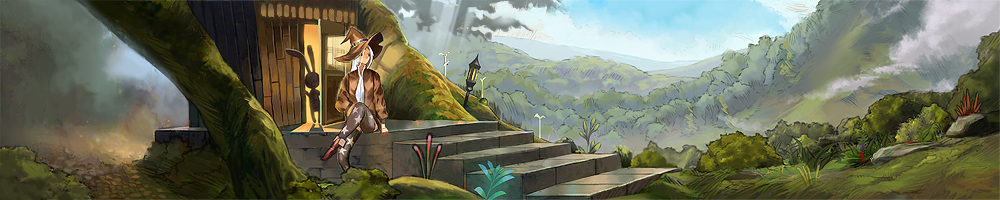
What stands out the most here are the visuals. Oh my god, these are gorgeous. This movie is two hours long and absolutely chock full of all sorts of visual ideas. I mean, like I said: Makoto Shinkai is inspired by Ghibli this time, but it still is undoubtedly a Makoto Shinkai movie. The artistic direction is a brilliant blend of the two styles and while the budget of this movie may not be as big as your average Ghibli movie, the animation is still very life-like, some frames are incredibly fluid, and the background art is just absolutely fantastic. Here, he actually surpassed Ghibli with its sheer versatility.
And really, this isn’t one of those movies that are all style and no substance. It still stands out as a very solid and enjoyable movie, but I do feel that Makoto Shinkai could have gone more in depth to his material.
| Storytelling: | 8/10 – Believable storytelling, slow but very good pacing and kept my attention through the whole movie. |
| Characters: | 8/10 – Realistic characters, albeit a bit one-sided. |
| Production-Values: | 9/10 – Amazing background art. |
| Setting: | 8/10 – Imaginative, though not very deep. |
Suggestions:
– Yona Yona Penguin
– Gedo Senki
– Princess Mononoke


 Most studios tend to favor a particular type of series. Sunrise loves mecha, JC Staff often goes with young moe girls, Bee-Train is crazy about series that involve partnerships, Studio Deen has its bishies, Madhouse is there for the dark avant-garde type shows and Hal Film Maker is often into slice of life. Bones though… their shows all are completely different from each other. The only common thread that I can find is that their shows often have action, but that can be said about 50% of all the other studios as well. It’s really one of their strengths, on top of how much effort they nearly always put in their execution. And with this, I bring you Kurau Phantom Memories, a show that is among their top 5 best attempts.
Kurau Phantom Memories follows people with superpowers, but instead of trying to be the epic of the year, it is very much character oriented. It’s as much about the use of superpowers in a corporate society as it is about womanhood. Perhaps the latter is an even bigger theme. And as a result, the creators absolutely nailed the characterization of the lead female character. She’s incredibly well developed, and even though this show can get pretty dark at times, she’s portrayed with an incredible amount of warmth. This show is especially brilliant at balancing its heart-warming and cold-hearted nature with each other, with some magnificent results.
The rest of the cast is also very well written. Characters all act naturally and the main side characters all are significantly developed into interesting characters throughout the series. The side characters that only appear on one or two episodes before leaving meanwhile do a very good job on fleshing out the world of the series, and even they are multi-dimensional as soon as their airtime ends.
The production values play an interesting role here. The animation is perticularly well directed, and even though this show doesn’t have the budget to keep its art consistent, it does know when and where to put effort into its fluidity, leading to some truly excellent and dynamic scenes, on places where it counts. The soundtrack is also just fantastic. It’s not large, but nearly every track that’s there is a feast for the ears and does a brilliant job at enhancing the atmosphere.
The acting does border cheese at times though. The dialogue often is very inspired, but at other times the characters don’t get further beyond uttering each other’s names a number of times. Despite these issues though, ti’s got a strong plot with some real moral dilemmas and situations that really aim to get the best out of the characters.
Most studios tend to favor a particular type of series. Sunrise loves mecha, JC Staff often goes with young moe girls, Bee-Train is crazy about series that involve partnerships, Studio Deen has its bishies, Madhouse is there for the dark avant-garde type shows and Hal Film Maker is often into slice of life. Bones though… their shows all are completely different from each other. The only common thread that I can find is that their shows often have action, but that can be said about 50% of all the other studios as well. It’s really one of their strengths, on top of how much effort they nearly always put in their execution. And with this, I bring you Kurau Phantom Memories, a show that is among their top 5 best attempts.
Kurau Phantom Memories follows people with superpowers, but instead of trying to be the epic of the year, it is very much character oriented. It’s as much about the use of superpowers in a corporate society as it is about womanhood. Perhaps the latter is an even bigger theme. And as a result, the creators absolutely nailed the characterization of the lead female character. She’s incredibly well developed, and even though this show can get pretty dark at times, she’s portrayed with an incredible amount of warmth. This show is especially brilliant at balancing its heart-warming and cold-hearted nature with each other, with some magnificent results.
The rest of the cast is also very well written. Characters all act naturally and the main side characters all are significantly developed into interesting characters throughout the series. The side characters that only appear on one or two episodes before leaving meanwhile do a very good job on fleshing out the world of the series, and even they are multi-dimensional as soon as their airtime ends.
The production values play an interesting role here. The animation is perticularly well directed, and even though this show doesn’t have the budget to keep its art consistent, it does know when and where to put effort into its fluidity, leading to some truly excellent and dynamic scenes, on places where it counts. The soundtrack is also just fantastic. It’s not large, but nearly every track that’s there is a feast for the ears and does a brilliant job at enhancing the atmosphere.
The acting does border cheese at times though. The dialogue often is very inspired, but at other times the characters don’t get further beyond uttering each other’s names a number of times. Despite these issues though, ti’s got a strong plot with some real moral dilemmas and situations that really aim to get the best out of the characters.


 Here’s a movie, animated by Madhouse, but voiced fully in Chinese, about the highlands of Tibet. With this it already gets a plus for its interesting setting. It’s also a coming of age movie about a young boy, which is a bit unfortunate, but this mvie has more than enough to make up for it.
It’s an excellent look on the culture of Tibetan sheep herders and in particular a doctor in those areas (the lead character’s father is a local doctor). On top of that, it also has a number of very interesting action scnees involving dogs. Those things set it apart quite a bit from the mould of coming of age movies. It’s a movie that is grounded in realism, yet also packs some nice climaxes, and in terms of pacing it’s pretty well paced: the quiet scenes build up well for the climaxes and they remain interesting for the entire movie.
There are two main problems with this movie. The first is the very unfortunate name that was chosen for the golden dog that the movie is all about: Doogie. I’m not sure whether this sounds any less cheesy in Chinese or not, but the mood of the climaxes did get broken a bit when the characters kept going “Doogie! Doogie! Doogie!” over and over. My second issue is that a lot of the characters could have been more interesting. The dogs are awesome, but the lead character does little to set himself apart from other young leads. The bad guys of the movie are also pretty bland. Some of the side characters, like the old medicine seller and the male lead’s father were interesting to watch, though, but unfortunately the dull characters outnumber the interesting ones.
Tibetan Dog is a very good movie, especially considering its settings, but the director,
Here’s a movie, animated by Madhouse, but voiced fully in Chinese, about the highlands of Tibet. With this it already gets a plus for its interesting setting. It’s also a coming of age movie about a young boy, which is a bit unfortunate, but this mvie has more than enough to make up for it.
It’s an excellent look on the culture of Tibetan sheep herders and in particular a doctor in those areas (the lead character’s father is a local doctor). On top of that, it also has a number of very interesting action scnees involving dogs. Those things set it apart quite a bit from the mould of coming of age movies. It’s a movie that is grounded in realism, yet also packs some nice climaxes, and in terms of pacing it’s pretty well paced: the quiet scenes build up well for the climaxes and they remain interesting for the entire movie.
There are two main problems with this movie. The first is the very unfortunate name that was chosen for the golden dog that the movie is all about: Doogie. I’m not sure whether this sounds any less cheesy in Chinese or not, but the mood of the climaxes did get broken a bit when the characters kept going “Doogie! Doogie! Doogie!” over and over. My second issue is that a lot of the characters could have been more interesting. The dogs are awesome, but the lead character does little to set himself apart from other young leads. The bad guys of the movie are also pretty bland. Some of the side characters, like the old medicine seller and the male lead’s father were interesting to watch, though, but unfortunately the dull characters outnumber the interesting ones.
Tibetan Dog is a very good movie, especially considering its settings, but the director, 

 To the people who sat through the first two movies of Towa no Quon feeling rather underwhelmed: this third movie will reward your patience. It’s a massive improvement. While during the first two movies I wasn’t really sure whether the creators knew what they were doing. The third one however, showed that it knew.
For starters, the extra focus on the characters’ backgrounds really helps. This episode is specifically meant to get various characters with bad pasts relate to each other, including the main character Quon. The cast of this series goes through a massive improvement here, and finally they step away from the rather generic bunch they used to be in the first two movies.
But that’s not all that happens here. In terms of storytelling this movie also did something interesting. It plays around much more with its screenplay. The first two movies were rather mediocre at building up, but this movie contains some really good suspense that actually doesn’t leave. The build-up actually comes together really well at the end of the movie.
The director really put in some thought here in how to make this episode work, considering the very limited budget he has to work with. This leads to a movie that downplays action in favor of suspense, and that really works here. The creators really found something that they’re good at.
To the people who sat through the first two movies of Towa no Quon feeling rather underwhelmed: this third movie will reward your patience. It’s a massive improvement. While during the first two movies I wasn’t really sure whether the creators knew what they were doing. The third one however, showed that it knew.
For starters, the extra focus on the characters’ backgrounds really helps. This episode is specifically meant to get various characters with bad pasts relate to each other, including the main character Quon. The cast of this series goes through a massive improvement here, and finally they step away from the rather generic bunch they used to be in the first two movies.
But that’s not all that happens here. In terms of storytelling this movie also did something interesting. It plays around much more with its screenplay. The first two movies were rather mediocre at building up, but this movie contains some really good suspense that actually doesn’t leave. The build-up actually comes together really well at the end of the movie.
The director really put in some thought here in how to make this episode work, considering the very limited budget he has to work with. This leads to a movie that downplays action in favor of suspense, and that really works here. The creators really found something that they’re good at.


 There was pretty much only one reason why I was really looking forward to checking out Infinite Ryvius: because I had seen it being praised for having very realistic and true to life characters. Now that I finished watching it, I can wholeheartedly agree with that, but just that statement alone also does a complete injustice of just how good this show really is.
The cast in this show is true to life, but by god, that’s not everything. This show has pretty much one of the best uses of teenagers in a space opera I’ve seen. Perhaps only Bokura no surpasses it here, if you really stretch the definition of “space opera”. This show is about the crew of a space ship. The entire cast of Infinite Ryvius consists out of teenagers, but for once, it makes perfect sense in the context of the story, they actually make full use of the young age of everyone to create a storyline that would never have been possible with adults. The fact that everyone is just a kid is vital to just about everything in the story.
What’s also amazing is how perfectly paced this show is. I mean, above I said that the characters are really true to life. They are very easy to relate to, and their actions throughout the series are very realistic. And yet at the same time the creators somehow turned this into a roller-coaster of a series that hardly ever takes a break. I’m completely amazed at how well the creators manage to weave everything together into one series. The cast of this show is huge, every episode brings a ton of new developments for the characters, and yet it doesn’t feel rushed. The story is the complete definition of utter chaos, and yet it’s full of twists, and yet the creators succeeded in making it move naturally. Despite having a ton of characters who all change significantly multiple times, all at their own pace, it makes sure to make all of them relatable, very strongly acted and miles away from stereotypes.
The only thing I’d have to mention against this series’ favor is that there is techno-babble, but it’s not even badly used. This show has its own original setting, and with that comes a bit of terminology that will take a bit of time to remember all of the different aspects of it.
Seriously, this may not have strings of over the top action scenes, but this show was made in 1999. I haven’t seen any Sunrise series made after that that was able to top this series. Not even Bakumatsu Kikansetsu Irohanihoheto. It’s an emotional roller-coaster that somehow managed to avoid stereotypes, one-dimensional characters, hamming it up or other kinds of insincere melodrama, and it manages to blend all sorts of emotions wonderfully together. Definitely a recommendation for science fiction fans.
There was pretty much only one reason why I was really looking forward to checking out Infinite Ryvius: because I had seen it being praised for having very realistic and true to life characters. Now that I finished watching it, I can wholeheartedly agree with that, but just that statement alone also does a complete injustice of just how good this show really is.
The cast in this show is true to life, but by god, that’s not everything. This show has pretty much one of the best uses of teenagers in a space opera I’ve seen. Perhaps only Bokura no surpasses it here, if you really stretch the definition of “space opera”. This show is about the crew of a space ship. The entire cast of Infinite Ryvius consists out of teenagers, but for once, it makes perfect sense in the context of the story, they actually make full use of the young age of everyone to create a storyline that would never have been possible with adults. The fact that everyone is just a kid is vital to just about everything in the story.
What’s also amazing is how perfectly paced this show is. I mean, above I said that the characters are really true to life. They are very easy to relate to, and their actions throughout the series are very realistic. And yet at the same time the creators somehow turned this into a roller-coaster of a series that hardly ever takes a break. I’m completely amazed at how well the creators manage to weave everything together into one series. The cast of this show is huge, every episode brings a ton of new developments for the characters, and yet it doesn’t feel rushed. The story is the complete definition of utter chaos, and yet it’s full of twists, and yet the creators succeeded in making it move naturally. Despite having a ton of characters who all change significantly multiple times, all at their own pace, it makes sure to make all of them relatable, very strongly acted and miles away from stereotypes.
The only thing I’d have to mention against this series’ favor is that there is techno-babble, but it’s not even badly used. This show has its own original setting, and with that comes a bit of terminology that will take a bit of time to remember all of the different aspects of it.
Seriously, this may not have strings of over the top action scenes, but this show was made in 1999. I haven’t seen any Sunrise series made after that that was able to top this series. Not even Bakumatsu Kikansetsu Irohanihoheto. It’s an emotional roller-coaster that somehow managed to avoid stereotypes, one-dimensional characters, hamming it up or other kinds of insincere melodrama, and it manages to blend all sorts of emotions wonderfully together. Definitely a recommendation for science fiction fans.


 Now that I’m getting so close to the end of my to-watch-list, and really to the series that I’ve been looking forward to the most, this really does give a different kind of expectation compared to usual. This goes in particular for Princess Tutu: aside from one particular series, it has been the series that you have recommended to me the most often (that other series is Monster, by the way). With such a critically acclaimed series, I went into this series with a completely different mindset than others and it generally leads you to expect things in a different way from usual.
What I mean by this is the following: after completely finishing this series, I’d have to say that Princess Tutu isn’t the best shoujo series I’ve seen. Normally for an average show, this really wouldn’t mean much, because you can say this for 99.9% of all of the series out there, but this statement does gain a different meaning for something with the caliber of Princess Tutu. That doesn’t however mean that this show isn’t awesome and if you even remotely like shoujo and haven’t seen this one yet, you’re doing yourself a great disservice.
First of all, Princess Tutu is about ballet. That alone gives this show an air of elegance unlike any other, and the creators make full use of this with some excellent choreography. This show doesn’t have fancy graphics, but it still looks gorgeous due to the time that went into portraying all of the different dances that are incredibly prevalent throughout the entire series. A good dancer is able to entice an audience, just by performing, and the creators of this series did just that.
What really caught my attention about this series however, was how well this show develops its characters. In particular the most important characters change tremendously throughout the storyline, and this change ends up being a very important theme throughout the entire series. These characters are round and dynamic, they change naturally, yet you can’t see them coming. Even the side-characters evolve subtly throughout the series. Everyone is well acted, and the cast is immensely fun to watch, both during the light hearted moments and the serious ones.
This series is also able to tell a great story, with a beginning and an actual ending, where it makes great use of its build-up. Where it left things to be desired for me was at some points while building up, where it tended to get a bit too formulaic. This series also depends a lot on brainwashing and using love as a plot device. It actually gets away with it quite decently, but there are times when in particular the side characters suffer losing their free will too much, so that they can’t really show what kind of character they actually are. Brainwashing in general is very tricky to do right and Princess Tutu remains one of the better examples to do it because it’s a major theme of the entire series, but it does lead to a lack of freedom that holds the show back at times.
Still, with the current state that shoujo anime is in today, it’s great to look back at how grand it was in the past. This show combines innocence with dark and deep characters really well and with the ballet, it turns turns into a wonderful emotional ride. Oh, and the soundtrack cannot go unmentioned here. The use of classical music in this show is just a perfect match.
Now that I’m getting so close to the end of my to-watch-list, and really to the series that I’ve been looking forward to the most, this really does give a different kind of expectation compared to usual. This goes in particular for Princess Tutu: aside from one particular series, it has been the series that you have recommended to me the most often (that other series is Monster, by the way). With such a critically acclaimed series, I went into this series with a completely different mindset than others and it generally leads you to expect things in a different way from usual.
What I mean by this is the following: after completely finishing this series, I’d have to say that Princess Tutu isn’t the best shoujo series I’ve seen. Normally for an average show, this really wouldn’t mean much, because you can say this for 99.9% of all of the series out there, but this statement does gain a different meaning for something with the caliber of Princess Tutu. That doesn’t however mean that this show isn’t awesome and if you even remotely like shoujo and haven’t seen this one yet, you’re doing yourself a great disservice.
First of all, Princess Tutu is about ballet. That alone gives this show an air of elegance unlike any other, and the creators make full use of this with some excellent choreography. This show doesn’t have fancy graphics, but it still looks gorgeous due to the time that went into portraying all of the different dances that are incredibly prevalent throughout the entire series. A good dancer is able to entice an audience, just by performing, and the creators of this series did just that.
What really caught my attention about this series however, was how well this show develops its characters. In particular the most important characters change tremendously throughout the storyline, and this change ends up being a very important theme throughout the entire series. These characters are round and dynamic, they change naturally, yet you can’t see them coming. Even the side-characters evolve subtly throughout the series. Everyone is well acted, and the cast is immensely fun to watch, both during the light hearted moments and the serious ones.
This series is also able to tell a great story, with a beginning and an actual ending, where it makes great use of its build-up. Where it left things to be desired for me was at some points while building up, where it tended to get a bit too formulaic. This series also depends a lot on brainwashing and using love as a plot device. It actually gets away with it quite decently, but there are times when in particular the side characters suffer losing their free will too much, so that they can’t really show what kind of character they actually are. Brainwashing in general is very tricky to do right and Princess Tutu remains one of the better examples to do it because it’s a major theme of the entire series, but it does lead to a lack of freedom that holds the show back at times.
Still, with the current state that shoujo anime is in today, it’s great to look back at how grand it was in the past. This show combines innocence with dark and deep characters really well and with the ballet, it turns turns into a wonderful emotional ride. Oh, and the soundtrack cannot go unmentioned here. The use of classical music in this show is just a perfect match.


 Um… yeah. This movie…. I think I’ve just been trolled.
The first Macross Frontier Movie stayed very close to the TV-series, only in a much more streamlined version. It cut all of the unnecessary stuff that dragged out, and instead focused on the core of the series, which worked really well and I ended up really liking it (and this is coming from someone who was really annoyed by parts of the TV-series). The second movie is… different…
One of my problems with Macross Frontier was that some subplots took forever to get anywhere, and a lot of them were resorted rather half-heartedly, if at all. This movie isn’t like that. This movie wants to be exciting. This movie wants plot twists, and it delivers them no matter what.
It’s difficult to do this review without spoilers, but let’s just say that this movie wants to deliver plot twists a little too badly. Especially the second half shows this. The result is a story that has lots of twists and turns… that just don’t make any sense whatsoever. You are going to have to turn off your common sense if you want to be able to enjoy this. I did not, and was raging throughout half of them. This was in no way good storytelling! The creators just pulled whatever twist looked the coolest out of their ass, and completely disregarded narrative logic. And I’m not the strictest when it comes to not making sense, but what the creators pulled here was just deus ex machina after deus ex machina that only add to the style of this series, not the substance. Oh, and Shoji Kawamori shows his environmentalist side again. You know, the kind where the environmentalist messages are just shoved down your throat without any sense of subtlety.
*Ahem* when you do turn off logic, you’ll be rewarded by an utterly gorgeous movie. In particular the musical segments shine as ever. This is one part at which Macross Frontier has never disappointed, and this is o exception. The use of colours and camera angles shows how much budget and animation talent went into this. Both for the 2d animation as the CG as the backgrounds.
It IS a fun movie. Just don’t go into it expecting good drama, because the drama here is of soap opera quality.
Um… yeah. This movie…. I think I’ve just been trolled.
The first Macross Frontier Movie stayed very close to the TV-series, only in a much more streamlined version. It cut all of the unnecessary stuff that dragged out, and instead focused on the core of the series, which worked really well and I ended up really liking it (and this is coming from someone who was really annoyed by parts of the TV-series). The second movie is… different…
One of my problems with Macross Frontier was that some subplots took forever to get anywhere, and a lot of them were resorted rather half-heartedly, if at all. This movie isn’t like that. This movie wants to be exciting. This movie wants plot twists, and it delivers them no matter what.
It’s difficult to do this review without spoilers, but let’s just say that this movie wants to deliver plot twists a little too badly. Especially the second half shows this. The result is a story that has lots of twists and turns… that just don’t make any sense whatsoever. You are going to have to turn off your common sense if you want to be able to enjoy this. I did not, and was raging throughout half of them. This was in no way good storytelling! The creators just pulled whatever twist looked the coolest out of their ass, and completely disregarded narrative logic. And I’m not the strictest when it comes to not making sense, but what the creators pulled here was just deus ex machina after deus ex machina that only add to the style of this series, not the substance. Oh, and Shoji Kawamori shows his environmentalist side again. You know, the kind where the environmentalist messages are just shoved down your throat without any sense of subtlety.
*Ahem* when you do turn off logic, you’ll be rewarded by an utterly gorgeous movie. In particular the musical segments shine as ever. This is one part at which Macross Frontier has never disappointed, and this is o exception. The use of colours and camera angles shows how much budget and animation talent went into this. Both for the 2d animation as the CG as the backgrounds.
It IS a fun movie. Just don’t go into it expecting good drama, because the drama here is of soap opera quality.


 The first Gaiden series was pretty much what you’d expect it to be: small and big side-stories focusing on Reinhart’s past. The second gaiden series promised to focus on Yang Wenli’s past (who by the way was my favorite character of the main series). It however did not turn out to be as I expected.
First of all, in Yang’s past there was always one event that really kept mentioned over and over again: the things he did on the planet of El Facil. It was one of the core themes of the series as it looked at what it means to be a hero. I expected a very detailed look at it, but instead the creators end up breezing through it in one single episode.
This is just a small nit-pick, though. Spiral Lbyrinth starts off with a huge 14-episode arc, and in that arc is invaluable for Yang’s character. It shows who he was as a kid and how he ended up in the military, along with how he grew. Where the big arc in the first Gaiden Series was typical LoGH, this one is far from it, and it turns into a historical analysis that’s very interesting to watch unfold. When the arc ended, I was really looking forward to see some more small back-stories of the guy to close off the series…
… and suddenly the show goes back to Reinhart again. In fact, Yang only appears in one more episode after that. It’s like the creators were thinking “No! The people want more Reinhart!” The last number of arcs of this series are still good, but overall they don’t match up to the rest of the series, especially when you compare them to the short arcs of the first gaiden series. They’ve got nice ideas, and especially the retriever has an interesting premise, but a little too often they just deal with Reinhart trying to deal with dumb nobles and officers. It doesn’t add as much as the first gaiden season. Thankfully the final two-episode arc is a great point to end the series with, and connect everything together.
Now, this series actually has a different animation team than a Hundred Billion Stars, A Hundred Billion Lights. The two Gaiden series were at one point actually produced right next to each other. The team behind the main series seemed to have taken care of the first, while the second has a noticeably different art style. This art style unfortunately is a bit less successful in hiding the animation flaws in the character models, and it’s also a bit too full of intrusive CG (yes, this was produced around the year 2000. 12 whopping years after the series started).
Overall LoGH can be divided into six major arcs, including the Gaiden series. Unfortunately, the final one seems the weakest one to me due to its reluctance to fully embrace its premise and how it didn’t set itself apart as much as the other arcs. I do have to say that the first half is a must-watch due to Yang’s background and I’d actually consider that one better than the big arc of the first Gaiden series.
The first Gaiden series was pretty much what you’d expect it to be: small and big side-stories focusing on Reinhart’s past. The second gaiden series promised to focus on Yang Wenli’s past (who by the way was my favorite character of the main series). It however did not turn out to be as I expected.
First of all, in Yang’s past there was always one event that really kept mentioned over and over again: the things he did on the planet of El Facil. It was one of the core themes of the series as it looked at what it means to be a hero. I expected a very detailed look at it, but instead the creators end up breezing through it in one single episode.
This is just a small nit-pick, though. Spiral Lbyrinth starts off with a huge 14-episode arc, and in that arc is invaluable for Yang’s character. It shows who he was as a kid and how he ended up in the military, along with how he grew. Where the big arc in the first Gaiden Series was typical LoGH, this one is far from it, and it turns into a historical analysis that’s very interesting to watch unfold. When the arc ended, I was really looking forward to see some more small back-stories of the guy to close off the series…
… and suddenly the show goes back to Reinhart again. In fact, Yang only appears in one more episode after that. It’s like the creators were thinking “No! The people want more Reinhart!” The last number of arcs of this series are still good, but overall they don’t match up to the rest of the series, especially when you compare them to the short arcs of the first gaiden series. They’ve got nice ideas, and especially the retriever has an interesting premise, but a little too often they just deal with Reinhart trying to deal with dumb nobles and officers. It doesn’t add as much as the first gaiden season. Thankfully the final two-episode arc is a great point to end the series with, and connect everything together.
Now, this series actually has a different animation team than a Hundred Billion Stars, A Hundred Billion Lights. The two Gaiden series were at one point actually produced right next to each other. The team behind the main series seemed to have taken care of the first, while the second has a noticeably different art style. This art style unfortunately is a bit less successful in hiding the animation flaws in the character models, and it’s also a bit too full of intrusive CG (yes, this was produced around the year 2000. 12 whopping years after the series started).
Overall LoGH can be divided into six major arcs, including the Gaiden series. Unfortunately, the final one seems the weakest one to me due to its reluctance to fully embrace its premise and how it didn’t set itself apart as much as the other arcs. I do have to say that the first half is a must-watch due to Yang’s background and I’d actually consider that one better than the big arc of the first Gaiden series.


 They aired after the main Legend of the Galactic Heroes series, but make no mistake: the two Gaiden series are prequels. One Hundred Billion Stars, One Hundred Billion Lights tells stories about the past of the main character, Reinhart von Lohengramm. In theory, they could be watched at any point in the series after episode 3 of the TV-series. The benefit you get from watching it early is some solid characterizations, backgrounds and introductions before the series gets really fired off. The benefit you get from waiting to check it out until the series finishes is a very solid background arc.
Now, the main series did hint at various events that happened in Reinhart’s past that we never fully got to see. Surprisingly though: this OVA doesn’t address those at all, and creates a whole array of new stories throughout Reinhart’s teenaged years. There are three small arcs of four episodes, followed by a big one comprising of 12 episodes. The last arc is typical LoGH: it focuses on large scale tactics and strategies, while weaving the stories of all kinds of characters together while at the same time asking many poignant question about the nature of war and commanding an army. Reinhart here shows a version of himself that he did not show throughout the main series, so it’s definitely worth checking out.
And then there are the short arcs, which really surprised me. It’s here where Legend of Galactic heroes shortly dabbles into other genres than its area of expertise: large scale space warfare. Each of these arcs are completely standalone and surprisingly varied. One of them even turns into a murder mystery, but in particular the third arc is masterfully told: it combines Legend of Galactic Heroes’ signature style of thoughtful dialogues and complex motives, and throws it into a story that instead of being told by reason, is told by emotions. That was the highlight of this season for me.
Now, these side stories miss the grandeur of the main series, so I can’t rate it as highly as the first. The stories are all really good, and again very intelligent, but they don’t come together as well as the main series did with its 110 episodes. It’s not that this movie is as unconnected as the first movie was. It’s still pretty much the best you can get in terms of warfare on a much smaller scale. It lacks the politics that made the main series so unique, though, and they definitely add a lot of things to this series and its cast. In terms of the big picture it’s just a matter of comparing a panther to a gigantic lion with wings.
They aired after the main Legend of the Galactic Heroes series, but make no mistake: the two Gaiden series are prequels. One Hundred Billion Stars, One Hundred Billion Lights tells stories about the past of the main character, Reinhart von Lohengramm. In theory, they could be watched at any point in the series after episode 3 of the TV-series. The benefit you get from watching it early is some solid characterizations, backgrounds and introductions before the series gets really fired off. The benefit you get from waiting to check it out until the series finishes is a very solid background arc.
Now, the main series did hint at various events that happened in Reinhart’s past that we never fully got to see. Surprisingly though: this OVA doesn’t address those at all, and creates a whole array of new stories throughout Reinhart’s teenaged years. There are three small arcs of four episodes, followed by a big one comprising of 12 episodes. The last arc is typical LoGH: it focuses on large scale tactics and strategies, while weaving the stories of all kinds of characters together while at the same time asking many poignant question about the nature of war and commanding an army. Reinhart here shows a version of himself that he did not show throughout the main series, so it’s definitely worth checking out.
And then there are the short arcs, which really surprised me. It’s here where Legend of Galactic heroes shortly dabbles into other genres than its area of expertise: large scale space warfare. Each of these arcs are completely standalone and surprisingly varied. One of them even turns into a murder mystery, but in particular the third arc is masterfully told: it combines Legend of Galactic Heroes’ signature style of thoughtful dialogues and complex motives, and throws it into a story that instead of being told by reason, is told by emotions. That was the highlight of this season for me.
Now, these side stories miss the grandeur of the main series, so I can’t rate it as highly as the first. The stories are all really good, and again very intelligent, but they don’t come together as well as the main series did with its 110 episodes. It’s not that this movie is as unconnected as the first movie was. It’s still pretty much the best you can get in terms of warfare on a much smaller scale. It lacks the politics that made the main series so unique, though, and they definitely add a lot of things to this series and its cast. In terms of the big picture it’s just a matter of comparing a panther to a gigantic lion with wings.