Medaka Box Abnormal Review – 76/100

Poor Medaka Box. Its second season had the worst timing imaginable. Here’s the thing: for the past few years, me and Shounen Jump Adaptations didn’t have the best relationship. Sure, there was the occasional gem with Level E, but most series got on my nerves like no other by taking so many ages to actually get somewhere. There are so many of these adaptation that are paced out too long in order to keep the story going in their constant fear of getting cancelled. The first season of Medaka Box actually took advantage of that by actually doing something interesting within the first 13 episodes. It didn’t take ages to change and move somewhere. There was variety.

And then the past autumn season happened. And the juggernauts of Hunter x Hunter and Jojo’s Bizarre Adventure came and challenged just about every boundary of the shounen genre, showing among the best of what Shounen Jump has to offer. And Medaka Box tried to air is second season alongside those two. Yeah, it paled in comparison, unfortunately.
The first season of Medaka Box was a generic school series that at a certain point goes over 9000. The second season is different, though: it consists out of a collection of fights between people with all sorts of powers. You can see that a lot of thought was put into these powers, how they work and how they can be beaten. It goes further than most shounen fighting series do, and you can see that the series has quite a bit of fun in analyzing all of these powers along with their stories. And that’s about all this series does.

The problem with this series, like most other nisiOisin’s works, is that the balance is lost. The problem is that this series spends so much time and focus at talking and explaining how all these powers work, that it forgets to put focus on the rest. This show aims to break some traditions of the shounen jump genre with how elaborate these powers, but at the same time it also falls in the same pitfalls by having way too many characters pointlessly talking and analyzing the fight.

And the fights themselves… it’s not like they are of the kind that remain interesting for 12 episodes. The first season had novelty: the characters did other things than just fighting. Here, they don’t and it becomes obvious that Gainax didn’t put their top people on this series: for their standards, the animation is rather bland, and feels too much like they directly copied and pasted manga panels and moved a few things here and there, that ends up looking a bit bland.

Then here is another thing: the characters of this series have their wrong priorities.I mean, this series understands that characters need to have back-stories, and those stories are indeed often insightful and all. The show is not good at all at fleshing out its characters, though: most characters jus have one or two sides to them. They’re not fun to watch because all of them are defined by their powers and backstories, instead of their actions, if that makes any sense.

I am indeed a tsundere for nisiOisin: up till now despite my annoyances of him, I have watched every adaptation of his that came out so far, because I do think that he is a talented writer. The tsun in me though is starting to win terrain because of how unbalanced all of his stories are. I really care about the big picture how all the small pieces are used together. I’m missing that a lot with his series due to the obsessive focus he puts on his dialogue and Medaka Box is the same: it had some very interesting ideas. But did I enjoy myself for the most part with this series? Well, only the final two episodes really ended up catching my attention to be honest, but they did not succeed in making up for the rest of the episodes, especially because this season was supposed to be the part where the story really started, and to be honest I prefer the variety of the first season over the second.

Storytelling: 7.5/10 – Lots of dialogue that is well-written, but also gets in the way of the rest of the show.
Characters: 7/10 – They’re not interesting, they have backgrounds, but aren’t fleshed out enough.
Production-Values: 8/10 – Gainax does a decent job. Nothing outstanding, but nothing bad either.
Setting: 8/10 – Lots of interesting ideas being explored. Not interesting enough to really lift the series to a higher level, though.

Suggestions:
Law of Ueki << This show is pretty much Medaka Box if it did focus on actually being fun. Yes, this my favorite comedy ever. That's a big difference there... - Hunter X Hunter
Jojo’s Bizarre Adventure

Poyopoyo Kansatsu Nikki Review – 84/100


Okay, so I crowned Poyopoyo as my favourite comedy of 2012. Here I have some more room to explain that. First of all, this series did not make me laugh the hardest out of the comedies of 2012. It did, however, make me laugh the most and it was the most consistently funny series of the year. I can perhaps recall three or four of its 2-minute episodes that did not make me chuckle out loud.

That’s the beauty of this series: it’s short, yet has a ton of content. Every episode is divided into four to eight sketches that describe the daily lives of the main cast, and hardly any of them feel like they have been put in there just to fill time. They all have a point or a joke to make, and really few of them feel flat. When it’s able to do that for 52 consecutive weeks, it really manages to be something special.

And what makes this show funny? Well, most importantly its cast of characters. The show follows a farming family and the people around it. They don’t exactly develop much, but this series is masterful at fleshing them out: showing their different sides in different situations, showing how they typically and un-typically act. And all of this with a good dose of humour. They become really fun and enjoyable to watch, already quite quickly into the series.

About the animation… yeah don’t expect too much of it. It is solid for what it does though: you don’t need to expect crappy flash animation, and the camera angles are consistently sharp for its designs. Voice acting is really good though: the voice actors really manage to bring their characters alive. In terms of background music, there is not much variety: one track is just constantly being played, but it is a very good track nonetheless.

Poyopoyo as a series is more than just funny. It’s also very relatable. It contains tons of scenes that hit home. Sometimes for just pet owners, but also for everyone. Beyond that, if you’re interested you can just give it a try. It’s a really accessible series that you can just jump into whenever you feel like.

Storytelling: 9/10 – Very consistent comedy that is hilarious.
Characters: 9/10 – Down to earth and character who feel real, and remain funny and charming.
Production-Values: 7.5/10 – Simple animation, but quite effective nonetheless.
Setting: 8/10 – Believable and realistic.

Kamisama Hajimemashita Review – 84/100


Romance galore for the past season! Not to mention that there were so many good ones: Sukitte Ii na Yo, Sakurasou, and apparently Chuuninbyou and Tonari are also really good but I did not watch them. Kamisama Hajimemashita for me stands out as the best though. Why? Execution.

For the people who haven’t heard me repeat this over and over yet: the director of this series is Akitarou Daichi. He did Fruits Basket, Kodocha and Bokura ga Ita before so yes, he can direct really good romance, and yes, he can do this incredibly consistently. Kamisama Hajimemashita feels the most like 13 episodes of Kodocha, with a bit of its energy calmed down. Though it’s still a series that is full of energy, especially if you watch its first episode.

The trick with this series is that it has perfected its timing: shots last for the exact right duration. Jokes are timed perfectly. The energy is built up over each episode really well. The show managed to use its camera work to bring out the emotions of the characters really well, and especially the feelings of love and laughter. This show is really good at juggling these around, making you laugh hard one moment and feel sorry the next. No other romance this series was as balanced as this series.

And the thing is, that this is not the most ambitious series: the characters are simple, they don’t try too hard to be likable at all. The storylines are also really quite simple when you boil down to them. The character development too: simple. Yet this series shines in it, and due to this simplicity and polish it is really enjoyable. Not to mention that without exception, it manages to end every single episode with a really charming climax that is full of warm feelings (that ED works brilliantly with it). I don’t see many other shows pull the same.

The problem mostly is that this series really needs to be a 26 episode series. With 26, its story just cuts off in the middle with a hasty end boss, and the characters don’t develop as well as they could have. It loses most of its points on that.

Storytelling: 9/10 – Awesome timing, really uses its simplicity well and knows really well how to build up.
Characters: 8.5/10 – Simple but effective characters. At first they might not seem much, but they grow on you.
Production-Values: 8/10 – Well drawn camera angles, although they don’t move much. Catchy soundtrack.
Setting: 8/10 – It’s the same old setting about youkai, but well used.

Suggestions:
Kodomo no Omocha
Bokura ga Ita
Yamato Nadeshiko Shichi Henge

K Review – 79/100


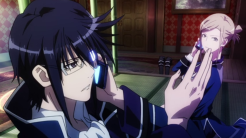
Sometimes this happens: the point where I’ve nearly written off a series, and then it pulls something that drastically changes my opinion of it. For a long time, I was just planning to write my review of K with the base of “gorgeous, but unambitious and boring”. Then the final episode turned out to be the best of the entire series and a second season got announced. Now it suddenly is a solid show that devotes a bit too much time to building up.

The thing with K at first sight was that even though it seemed really ambitious at first sight, the story delved into some very simple murder mystery, alongside a war between two different clans. It never really went beyond that and it also did not try to spice things up much, aside from some gorgeous visuals and action scenes. It had some talk about seven different kings that for a long time didn’t really go anywhere other than explaining why some people in the world are ridiculously powerful. It just did not make sense with the mindset that this would be just a 13-episode series.

But yeah, it all turned out to be just build-up. With the way this series is, I would not recommend it on its own, but it set a solid base for its second season. A big problem with a lot of this series was that there also was hardly any character development. The final few episodes finally also brought that in. Doable for a series with 26 episodes, but not for one with 13.

Oh about the animation by the way: K wins the award of the best animation of the season, or at least the biggest production values can be found here with tons of smooth animation, realistic character movements and well coordinated fight scenes. It’s also got a pretty good soundtrack. My only complaint is that the creators like to abuse lighting effects, to the point where every short has some sort of obnoxious filter over it.

So yeah, I’ll be checking out the second season. Then we’ll know whether the build-up in this series was actually worth it.

Storytelling: 8/10 – Good build-up, just forgets to deliver through most of its airtime…
Characters: 7.5/10 – The characters stay rather bland through most the airtime. Emphasis on “Most”, because they do come together in the finale.
Production-Values: 9/10 – Gorgeous animation, nice soundtrack.
Setting: 7/10 – Doesn’t really do much with its setting and the seven kings backstory feels a bit empty.

Suggestions:
Durarara
Heat Guy J
Karas

Sword Art Online Review – 72,5/100


Um yeah. Sword Art Online. While it doesn’t beat Guilty Crown as “trainwreck of the year” for me, it still is a show I had very mixed feelings about. In order to explain why, I’m going to have to diverge a bit from my normal spoiler policy, though. I won’t outright spoil things, but I do have to say things about the plot progression here and what happens at certain stages. Because Sword Art Online has for me been the prime example of jumping the shark for the past half year.

Like Guilty Crown, SAO is what happens if you focus your series way too much around your male lead. Thankfully, Kirito is an actual character. A bland one, but an actual character, rather than a plot device. It’s nearly everything around him that’s a plot device instead though. The first half of the series however thankfully has enough to make up for it.

I mean the setting behind this show is fascinating: you’ve got an MMORPG that traps its own players. Wonderful! The despair of the people who are trapped inside it for an incredibly long time was great. A unique culture evolved that was really interesting to watch. Add that to great fight animation and a great climax, and you’ve got a very solid story. For the first half.

The show’s problems already shine through in the first half, but not bad enough. By far the worst issue I had was the harem element. Picture this: you’re on an mmorpg server. The females are in a big minority. And yet, nearly all of them end up falling for Kirito, the lead. He’s the first who truly cares about them when he meets them, he’s the first who makes them feel comfortable, even though he’s a completely antisocial guy. Yeah, this is wish fulfillment that is pretty thinly veiled. Kirito’s sole salvation here is that he actually ends up in a very good couple, and that the chemistry between him and the female lead actually works. The lead female is strong, and they complement each other quite well. The combination between action and romance works out quite well as the first half goes on and gets to its climax.

So yeah, the second half… it took about two episodes for me to completely give up hope on this series afterwards. That arc is just so inherently wrong on so many levels, it’s hard to know where to really start.

But imagine this: the bland male lead is happy in a couple. Then the female lead gets kidnapped for an entire season, and he starts flirting with his cousin (who he grew up with believing her to be his sister), leading to a completely pointless romantic quasi-incest subplot that doesn’t really go anywhere. Seriously, nearly the entire second half of this series is dedicated to just that, rather than the much more interesting other things aobut this series.

The second half is also littered with plotholes that this show just pulls right out of its ass, just to be more convenient and make the plot go as intended. It’s just too spoilery to go into details, but items appear from out of nowhere, the games in this series are riddled with design decisions that just boggle my mind, characters act irrational for no reason, and half the time this show doesn’t know whether it’s in a virtual world or not, which gets really annoying. Oh and the villain there. He’s one of the most stereotypical evil villains I’ve seen in a long while.

Thankfully this is an A-1 production, so the graphics look good and the fight animation is very creative. Yuki Kajiura behind the soundtrack is also solid, although with this series she really starts to reveal that she has run out of inspiration and that all of her music is just starting to sound the same.

Sword Art Online gets a lot of love. I don’t think that it deserves that. Sword Art Online also gets a lot of hate. And I also don’t think it deserves that either. Sure, its second half is pretty bad and all, but it does have its things to make up for it. Its setting has its traces of brilliance, and the first half was pretty solid there. Nevertheless. There’s better out there. It’s just too flawed to really recommend. The only thing I’m really angry at this series for is how it disrespects its female lead in its second half. That’s the one thing that I really find unforgivable. Apart from that the second half is just bad storytelling. Nothing more, nothing less.

Storytelling: 6.5/10 – Good build-up, but waaaay too many plot devices.
Characters: 6.5/10 – There are some interesting characters here, and the lead couple is quite good in the first half. This show completely disrespects the female lead in its second half by having her kidnapped, making her do nothing and have the male lead head off to a pointless incest subplot.
Production-Values: 8,5/10 – Great animation. It’s overall a very solid looking show at the very least.
Setting: 7.5/10 – The show gets some points for being interesting and having some really nice ideas. It loses points for not making any sense. Especially in its second half.

Suggestions:
– .Hack//Sign
.Hack//Roots
Amatsuki

Btooom! Review – 81/100

So, Btooom. A suspense series that tries to see what you’d get if you turned Bomberman into a real game. With real bombs. Or at least, that was the intention of the original creator.

The show got the suspense part right, but with the action scenes, you do need to turn off your brains, because the bombs in this series seem to favor the lead character: blasts that kill others are ones that only manage to scratch him, he manages to dive away from situations that were seemingly impossible to avoid, and all that is coming from a hikkikomori who never exercises and never leaves his room.

So yeah, the side characters for this series are much more interesting, but here is where this series surprised me, because these guys are actually really good. Like the main character, they too have been thrust into a game in which they’re forced to survive using real bombs, but unlike him they lack the magical main character powers, and really have to fight for their lives there. The way the creators do this is actually quite interesting, and I especially want to tip my hat for Taira, who really stole the show for me as this burdened old guy who you hardly ever see in such an important role as he is here.

They also are something else: varied. There are kids, adults, muscled army officers and weak accountants among them. This has an interesting effect for the action: every battle in this show is different and fought in a different way. It’s not immediately apparent and I only realize this as I’m writing up this review, but they really help to keep this series fresh and new through its 12-episode airtime. The show ends with a lot of things unresolved (hoping for a second season there…), but it does end at a logical point in the story and makes for a short but sweet and intense ride.

Having said that though, the thing remains that some things in this show are very contrived. A lot of them have to do with the lead couple. I won’t reveal the big twist around them, but it’s a really bad one that you could have seen from miles away. The two play of each other nicely, but you do get the feeling that the lead female is just there so that the lead male can have a girlfriend.

There are a few exceptions to that, though. One thing that this show loves to explore is the darker side of human nature, and when it starts playing with that it goes into some pretty interesting directions. All of this isn’t enough to make it stand among the better series of the season, but for what it did it did well.

Storytelling: 8.5/10 – Varied battles using bombs that are all different from each other and make for good suspense.
Characters: 8/10 – Great side-characters, contrived main characters.
Production-Values: 8/10 – Stylish look, solid music, nice animation, though nothing special.
Setting: 8/10 – A potentially very interesting setting, but the show doesn’t really use this much in favor of the characters.

Suggestions:
Blade
High School of the Dead
Shikabane Hime

Teekyu Review – 77.5/100

Here’s a quick one: Studio Mappa are some of the talented people who branched off from Madhouse in order to start their own studio. I was expecting great things from the people who among others were responsible for Casshern Sins, and they definitely delivered that with their debut work of Sakamichi no Apollon. Naturally I was very eager to see their next work, which turned out to be something completely pointless and silly.

Seriously, this is what Teekyu is: two minute episodes of four high school girls who try to be as random as possible. This show is nothing but 24 minutes of moe and juvenile madness that makes no sense. Nothing more. There is no progression, nothing really happens. Just that randomness. Still, I managed to finish this show and I didn’t really have to force myself to it.

The thing with this show is that even though it’s completely stupid, it’s well made. Most shows with 2-minute episodes are cheaply made, and the concept of inbetween animation is nonexistent for this series, however the animators make sure to make every frame unique and you can really see them play around with their camera angles. There is a lot of creativity in the jokes and the randomness as well, and I admit that there were quite a few times that I laughed out loud. You do need to be able to stomach hyperactive humour if you want to watch this series though. That’s the only prerequisite.

But yeah, this just is a show to just shut your brains off and watch, and for that it does its job of keeping you entertained on a superficial level. The creators here just wanted to goof off a bit inbetween their projects with something completely silly. And yeah, silly it was. Also, I’m not going to break down this show’s ratings in four categories, because that would be entirely pointless. I just see it as a show with a rating of 77,5/100, or a show that even though it doesn’t hit any heights and may have some big flaws, it’s still worth watching.
Suggestions:
Mr.Stain on Junk Alley
Gag Manga Biyori
Eternal Family

A Letter to Momo Review – 86/100

The target audiences for movies are completely different from those of TV-series. What’s most impressive is that the most overused genre, the family movie, is actually consistently very good and that there are very few people taking advantage of it with cheap and bad story-lines, like what’s currently happening with the fanservice in TV-series. They’re all attempting to be well executed.

Having said that though, there are a lot of movies that just look like each other. I’m of course talking about the My Neighbour Totoro-inspired series: you take a village, you take a kid, and you take some sort of supernatural being, and you try to create a heart-warming story around it. The stories indeed are heart-warming, but they don’t really try to do something new with the genre and tropes. Miyazaki himself did this with Ponyo, a few years ago, but apart from that I can’t really think of many other movies. A Letter to Momo however, gives a really good attempt to stand out, though.

It’s just all so real. These movies stand out with their realism, but this one reallygoes the extra edge: Momo really feels like a typical young girl, and this movie adds so many quirks for her that other movies look over. It’s all in the details, though, but those details are amazing. The animation also really shows this, with a lot of Madhouse’s top people working on it. The faces in this movie are all 2-dimensional, but they have depth. The way they’re animated, the way they move: you feel like they’re more than just a few drawn lines, something quite rare in today’s animation. It only adds even more to the realism and believability.

Where this really sets itself apart though, is in the supernatural creatures that visit Momo. They are nearly always innocent: cute, adorable, mysterious. In this movie, they’re the complete opposites: while they have good intentions, these beings are flawed, annoying, they continuously cause trouble, they keep stealing from everyone, they keep harassing Momo, and they have just generally un-likable personalities. And yet it’s been a while since I laughed as much at a movie as here. They are the kind of characters that were supposed to be annoying, yet only ended up really charming because of it.

The overall plot of this movie is something you should not expect much of: you’ve seen it before in other movies. However, the way in which it does this is remarkable and defnitely deserves a watch as one of the best attempts on how to do it since Totoro. For the Jin Roh fans who were looking forward to this movie though (the director of Jin Ron has also directed this movie, working on it for seven years): expect nothing like it. This movie has no political messages whatsoever, and is the complete opposite of Jin Roh was. It’s a bit of a shame considering how original Jin Roh was and all, but that does not make A Letter to Momo any less impressive.

Storytelling: 8/10 – The plot is nothing special, but how it was told stands out as the best since Totoro of its trope.
Characters: 9/10 – Absolutely lovable, yet different. Excellent acting as well, although the way they developed has been done before.
Production-Values: 9.5/10 – Very realistic. Characters have depth, lots of details and the characters really are brought to life here.
Setting: 8/10 – Realistic portrayal of a random village, nice ideas. Solid

Suggestions:
My Neighbour Totoro
Junkers Come Here

Eureka Seven Ao Review – 87.5/100


The original Eureka Seven is a classic. If you like teenagers and mecha, then by all means give it a chance: it has a very rocky start, but has so many defining moments. And so, six years after its end, Bones came with a sequel. It’s quite an interesting series: you really need to have seen the first series in order to enjoy it, yet it is nothing like its predecessor.

The series takes some of the core concepts of Eureka Seven, it takes its defintion of Trappar and Corallian, it grabs the son of the two lead characters of Eureka Seven, puts him into a completely different location and even time, and just goes with it, trying to explain what the hell is going on as it goes along. Where Eureka Seven focused on showing children’s naivety, this series instead turns this around by forcing children in the center of conflict, while emphasizing that they do not belong there in the slightest. With these themes, it tells a story that with one crazy amount of plot twists.

After a bit of a warm-up period, this show just delivers plot twist after plot twist after plot twist. It’s a really good mystery series, with a lot of interesting ideas and twists that come from out of nowhere and give completely different turns to what the plot was before. This obviously has its advantages and disadvantages.

I mean, back with Un-Go, that was a series that had perfect control of its fast pacing. Ao does not, and there are quite a few plotholes. On the other hand though, there are plenty of moments that might seem ludicrous, only to make sense when you start thinking about it. A lot of the plot twists aren’t explicitly explained, or require the viewer to constantly pay attention to what’s going on: this is one series that does not plan to hold the hands of its viewers, and you definitely cannot watch it when you’re tired, otherwise you’ll miss stuff.

Anyway, I have seen plenty of people turned off by the plotholes, but I personally loved what this series tried to do. It’s all about the suspense of disbelief for this series, and let me tell you: if this suspense of disbelief holds, then there is a lot to like about this show. Helping are the characters, who may not be as good as the cast of Eureka Seven, but still are very likable, diverse and entertaining, and this show is also full of unexpected character-development.

What I really encountered here that this show does like none other, is how it treats the old characters of the first series. Out of all the sequels I have seen that focus on different characters than the first, this is BY FAR the best use of the old cast. They are used at the exact right moment, and this show pays homage to them, yet also shows their flaws, it shows who they turned into after the end of the series, and it gives them their own storylines that are more than just “let us old guys just watch over you new guys”. It’s fanservice, but I appreciated it so much.

This is a very ambitious series. You can also see this though the production values, which were some of the most consistent of the year for an action series, containing a lot of fluid and fast-paced action scenes and a really good soundtrack. The plot twists and characters on top of that made it a really fun and entertaining series for me, although this ambition does have its prices to pay with the rushed plot that is easy to get bored with.

Storytelling: 9/10 – Love the ambition of this series of delivering as many plot twists as possible that attempt to weave a whole storyline together. Great mystery, though the rushed pacing and plotholes will be a turn-off for some.
Characters: 8.5/10 – Briliant use of the old Eureka Seven cast, Enjoyable and gripping cast of both main and side characters, although the cast is too big for every character to really show his/her best.
Production-Values: 9/10 – Great production values, excellent soundtrack, really fluid animation at times.
Setting: 8.5/10 – Takes the setting of Eureka Seven, expands upon it, turns it into something completely different and completely changes what it stands for. Might be hard to swallow for fans of the first series hoping for the same.

Suggestions:
Darker than Black – Ryuusei no Gemini
Un-Go
Noein

Kyoukai Senjou no Horizon 2 Review – 76/100


Horizon had so much going for it. In this season of creativity, it fit right in with its premise, and all sorts of weird powers for each of its characters, its unique sense of combat and its huge back-story. Along the way though, something went wrong with me. What went wrong, and why did this happen?

The thing is, that even though I mildly enjoyed this show, I could hardly bring myself to care about it. I barely managed to finish this sequel without dropping it and each week I had to push myself to watch another episode. It’s not like the episodes themselves were boring: there was enough action and creativity to prevent that from happening and this was far from as generic as Tari Tari was. Still, there is something in the style of storytelling that just could not catch my attention.

The reason behind this is something that I’ve noticed in a few other Sunrise series as well (they’re the one who produced this series), mostly Gundam: the action overload. This show wants to try so hard to deliver action that it keeps on delivering as much action scenes as possible. These action scenes are well animated, and they involve interesting powers clashing against each other, but there is so much focus on them that this show forgets about everything else. The balance is completely gone!

The result is that among all these creative action scenes, nothing really stands out. This show starts with a scene, then moves onto the next and then the next again, without any of them making any impact beyond mild entertainment. It’s like having a 7-course meal in which every dish consists out of some variation of chocolate pie: sure it’s delicious and all, but it’s just way too much and too monotone.

A nasty side-effect of this is that this show also refuses to spend time on fleshing out its cast. Every scene has to make an impact or build-up for the action, and we hardly ever get to know the cast beyond a few comedic skits that do very little in giving them any kind of character to sympathize with. The majority of them are bad boob jokes anyway. And I mean, there is this romance subplot that feels forced at best, but that’s the most character development we see in this entire series.

Horizon is a show that does one thing really well, but instead of using the rest to support this, it just ignores this. The complete lack of any attention to balance just made me unable to care about what was going on. The plot and setting are saved by good source material, but in the end I just can’t recommend this show because of this.

Storytelling: 7/10 – Lack of balance: this show is just action, action and more action without anything to differentiate it inbetween.
Characters: 6,5/10 – Great ideas behind them and they really try to be likable, but this show doesn’t take that further: every character in this show is completely one-dimensional.
Production-Values: 8/10 – Very solid, albeit that the character-design style still look quite ugly.
Setting: 9/10 – This is where this show shines: a huge plot, creative powers. You can see that the original source material spent a lot of time in making this stand out.

Suggestions:
Armed Librarians – The Book of Bantorra
Bakumatsu Kikansetsu Irohanihoheto
Law of Ueki