Katsugeki Touken Ranbu Review – 45/100

Every Anime season we the viewers are shown a number of adaptations, often made after Light or Visual Novels. It’s an already written story with an established base, a smart business decision. In recent years studios have also begun pulling from the Video Game market for their shows. Pieces like the Idolmaster series, Kantai Collection and Akibas Trip. I bring this up not because this is a new event, but because the anime I want to talk about today, Katsugeki/Touken Ranbu, is one such anime.

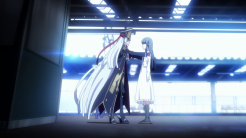
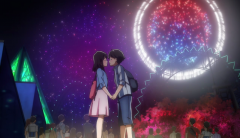
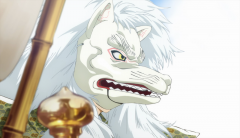
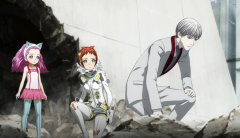
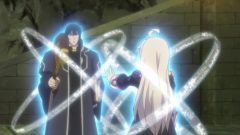
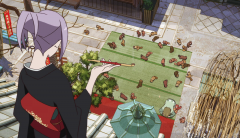
Ranbu is based off of the online video game Touken Ranbu, along the same lines as Kantai Collection. It focuses on a group of warriors who are the human personification of famous weapons, sent back in time. Their task? To protect history from the forces of the Time Retrograde Army, who seek to change history for an unknown reason. Ranbu focuses in on the 2nd Unit, newly minted and formed from a group who have never worked together before. Together they will face the hordes of the Retrograde Army and defend the past from the future!

Let’s jump in.

Continue reading “Katsugeki Touken Ranbu Review – 45/100”

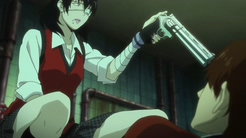
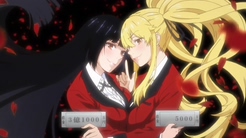
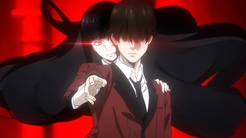
Kakegurui Review – 61/100

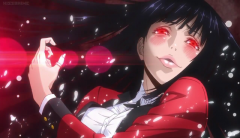
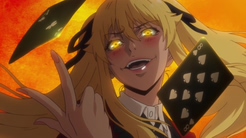
This show is one that makes conventional reviewing difficult as your enjoyment of your series will likely determine on highly subjective factors. For if I was to put this under scrutiny on matters of f-plot, setting and characters then it will end up lacking in all categories. The plot is just watching Yumeko face members of the student council in a series of gambling games. The setting is absolutely ridiculous with a unnecessary school setting that makes no sense whatever considering what happens in the series. The cast is made up of people whose main trait is being crazy in some form or another and go over the top with facial expressions. Yes to judge this show on these qualities would have it fall low indeed but that is not what makes a show enjoyable. I believe that style over substance is what I am getting at here as Kakegurui works mainly due to it’s presentation.

While gambling is the focus of this anime, the games themselves don’t really amount to much as we never really get a chance to look inside Yumeko’s head and see her work out plans or countermeasures. If you have just finished Kaiji and walk into Kakegurui expecting something similar then you will be undoubtably disappointed. For the common factor here is to see how smug the opponent is in how they rigged the game and having Yumeko eventually unveil that she knows about it and manages to win. Often putting her previous smug opponent down a peg.

Thus the satisfaction is in seeing the over exaggerated fashion at which this all goes down. The music, animation and art are often as over the top as possible with the soundtrack sporting trumpets and jazz like music while the characters faces distort into vile contortions be it in victory or defeat. Every character is crazy and none are crazier than our lead who often elapses into sexual excitement over the idea of risk. This aspect can get admittedly too much as it’s used to push fanservice as characters essentially orgasm over gambling and there are quite a few times where in female characters seem to be visually seducing each other in what would be otherwise a normal conversation. Yuri undertones are apparent here quite blatantly despite none of the character being made clear to be homosexual nor interesting in anything besides gambling and their own ambitions.

As such this is a series that I can’t really provide value through words, instead I say if you show interest then check out the first episode as that acts as an example of what you will receive for the entire series. However I would warn you to not expect something more than that as Kakegurui is only good at one thing and it will not move far from that one thing. This is a series about a crazy gambling girl showing smug assholes their place. That’s all you are going to get. But if you are fine with that then this is the show for you. Personally while i enjoyed it at first, I began to grow tired of it in the final episodes of the shows run so my rating for it’s that it’s a decent distraction but not one I will return to.

Re:Creators – 22 [Re:CREATORS] – 75/100

There was never going to be a epic fight with every creation squaring off against the overpowered and invincible Altair. That possibility died when the creators threw the copycat of Blank at her only to have that plan backfire horribly. Besides, it wouldn’t have been a satisfying conclusion to Altair’s story to have her be brought down by the remaining supporting characters given that Selecia disappeared in the blue ether beforehand. Predictably, it comes down to Altair convincing herself that the world is worth saving and the conversation between Altair and Setsuna was really well done with both voice actresses going back and forth with their arguments about placing the blame on the world that was so cruel to Setsuna. There is a parallel between those two and how Bltiz choose to switch side when confronted with the opportunity to gain back the very reason for their motivation to end the world. As well, the transformation from the PPSh-41 machine gun to an actual violin is a visual symbolism of her ultimate choice to create and not destroy. As the far as the main plot goes, Re:Creators is finished as its antagonist goes happily off into sunset with her creator into their own world of adventure and fun. It’s not the best twist ending but I’m perfectly satisfied with how the series build itself up to that point and concluded it.

After everything’s said and done, the final episode wraps up with everyone having a celebratory meal, saying their goodbyes and reflecting on past sacrifices. The creations go back to their own fictional world but Meteora, due to the untimely death of her creator, which begs the question of what happened to Magane. Curiously absent from the final episode, I would infer that she would have lost her powers just like Meteora and go on to become a regular trolling schoolgirl. It’s not quite the ending for those who wanted to see justice be served for the murder of the shopkeeper and her own creator but I think it better to see her leave quietly than having a upbeat epilogue scene for her. The ending summarizes the points of the series in that creators will keep on creating even to the point where a creation, like Meteora comes full circle and end off the series with her own work of Re:Creators.

Re:Creators marks the third series that Studio TROYCA have made with Aldnoah.Zero and Sakurako-san no Ashimoto ni wa Shitai ga Umatteiru being the first two. While their original mecha show was a wild ride of disappointment that really needs more time to flesh out its characters and concepts and the episodic nature of its investigative show took away from the overarching narrative, I felt that they succeed in having and executing an interesting premise while having a few flaws. The biggest glaring issue I had was the uneven pacing in regards to the infrequency of actions scene and mid-series lull of dealing with Sota’s underlying guilt and laying of the foundation for the Elimination Chamber Festival. Also, as Rei Ham (Writer of Re:Creators) regretfully mentioned in an interview, Mamika exited far too early in the show as she was probably one of the best characters arc by growing out of her naive magical girl persona. Her replacement of Hikayu wasn’t all that great despite the creators having fun with her backstory and power-ups. Finally, the 3D stilted animation of the mecha hasn’t been improved over their effort of Aldnoah.Zero and just cements the reality that 3D and mechs don’t mix (Knight of Sidonia is an exception). Aside from those quibbles, I enjoyed my time with Re:Creators over the past half year and looked forward to watching it every week. It looked nice, had that sweet sweet Sawano soundtrack and always had something interesting to say about the nature of artistic creation.

7.5/10

Sakura Quest (Summer 2017) Review – 79/100

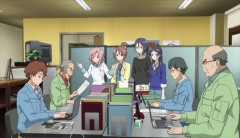
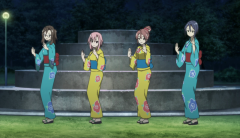
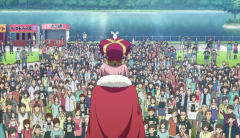
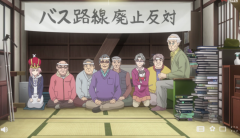
Conceived as a third installment in a loose P.A Works trilogy about young adult girls in working environment, Sakura Quest both knows its target audience well, and has some big shoes to fill. After all, many have considered Shirobako an install classic for good reasons. As it turns out, Sakura Quest is more on the level of Iroha than Shirobako, and it still has some of the same issues from its predecessors, namely it’s still too optimistic, hence comes off as sometimes unrealistic outlook to its subject matters; and it tends to rely on sitcom slice of life format (mainly in the first half) that feels unfocused and inconsistent at times. Despite these issues, the truth remains that Sakura Quest had never been bad. The show has some snappy, realistic dialogues, easy humors and it never treats their characters lightly. The show is at its best when it creates problems that force the main cast to reflect on their own issues, then learn and grow from their own issues.

Sakura Quest’s structure is split into two distinct halves. The first half focuses on several mini-arcs, where the Tourism Boards undergo many events that attract more tourists visiting Manoyama, at the same time give each of the main girl a character arc to flesh out who they are. Many events, from assisting filming production, matchmaking tours, to the TV programs about our girls and hosting a popular rock band to town, are exciting and at first glance, it gives an illusion that the Tourist Board has achieved its success. In part, yes, as the number of visitors consistently goes up, but when all is said and done, the town remains a ghost town with no lasting impact whatsoever (I love this image: the next morning, all the tourists are gone, only trash and coupons flying around). The decision to concentrate on main leads’ own problems and their dynamic together in the first cour, now in retrospect, actually serves its purpose since we come to care and root for them well before the second cour pushes forward its main storyline.

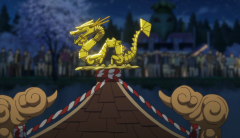
If you consider the first cour as “inward approach” (forgive me for the lack of more academic term), which is attracting tourists to visit Manoyama town, the latter half can be seen as “outward approach”, as the Tourism Board reaches to the local needs, goes to rural mountain where a small elderly community lives, reviving an abandoned school for public use, and strengthen Shopping District’s business. For me, it’s a much more realistic approach and the journeys along the way are all worth spending time for. You can compare two festivals – the Manoyama Founding festival and the revival Mizuchi festival for their differences in approach. The Mizuchi festival is made for the locals, by the local and achieving that level of enthusiasm from the villagers is something worth rewarding. While there are still some unnecessary plot points (here looking at you the merger of Manoyama town), Sakura Quest did indeed end on a satisfying note. This might be the end of the Queen’s run and all other girls, but it’s clear that it’s just a beginning for the Manoyama’s local to grow stronger.

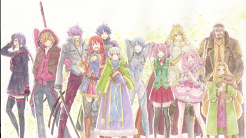
Our five girls: Yoshino, Sanae, Maki, Ririko and Shiori play a big part of adding Sakura Quest’s identity. All these girls have their own charms, play off well with each other, and most of own develop greatly at the end of the show. Sakura Quest’s biggest strength lies in its ability to address the insecurity of young adults regarding their jobs, their place to belong, and their choices of life. Many issues it touches (most notably Maki’s unsuccessful acting job) feel achingly true and honest. The supporting cast, from Kadota, Chitose, to that kid Erika, add their own marks to the show’s big picture and it’s a joy to watch such a huge cast coming together for a big project. I bet Sandal-san will enjoy a great fan following as he steals the scene every time he appears onscreen. Thanks Alexandre Cena Davis Celibidache for compiling such a fantastic artbook about Sakura Quest.

P.A Works does a pretty decent job production-wise for Sakura Quest, although in some episodes (especially the final episode) the character models are a bit off. The soundtrack and the voice acting are all pretty spot on. Only a year has passed in this Manoyama town but it has been quite a journey. Every girl has their own dream to follow now, and life continues to go on and I know there will be a time that the five of them will meet again under that sakura tree they planted together. As a conclusion, allow me to quote the final preview speech from Sandal-san because it sums what I feel so well: “It was a long, long trip, and we’re coming finally to the end of the journey. Thank you, Manoyama and Chupacabra. And thank you, 5 EURO”

Castlevania Season 1 Review – 70/100

Upon hearing that Castlevania would be getting an animated TV series my first reaction was that of unpleasant surprise. Part of the reason was because of the video games infamous history with adapting their stories to other mediums but my main reason was that being familiar with the Castlevania games, I knew the story was by far the weakest aspect. I have played a number of Castlevania titles though my main experience is with the so called “Igavania” titles which helped birth the Metroidvania genre. Let me say that story was not the reason I came to love the franchise, as a matter of fact the story rather went beyond “Dracula has revived, go kill him again.” However against all odds this series has managed to pull a rather enjoyable story out of the bare bones that was present in the game it was based on, Castlevania 3. I believe the main reason behind this story turning out to be a good video game adaption has to do with the writer being a famous comic writer by the name of Warren Ellis. Not being much of a comic fan I have only read a couple of his works like Planetary, Transmetropolitan and Crecy but based on those I can tell he has skill.

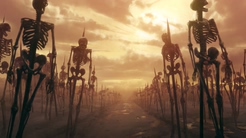
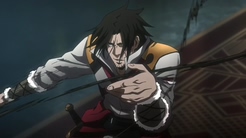
The story of this series isn’t anything to gush over but does serve well in using the little story in the games and fleshing it out to a better degree. It reminds me a lot of old anime ova’s from the 80s with its high level of violence and gore while sticking to a simplistic but enjoyable story. Make no mistake this animation isn’t for children with swearing and corpses abound. I admit that with the large amount of anime I watch it is rather refreshing to experience something that doesn’t have the usual Japanese tropes. Our main character Trevor Belmont is the one to get the most screentime in this short hour and a half season and he certainly makes for a fun main character. Starting your introduction with a drunken brawl is certainly a plus in my book and he is a good mix of playful and skilled without delving into overpowered territory. Other characters didn’t quite get as much screen time to really get a grasp on their characters but they were believable enough to get invested in.

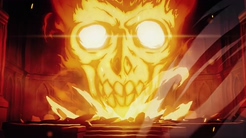
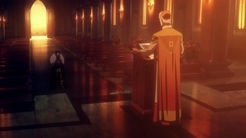
The main cast only really assembled in the final minutes of the last episode. The villains on the other hand were on the weak side with the demons being sidelined by the church who really get treated as ignorant and greedy as all hell. Not saying it’s an inaccurate depiction but they do come off as rather one dimensional when any priest is automatically a murdering scummy psychopath. I hope that with this there role in the story is more or less finished with the end of the season as the first episode does nicely make Dracula’s motives much more compelling. He sadly didn’t get much of a role in this season but clearly the story wanted to focus on a minor villain first before taking on the main one. Our main villain for this season happens to be a bishop and I can pretty much sum him up as the same character as Frollo from Disney’s the Hunchback of Notre Dame. Religious, insane and so mistakenly sickeningly self righteous that he makes you want bash his head in with a sledgehammer.

This “Season” is only four episodes long and feels more like a hour and a half pilot episode. If I had to guess I would say that these four episodes were to gauge interest in the series due to the negative view of video game adaptions and considering just how quickly a second season of eight episodes was greenlit it looks like the response was quite positive indeed. In the continuation of the series I hope they keep up this level of quality but I also hope that they have much more monster variety as the enemies were primarily variants of demon creatures. Part of what makes Castlevania great is the huge cast of enemies from monster movie and myth. You didn’t just fight demons in Castlevania but ghosts, goblins, fishmen, werewolves and a whole host of monsters including Death himself. It would be a massive shame for the series to not capitalise on that and instead keep the monsters as dull demon creatures.

Animation for the most part is excellent with some occasional stumbles but excelling when it needs to. Music overall was fine but I do wish for a rendition of the iconic Bloody Tears or Vampire Killer songs. For fans of the games there is details sure to make you smile such as platforming on clock gears which I am sure any Castlevania fan is familiar with. However this doesn’t require knowledge of the games to be enjoyed either as the story very much stands on it’s own. Overall I would consider this to be one of the strongest Video Game adaptions to date though that may not be high praise considering it’s competition. If you happen to be burned out on anime or just looking for a nice change of pace then I do recommend checking this show out as it’s short and sweet.

Tsuki ga Kirei (Spring 2017) Review – 88/100

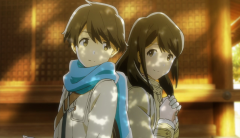
It’s hard for me not to go overboard on Tsuki ga Kirei: out of all the show I’ve followed this season, I resonated the most to this one; but even when I’m judging this show objectively, Tsuki ga Kirei is one of the most perfect one, in a way that it achieved exactly what it set out to do, and achieve it flawlessly most of the time. The story that they tell – detailing the first love relationship of our young Kotarou and Akane – is decidedly simple, mundane but honest that it feels more like a love story taken from young best mates. It has that “sincere” quality, something that the anime medium often cranks it up to the max with “moe” and exaggeration everywhere. Not here. Tsuki ga Kirei has great flair of visual storytelling (something that benefited from being an original show, they don’t tie up to your usual LN and manga visual cliché), using show-don’t-tell approach that often focus on small moments and little gestures than big emotional melodramatic scenes. The characters never play off their roles, they’re the most natural group of kids that feel exactly kids their age: naïve, inexperience and pure. This show ends up at top of its genre as I consider it the most effective romance anime out there. In short, I freaking love almost everything about this show.

What Tsuki ga Kirei will be remembered the most for lie in real depiction of first love relationship. The more you watch romance anime, the more you surprise at how simple, yet distinctive achingly honest this show aim for. Ordinary romance anime would spend its entire time on how boy gets girl, throw in some other love interests that make them realize how much they mean for each other, and if we’re lucky we might actually see they confess to each other in the end. Tsuki ga Kirei is an entirely different beast, we got the confession right at the end of episode 3, and from there we follow every stage of that relationship and see their love progressing. Moments like Kotarou had to search the internet on what people do when they’re dating, finding a way to spend time alone together, or thinking how to continue their love after graduation – all feels so real and progresses so naturally that I suspect anyone who have been in relationship will find a thing or two from this show that speak directly to their experience.

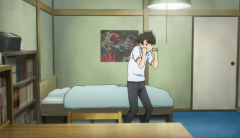
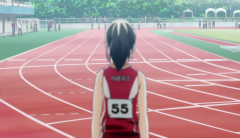
Moreover, they understand that in order to make this relationship work, we have to relate to Akane and Kotarou and they did a damn fine job at that. Both have their own lives and their own troubles to deal with, so we can see them as characters who have distinctive personality, with well-defined goals and struggles. In one of the episode, they both reach a new low in their personal dreams, as Akane underperformed her track competition and Kotarou got a call from a real publisher just to receive an advice that he had no talent in serious writing. Then in small moments when those characters act without much thinking, it’s a treat to see how their personality plays out: I love how every time Kotarou get excited he will punch the light’s chord in his room, or Akane whenever she gets nervous she will press that pushie hard. Their circle of friends also adds to the naturalism of the story and although they aren’t developed much, they clearly belong to this universe.

The visual storytelling is another great strength of the show. As both Kotarou and Akane are introverts and tend to keep their feelings inside without saying out loud, it’s showing their subtle gestures, their glances that we get to know a lot about them. As a result, this show is decidedly quiet, there’s not much monologue going on but that is the reason why this show feels just like in real life. The designs are simple, again emphasizing on subtle over excessive details. Great shot compositions everywhere. This is one of the rare show where I can argue that the visual components play as an important part of the show and they achieved it almost exactly what they’re aiming for.

Another factor that feel like a character itself that I feel the need to acknowledge, it’s LINE. Just like kids their age, Kotarou and Akane’s main communication is through LINE and we witness a huge chunk of amount that they exchanged through LINE, as they are, no shortcut. It’s just like how real kiads would do and to achieve this effortlessly is no small feat at all, so congrats to Tsuki ga Kirei for its respectful use of social chatting. The shorts in the end also a part of this show’s identity, as they depict the love relationships from Kotarou and Akane’s friends with more bawdy and comedic tones, which in turn made that world so inviting to watch.

Although the show succeeds most of the time in term of production values, I can still see some production troubles from the show and the delay in airing in later half further reflected that. Tsuki ga Kirei does suffer from that as in one of the episode the production values just fall apart. But I’m genuinely surprised that after that disaster episode they managed to keep up a consistent quality and the more I know about their trouble backstage, the more I’m in awe about their efforts. It’s obviously a product of many sleepless nights from the production team so I thank studio Feel for their outstanding performance.

And all of what I was written above was just how I access the show objectively and that kinda demerit one of Tsuki ga Kirei’s most appealing factor: it’s right down charming that touch the hearts of viewers with its bright and delightful portrayal of pure love – I don’t deny I fall under its spell, actively care for the couple and goddamnit I just want them to be happy together. Tsuki ga Kirei is breathtakingly intimate in narrative scope and I know I will remember the show and its characters very fondly. Arigatou.

Seikaisuru Kado Review 51/100

Seikaisuru Kado was a title which caught my attention for a number of reasons. For one it’s visuals showed not a single teenager in sight and a cast mainly consisting of working adults. Another is that it deals with a premise not often tackled in anime, Philosophical Science Fiction. The story features an alien being who lands on earth and gifts humanity with revolutionary devices which could throw the economic, social and political climate into pure chaos. Our main characters are a Japanese Negotiator by the name of Shindo and an Alien being from something known as the anisotropic who refers to himself as ZaShunina. While I wouldn’t call the cast great, I do say they perform the needs of the plot well and are interesting enough to engage the viewer. Well up until the point where there characters are forced to change due to the direction of the story. There are examples of anime tropes which only cheapen the serious atmosphere of the stories tone such as a scientist girl who eccentricity is at a far too unbelieveable level. Though sadly anime tropes show up in other parts of the show as well, mainly in the rather rushed romance of the second half.

A positive aspect of this series is that it has some of the best CGI integration I have seen to date in a anime. In most series CGI is jarring and breaks immersion but here the CGI is included well enough to keep things looking natural. It does use a combination of 2D and 3D visuals and it is noticeable when it changes between the two. However I never had a moment watching this series where I was just taken out of the experience completely by shaky 3D work. The CGI also works wonders in displaying ZaShunina’s alien nature as his cube structure is a pure prism of visual marvel. The music likewise processes a grandiose and majestic feel which illustrates how this is the turning point of mankind. On the technical side of things I would consider Kado to be a success.

But when it comes to a storytelling standpoint this is where Kado fails. At first things look good as there is a focus on the diplomatic systems reaction to the sudden arrival of an Alien entity, while the Alien itself is slowly growing accustomed to human ways and learning about human culture. From the outset it feels like Kado is revving up to really dive into some deep topics but as the series continues you will find that these topics continue to get pushed into the background and not addressed. The series focuses more on ZaShunina introducing the amazing device and then implementing it. But when it comes to the long term ramifications to integration of such advanced technology, then this series instead decides to ignore it and move on to the next gift. You see the introduction and integration of the device, but never the conclusion. It appears as though the writer was never interested in these ramifications but instead in pushing some generic themes of humanity instead.

In the end Kado is a story that starts with a lot of potential and looks to bank on that potential within its first six episodes. However it moves away from a multifaceted issue to have a more black and white conflict instead. The story and characters suffer for it and it concludes in an ending that’s nonsensical, disappointing and terrible. As a result Kado is a series which most would likely regret watching as you see great ideas tossed aside to portray a stereotypical good vs evil conflict. Ultimately Seikaisuru Kado is evidence that just because someone is writing the story does not mean they know the best road to take it and in the future I hope there are those who see just what this series could have been so that they can fulfil its lost imaginable value.

ID-0 (Spring 2017) Review – 81/100

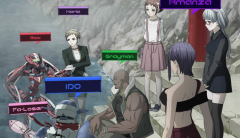
Here comes one of the most under-appreciated anime of this Spring season. ID-0 has many hassles that keeps viewers away from watching it: Netflix exclusive, full CG animation and a plot that just plain weird and a bit incomprehensive at first view. I originally took it as nothing more than fun spooky little-seen show until I realized that ID-0 is a well-crafted one. Both in terms of productions, worldbuilding storytelling or characters’ development, they’re all above par. ID-0 also succeeds on introducing their main concepts that not only plausible on the surface, it hints on deeper implications regarding those concepts and the show handles those issues competently. The discovery of the Orichalt – the red crystalline mineral that floating in space – has allowed humanity to travel through space and live outside other planets. In order to look out for more Orichalt, human creates “I-Machines”, the giant robot that is functioned by transferring human consciousness into robot’s operating systems – a robot body with human mind. It’s important to remember those two details since the show explores its theme from there.

The first implication from the show’s concept, which perfectly aligned with the lead Ido’s main character arc – is how much of this I-Machines version independent from its host? Are they the same identity with the host body, or are they their own selves? Normally, it shouldn’t be a problem since human uses I-Machines as a means to perform work in harsh environments. Loose the I-Machines and they will trance their mind back to their original body. No big deal. The Escavate team, a team of Orichalt-pirate, contain many exceptions to that rules. They lost their physical body forms due to different circumstances, thus the I-Machine bodies are their owns now, called Evertrancers. Ido has no recollection of his past, and his ID was erased (hence ID-0). Throughout the series, it’s his personal journey of finding out who he was, and whether or not he’s still Ido the Excavator or the embodiment of his past real self. Another member of the group, Rick – another Evertrancer, adds some more layers regarding this “self-existent” theme as well. His current soul is a copied version of his original consciousness, meaning he has no “real” body and no “real” soul, he’s Rick yet he isn’t Rick. He carries the same personal traits as the original Rick, has the same memory but he’s ultimately his own individual now. Their current I-Machine versions are who they are now, with the consciousness that run totally independent from their former host.

And I just barely touched the ice-tip of ID-0 themes, so let’s dig in further. Now looking back, I really love the concept that Orichalt is already something irreplaceable and invaluable for the humanity from Day 1. Everyone keeps talking about it, all their activities aim to get more of those Orichalt to begin with. It just shows how humanity has taken Orichalt for granted, so that when the Rajeev (the wandering planets) appear, we can sense the high stake of the situation. I also enjoy the philosophy behind this Rajeev. Just like how Joker was inspired to challenge the very concept that Batman has built, for everything that too good to be true for our human race, there will be some sort of drawback, a kryptonite that attack directly to the advancement that we gained. These wandering planets’ main purpose is to consume Orichalt, and they have developed their own intelligence on top of that – a worthy enemy to destroy the human kind. Although the solution come a bit far-fetch as best: teaching them the love of humanity so that they can learn about humanity and leave us alone (Yes, you heard it right), I still firmly believe this is a well thought-out main conflict for this series.

ID-0 also suggests a far darker implication to this Mind-Trance system, albeit a bit under-developed as they don’t have time to progress that angle. It’s the “immortality” theme. A secret organization, using the techniques as a mean to transport their mind to their younger clone to archive living immortally. For me, this actually sounds very intriguing because it’s entirely possible. If there is a second season of ID-0 I would love if the show goes darker and focus on these themes like this. Seriously, there is many interesting variables to the concept that I really want to explore more. All of that jut to highlight how well-crafted the world settings are. Well done, ID-0.

Now, I realize that I have delved too much on its themes without giving you an actual critique, so I will do just that below. ID-0 is a prime example of having a great pacing. The story almost never drags, while still allowing many of space for the characters to breathe and all the developments progress quite naturally. In other words, top-notch. The cast’s overall chemistry is another highlight for me. They have easy chemistry and they bounce off each other extremely well. It helps that each of them has their own voices so when the show putting them altogether, their diverse voices are more than enough to shine through. They’re not the deepest bunch by any mean but nearly all of them have enough development to work with. I’m a bit sad that Maya isn’t given enough spotlight in the end (this is, after all, Ido’s story), she serves more as our lenses to that brand-new world more than a flesh-out or deep character, but I am fine with that. In other spectrum, the main antagonist of the show, Adams, unfortunately is one of the worst character that brings the show down a note. Apart from his obvious inferior-complex to Kane and his eight-grade symptom of the world has to revolve around him, he has no real personality to speak of and he terribly overacts all the time that it’s hard to take him seriously. The sequence where Adams reveals Ido’s past is a kind of convenient and way to-your-face approach that personally turned me off, but other than that obvious misstep ID-0 manages to maintain its beat thoroughly.

The CG animation does feel stiffs at times and it takes some time to familiar with the animation, due to its mecha robots that floating in air- premise, but this is one of the few series that not only the CG animation is done right, it has its purpose; as robots and space, and spaceships are all components that CG can be used the most effective. In addition, the character designs are attractive, characters look their ages and even the I-Machines versions have so much personality for each member of the team. Sanzigen continues to be a studio that has its firm grasp on making convincing CG anime so thumb ups for the studio for this amazing anime. This is a solid anime offering, a firm 8/10 rating for me. Definitely the best show that no one watch this season. Now, I just hope that Netflix knows what to do with this little gem.

Grimoire of Zero (Spring 2017) Review – 77/100

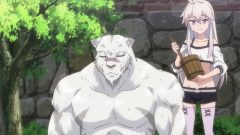
I remember, back in our first impression of this series, Aidan remarked that Grimoire of Zero isn’t your typical LN-adaptations, but he didn’t know what to make of it. To be honest, after watching an entire cour, I’m still unsure what to make of it myself. This show has some serious flaws, yet despite all that I never find myself losing interest in it. I guess the biggest strength this show offers is the rock-solid chemistry between Zero and the beastfallen Mercenary, and in the end, I do get out of it wanting more of these two’s adventures. They also put some serious thought into its sorcery world building and overall while Grimoire of Zero can never raise above exceptional level, I have quite a good time watching it.

One of the first head-scratching factor about this anime is the decision to adapt the whole full season for a single first volume. I watched a fair bit amount of Light Novels-adaptations anime so I know that usually it’d take between 6 to 8 episodes for one volume AT MOST. Here they intentionally stretch out to 12 episodes, meaning some of the time the plot has too stretch a bit thin; and for my money with all the developments, they could condense the story into 6 episodes – half of its actual length. For example, Grimoire of Zero took quite a bit of time until we get to meet Thirteen (episode 5), then it took 3 whole episodes for Mercenary and Zero to finally reconcile. On the other hand, stretching the story enhances the slice-of-life feel in the first few episodes, and making the show much more room to breathe. That decision of adapting only first volume, to sum it up, has a fair share of good and bad points, but that was one of the reason that made Grimoire of Zero different from its LN fantasy offerings.

Second factor that baffled me is the show’s tones. I don’t know how to explain this clearly, but I always feel this series is mono-tone. When they try to mix with other tones, it’s embarrassing. They failed miserably at comedy because of that mono-tone. For the most glorious example, the sequence where Zero and Thirteen stopped in the middle of the fight for lunch break was so off-putting it was actually (unintentionally) hilarious. Or when it wants to tackle seriously about the dark, cynical side of human (part when the girl using the Mercenary to protect herself from other beastfallens) or the true flesh-lust nature of beastfallen, it didn’t leave much of an impact. Other times, when the show tries to amp up the romance (“what is Kisssss?), it falls completely flat. Yet, despite all that, the tone the show usually goes for – not quite slow, methodically but not action-packed either – is always strong and engaging that it still holds my interest till the end. Weird, since I can’t still put my finger on what exactly the show’s general tone is.

Then the characters, which are decidedly a mixed bag all around. All the main players are developed smoothly throughout its run. Apart from the amazing chemistry between Mercenary and Zero (which for me light up the screen every single time), Albus, Holdem, Thirteen and most notably Sorena all have their time to shine. Other characters, unfortunately, are quite plain and sometimes quite offensive (I’m looking at the guy who has a fetish for Zero’s clothes) and this is unforgivable considered that the show has so much time to develop those characters if they really want to, but they just didn’t give a damn. There are inconsistencies at the end for example: the Sorcerers of Zero attack the kingdom to kill Thirteen, and the guards fight back. After Zero negates the use of magic, you expect them shaking hands in peace immediately? *you might say I’m a dreamer – but I’m not the only one lala*. Albus and Holdem are a good addition to this arc, strong enough for me to care about them, but just about enough so that when they gone I don’t miss them much. This, after all, is the adventures of Zero and the Mercenary.

The sorcerer and witch backdrop is an intrigued world building itself and at first I enjoyed seeing there are many races from completely different backgrounds that live independently in this world. Not sure if this is just this arc, but later on the show goes heavily on those sorcerer’s themes which detail the division amongst the witch’s world: the Sorcerers of Zero, the Rouge witch and Sorcerer of the State; it doesn’t bring much impact. Moreover, I do feel that the final reveal revolving Thirteen’s role is a bit of a convenient one, and despite the whole witches’ war just don’t do much to me, I still find it provides some great details regarding its world settings. So, great details, but shaky development.

In term of production, this show is slightly above-average. There nothing exceptional to speak of, although the animation quality is rather consistent. In the end, one thing for sure that Grimoire of Zero never fails to be intriguing, whether or not it is intentional is up for debate. Despite its uneven approach, I’m still looking forward for its sequel, as the main catch of the series, the chemistry between Zero and Mercenary, will become more prominent in later volumes. And honestly that is more than enough to get me on board.

Uchoten Kazoku Review – 94/100

(Note: Since psgels didn’t give his final review to the first season, this review is for the entirety of Eccentric Family. If I had to grade the second season alone, it’s 90/100).

Doesn’t matter how you look at it, the Eccentric Family is a unique show, in a way it feels and tastes like no other shows out there, both in and out of itself. Everything surrounding it feel magical just like its world: the series is the only anime show that promoted as a city ambassador (Kyoto Special Goodwill Ambassador), the second season that no one see coming (especially at the time the first season ended the second book hasn’t even written yet), P.A Works studio became the leading unit in production committee of this second season, meaning they are passionate about this series and they have total artistic control over it (as for how influential the anime studios usually have over the decision of their work. Nil. Most of the time they are slave who draw and deliver what were told. Sad fact). This is one of few series where I can see a lot of love was put into those details, from the love of their characters to its rich world settings, to Yasaburou’s various adventures. Of course P.A Works does a magnificent job to visualize that world, but I also credit the success on Tomihiko Morimi’s adept writing. Eccentric Family is at heart a character-driven series, and he’s simply one of the best in this industry when it comes to character writing: eccentric cast of characters who distinctive, whimsical but always insightful and intriguing. I have a lot to say about this world so let get right down to it.

The Eccentric Family’s first and foremost strength comes from its magical-realism Kyoto world where human, tengu and tanuki live together in harmony. I am not at all exaggerating when I say that this setting is my personal favorite anime settings ever. Magical-realism has always been right up my alley: the mundane, ordinary world that mixed in with magical elements that serve as a normality to their world. And sure, in this world a lot of strange things happen: tanuki who transform into human shape and fool around until they get caught and turn into a hot pot tanuki, human who float in the air in broad daylight, a tiger (and bear) appear in the middle of the city. Just by the look of it, this world promises to provide a lot of fun, but this show even goes much more further than that: all the settings that not only gorgeous to look at, they all have strong sense of personality that feel like they get stuck in that specific moments: when you see the rooftop you immediately link to Benten, Yasaburou and the moon; when you see a flying house you would think right back to the Daimonji Festival and the stupid fights between Shimogamo and Ebisugawa’s family.

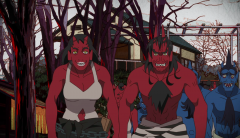
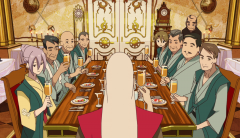
And to support for both its sense-of-wonder attitude and its magical-realism settings, The Eccentric Family is a masterclass at portraying an impossibly huge interior space that looks much grander than it supposed to be***: the Painting of Hell that literally pull you through hell with Onis doing wrestling and eating ramen; the 3-stories bus that has an upper floor of open air onsen and bamboo pathway; or a shogi board that can suck you into a secret room. Not only that warped sense occurs in space, it happens in time as well. There is a 2-epsiode worth of playtime that dedicated to Yasaburou’s various adventures in a span of a single day, where he enjoyed a public bath, went through hell, watching Oni wrestling, enjoyed mixed onsen, having crazy dinner party and witnessing his uncle got shot. See, those events feel much longer than it supposed to be. This is on purpose, of course, since what is a better way to highlight the enjoyment of busy carefree life by crazy events one after another?

In addition, the Eccentric Family’s greatest strengths come from its characters. The first season contains a great diversity of cast, but that quality really shines through in the second season as the new additions not only fit very well with the old cast, they even outshine them in many moments. Each of them has their own voice, has great arc to develop and their chemistry are natural, warm and insightful. Here comes one of the decision from the P.A Works that I find worth applauding, they never probably introduce a new character to us. Most of the time the new characters just walk in and have a normal conversation with our main casts and we have to work out their name and their role to the story. It helps that nearly every single one of them has their own way of speaking and their own personalities, so it’s not that hard to differentiate one from another, despite a relatively huge cast. It also helps that through we can tell so much about their characters through subtle gestures, so much as the Eccentric Family is one rare show that I can fall for new characters within the first few minutes (I remember you very fondly, Seiran). Our main protagonist, Yasaburou, is an interesting character to follow, throughout the course although all we see about him is having as much fun as possible with no consideration for responsibility, he takes care of everyone arounf him in his own way and in the end, he reaches a personal grown on balancing between those two factors. It’s up in the air if he’s constantly thinking of everything or constantly thinking nothing at all being led by his fool’s blood; but for him anyway, these are the same goddamn thing.

But by all mean, even 95 percent of the time this show treats their characters thoughtfully, the remaining 5 percent whenever the idiotic twins and Soun appear, they unfortunately drag the show down. These characters are the type that we all love to hate, so they possess their annoying traits… all the way, being annoying for the sake of annoying. I have since warmed up to Soun, but the way he came back to life kind of demerit his meaningful death. Another factor that happen in second season, is that sometimes they reprise the events of the first season (the Daimonji festival, the Nise-emon election), and whenever they do that they can’t bring the same impact as the first and seem like they rely on the beaten path.

While the first season focus more about familial bond, the responsibility one would strive to do versus the fun one has to experience through life, the second season follow that freedom sense, but touch on other themes such as self-identity (in term of Nidaime and Benten: one is a tengu who refuse to be one, the latter is a human who wants to become a tengu. None of them are happy), and the fate of love. The romance part is what surprise me the most as I would never expect I would ship for almost all the lovey cute little love here. I also give my hat off to the character designs, as each of the tanuki have human and tanuki counterparts, and we have such huge cast here but nearly every one of them is distinctive and attractive. The animation is thoroughly consistent and the music is really, really well done. In term of production value, I really have no complain.

The Eccentric Family has a lot to recommend on, I would argue that distractors can read the show as un-focus at times, because it feels like they set up for one crazy set-piece after another without a central conflict; but take heed that the majority of its 2-season runtime is about Yasaburou wanders around his city, tries to live the life to the max so it has its merit. I just say this simply; this show is brimming with love in every scene and with shows like this I know why I fall in love anime medium in a first place. The Eccentric Family already has a special place in my heart.


***If you want a real-place equivalent to this, I’d say it’s like the Old Quarter in Hanoi. From the outside you can only see a small pathway between 2 old houses that only wide enough for a bicycle to get in, then you get through that pathway, turn to some small alleys, go up-stair, pass through some small apartments and TADAH: a bookstore, a store and a café located inside all that maze. I was utterly amazed but there’s no chance an outsider would know such a place without the help of the local. And I do worry what going to happen if there is a fire there?