Porfy no Nagai Tabi – 39


Short Synopsis: Porfy travels.
Highlights: Just when you thought that the background artists couldn’t get any better, they surpass themselves.
Overall Enjoyment Value: 8,5/10
Okay, the summary can be very short this time, seeing as this is one of these episodes where hardly anything happens. Porfy travels, and he once meets an angry farmer because he picked up olives that reminded him of home, and he runs into a woman later, who also lives alone just like Porfy. This episode really was all about its atmosphere, and the psychological aspects of travelling, and it did an excellent job at that.

Porfy finally enters France, but at the same time he also lost Mina’s picture, the only thing he had to remind of her. He also gets quite arrogant when he talks to the farmer, and I finally noticed that his development hasn’t just made him stronger. He may have matured, but he throws away all reasons when he’s reminded of his sister, and for the past number of episodes, this still hasn’t gotten better (foreshadowing, anyone?)

Also, was it just me, or was the woman Porfy ran into some sort of subtle revenge for Fantine in Les Miserables, how the creators weren’t able to show her becoming a prostitute due to the censors? It’s never explicitly said, but a lot of hints pointed towards that woman being some sort of prostitute, especially the way in which she wouldn’t let Porfy enter her car. It’s a very subtle addition from the creators: the children are never going to notice it, while it’s a bit of extra realism added for the adults.

And oh my god, I already suspected this, but the background art was absolutely gorgeous in this episode. Especially the time Porfy spent in the forest, and that final beautiful shot of the town at the foot of the Alps was just awesome. In any case, this definitely was the quietest episode of Porfy yet, but its storytelling was wonderfully subtle.

RD Sennou Chousashitsu Review – 87,5/100


Also happily adding to the theme of “fooling the viewer”, which returned in quite a few series for the past season, is RD Sennou Chousashitsu, or Real Drive. The set-up promised to be awesome, uniting Masamune Shirou, the creator of Ghost in the Shell and Ghost Hound with the director of Chevalier and Rurouni Kenshin – Tsuiokuhen. It promised to be an epic science-fiction action thriller-something. So, what did we get? A series that combines science fiction with slice of life and a few politics here and there. That’s not something you see everyday.

And indeed, Real Drive is probably the most original series to have aired in the past half year. It’s not about action at all. Instead, it just wants to present its image of the future in about sixty years from now. It’s really science fiction in its truest sense: it explores the current technology, and predicts how it’s going to evolve through the course of time, and most importantly: how did people learn to live with these technologies, which is where the slice-of-life part of the series comes in. This series also sets itself apart from most other science-fiction series by presenting a future image that’s overall positive in its message, compared to most other of its kind, which feature some sort of post-apocalyptic setting. Real Drive instead focuses on the creative expressability that people have gained, and highlights the disadvantages that come with these capabilities, instead of the other way around.

You also really have to admire the guts of this series: never have its protagonists been so different from the norm: the two main characters are a slightly overweight girl and an eighty-year-old guy. Normally, characters like them couldn’t even dream of acquiring any important role in anime, due to some strange rule that dictates that every female needs to have the looks of a J-pop idol and ever male needs to look young and hot. It’s taken quite a while, but finally a series comes and shows that you can make characters that don’t have perfect bodies look great. In fact, the entire series looks great: the few fights that appear are well coordinated and realistic, the CG is beautiful at times, and a lot of imagination went into creating the visuals. The soundtrack is also rich and complements the scenes very well.

Alas, this could have easily been a masterpiece if it wasn’t for some problems this series stumbled upon along the way. What we have here is a series with mostly episodic stories, and a large story at the end. That’s fine and all, and the individual stories are really nice to watch, but they’re also very unbalanced. They focus way too much on one character: Minamo, and leave all the others a bit behind in development and background. The result is that Minamo turns into an excellent character, but when everything needs to come together at the finale, this rather fails, because some of the major characters weren’t fleshed out enough. In the end, two unimportant characters that have nothing to do with the story have gotten more screen-time than some of the major actors, and I really feel that the creators should have spent more time into balancing out the topics of the individual episodes.

So, no. A masterpiece this is not. However, it is worth enough watching this series for the huge amounts of imagination that went into creating its setting, because THAT’s where this series stands out. Real Drive has also been the most intelligent series of the past half year, even though it may not show this at times, and thankfully everything does come together at its endings, which I rank among the best of the past year.

Storytelling: 8/10
Characters: 8/10
Production-Values: 9/10
Setting: 10/10

RD Sennou Chousashitsu – 26


Short Synopsis: Real Drive’s end, for which I can’t seem to think off a fitting synopsis…
Highlights: Answers! Closure!
Overall Enjoyment Value: 8,75/10
I must say, I’m really impressed by this episode. It most likely was the best ending I’ve seen the past month. Oh, I’m SO glad that this series managed to pull through in the end. It was more than just “find Kushima and bring him back while save the world from the evil nano-machines”. This ending was also one of the most intelligent and creative of the past spring- and summer-season. Himitsu hasn’t finished yet, so I can’t label this definitively as the best ending of the past half year, but its ending has to be really good if it wants to surpass this one (which, however, it has the potential for).

Really, I liked the plan to get rid of the rampaging sea by switching off the power in the entire Asian (“Asean”?) continent a lot. It makes sense, and at the same time it also lead to some great symbolism: because the lights were off everywhere, the stars suddenly became visible, which probably points to how Technology can mean a lot to humans, but at the same time it clouds other parts of our mind: the stars. It’s a really interesting message, that ties in with the setting perfectly.

And after the previous episode, I wondered whether the creators really would be able to close off the subplot between Haru and Kushima, Souta and Holon, Jennie and the Secretary General. I didn’t think that the creators would be able to do that, but as it turns out: I was wrong. The latter two were done very subtly: Jennie realizes that he made a mistake, and instead of pouting he helps trying to fix his own problem. The Secretary General is seen, as she still longs back to Souta, even though he won’t come back to her. Souta also finally gets the courage to give Holon the bracelet he bought her, even though she lost her memory. And he finally acknowledged her as a human being, even considering the things that happened to her. All of this happened on the background, but formed a really fitting closure for this series.

Then there was Haru, who finally managed to find Kushima. He first tried to visit Eliza, and after the power was switched off, he ended up at the red ocean. As it turns out, it’s the memory of the sea, and it’s there where Haru was stuck for fifty years before he awakened. The metal was based on this memory. Kushima also doesn’t return with Haru, and instead he still wants to stay where he is.

And the production-values really knew how to close off this series. There were hardly ANY action-scenes, and yet the graphics looked beautiful in this episode. Especially that shot of earth, with its lights on and off was absolutely gorgeous, just as the star-filled sky with the single comet inside of it. The soundtrack also saved some of its best tracks, without turning them into some sort of strange medley, which is what happened in the ending of Macross Frontier.

Now that I think of it, I think that this ending is a very good contender for the best ending of 2008. It’s really the product of an intelligent setting, because in that way, you really can play without resorting to uninspired stereotypes. Out of the top of my head, my list of favourite endings this year at this point is the following:
1) RD Sennou Chousashitsu
2) Crystal Blaze
3) Mahou Tsukai ni Taisetsu na Koto ~Natsu no Sora~
4) Mokke
5) Clannad

Natsume YuujinChou Review – 87,5/100


Strange how the best series for me this season end last. Anyway, Natsume Yuujin-chou is a perfect summer-series. As Brains Base’s latest production, it tells about a boy named Natsume, as he tries to deal with his ability to see spirits. Sure, it’s a thing that’s been done many times before. But never this subtle.

While not the most subtle series of the past season (it’s near-impossible to beat Natsu no Sora in that, after all), Natsume Yuujin-chou shines in the dream-like atmosphere it manages to create. This is a real series that you can relax at as it progresses with its heart-warming stories. Throughout the series, it manages to create a really interesting setting of Youkai versus humans, and especially the focus on niceness makes a lot of impact. Youkai are beings that spend a lot of time alone, and so a very simple action of gratitude or kindness can mean the world to them, even though they may seem like unimportant to human eyes.

Added to that comes an excellent sense of characterization. Especially Nyanko-sensei is an awesome character, but the rest of the cast is also filled with a number of very enjoyable and deep characters. The characters feel natural, and away from the stereotypes.

The result is an episodic series where nearly all of the stories turn out heart-warming, some a bit more than others, and there are a few utterly stunning episodes amongst them, despite the limited time this series has to build up. Just be aware that the best episodes aren’t necessarily located near the end of the series. Overall, Brains Base has done it again. They really are a studio that constantly tries to deliver unique and innovating series, and they pretty much succeeded here again.

Storytelling: 8/10
Characters: 9/10
Production-Values: 9/10
Setting: 9/10

Natsume Yuujin-Chou – 13


Short Synopsis: It’s time for the local shrine festival and Ponta gets kidnapped by a manipulative woman.
Highlights: Someone hired different animators?
Overall Enjoyment Value: 8,5/10
What an awesome way to conclude the first season of Natsume Yuujin-chou. The different stories weren’t that connected to each other, but this episode instead of introducing new characters, brings back some of the older ones, and develops all of them a bit. It’s an excellent way to close off the past season, and at the same time introduce the second season, because this means that now, the characters are going to be a tad different from what we’ve seen up till now.

The biggest development is of course that Kaname finally knows that Natsume can see spirits, due to some slip-ups from Nyanko’s side, which made the two of them finally get a bit closer to each other, rather than being two people that happen to know each other and occasionally bump into each other. The rest of the cameos this episode was also very appreciated: the adorable fox returns, and Natori also makes his appearance, to do something that will probably be explained three months from now, with the start of the second season. Hinoe also made a short but nice appearance.

But really, this probably was the strangest time possible to suddenly switch animation styles. The background art was much more colourful, and the character-art was much messier than usual, especially in the first half of the episode. It looked pretty interesting, but… why now?

Porfy no Nagai Tabi – 38


Short Synopsis: Erm… without going into spoilers: Porfy meets a market saleswoman in a town with horse-races.
Highlights: Hard to say without going into spoilers, but let’s just say that stuff that’s typical of the World Masterpiece Theatre happens.
Overall Enjoyment Value: 8,75/10
Awesome episode! This really showed that the creators are nowhere near finished with the development of the different characters, and even now they still continue to evolve. And this episode both progressed the development A LOT, while also symbolizing some of the changes that occurred within Porfy and Mina.

The episode starts with Mina and Isabella again, as Carlos prepares to go into the city. He asks Mina whether she’ll come with him, but she declines, which obviously isn’t the best way to get on his side. Porfy meanwhile walks IN THE SAME CITY, looking around at a big market. He accidentally steps on the clothes that one saleswoman is trying to sell, so he tries to pay this off by fixing her car.

Carlos meanwhile, lost big. So what does the bugger do? He finds Aneke’s watch and SELLS THE THING. Porfy meanwhile managed to get the saleswoman’s engine working again, so she treats him to a few delicious sandwiches. She wonders whether Porfy is staying for long in the city, and wonders whether Porfy wants to work a bit for her, so that he can gain some money, so Porfy agrees, as it seems that his original money is beginning to run out.

Mina meanwhile discovered that her watch is missing, and is searching for it like crazy. Isabella and her father try to stop her, but Carlos shrugs it off. In the end, they can barely convince her to search for it in the next morning. She then spends th rest of her time, curled up in bed, without talking to anyone while Carlos continues being an ass to her.

The next morning, the saleswoman explains Porfy how to draw customers, and she leaves to enjoy the local horse races. While Porfy is enthusiastically trying to sell stuff, he suddenly notices a certain watch at the stand of one of the other salesmen. He continues to bug the salesman to tell him who sold him it, which very quickly gets on the salesman’s nerves, especially when Porfy starts distracting him from another customer. When Porfy starts to forcefully take his watch back, the guy ends up shredding Mina’s picture: the only thing that Porfy had that people could recognize her by.

Carlos, meanwhile, lost all of his money at the horse races. When he returns, Isabella waits for him, and questions him about the watch. He then says that he sold it, and says some pretty bad things about Mina, while Mina’s listening. Mina starts desperately attacking Carlos, after which Isabella calms her down and smacks Carlos instead. Porfy meanwhile lost all his energy and refuses to sell anymore. Fortunately he made enough money from when he still was enthusiastic, so the saleswoman is grateful to him. Because she did win big at the local horse races, she pays him generously, with enough money for Porfy to buy back the watch. Unfortunately… it’s already sold.

Next episode, it’s time to say goodbye to Italy, as the series moves into France. I’m interested whether the soundtrack will change, because even in Italy, the background tunes still yelled “Greece”. 😛

But really, this was an excellent episode, and especially the reason why I fell in love with this series. It had two storytelling-techniques that are typical to the World Masterpiece Theatre, and which are part of the reason why I like this entire franchise so much. The first is the way that the creators keep teasing the viewer, by letting the characters miss meeting each other for just an instant, which was used a lot in Les Miserables. It worked even better there, because back then, you REALLY had no idea when the characters were supposed to meet, due to the huge storyline. Because Porfy’s story is a lot smaller, there are indeed going to be predictability issues, but because its main cast is so much smaller, it can spend much more time to flesh them out and develop them.

And the second is the way they manage to amplify setbacks so much: everything goes right most of the time, but when things go wrong, they really GO WRONG, which makes for a very big impact. Perrine was such a series that loved using this technique as well. With Porfy it’s the same: the creators love to tease the viewer. At the end of this episode as well: we don’t get to see how badly Mina was hurt by Carlos’ stupid actions, or how Carlos reacted to Isabella’s slap-fest. We’re going to have to wait till the next episode, or god knows when they’ll show up again. In fact, it seems that Porfy has managed to overtake them at this point, and will be entering France before the others do.

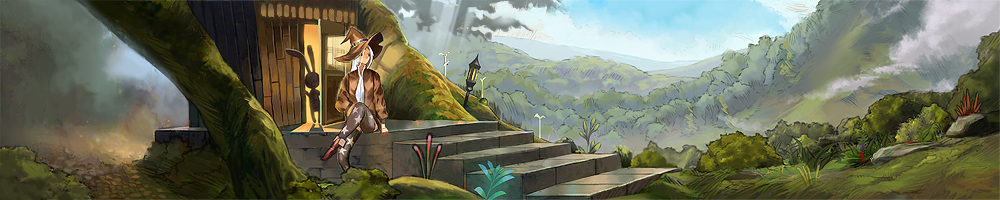
One thing I also love about this series is how the background scenery subtly changes, depending on the location. I’m especially looking forward to when Porfy manages to hit the alps and enters France, considering how beautiful the sceneries already were.
RD Sennou Chousashitsu – 25


Short Synopsis: A calm-before-the-storm episode, which shows Haru right before he attempts to retrieve Kushima’s consciousness.
Highlights: Finally some focus on Minamo again!
Overall Enjoyment Value: 8,5/10
This was an excellent calm-before-the-storm episode. It did exactly what was needed to prelude the finale for this series, and it also found enough time to finis Minamo’s development. It’s still a pity that she got degraded to side-character when the finale of this series started, so I’m really glad that the creators managed to put a satisfying closure to her story arc. With this episode, her growth feels complete.

The question of course remains: will the creators be able to do the same thing with the subplots between Souta and Holon, Haru and Kushima, Souta and the Secretary General and Kushima and Jennie. That final episode needs to be really fastly paced in order to get everything in there, and this is where the director really has to show what he can do to prevent the ending from getting rushed. I think that his best choice would be a simple straightforward ending, much as with Seirei no Moribito, instead of that chaotic ending of Ghost Hound. He should just focus on providing a satisfying conclusion for all of the above-mentioned subplots.

The plant, breaking down also was really nicely animated, by the way. It shows the promise for a nicely animated finale.

Overall, I’m still glad that I decided to follow this series, and while it isn’t THE best series of the past half year, I’d easily include this series in my top-10 favourite series of the past spring and summer-season, which have overall been rather disappointing for Production IG. They once were my favourite of the big animation producers, but that drastically changed in 2008. I think it was just one big mistake to get affiliated with that small company of Trans Arts, because these guys have just wanted to do way too much in way too little time, and they just don’t fit Production IG’s specific style. Especially with that theatrical announcement for Chocolate Underground, I’m wondering who on the company still finds it a good idea to keep affiliating with Trans Arts. Even Wellber, which I loved when it aired, is starting to get less and less memorable, the more I think back about it.

Natsume Yuujin-Chou – 12


Short Synopsis: Natsume gets a very nasty curse put on his arm.
Highlights: ZOMG Second Season!
Overall Enjoyment Value: 8,5/10
Ah, thank goodness this series is getting its second season. The show is nice and all, but there’s so much potential left that still needs to be touched. This concept is just way too short for a mere 13 episodes, so it’s awesome to see that this series is getting 13 more to work with. The next winter-season is going to be a pretty interesting one, with both Birdy the Mighty and Natsume Yuujin-chou getting their continuations. Now all that’s left is that second season-announcement for Amatsuki, the series that needs a continuation even more badly than this one.

Just scrap my comments from the previous episode. When talking about 26 episode, that was indeed the perfect tme to introduce a lighter episode to flesh out one of the characters. This episode too eliminated any chance that this series would only last for one season as it introduces what seems to be two recurring characters. It’s the woman and big goat ayakashi from the OP, and they’ve got a lot of potential to shine in that second season.

Wat was especially funny about this episode was that the curse that struck Natsume also had a very interesting effect on Nyanko-sensei: he kept switching between an incredibly tiny and incredibly big version of himself, both with hilarious results.

I’m also glad to see that the book of friends played another role in this episode. My only problem with this series is how it has been ignored so much, even though it’s the central item in this series. This episode showed that you can do more with it than just collect a bunch of names, and Natsume uses it in this episode to summon the goat ayakashi.

Porfy no Nagai Tabi – 37


Short Synopsis: Porfy meets an old dog who stubbornly keeps following him.
Highlights: An episode for the animals, and what a lovely episode it is!
Overall Enjoyment Value: 8,5/10
Awww, that was such an adorable episode. It was incredibly cute and at the same time the conclusion was so powerful and awesome. What an adorable dog. What an absolutely adorable dog. To prevent myself from repeating myself even further, here’s this week’s summary:

Porfy is camping out again, wondering why he didn’t take a bus. Apollo meanwhile catches himself a mouse, and suddenly a huge dog appears, and cuddles up to Porfy. The two fall asleep that way, and the next day the dog continues to follow Porfy on his journey, even though Apollo doesn’t like it. When he sees a passing vehicle, he manages to get the driver to ride him to the next village, but the dog won’t move out of the car’s way until Porfy gives in and lets him ride as well, with Porfy obviously having to explain that the dog isn’t his.

Then, when the driver drops him off, Porfy gets hungry and buys a sandwich. He at first doesn’t want to give the dog anything, but eventually he shares his second sandwich with the animal. A local pastor then arrives, and takes interest in the dog. He notes that it’s already quite an old do, and how it could be following Porfy because it’s also travelling around. Apollo, while watching, meanwhile runs into a pretty female owl, which he begins to follow around and try to appease. When it starts raining, the two spend their time inside a hollow tree, while the female starts to like Apollo more and more.

The dog meanwhile decided to show Porfy around a bit, and takes him to a local stream where he could fresh him up a bit. While he’s taking a nap, Bernardo runs off with his bag, and Porfy chases it over and over. When Apollo hears Porfy, he decides to leave his new lover for Porfy. Porfy meanwhile is very angry at the dog for takng away his bag (including the tools from his father; always a touchy subject for the guy). But as it turns out, the dog just wanted to show Porfy a beautiful scenery (and beautiful it is!).

Porfy then looks around, and the dog has died. He creates a proper grave for it, and continues on with his journey with Apollo and the episode ends.

The creators made clever use of Apollo in this episode. Uusally, he’s the voice of reason for this series: whenever he’s freaking out, something bad is about to happen. In this case, he just didn’t like the dog, period. That did give the feeling that something was fishy about that dog, which the creaotrs really used to make it look a bit ambiguous. While in fact, the dog just knew it was about to die, and wanted to do this with some great scenery, next to someone who treated him well until the end.

I also finally noticed the pattern of this series: arc-climax-arc-climax-arc, where the arcs mostly are long, and the climaxes are short and powerful, although the first climax did take up quite a few episodes. What’s more interesting though is that each successive arc takes a different focus. The first one was slice of life, the second multi-episoded travel arcs, and now the third one features single-episoded travel arcs. I think that around episode 40 or 43, the next climax is going to come, where the final arc is going to wrap everything up.

My prediction is that the next climax will feature the bomb finally exploding between Isabella and Carlos. It’s probably going to be an arc where he finally had enough of Mina. In the final episodes, Porfy will then finally meet her (I get more and more the feeling that this will happen as late as possible) and run into Alecia.

So yes, something tells me that the final quarter of this series is going to be an amazing one. 🙂

RD Sennou Chousashitsu – 24


Short Synopsis: Jennie tries to execute his plans, and I finally found out what the bugger’s trying to do!
Highlights: Nice fight scenes!
Overall Enjoyment Value: 8/10
Okay, so this series blew its chances at being a masterpiece due to some uncoordinated build-up, but it still can end the series with a strong finale, if everything goes right. It started the build-up for the finale thankfully at least a bit in time, and right now it needs to deliver an interesting finale in its final two episodes. This requires the creators to take what they’ve been building up to, and push this into an entirely new or further direction, because I’m not convinced whether a character-based or straightforward ending is going to work for this series. The fact remains that the most fleshed out entity in this series is Minamo, and she never played a central role in the final arc.

Ooh, but I finally found out what the eventual plan of Jennie is, thanks to some very appreciated English words that appeared on the screen. It’s really a shame that this series has stopped being subbed, because the finale was just full of elaborate dialogues. In any case, Jennie has been trying to use the plant he and the secretary general have been developing in order to send nano-machines into the atmosphere, in an attempt to control the weather. And I must say that this is a perfect issue about which differences of opinions could arise. On one hand, think of the possibilities when you can fully control the weather. On the other hand, you’ll be disrupting the eco-system of the entire planet this way. It’s the basic environmentalist vs. progression debate, in a very interesting coat, if I had to say so myself. At least the messages in this series are rock-solid, but I wish I could say the same about the storytelling-technical aspects of the series, but ah well. You can’t change what’s already done, so at least I’ll try to enjoy the finale of this series for what it is.

Another interesting thing is the huge amount of parallels with Nijuu Mensou no Musume that are popping up. In its final arc, Chiko is also trying to prevent a scientist from launching a particle beam, and what’s even more coincidental: both in their latest episodes, these attempts have succeeded. Overall though, RD’s attempt at its particle beam is more interesting, because Jennie still is more of a villain than that scientist of Nijuu Mensou no Musume. At least I’ll grant it that. Jennie at least feels part of the show, rather than him being just another villain. In the end, I do admit that his lack of attention wasn’t as bad as I originally thought it was. I think that the reason that this series has disappointed is simply the fact that it went from character-based to story-based, and that progression wasn’t that smooth. This series is about its setting and characters. When the story takes over, it’s going to feel a bit awkward. That finale just arrived to abrupt. What should have been a time when all the character-development came together turned out to be a time where the characters are ignored in favour of the storyline. And that’s just a pity.