Fate/kaleid liner Prisma☆Illya 3rei – 06

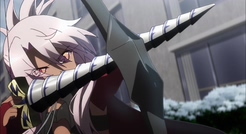
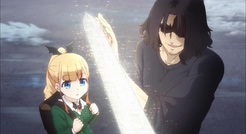
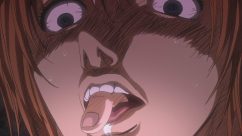
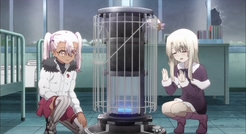
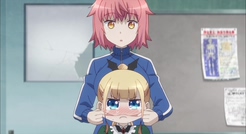
At the moment I must admit that the Ainsworths are not a particularly interesting antagonists. They are a good addition in that Prisma Illya has an antagonist rather that Zwei which generally had to throw in a makeshift one to take up time. However the Ainsworths as they are now are just evil people being evil for the sake of being evil. THere is likely a better method to their madness but they do come across as rather one dimensional. This episode mainly serves to introduce Darius who has his own meta way of looking at the situation. Claiming the situation to be an act in a play with Illya and co being the stars of the show. He pulls several made up noble phantasms out of nowhere and proceeds to introduce himself to Illya. I will admit that locking himself and Illya in a ice dome with limited air was particularly dark for him. He has pretty much shown the group just how outclassed they are in terms of combat strength so as an obstacle to Miyu’s rescue he works great. However he will need more development on his objective and character to truly stand out as a villain.

The action in this episode was decently animated however I can’t say the action scenes themselves were great. For having the villain just one sidedly beat the heroes doesn’t make a good action sequence. This is the main reason why Bleach’s whole Aizen battle failed so miserably as a climatic showdown. A battle is interesting when both fighters are pushed to their limits and there is an exchange of blows. If one fighter is never injured, never has to try and always has the upper hand then there is no tension. Thus no real interest. Though One Punch Man may be an exception to this rule but even then those battles put Saitama in interesting situations to compensate. Those noble phantasms make Darious a bit overpowered and as Gilgamesh pointed out that the Noble Phantasms he used were not items from his treasury and therefore not real Noble Phantasms. So essentially our villain can pull any power he wants narrative wise and  considering that Noble Phantasms are ridiculously overpowered as it is, this means the heroes are going to have to pull some major weapon out to get on an even playing field.

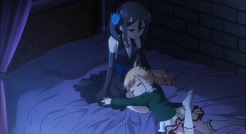
Sliver Link, was there really a need to make that scene with Miyu even more awkward? My memory of the manga might be a little foggy but I am certain that scene wasn’t quite so…suggestive. Sort of reminds me of that scene in the second Gurren Lagann Movie where they made the anti-spirals treatment of Nia well…suggestive. That really doesn’t make sense. Alright if the point is to get across that Darius is a serious asshole then I am certain the stabbing and draining of Miyu’s blood would have accomplished that. Having him insinuate so much and those camera angles just seems to be fan service for a very select fetish group. Miyu and Erika’s relationship seems a complex one as Erika really can’t seem to see the evil in her family. She’s not a bad girl but she doesn’t quite realise just what kind of horrible things are being done to Miyu and why everyone is trying to save her. She has a kind of childish cruelty. Still despite my gripes with this episode, I appreciate that we are getting more action. The last two episodes were veering towards Zwei territory again and I was starting to get worried.

Neon Genesis Evangelion – 03

Let me just start by apologizing for the delay of this post. I guess the only privilege of covering a retrospective show is you can cover it any time you want. I kid, I kid. The truth is I just binge-watched many series so I don’t have time to do this review. While I’m enjoy writing reviews, it’s no secret that it has eaten most of my free time and sometimes I miss a good old time when I still have time to watch everything and not to worry about review. Anyways, my ranting ends now and I hope I will review this piece more frequently. Now, moving on.

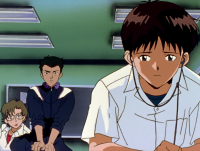
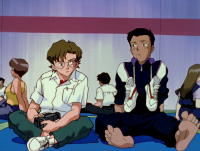
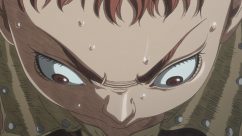
This episode shows us another facet of being a hero. It’s not all shine and glory, and Shinji proves to be as atypical a hero as you could imagine. Told through the point of view of new Shinji’s new classmates Toji and Kensuke, Shinji at first appears as a thorn to their eyes. His sudden spotlight for being the one who save the city strikes a wrong note to those guys, and to make it worse Toji’s sister was injured from that fight, something which he blames for the fault of the hero. To add salt to the wound, Shinji himself confesses that he did not choose to protect the city. Seriously if I were Toji, I would not stop with just one punch. Shinji’s submissive seriously gets on my nerve! But when the Angel attacks again, Toji and Kensuke has a real chance to witness what it really means to be a hero and save the world. It’s all messy. Eiji got suffered, both physically and mentally. It’s a life and death matter where you could end up death with just one wrong move. Shinji pushes himself to the limit that it borders on insanity. Kudos Gainax for creating a battle that gripping, on-the-edge and terrified, instead of going over the top like most mecha action sequences tend to do.

The original Japanese title really nails another theme of this episode. “The Phone that Never Rings” best described about Shinji’s character. The more I think about it the more I see him not really fitted for this type of job. He’s a loner, he’s submissive (look at the way he talks to himself “aim in the middle”) and worse he sees no point for himself to fight. Even in his normal school life, he has no friend. As I mentioned above the battle was gripping because we witness Shinji nearly breaks down, but the worst thing of them all is the whole mess is still working. As we learn in consequential theory, if one still produce a desired result then nothing is needed to worry about, right? In this case not in a long shot. If Shinji keeps pushing himself like that, eventually he’ll break. Everyone breaks, it’s biology; as they say in the (in)famous torture scene in Zero Dark Thirty. Seriously I think saving the world is too much a burden for our Shinji. Not that I blame him really since it’s already a very obscure idea to rely on 14-year-old kids to fight the alien. Well, we still have plenty to go but as far as 3 episodes, EVA has already established its strong grasp on the ruined and shattered theme. This time I will try to get the next episode review quicker so stay tune. Until then!

Thunderbolt Fantasy – 06

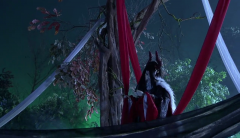
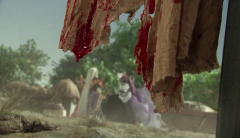
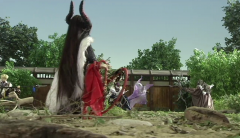
I imagine those of you who expect Thunderbolt Fantasy a full-blown action series, the first half of this week would prove to be a disappointment. There’s too much talking and the plot just floats upon a river, slowly crawls into its destination. But really Thunderbolt Fantasy never intend to be a true-ish action show, the staffs go for it knowing full well it’s a campy B-genre show. They really understand that the band of misfits is a real stars of the show (as oppose to the attention-catching premise which is a puppetry wuxia show written by Gen Urobuchi) and as a result the show spends a considerable amount of time just for the characters interacting with each other. I’m fairly content with it because if the show just relies on its gimmick, it will wear off very quickly. Thankfully again, when the actions indeed kick in, it’s a feast to the eyes. There’s way too much explosions and gores actions (in a puppetry form to boost) that you would never see in anything else, anime-wise.

Our main character Shang Bu Huan, having the same state of mind as myself, has doubt about Gui Niao’s true intention in this whole affair (frankly, offer his head to secure the magic flute shows how desperate he is) and literally spends a good first half talking to everyone in the group. By the end of those talks he never gets the answer he wants to know, but instead learns two most valuable lessons: that his comrades have different sets of personality and they surely don’t look eye-to-eye in almost everything, and that everyone never trust each other, especially against our main character. The only things those people have in common are they’re going to retrieve the sacred sword, and Gui Niao. He’s a tape that stick everyone together and making them perform their roles. Whatever his intention will be, I’m really amazed the way he pulls all the strings behind the scene. Now, I have a theory about the intention of Gui Niao, and that has something to do with the information we gathered this week. It’s about the divided countries of Xi You and Dong Li. From the information we gained there was a sorcery of the demons that formed the Wasteland of Spirits, that split the two countries for almost 200 years. I come to believe that gaining the sacred sword, plus the fact that Shang Bu Huan come from Xi You, there is a fair chance of them to undo the effect of black magic, get rid of that Wasteland, and unite the two nations.

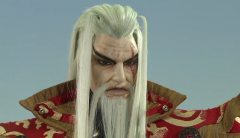
But to give more attention to our group also means that the enemy side gets undeveloped. We hardly see any of them long enough to have any impression, nor do we care much about them. For now, they are just too bland. It’s interesting to note about the character designs of the villains. Besides their black clothes, they don’t look as “evil” as some members of our groups. And I didn’t expect the main boss Mie Tian Hai appears to soon to fight off the group, so his appearance either will limit to talk to our allied group in the next episode (get right to the show’s comfort zone), or he is not the boss at all. From the way the show keeps delving on the nature of all the “archetype” characters (like the demon lady is not quite evil, but actually a bit elegant; or the “sheltered young lady” is the one who sees positive things most characters tend to overlook), I expect a bit of deconstruction on the main boss. Hopefully we will know more about him next week. Overall, Thunderbolt Fantasy’s still going strong. I really enjoy all the gestures and mannerisms each of the possess and hilarious lines like “let’s put aside a cultural difference for now” (when the characters talking about demon and human) are always welcome in any show.

Thunderbolt Fantasy – 05

This week’s Thunderbolt Fantasy runs a much slower pace compared to last week, which has only one main development: Sha Wu Sheng the Screaming Phoenix Killer agrees to join the band, as we can probably figure out last week. That’s my only complaint though, because the episode still provides a lot of gold moments. I can’t help but laugh at the ridiculous “it is already a sitting fight before the sword fight” situation or campy lines like: “I thought as much. I knew you’d be the one who come”, because when you really think about it, our main character is the LEAST likely person who would’ve come. It will be more reasonable if Gui Niao pays a visit to the guy, or the three who fought him in last episode. Even Dan Fei would make more sense if she’d come. Prior to this episode, we see the story through Shang Bu Huan point of view- a somewhat ‘normal’ guy, compared to an eccentric cast around him, and I come to really love his stunning reaction whenever something absurd happens. The world around him is too crazy for him to comprehend, apparently. But it’s nice to see that he has a lot of room to develop this episode, and he actually turns out to be a very sincere guy at heart who decides to turn up because he doesn’t want to see his new friend getting killed the next morning. At first I thought he and the Screaming Phoenix Killer knew about each other, judging by the way they already anticipated the moves of the opponent, but it was not the case. Shang Bu Huan hints that he come from Xi You (the other side of Wasteland of Spirits), which apparently is impossible to cross over. Well, at least we know now that he is not an ordinary guy, his skills are even on the same level as Sha Wu Sheng. The fighting scene, although brief and anti-climax, is still very impressive.

You see, the band heading to the Seven Sin Towers with very different goals in minds; Dan Fei has to achieve the legendary sword; Xing Hai the demon necromancer concerns about that sword that might affect her world; Juan Can Yun the spear wielder wants fame. Sha Wu Sheng wants revenge and Shou Yun Xiao the archer follows the gang because he just wants to help out Gui Niao (I know it’s a lame reason but in the world of wuxia, where you are skilled and you have nothing to do beside screwing around, make yourself useful by helping your friends out surprisingly makes a lot of sense). It’s the more dangerous that we don’t really know the motive of Gui Niao. Seriously, he’s the worst allied friend you could ever wish to have in your team. He really needs to keep Shang Bu Huan on the team to the point of offering his head to the Screaming Phoenix Killer, despite that our main guy doesn’t have much role on the plan. But in fact, everyone here pretty much has pretty solid purpose in this journey: The demon girl for The Village of the Dead, the archer for The Valley of the Doll, the Screaming Phoenix Killer for Labyrinth of Darkness; Dan Fei retains a part of the sword and Juan Can Yun for killing the enemy guards. What role would it be for our main character then? My guess would be Gui Niao needs him to be the one who control and wield the legendary sword when the parts are finally in place; so that he could kill the main antagonist and everyone on the way, including Sha Wu Shang and save his head at the end of the day. Sounds sinister, right? But it might not be as far-fetch. Next episode is called “Seven Comrades”, which will be about our seven characters head towards the Seven Sins Tower, and we will have seven days to wait for that journey; and now I’m head off to drink Seven-Up.

~SuperMario~

Berserk(2016) – 06 [Nighttime Feast: Burning at the Stake]

The episode picks up where the last one left off, with the lakeside haunting of Casca and Nina. We see the brand attracting ghouls followed by the Demon Child warding them off. For those who might be unfamiliar with the franchise, the Demon Child is Casca’s infant, and it’s been corrupted by the Godhand form of Griffith, Femto. The child’s powers were never clearly explained, but it’s safe to assume that he takes a bit after his stepfather. This will be further explored in the coming chapters.

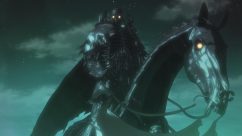
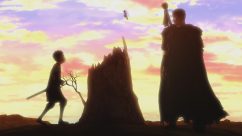
The next scene marks the return of the Skull Knight. I’m definitely disappointed that we didn’t get to see the fight between Guts and the Wheel Skeletons. It’s not really a crucial scene, but given the iconic design of the monsters it is still a letdown. Skull Knight warns Guts of the significance of the ‘hawk dream’ which apparently was shared with him as well. Guts calls him “old man” which is a bit of an understatement, given that he’s at least a thousand years old.

Speaking of millennia, the Skull Knight explains that an Eclipse-like event is about to unfold, which takes place every thousand years. It’s unclear if he’s referring to the general descend of the Godhand, or specifically to the rebirth ceremony. It is widely believed that the he is the psedo-apostle form of another character in the Berserk universe called Emperor Gaiseric. He supposedly united the nations of Midland over a thousand years ago. Later in the episode we learn that the emperor imprisoned a man that refused to deny his sins. The prisoner must’ve been in the possession of a Behelit, as his trial ends with an Eclispe. This occurrence causes the empire to crumble, and earlier in the story we see the remains of branded bodies in the tower where Griffith was being held prisoner. It’s unknown if Gaiseric ever became a Godhand and then later reborn, or gained his powers from a separate source.

The scene comes to a close with Guts asserting his intention of saving Casca, no matter what gets in his way. I have to say that it’s refreshing to see this defiant side of Guts again. His resolute attitude and disregard for warnings and danger is a core part of his personality, and one of the main reasons why he’s such a beloved character. He fights on against all odds, and his neverending struggle is symbolic to the spirit of survival that keeps pushing all humanity forward. This charming arrogance is sorely missing from some of the new chapters of the manga. Readers who are staying up-to-date probably know what I’m talking about. He has been portrayed uncharacteristically timid in the newer installments. This might be due to character growth, but I’m hoping that it’s temporary, and that we’ll soon get to see the true berserker in action.

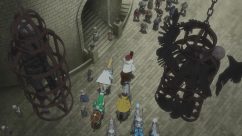
We switch back to the Tower of Conviction, as a doubtful Farnese is reflecting on the state of affairs. There is a subtle juxtaposition of the relative prosperity of the Holy Iron Chain Knights, set against the hunger and famine that continue to ravage the land outside. If you’ve been paying attention, there are frequent close-up shots of Farnese throughout the series. I realized that the reason for these is most likely because the close angles hide the uncanniness of the CGI, and create a more drawn look to her face. Moving on, we get to see the prostration of Mozguz, and him reassuring Farnsese of her faith, by an appeal to blindly following the divine authority. Even in reality, blind faith is often used to give purpose to those who are distressed by uncertainty. It’s also explained how Mozguz targets the social outcasts and uses their ostracization as a tool for recruitment.

We then head back to the campsite, and are introduced to Nina’s thirsty lover, Joachim. He’s mostly used as a plot-device for the viewers to get to see the other side of Nina, as she invites him to their secret gathering. As I expected, the episode includes the infamous cave scene. Similar to the manga, the gathering is a plethora of psychedelics, sex and cannibalism. I guess now we know where Nina caught that nasty little STD. Among the storm of hedonism it seems that some curious nipple-theft is taking place, and nobody’s the wiser.  It’s surprising that so much nudity is included, especially given the fact that they were well aware of their limitations due to censorship. It’s not really a big deal, but it’s seriously distracting. The orgy scene itself is drawn minimally and awkwardly, giving it a clean and sterile look that detracts from the sense of grotesque that they were going for. No matter how much they distort the images, and draw characters off-model, this still doesn’t look all that hellish. The cannibalistic imagery might be the only aspect of it that is slightly unnerving. We also get a glimpse of the Goat Head, who serves as the leader of sorts to the cult. I’ll be discussing him in more detail in the upcoming episodes.

The party is interrupted when Joachim is chased out of the cave, leading to his fall into the ravine. He’s later found by the Egg-Shaped Apostle, which will be playing a crucial part in what’s to come. It’s always good to see Luca, as she takes no nonsense from Nina, and promptly starts scolding her for her stupidity. Their reconciliation doesn’t last long, as Casca’s discovery leads to an attempted rape by a group of impressively aerodynamic men, which itself is interrupted by the manifestations of some more ghosts. This scene is very awkward, since the few models they had were reused so many times, in some instances standing almost next to eachother. The saving grace is that the scene is brief, as the Demon Child yet again dispels the apparitions.

Similar to episode three, this one also has an extended post credit scene. We get to explore the backstory of both Farnese and Serpico. Farnese is engaged in almost Lady Melisandre levels of pyromania, and it is shown that this is deeply rooted in her childhood. Serpico again demostrates that he’s a sympathetic fellow, and it’s his tragic past that has brought him into the Vandimion fold; that among other things. This episode in whole was rather plain looking, and primarily used as set-up for the next one. I understand that there was no way to exclude this whole section, but I hoped that they portrayed it with some more energy. The grey muddy colors are really tiring, and at this point I can’t wait for the Eclipse to bring some change in the scenery. The next episode is called “The Black Witch” so at least we know it’ll be racist. I jest, in reality we’re going to get a big reunion, but not a particularly sweet one. Things always seem to pick up when Guts enters the picture, and so the next one is going to be a more dynamic episode

~Bam~
Fate/kaleid liner Prisma☆Illya 3rei – 05

I guess this is the hot spring episode and as the fanservice escalates I am beginning to have second thoughts. That generally feeling when the thing you thought was great might not actually be all that great is seeping in. Sort of like the anime adaption of Parasyte which was strangely underwhelming despite the source material being so good. Though I think this at least will be the last of the fan service for a while and we will be returning to action next episode. Though I don’t know what’s up with that face the Ainsworth head is making to Miyu in the preview, I really hope Silver Link don’t add something that insinuates that direction. So todays episode introduces a little girl who’s the daughter of the Ainsworth family head and Gilgamesh puts a hot spring on the roof of the school. Gate of Babylon truly has everything though I wish they kept Gilgamesh in the scene as he added lines like trying to make the hot spring match Japanese customs so it didn’t seem that weird and out of place. Plus more Gilgamesh is always a good thing. It’s still poor reasoning to have a hot spring scene but hey it’s better than just having a hot spring randomly on the roof of a school.

Tanaka gives some insight into herself with her hate of Erika which seems to be her recognising that she was an Ainsworth instinctively. Her memory seems to begin at the moment she met Illya which seems to suggest she gained self awareness the moment she ran into her. I still think she is a counter guardian and by rule of thumb they generally work without awareness. The unlimited bladeworks series somewhat contradicts that by showing Archer as a counter guardian being aware of his surroundings but  in reality he learned of what he was doing then by getting a peek at the Akashic Records. The question of what exactly is she is another matter, I doubt she’s some form of ancient hero but she does remind me a bit of the human form of Ciel’s weapon from Tsukihime which was called Nanako.

Gilgamesh seems to know more about what is going on than he is giving away and duly noted by Chloe trying to get some exposition out of him. I am not too fond of this episode with all things considered but I do like how they introduced the main villain. Darius comes across as a silly doting father before revealing his true colours and it gives him more personality rather than just being the arcs villain. Some comedy worked here though Tanaka and Erika’s back and forths got somewhat tiresome. Erika I find to be a more interesting character as this arc goes along though here her main gimmick is playing a game of extreme reverse psychology and that is somewhat charming at first but begins to wear out it’s welcome by episodes end. Not a lot happened here so I don’t have much to say and I would have preferred they just get a move on with the main plot.

~AidanAK47~

Thunderbolt Fantasy – 04

Wow, this episode is way better than I would have expected. Remember last week I mentioned that the demon girl might have a deep appreciation for Gui Niao (I called him Lin Xue Ya previously, but consider that he himself prefers to be called as an alias Gui Niao, I will stick with it from now on) and I expected the clash of light and dark arts between the two girls? Well, I couldn’t be more wrong this time, since the show went in a completely different fashion. Xing Hai hated his guts, because she felt manipulated by him in their last encounter. Many people suggest that it was a romantic tension but I don’t buy that at all. She quickly changes her mind though (way too quickly) after she heard about Tiang Xing Jian sword; and guess who’s the only one she gets along well? This is none other than Dan Fei. I really enjoy how the characters bound off each other, particularly the skeptical remarks from Juan Can Yun the spear wielder to the demon girl, and the venomous words from herself towards Gui Niao. Those arguments actually raise an interesting point about the very notion of hero/villain in the show. The two addition members this week (Xing Hai the demon lady and Sha Wu Sheng the Roaring Phoenix Killer) could very well be the ultimate villain in another series, yet here they will have to become “good” guys, joining up with the group to kill a villain. Gui Niao is another perfect example of this concept, we see him as cool and excellent strategic thinker, but we don’t know his motives in this quest at all. He mentioned that he is acquainted with the antagonist Mie Tian Hai so he feels responsible for stopping the guy, but he might as well just want to get control of the sword himself. Both Xing Hai and Sha We Sheng despised him to the point of hunting him down, plus the fact the he has little remorse when hearing about his master was killed because of him. I say this ambiguity makes his characters somewhat compelling and I can’t wait to see how far he plan ahead and what his true intention will be.

Another bit that goes against my expectation come from the second half. When we heard about the master who has a magic flute, plus the fact that he’s a skilled swordsman, we immediately think he could be a great addition for the group, using his wisdom as a voice of reason for the group to avoid any potential danger, right? WRONG. He was immediately killed off by the Roaring Phoenix Killer Sha Wu Sheng, who his purpose was simply to hunt down any connection to Gui Niao, in order to find him and kill him off. This development takes me completely off-guards, kudos to the writing of Gen Urobuchi. The Roaring Phoenix killer is by far the most skilled and deadliest character we encounter so far. Judged from him having the magic flute that the group desperately needed, I don’t know for sure what will happen in the next episode. Will the gang fight him to death to get the flute? Will Gui Niao negotiate with this guy so he would join the group? God knows. Finally, to the “most whimsical lines this week”, we have Xing Hai hesitating to enter the temple because the “smell” was too offensive. I guess being devil is not easy to get along, even if they really try to. If the show can keep up with those qualities that made it so refreshing: its elegant characters; its campy sense of humor and its stunning fights, I think Thunderbolt Fantasy is up there as one of the most entertaining show this season. The fun just about to begin and I really can’t wait for the next episode.

~SuperMario~

Berserk(2016) – 05 [Tower of Conviction]

Episode 5 Starts off with Isidro, and some half-assed attempt at levity. This is really harmless, but it highlights an issue that has become apparent from the first episode. It’s widely understood that the inclusion of Puck was done to bring some light-heartedness to an otherwise grim story. But yet again this proves the point that manga and anime are widely different mediums, and what works in one doesn’t necessarily work in the other. A manga is a very fluid format. The style and design elements can be altered to communicate different concepts. It is not at all uncommon to have characters portrayed in chibi or exaggerated forms to correspond to the situation. They can also include footnotes and other remarks to clarify and explain certain things. These techniques can’t really be done the same way in an anime adaptation, or when attempted could seriously backfire. The medium of motion pictures revolves quite extensively around immersion, and things that can hinder that immersion are best to not be included in the first place. This is not to say that the combination of serious subject matter and comedy can’t be achieved,  for example,  Cowboy Bebop, Black Lagoon, Welcome to NHK and Kemonozume have all done this to varying degrees, but doing so requires a mindful approach and a delicate touch.

Thankfully the farce is soon interrupted by the Kushan hunters. Here we get another action scene, which similar to the ones up to now was just alright. There are some interesting angles and framing, but the quick cuts in editing and the unnecessary rotation take away from the action. This is exacerbated by the drops in the frame-rate. I researched the reason for this back during the first season of Knights of Sidonia, and apparently this is due to the cel shading that is done on top of the CGI. In these types of animations when the camera pans the animators need to draw in the details in almost every frame, causing the process to become seriously long and costly. The solution they came up with was to limit the number of frames, so the required number of overlay shading could be reduced. My question is that knowing their limitations, why do they include so many panning shots that aren’t even really necessary? Well the upside of the action scene is that we get to yet again hear Hirasawa’s excellent track Hai yo (Oh Ashes).  I instantly light up every time the track kicks in and the pipes swell up. He truly understands Berserk, and given his close friendship with Miura, it is not at all surprising. I only wish that he had composed the entirety of the OST.

Next we get the reintroduction of Silat and his Bakiraka clansmen. If I’m not mistaken this is the first time since the movies that he has made an appearance. Silat is an interesting case, since he’s one of the handful of characters to endure in the story past the Golden Age Arc, and although he continues to play a part he is still usually delegated to the sidelines. He was understandably removed from the 97’ adaptation, as there was no reason to include him so briefly at the end of the series. He also made an appearance in the movie trilogy in a slick action scene, but the third film failed to correctly portray the complexity of his character.  We will see how much they will develop him in the new show.

I want to point out how newcomer unfriendly this adaptation truly is. To those who have only gotten into Berserk with this new series Silat won’t be making any sense. A lot of other factors are exactly the same, with them only resonating with fans of the manga or the previous iterations. Liden Films have failed to properly communicate that this is a continuation of the movies, and yes, this is linked to the movies and not the old show, as there are flashback scenes that include segments and music directly taken from the trilogy. This might be due to some licensing issues with Studio 4°C who made the films. I am personally fine with this, as I am very familiar with the material, and the last thing I wanted was for yet another developer to go over the Golden Age Arc. I still can see a lot of new viewers passing on this show due to their confusion, and it would be a shame for people to avoid the Berserk franchise only due to this series’ lack of quality; which is the most damaging aspect of this adaptation.

The next section switches back to Albion, as we get to see Mozguz engaging in an uncharacteristic act of kindness. It doesn’t take long for the audience to be reassured of his depravity, as he moves on to torturing the mother of the child he just saved. I’m not really a fan of these sudden outbursts which are accompanied by severe character deformation. I understand that they suppose to be somewhat shocking, and aim at creating tension in the scene, but they are often just distracting. This brings to my mind a certain scene at the end of the first episode of Akame ga Kill, which has a little girl suddenly exposing her messed up nature. In fairness this isn’t as abrupt as in AgK, since Mozguz is already shown to be vile and ruthless. What I admire here is the daringness of the series, which doesn’t shy away from sex and violence. They have included things that I was certain will be dropped, so the producers are at least adamant on keeping the dark edgy side of Berserk. However I do realize that this might be done more for the sake of publicity, and not purely out of artistic integrity. I wish that the same approach was applied to the more subtle tone and subtext of the Berserk story.

Speaking of daringness, we get the return of the nippleless women, this time in the form of Luca. They should either go all the way with it or not include nudity at all, but I guess there are restrictions that are out of their control. Some suggest that these would be fixed in the Bluray release, but considering that they have to go over and draw it in every frame causes me to doubt that. We get to see a scene with Luca entertaining Jermore, a minor member of the Holy Iron Chain Knights. Luca is an interesting character, and despite being a prostitute she is still portrayed as a strong woman, who not only knows how to take care of herself but also the rest of her camp. It’s good to see a working lady portrayed in a sympathetic light, and she manages the group with almost a socialist methodology. There is also a brief exploration of wartime economics and upheavals. The kingdom of Midland doesn’t seem to catch a break, with the Kushan invasion happening on the heels of the recent conclusion of the hundred year war with the Chuder Empire. The passing of the king has only added to the social instability, and this can be seen by the ubiquity of famine and poverty. For most people hope seems to have faded, and they all do whatever it takes just to survive. The stoning scene shows how ruthless people have become. Being from the Middle East myself, I know how average people can act in horrific ways. When individuals are themselves under pressure they find catharsis in having any sense of control. It is probably not by chance that such crisis has consumed the land, setting up the stage for a certain someone to make his return. There is also a brief introduction of the rest of Luca’s group, but Nina is really the only one of any importance. We get to see her plight, and it’s implied that syphilis is now commonplace.

The episode ends with a scene between Guts and Isidro. Despite being a goofy little brat, it’s clear that Guts sees a bit of himself in the kid, persuading him to let Isidro stick around. After the so-called “epihpany” at Godo’s house it appears that Guts has calmed down a little bit, causing him to warm up and let go of his constant rage. It’s interesting to see how close they’ve been following the manga in the recent episodes. Looks like the sporadic script of the first few ones might’ve been growing pains, and they have now found their groove, and are now simply attempting to tell the story. The next episode is “A Nighttime Feast: Burning at the Stake” implying that it might be multi-episode chapter. I’m getting the sense that we might be getting the ‘cave scene’ after all. The majestic Skull Knight is also making his reappearance. Berserk 2016 has serious issues, no doubt, but I would be lying if I’d said that I’m not enjoying myself to some extent. It is a treat to get a new Berserk at the end of the week, and unfortunately when anticipation rises the wait for the next episode only grows longer.

~Bam~
Berserk(2016) – 04 [Epiphany]

I wanted to start off by apologizing for the late review, as well as giving some general information and my overall impression of the new series. I’ve been a Berserk fan for quite a while, and both the 97’ series and the Berserk manga are among my top 5 anime/manga of all time. I was quite excited when news of the new adaptation broke back in December, and same as everyone else got heartbroken upon watching the initial preview. Still I reserved hope, and was eager for the premier. As I was watching the first episode my disappointment grew with every passing minute. Unlike most fans my discontent wasn’t merely based on the animation quality or the plot deviations and omissions, since for me those were expected, but rather the overall tone of the series which I felt was off by a large margin. Nothing expresses the disconnection as much as the intro. Everything from the music, to choice of content, to the execution felt very misguided. The original anime overcame its shortcomings by creating a dense atmosphere, and a lot of that was achieved through Susumu Hirasawa’s moody and unconventional soundtrack. The opening song itself is alright, but the problem lies with its relation to the grim content of the story. I completely understand the other authors of this blog’s disenchantment with the show, and don’t support the idea of having the reviews forced on someone who doesn’t enjoy covering the series; as the result is often a steep decline in the quality of the posts. I personally have come to terms with the animation, and will only comment on it when something is out of the ordinary. I’ll try to keep the comparisons to the manga at a minimum, and will aim to judge the new series on its own merit. With that being said, let’s move on to the review of episode 4 ‘Epiphany’.

We are now well into the Conviction Arc, and approaching the end of the Binding Chain chapter. I’m surprised by how fast the show is progressing, yet the pacing of this episode was relatively well done, with ample time being set aside for character development. The episode starts off with guts’ vision of Casca on a pyre. We also get a glimpse of the Demon Child, as he urges Guts to seek Casca at the ‘Holy Ground’. This prompts him to head back to Godo’s house to check on her. It’s in this section where we get most of the character development, as Guts realizes his mistake of leaving Casca behind to pursue his vendetta against the Godhand. This is actually quite a crucial moment, as it’s the turning point for Guts’ plans and ambitions. It might not appear so in the show, but Guts has spent a long time away chasing ghosts (apparently two years) as Casca was left to suffer alone in the mine. I always felt that Miura didn’t really layout the story ahead of time, and probably initially planned to have Guts as a lone swordsman seeking justice. This is somewhat apparent from the Berserk Prototype, which has Guts on a revenge spree against the “Apostles of Vana” for slaughtering his mom. We also see this in the Black Swordsman Arc, which has little to no mention of surviving allies, and only the Demon Child left as a stark reminder of what has befallen him.

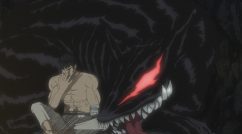
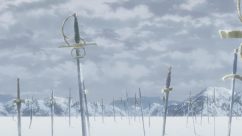
Moving on, we’re reintroduced to a slightly older, but much more mature Rickert, and later Erica brings Guts to the Hill of Swords. This is to further hammer in the point, both as a tribute to the Band of the Hawk, as well as reminding Guts that he has to focus on the few loved ones that remain. This is actually borrowed from a real practice of erecting symbolic graves, usually plain white crosses, for victims of war or natural disasters whose bodies couldn’t be reclaimed. This location will again come into play a bit later in the story. From the original Hawks only Guts, Rickert and Casca have survived, and now the more important one has gone missing, which motivates Guts to drop the pointless headhunting and go look for her. Although I don’t particularly care for the emotional pleas of Erica, it serves the purpose of knocking some sense into Guts, so I didn’t really mind it that much. We are also introduced to the Beast of Darkness, which is as a manifestation of Guts’ darker side and hidden desires. There’s also the coup de grâce from the ever-so-shirtless Godo, as he gives his last to repair the Dragonslayer. Their farewell is short, yet appropriate, since as Godo himself puts it “It’s better than getting all weepy” and it’s good to see a character staying true to the end.

The last sequence of the episode switches back to the Holy Iron Chain Knights, now tasked with escorting Mozgus the grand inquisitor of the Holy See to the tower of conviction; although it’s unclear why he would need any protection in the first place. We also get to see an original action scene, which in itself is not that spectacular, but serves to show the ruthlessness of Mozguz and his twisted ideology. The bible headsmash is taken directly from the manga, albeit toned down a few notches, but the torture scene with the Logarius’ Wheel is sufficient enough in getting the point across. Farnese is adamant at first, but is soon distressed from witnessing the horrible torture of the villagers, further weakening her faith and trust of the church. There’s also a brief glimpse of the elite tortures, as well as the prostitute Luca, which sets up the board for the rest of the chapter.

Overall I would say that this episode showed quite a few improvements over the previous ones. The CGI and the 2D animation were integrated more seamlessly, and the show took a much-needed break from the lightning-fast pacing to focus on the characters. The coloring and shading on some of the models during the carriage scene, particularly the armors, were enjoyable. Mozguz seems to be primarily rendered in 3D, and given his round physique it creates a Katamari look to him that diminishes his threatening presence. The next episode is titled ‘The Tower of Conviction’, so it looks like we’re going straight into the birth ceremony. Isidro and the Kushan scouts will also make an appearance. I’m hoping that they don’t skip some of the in-between material, particularly an infamous cave scene. The upside of this late review is that the wait for the next episode will be especially brief.

~Bam~
Neon Genesis Evangelion – 02

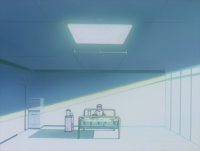
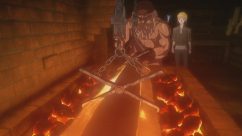
Turns out that our boy Shinji is after all THE ONE, akin to Neo in the Matrix or every main mecha hero for that matter. He has been chosen, he must therefore use such strength and heart and wits as he has. Sound like I’m complaining, right? Well, I’m not because I think this is a necessity for the series: you have to build the foundation first in order to deconstruct it. You have to establish all the genre tropes first before you crush them, move its parts apart and then assemble the parts again. Why do I think this series is a mecha deconstruction then? Because of the way this episode framed the story. It’s a bold choice to jump-cut from the climax of the battle to the next day where Shinji wakes up quietly in a hospital. The show deliberately hides the outcome of the battle till the end of episode to the point it had fooled me to believe that the battle was a failure, but in a larger sense, this is not unlike a failure. Nobody comes out as happy and excited as we normally expect from the winner side. Gendo, the one seems the most pleased with the outcome, was scolded by the committee for using the budget for his own personal gains (build a toy and let the son plays it); Misato voices her concerns out loud; the citizens in the city were afraid and planned to head out of the city; and certainly our Shinji was not happy about the result, NOT ONE BIT. The ceiling motifs in this episode is a nice touch of symbolism, because it sums up very well the disconnection between Shinji with the rest. Shinji just don’t feel the city as his home, as the place where he belongs. He just wants to be left alone and has nothing to do with the whole mess. There’s already some intrigue moments of the images of the Angels messing with his head, and I appreciate those moments both in terms of the symbolism it conveys, and the visual it possesses. The show really conveys a false sense of security well, indeed it feels more like they are more terrified with the potential of the Eva than satisfied with it. The Eva just literally went berserk and saved the day, but notice that Shinji at that time was unconscious and I do feel like Shinji just become the Eva at that point. Is it the trigger in order to activate the full potential of Eva? Well, I guess I just have to wait until later episodes to find out meself.

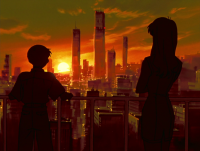
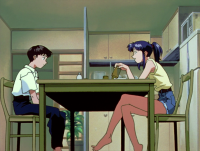
Now let’s talk a bit about the world-building of EVA. When Misato shows Shinji about the rising buildings, I think it summarizes the world of EVA the best. The city as a whole looks like a fortress (and as Misato points out, functions like one), this is basically a battlefield. The rising towers and buildings adjusts well with the theme the show establishes so far. Those building, just like our Shinji, hiding underground, waiting for the sun set to raise ahead. The committee also mentions about a certain project that is more important than defensing against Angels. What could be more important than protecting the world from aliens? For now, my guess is that they’re building another perfect city in order to get the hell out of here. Well, I feel like I have caught up too much with all the symbolisms of the show and I think some of my take here might go well off the mark, but really, aside from Utena and Monogatari series, no other show has ever given me that much imageries to chew on and I really appreciate that. All those aside, I really like the Misato’s apartment and the untidy trash, beer cans and takeaway junk foods everywhere really hint a lot about her character. To say that I still can’t put my fingers on what the hell the penguin doing in the episode?

~SuperMario~