Mahoutsukai no Yome – 12 [Better to ask the way than go astray]

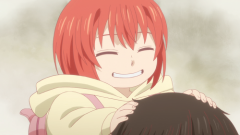
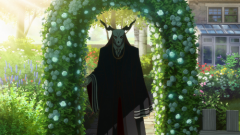
Welcome to the end of Mahoutsukai’s first cour! Apologies for the lateness of this review. I had expected another to come out over Christmas and to simply do a double feature, but Mahoutsukai pulled on over on me! This week we finish up Chise’s wand, get to see Grandfather Nevin again and have an almost literal character rebirth. Lets jump in!

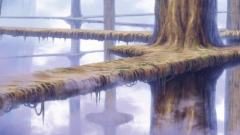
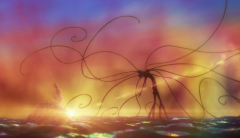
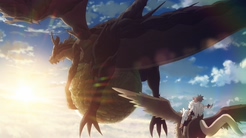
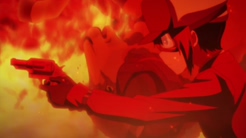
Mahoutsukai finishes up Chise’s wand arc this week with a bang, quite literally. Chise’s flight as a Phoenix was a great payoff. You can tell they put a lot of work into the scene, as she soars through the air and the lighting on her face and body changes. The sweeping Icelandic coastline and the fluffy cloudscape both stood out to me, really selling this whole “rebirth” theme Chise was rocking at the time. Sadly these shots came at the expense of others. Many of the shots of the Dragon Aerie were reused from previous episodes, and Lindel’s song simply didn’t have the magic it had last episode. Its a standout melody, but using the exact same version so soon after its first reveal? It simply wasn’t as special, especially compared to the use of the OP in Chise’s transformation right after it. All in all though, a decent job.

Continue reading “Mahoutsukai no Yome – 12 [Better to ask the way than go astray]”

Houseki no Kuni (Fall 2017) Review – 92/100

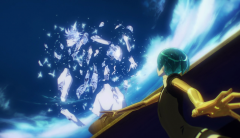
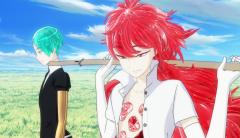
Make no mistake, Houseki no Kuni is the most ambitious anime project of the year. Not only because it’s an entirely CG project (and make a damn good use of it, mind you), or because of its narrative scope that at once strange, grand and beauty, but also in its very conception in their production phase. Unlike normal anime products, Orange studio approached the material as early as nearly 2 full years before its initial broadcasting, and the production went through many unusual phases that took much longer time for the studio to complete. This is to say it was a rough path that they decided taking on and the result showcases how much confidence they adapt the material. This season feels much more as an introduction to an epic story and at its core Houseki serves as an coming of age story to our protagonist Phos, while exploring the insecurities of those gems towards their own roles. As I compare the manga and the anime adaptation together, I still regard the manga as a more astonishing version, but by all mean it’s not a criticism against the anime. Houseki the anime approaches the source in the best way it possibly can, both highlights the unique appeal of its gems cast, striking visual metaphoring and dynamic fights sequence that make it one of the best adaptation in my eyes: both respect the core themes that make the manga stands out, at the same time is vibrant with its own personality.

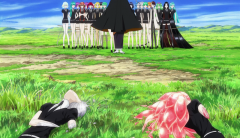
Houseki is a show of pure beauty. Its world building is ethereally fresh and rich, at once strange and full of mysteries yet to explore. Houseki features the world where the three races: the Lunarians who live over the Moon, the Gems who live in land and the Admirabilis who live under the sea. Underneath that surface where we follow the Gems doing their daily patrol and fight off the invaders Lunarians, the three races are hinted to be the three basic components that form the human race: the Soul, the Bone and the Flesh, respectively. Houseki is the work that is dense with Buddhism symbols, images and philosophy. This is further underlined in the way the character designs are drawn: the Moon People are identical entities, the Gems have their lower bodies almost the same, only the Gems-reflected in their hairs are vastly different and the Snails have their own distinctive, over-designed body with clear sexual traits. Speaking of the ambiguous of gender issues, Houseki might be the only series I could give a plus (+) rating for its sensitive approach to the non-gender beings, something that is rare even in today’s standard and something that speaks further to the originality of Houseki.

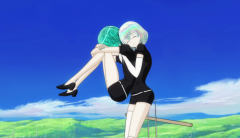
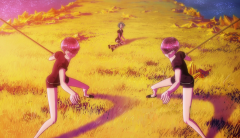
In order to approach the strange beauty of the Gems and the stylish dynamic of their fights, Houseki decided to go full CG – a decision that freaked out the manga fans considering the bad track of full CG shows. The computer generated might get some time to get used to, but the more Houseki displays its visual the more it reaches its new height. The characters look gorgeous in their CG models, the CG allows Houseki to experiment with many unusual shot angles and long shot tracking that really hard to pull in a traditional hand-drawn production. The sequence where Dia runs away from Shiro, for example, stands out for all the right seasons. In addition, this CG style uses its shortcomings in computer production (its lightweight movements and somewhat awkward character actings) into an asset, making the Gems feel offbeat and whimsical – the very quality that make them charming and pleasing to watch. The physical comedy, as a result, hits the mark most of the time. But not only the CG takes all the credits here, I have to praise the 2D production as well since the characters have 2D facial features that allow many subtle facial expressions. Orange studio really makes the most out of what they have, capturing the feeling of the manga using the tools of a different medium, and they pull off beautifully.

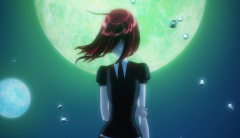
But exploring this mysterious world and its grand cast is only one of Houseki’s many concerns. This season is all about the growth of our main character, Phos, as they breaking apart, metamorphosing, and changing themselves for better or for worse. They experient some of the sharpest character development I have seen in awhile, both physically and psychologically. The more they losing parts of their body, the more useful and mature they become, the less memory they have. At the end of the day, what’s left of the original Phos? Phos certainly carries their own magnificently with their own charm and witty remarks and a natural voice acting from the talented Tomoyo Kurosawa. Moreover, Houseki underscores the identity and the insecurity of the Gems towards the own roles. Many of the gems, from Phos, Cinnabar, Dia are all struggling with their position. Those vulnerables make them so relatable and real. All other Gems of the cast have their own quirks, but they never sell themselves short. They share great natural chemistry to each other and each of them is memorable, grounded and overall a total joy to watch.

Aside from the colorful yet memorable characters, Houseki benefits from the stunning background arts that not only stand out on its own, but they fit to the narrative seamlessly. Take note how the color of the background changes according to the Gems in spotlight – a beautiful trick that both convey the aura of said character, but also is very appropriate to show the sparkling ability of those Gems. The anime visual has a lot of symmetric shots that from what I know isn’t apparent in the manga, but it’s a welcome upgrade since the techniques reflects very well the theme of Houseki. The soundtrack is another highlight that really elevate many sequences to another level, especially during the fight scenes.

But still, Houseki is much more than beautiful visuals. What I impress the most about Houseki is how they manage the overall tones of the show. Sometimes we have silly, offbeat fluffy comedy, at times it goes full on devastating that showcase a very realistic portrayal of grief; in other minutes Houseki is thrilling with monster chase, crazy Gems and dynamic fights. Strangely, all of these moments above feel really Houseki-y. It’s the show that is full of identity. Rarely I see an anime show that feel so unlike any other shows I watch out there, and manage to be so passionate on what it does, that I can let all my complaint about the show down under the kitchen sink. Unique, strange, beautiful, devastating, ambiguous, and charming all at once, Houseki is an one-of-a-kind series, and I mean it in the best possible way.
Fate/Apocrypha Anime Review – 64/100

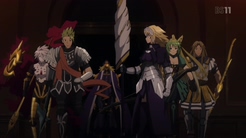
I was quite excited for Apocrypha and in the so called year of Fate adaptations, it looked to be the crown jewel. Sadly, partly due to lacking adaption and the source lacking in areas, this anime turned out to be not quite the jewel I thought it would be. It’s hard to call this a bad anime, mainly because it lacks consistency it it’s quality. Much like it’s animation, Apocrypha goes from highs and lows, from boring mediocre scenes to scenes that range from mildly entertaining to genuinely great. Unfortunately to get the most out of it you need to read up on the mythological of the characters in it as the series itself does a very poor job of fleshing them out. Fate/Apocrypha details a war between fourteen servants with one extra servant acting as referee. As such it boasts a pretty massive cast of characters which proves to be to its detriment. There isn’t enough screen time to flesh all these characters out and sadly a lot of potential with some genuinely interesting characters gets wasted. There are a number of servants in Apocrypha that deserved better than the story they got, such as Sisgou and Mordred, the people who originally appeared to be our main protagonists. Excellent chemistry, fun master servant relationship and despite Mordred being a saberface she gives enough personality to the design that she makes it her own. And all of this is absolutely wasted when they are pushed to the wayside for their screen time to be robbed by the actual protagonist of the story.
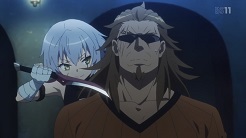
At episode three a homunculus called Sieg is introduced and from his very introduction comes the greatest flaw of Apocrypha. Sieg is a mistake. He is a character with no personality who goes from wondering about his existence to archetypical hero. The plot of Apocrypha bends over backward to give Sieg all the screen time and plot devices he needs to steal the spotlight. he is cardboard, a literally one dimensional plank with a sign that says “Your face here” and comes with his own romance subplot that is given far too much time and effort. Sieg sucks the fun out of any scene he’s in that I honestly believe that the times I was most bored watching this show where when he was on screen. Take note that Sieg is not an annoying character nor does he have a personality that irks the viewer. The problem is that he’s nothing and steals precious screen time from servants most desperately needing development. All the characters of Apocrypha suffer due to his presence and that’s a damn shame as this story does indeed have potential. But it’s clear that while the writer set up a grand epic battle, he didn’t quite think of how he was to close it out. Some servants feel like unnecessary time wasters like Jack and Avicebron. Also while the battle starts as shades of grey with no one technically in the right, it slowly changes into a strictly black and white affair.

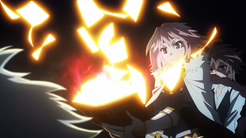
The music of the series is fantastic which Masaru Yokoyama succeeds in giving Fate/Apocrypha its own distinctive identity through melody. There are plenty of scenes elevated by his OST alone and I truly think they deserved a better show. Though there are some medolics which play a bit too often. The animation, while shaky and nowhere near Ufotables level, does showcase some impressive fight scenes which are exhilarating enough to push away Apocryphas problems temporarily. Ultimately Fate/Apocrypha is wasted potential that made for a mediocre anime with some patches of entertainment and some small moments of greatness. Not to be recommended as your first Fate anime and most likely more for those that are deep into the series. It is a immensely flawed series that could have been better than the sum of its parts but as it there is at least some meat here to give a Fate fan reason to check it out. Provided you keep your expectations low and do a bit of reading on the servants histories. Though if the Light novel ever gets fully translated, that’s the better alternative.

Fate/Apocrypha – 24/25[The Holy Grail War/Apocrypha]

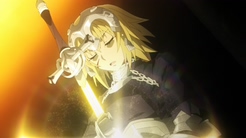
Forgive me for my lack of updates with the series I am blogging but as I am sure you all know, holidays tend to keep us busy for one thing or another. Believe it or not i only recently got around to finishing this series last two episodes and they didn’t really surprise me all that much. Truth be told I actually prepared for an ending far worse than this so that’s a positive of some sort at least. It was a good thing to bundle these episodes into one post as the previous episode boiled down to a debate between Joan and Shirou over what is truly salvation for humanity and that actually is rather interesting as Shirou has a very Eastern version of religion which attributes sin to the body and believes shearing the mortal coil will allow people to transcend sin. Meanwhile Joan and Wish believe that true goodness only comes from people overcoming trail and suffering which is a very western style to religion. Only for it to result in Joan pulling out her last noble phantasm in an effort to destroy the holy grail. A suicide beam attack that sadly accomplishes not all that much really. Well the name does not make it apparent but that attack did have a pretty devastating effect on the grail and Shirou himself but was highly played down in the anime.

Thus begins the downward path for this ending and much like most of the things wrong with this anime, it begins with Sieg. There is a admittedly cool fight scene between Sieg and Shirou but it does beg the question that if Sieg could fight Shirou, then why do it after Joan unleashed her suicide attack. Got to say Sieg that your anger over her death is pretty hypocritical when you could have helped at least not make her death worthless. Why can Sieg somehow match Shirou? Well on top of getting the power to transform into Siegfried, it appears that SIeg also absorbed the power of Fran’s Noble Phantasm. And to add insult to injury the holy grail throws Sieg a freebie after he defeats Shirou. Never have I seen a plot bend over backwards to accommodate the needs of a single character. Almost as if he was originally the surrogate of a player character from an MMO game that was never made. Like say what Apocrypha was originally. I will also note that Suicide attacks don’t work in this series, unless you happen to be Sieg. You can even survive them as an extra bonus.

Semiramis and Shirou have one final scene together which shows they have better romance that the two actual leads of this series. Shakespeare finishes his story before disappearing, wishing he was the protagonist.(Me too Shakespeare, I wish that too.) But Shirou’s wish is in effect and cannot be stopped. So Sieg turns into a dragon and takes the grail to the other side of the world where it can grant immortality to that place instead of the human world. I would love to say that this whole “Other side of the world” business is totally established lore and a good explanation but let’s just cut the bullshit and be blunt. This is just a cheap deus ex Machina and I don’t see how the hell Sieg could think of this when not even I knew about this other side of the world until now. I mean I knew about Avalon, which appears to be related but this other side is news to me. And honestly this kind of stuff is just supplementary material rarely put to any story use besides justifying plot bullshit like this. I mean Nasu has established stuff in this universe like the archetypes(Ultimates) and yet has done diddly squat with them besides a small short story. (Case in point, if the archetypes make an appearance in Fate Grand Order, that would be amazing.)

So world is saved, the remaining people live happily ever after, even Astolfo who is getting supplied mana somehow, despite not having independent action…screw it, there’s no point in questioning it. The girl Joan was possessing reaffirmed that it wasn’t her that fell for Sieg, she just respected his way of life which is…um…whining about your existence like a little bitch till the world bends over backwards for you? Yay, Joan was feeling true love…for cardboard…isn’t that just something. (I am never rolling for you or your Alter form. Ever.) And she reaches the other side of the world..somehow..screw it, I don’t care. Overall my experience with this series hasn’t been a hateful experience. Certainly this series didn’t live up to my expectations and part of the blame lies with A-1 adapting it poorly and just the source itself having its own problems. Hard to dismiss and yet hard to recommend, this will be a polarizing series indeed. So far the year of Fate Adaptations has proven to be a poor one with only Heaven’s Feel and Fate/Extra’s adaptations to prove that wrong.

Kino’s Journey -The Beautiful World Anime Review – 73/100

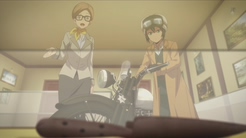
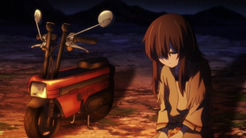
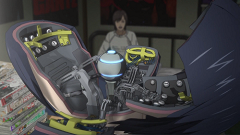
One of the surprises of the year was to see the return of Kino’s Journey, a very well regarded and more unique anime among those deemed classic. Many, myself included, were very much looking forward to the return of Kino and her talking Motorrad. Though due to some factors this series doesn’t quite live up to the pedigree of its former season. One factor is that it is somewhat a mix of a remake and a sequel as some old stories from the original 2003 series are remade while other new stories make an appearance. Those fond of kIno for it’s morally ambiguous parables will find the new series to be less focused on that and more on lighthearted little tales with Kino and other protagonists. There are of course dark moments but overall this series has more of an optimistic tone when compared to the previous seasons nihilistic outlook. This could be quite a turn off for old fans but there are indeed still good stories here.

However the choice of stories and their structure in the series doesn’t appear to have been thought out well as stories appear to be chosen based more on Kino and other fan favorites getting the spotlight rather than meaningful allegories on life. Quite a pity as there are well over 200 stories and yet the ones featured here appear to be the weaker ones of a long running series. Stories are placed one after another haphazardly without considering the tone or overall structure. For example, two of the remake episodes are A Kind Land and the Country of Adults. A kind land was the previous seasons finale but is placed in the middle of the series and is followed by Kino’s Origin which would have been more beneficial to place before A Kind Land. On top of which this season decides to finish on what amounts to a joke episode which again is a odd decision that seems to misunderstand the very intent of Kino’s story. Nonetheless there are some standout stories such as the Country of Lies and In the clouds.

That said while we have a B-class selection of stories, the presentation at least does them justice. Aside from some rather awkward CGI, this season of Kino is a visual improvement over its predecessors intentional but rather dated look. I didn’t notice anything noteworthy music wise and the opening is just alright. Characters can act a bit over the top and unrealistic, which is different from the original series more monotone delivery but that can result in some more emotional moments hitting harder. As such if a another season was made with better story selection I believe it could very well match the original. Though sadly this may be the last we see of Kino for a very long time. To sum things up, this series doesn’t hold a candle to the original but it’s still a worthwhile watch.

Kino’s Journey -The Beautiful World- – 12[Fields of Sheep]

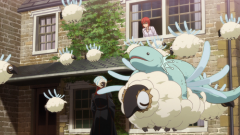
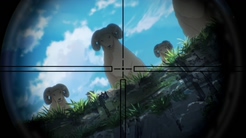
Thus with todays episode, Kino mets her greatest adversary, one to test her to her very limits and be her greatest obstacle on her journey so far. Kino’s Arch Nemesis is…Sheep. Yes, sheep. Of all the stories that could have been chosen for the finale for Kino, this has to be one of the most bizarre choices. Kino gets attacked by Sheep and must fight them off to escape with Hermes. What unfolds is a strange yet somewhat hilarious battle between them. This would have made for a excellent breather episode in the middle of the season and yet here it is right at the end. Besides so awkward CGI it’s an enjoyable episode but much likely my previous complaints about episodes like this, this isn’t what I watch Kino for. There isn’t really a deeper meaning to this one, only a action scene and the humor of Kino taking on sheep.

The only thing I found to be a interesting observation was the final revelation that those sheep were used to fight each other in a nearby country but were released into the wild due to animal rights groups. Now that country is oblivious to the fact that those sheep hang around outside and attack any travelers that come near. Even killing what is likely quite a number of people. An old tale of good intentions going wrong, in this case animal rights groups simply assuming that the sheep would forgot their fighting ways and go back to being docile naturally. Guess the lesson is that if you are going to do a good deed, make sure to consider all potential consequences of your actions.

My feelings towards Kino’s Journey 2017 are complicated. I will most certainly say this is not a bad season but when held up against its predecessor, it is a weaker one. The odd thing is that I don’t believe that it was how these episodes where adapted that was the problem. In fact I would consider the adaptations of these stories to be rather strong. No, the problem lies in the stories themselves and how they were laid out in this season is the thing that truly brings this season down. While Kino is an episodic series, there doesn’t seem to be any rhyme or reason to how these stories flow into one another. A perfect example is the episode showing various countries, were in a batch of comedic and lighthearted stories is one rather dark tale that it was almost mood whiplash. The stories where very poor choices as well, seemly chosen for making Kino look cool or showing off fan favorite characters.

This is the problem when you decide based on popular vote instead of actual quality. There are well over 200 stories written in Kino and yet the story choice in this season consisted of three remakes that frankly were not needed and far too many lighthearted/comedy episodes. I think that any new viewer would walk away from this series with a massive misunderstanding of just what Kino is actually about. I believe they would be quite surprised if they went back and watched the 2003 version to find it being a much darker introspective beast. Still I would like Lerche to take another shot at Kino as they have show they can adapt it. All they really need to do for another season is choose more wisely from Kino’s selection of stories and consider how they fit together in a season as a whole.

Inuyashiki Review – 65/100

Do you know what the average age of an anime protagonist is? Neither do I, but I’d wager its in the upper teens. For obvious reasons, most anime focus on high school and have high school aged protagonists with similarly aged problems. Its not often that we get a good older main character, who has to deal with more adult issues such as MonsterGreat Teacher Onizuka and Rakugo. Well, this season we can add another to this list. Even with its faults, Inuyashiki‘s characters remain strong and worth watching just for them.

Lets jump in!

To start, a quick synopsis. Inuyashiki focuses on well, Inuyashiki, a middle aged salaryman who feels useless and unloved by his family. One night, he heads to the park where he and a young man named Hiro Shishigami end up in an extra terrestrial hit and run. To cover their tracks the aliens rebuild them as cyborgs! These new bodies destroy their sense of humanity, and in the ensuing weeks the two must rediscover what it means to be human! Watch as their ideals clash and Japan pays the price! Onto the review!
Continue reading “Inuyashiki Review – 65/100”

Houseki no Kuni – 12 [New Work]

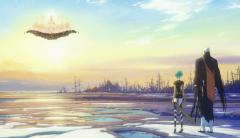
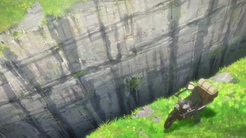
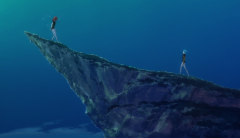
And this phenomenal anime has come to an end, at least for now. This finale is pretty much a calm before the big arc coming up, and further solidify the extend Phos has been growing so far. Well, Houseki isn’t very subtle on this by showing the parallel between this finale and the first episode. Again, we have the meeting between Phos and Cinnabar as the emotional chord, now with Phos’s offering the new job to their Crimson friend. Again, mirroring the very first sequence of the show  we have other Gems calling out for Phos to meet Kongou-sensei. While in the first episode Phos was lying on the grass doing basically nothing, this time they’re standing at the edge of the cliff and clearly have a goal in mind. It comes to a full circle, which is kind of appropriate for a heavily-Buddhism theme like Houseki. Many viewers might consider this ending anticlimactic, but I really like the steady progression of how the story unfolds and particularly how Phos has matured slowly but firmly since the start of the season. Even Phos reflects on the change with sad sentiment, a loss of innocence that they will never go back to the way they were before. This is one of the most well-developed anime character arc I have seen in awhile. Well done Houseki.

But not only Phos, this episode also shines on bringing other Gems to light with many hints of their backstory, while further highlights their colorful personalities with surprisingly relatable traits. Take Padparadscha for example, the beautiful Swiss-cheese holes Gem just waking up, having a walk at the shore and then falling back to sleep all too soon, but they sure catch up well with the situation and leaves a lasting impact. They’re the one who give Phos a much-needed advice: keep their composure and be mindful with their actions. Adding to that wise advice is the way he wears the uniform: loose shirt, uneven pair of socks and cool demeanor make him a total winner to me. But even Alex (Lexi), Zircon and Yellow Diamond all give their own stories that rooted deep in their insecurities when it comes to their roles and the fear of losing their dear comrades. Phos, on that note, had experienced both those issues, but it becomes apparent this time that the other Gems also have experienced them in some degrees too. Alex determines to learn all about the Lunarians as a reminder that they took Chrysoberyl away (the way they love trivia and cosplay Kongou sensei, by the way, are awesome). Zircon, on the other hand, feels deeply nervous around Bort, and their insecurities of having Phos surpassed him despite being the same age.

The biggest hint about the Lunarians comes from Phos’ attempt to isolate one of the Lunarian and try to talk to the figure. The Lunarian’s eyes come back into focus, or to put it better, they regain conscious. They even mutter something before got swept away by the toxic of Cinnabar. This makes me thinking what if the Lunarians are mind-controlled as well, just like the poor Admirabillis? All we know at the moment is the Admirabillis were captured and lose their consciousness in the Moon land, and the Gems are systematically controlled by Kongou-sensei, so it’s reasonable to assume the same fate with the Lunarians? Kongou-sensei obviously is the key to open the door full of secrets here, although Phos’ current decision to come over the Moon to see their side of story is a very logical move. After the Moon, the next target should be the Snails, right?

I still can’t put my finger on how much Phos still remembers Cinnabar and their promises, but it sure isn’t a good sign that Phos starting to lose their memories and Houseki suggests that as time goes on, when Phos loses more of their body parts, they will no longer have those important memories too. But their last encounter brings a lot of raw emotions to the forefront. Cinnabar still leans on what Phos promise, every single word of it, and the scene where they ran off Phos and showed their vulnerability speaks volume considering how they tend to avoid showing any emotions towards other Gems. It’s a hard job, and not necessary a rewarding one, where they team up with Phos to offer an opinion, or rather a contrasting opinion. I’m looking forward to see how the outcast duo will fare when they go up to the Moon for an enlightment.

Overall, what a ride! While I still bemoan for Houseki ending too soon and we have to wait for a certain amount of time for the sequel to come, if ever, I would definitely say that Orange studio had succeeded on their gambles of using fully computer generated to the entire show. The animation is dynamic and inventive, the visual is striking with symmetrical visual, moody color palette and the comedy is unexpectedly slapstick-y that somehow fit the tones of this little gem. Houseki is a treasure and I really hope they greenlit for the second season. This story is deserved to receive a full adaptation. The Gems must live on.

Inuyashiki – 11 [People of Earth]

Welcome everyone to the finale of Inuyashiki! Its been quite the roller coaster to get here, filled with sympathetic serial killers and interesting philosophical questions. So lets jump in, one last time!

To start off, I want to talk about Hiro, and his ending. I’ll get into the asteroid nonsense later, for now I want to focus on Hiro. As one of the main characters, arguably the one with the most screen time, Hiro deserved a good ending. For the most part I think he got it. His meeting with Ando, up to the Asteroid, showed what he really is. A scared child dealing with the existential question of humanity. At the end, all he wanted was to take care of those close to him, to spend time with them, to protect them. He protected Ando by dealing with his bullies, he protected Shiro by stealing money and by trying to end his war with the police. What he did was terrible, there are no excuses, but you can understand why. In his final meeting with Ando, he just wanted to spend time with his friend, not realizing or not accepting that his actions had destroyed that friendship. It’s beautiful and the complete opposite of Inuyashiki.

Continue reading “Inuyashiki – 11 [People of Earth]”

Mahoutsukai no Yome – 11 [Lovers ever run before the clock]

Welcome to another week of Mahoutsukai! Apologies for the lateness of this post. Mahoutsukai is difficult to write something meaningful about, and with Christmas right around the corner I have been rather busy. This week we have a continuation of Elias’s story, another step in Chise’s wand construction and more barely dressed elves! Lets jump in.

Picking up where we left off last week, Lindel continues with Elias’s story. Mahoutsukai did a lot right with this continued story. There was some comedy, without the use of chibi, with small things like Elias falling while skiing. There was some darkness, and interesting world bits, with Lindel trying to heal and Elias freaking everyone out. We even had a show of Elias learning as he uses the spruce to get them to safety! It all made for an enjoyable first half of the episode. It did still have issues however, such as the random chibi after Elias’s admitting to eating humans, or the odd opening shot of Elias in his home. I understand they wanted to show his lonliness, with Chise being off on her own adventure, but it just felt off. Overall though Elias’s story was a hit and framed Chise’s growth this episode well enough.

Continue reading “Mahoutsukai no Yome – 11 [Lovers ever run before the clock]”