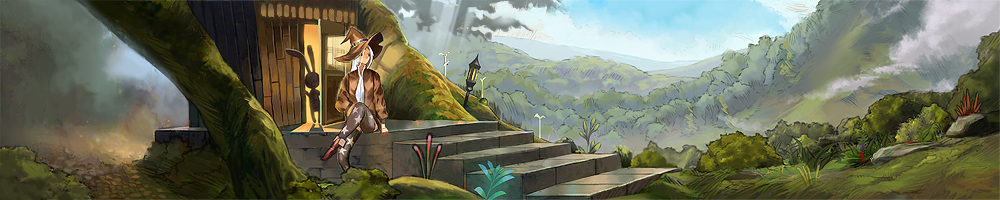


 Well, this is going to be my hardest review to write this season: explaining why the heck I considered Shangri-La among my favourites for the past half year. Even though there is a lot to dislike this series for, it’s really a series that proves to be very solid entertainment for those willing to suspend their disbelief.
I think it’s best explained as follows: imagine a series with a straightforward story, a simple and small cast and a slow pacing. Now imagine a series with a huge setting, a large and diverse cast of characters who all have their own motives and stance, a multi-layered story with a fast pacing that delivers buckets of plot twists each episode. Now, which of these two is likely to have more plotholes? And which one is probably going to be more exciting?
That’s basically the thing with Shangri-La. Granted, throughout the series Kuniko does a number of things that are rather hard to suspend your disbelief at (including breaking the laws of physics), and plotholes are also pretty common for those who pay attention. But at the same time, it had just about everything I look for in an anime.
The concept of Carbon Trading might seem weird at first, but it’s a pretty neat idea for this series to work with, and the setting that this series built around this concept is rich and imaginative. There are lots of different parties with all different priorities, morals and values, and the same goes for the cast: there are a lot of characters, and yet there are hardly two characters with the same outlook on life: everyone feels like an individual, and is interesting to watch and develop. My personal favourite was Karin, who gets the most development in this series.
My favourite part of this series was the plot, though. Throughout the majority of the series, you’re never going to know what to expect. Especially a good portion of the middle part of this series is features an truly excellent mystery plot, in which every revelation only makes the setting even more intriguing than it already was. Every character has so his or her own secrets, that together form a multi-layered storyline that just keeps delivering.
Unfortunately, this series plays the “lazy”-card right at its ending, which is without a doubt rushed. I’m not sure why there are only 24 episodes for this series because it definitely could have used two more episodes to wrap up the story better. The story right now just wants a happy ending a little too badly, even though it has to use lots of deus ex machina to get there. A shame.
The visuals for this series are an interesting beast. They range from rushed to absolutely gorgeous. Especially the first couple of episodes suffer from a collection of rushed shots and drawings, but at the same time some episodes feature the single most visually pleasing shots that I have seen for the past half year. The animation also picks itself up very nicely in the second half, and delivers some really good use of CG and shading to make this a very aesthetically pleasing series. The soundtrack of this series is also among my three favourite soundtracks of the past half year (with the other two belonging to Phantom and the Guin Saga).
So yes, you’re going to have to bring a cup of suspense of disbelief when you want to watch this series, and if you’re not trying to turn over every stone in search of a flaw you’ll be rewarded by a great story with a great setting that always manages to bring something new to the table, instead of dragging at the same point over and over. It’s a fun and diverse series, but I can understand why many hate the plotholes with passion.
Well, this is going to be my hardest review to write this season: explaining why the heck I considered Shangri-La among my favourites for the past half year. Even though there is a lot to dislike this series for, it’s really a series that proves to be very solid entertainment for those willing to suspend their disbelief.
I think it’s best explained as follows: imagine a series with a straightforward story, a simple and small cast and a slow pacing. Now imagine a series with a huge setting, a large and diverse cast of characters who all have their own motives and stance, a multi-layered story with a fast pacing that delivers buckets of plot twists each episode. Now, which of these two is likely to have more plotholes? And which one is probably going to be more exciting?
That’s basically the thing with Shangri-La. Granted, throughout the series Kuniko does a number of things that are rather hard to suspend your disbelief at (including breaking the laws of physics), and plotholes are also pretty common for those who pay attention. But at the same time, it had just about everything I look for in an anime.
The concept of Carbon Trading might seem weird at first, but it’s a pretty neat idea for this series to work with, and the setting that this series built around this concept is rich and imaginative. There are lots of different parties with all different priorities, morals and values, and the same goes for the cast: there are a lot of characters, and yet there are hardly two characters with the same outlook on life: everyone feels like an individual, and is interesting to watch and develop. My personal favourite was Karin, who gets the most development in this series.
My favourite part of this series was the plot, though. Throughout the majority of the series, you’re never going to know what to expect. Especially a good portion of the middle part of this series is features an truly excellent mystery plot, in which every revelation only makes the setting even more intriguing than it already was. Every character has so his or her own secrets, that together form a multi-layered storyline that just keeps delivering.
Unfortunately, this series plays the “lazy”-card right at its ending, which is without a doubt rushed. I’m not sure why there are only 24 episodes for this series because it definitely could have used two more episodes to wrap up the story better. The story right now just wants a happy ending a little too badly, even though it has to use lots of deus ex machina to get there. A shame.
The visuals for this series are an interesting beast. They range from rushed to absolutely gorgeous. Especially the first couple of episodes suffer from a collection of rushed shots and drawings, but at the same time some episodes feature the single most visually pleasing shots that I have seen for the past half year. The animation also picks itself up very nicely in the second half, and delivers some really good use of CG and shading to make this a very aesthetically pleasing series. The soundtrack of this series is also among my three favourite soundtracks of the past half year (with the other two belonging to Phantom and the Guin Saga).
So yes, you’re going to have to bring a cup of suspense of disbelief when you want to watch this series, and if you’re not trying to turn over every stone in search of a flaw you’ll be rewarded by a great story with a great setting that always manages to bring something new to the table, instead of dragging at the same point over and over. It’s a fun and diverse series, but I can understand why many hate the plotholes with passion.
| Storytelling: | 9/10 |
| Characters: | 8/10 |
| Production-Values: | 9/10 |
| Setting: | 9/10 |


 And so this series has come to an end. Unfortunately it wasn’t the epic ending I hoped for though. In this episode, Kuniko simply kills everyone evil, and this episode unfortunately was rushed in order to get to a happy end. I expected better from this series. There were also a bunch of deus ex machinas, like Miiko suddenly popping up from nowhere and blocking bullets that were aimed for Mikuni. It was explained later, but it still feels cheap.
There also was that matter of Kuniko, somehow not becoming Himiko’s reincarnation. Why did Ryouko not know that that was going to happen? Also, Takehito was just pathetic in this episode. What, he just appears and blows himself up? Come on, that deserves more build-up. Everything just went too easy in this episode. It didn’t really build up to Kuniko’s development of becoming a leader, she simply smacked her way through everything because she happened to be a digma (thankfully she wasn’t Ryouko’s daughter, but instead a clone).
But there’s one thing I really liked about this episode: Karin’s end. She really feels like she developed her character and I liked how despite being in despair, she still managed to stop Medusa in time, and it was very nice to see Claris and Jean appear in the end. Her ending was really cute.
But yeah, overall I’m really afraid that this downer ending is going to leave me with a rather negative impression on this series, which is a shame because the middle part of this series really was everything I look for in an anime. Thinking back, I think the turning point was the burning of Tokyo: after that, the stories started to converge with each other, and it lost that bit of chaos that it was so good at in the middle part. In a way the hardest part of a mystery series is its ending: making the revelations count.
In any case, I do hope that this isn’t going to form the ending of Gonzo. Like ’em or not, they do have the guts to take risks, even when they’re about to go bankrupt. Risks like these are much better than playing it safe. Shangri-La… if it were well executed it would have belonged to my absolute favourites. Unfortunately, the shoddy execution made it less impressive than it could have been. Still, it’s still likely to end up somewhere at the end of my top 10 for 2009, unless the fall season turns out to be really, really good. Which I really doubt until proven wrong.
Rating: (Enjoyable)]]>
And so this series has come to an end. Unfortunately it wasn’t the epic ending I hoped for though. In this episode, Kuniko simply kills everyone evil, and this episode unfortunately was rushed in order to get to a happy end. I expected better from this series. There were also a bunch of deus ex machinas, like Miiko suddenly popping up from nowhere and blocking bullets that were aimed for Mikuni. It was explained later, but it still feels cheap.
There also was that matter of Kuniko, somehow not becoming Himiko’s reincarnation. Why did Ryouko not know that that was going to happen? Also, Takehito was just pathetic in this episode. What, he just appears and blows himself up? Come on, that deserves more build-up. Everything just went too easy in this episode. It didn’t really build up to Kuniko’s development of becoming a leader, she simply smacked her way through everything because she happened to be a digma (thankfully she wasn’t Ryouko’s daughter, but instead a clone).
But there’s one thing I really liked about this episode: Karin’s end. She really feels like she developed her character and I liked how despite being in despair, she still managed to stop Medusa in time, and it was very nice to see Claris and Jean appear in the end. Her ending was really cute.
But yeah, overall I’m really afraid that this downer ending is going to leave me with a rather negative impression on this series, which is a shame because the middle part of this series really was everything I look for in an anime. Thinking back, I think the turning point was the burning of Tokyo: after that, the stories started to converge with each other, and it lost that bit of chaos that it was so good at in the middle part. In a way the hardest part of a mystery series is its ending: making the revelations count.
In any case, I do hope that this isn’t going to form the ending of Gonzo. Like ’em or not, they do have the guts to take risks, even when they’re about to go bankrupt. Risks like these are much better than playing it safe. Shangri-La… if it were well executed it would have belonged to my absolute favourites. Unfortunately, the shoddy execution made it less impressive than it could have been. Still, it’s still likely to end up somewhere at the end of my top 10 for 2009, unless the fall season turns out to be really, really good. Which I really doubt until proven wrong.
Rating: (Enjoyable)]]> 

 Oh my, the creators actually found a solution to the badly animated wars: skip them, and just show the aftermath. Oh boy, I never saw that one coming. While at first sight cheap, I believe that this was the best choice that they could have made. Imagine what would have happened if they did animate those fights: it would have overrun the screen with fake CG, unbelievable animation and stock footage that probably would have been used over and over again. It would have ruined the suspension just like what it did in the Nosferas Arc.
They also give an interesting anticlimactic air to the battles, which in turn works SO well with Amnelis’ development: here she is, ready to kick Naris’ butt for betraying her, and then her father collapses, she’s forced to retreat, gets cornered and charges anyway, only to be mercilessly slaughtered. It spells pathetic all over her, and yet that only solidifies her growth as a character, and develops her even more. We probably have to wait for the second season (SECOND SEASON WHERE!?) to see what it exactly paid off for, but I really loved Amnelis throughout this episode, even though just about everything went wrong for her.
If anything, the deletion of the battles show that the creators more than anything know what they’re good at, and focus on those things while leaving the large-scale battles for what they are, because they simply don’t have the budget to make them work. I must congratulate Satelight for making this decision, because despite these battles, this episode rocked beyond belief.
Also, it’s interesting that Guin’s side-story has been anime-original, but I can somewhat understand why the creators chose to do it. After all, this series is called “Guin Saga”, but his role has been that of a mere side-character for the past arc. Instead, the series could just as sell have been called the “Naris Saga”, “Amnelis Saga”, or perhaps even the “Remus Saga”. So yeah, after all that he does deserve his own place in the spotlights in the end, saving Remus and Linda from that blond guy. it forms a nice conclusion and yet at the same time isn’t going to get in the way of that second season (SECOND SEASON WHERE?!).
Rating: *** (Awesome)]]>
Oh my, the creators actually found a solution to the badly animated wars: skip them, and just show the aftermath. Oh boy, I never saw that one coming. While at first sight cheap, I believe that this was the best choice that they could have made. Imagine what would have happened if they did animate those fights: it would have overrun the screen with fake CG, unbelievable animation and stock footage that probably would have been used over and over again. It would have ruined the suspension just like what it did in the Nosferas Arc.
They also give an interesting anticlimactic air to the battles, which in turn works SO well with Amnelis’ development: here she is, ready to kick Naris’ butt for betraying her, and then her father collapses, she’s forced to retreat, gets cornered and charges anyway, only to be mercilessly slaughtered. It spells pathetic all over her, and yet that only solidifies her growth as a character, and develops her even more. We probably have to wait for the second season (SECOND SEASON WHERE!?) to see what it exactly paid off for, but I really loved Amnelis throughout this episode, even though just about everything went wrong for her.
If anything, the deletion of the battles show that the creators more than anything know what they’re good at, and focus on those things while leaving the large-scale battles for what they are, because they simply don’t have the budget to make them work. I must congratulate Satelight for making this decision, because despite these battles, this episode rocked beyond belief.
Also, it’s interesting that Guin’s side-story has been anime-original, but I can somewhat understand why the creators chose to do it. After all, this series is called “Guin Saga”, but his role has been that of a mere side-character for the past arc. Instead, the series could just as sell have been called the “Naris Saga”, “Amnelis Saga”, or perhaps even the “Remus Saga”. So yeah, after all that he does deserve his own place in the spotlights in the end, saving Remus and Linda from that blond guy. it forms a nice conclusion and yet at the same time isn’t going to get in the way of that second season (SECOND SEASON WHERE?!).
Rating: *** (Awesome)]]> 

 Aha, the calm before the storm episode. There’s nothing much to say about this one: it was as solid as usual, while the plot sets up for the big climax of this series, which is probably going to happen in the next episode. The past few episodes have really been able to very subtly build up to this finale, and I can’t wait to see how all of this has paid off.
So, in this episode Reiji first manages to convince Helen to leave Cal to him, because he doesn’t want to lose anyone else, however Helen in the end refuses to listen to him and decides to kill Cal off herself. It’s here where Reiji’s big weakness comes into play: his naivety. He believes with his heart that he’s going to be able to convince Cal to stop killing him, yet Helen who has the more realistic mindset sees no chance in that happening. The last she wants to happen is a dead Reiji, and so she chose for the option that would leave his life in as little danger as possible.
Scythe Master in the meantime also hasn’t been sitting still, when this episode introduces Vier, Funf, Sechs, Sieben, Acht and Neun. I’m not sure what they can add to the story at this point in the series, but it was only natural for him to put his experiments to a larger scale at one point.
Rating: ** (Excellent)]]>
Aha, the calm before the storm episode. There’s nothing much to say about this one: it was as solid as usual, while the plot sets up for the big climax of this series, which is probably going to happen in the next episode. The past few episodes have really been able to very subtly build up to this finale, and I can’t wait to see how all of this has paid off.
So, in this episode Reiji first manages to convince Helen to leave Cal to him, because he doesn’t want to lose anyone else, however Helen in the end refuses to listen to him and decides to kill Cal off herself. It’s here where Reiji’s big weakness comes into play: his naivety. He believes with his heart that he’s going to be able to convince Cal to stop killing him, yet Helen who has the more realistic mindset sees no chance in that happening. The last she wants to happen is a dead Reiji, and so she chose for the option that would leave his life in as little danger as possible.
Scythe Master in the meantime also hasn’t been sitting still, when this episode introduces Vier, Funf, Sechs, Sieben, Acht and Neun. I’m not sure what they can add to the story at this point in the series, but it was only natural for him to put his experiments to a larger scale at one point.
Rating: ** (Excellent)]]> 

 Do correct me if I’m wrong, but this is he part where the anime seems to be going into original episodes that weren’t based off the manga, right? If that’s the case, then the creators handled it pretty well this time. This episode didn’t try to rush through revelations, or go into a completely different direction, ruining the rest of the series.
Okay, it was a build-up episode, but a very pleasant one. My guess is that the creators have decided to end the series with the truth about the tragedy of Sabrie, and if they can pull it off it’s at least going to be a satisfying conclusion. This episode was all about building it up and what I liked a lot about it is that it did bother to show the development of the past few episodes: how much closer the five lead characters have gotten after Break gave in and told about his backstory. It’s as if that broke down some sort of invisible wall with that. It was also pleasant to see Ada again, and the jokes around Oz’s private security were also hilarious.
I’ve said this before, but anime-original material isn’t bad at all. It all depends on whether or not the creators are able to handle it correctly, and I’ve seen plenty of series who pulled off great things when they included stuff that wasn’t in the original source material. For Pandora Hears it unfortunately seems unlikely for a second season, so I’d rather have at least some conclusion, rather than that the show simply “ends” after episode 25 (this is one of those shows in which a “life goes on”-ending like in Aoi Hana simply doesn’t work), and so far they seem to be doing a good job. I’m not going to get too enthusiastic before I find out what the creators were actually building up for, but it does look like this show isn’t going to pull a Claymore at the end.
Right now, I want to have a good explanation for those strange puppets that appeared at the end of this episode. Did Vincent summon them in an attempt to get those who are close to the secrets of the Tragedy of Sabrie out of the picture, and can the creators pull it off without being cheesy? Well, let’s find out in the next two weeks!
Rating: * (Good)]]>
Do correct me if I’m wrong, but this is he part where the anime seems to be going into original episodes that weren’t based off the manga, right? If that’s the case, then the creators handled it pretty well this time. This episode didn’t try to rush through revelations, or go into a completely different direction, ruining the rest of the series.
Okay, it was a build-up episode, but a very pleasant one. My guess is that the creators have decided to end the series with the truth about the tragedy of Sabrie, and if they can pull it off it’s at least going to be a satisfying conclusion. This episode was all about building it up and what I liked a lot about it is that it did bother to show the development of the past few episodes: how much closer the five lead characters have gotten after Break gave in and told about his backstory. It’s as if that broke down some sort of invisible wall with that. It was also pleasant to see Ada again, and the jokes around Oz’s private security were also hilarious.
I’ve said this before, but anime-original material isn’t bad at all. It all depends on whether or not the creators are able to handle it correctly, and I’ve seen plenty of series who pulled off great things when they included stuff that wasn’t in the original source material. For Pandora Hears it unfortunately seems unlikely for a second season, so I’d rather have at least some conclusion, rather than that the show simply “ends” after episode 25 (this is one of those shows in which a “life goes on”-ending like in Aoi Hana simply doesn’t work), and so far they seem to be doing a good job. I’m not going to get too enthusiastic before I find out what the creators were actually building up for, but it does look like this show isn’t going to pull a Claymore at the end.
Right now, I want to have a good explanation for those strange puppets that appeared at the end of this episode. Did Vincent summon them in an attempt to get those who are close to the secrets of the Tragedy of Sabrie out of the picture, and can the creators pull it off without being cheesy? Well, let’s find out in the next two weeks!
Rating: * (Good)]]> 

 Haha, what an awesome episode. With such a huge series with so many different subplots and such a frantic pacing, I was really expecting some sort of trainwreck for the final episodes. And yet the opposite turns out to be true, and instead the finale developed into a thriller to stop Ryouko from trying to destroy the world.
And really: it works. Because the rest of the series fleshed Ryouko out so well compared to most villains out there, she’s far away from those stereotypical evil overlords and really stands out as a huge threat to the lead characters. Her mindset is demented, yes. But at the same time as a villain, she’s very competent: she knew exactly how to place the chess pieces right in order to get her way; so far, she only made one mistake throughout the entire series in terms of her own ideals: she didn’t know that the daggers could be removed from the altar, and she didn’t know that they could cut through any kind of steel. And I admit: you’ve got to think pretty far-fetched in order to have seen that one coming if you didn’t know anything about it.
I also love how she also averts one of the tropes that most villains of her kind strangely get away with. Suppose you were working for an evil overlord, and found out that your master was planning to destroy the world, you included. Would you still support this boss? I sure as hell wouldn’t. Ryouko did well to keep all her plans to herself, right until it wouldn’t matter anymore who would find out. I mean, her plan to hold Kunihito’s parents hostages would never have worked for long, but it did buy her the necessary time to take Mikuni away from Kuniko.
And yeah: this episode finally explains what happened to Karin’s parents: they turn out to have been dead all along. Talk about an awesome plot twist here: all the wealth she attained, everything she gained when she created Medusa: it was all just a case of denial in her case.
Okay, so one episode is left. The set-up for the final episode is fairly straightforward: Ryouko wants Mikuni to destroy the world, Kuniko is here to stop her. What I want to see from this series is an ending which is more than “Kuniko and Ryouko have a fight and Kuniko wins”. I’ve seen too many series who have fallen to this trap, but if there’s any series who is able to evade this, it’s Shangri-La. This series really has exceeded my expectations at this point. These past few episodes took it away from its image of “yet another trainwreck” when it showed that it’s very well capable of writing a solid finale. What more could you want?
And yeah. Who cares that Kuniko descended the tube with her dagger? It’s science fiction. Who knows whether that dagger has magical slowing-down powers?
Rating: *** (Awesome)]]>
Haha, what an awesome episode. With such a huge series with so many different subplots and such a frantic pacing, I was really expecting some sort of trainwreck for the final episodes. And yet the opposite turns out to be true, and instead the finale developed into a thriller to stop Ryouko from trying to destroy the world.
And really: it works. Because the rest of the series fleshed Ryouko out so well compared to most villains out there, she’s far away from those stereotypical evil overlords and really stands out as a huge threat to the lead characters. Her mindset is demented, yes. But at the same time as a villain, she’s very competent: she knew exactly how to place the chess pieces right in order to get her way; so far, she only made one mistake throughout the entire series in terms of her own ideals: she didn’t know that the daggers could be removed from the altar, and she didn’t know that they could cut through any kind of steel. And I admit: you’ve got to think pretty far-fetched in order to have seen that one coming if you didn’t know anything about it.
I also love how she also averts one of the tropes that most villains of her kind strangely get away with. Suppose you were working for an evil overlord, and found out that your master was planning to destroy the world, you included. Would you still support this boss? I sure as hell wouldn’t. Ryouko did well to keep all her plans to herself, right until it wouldn’t matter anymore who would find out. I mean, her plan to hold Kunihito’s parents hostages would never have worked for long, but it did buy her the necessary time to take Mikuni away from Kuniko.
And yeah: this episode finally explains what happened to Karin’s parents: they turn out to have been dead all along. Talk about an awesome plot twist here: all the wealth she attained, everything she gained when she created Medusa: it was all just a case of denial in her case.
Okay, so one episode is left. The set-up for the final episode is fairly straightforward: Ryouko wants Mikuni to destroy the world, Kuniko is here to stop her. What I want to see from this series is an ending which is more than “Kuniko and Ryouko have a fight and Kuniko wins”. I’ve seen too many series who have fallen to this trap, but if there’s any series who is able to evade this, it’s Shangri-La. This series really has exceeded my expectations at this point. These past few episodes took it away from its image of “yet another trainwreck” when it showed that it’s very well capable of writing a solid finale. What more could you want?
And yeah. Who cares that Kuniko descended the tube with her dagger? It’s science fiction. Who knows whether that dagger has magical slowing-down powers?
Rating: *** (Awesome)]]> 

 At the end of this episode, there’s an insert song. I suspect the lyrics to be gibberish or some other obscure language, and I don’t exactly know who sung it, but whoever she was, she really has an amazing voice. Thumbs up to whoever she was.
Anyway, yet another episode of excellent buildup, and a surprising scene from Sumni who proves once and for all that she’s able to kick ass. Probably the most important part in this episode was Guin (ZOMG) leaving Remus and Linda: for one, he did it because he’s targeted and Remus nearly got killed if it wasn’t for Sumni, and this also allows him to pursue his own goals, now that Remus and Linda have found their place back where they belong. At the same time, Istvan also learns that Naris is planning to marry Linda for his own goals, and quickly ends the alliance he made with him.
Looking back, the weakest part of the Guin Saga was definitely the CG of the Mongol army in the Nosferas arc: while a nice try, the creators just weren’t able to simulate grand grand-scale battles with the limited budget they had. That does sort-of worry me for the finale for this series, as it promises to end with an all-out battle between the armies of Naris, Amnelis, Remus and Scar. Did the creators save up enough budget to make it work, or does the plot have a few more surprises to make up for the flawed battles?
Rating: ** (Excellent)]]>
At the end of this episode, there’s an insert song. I suspect the lyrics to be gibberish or some other obscure language, and I don’t exactly know who sung it, but whoever she was, she really has an amazing voice. Thumbs up to whoever she was.
Anyway, yet another episode of excellent buildup, and a surprising scene from Sumni who proves once and for all that she’s able to kick ass. Probably the most important part in this episode was Guin (ZOMG) leaving Remus and Linda: for one, he did it because he’s targeted and Remus nearly got killed if it wasn’t for Sumni, and this also allows him to pursue his own goals, now that Remus and Linda have found their place back where they belong. At the same time, Istvan also learns that Naris is planning to marry Linda for his own goals, and quickly ends the alliance he made with him.
Looking back, the weakest part of the Guin Saga was definitely the CG of the Mongol army in the Nosferas arc: while a nice try, the creators just weren’t able to simulate grand grand-scale battles with the limited budget they had. That does sort-of worry me for the finale for this series, as it promises to end with an all-out battle between the armies of Naris, Amnelis, Remus and Scar. Did the creators save up enough budget to make it work, or does the plot have a few more surprises to make up for the flawed battles?
Rating: ** (Excellent)]]> 

 Well, since the manga is going on way beyond the end of this series, which is going to come in three more episodes, I’m not expecting too much from this series’ finale. Sure, the final episode may end up to become awesome, but the story isn’t going to come together like with most endings, and it’s probably going to keep me hungry for more until that second season gets announced. If it ever gets.
Nevertheless though, this show just keeps surprising me. Some of the flashback parts in this episode were utterly demented, not to mention that just about the entire episode was dedicated to Break’s past. We also learn about how Alice and the Will of the Abyss used to be twins, somehow strangely connected through each other in the Abyss. When Alice got killed, I assume that the Will of the Abyss remained in the deepest parts of the abyss, while Alice herself was just cast into the regular Abyss, where Oz ran into her.
Thinking back though, this series did miss out on being a classic. Now that this series has nearly ended, I’m beginning to understand why: compared to the other series this season, the cast of Pandora Hearts didn’t grow on me as much. This series has always excelled at two points: the complex storyline and back-story behind everything, and the demented style of storytelling that just keeps the surprises going. But it also excelled at these points incredibly well.
In the end, Oz ended up as a bit of a flawed character: he works when the focus isn’t on him, but when this show focuses on him it starts focusing a bit too much on his cheesy self-retrospection. As for the rest of the characters: the thing that made them awesome was this series’ style of storytelling: the people from Xebec did a great thing of translating the style from the manga to the anime, and give it as much impact as possible. But in the end, the cast members on their own just aren’t as interesting as the cast of Guin Saga, Phantom, Shangri-la, Full Metal Alchemist, Cross Game, the New Mazinger and some other shows.
Nevertheless, where as the spring season of 2008 brought some truly inspiring science fiction premises and the autumn of 2008 brought lots of new things to the table for the horror-series, the spring of 2009 excelled at the fantasy-premises. The new Full Metal Alchemist, Guin Saga, Pandora Hearts and Shangri-La (which walks a bit in between fantasy and science fiction) and if you include the winter-season Kemono no Souja Erin all came with great and inventive premises that really contributed to the fantasy genre.
Rating: ** (Excellent)]]>
Well, since the manga is going on way beyond the end of this series, which is going to come in three more episodes, I’m not expecting too much from this series’ finale. Sure, the final episode may end up to become awesome, but the story isn’t going to come together like with most endings, and it’s probably going to keep me hungry for more until that second season gets announced. If it ever gets.
Nevertheless though, this show just keeps surprising me. Some of the flashback parts in this episode were utterly demented, not to mention that just about the entire episode was dedicated to Break’s past. We also learn about how Alice and the Will of the Abyss used to be twins, somehow strangely connected through each other in the Abyss. When Alice got killed, I assume that the Will of the Abyss remained in the deepest parts of the abyss, while Alice herself was just cast into the regular Abyss, where Oz ran into her.
Thinking back though, this series did miss out on being a classic. Now that this series has nearly ended, I’m beginning to understand why: compared to the other series this season, the cast of Pandora Hearts didn’t grow on me as much. This series has always excelled at two points: the complex storyline and back-story behind everything, and the demented style of storytelling that just keeps the surprises going. But it also excelled at these points incredibly well.
In the end, Oz ended up as a bit of a flawed character: he works when the focus isn’t on him, but when this show focuses on him it starts focusing a bit too much on his cheesy self-retrospection. As for the rest of the characters: the thing that made them awesome was this series’ style of storytelling: the people from Xebec did a great thing of translating the style from the manga to the anime, and give it as much impact as possible. But in the end, the cast members on their own just aren’t as interesting as the cast of Guin Saga, Phantom, Shangri-la, Full Metal Alchemist, Cross Game, the New Mazinger and some other shows.
Nevertheless, where as the spring season of 2008 brought some truly inspiring science fiction premises and the autumn of 2008 brought lots of new things to the table for the horror-series, the spring of 2009 excelled at the fantasy-premises. The new Full Metal Alchemist, Guin Saga, Pandora Hearts and Shangri-La (which walks a bit in between fantasy and science fiction) and if you include the winter-season Kemono no Souja Erin all came with great and inventive premises that really contributed to the fantasy genre.
Rating: ** (Excellent)]]> 

 Okay, the calm before the storm episode. Most of this episode was very quiet, and yet at the same time a lot of things happened, were built up and had me glued to the screen.
With the biggest event being Lizzie’s death. At this point, it wasn’t meant to be a shocking plot twist, but rather to symbolize how much has gone wrong with Drei. Throughout the series, she has always been the most solid and stable character: she had no hidden agenda, and instead she worked with a mindset with a healthy balance between friends and money. She was the one who watched Cal train in her Drei-form, and in this episode you can really see that now that she has found out what drove Cal to be an assassin, she really regrets to see what she turned into.
In this episode, the inevitable indeed happened that Drei was forced to shoot Lizzie. She really doesn’t care at all about her job, as long as she gets to kill Reiji, and in this episode we see her kidnap Mio, to prevent him from running away. In the end though, Helen takes the bait. The next episode is going to be awesome, I can feel it. But yeah, this episode still rocked. At this point, the characters can be drinking tea and I’m still going to love them.
Also, how large is this soundtrack anyway? This episode introduced yet two new tracks. I’m growing into more and more of a fan of Hikaru Nanase. At first I believed her to be some sort of one trick pony, with Noein’s soundtrack and all. But after watching this show, and finishing Zone of the Enders, I really have to take that back: Hikaru Nanase really is an amazing composer, but she does need a great show to draw out her full potential.
Rating: ** (Excellent)]]>
Okay, the calm before the storm episode. Most of this episode was very quiet, and yet at the same time a lot of things happened, were built up and had me glued to the screen.
With the biggest event being Lizzie’s death. At this point, it wasn’t meant to be a shocking plot twist, but rather to symbolize how much has gone wrong with Drei. Throughout the series, she has always been the most solid and stable character: she had no hidden agenda, and instead she worked with a mindset with a healthy balance between friends and money. She was the one who watched Cal train in her Drei-form, and in this episode you can really see that now that she has found out what drove Cal to be an assassin, she really regrets to see what she turned into.
In this episode, the inevitable indeed happened that Drei was forced to shoot Lizzie. She really doesn’t care at all about her job, as long as she gets to kill Reiji, and in this episode we see her kidnap Mio, to prevent him from running away. In the end though, Helen takes the bait. The next episode is going to be awesome, I can feel it. But yeah, this episode still rocked. At this point, the characters can be drinking tea and I’m still going to love them.
Also, how large is this soundtrack anyway? This episode introduced yet two new tracks. I’m growing into more and more of a fan of Hikaru Nanase. At first I believed her to be some sort of one trick pony, with Noein’s soundtrack and all. But after watching this show, and finishing Zone of the Enders, I really have to take that back: Hikaru Nanase really is an amazing composer, but she does need a great show to draw out her full potential.
Rating: ** (Excellent)]]> 

 Haha, how awesome! Just when I thought that this show had already passed its best point, it just keeps the surprises coming. Seriously, with this series I was expecting the final episodes to be all over the place, like what it did in the middle part of the story, which had so many different plot twists about so many different characters.
Instead, the past few episodes have been the most solid and focused episodes of the entire series. Because of that, it lost the erratic pacing that I liked so much in the rest of the series. Usually when a series pulls this, it gets rather boring, but this episode really was surprisingly good. In fact, it was awesome, and well for the fact that this series has much more than just that pacing: it still has its great sense of characters, plot twists, visuals, music, et cetera. And the slow pacing leading up to the ending actually improved on them: we now can really focus on the central themes of the series. And hey, this series has completely shifted its style of storytelling before, so for once it doesn’t feel like the creators lack inspiration for the finale.
I really liked the reason why Sayoko was freed by one of Ryoko’s henchmen: he discovered that Sayoko was his older sister he had never known, so he decided to be a good brother for once and let her go. While it seems like a rather flimsy reason at first, the more I think about it the more it fits within this series: it ties in very much with this series’ themes of family bonds: families being torn apart, growing away from each other. You see it everywhere in this series: Sayoko lost her daughter, Takehito having lost his little sister, Kuniko taking her grandmother for granted and getting into a fight with her, Karin and the distance from her parents, and there is of course also my theory of Ryouko, being the mother of Kuniko, Mikuni and Kunihito, which is getting more and more likely, which I’ll get into below.
Most of this episode was spent on Mikuni, trying to decide whether it was worth destroying the world for the sake of revenge. The thing is however, that she’s just a little kid: very easily influenced by the scary Ryouko. Ryouko on the meantime really proved to be an excellent villain here, if you can accept that she’s so screwed in her mind that she’s willing to destroy the world, and it was her who hacked into Medusa earlier.
So in the end she did turn into another villain who’s planning to destroy the world, but in my opinion she stands much higher above the usual villains of this type. In a villain, I’m not looking for someone who necessarily has to be morally ambiguous, like these misunderstood good guys. Those people also have their sets of problems. What I’m looking for in a villain is a personality: a well fleshed out character who isn’t a cheap excuse for a bit of conflicts. Well backed-up reasons are a plus, but not necessarily required: I mean, how many evil overlords in the real world are screwed in the head? The reason why I dislike most villains in anime is because they’re too often just paper bags who are there for the sake of having a villain.
And yeah, I’m getting more and more convinced that Ryouko is the mother of Mikuni, Kuniko and Kunihito. The final twist this episode really was an awesome one: I love it when these character who infiltrate the enemy tell nobody of what they’re doing, not even the viewers themselves. I already found that it was strange that he’d suddenly get so close to Kuniko, I already found it weird for the creators to suddenly start establishing a strange romance between him and Kuniko. Now everything makes sense!
And really, Ryouko looked so much like an angry mother who’s urging her child along when she took Mikuni along with her. She really had that feeling of parental authority when she dealt with her. And besides that, I can’t think of any reason why she would want to obey the successor of Atlas, other than some sort of strange and deranged case of family bonds, in a series which is full of broken up and dysfunctional families.
Out of all the shows that are going to end in the coming month, the ones that are promising some outstanding endings to look out for for me are the new Mazinger, Shangri-La, Tokyo Magnitude and Phantom. These are the shows which were excellently planned across their total airtime, and are promising to close off with a finale in which everything comes together. There are only a few shows of this caliber every season, and I’m glad to see that this season again has a fine selection of them.
Rating: *** (Awesome)]]>
Haha, how awesome! Just when I thought that this show had already passed its best point, it just keeps the surprises coming. Seriously, with this series I was expecting the final episodes to be all over the place, like what it did in the middle part of the story, which had so many different plot twists about so many different characters.
Instead, the past few episodes have been the most solid and focused episodes of the entire series. Because of that, it lost the erratic pacing that I liked so much in the rest of the series. Usually when a series pulls this, it gets rather boring, but this episode really was surprisingly good. In fact, it was awesome, and well for the fact that this series has much more than just that pacing: it still has its great sense of characters, plot twists, visuals, music, et cetera. And the slow pacing leading up to the ending actually improved on them: we now can really focus on the central themes of the series. And hey, this series has completely shifted its style of storytelling before, so for once it doesn’t feel like the creators lack inspiration for the finale.
I really liked the reason why Sayoko was freed by one of Ryoko’s henchmen: he discovered that Sayoko was his older sister he had never known, so he decided to be a good brother for once and let her go. While it seems like a rather flimsy reason at first, the more I think about it the more it fits within this series: it ties in very much with this series’ themes of family bonds: families being torn apart, growing away from each other. You see it everywhere in this series: Sayoko lost her daughter, Takehito having lost his little sister, Kuniko taking her grandmother for granted and getting into a fight with her, Karin and the distance from her parents, and there is of course also my theory of Ryouko, being the mother of Kuniko, Mikuni and Kunihito, which is getting more and more likely, which I’ll get into below.
Most of this episode was spent on Mikuni, trying to decide whether it was worth destroying the world for the sake of revenge. The thing is however, that she’s just a little kid: very easily influenced by the scary Ryouko. Ryouko on the meantime really proved to be an excellent villain here, if you can accept that she’s so screwed in her mind that she’s willing to destroy the world, and it was her who hacked into Medusa earlier.
So in the end she did turn into another villain who’s planning to destroy the world, but in my opinion she stands much higher above the usual villains of this type. In a villain, I’m not looking for someone who necessarily has to be morally ambiguous, like these misunderstood good guys. Those people also have their sets of problems. What I’m looking for in a villain is a personality: a well fleshed out character who isn’t a cheap excuse for a bit of conflicts. Well backed-up reasons are a plus, but not necessarily required: I mean, how many evil overlords in the real world are screwed in the head? The reason why I dislike most villains in anime is because they’re too often just paper bags who are there for the sake of having a villain.
And yeah, I’m getting more and more convinced that Ryouko is the mother of Mikuni, Kuniko and Kunihito. The final twist this episode really was an awesome one: I love it when these character who infiltrate the enemy tell nobody of what they’re doing, not even the viewers themselves. I already found that it was strange that he’d suddenly get so close to Kuniko, I already found it weird for the creators to suddenly start establishing a strange romance between him and Kuniko. Now everything makes sense!
And really, Ryouko looked so much like an angry mother who’s urging her child along when she took Mikuni along with her. She really had that feeling of parental authority when she dealt with her. And besides that, I can’t think of any reason why she would want to obey the successor of Atlas, other than some sort of strange and deranged case of family bonds, in a series which is full of broken up and dysfunctional families.
Out of all the shows that are going to end in the coming month, the ones that are promising some outstanding endings to look out for for me are the new Mazinger, Shangri-La, Tokyo Magnitude and Phantom. These are the shows which were excellently planned across their total airtime, and are promising to close off with a finale in which everything comes together. There are only a few shows of this caliber every season, and I’m glad to see that this season again has a fine selection of them.
Rating: *** (Awesome)]]>