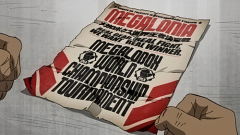
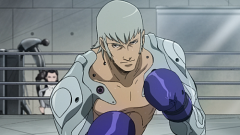
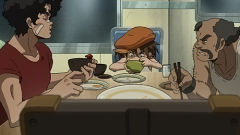
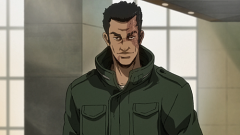
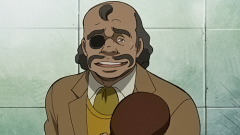
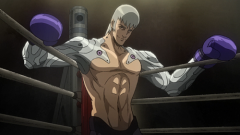
Megalo Box – 8/9 [Deadline of the Dream/A Dead Flower Shall Never Bloom]

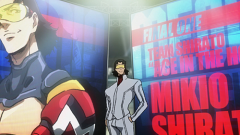
Hello again everyone and welcome to another (2) week(s) of Megalo Box! First off, apologies for missing last week. Was a bit hectic. Still, means we can cover the rest of the Mikio arc in a single post! Smaller victories! Lets jump in.

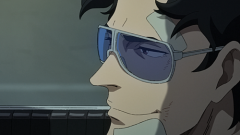
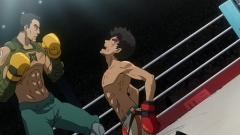
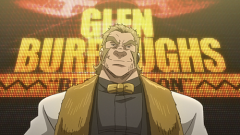
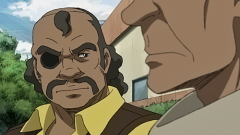
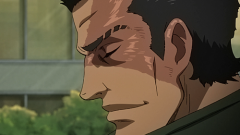
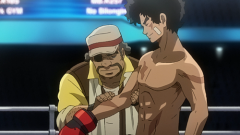
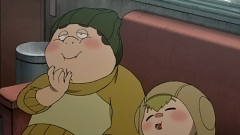
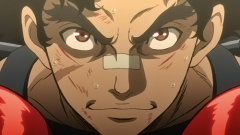
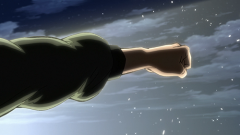
To start off, Megalo Box continues to stand out. The rough lineart, the style in every scene and the narrative are lovely. Mikio’s build up, backstory and motivations all made me enjoy him as a character. He was a complete toss-pot of a person, terrible dude, but as a villain I enjoyed him. I am a little annoyed that they are playing up his “pride”, a good loser, at the end with his respect towards Joe however. It just doesn’t fit his character to me. This man was willing to blackmail his opponent, run with AI Gear and inject himself with what can only be drugs all to steal the family company from his sister. These are not the actions of a “good man” and I hope Megalo Box doesn’t attempt to redeem him. Not all characters need to be “likeable”, and we already have Aragaki for this role.

Continue reading “Megalo Box – 8/9 [Deadline of the Dream/A Dead Flower Shall Never Bloom]”

Megalo Box – 7 [The Road to Death]

Hello everyone, and welcome to the most surprising episode of Megalo Box yet. This week we have family drama, Joe’s declining health and a shocker of an ending. Lets jump in!

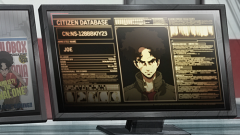
So starting from the top, lets talk about this ending. I never thought Megalo Box would pull something like this, with its limited number of episodes. I assumed there would be a basic, linear progression of fights. With this however we now have 2 strong antagonists, or perhaps 2 protagonists. Its difficult to decide where Yuri fits into this, though Mikio’s place is clear. Regardless I am very impressed through brought Joe’s legal citizenship back into question. Mikio was already an interesting opponent, the rich boy with something to prove, but this blackmail really sells his “Anything to win” attitude. I am slightly disappointed that we didn’t get a fight, and might not get one next week, but based on the quality of previous fights, its not that big a loss. Fewer, higher quality fights with intense narrative weight like the inevitable Mikio fight will beat out Samejima any day.

Continue reading “Megalo Box – 7 [The Road to Death]”

Megalo Box – 6 [Until the Last Dog Dies]

Alright, Megalo Box was a series of highs and lows this week and I don’t want to waste time with a preamble. So this week, lets speed things up and just jump in!

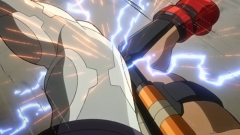
To start off, the big showpiece of this week is the Aragaki vs Joe fight. We will get to its place in the story, its result and all that later. For now the elephant in the room is the quality of the fight and booooy, is that a mixed bag. To start off, the good. The music was, as always, good. It gave each round its own distinct feel. The final 30 seconds was also phenomenal. The rotating camera shot as Aragaki and Joe just hammer each other… Ive rewatched it more times than I can count. The weight, the rhythm, everything from the first two episodes is there in spades. This single shot managed to keep me excited for Megalo Box’s finale. Sadly, this shot was, animation wise, the only thing it had going for it.

Continue reading “Megalo Box – 6 [Until the Last Dog Dies]”

Megalo Box – 5 [The Man From Death]

Hello everyone and welcome to Megalo Box, now with added 100% more feels. This week we have a story of disabled boxers, war and mutual mistakes, and I loved every second of it. Lets jump in!

So lets get this out of the way right now, I was not expecting anything that happened this episode. I was prepared for some backstory on Aragaki and some sort of grudge with Nanbu. What I was not prepared for was a more effective story of war and lost limbs than anything I got from Violet Evergarden. That might seem an exaggeration but over the next few paragraphs I will explain. Specifics of the war story aside, I am glad Megalo Box is taking the time to build up its boxers. We need more than the end boss Yuri to carry this story, so compelling or interesting opponents are a must. Not only do they let Megalo Box tell interesting stories, but we get to explore Nanbu and Joe through their opponents as well. It gives Megalo Box real breathing room for its character moments.

Continue reading “Megalo Box – 5 [The Man From Death]”

Megalo Box – 4 [Let’s Dance With Death]

Welcome one and all, to the real start of Joe’s boxing journey. This week Megalo Box’s starts to show its first cracks and gives us more fights than we can shake a stick at. Lets jump in!

Overall, this was a good episode in every respect but one. The music, story and pacing all do wonders. The one sticking point for me this week though was the main fight and its animation. For the most part it works, having Joe struggle with fear as his main opponent was brilliant. With both Joe and Nanbu caught up in it, Sachio had to be the one to save the day. The kid needed to be more than the plucky sidekick. However the fight animation itself worried me. It feels slow, delayed in places. Not smooth and snappy, nor working with the music like previous fights. In addition, ending the whole thing with one punch after all that buildup felt like an anti-climax. It wasn’t a bad fight by any means, let me make that clear, but I was hoping for more in our first big match.

Continue reading “Megalo Box – 4 [Let’s Dance With Death]”

Megalo Box – 3 [Gear Is Dead]

Another week, another good episode of Megalo Box. Its like dose of old school action. This week we get a subversion of the “upgrade” and some evidence of how bad life in the slums really is. Lets jump in!

So my first thought after finishing this episode was, wow there are some awesome camera shots in here. Cutting from a cross hanging in a car to Yuri resting on the ropes? Joe examining his cut in the rearview mirror? And how about Joe standing, with no gear, before Potemkin? Each of them convey so much beyond the basic information they needed to get across. They sell Yuri’s already massive power or the David vs Goliath feeling against Potemkin. The shot with the rearview mirror puts us in Joe’s shoes as we see him how he sees himself, not to mention it’s just interesting to look at. Its angles and direction like this that can make even the stillest or low-res anime interesting to watch. For more proof of that just go watch Monster. Another example of the effect of great direction. That’s not all Megalo Box gets right though.

Continue reading “Megalo Box – 3 [Gear Is Dead]”

Megalo Box – 2 [The Man Only Dies Once]

Welcome to the Spring 2018 anime season! I am proud to present to you the Ashita no Joe 50th Anniversary project, Megalo Box. Easily the most stylish anime of the season. Lets jump in!

With just 2 episodes, Megalo Box has become my favorite for the season. Everything about it feels like it comes from a different age of anime, the time of Hajime no Ippo’s first series, Cowboy Bebop or Trigun. Even the story, so far, is Ashita no Joe with robot arms, with certain shots coming straight out of original 1970’s anime. In today’s anime landscape, Megalo Box is a breath of fresh air. Its thick, rough line work contrasting the all to clean and thin art we normally see. The vibrant color pallet that gives us bright greens, blues and oranges instead of muted browns and greys of regular highschool life. The only negative I can think of with Megalo Box is that, at least the Crunchyroll version, seems to have some resolution issues. Like it was upscaled to 1080p. Luckily with its style, Megalo Box doesn’t suffer for it much.

Continue reading “Megalo Box – 2 [The Man Only Dies Once]”

Devilman Crybaby – 83/100

It’s an exciting time to be an anime fan where new business models and players are making big waves within the animation industry. After debuting with the original and excellently-produced Neo Yokio, the juggernaut streaming service of Netflix has decided to revive the classic series of Devilman and gives it the full adaption treatment. By combining the sexual violence of its source material to the likes of Urotsukidoji and having big names like Masaaki Yuasa at its helm, the Devilman franchise makes a comeback into the western mindset after spending decades in obscurity.

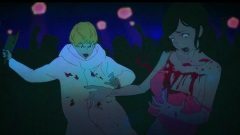
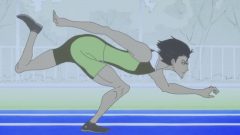
For those of you not familiar with the Devilman series, it was a huge series in the 1970s where it tells the story of a teenage boy, bestowed with demonic powers, fighting against other unearthly horrors in an monster-of-the-week format. Subsequent OVAs attempted to follow the manga source more closely but could never finish the job. Devilman Crybaby makes a couple of liberal changes but the core story remains the same with Ryo and Akria teaming up to fight the demons with Miki supporting from the sidelines. Yuasa’s version adds a whole bunch of layers like the incorporation of track and field and roaming beatboxing freestylers . All those aspects are done quite well but perhaps the strongest aspect of having Netflix being the financier and distributor is being able to be very casual about its sexual and violent content. It was once said that:

There is nothing that arouses a stronger response in human beings than either sex or violence. A mixture of the two is very powerful indeed.

Unlike other anime where the mature content is done for the sake of being edgy, Devilman Crybaby uses its brutality to validates its darker themes as it progresses further along its story. I don’t want to give out spoilers but since the source is a 70s manga that influenced works like Berserk and Evangelion, there is nothing comforting about how everything plays out.   

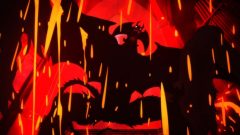
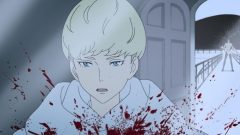
If you are familiar with Yuasa’s unorthodox animation style, then Devilman Crybaby’s eccentric visuals should come as no surprise. It doesn’t have that crude design of Ping Pong the Animation, but lacks the fancy special effects that other studios strive for. Instead, it swings between the plain and psychedelic color palette, the strength to this anime is not found in the details but the unhinged motions of its characters and artistics liberties taken with the framing/composition of its shots. Like its animation, the music (composed by Kensuke Ushio of Koe no Katachi and Ping Pong the Animation fame), is just as unique with its elements of synthwave and an epic orchestral choir to the point like it came out of Hotline Miami 2‘s soundtrack. In keeping up with the insanity shown on screen, the soundtrack does a very job and only serves to enhance the show overall.

Devilman Crybaby is the definitive complete package of its source material but it doesn’t come without its fair share of problems. Clocking in at ten episodes, I had an issue with its pacing especially towards the latter half of the series when Ryo’s grand plan comes into fruition and things get very crazy. It goes far too fast in its escalation of conflict between the demons and mankind and in a few instances, I had to pause and read between the scenes to understand the what exactly happened in the final episodes. In addition, Ryo and Akira’s memories of their early childhood together should have been sprinkled in far earlier in the series instead of shoehorning it into the last episode as it seemed rushed to have the foundation poured in before the conclusion of their conflict. The second negative is the amount of Erglish thrown around as it becomes a distracting element for the story’s more serious moments. While Roy’s japanese voice actor is relatively decent in pronouncing his English line when compared to other anime (I’m looking at you Zankyou no Terror), there are some major speeches where his delivery fall flat in invoking the intended reaction from the viewers.

Devilman Crybaby is not a show for everyone. It is a vulgar, uncensored and sexually violent reinterpretation dreamed up by the surreal creativity that is Masaaki Yuasa. For those of you who are able to stomach such things or have a fascination with anime’s more unhindered aspects, this show is the shining example of the medium is capable of and the new business direction it is heading towards. However, for all its praises, there are just a few significant issues that holds it back from becoming anime of the year although it would easily a top ten list for any serious anime fan. In any case, Devilman Crybaby was an experience for me that I won’t forgetting about anytime soon.

83/100

2011 Anime Retrospective: Wandering Son & Tiger & Bunny

[slideshow_deploy id=’25632′]

It bares repeating for those of you who don’t know:

– For rating, I will use psgels’ 100 score system, but keep in mind that my barometer might be different than his. For instance, I consider 60/100 (not 50) as a line between mediocre and passable shows. 75/100 to 89/100 are recommended shows and from 90/100 upward are the masterpieces. In some rare occasions, I will include plus (+) and minus (-) but remember that they don’t have anything to do with the quality of the shows. (+) is awarded for shows that address the gender role thoughtfully, including shows that have strong feminine message. (-) is casted for shows with insensitive treatment to gender roles.

– There will be mild spoilers, as I will address the main theme of each show.

Wandering Son (AIC)

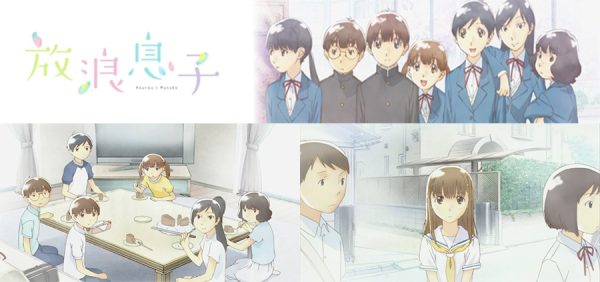
Boy, I know I’d come to enjoy this series given its thoughtful subject matter, but I’d never expect the show gets under my skin the way it did. Wandering Son turns out to be even better than what I expected. Yes, they nail it on the struggles transgender youth must face during their puberty, but at heart this is a coming of age story about coming to term with their own identity. Crossdressing is a way for the kids to express who they truly are, the self that they feel most comfortable with. One thing that struck me the most is how simple the show seems to be, but it’s anything but. From the soft watercolor background, to the simple and plain character designs (those are in the service of the show, as the main leads have their asexual appearances), to the way the story focuses on slice-of-life drama, to the equally soothing soundtrack. Everything seems light-weight at first glance, but inside it, there are many complex relationships and even more complex narrative. The transgender aspect never becomes to preachy or heavy-handed, for once, and the show makes itself clear that it never judges any of these characters. It’s just simply a normal growing up tale from a boy and his friends, nothing more, nothing less.

I also appreciate the anime for the fact that it left out entirely the first section of the manga, so many drama and characters have already been introduced before we get to know them. Fear not, since everything we need to know about the characters and their dynamic are showed and hinted subtlety over the course of its run. For me, the best parts of the show aren’t the subject matter it deals with, but the rich cast and their complex dynamic together. Take the latter for example, many characters form a very special relationship to each other (many has complained the characters behave too mature for their age, which I digress. We need more of these). And it’s these special bonds that made every single one of them interesting. Take Chiba’s love for Shuu: doesn’t matter how he changes, he will always be the special person to her. The same can be said for Yuki and Takatsuki. It often feels like they reach to a mutual understanding that other people can’t never comprehend. And I suppose sharing the same deep bonds as these makes up the reason why they can always rely on each other, even overcome their own issues to reach out for each other.

Shuu and Takatsuki made up two strong protagonists for this show, both because they’re trans who bothered by their own biological bodies, but also their special bond as well. Noted that while Wandering Son deals heavily in transgender issues, all the romantic relationships in the anime are heterosexual – most notably, Shuu and Anna’s love. Why? Because, of course Shuu loves her. Not in a physical attraction sense since I guess Shuu would never desired to kiss her, but in the intimacy sense where he loves her and cares for her like a sibling love. Is it make their relationship weird? Maybe. But it’s powerful nonetheless. Although I already enjoy the first half of the anime well enough, where they focus on the kids and their gender-bender Romeo and Juliet play, the second half is when Wandering Son hits me real hard. Insecurity plays another major role to these kids, as they are constricted by social norms, by the code of rules that dictates how boy and girls should wear and behave. Takatsuki comes a long way until she decides to cross-dress as a boy to school, but Shuu has it much harder by trying the same thing. The escalated tension when Shuu gradually believes that he should dress up in girl’s uniform because he feels comfortable doing so is one of the moment so powerful that it won’t leave my head anytime soon. It’s one hell of a statement right there and it’s more compelling than any LGBT campaign because it comes from very personal lenses.

As a side note, despite people often complain the show for the lack of proper closure, for me it ends in the best possible way. In that final moment, Shuu literally takes a step forward to the stage. That single image can signify many things: that he’s taking anew step towards the spotlight with his new body; that he finally let the dark and bullied past behind; that he moves on to the next puberty stage of his life. Shuu and his friends continue to live on beyond the scope of this little story.

Rating: 92+/100

Tiger & Bunny (Sunrise)

It’s amusing to note that these two shows received the same rating 87.5 here in by psgels, my opinions on these two couldn’t be more varied. Let’s start from its best components first, Tiger & Bunny is the show that has novel concept, a commercial Superhero reality TV show in the neo-modern city that looks like a glamourous version of Gotham. It’s a pretty cool idea and moreover, the concept of commercial superheroes and their ability “NEXT” have potential to develop into heaps of interesting scenarios. It helps that the show makes these superheroes and their moves as flashy and over the top as possible. Another plus for the shameless corporate sponsorship’ logos that pop up in the team uniforms. Flashiness and cool factor have never been this appropriate. The art design is awesome, especially the city itself that feels lush, noisy but gritty at the same time. The production values, for the most part, fulfil their roles quite remarkably. The fights are dynamic, and those action sequences are always damn fun to follow to say the least. The CG department, however, is wacky and looks out of place whenever the two leads are in the combat suits. Take Tiger & Bunny as a purely action show, it certainly satisfies your cravings.

But Tiger and Bunny is more than a mindless action show. It consistently develops into overarching arcs with more serious tone, and that, my friend, is where the show becomes hit and miss. On positive notes, these arcs make Tiger and Bunny more ambitious than your normal Superhero show and the main leads do grow a bit in their character development. The titular Tiger and Bunny, in particular, share some solid chemistry together. The show, on the other hand, has the Western Superhero and Hollywood as their inspiration and it unfortunately inherits the stupidity of Hollywood’s script as well. There is little to no grey area, the heroes are mostly your hero of justice and the villains get more and more evil as the story progresses. I don’t mind about some casual plot holes or some character inconsistencies because… you know, ACTION show, but the last arc, in instance, is so ridiculous and laughable bad that I have to mark the show down several notes. In this last arc, the whole superhero team suddenly becomes puppets with no personality, or even worse, betray their own personality. Kotetsu is being hunted by the police and being broadcasted live, and suddenly, all these developments are set aside for some more plot twists that go nowhere, fighting with Barnaby for no good logical reason and some other bullshits about androids. And I can never get why the main antagonist thinks it’s such a great idea to brainwash dozen of superpowered and influential people, instead of just eliminating Kotetsu in silence.

Character-wise, I regret to say that although spending 25 episodes with them, at the end of the day I don’t know, or care much about them. Both Bunny and Tiger are your stereotyped JUSTICED superheroes, with Barnaby’s backstory is the one we all heard before (Batman, anyone?). Other heroes each have their own episode that flesh them out a bit, but still ain’t enough to make them stand out at all. Villains are over the top in a no-good way and Lunatic (an anti-hero of sort) has never developed into his full potential. Overall, Tiger & Bunny is an adequate take on the same old Superhero genre that make some good use of the old ideas, especially in their brilliant main concept. The mixture of buddy actions, hero of the week, drama make this show consistently entertaining to follow, despite more often than not they follow the same old formula that been around since the creation of Western Comic.

Rating: 78/100

Welp, turns out I finished these two faster than I originally planned. Have you watched either Wandering Son or Tiger & Bunny? What is your take on those shows? Next time, we will meet a girl who plays karuta and a girl who is a NEET detective. Yep, I will review Chihayafuru and Heaven’s Memo Pad. See you in 2 weeks or so (this time is for real). Until then.
Juuni Taisen (Fall 2017) Review – 72/100

With a battle royale concept about 12 Chinese Zodiac warriors fighting against each other for a grand wish and penned by Nisio Isin, Junni Taisen had a lot of high expectation from the anime fandom. We’re pretty much guaranteed to have colorful larger-than-life characters, creative killings, cool lines and exciting battle sequences. The involvement of Nisio suggested that the show might be a tad bit talkier, focus more on characters instead of the overall battle and it could be a deconstruction to the battle royale premise. Well, in the end, Juuni Taisen isn’t what you expect it would be, but not for good reasons. What we have instead is a half-baked story that never quite spend enough time for its cast, a plot that has too much flashback and too little present plot-progress and a production that falls apart like a mutilated zombie.
In order to understand how Juuni Taisen structured the way it was, it’s best to look into their own backstory. Juuni Taisen is an adaptation of a Light Novel that served as a prequel to an one-shot manga about granting one’s wish (my thanks to the commenter who pointed it out), as a result, with the winner pretty much known and the basic groundwork about the Zodiac Wars already established, Nisio decided to narrate the Zodiac War in the reserve-order of the Zodiac signs, as well as its death order. Which comes to straight to the first issue of Juuni Taisen, it becomes predictable that kill half the fun of the battle royale concept. “Predictable” isn’t the same as bad, I must add. But my issues lie in the fact that this tournament doesn’t need to be predictable. Unless you have a sound reason to kill the Zodiac Warriors in that order (which the show doesn’t), it makes no sense whatsoever to rely on such arrangement.

Which also comes to my second point, if viewers come to Juuni Taisen expect a spectacular, brainless action show, they will bound to be disappointed. The fight sequences are decided short and anticlimactic. The pacing doesn’t flow very well because sometimes it spends too much time on flashbacks. There is a significant chunk in the middle part where the present-day moves so little it adds nothing to advance the plot. The huge amount of flashback, its talky nature and the decision to focus on one character per episode mean that Juuni Taisen is more a character-driven piece than action-oriented.

In fact, memorable and colorful characters are Juuni Taisen’s greatest assets. They are not particular deep but they all stand out in their own ways and fit to the narrative of this show like a glove. At its best, Juuni Taisen can develop characters with heart and soul, characters who we can identify and root for. The female cast, in particular, all are developed just about enough for us to care and still want more from them. Chicken, Monkey and Tiger’s stories all have their tragic side that make them utterly relatable. At its worst, Juuni Taisen can ponder too long to the flashbacks that halt the story progression, and worse add next to nothing on what we already know about the characters (hello Snake and Dragon) or too short that we don’t have time to learn more about them (Horse’s flashback is entirely about him trying to enhance his physical body. Dog’s flashback, likewise, is all about his strategy). In the last episode when the show spends some more time to flesh out the entire cast by having Rat asked them about their wishes, it hits home again because those characters are vibrant enough to lighten up the show.

Judging Juuni Taisen in a story department, in the end I consider this story branch fairy weak and uninteresting. Since this is a story about Rat as a protagonist it comes as a given, but I would love to see the retake of other possibilities as I still believe many characters still aren’t developed to their full potential. Not only the characters, but the settings and the implication that powerful people use the Zodiac War as a real-world proxy war are under-explored. For example, the tournaments that occur every 12 years sound nice in concept but inadequate in practice, because it suggests that the tournaments only happen in one animal sign only. Running through the series I still don’t know for sure how popular the Zodiac War is to the common people. If this War is supposed to be a Warrior’s pride then the show fails to develop it properly too.

Aside from the plot progress of the current tournament, the Warriors’ flashbacks usually fall neatly into 2 extreme settings: their mundane normal lives (Monkey, Sheep, Tiger, Rat) as a way to show those Warriors as normal people, and the battlefield (Boar, Chicken, Sheep, Horse, the twins, Tiger, Bull) where it serves to underline our characters as Warriors. Juuni Taisen seems to have a cynical attitude towards the war. War does affect badly to some of our warriors, and the violence of war is sudden and cruel, but that’s the world they live in so they have to accept and make the most out of it. You see, its central message isn’t really profound, or plausible, but I suggest don’t delve too deep into that because Juuni Taisen doesn’t seriously care about it either. All the show cares is to displaying those characters with different viewpoints and attitudes about war and the violence it brings.

Graphinica studio is mostly known as a CG anime studio, and with Juuni Taisen as their first full hand drawn project, it does hint us something about the production values of this show. For the first few episodes, the production was solid with some dynamic fight sequences, but as the show goes on it starts to fall apart with off-model characters, clunky animation and overall unattractive aesthetic. The character designs, on the other spectrum, is so outrageously ridiculous and over the top they stand out as one of the most memorable feature in the series. I would never forget a character with stripper suit, a bunny tail and a high heel. As a whole, Juuni Taisen is decidedly not an action campy show it allures people to be, and that’s not often for its benefits. But still, I would recommend Juuni Taisen to other viewers, since it can provide many deliciously striking sequences, memorable dialogues with its memorable cast. You will have a delicious – if a bit uneven – time, just don’t expect a full-blown action show or a solid show with deep message.