Junji Ito Collection – 02[Fashion Model, Long Dreams]

After the first episode started off as a black comedy, I was worried that this series may suffer the same problem as Kino’s Journey in that the weaker stories in his work would be chosen for adaption. Lucky this does not appear to be the case but there is another problem which is not quite as easy to resolve. Junji Ito’s work has always faced problems regarding his work getting adapted, much in the same way that Stephen King’s work has had a lineup of failed adaptions. The big issue with Ito’s work is that the quality of it isn’t so much in the characters and writing but rather the idea and artistic value. Ito knows how to think up disturbing and strange horror concepts and work to illustrate and panel them to become massively unnerving. However when you strip away his artstyle, the apparent silliness of his ideas becomes more visible. Much like how Ufotables adaption of Gyo turned out, which was an admirable effort but sadly didn’t quite succeed. The live action efforts are marred by bad CGI and other factors, though the Tomie movies seem to have succeeded to a degree. Now Deen are taking a stab at it and their take appears to be sacrificing movement for detail. This has been a double edged sword as while this anime may be the closest to Ito’s style, the lack of movement makes it very much like a slideshow of the manga at times.

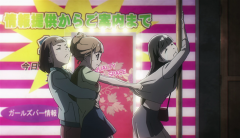
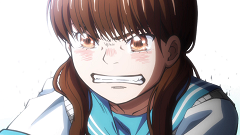
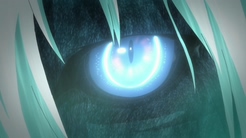
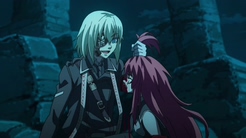
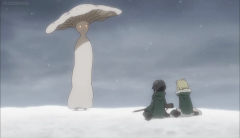
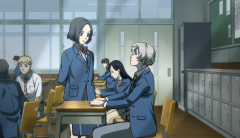
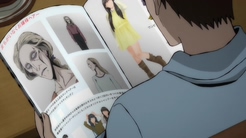
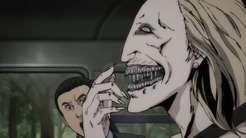
Our first story brings to front Ito’s style of using unconventional and sometimes humorously strange monsterities. It features a horrifically monstrous model whom a college film crew decide to include in their movie. Without Ito’s signature style this story could very easily fall flat on its face but it actually succeeds in being rather creepy here. I like it for being a bit of the subversion of the heart of gold trope in that usually in anime and media, a monstrously ugly person actually turns out to be nice and misunderstood. However in this episode we have a monstrous looking woman whom everyone gives the benefit of the doubt but really turns out to be just as horrific a monster as she appears. For judging book by its cover is bad but that doesn’t mean that someone can’t have an ugly appearance and an ugly personality as well. It also shows the deep discomfort of having caught the undivided attention of someone whom you don’t find attractive or the torment of being stalked. The main character has caught the attention of this monstrous creature and it’s quite disturbing to think that this woman won’t so much rip him apart with her fangs but instead…ugh…eat him in another sense. If i had a problem with the stories presentation it would be that the ending was rather abrupt and parts of the original story showing how the main distorted the women’s image in his head was missing but otherwise it was strongly shown how uncomfortable the situation was.

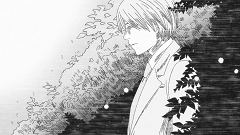
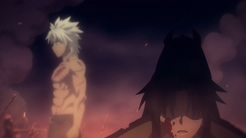
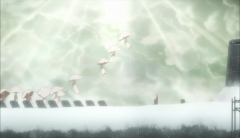
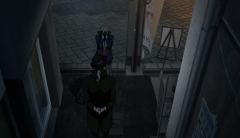
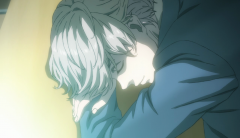
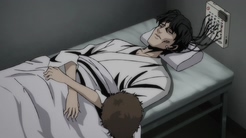
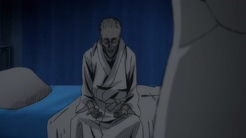
The second story is Ito at his best as while not really scary in the usual sense but the very idea of it is deeply unsettling. Detailing a story about a hospital patient who is experiencing long dreams, dreaming in which he spends large amounts of time stuck in and growing longer by the day. While time passes normally for everyone else, the patient goes to sleep and lives through 8 years in his dream. This is contrast by another woman whom has a massive fear of death and believes she will die soon. One is scared of their time getting cut short while another is terrified that their dream will continue for eternity. It’s a pity that the anime cut out a few panels with the patient describing his dreams such as 10 years as a soldier wandering a jungle, 6 years cramming for student tests and 8 years with a full bladder searching for a toilet that doesn’t exist. Made worse when his body begins to adjust to the time he spends in dreams and age prematurely, eventually transforming into a macabre husk. Leaving only dust and strange crystals behind. The last scene make for an interesting twist as the doctor treating him administers the crystals to the woman which in turn gives her long dreams as well. The doctor rationalises this that a eternal nightmare is better than the void of nothingness that death could very well be. Personally I find the idea of being trapped in my own mind for a century in a single night to be a atrocious alternative to death. But well if you can get the internet in there, maybe I would think about it. The presentation falls a bit shorter in this story but luckily the story itself is enough to carry it.
A Place Further than the Universe – 02 [Kabukicho Fremantle]

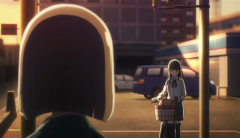
I’m glad that this second episode addresses straight out all my worries from the first episode: the actual implementation to make that trip a reality, because boy, it’s no simple matter. Universe apparently does its research, telling us exactly places they need to go, the initial trip ahead and the amount of money they need to raise. Even me who is living in Australia has absolutely no idea that Freemantle is a place to gather the expeditions to board to the South Pole, so that bit is very informative. After all, the concept is about a bunch of 16 year old girls travelling to the place as bizarre as Antarctica, thus if Universe takes it lightly, it will start to lose its sparkle very quickly. But thankfully, the show depicts the girls’ plans and their struggles quite thoughtfully and believably.

Shirase has been on and on about her plan, and with the knowledge about the Antarctica that she has, it’s reasonable for Mari to trust her. Except that knowledgeable and desperate as Shirashe is, she’s still a naive high school girl, and her plan starts to crumble apart in our very eyes. Kudos for Universe for suggesting her inexperience early on (with a sketchy job advertisement), and then as the show continues it’s apparent that she takes the role too big for her to fill in. Mari worries if the civilian Antarctic expedition really allows them to join in, which angers Shirase because she herself knows how tough it is to get in. Her half-baked plan reaches its own breaking point when the plan of getting in the expedition team is to “seduce” male members, something none of the girls is mentally equipped enough to carry out. They failed, of course, but it’s still worth trying.

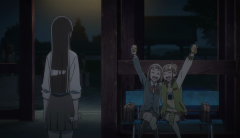
While I enjoy the chemistry between Mari and Shirase, I’m not that keen on their personalities alone. They serve the story right and they have relatable issues, but they never stand out as particularly interesting or deep characters. Thankfully, with the introduction of the third member, Hinata, she’s more than make up for what the two girls lack. Both bright in her own charisma and she fits the team like a glove, it’s an improvement in terms of characters for me. I like the fact that she has her own route when she declares that she doesn’t go to school because she doesn’t need to. That I can root behind, albeit the reason behind that sounds superfluous for me (that she doesn’t feel she blends in with normal crowd – not that working full time in a convenience store would solve that problem, girl). What sold me about her character, however, is despite her cheerful and outgoing traits, she’s surprisingly observant and she caught on with the girls’ plan even before she met them. You had me at “Are you going to… Antarctica”, girl (and despite accusing the other girls for being too loud, she’s the loudest one here). Moreover, right at the end where Shirase failed, she releases Shirase from leader role, an action to release the heavy load Shirase has been taking all along.

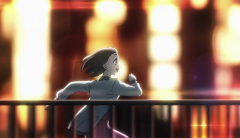
But the best part of this episode is when the girls run away from the Expedition team members, for a reason both us, and the girls don’t even know. The story might be about the girls going to the Antarctic, but the underlying theme has always been enjoying the youth to the fullest. Mari runs and smiles because she realizes that her youth “is in motion” makes so much sense. It’s the joyous, the feeling of actually doing and experiencing that counts. At this moment, the girls might be in their dead end, but with the involvement of the fourth girl, whose mother could very well be a famous person/ main sponsor for the civilian Antarctic expedition team, things will turn for the better. I’m eager to see how she meets up with the three girls.

3-gatsu no Lion – 33/34 [Where the Sun Shines…Light]

It’s been three weeks since my last 3-gatsu post, a gap owed in part to the break the show took around New Years’. Perhaps it’s because of all that time away from the series, or maybe it’s due to the massive difference between these two episodes, but I had a tough time connecting with the characters here. Episode 33 revolved around the quirkier members of the 3-gatsu family, and came out mostly comedic, while its follow-up focused solely on Hina’s bullying drama, and came out mostly not. And while I consider myself a 3-gatsu anime apologist, both of these offerings were disappointing to me. Episode 34, in particular, is my least favorite adaptation of Hinata material yet, featuring a multitude of distracting shot choices and some phoned-in character animation. Shaft’s unmistakable, borderline-invasive style is often the first criticism that people lob at this show, and though I usually view that as a matter of taste, I have to join their ranks this time.

That’s probably enough negativity, yeah? On to “Where the Sun Shines/Small World,” which featured appearances from plenty of fun side characters, both shogi players and members of the Shogi Science Club. Though the most significant developments in this episode were the reveals of two upcoming matches, my favorite moment was a clash between Gakuto and Shimada. Their contrasting personalities were showcased not just visually, but sonically, as well. Listen to the full band that plays behind Gakuto’s mountaineering-based “special attacks,” and then the quiet woodwind performances that underlie Shimada’s calm, calculated moves. That switching of styles makes their face-off a lot funnier, but the show quickly moves to a more reflective mood after Shimada’s victory. He’s dehydrated and exhausted after the win, but also shivering with excitement at having secured the right to fight Yanagihara in the Kishou Championship title match. This mix of the comical and the emotional is where I like 3-gatsu best.

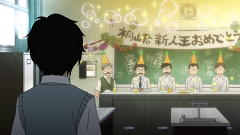
The impending Shimada/Yanagihara battle is only second in importance to Rei’s upcoming match, however. The Chairman has arranged for his young star to go up against Meijin Souya in a commemorative match, all for the sake of maintaining their sponsors’ interest in shogi. Though the event’s planning may be a result of financial concerns, just hearing the news stuns Rei to his core. He looks up to Souya as though he were a god, and because of the parallels that 3-gatsu has drawn between them in the past, we know that this will be the most important match of the series thus far. Later, Rei becomes even more flustered at the outpouring of support that he receives from his school club after earning the Newcomer King title. All of this is enough to drive him to tears midway through the episode, but even that emotional scene failed to get a similar reaction from me. Attached to this show as I am, it’s hard to put my finger on why that is, so I’m not going to spend a lot of words trying. I will note that Rei’s realization (that happy memories can always be called upon, even if your circumstances are unhappy) is a powerful one, though.

“Black Mist/Light” is much bleaker than what came before, what with the breakdown of Hinata’s teacher and the stress placed on Akari as her makeshift parent. The two characters who shine most brightly here are Hina herself (whose determination to “win” against her tormentors is almost feral), and her new instructor Kokubu-sensei, whose zero-tolerance approach to bullying marks a turning point in this story. Kokubu’s sudden need to juggle two separate classes leaves him totally overworked, but I’m guessing he was assigned to Hinata’s class because of his ability to handle these sorts of situations. Unlike his predecessor, he doesn’t let Takagi (or her mother) run him over, which is great news, but the anime’s treatment of his character is too worshipful compared to the manga. Still, this episode had its bright spots, most notably the love shared between the older Kawamoto sisters. Akari is still plagued by worries about her suitedness as a caretaker, which have even started to invade her dreams. The image of her mother on a hospital bed, crying and apologizing for leaving her oldest daughter with such a heavy burden, is hard to watch. But Hinata, full of appreciation for her sister’s appearance at her parent-teacher conference, manages to be strong for the both of them. As Rei pointed out weeks earlier, it’s thanks to Akari that Hina has that strength of character – I just hope she takes those words to heart before too long.

Dies Irae – 10/11[Einherjar/Self-Destruction Factor]

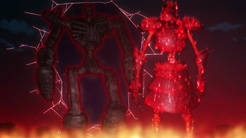
Quite late in covering this one though out of the three shows I covered for the fall season my level of interest in this series has more or less evaporated. Truth be told, while this is a episode review of ten and eleven, i honestly cannot even remember what happened in episode ten. I think it was mainly a action episode and in regards to that I regret complaining about Apocryphas animation. Because Dies Iraes animation shows just how low animation can go for action scenes. There was some novelty in the episode where Ren took on Reinhard but it looks like they blew all their effort on that one scene. After that fight scenes were just lifeless and I find my eyes glaze over as characters talk confidently to each about things I can’t really care about anymore. I rather liked the giant gold skeleton before but they are a anime only addition that the author decided to add for rather odd reason. I don’t see how he thought it was a good idea to invent a brand new power for the anime that would require even more animation for a already stretched to breaking point anime. Also creating some brand new level that exists somewhere between your previously established level is just rather poor writing considering it makes your previous infodump about levels flawed.

So I will mainly talk about episode eleven here as this was actually a part of the story I remember thinking would be great animated. When reading the visual Novel this part was pretty excellent and does a good job of establishing just how brutal and broken Sherbeir is. Not to mention that SHirou ripping his way out of Rusalka’s body was pretty awesome. Yet these events are shown here and somehow are drained of all the impact they had in the VN. Part of this is missing context but mainly this shows just how much presentation can affect a scene. But lets recap, Shirou after getting eaten by Rusalka manages to rip his way out of her while stealing some of her power. It’s worth noting that Ellie came along as well and her soul resides within Shirou. So Rusalka, a character who is obsessed with gaining immortality is dying on the church floor, scared out of her mind. When Schreiber shows up she attempts to get him to help her by saying she loves him. Mainly because Schreiber is completely insane and she thought that by becoming his loved one, he would then go out of his way to save her despite being indifferent at first. She has some special magic circle that can heal her if she is just placed within it. Thing is that she largely underestimated just how insane Schreiber is. For you see Schreiber is really excited over being able to kill for revenge for a loved one and the big problem is that Rusalka recovered from her injury, he couldn’t avenge her death. So Schreiber carries half of her to the battlefield claiming he will avenge her by killing Shirou, all the while ignoring her pleas for him to help her. Cause Rusalka has to die in order for Schreiber to avenge her, duh. At least that’s his logic. It really established just how messed up this kid really is and boy his history sure is something. I would say it is grimdark to the degree of being ridiculous.
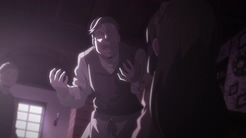
Willhelm has an equally messed up childhood as you may have noticed by the appearance of his Sister/Mother. And yes, his sister is his mother. Basically he’s the product of incest between his father and sister. Obviously consent was not part of the equation and this is indeed the reason why WIllhelm killed his family. But one thing about Wilhelm that’s interesting is the matter Mercurious mentioned, that each person has a kind of curse attached to them. Indeed the characters of Dies Irae all have some curse when it comes to Fate. Kasumi is forever destined to be kept out of Shirou and Rens matters no matter how much she wants to be involved. Willhelm will always have the thing he wants most be taken by someone else. Lisa trying to save children by killing more children. Ren will constantly be pushed away from a normal life, despite his desire to be nothing but normal. As well as Shirou constantly seeking to break his deja vu, only to reaffirm it with all his efforts. Every character of Dies Irae is cursed by fate and in Dies Irae, fate has a face. Though how much of a role he will play is still up for debate.

Fate/Apocrypha – 24/25[The Holy Grail War/Apocrypha]

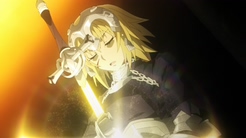
Forgive me for my lack of updates with the series I am blogging but as I am sure you all know, holidays tend to keep us busy for one thing or another. Believe it or not i only recently got around to finishing this series last two episodes and they didn’t really surprise me all that much. Truth be told I actually prepared for an ending far worse than this so that’s a positive of some sort at least. It was a good thing to bundle these episodes into one post as the previous episode boiled down to a debate between Joan and Shirou over what is truly salvation for humanity and that actually is rather interesting as Shirou has a very Eastern version of religion which attributes sin to the body and believes shearing the mortal coil will allow people to transcend sin. Meanwhile Joan and Wish believe that true goodness only comes from people overcoming trail and suffering which is a very western style to religion. Only for it to result in Joan pulling out her last noble phantasm in an effort to destroy the holy grail. A suicide beam attack that sadly accomplishes not all that much really. Well the name does not make it apparent but that attack did have a pretty devastating effect on the grail and Shirou himself but was highly played down in the anime.

Thus begins the downward path for this ending and much like most of the things wrong with this anime, it begins with Sieg. There is a admittedly cool fight scene between Sieg and Shirou but it does beg the question that if Sieg could fight Shirou, then why do it after Joan unleashed her suicide attack. Got to say Sieg that your anger over her death is pretty hypocritical when you could have helped at least not make her death worthless. Why can Sieg somehow match Shirou? Well on top of getting the power to transform into Siegfried, it appears that SIeg also absorbed the power of Fran’s Noble Phantasm. And to add insult to injury the holy grail throws Sieg a freebie after he defeats Shirou. Never have I seen a plot bend over backwards to accommodate the needs of a single character. Almost as if he was originally the surrogate of a player character from an MMO game that was never made. Like say what Apocrypha was originally. I will also note that Suicide attacks don’t work in this series, unless you happen to be Sieg. You can even survive them as an extra bonus.

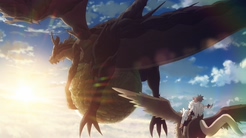
Semiramis and Shirou have one final scene together which shows they have better romance that the two actual leads of this series. Shakespeare finishes his story before disappearing, wishing he was the protagonist.(Me too Shakespeare, I wish that too.) But Shirou’s wish is in effect and cannot be stopped. So Sieg turns into a dragon and takes the grail to the other side of the world where it can grant immortality to that place instead of the human world. I would love to say that this whole “Other side of the world” business is totally established lore and a good explanation but let’s just cut the bullshit and be blunt. This is just a cheap deus ex Machina and I don’t see how the hell Sieg could think of this when not even I knew about this other side of the world until now. I mean I knew about Avalon, which appears to be related but this other side is news to me. And honestly this kind of stuff is just supplementary material rarely put to any story use besides justifying plot bullshit like this. I mean Nasu has established stuff in this universe like the archetypes(Ultimates) and yet has done diddly squat with them besides a small short story. (Case in point, if the archetypes make an appearance in Fate Grand Order, that would be amazing.)

So world is saved, the remaining people live happily ever after, even Astolfo who is getting supplied mana somehow, despite not having independent action…screw it, there’s no point in questioning it. The girl Joan was possessing reaffirmed that it wasn’t her that fell for Sieg, she just respected his way of life which is…um…whining about your existence like a little bitch till the world bends over backwards for you? Yay, Joan was feeling true love…for cardboard…isn’t that just something. (I am never rolling for you or your Alter form. Ever.) And she reaches the other side of the world..somehow..screw it, I don’t care. Overall my experience with this series hasn’t been a hateful experience. Certainly this series didn’t live up to my expectations and part of the blame lies with A-1 adapting it poorly and just the source itself having its own problems. Hard to dismiss and yet hard to recommend, this will be a polarizing series indeed. So far the year of Fate Adaptations has proven to be a poor one with only Heaven’s Feel and Fate/Extra’s adaptations to prove that wrong.

Kino’s Journey -The Beautiful World- – 12[Fields of Sheep]

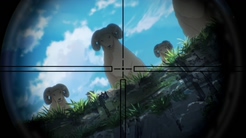
Thus with todays episode, Kino mets her greatest adversary, one to test her to her very limits and be her greatest obstacle on her journey so far. Kino’s Arch Nemesis is…Sheep. Yes, sheep. Of all the stories that could have been chosen for the finale for Kino, this has to be one of the most bizarre choices. Kino gets attacked by Sheep and must fight them off to escape with Hermes. What unfolds is a strange yet somewhat hilarious battle between them. This would have made for a excellent breather episode in the middle of the season and yet here it is right at the end. Besides so awkward CGI it’s an enjoyable episode but much likely my previous complaints about episodes like this, this isn’t what I watch Kino for. There isn’t really a deeper meaning to this one, only a action scene and the humor of Kino taking on sheep.

The only thing I found to be a interesting observation was the final revelation that those sheep were used to fight each other in a nearby country but were released into the wild due to animal rights groups. Now that country is oblivious to the fact that those sheep hang around outside and attack any travelers that come near. Even killing what is likely quite a number of people. An old tale of good intentions going wrong, in this case animal rights groups simply assuming that the sheep would forgot their fighting ways and go back to being docile naturally. Guess the lesson is that if you are going to do a good deed, make sure to consider all potential consequences of your actions.

My feelings towards Kino’s Journey 2017 are complicated. I will most certainly say this is not a bad season but when held up against its predecessor, it is a weaker one. The odd thing is that I don’t believe that it was how these episodes where adapted that was the problem. In fact I would consider the adaptations of these stories to be rather strong. No, the problem lies in the stories themselves and how they were laid out in this season is the thing that truly brings this season down. While Kino is an episodic series, there doesn’t seem to be any rhyme or reason to how these stories flow into one another. A perfect example is the episode showing various countries, were in a batch of comedic and lighthearted stories is one rather dark tale that it was almost mood whiplash. The stories where very poor choices as well, seemly chosen for making Kino look cool or showing off fan favorite characters.

This is the problem when you decide based on popular vote instead of actual quality. There are well over 200 stories written in Kino and yet the story choice in this season consisted of three remakes that frankly were not needed and far too many lighthearted/comedy episodes. I think that any new viewer would walk away from this series with a massive misunderstanding of just what Kino is actually about. I believe they would be quite surprised if they went back and watched the 2003 version to find it being a much darker introspective beast. Still I would like Lerche to take another shot at Kino as they have show they can adapt it. All they really need to do for another season is choose more wisely from Kino’s selection of stories and consider how they fit together in a season as a whole.

Houseki no Kuni – 12 [New Work]

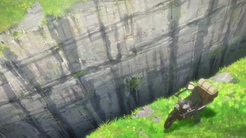
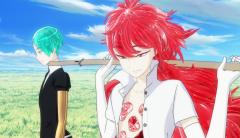
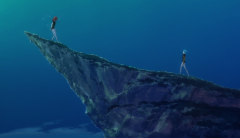
And this phenomenal anime has come to an end, at least for now. This finale is pretty much a calm before the big arc coming up, and further solidify the extend Phos has been growing so far. Well, Houseki isn’t very subtle on this by showing the parallel between this finale and the first episode. Again, we have the meeting between Phos and Cinnabar as the emotional chord, now with Phos’s offering the new job to their Crimson friend. Again, mirroring the very first sequence of the show  we have other Gems calling out for Phos to meet Kongou-sensei. While in the first episode Phos was lying on the grass doing basically nothing, this time they’re standing at the edge of the cliff and clearly have a goal in mind. It comes to a full circle, which is kind of appropriate for a heavily-Buddhism theme like Houseki. Many viewers might consider this ending anticlimactic, but I really like the steady progression of how the story unfolds and particularly how Phos has matured slowly but firmly since the start of the season. Even Phos reflects on the change with sad sentiment, a loss of innocence that they will never go back to the way they were before. This is one of the most well-developed anime character arc I have seen in awhile. Well done Houseki.

But not only Phos, this episode also shines on bringing other Gems to light with many hints of their backstory, while further highlights their colorful personalities with surprisingly relatable traits. Take Padparadscha for example, the beautiful Swiss-cheese holes Gem just waking up, having a walk at the shore and then falling back to sleep all too soon, but they sure catch up well with the situation and leaves a lasting impact. They’re the one who give Phos a much-needed advice: keep their composure and be mindful with their actions. Adding to that wise advice is the way he wears the uniform: loose shirt, uneven pair of socks and cool demeanor make him a total winner to me. But even Alex (Lexi), Zircon and Yellow Diamond all give their own stories that rooted deep in their insecurities when it comes to their roles and the fear of losing their dear comrades. Phos, on that note, had experienced both those issues, but it becomes apparent this time that the other Gems also have experienced them in some degrees too. Alex determines to learn all about the Lunarians as a reminder that they took Chrysoberyl away (the way they love trivia and cosplay Kongou sensei, by the way, are awesome). Zircon, on the other hand, feels deeply nervous around Bort, and their insecurities of having Phos surpassed him despite being the same age.

The biggest hint about the Lunarians comes from Phos’ attempt to isolate one of the Lunarian and try to talk to the figure. The Lunarian’s eyes come back into focus, or to put it better, they regain conscious. They even mutter something before got swept away by the toxic of Cinnabar. This makes me thinking what if the Lunarians are mind-controlled as well, just like the poor Admirabillis? All we know at the moment is the Admirabillis were captured and lose their consciousness in the Moon land, and the Gems are systematically controlled by Kongou-sensei, so it’s reasonable to assume the same fate with the Lunarians? Kongou-sensei obviously is the key to open the door full of secrets here, although Phos’ current decision to come over the Moon to see their side of story is a very logical move. After the Moon, the next target should be the Snails, right?

I still can’t put my finger on how much Phos still remembers Cinnabar and their promises, but it sure isn’t a good sign that Phos starting to lose their memories and Houseki suggests that as time goes on, when Phos loses more of their body parts, they will no longer have those important memories too. But their last encounter brings a lot of raw emotions to the forefront. Cinnabar still leans on what Phos promise, every single word of it, and the scene where they ran off Phos and showed their vulnerability speaks volume considering how they tend to avoid showing any emotions towards other Gems. It’s a hard job, and not necessary a rewarding one, where they team up with Phos to offer an opinion, or rather a contrasting opinion. I’m looking forward to see how the outcast duo will fare when they go up to the Moon for an enlightment.

Overall, what a ride! While I still bemoan for Houseki ending too soon and we have to wait for a certain amount of time for the sequel to come, if ever, I would definitely say that Orange studio had succeeded on their gambles of using fully computer generated to the entire show. The animation is dynamic and inventive, the visual is striking with symmetrical visual, moody color palette and the comedy is unexpectedly slapstick-y that somehow fit the tones of this little gem. Houseki is a treasure and I really hope they greenlit for the second season. This story is deserved to receive a full adaptation. The Gems must live on.

Girls’ Last Tour – 12 [Collection – Friends]

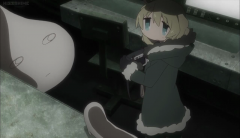
I am glad that this little dark moe show that mostly flies under the radar in this Fall 2017 ended in a high note, and Girls’ Last Tour has been really consistently solid to begin with. This is a fitting ending for a slice of life show like this, further reconfirming many elements that make Girls’ Last Tour stand out in the first place: its intriguing world setting, the bond between our two girls Chi-chan and Yuu, and still manages to surprise us in many ways. The only element was missing in this last episode is, surprisingly, its laid-back slice of life theme. This finale takes a look back to the past where humanity was still dominant, then to the present with those no-leg white caterpillar turn mushroom creatures, while at the same time give those girls a push to realize the importance of each other in their lives.

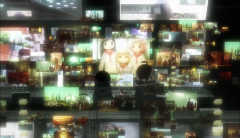
This first half is easily my favorite chapter of Girls’ Last Tour. As the girls taking pictures of themselves, the camera’s automatically syncing with the big screens and all sort of pictures, and videos from the past come into play. The girls obviously don’t aware much about those old storages, so it’s a nice surprise for them to witness the old world, the traditions, the people that no longer exist in the world. It’s a whole world’s history that play in front of the them: a group of girls presenting their latest project, a newborn baby, a sport event, the ongoing war… and the toss and mix between the tones of those events that gather a grand and epic feeling to the girls, and to us the audiences as well. Here I must compliment the precise editing of Girls’ Last Tour. Those video segments from the past play out seemingly out of order, but they hold the emotions very well, even the music helps strengthen the feeling. Those videos play a nice contrast to this wasteland the girl’s living right now. Full of people, full of life with vibrant colors in contrast with this dull, grey world, but in essence the dull world is one part of the rainbow color that makes life so interesting and full of wonders.

The second part focuses on the new creatures that appear out of the blue, swallow whole Yuu. At that point of time Chi-chan has to experient the important of losing Yuu in her life. Those creatures turn out do not look for human flesh, but rather the energy left over after the human race destroyed itself. Their objective is to swallow and “clean up” all the remnants of warfare, and effectively put the world into an inactive state, and that will be the new state of the world (they need to destroy all the bads before resetting the world again), albeit at the cost of the human race, and our two girls in particular, who were deemed as the last human on Earth by their calculation.

Those creatures transform into a flying Mushroom is weird but pointed criticism towards the consequences of war (Mushroom smoke anyone?). They are, after all, the very product of the destruction the human race had left behind. Their companion Cut is gone way too soon too, and now, with nothing better to do except knowing full well that the world is going to be destroyed, the girls confirm their bond to each other and continue on with the journey to the highest level. I had never expected Girls’ Last Tour to be this consistently great so it was a nice surprise for me and I love every moment watching and blogging this under-the-radar show. Amidst the post-apocalyptic hopeless world, the girls prove once again that all you need to do to survive is enjoying the little things in life and keep moving on.

Juuni Taisen – 12 [The One Wish That Must Be Granted, and the Ninety-nine That Can Be Done Without]

This last episode of Juuni Taisen centres on Rat pondering around, deciding on his ultimate wish after winning the Zodiac War. In a way, Rat is the perfect protagonist to explore the nature of wish-fulfilling, because unlike other warriors who have strong personality and have their wishes fixed in mind, all Rat wanted was to survive the Zodiac War. To add more trouble to that mix, he’s totally pessimistic and has little interest in what he really wants. So all Rat does is to weight all the options, and ask his past companions about their own wishes. The results are vastly different from one character to another, because simply they have different sets of value so the “wish” only works for them. To a certain extent, wish is a form of self-fulfilment, as you only wish for something that you don’t or can’t have, as a result what the characters wish for bring out their own insecurities. While I didn’t and still don’t care much for Rat character and his wish, this finale manages to flesh out the cast who have depth in various unexpected ways. As a consequence, although I don’t buy at all Rat’s ultimate wish (for me it’s anticlimax and nonsense as fuck), I still think we have a solid last episode that present well the nature of wish and give the big cast the last victory lap before the show itself fades out.

As we see the various deleted branches in Rat’s hundred possibilities, it’s worth noting that right at the beginning of this series, even before Boar steps into the building, we’re already on Rat’s winning route. The reason why? In other possibilities, Snake was still pretty much healthy and alive; and in one of the route especially, Snake was chopped down by Bull so that he can use the flamethrower to destroy Rabbit’s maniac Necromantist ability and in another reality, Rat is killed even before he entered the elevator. Sheep and Boar don’t give us much of what we already know about them (except for the mannerisms, Boy do I love Boar’s joy and pride when she says her wish). Chicken and Horse give us exactly what they fear, their own weaknesses. But it’s Dog and Rabbit who completely caught me off guard by breaking a bit of their characters, giving them a bit of soft side that we now know maybe just little more about them. Dog rescues a girl and becomes a guardian of that girl and the girl gives him a purpose in life (I know it sounds cliché but frankly, I can live with that). Rabbit, with his obsessions of making everyone his friends, and he’s truly committed to do that. It’s the one wish I’m glad didn’t happen because if it was, the world will become a freaking zombieland.

For all the strengths of his ability, it appears that the ability is more like a curse to Rat because he’s the only one who remembered all the deleted routes, meaning he experienced and remembered vividly all the other 99 occasions in which he had been killed. Again and again. Having option for all the possibilities also means that when it comes to making a proper decision choice, he’s slow and undecided and on the verge of nervous breakdown. Wanting to forget all that happened makes sense to Rat, since he won’t be bothered to remember all the possible paths and thus, becomes a bliss of ignorance – what you don’t know cannot hurt you no more ‘yeah yeah’.

Overall, I consider Juuni Taisen a missed opportunity. When Juuni Taisen remembers to flesh out the characters, it shines on. The Zodiac War, on the other hand, is poorly constructed. I still don’t get what the hell is up with all the “people” behind the big screen? Or I wonder do normal citizens know about the game at all? If they do, why no one recognize Rat? If they don’t, why the Zodiac war important at all? The plot progress didn’t manage enough twist and turn, with many unnecessary extended flashback and what’s up with Rat who disappeared 80% during the game? The production fall apart like Rabbit’s zombie patched body as the show went on. This might be my second least favorite show of this Fall season but I don’t regret the time spending watching and blogging it, because Juuni Taisen is still a fun and perfectly functional mindless trip. Just don’t look too critical on it.

Kino’s Journey -The Beautiful World- – 11[Country of Adults]

Yet another remake of an old episode that I don’t think we really needed. Besides a visual upgrade these remake episodes do seem to feel like a waste of resources and if we must gets remakes of old episodes, it would be wiser to actually pick the best episodes. Colosseum was the weakest story in the original series, a kind land makes a good finale but doesn’t quite work as well without a foundation from other episodes and now we have the country of Adults which basically just establishes Kino’s backstory. However unlike kind country there is at least some intellectual fodder to be gathered from this episode and the message of the day is false maturity. Our story takes place in a country where children are given a operation at a certain age which would turn them into “proper adults” and while the original series did a better job of making this seem to not be quite a bad, the new series turns it into a more black and white affair. You can gather a number of messages from this such as the way parents tend to force their own experiences onto children as that is how they believe children should be raised regardless of whether it is truly correct or not.

But instead I think I will focus on the matter of what exactly makes for a proper adult. As a child, a adult seems like a no brainer concept, they always know what to do, they generally deal with matters maturely and they are bigger and wiser about the world. A proper adult is what we as kids are supposed to grow into and our parents are to be role models to help show us the way to that goal. However as you grow up and learn about the world in your own way you come to learn something crucial and rather terrifying about this world of ours. As a man of 29 years of age, I have worked with a large amount of people, talked with a large amount of people and as I live in a house share, I have also lived with a large variety of people. Thus in doing so I have learned one simple thing. There are no adults, only bigger children. They say with age comes wisdom but I have seen a woman twice my age throw a hissy fit because she couldn’t get her way. I have seen a man double my age who ran around the house making noise like a toddler. Young men with the ideology of teenagers, men in there seniority who act like spoilt brats, men who try to cover up their mistakes by throwing newspaper over it. As I am often the youngest around, these so called adults attempt to lecture me on their so called wisdom as they attempt to convince me that 9/11 was an inside job and there is special electric water that can cure all diseases. In all the teams I have worked with, I find it amazing that we as a species can get anything done considering how humans always find a way to screw up.

Please note that I am not putting myself above this, I am no more a proper adult that any of them. Still I at least would like to believe that I am a little bit wiser or at least conscious of my own failings and how they affect other people. Aspects which a surprisingly large frequency of people tenditively lack. But what does this long winded rant have to do with this episode? Well it’s that in this episode the people of this country assume they have become adults simply because they had an operation and in reality they people are far more childish than the Traveler and the girl who is to become Kino. Much like those that assume they have obtained maturity just by the act of there bodies aging, these people are children who believe they grew up and thus are wholly ignorant of their own immaturity. They only follow the person in power, whenever someone challenges them they shout them down and immediately resort to violence. They are those who flaunt superiority over their indoctrinated values of perceived adulthood. Without true empathy or caring for those around them. Children with delusions of maturity are dangerous things indeed. I apologize for what is likely a rather pretentious excuse for an episode review but my original intent upon covering this series was to delve a bit into the things it made me think about. Sadly this series hasn’t given me as much as I thought it would in that regard and I don’t really feel like taking the easy route and just recapping the episodes content. So I guess I will leave it at this one final note. The original name of Kino is Sakura and that’s why she reacted so strongly to Sakura’s name in Kind Country.