Uchoten Kazoku 2 – 01 [The Nidaime’s Homecoming]

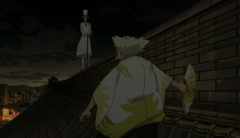
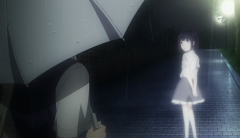
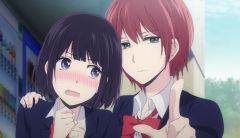
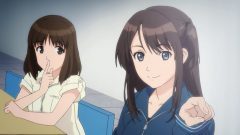
So Eccentric Family is back. If you’re already enjoyed the first season of this gem, the pilot of this second season sure won’t disappoint you. If you haven’t checked it out though, just go watch it. Seriously. The first season really understands the dynamic of a family, and what it meant to be the person tanuki you are and be a part of a whole society. Plus, like I said in the preview, the show’s depiction of magical-realism whimsical world where tengu, tanuki and human live in harmony together in a lustful and vivid Kyoto setting is one of my favorite anime settings ever. That comes as no surprise because Morimi is one of my favorite writer. While Tatami Galaxy offers what I considered an unique, singular interpretation to Morimi’s world, The Eccentric Family is the case where I feel the visual completely in sync with the writing, the way it rarely stands out but always sinks you in with its world (if you ask me which kind of adaptation I prefer though, then it’s Tatami Galaxy, as I always believe creators SHOULD give their own take to the source material).

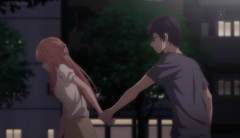
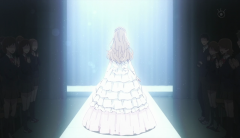
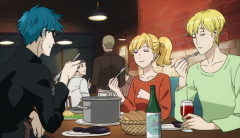
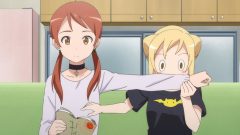
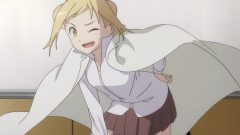
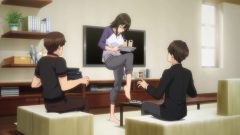
This new season unfortunately sets us back to a status quo, a bit of disregarding the happy conclusion of last season. That includes Bentei departs from Master Akadama (yet again) to cruise around the world (Singapore, SYDNEY, she got taste), Yaichirou (the first son) still aims for Nise-emon title, Yajirou (the second son) reverts back to his frog-self who lives inside the well (there’s no reason for him to stay there anymore, right? But still, a frog who plays shogi by himself in a well is pretty cool). This first episode re-introduces majority of the main cast from the first season; yep that including the tanuki twins who still annoying like an (double) alarm clock, or Master Akadama who is still too prideful to accept that he has been in bad shape for years. My two favorite characters from last season don’t make an appearance though. But I am sure Kaisei will be back very soon; and as for Bentei, while she doesn’t technically appear in this episode, her aura still presents strongly throughout the episode.

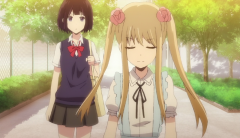
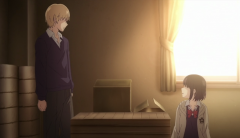
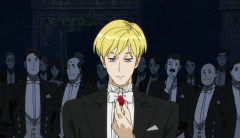
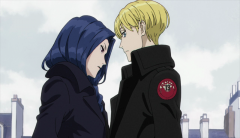
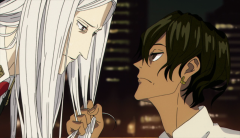
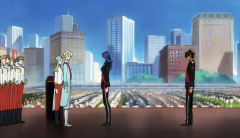
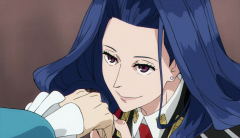
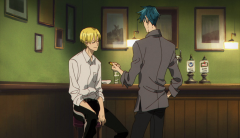
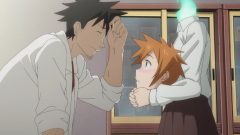
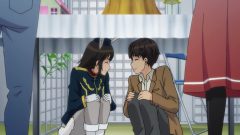
The new additions bring some nice, fresh air to the table, yet completely at home with the old cast. We get introduced to the big brother of Ebisugawa family, Kureichiro, who at least sensible and responsible unlike his twin brothers, but his introduction makes me really question where the hell was he in the first season at one of the most important events for tanuki. The girl Gyokuran seems very nice and it’s possible that Yaichirou and her having a bit of romantic feeling. But the man of the moment is, of course, Nidaime (which literally mean “Second Generation”), Master Akadama’s son. He seems to take a liking to Yasaburou, and their meetings makes up some excellent moments. Now the first shoes are dropped, Nidaime and his father had a big fight that lasted 3 days and 3 nights (again, cool!) that after he lose, both men were to prideful to even see each other or make amends. But to be fair, “big ego” is a trait of all the tengu, as they believe they are “the only being of any significance between Heaven and Earth” after all. I really like the roundabout ways both Master Akadama and his son behave, act like they don’t care for each other at all, yet both appear in the meeting as planned. Actually, we could draw an interesting parallel between Nidaime (who obviously is a tengu but denies himself to be) and Benten (who is a human but have all the tengu ability). I believe this aspect will become more apparent in later episodes. Although Nidaime said that his air gun is still missing somewhere, so… maybe the twins have it again, right?

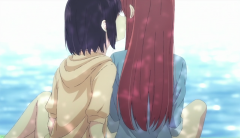
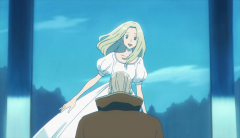
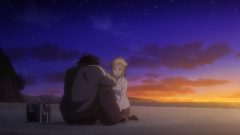
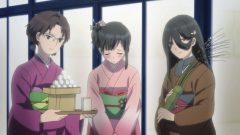
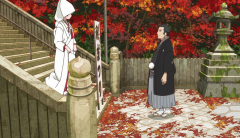
But the sequence that almost grabbed my heartstring was the first flashback of the young mama and papa from Shimogamo Family playing together in a temple. Such a great way to kick off the second season. Those scenes are so sweet with the detailed backgrounds and some lovely character’s expressions. Those qualities, along with the sensitive writing and the emotions that often ring true are the reason why The Eccentric Family’s so enjoyable and re-watchable. It’s those re-watches that make me pick up some minor things that add up and appreciate more with the arts and camerawork. Indeed, the last time I re-watched the show, while I was right in the middle of Kyoto so I could pick up all the real locations and what the real Kyoto had to offer, was one of my best anime-viewing experience ever. This show already has a special place in my heart.

Some notable Animated Music Videos of 2016- part 3

[slideshow_deploy id=’21251′]

With this last part, we will head for more energetic offerings from last year. Be sure to get in the lively mood and the trippiness of those videos. Fasten your seatbelt and enjoy the ride. A bit of caution here as these videos are mild NSFW.

Caravan Palace “Lone Digger” by Double Ninja

“The choice of the title started as a joke while exchanging emails with our manager and we liked the modern touch immediately. Our good old robot as an emoji <I°_°I> ! We communicate a lot via email and text messages, so it actually took us a while to realise it could be a problem pronouncing it. But it’s fun to puzzle people a bit, even your direct partners: label, PRs, distributors… Somehow it started to be called “Robot” or “Robot face” on the net but that was never our choice. (The band commenting on the title of their new album <I°_°I>, since I couldn’t find any interviews regarding the video. For whatever reason a video this popular and the band this socially active didn’t have any single mention is beyond me).

Okay, I’m a bit cheating here as this video was released in late 2015, but I know it when I saw it, this video has to be up here on this list. I’m not beating around the bush, Lone Digger video is one of the most impressive production. Everything here is top-notch, the music is great- the French band Caravan Palace is one of the most prominent electro-swing band today; just listen!), the video kicks ass- they created the mood of the club that go so well together with the song, and they managed to turn up a notch into a bloodbath of the lawless. But the video speaks some of the truth as well. Aren’t we, human, when get drunk and high, becoming some sort of wild animals? This video brings an absolute amazing energy that surely will make your blood pumping and your heart racing.


Savern “Hendrix” by Airplan Studio

Regrettably, I can’t find any interviews regarding the making of this video. Might have it in Hungarian, where the band and the animation company are based, but again that out of my reach.

Wildly imaginative, cinematic, and just plain entertaining to watch, this video gives a lovely tribute to classic rock music, classic western movies and the post apocalyptic world that suddenly become popular in recent years (no small thanks to Mad Max Fury Road). Let’s face it, this world building is so cool that you could make a movie revolve around this settings (Actually they did raising funds for another project based on this settings, which sadly failed). The story is a trip to madness where the world is suddenly invaded by the alien that could make people hallucinating. There’s the green liquid that can keep people in check but with all the supply is now gone, our “Man with No Name” version becomes more and more out of touch with the reality and get himself more into the world of Jimi Hendrix. The CG animation mostly keep up with the theme but the art settings of the post apocalyptic world are the real winner here. Moreover, this video never forgets to be fun and as a whole, this is a must watch for any fan of classic rock music and movie lovers.

Continue reading “Some notable Animated Music Videos of 2016- part 3”

Scum’s Wish (Winter 2017) Review – 80/100

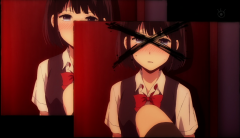
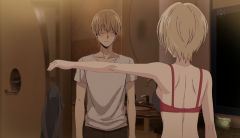
I remember after watched a movie called “Requiem for a Dream” a few years back, I felt devastated for an entire week. The ending hit me so hard that after finished that movie I had to walk around my area for 2 hours in the middle of night to settle my feeling and I thought to myself, “What’s the point of being too hard to the characters, those who have feeling and dreams just like any of us?” Then it hit me immediately. The movie is an unflinching look at the bad side of drugs and how it corrupts people. People like you and me. I finished Scum’s Wish feeling the exact same way. Scum’s Wish is an anti-romance series, a show that excels on portraying ugly aspects of romance relationship and the line of that love versus physical love. I don’t blame you if you feel emotionally-drained watching this series. It was supposed to be that way and for all the dark sides the show evokes, Scum’s Wish always give more thoughtful and honest treatments than most of other anime out there. The way the show handles the bright side of love though, couldn’t pull so much punch as it aimed for.

I do believe the title “Scum’s Wish” really give you an idea of what this show is about. The “Wish” part of the show is its exploration of unrequited love. This unrequited love trope appears everywhere in the show to the point it could be considered as a deconstruction. All these feelings so pure and strong it begins to be eaten over by desired; hatred and obsessions. In Scum’s Wish, everyone falls hopelessly in love with another person who don’t return their love, become blinded and damaged by that obsessive love and in the end, they had to leave that love to move on with their lives. “If it’s a special kind of pain, they’ll be able to become stronger”. Scum’s Wish argues that it’s a painful process to let go with the love of your life, but it’s a necessary step in order to grow up and become a fully-formed person.

But it’s the “Scum” part that gives makes this show provocative and controversial, for all the right reasons. Unable to let go of those one-sided loves, the characters of the show start to use physical means to get what they want. The show keeps progressing its confidence take on the line between physical desires and emotional desires, on how the characters keep using the former as the substitute for the latter, but end up being lonelier and more suffering. Also in Scum’s Wish, all characters really self-aware on the muddy situations they get themselves in, but charge forward anyways. They know what they do will fill them with regret and disgust, but they continue to do it for their own selfish gains, be it to escape from the frustration that they can’t be with the one they love, trying to get every little moment they could out of the loved one, or just use physical attraction as an approval of their power – hence Scum. Those moments where the characters struggling with themselves, most notably Hanabi’s young version loathes current Hanabi are one of the darkest, yet effective sequences of the show.

For a show that has little action and with a mundane high school settings, the visual presentation and the direction of the show are surprisingly very solid. I agree with most of its visual choices, ranging from the using of panel like in manga that represent both multiple perspectives and establish the space between our characters; the stylized key frames that make us feel like time has stopped in those moments; the text screens that represent more as a visualize of characters’ thoughts; the constant use of visual motifs like fallen rose pedals, characters facing the bright, more innocent selves that detailing the increasingly corruptions of the cast. The music; in particular, stands out in Scum’s Wish, as each segment has a different distinctive musical score that really help elevating the mood of each sequence.

The characters in the show are unfortunately a mixed-bag for me. We have really strong leads of Hanabi and Mugi who constantly have to deal with their personal issues, and the show successfully keeps peeling their skins for more nake, more vulnerable of themselves. With a show that aims more on pushing provocative themes than actual characters’ study, there are some characters of the cast are decidedly presented as one-dimensional from the start. Both Akane-sensei and Moca fall comfortably in their usual character’s stock, one is a bitchy bitch who love attention from men and jealousy from girls, the other is an elegant princess who dream for the prince to come. The show presents them as cliché in order to deconstruct how flawed their ways of thinking are. When they shrug off that extreme side of theirs, however, they become stronger and happier in the process. Moreover, I find Ecchan love towards Hanabi one of the most complex and appealing romance in this show. While the female cast if this show is consistently great (even with limited time on screen, Mugi’s senpai still come off as a painful and conflicted character. Strong character’s writing here), the male cast unfortunately doesn’t develop fully enough. Four-eyed sensei drags the show down and he feels more like a walking stick than a normal person; that guy Takuya is portrayed in mostly insensitive light that I feel he was more a trash bin with all the bad traits male inhibits; and Atsuya’s role in the show feel awkward and a bit forced towards pulling Ecchan out of her mess.

While the way this show handles its dark, twisted web of broken romances is effective and thought-provoking, the last third of the show it loses some of its impact as the show tries to resolve all of its relationships. With things are messy and complicated as they are, the ending feels a bit too clean and sometimes overreached. I can’t buy that love between Akane and Narumi for example, I feel like Hanabi and Ecchan can’t go back as friend, bot with that short time span and I feel the ending of Hanabi and Mugi, while appropriate, is underwhelmed. The best strength of Scum’s Wish is its ability to grab you and never let you go, but its impact is lessened greatly towards the end.

As a whole, Scum’s Wish is still a solid drama. Not so often in this medium we see a more realistic and dark aspect of love and romance like this one. The fact that I keep comparing this show to other movies really speak to this quality of Scum’s Wish: the show is structured and presented more like live-action TV show than an anime one (in fact, the live-action drama is currently streaming as we speak). For all of its devastating and depressing details, at its peak Scum’s Wish manages to pull many raw and naked emotional punch that many other shows don’t dare to address. Scum’s Wish is ultimately a painful and uncomfortable experience, but that what growing up is all about.

Scum’s Wish – 12 [Two Stories]

So we end things up with the bookend of school festivals, huh? I think I get it, school festivals supposed to be fun, exciting and thrilling which is exactly opposite with how Hanabi feels. She feels lonely, but now as time slowly passes, when all the pains become somewhat endurable, she just wants to be left alone. Drifting in life so to speak. But that happy tones of those school festivals seem out of place to me, especially those comic exaggerated reactions don’t land well. Maybe in the manga form it works better because we can still have the silent moments of sobering, but in anime there are noise everywhere. The jump back and forth between festivals don’t really inform us much either. That got me thinking but I do feel that in this case, the best way to end the show could be flashforward few years into the future and show us how the characters are at that time. In Flowers of Evil, when the manga did the massive time-jump, it felt jarring at times, but afterward I found that last part the right treatment to examine the wound, the aftereffect of those obsessions bring to the main character. In Scum’s Wish, the characters are in the same circumstances: lost and adrift in life, time can indeed heal these pains but those wounds don’t heal overnight. It’s a progression; seeing how the past still affects them, but they still can move on with their lives would be rewarding enough. But I’m settled with this ending, not the best way to close up the story but it still pulls great emotional punch to our two mains.

It’s great to bump up each of the cast for the last time, and they’re all in a better, healthier stage right now. Moca embraces her dark self and becomes more beautiful, more attention-grabbing because of it. Remember the ugly duck transforms into a beautiful swan fairytale? Well, she was no ugly duck by any mean but this is a right metaphor for Moca: SHE TRANSFORMS. Ecchan; cuts loose her hair and still manages to be that hot, lets go of that dark past behind and moves on. The way she treats Hanabi was the same way Hanabi treated her back then, sincere and earnest as friends. Four-eyed teacher and Akane are all happy, of course, with the wedding around the corner. Hanabi had a moment to really accept that she can’t never be with Harumi and feel happy for him, and I love the brief moment of Akane being her usual self while picking on Hanabi. As it turns out, I’m pretty the same with Mugi, preferring Akane when she was a broken, lonely character than her current happy version.

At last, it’s time for Mugi and Hanabi relationship and overall I like this treatment. Back in my weekly coverage, I firmly believed that they couldn’t be great together because they don’t talk to each other about their problems, instead just keep those feeling bottled inside and release them in terms of sexual contact instead. Well, this last time they do just that, talk to each other about everything, no physical contact, and decide to part ways to grow on their owns and find their new true love. Well, this show’s main theme has always been about exploring unrequited romances, so I’m happy with this ending; although I do feel like they could’ve been better. As a final impression, Scum’s Wish is an emotionally charged and mature series that don’t afraid to go dark and disturbing to examine unflinchingly on what it means to love someone with all your hearts. I don’t mention it much in my weekly reviews but the direction for this show is rock solid, and I pretty much agree with most of their visual choices there. As for my personal feeling on Scum’s Wish, although the show managed to grasp me personally, I’m more respecting it as a well-written character study, rather than outright responding to it. I’m not that big romance and true love to begin with. Can’t say I’m “enjoying” the experience but I’m glad that I’m sticking with it, because it manages to pull many raw feelings that other series shy away from addressing. The pains won’t go away anytime soon for our Hanabi and Mugi, and I know at the end of this trip, they don’t learn much about what they want, but certain only of what they didn’t want. And that’s fine, it’s all part of growing up.

ACCA: 13-Territory Inspection Dept. (Winter 2017) Review – 83/100

Imagine my utmost amazement when a show that I wasn’t that confident on taking in the beginning turned out to be one of the most solid offering this season had to offer. ACCA is the most recent anime adaptation from mangaka Natsume Omo, which despite isn’t a household name, many of her works (6 titles of them) have been translated to English, a privilege that rarely seen among this industry. Watching ACCA though, it’s easy to see her appeals: attractive and recognizable character designs, detailed world settings, complex yet laid-back themes and featuring characters that always in the move. ACCA embodies all those traits with slow but confident pacing that have an ending that perfectly tied up all the plot threads- for me one of the best ending I have seen in years. ACCA isn’t perfect by any mean, after all, adapting full 6 volumes into one cour of 12 episodes mean that they have to cut LOTS of extra details. Although I would’ve preferred more if the show has more time to focus on these 13 Districts and their ACCA’s representatives, the mere fact that they manage to make the plot points flows seamlessly, while still engage (or rather, enhance) viewers’ interest by each passing episode isn’t an easy feat at all; so a special shout out for Madhouse for this wonderful adaptation.

At first, what really makes ACCA compelling to watch is its rich world setting; as the show’s diverse settings is one of its identity itself. The 13 districts all have their own distinctive traits and are vastly different in wealth and their sub-cultures; which remind me a bit of the worlds in Kino’s Journeys. In fact, it’s too different from each other that the only thing that they all SHARE is its autonomy. I should remind you, the demand for putting background details for this show is insane, as they have to show the characteristics of all 13 districts in the little time they had without obstruct the pacing, but Studio Pablo (you might need to remember that name- They are an anime background company, the team who also handled the gorgeous visual backgrounds in Flip Flappers) did a marvelous job in putting as much details as possible from those districts. The two poorest districts were given more development than the rest with their own stories and struggles and as a whole, Dowa Kingdom is a place that I’m more than happy to spend more time to. The ACCA’s representative member in each district, likewise, all given just about enough personality to both inform us their own characters, and how the uniqueness in the district they work in starts to influent them. Regrettably, I still feel the show doesn’t have much screen time to flesh out those ACCA members but that is the sacrifice I’m willing to take…

… Because ACCA is masterclass at its storytelling and pacing. Even now when I’m looking back at the series, I don’t see any wasted segments, any meaningless conversations or any useless developments. Everything the show puts in, they are there for a reason, either to advance the plot, or to flesh out the characters, or give the show more identity. All the plot developments were hinted subtly way ahead, so when the BIG ANOUNCEMENTS take place, we don’t feel like them pulling the rug under our feet, but instead we’re well prepared to take such twists in. Secondly, all the character’s usual habits like Jean’s constantly smoking, Nino taking pictures, or Lotta eating cakes all the times not only tell us their personality, but also those details suggest a deeper plot meaning (see the relevance of cigarettes here? Or the reason why Nino taking pictures all the time?). Moreover, for a show that mainly about the scheming, plan within a plan within a plan about the coup, there are surprising overloaded with breads, cakes and deserts. Characters in this show fall in love with breads, buying cakes when scheming about a plan, making friends through the love of toasts (which ultimately saved Lotta’s life), and to be fair, the love of bread is what give birth to Jean and Lotta to begin with (guess where their Mom met their father? A bakery of course), but strangely, those moments of cake-porn never feel out of place in this ACCA world. For me personally, cakes and toasts will be what I miss the most about this show. And then the pacing. While many would argue the ACCA is snail-moving slow, and they’re mostly right, this is one of the most confident pacing that I’ve seen this season. It’s slow, but it never drags. It’s slow, but it keeps getting more intense as it goes on; steadily to its final showdown.

Another attribute; however, that really sets ACCA well apart from other political thrillers, or any thrillers in that extend; lies in its almost non-existence of violence and dark intentions. ACCA is an idealistic show; characters in ACCA think and behave for the benefit of the kingdom, where sacrifice of individuals can be necessary to keep peace for the nation (That make the backstory of princess Schnee even more tragic). Even the show’s main villain’s thrust to destroy the throne wouldn’t necessary qualified as evil either; after all, all he wanted is the “rightful” power and control for his own district, one of the richest and most influential district. If shows like Berserk or Death Parade keeps addressing the dark and ugliness of human’s nature, show like ACCA is the opposite. It’s almost too bright, too optimistic about human, which is be no mean these characters aren’t complex. The characters are plotting plans within plans, and sometimes their actions are already manipulated by other’s, but more or less their objectives always aim for the better of the people, with little to no gain for themselves. While personally I don’t have much of an issue with it, I do feel portraying the world that devoid of violence or ill-will might split the audience on being unrealistic, and that ending where too much of good things happened (look, Pranetta hits gold) could turn some viewers off for being over-cheerfulness.

Madhouse’s execution to this series is overall top-notch. The use of strong color pallete, for example, gives the show so much texture and more impressively, they fit in with the tones so well that those color palletes don’t stick out like sore thumb. Episode 8, for example, detailing the one big flashback of princess Schnee through Nino and his father’s eyes is textbook example on how to use those colors the most effective. The music, likewise, is really on point most of the time and the shot compositions have great flairs, cinematic, and sometimes they convey the mood and tension just by showing one character’s position to another (like when Mauve informed Jean about his royal heritage) or putting the characters in the soft, blurred background (most prominently through the climax of the last episode). In one word, exceptional. But there is one minor issue, though. For a show that have high caliber of crafting like ACCA, the animation, the actual motions, is lacking. Characters stay at static positions most of the time, and even their expressions don’t change much. Which for me is fair, because ACCA has always been about the calm, about what beneath the surface so it’s only appropriate that we don’t get to see much actions on the surface, both in term of actual movement, or the plot itself.

ACCA also is extremely well-grounded in terms of underlining characters’ chemistry. Although I would argue that those characters don’t change/grow much in terms of character’s development (see, in the end, Jean is still the same guy we saw at the beginning, so is Lotta, or… gasp, Owl), but the show delivers such natural chemistry between the cast, especially the trio Jean – Nino – Lotta that it’s such a nice time to see them hanging around together. Each of the pair give off a different chemistry to boost, and they always feel so effortlessly to each other that when Jean and Lotta find out the truth about Nino, it’s bitter and sweet at the same time. For a show that is more about the detachment (everything flows underneath the surface), they understand that the underlying emotions of the show is the buddy relationship between Nino and Jean (and well, Schnee’s tragic past) so rightfully ACCA gives their final moments on those two as a sweet farewell to us.

But like I mentioned earlier, ACCA is not without its issues. One of it is that the show has to compress its source material to only 12 episodes, as a result in the last third of the show the sweet cakes and deserts just evaporated (but I can understand, we wouldn’t take the coup seriously with all those cakes and breads so they have to go), and like I said, more time to flesh out the uniqueness of each districts and their ACCA representatives would benefit the show greater. Secondly, by giving much attentions to the royal and the members in power, we don’t get to see the Dowa Kingdom in ordinary citizen’s point of view. I mean, we hardly know anything about Jean and Lotta’s father, a commoner, for example. Moreover, being slow and static and diplomatic-centric also means that when the show has to raise up its tempo; most notably during the Lotta assassination; they are clumsy in both storytelling and execution to the point of near-ridiculousness. And lastly, show with this deliberate pacing won’t attract much of the mainstream audience, in which if that is the case, the only think I can say is that they have missed out one of the best well written gem this year had to provide and trust me, this show will hold up well with time. I will definitely check out more of Natsume Omo’s works.
ACCA: 13-Territory Inspection Dept. – 12 [Where the Bird Flies]

Boy, what an impressing ending to this great show. In a way, I should’ve thought about that, keeping in tradition which what ACCA has been established so far: a coup d’état without any chaos, or violence; an actual coup d’etat but not aiming to exclude the Prince and the royal, but to Furawau district. The coup that was just… too polite, like it was the calm during the storm itself, but it swept all my concerns for a conclusion that tied up ALL the loose ends. First, it’s none other than Qualms who leaked about the royal blood rumors (this guy’s impressive!), but the main players in this game are none other than Jean and Mauve. Jean apparently learned about Lilium’s plan from Mauve back when she informed him about his royal heritage (don’t underestimate the power of the opening sequence, when she literally whispered to his ear), then it was Jean who proposed a counterplan that run right beneath Lilium’s evil plan. All the districts want the continuation of ACCA, Lilium wants the power into his Furawau’s district. Mauve takes up the stage and delivers a kick-ass speech, in which not only “forced” the Prince to accept the continued existence of ACCA, but also negated Lilium’s own plan. He left the game, as did his district from the Dowa kingdom. Jean settled the game without having to step in for the throne and his identity is kept secret from the public. I can’t possibly think of any better way to resolve it as satisfying as we have here.

After that, everything else falls on positive notes (if a bit overly so), the Prince turns out to be much nicer than everyone thought. The 5-heads dragon, now with Lilium gone, decides to disband, each of them (save Grossular) returns back to their district to become a chief district and seem to be much happier with it. Mauve becomes the leader of ACCA (so deserving), and while it’s a bit sad that Mauve and Jean don’t become a couple, I believe they’re better off that way. The two poorest districts are now growing to be much better (I can see that the author really care about those two districts), with Pranetta hits gold and become a new “American Dream” – or should I say, “new Furawau Dream”; Suitsu opens its borders and now citizens can vote freely. Lotta has a whole lotta more opportunity to meet her new cousin and beloved grandpa and eat cakes and breads. Abend is indeed, Owl, and this guy was the one who pulled the strings from behind so that everything can fall according to this outcome. Like Nino said, an impressive feat.

Finally, Nino seems to be so relaxed and peaceful. I think all of his load was taken off from his talk with Jean last episode, now he’s truly free to do what he wants. I was actually smiling when he stands behind Lotta in that crucial moments to protect her. He can’t change, huh? Kudos for the show to focus squarely on Jean and Nino’s relationship in ACCA’s final moments. In the end, no matter what happen, they will always stay beside and trust each other. I’m in particular impressed again with the use of jazzy music during the coup scene and the use of strong color pallete everywhere in this episode. This episode indeed ends the show in a high note, and I’m sure this show will hold up very well, and rewatching it to pick up all the subtle details would be very rewarding. In retrospect, people might complain about its slow and deliberate pacing, but for me this is one of the most confident and well-balance pacing that I’ve seen in recent years. Every detail they put in counts and I don’t really see any unnecessary fat so far. I really have a blast blogging this one, and believe it or not ACCA becomes one of my favorite titles this season (not a slight judgement with a season that has Rakugo, Little Witch Academia, and Hand Shakers… I kid, I kid). Well, full review will be up soon, all I can say is I am satisfied with the whole experience. Well done ACCA.

Demi-chan wa Kataritai (Winter 2017) Review – 62/100

Demi-chan is one of the newest addition to the monster girl subgenre, which usually feature a human helpless male lead get stuck in a harem of mythical creatures, in form of oversized boob girls of course (why usually those monsters are in female forms anyways? Aren’t they sexless?). In this case, we have monster girls as high school students in an otherwise mundane ordinary world, where human begins to accept them as a part of society. With the help of a teacher who takes special interest in demi-human, those monster girls (called themselves as demi) starts to navigate their lives, opens up about their demi abilities and how they adjust those abilities to fit in with the environments around them. Demi-chan, as a result, tackles quite thoughtfully and sincerely about demi issues from multiple sides; from demi side, from those who do and don’t aware about them. The middle part of the show, however; dragged the show down by a passable but uninspiring slice-of-life tendency where nothing much happened. The final two episode picked up some of the show’s best spirits but as a whole, Demi-chan isn’t special enough or hard-hitting enough to really stand out in a crowd.

As you can probably guess from the title “Interviews with Monster Girls”, the show focuses on the main demi-human nature of our high school girls: vampire, dullahan, snow girl, succubus. By that the show comparing their true natures to those traits we all heard from mythology (Do vampires hate onion? How succubus work to attract male preys?), addressing their main concerns toward blending in with human world, and explaining their demi abilities so that those girls understand and be proud about their nature. One of the main moral question the show keeps asking throughout its run is that how we, the human people, should treat the demi girls most appropriately. Should we treat them like normal people, or should we care more about their monster’s attributes? Isn’t keep questioning about their “abnormal” nature a kind of discrimination itself? When you keep asking about those natures so many times it’d make the monster girls aware that they are different than the rest. For that Demi-chan argues that it is necessary for the girls to learn and embrace their own natures because those natures are a part of themselves and are what make them unique as a person. The human as well should learn and understand their concerns in order to really support them. Sometimes we do some discriminated actions to them without we knowing it (one of the lines from a recent film Hidden Figure really hits it home. The white boss: “Despite what you may think, I have nothing against y’all”. To which one of the black girl replied “I know, I know you probably believe that.” I totally agree with this thoughtful approach and to be frank this attitude is relevant to the people from ethnic groups in real life as well. I’m not going to touch on world political much but with Trump’s aggressive actions towards Muslim countries and border immigrations, sometimes what we should do instead is understanding each other’s points of views and acknowledge and respect their distinctive cultures.

Another strength of Demi-chan is this show has a lot of hearts. The show has its light-heart, sweet nature hanging in the air and many of those big emotional scenes are heart-felt and delightful. Well, you can argue that those moments (like Hikari confronts the bullied girls in the toilet, or Hikari encourages Tetsuo by the lake) are over-sentimental for its own good, but when its heart is on the right place I have no problem with that. It’s that sweet nature and the easy chemistry between those girls and Tetsuo that basically carry the show throughout its run. In addition, the sweet voice acting help elevating the chemistry as well. Of those characters, Tetsuo-sensei and Hikari are easily the best characters of the show. Hikari for her over the top but that’s-exactly-what-we-need carefree attitude, and Tetsuo for consistently helping out the girls with his kindness and he also grows from approaching the girls with curiosity into wholeheartedly caring about them. The second last episode where the show examines how close should he assist the girls is also a thoughtful, well-drawn conflict that help developing his character and making us see how much he means to other monster girls.

The introductions and then the interviews of our monster girls are easily the show’s best parts. After the interviews segment though, Demi-chan stumbles in finding a hook so it relies on some of its more questionable aspects: the romance and the slice-of-life approach. The romance is a totally dead weight, unfortunately, because this show doesn’t need any romance to begin with. Sakie’s crush on Tetsuo is more of a missed opportunity than a hit, because it’s awkward in tone and worse, gets pale very, very quickly. Kyouko the dullahan’s feeling towards her teacher is also the show’s low points, and there was more than one time that Tetsuo having a sexual tension towards her, which gives this show a rather bad taste. Secondly, after the interviews the show wanders around for “cute monster girls doing cute things” focus, that including the girls studying for the exams, enjoy reading old manga and swimming in the pool (really, we MUST have pooling episode in some ways). Those moments sure are cute and relaxing but they don’t really have much to say and it loses its steams by each passing episode. In fact, I don’t remember much what happens in those middle episodes because nothing really happened, nor mattered. Lastly, the new characters introduced in that period are unmemorable at best. The young boy and the detective adds little to the table, that Tetsuo’s scientist friend has no chemistry whatsoever with the cast, the human students don’t have much screen time to stand out and Hikari’s parents, while well-fleshed out, still remain underdeveloped. In fact, where is Himari in the second half of the show? It is a shame because she’s far more interesting than most of the core cast out there.

In the end, I’d only recommended the first 4 episodes and the last two, which would sum up to exactly half of its runtime. Except from its well-thought approach on the nature of the demon girls and the easy chemistry between our characters, the show leaves little impact and unfortunately, for me at least, the middle part really brings the show down to the point I feel it falls flatter and flatter as each episode passed. The last two episodes did regain some of its spirit but by then it was far too late. Still, I don’t deny that I have an easy time watching Demi-chan, it’s good to get sucked in their world and enjoy the band of demi-girls having fun times, but ultimately when it’s all done and gone I left without much personal attachments from any of this.

Seiren (Winter 2017) Review – 51/100

Let me say this out front, Seiren is NOT a good show, it’s a highly uneven one. Throughout its run, I can see some solid moments and fresh ideas that could potentially raise it above the bar, but ultimately, view it as a whole, Seiren is a show that isn’t worth recommending. At first, I’m actually intrigued by the premise of the show: an omnibus format on the romance between our protagonist and each of the girl (3 of them this season). Ya know, a harem without an actual harem. For me personally, I’m dread at the concept of “the one” in romance, that there is one person who specifically for you, your “true love”. I always believe that having a romantic relationship with someone is a matter of meeting them at the right time in the right circumstances, of course with enough chemistry and efforts. So, for a show like this (and Amagami, I’ll get to that later), showing multiple possibilities one could’ve have to be in love with different girls is actually interesting and more realistic concept, at least for me. Moreover, with 4 episodes for each arc, it is a perfect length to flesh out the characters, heighten the chemistry before the romance itself drags out for too long. That was in theory anyways, because what we got instead is a show that bugged down by a very inconsistent plot progression, awkward pacing and weak writing in general.

It’s hard not compare this to Amagami so I will address this issue first. Although Seiren is an original show, it borrows the same concept, the same structure and even the same settings with the latter, so like it or not we have to see if this show is better than its inspiration or unique enough to stand out by its own. For the quality, Amagami is way better and way more focus, they understand the romance is their central point so everything they put is mainly to flesh out the relationship between the main character and any given girl. Each of the route starts and finishes around the same time period, making us feel strong connection between each arc. Moreover, Amagami works because it adapts its Sim-dating format really thoughtfully (okay, enough about Amagami, I won’t address it again. Promise). Seiren, being an original show, doesn’t really need to follow Amagami’s footstep because frankly, why stick to a game format when you have an ability to do something fresher? Seiren achieved it in a way, because after finishing the show I wouldn’t call it a ghost of its predecessor. It is its own thing, but in an inferior way.

The first issue here is the route, because honestly I can’t call it a route. Each arc happens in a different time period, and sometimes without the knowledge of the previous arc, you couldn’t follow the details in later arc (like Tatsuya, Shouichi’s friend, who has a fetish for rabbit). Worst of all, except for featuring the same stock of characters in the same school settings, the three arcs are vastly unrelated to each other, be it in themes, in the romance, even in characters themselves. For that I mean the characters change in personalities during each arc that it’s hard to consider them the same person. Take Shouichi best friend, Ikuo for example. In the first arc, he appears as Shouichi’s close childhood friend but he’s more academic, he’s more serious about his life and spends a lot of time for study. In the second arc however, the show betrays his nerd side by putting him to become a game-buddy with our main leads; and in the last part I wouldn’t consider them close friend at all (how can you call each other best friend when you have no idea the girl that Ikuo crushed for so long) and Ikuo acts like a love-struck Romeo. The only thing that consistent is the show’s weird fetish for deer, in which I find rather fascinating.

Then to the big elephant in a room, the writing and the progress of the plot are all over the place. In Seiren, I have a feeling that there are too many chefs in a kitchen, thus the result is a hot mess tomato syrup. Sometimes it wants to be a game-buddy show with exciting mecha fights (really!), sometimes it focuses on magical girl- passion only for later it drops that storyline to focus instead on the girl baking and enjoying Christmas party, then it remembers that it had to develop a romance so it puts the characters alone together. In addition, normally you know the writing of a show is inadequate when a side character shows up and you had to think for a few seconds to remember who that person is. Well, I have the same problem with this series. Like, who is that girl in swimming club again? From the poster, I supposed she’d be one of the harem but where are the other two girls then? They might be around somewhere but at this point I lose all the interest to find out who they are. And not even characters, but the plots development as well. Let’s see, why Seiren keeps focusing on Hikari’s best friend backstabbing her subplot and then kind of drop it off all together? Why the subplot of the Student Council President (oh, my bad, it’s Public Morals Committee) forced the Home ec Club to build a Christmas tree? There were like dozen subplots in one arc without any proper development that it feels just like having a dream. I bet in few months all we can remember is the main plot points and some fragments here and there but we totally forget everything else.

But the show is not without its charms, mind you. First thing I should mention is the hilarious dialogues that bother self-satire, that actually make the show ridiculous and funny at certain points. Line like “Sorry, do you mind if I feed my deer” in a middle of a café date with deadpan delivery is something to behold. While the main male protagonist is plain, I like the all three girls Hikari (no, not the vampire), Toru and Kyouko (no, not the dullahan. What’s up with this show and Demi-chan?) and they are interesting and diverse enough to carry the show by themselves majority of the time (my favorite girl: Hikari). Lastly, I enjoyed the epilogue parts of each arc because I think it’s one of the rare cases where the randomness in details work in their favors. Watching Shouichi become a chief, a school bus driver (haha) or a magical girl mangaka is both hilarious, but also remind us the endless possibilities of our own future.

The technical aspect of the show is nothing to write home about, although it fulfills its jobs. There are some moments, most notably, during the “kiss in a beach” scene, where the visual and sound really elevate the whole sequence. Other time, the show did a decent job of choreographing an action mecha fight and the character designs, while attractive in general, sometimes I do feel like I was looking at fake wax statues (weird huh?). I think it mostly have to do with the character’s eyes, sometimes they just kind of staring too long without any emotion attached.

It’s note repeating that for my score, I consider 60 as recommendation line; as such Seiren falls short. The inconsistent in plots and sometimes in characters themselves are its most drawbacks. It’s a pity because I can see many of its plots have a potential to become a solid offering, but when they jam up everything they can think of together, the result is a half-baked resolution to most of its plots. If there will ever be a second season (come on, there are 3 more girls), I’m not exactly sure if I still care to watch it. At the end of the day, Seiren is a misfire romance show, it had potential to be a much better show, but all it need is to settle in some major plot points and develop them properly. To put it more precisely, Seiren lacks a sucker punch.
Scum’s Wish – 11 [A Kind God]

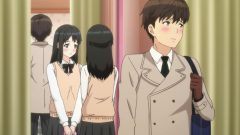
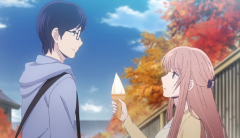
It’s strange, for a show that almost certainly make viewers furious one way or another, be it totally love it or hate it; I remain indifferent for last couple of episode. The thing is, I can’t ship this Akane – Narumi relationship, because I’ve witnessed this kind of relationship in real life before and it just didn’t work out. Contrasting personalities can attract each other, sure, but they still have to share the same basic fundamental of mutual understanding. I’m sure Akane and that robotic sensei have different sets of value about commitment, and until they can sort out that gap, marriage proposal is out of question. Furthermore, to what extent should we love and accept a person the way they are? The only one-sided, unconditional love that work is the love of the parents towards their child (I love a line in Xavier Dolan’s movie“Mommy”, in which a Mom talks to her son- “The only thing that’s gonna happen… is I’ll love you more and more. And you’ll be the one loving me less and less, but… Life works that way.”). Love as a couple means you love and expect the other to love you and have a moral obligation to behave correctly towards each other as well. How will he react if Akane is going to stay true to herself and f* anything that moves? Accept it means he assists her to her own destruction but reject it means he doesn’t accept her they way she is.

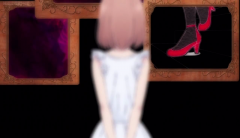
Therefore, it’s important to know what Akane’s feel about this relationship, and I actually can see why Akane attracts to Harumi. For all her love life, she has been a man’s sexual desire. She’s in the centerstage, demand all the men’s attention and enjoying their possessiveness and their jealousy over her. For Akane, it’s the proof of her worthiness. But Harumi cares none of that so that order is thrown out of the window and she suddenly feels confused and wants his approval. His very perspective of love- he’s fine if she screws around because she likes it- eventually reaches to Akane, shattered all the gallery of previous relationships (great visual metaphor here, although I still don’t understand why the young Akame again?), and makes her feel connected. As I said above, I don’t think this love will last and marriage proposal is way too fast for this relationship.

I’m glad the show doesn’t tackle this, instead just hints very slightly this episode; but at one time I thought they made Harumi lose his glasses so that he sees Akane reminds him again of his lost mother. Because if it is then I really question if Harumi really love/care/know Akane enough to live with her for the rest of his life. Akane herself doesn’t sure if it works out either, but the mere fact that she wanted to change is good enough. Also, credit where credit is due, although you know I believe he’s the worst-written character out of this show, I need to praise Takuya’s appearance in this episode (yep, he was in this episode, sobbing when he found out that Akane was cheating on him), because seeing the brief moments of him hurting by that love, I can feel the way his pure love is broken and a glimpse on how he becomes the way he is now. That is a sensitive storytelling.

Akane accepting Harumi also means the rejection for our boy Mugi. For the first time since forever, they have a date but it’s just purely a date, you know, no love hotel. Akane enjoys herself and then firmly rejects Mugi. When you think about it, it’s actually very thoughtful of her (I guess because she actually cares for Mugi) that she cuts that relationship clear and clean so Mugi can be able to move on. Like a protagonist in 500 Days of Summer (gosh, what’s with all the movies’ references today Mario!!!), he learned that people can actually change, but it’s always someone other than him; he has no real influence on her decision. Now, it’s important that he remembers this so that he can grow after this pain. “If it’s a special kind of pain, they’ll be able to become stronger”. Indeed. If there’s a central message to all of our tainted love threads, it’s that line. Now, it’s only Hanabi and Mugi left on stage for the finale (it feels so long without Hanabi), the real question is if they mature enough now to actually be together? I don’t really mind how the result might turn out, but I do think they deserve some happiness after all the troubles they have been through.

Some notable Animated Music Videos of 2016- part 2

[slideshow_deploy id=’21036′]

This part offers even more diversity in animation techniques, as well showcase the varied genre of songs. Let’s get right down to it.


Lorn “Anvil” by GERIKO

“He allowed us to choose one track from his latest album and gave us full creative freedom to explore and develop bot the narrative and the aesthetic of the piece. It was a great privilege to be awarded so much trust and creative licence by an artist we deeply admire” – GERIKO

Hands down the most ambitious and ambiguous video out of this list. Inspired by Japanese and Belgian comics, most notably Akira, Ghost in the Shell and the Matrix, Helene Jeudy and Antoine Caëcke (aka GERIKO) created a an incredible science fiction universe in a brilliantly stylish black-and-white animation for Lorn’s song “Anvil.” In this dystopian future in which social networks can manifest in physical ways, invade the body and mind and blow them wide open, a young woman chooses to take her life via a machine and we see every bit of process that she emerges herself to that crazy world there. The subsequent journey our main character embarks on is exquisitely detailed, mesmerizing, and truly compelling visual.


Jane Bordeaux Band “Ma’agalim” by Uri Lotan

“The inspiration came from a visit a few years back at Musée Mécanique in San Francisco, a museum devoted to antique penny arcade machines. Walking around the museum there was a feeling that time had stopped. The characters inside the machines have been destined to a never ending cycle repeating the same action over and over again. That metaphor worked perfectly with the lyrics.” – Uri Lotan

“Ma’agalim was conceived in an untraditional way. We contacted the band with the intention of creating them a music video. That gave us complete creative freedom, as long as it was in the spirit of the song.”

I’m gonna be honest, this video melted my heart for its beautiful, detailed yet bittersweet feelings it evokes and the fresh and innovative approach for its story. Ma’agalim is a Hebrew word for “circle”, and as the creator mentioned above this is precisely the theme with this video. We see the characters running in circle, getting stuck in a very specific and endearing place, but that’s why this video has a feeling of timelessness. The video centers around an enchanting, innovative CGI animated wooden penny arcade, packed with as many beautifully designed and whimsy characters. As the arcade rotates and our little girl wanders around, the internal workings of the machine are revealed, showing how it brings an everyday life of those characters in that penny arcade world. An intricately designed, beautifully-executed, and gently poignant achievement in CGI. Many people even go so far to compare this video to the worlds of Pixar for good reasons. My personal favorite pick.

Continue reading “Some notable Animated Music Videos of 2016- part 2”