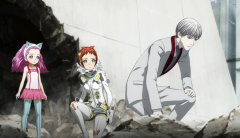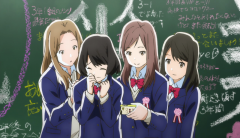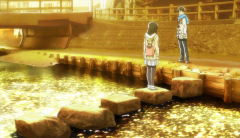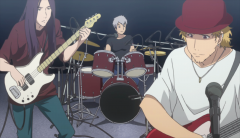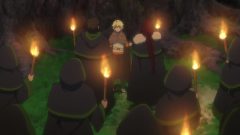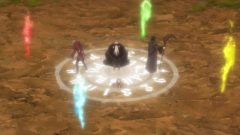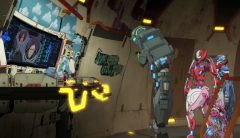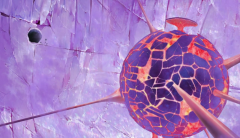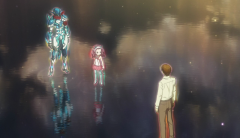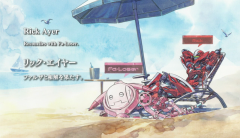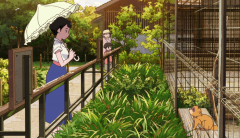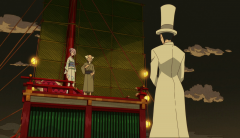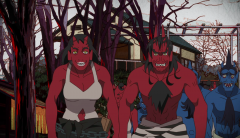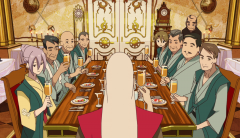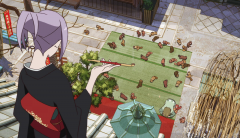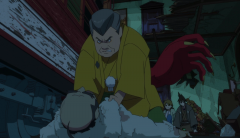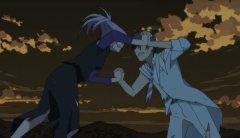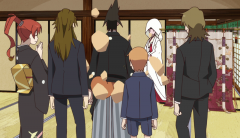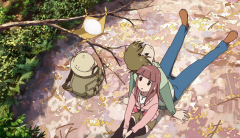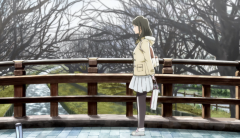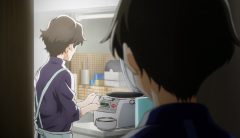
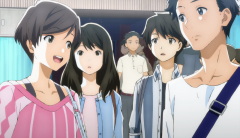
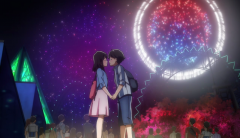
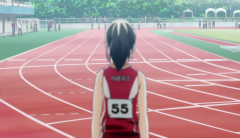
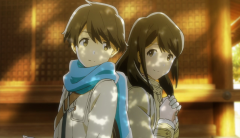
Tsuki ga Kirei (Spring 2017) Review – 88/100

It’s hard for me not to go overboard on Tsuki ga Kirei: out of all the show I’ve followed this season, I resonated the most to this one; but even when I’m judging this show objectively, Tsuki ga Kirei is one of the most perfect one, in a way that it achieved exactly what it set out to do, and achieve it flawlessly most of the time. The story that they tell – detailing the first love relationship of our young Kotarou and Akane – is decidedly simple, mundane but honest that it feels more like a love story taken from young best mates. It has that “sincere” quality, something that the anime medium often cranks it up to the max with “moe” and exaggeration everywhere. Not here. Tsuki ga Kirei has great flair of visual storytelling (something that benefited from being an original show, they don’t tie up to your usual LN and manga visual cliché), using show-don’t-tell approach that often focus on small moments and little gestures than big emotional melodramatic scenes. The characters never play off their roles, they’re the most natural group of kids that feel exactly kids their age: naïve, inexperience and pure. This show ends up at top of its genre as I consider it the most effective romance anime out there. In short, I freaking love almost everything about this show.

What Tsuki ga Kirei will be remembered the most for lie in real depiction of first love relationship. The more you watch romance anime, the more you surprise at how simple, yet distinctive achingly honest this show aim for. Ordinary romance anime would spend its entire time on how boy gets girl, throw in some other love interests that make them realize how much they mean for each other, and if we’re lucky we might actually see they confess to each other in the end. Tsuki ga Kirei is an entirely different beast, we got the confession right at the end of episode 3, and from there we follow every stage of that relationship and see their love progressing. Moments like Kotarou had to search the internet on what people do when they’re dating, finding a way to spend time alone together, or thinking how to continue their love after graduation – all feels so real and progresses so naturally that I suspect anyone who have been in relationship will find a thing or two from this show that speak directly to their experience.

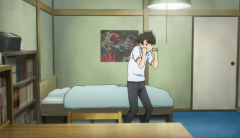
Moreover, they understand that in order to make this relationship work, we have to relate to Akane and Kotarou and they did a damn fine job at that. Both have their own lives and their own troubles to deal with, so we can see them as characters who have distinctive personality, with well-defined goals and struggles. In one of the episode, they both reach a new low in their personal dreams, as Akane underperformed her track competition and Kotarou got a call from a real publisher just to receive an advice that he had no talent in serious writing. Then in small moments when those characters act without much thinking, it’s a treat to see how their personality plays out: I love how every time Kotarou get excited he will punch the light’s chord in his room, or Akane whenever she gets nervous she will press that pushie hard. Their circle of friends also adds to the naturalism of the story and although they aren’t developed much, they clearly belong to this universe.

The visual storytelling is another great strength of the show. As both Kotarou and Akane are introverts and tend to keep their feelings inside without saying out loud, it’s showing their subtle gestures, their glances that we get to know a lot about them. As a result, this show is decidedly quiet, there’s not much monologue going on but that is the reason why this show feels just like in real life. The designs are simple, again emphasizing on subtle over excessive details. Great shot compositions everywhere. This is one of the rare show where I can argue that the visual components play as an important part of the show and they achieved it almost exactly what they’re aiming for.

Another factor that feel like a character itself that I feel the need to acknowledge, it’s LINE. Just like kids their age, Kotarou and Akane’s main communication is through LINE and we witness a huge chunk of amount that they exchanged through LINE, as they are, no shortcut. It’s just like how real kiads would do and to achieve this effortlessly is no small feat at all, so congrats to Tsuki ga Kirei for its respectful use of social chatting. The shorts in the end also a part of this show’s identity, as they depict the love relationships from Kotarou and Akane’s friends with more bawdy and comedic tones, which in turn made that world so inviting to watch.

Although the show succeeds most of the time in term of production values, I can still see some production troubles from the show and the delay in airing in later half further reflected that. Tsuki ga Kirei does suffer from that as in one of the episode the production values just fall apart. But I’m genuinely surprised that after that disaster episode they managed to keep up a consistent quality and the more I know about their trouble backstage, the more I’m in awe about their efforts. It’s obviously a product of many sleepless nights from the production team so I thank studio Feel for their outstanding performance.

And all of what I was written above was just how I access the show objectively and that kinda demerit one of Tsuki ga Kirei’s most appealing factor: it’s right down charming that touch the hearts of viewers with its bright and delightful portrayal of pure love – I don’t deny I fall under its spell, actively care for the couple and goddamnit I just want them to be happy together. Tsuki ga Kirei is breathtakingly intimate in narrative scope and I know I will remember the show and its characters very fondly. Arigatou.

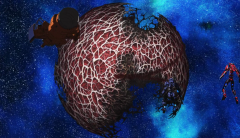
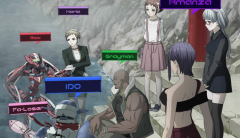
ID-0 (Spring 2017) Review – 81/100

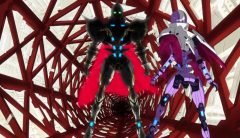
Here comes one of the most under-appreciated anime of this Spring season. ID-0 has many hassles that keeps viewers away from watching it: Netflix exclusive, full CG animation and a plot that just plain weird and a bit incomprehensive at first view. I originally took it as nothing more than fun spooky little-seen show until I realized that ID-0 is a well-crafted one. Both in terms of productions, worldbuilding storytelling or characters’ development, they’re all above par. ID-0 also succeeds on introducing their main concepts that not only plausible on the surface, it hints on deeper implications regarding those concepts and the show handles those issues competently. The discovery of the Orichalt – the red crystalline mineral that floating in space – has allowed humanity to travel through space and live outside other planets. In order to look out for more Orichalt, human creates “I-Machines”, the giant robot that is functioned by transferring human consciousness into robot’s operating systems – a robot body with human mind. It’s important to remember those two details since the show explores its theme from there.

The first implication from the show’s concept, which perfectly aligned with the lead Ido’s main character arc – is how much of this I-Machines version independent from its host? Are they the same identity with the host body, or are they their own selves? Normally, it shouldn’t be a problem since human uses I-Machines as a means to perform work in harsh environments. Loose the I-Machines and they will trance their mind back to their original body. No big deal. The Escavate team, a team of Orichalt-pirate, contain many exceptions to that rules. They lost their physical body forms due to different circumstances, thus the I-Machine bodies are their owns now, called Evertrancers. Ido has no recollection of his past, and his ID was erased (hence ID-0). Throughout the series, it’s his personal journey of finding out who he was, and whether or not he’s still Ido the Excavator or the embodiment of his past real self. Another member of the group, Rick – another Evertrancer, adds some more layers regarding this “self-existent” theme as well. His current soul is a copied version of his original consciousness, meaning he has no “real” body and no “real” soul, he’s Rick yet he isn’t Rick. He carries the same personal traits as the original Rick, has the same memory but he’s ultimately his own individual now. Their current I-Machine versions are who they are now, with the consciousness that run totally independent from their former host.

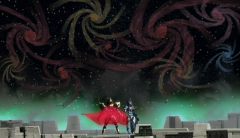
And I just barely touched the ice-tip of ID-0 themes, so let’s dig in further. Now looking back, I really love the concept that Orichalt is already something irreplaceable and invaluable for the humanity from Day 1. Everyone keeps talking about it, all their activities aim to get more of those Orichalt to begin with. It just shows how humanity has taken Orichalt for granted, so that when the Rajeev (the wandering planets) appear, we can sense the high stake of the situation. I also enjoy the philosophy behind this Rajeev. Just like how Joker was inspired to challenge the very concept that Batman has built, for everything that too good to be true for our human race, there will be some sort of drawback, a kryptonite that attack directly to the advancement that we gained. These wandering planets’ main purpose is to consume Orichalt, and they have developed their own intelligence on top of that – a worthy enemy to destroy the human kind. Although the solution come a bit far-fetch as best: teaching them the love of humanity so that they can learn about humanity and leave us alone (Yes, you heard it right), I still firmly believe this is a well thought-out main conflict for this series.

ID-0 also suggests a far darker implication to this Mind-Trance system, albeit a bit under-developed as they don’t have time to progress that angle. It’s the “immortality” theme. A secret organization, using the techniques as a mean to transport their mind to their younger clone to archive living immortally. For me, this actually sounds very intriguing because it’s entirely possible. If there is a second season of ID-0 I would love if the show goes darker and focus on these themes like this. Seriously, there is many interesting variables to the concept that I really want to explore more. All of that jut to highlight how well-crafted the world settings are. Well done, ID-0.

Now, I realize that I have delved too much on its themes without giving you an actual critique, so I will do just that below. ID-0 is a prime example of having a great pacing. The story almost never drags, while still allowing many of space for the characters to breathe and all the developments progress quite naturally. In other words, top-notch. The cast’s overall chemistry is another highlight for me. They have easy chemistry and they bounce off each other extremely well. It helps that each of them has their own voices so when the show putting them altogether, their diverse voices are more than enough to shine through. They’re not the deepest bunch by any mean but nearly all of them have enough development to work with. I’m a bit sad that Maya isn’t given enough spotlight in the end (this is, after all, Ido’s story), she serves more as our lenses to that brand-new world more than a flesh-out or deep character, but I am fine with that. In other spectrum, the main antagonist of the show, Adams, unfortunately is one of the worst character that brings the show down a note. Apart from his obvious inferior-complex to Kane and his eight-grade symptom of the world has to revolve around him, he has no real personality to speak of and he terribly overacts all the time that it’s hard to take him seriously. The sequence where Adams reveals Ido’s past is a kind of convenient and way to-your-face approach that personally turned me off, but other than that obvious misstep ID-0 manages to maintain its beat thoroughly.

The CG animation does feel stiffs at times and it takes some time to familiar with the animation, due to its mecha robots that floating in air- premise, but this is one of the few series that not only the CG animation is done right, it has its purpose; as robots and space, and spaceships are all components that CG can be used the most effective. In addition, the character designs are attractive, characters look their ages and even the I-Machines versions have so much personality for each member of the team. Sanzigen continues to be a studio that has its firm grasp on making convincing CG anime so thumb ups for the studio for this amazing anime. This is a solid anime offering, a firm 8/10 rating for me. Definitely the best show that no one watch this season. Now, I just hope that Netflix knows what to do with this little gem.

Tsuki ga Kirei – 12 [And Then]

There sure is a lot of crying going on in this finale (mine included, MANY TIMES), and that was one significant factor Tsuki ga Kirei pulled off in their last episode – they go for big emotions here – for better or for worse. The “worse” part, this emotional outburst goes completely against the show’s quiet tones presented in earlier episodes, and those scenes unfortunately bring Tsuki ga Kirei into an ordinary romance anime territory with all their usual cliché – “boy gets girl, boy loses girl” stuff. The “better” part then, after following their relationship for 12 episodes, Kotarou and Akane more than earned the emotional impact they presented here. The stakes are much higher now, as they have issues both from external threats and internal fallouts. Having Kotarou screaming “I Love You” to a running train, or Akane crying whenever she has a chance feel rightfully resonate with us viewers. Just like hidden waves just keep bubbling up under the surface to transform into massive tsunami, this is a stage where those two need to be actively acknowledge how much they are meant to each other. So in the end, not the best ending I could have hope for, but still an emotionally satisfying one.

I love how Tsuki ga Kirei wasted no time telling us the main conflict, as Kotarou receives a “rejected letter” seconds into the episode. Thus, the two will have to do with long-distance relationship, but will they survive? Akane is insecure about their status: her sister feels it’s better for both of them if they break up, her best friend Chinatsu tells her AGAIN that she confessed to her man, and Kotarou doesn’t address that issue, or any issues at all, instead taking the load all by himself. Now about Chinatsu, I know many of you would absolutely hate her by now, what’s up with all the confession again and again that she knows would hurt Akane and break their friendship? I just say it’s how extrovert works, they have to let it all out and no hard feeling after all said and done. They move on. Akane understands that trait of her friend so she can take it well.

But she won’t take it as well when it comes to Kotarou, because he doesn’t tell her any of that. Indeed, he doesn’t tell her lots of things, one of them is his ongoing online novel – about their relationship (poor Akane just aware of its existence by Chinatsu, again – just to show you how attentive Chinatsu is with the world around her). His novel, I take it as the literary version of this series, takes a lot of viewers’ hearts for its true and honest depiction of first love. But the true question remains, raised by a random user named Akane “What happens next?”. That’s for you to know and for me to find out, kids – It’s an ongoing question that both Kotarou and Akane need to search for themselves, and in that extend all the lovers out there. I think this question hits home hard, so that I remain a bit baffled by the ending credits. Cute and heart-warming, yes, but we don’t really need to know the outcomes. We’re here to witness their first love in a very first stage, and whether they gonna be together for the rest of their lives or not isn’t our main concern. In fact, I believe this story is stronger if the two can’t make it till the end (yes, I’m cynical). This end credits make me again want to pair up Tsuki ga Kirei with Flowers of Evil as a companion double-edge piece: one depicts the light, the brightness of first love relationship, and the other details how such relationship can go horribly dark and twisted.

As a whole, Tsuki ga Kirei has been a wonderful ride. I won’t say much here as I will save my thoughts for the final review. Just let me say I really respect the efforts studio Feel put in for this little gem. I know they were having productions issues in the latter half of its run, judging by the constant delay in their broadcast. But knowing all that made me even more impressed with the final products, as save for one episode they were exceptional. Also, I’m very happy you made it till the end, Kotarou and Akane-chan. Bravos.

Sakura Quest – 13 [The Marionette’s Banquet]

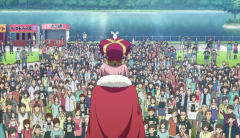
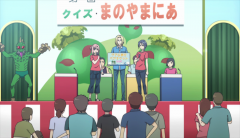
Up until the last few minutes before the ending, I almost written this arc off as the one with no real drama, since the events play out too easy for our characters. But as Yoshino’s concern arises, I realize that it was all intentional and with that, this episode closes up nicely the first half of Sakura Quest. On the surface, the Founding Festival is nothing but a huge success: the number of attendance reach their whole year’s target, Manoyama town got promoted by the popular programs and the girls are given spotlights that they deserved; even the town locals have a chance to sell their foods and products. But those successes are not sustainable – the plans rely too much on the band Plotemaios (pronounce as Plus Minus!!) and their appearance indeed overwhelmed all the efforts of the girls. The quiz program shows little interest to the travelers, though they still manage to carry on till the end. Their coupons are greatly ignored and the girls are framed as the ones who invited the band over and their quiz panel is completely ignored in the broadcast. Look at the aftermath of the quiet town where the only trace left from the big events was trash and lost coupon flying around, Yoshino wonders if all her efforts are truly worth it.

When Yoshino questioned that whether getting people to come to the town is good enough, well, it is important. After all, getting people come to town constantly is the first and foremost goal in the tourism industry. The constant flow of visitor can indeed affect the town, as many local products aim at tourists can blossom, but it has to be “constantly”. Many of those past events from previous arcs (save the woodcarving and the cooking ones), plus this event are one-off events, meaning that most of the time, after such events end, things turn back to normal for the town. Improve some of the town’s traditions and unique features so that it can attract outsiders is one of the option, but Yoshino, bear in mind that maybe most people in the village just want to live quietly this way. She clearly upsets with how things turn out now and finding motivation, plus looking for a better alternative sound like a good direction for me. The event itself, putting all those pretentious thoughts aside, still provides heaps of funs with many little character moments. I enjoyed Ririko’s idea of putting map as a wrapper; or Yoshino sings that cute little anthem song. The scene-stealer of the event, again, is Sandal, as he correctly guesses the answer even without hearing the full question (he OBVIOUSLY knows the answer, rightttt?) and then proceeds to announce Mr. Kindaichi to be his partner for Guam trip (haha, seriously made me laugh).

Half way through, Sakura Quest has its ups and downs. It has never been bad, mind you, as I quite enjoy many elements from the show. After all, I am within this show’s target audience and when the show uses their characters as windows to explore adult’s insecureness and their real struggles with their current lives, it speaks too close to home. On the other hand, Sakura Quest’s sometimes just too light-heart and sitcom-y for its own good, and tries to cook up too many ideas that many of them turn out to be half-baked. The chance of me continuing cover this show the next season will be slim (though not set in stone yet), as for me it just isn’t that exceptional or personally resonate with me to spend another 3 months talking about it. Hope things turn out well for the Queen and her people in the second half.

Grimoire of Zero (Spring 2017) Review – 77/100

I remember, back in our first impression of this series, Aidan remarked that Grimoire of Zero isn’t your typical LN-adaptations, but he didn’t know what to make of it. To be honest, after watching an entire cour, I’m still unsure what to make of it myself. This show has some serious flaws, yet despite all that I never find myself losing interest in it. I guess the biggest strength this show offers is the rock-solid chemistry between Zero and the beastfallen Mercenary, and in the end, I do get out of it wanting more of these two’s adventures. They also put some serious thought into its sorcery world building and overall while Grimoire of Zero can never raise above exceptional level, I have quite a good time watching it.

One of the first head-scratching factor about this anime is the decision to adapt the whole full season for a single first volume. I watched a fair bit amount of Light Novels-adaptations anime so I know that usually it’d take between 6 to 8 episodes for one volume AT MOST. Here they intentionally stretch out to 12 episodes, meaning some of the time the plot has too stretch a bit thin; and for my money with all the developments, they could condense the story into 6 episodes – half of its actual length. For example, Grimoire of Zero took quite a bit of time until we get to meet Thirteen (episode 5), then it took 3 whole episodes for Mercenary and Zero to finally reconcile. On the other hand, stretching the story enhances the slice-of-life feel in the first few episodes, and making the show much more room to breathe. That decision of adapting only first volume, to sum it up, has a fair share of good and bad points, but that was one of the reason that made Grimoire of Zero different from its LN fantasy offerings.

Second factor that baffled me is the show’s tones. I don’t know how to explain this clearly, but I always feel this series is mono-tone. When they try to mix with other tones, it’s embarrassing. They failed miserably at comedy because of that mono-tone. For the most glorious example, the sequence where Zero and Thirteen stopped in the middle of the fight for lunch break was so off-putting it was actually (unintentionally) hilarious. Or when it wants to tackle seriously about the dark, cynical side of human (part when the girl using the Mercenary to protect herself from other beastfallens) or the true flesh-lust nature of beastfallen, it didn’t leave much of an impact. Other times, when the show tries to amp up the romance (“what is Kisssss?), it falls completely flat. Yet, despite all that, the tone the show usually goes for – not quite slow, methodically but not action-packed either – is always strong and engaging that it still holds my interest till the end. Weird, since I can’t still put my finger on what exactly the show’s general tone is.

Then the characters, which are decidedly a mixed bag all around. All the main players are developed smoothly throughout its run. Apart from the amazing chemistry between Mercenary and Zero (which for me light up the screen every single time), Albus, Holdem, Thirteen and most notably Sorena all have their time to shine. Other characters, unfortunately, are quite plain and sometimes quite offensive (I’m looking at the guy who has a fetish for Zero’s clothes) and this is unforgivable considered that the show has so much time to develop those characters if they really want to, but they just didn’t give a damn. There are inconsistencies at the end for example: the Sorcerers of Zero attack the kingdom to kill Thirteen, and the guards fight back. After Zero negates the use of magic, you expect them shaking hands in peace immediately? *you might say I’m a dreamer – but I’m not the only one lala*. Albus and Holdem are a good addition to this arc, strong enough for me to care about them, but just about enough so that when they gone I don’t miss them much. This, after all, is the adventures of Zero and the Mercenary.

The sorcerer and witch backdrop is an intrigued world building itself and at first I enjoyed seeing there are many races from completely different backgrounds that live independently in this world. Not sure if this is just this arc, but later on the show goes heavily on those sorcerer’s themes which detail the division amongst the witch’s world: the Sorcerers of Zero, the Rouge witch and Sorcerer of the State; it doesn’t bring much impact. Moreover, I do feel that the final reveal revolving Thirteen’s role is a bit of a convenient one, and despite the whole witches’ war just don’t do much to me, I still find it provides some great details regarding its world settings. So, great details, but shaky development.

In term of production, this show is slightly above-average. There nothing exceptional to speak of, although the animation quality is rather consistent. In the end, one thing for sure that Grimoire of Zero never fails to be intriguing, whether or not it is intentional is up for debate. Despite its uneven approach, I’m still looking forward for its sequel, as the main catch of the series, the chemistry between Zero and Mercenary, will become more prominent in later volumes. And honestly that is more than enough to get me on board.

ID-0 – 12 [Still Here]

With this finale, we come to a happy ending of ID-0 and overall this was a satisfying conclusion. When the character Jennifer was brought up from the flashback, I wondered myself if she going to reappear, seeing that both Kane and Addams are here now. Turn out she was our Alice all along as she herself transported her mind to the Orichalt and now that she regains most of her memories, she determines to find Alice again. Thus come to the quest of both saving the humanity, and looking for Alice and it just so happens that Alice’s consciousness is nearby due to the large chunk of Orichalt and Rajeev around. See the plot convenience there? But that’s the one I’m happy to look pass as it gives our group one last time to work together as a team. I like the way the show portraits the concept of the space within the Orichalt – it’s just like we are delving into the world of consciousness when we eventually lost a sense of self and wandering around like a lost soul. Although the final solution to resolve this man-eating wandering planet crisis is to teach them the POWER of LOVE from human aka the most cheesy way ever imagined, I’m quite happy with the final outcomes.

For our main group, this final episode gives a deserving spotlight to Grayman and his daughter Claire, the one who was underdeveloped the most out of the cast. Her speech in favor for the pain and the loss her father had experienced is wonderful, and Amanza acts a bit out of character is very nice to see. One of the most impressive decision of this episode, howerver, is the interesting choice of music when the band charged through the Orichalt – It’s so out of place that somehow enhance the excitement and the thrilling of that scene. Seeing all of them charge through for the same goal reminds me greatly about one of the strongest element in ID-0: the great characters’ chemistry. The ending might seem a bit too fairytale with the criminal group all come clean due to saving the humanity, but it did tie the plot neatly and it was so entertaining that I have no complain whatsoever. Lastly, the show nails it with its after-credit stills about the whereabout of our cast: Maya and Karla are the ones who left the misfit band, join and contribute to the society. The ones who don’t have physical bodies of course stay on board, and most amusingly, Amanza left the army the join the team, and I have a good laugh at Fa-loser finally “reconciles” with Rick in a very drunken and moody English ED song.

As a final impression, to be honest I didn’t expect much from ID-0 so I’m genuinely surprised week after week how much it kept surpassing my expectation. I originally took it as a goofy fun show, but it turns out to be an understatement, ID-0 is a legit solid and entertaining show. Furthermore, ID-0 serves as another good example of how to use full CG right in anime and the animation is consistent from beginning through end. So bravos to Sanzigen and their great efforts. As far as I know, there is no official announcement when Netflix will release this piece, and until then I guess this one will fly under the radar for most anime watchers out there. Guys, whatever you do, give ID-0 a chance because it certainly deserves more acknowledgement – at least I know those who had watched this show till the end all found it rewarding.

Uchoten Kazoku Review – 94/100

(Note: Since psgels didn’t give his final review to the first season, this review is for the entirety of Eccentric Family. If I had to grade the second season alone, it’s 90/100).

Doesn’t matter how you look at it, the Eccentric Family is a unique show, in a way it feels and tastes like no other shows out there, both in and out of itself. Everything surrounding it feel magical just like its world: the series is the only anime show that promoted as a city ambassador (Kyoto Special Goodwill Ambassador), the second season that no one see coming (especially at the time the first season ended the second book hasn’t even written yet), P.A Works studio became the leading unit in production committee of this second season, meaning they are passionate about this series and they have total artistic control over it (as for how influential the anime studios usually have over the decision of their work. Nil. Most of the time they are slave who draw and deliver what were told. Sad fact). This is one of few series where I can see a lot of love was put into those details, from the love of their characters to its rich world settings, to Yasaburou’s various adventures. Of course P.A Works does a magnificent job to visualize that world, but I also credit the success on Tomihiko Morimi’s adept writing. Eccentric Family is at heart a character-driven series, and he’s simply one of the best in this industry when it comes to character writing: eccentric cast of characters who distinctive, whimsical but always insightful and intriguing. I have a lot to say about this world so let get right down to it.

The Eccentric Family’s first and foremost strength comes from its magical-realism Kyoto world where human, tengu and tanuki live together in harmony. I am not at all exaggerating when I say that this setting is my personal favorite anime settings ever. Magical-realism has always been right up my alley: the mundane, ordinary world that mixed in with magical elements that serve as a normality to their world. And sure, in this world a lot of strange things happen: tanuki who transform into human shape and fool around until they get caught and turn into a hot pot tanuki, human who float in the air in broad daylight, a tiger (and bear) appear in the middle of the city. Just by the look of it, this world promises to provide a lot of fun, but this show even goes much more further than that: all the settings that not only gorgeous to look at, they all have strong sense of personality that feel like they get stuck in that specific moments: when you see the rooftop you immediately link to Benten, Yasaburou and the moon; when you see a flying house you would think right back to the Daimonji Festival and the stupid fights between Shimogamo and Ebisugawa’s family.

And to support for both its sense-of-wonder attitude and its magical-realism settings, The Eccentric Family is a masterclass at portraying an impossibly huge interior space that looks much grander than it supposed to be***: the Painting of Hell that literally pull you through hell with Onis doing wrestling and eating ramen; the 3-stories bus that has an upper floor of open air onsen and bamboo pathway; or a shogi board that can suck you into a secret room. Not only that warped sense occurs in space, it happens in time as well. There is a 2-epsiode worth of playtime that dedicated to Yasaburou’s various adventures in a span of a single day, where he enjoyed a public bath, went through hell, watching Oni wrestling, enjoyed mixed onsen, having crazy dinner party and witnessing his uncle got shot. See, those events feel much longer than it supposed to be. This is on purpose, of course, since what is a better way to highlight the enjoyment of busy carefree life by crazy events one after another?

In addition, the Eccentric Family’s greatest strengths come from its characters. The first season contains a great diversity of cast, but that quality really shines through in the second season as the new additions not only fit very well with the old cast, they even outshine them in many moments. Each of them has their own voice, has great arc to develop and their chemistry are natural, warm and insightful. Here comes one of the decision from the P.A Works that I find worth applauding, they never probably introduce a new character to us. Most of the time the new characters just walk in and have a normal conversation with our main casts and we have to work out their name and their role to the story. It helps that nearly every single one of them has their own way of speaking and their own personalities, so it’s not that hard to differentiate one from another, despite a relatively huge cast. It also helps that through we can tell so much about their characters through subtle gestures, so much as the Eccentric Family is one rare show that I can fall for new characters within the first few minutes (I remember you very fondly, Seiran). Our main protagonist, Yasaburou, is an interesting character to follow, throughout the course although all we see about him is having as much fun as possible with no consideration for responsibility, he takes care of everyone arounf him in his own way and in the end, he reaches a personal grown on balancing between those two factors. It’s up in the air if he’s constantly thinking of everything or constantly thinking nothing at all being led by his fool’s blood; but for him anyway, these are the same goddamn thing.

But by all mean, even 95 percent of the time this show treats their characters thoughtfully, the remaining 5 percent whenever the idiotic twins and Soun appear, they unfortunately drag the show down. These characters are the type that we all love to hate, so they possess their annoying traits… all the way, being annoying for the sake of annoying. I have since warmed up to Soun, but the way he came back to life kind of demerit his meaningful death. Another factor that happen in second season, is that sometimes they reprise the events of the first season (the Daimonji festival, the Nise-emon election), and whenever they do that they can’t bring the same impact as the first and seem like they rely on the beaten path.

While the first season focus more about familial bond, the responsibility one would strive to do versus the fun one has to experience through life, the second season follow that freedom sense, but touch on other themes such as self-identity (in term of Nidaime and Benten: one is a tengu who refuse to be one, the latter is a human who wants to become a tengu. None of them are happy), and the fate of love. The romance part is what surprise me the most as I would never expect I would ship for almost all the lovey cute little love here. I also give my hat off to the character designs, as each of the tanuki have human and tanuki counterparts, and we have such huge cast here but nearly every one of them is distinctive and attractive. The animation is thoroughly consistent and the music is really, really well done. In term of production value, I really have no complain.

The Eccentric Family has a lot to recommend on, I would argue that distractors can read the show as un-focus at times, because it feels like they set up for one crazy set-piece after another without a central conflict; but take heed that the majority of its 2-season runtime is about Yasaburou wanders around his city, tries to live the life to the max so it has its merit. I just say this simply; this show is brimming with love in every scene and with shows like this I know why I fall in love anime medium in a first place. The Eccentric Family already has a special place in my heart.


***If you want a real-place equivalent to this, I’d say it’s like the Old Quarter in Hanoi. From the outside you can only see a small pathway between 2 old houses that only wide enough for a bicycle to get in, then you get through that pathway, turn to some small alleys, go up-stair, pass through some small apartments and TADAH: a bookstore, a store and a café located inside all that maze. I was utterly amazed but there’s no chance an outsider would know such a place without the help of the local. And I do worry what going to happen if there is a fire there?

Uchoten Kazoku 2 – 12 [The Red String of Fate]

Oh god, this climax. Other shows, take note. This is how you SHOUD NOT do on your final battle. How this show can jump from Yasaburou, Yaichirou fighting the Fellow Friday for their lives last week, to the conflict of Soun and Tenyama (that they eventually ended up in Hell again), to end with Benten and Nidaime’s face-off in a span of 5 minutes is way beyond me. It’s all over the place, and just like some oldschool screwball comedy where crazy events just keep stacking up by the minutes. But somehow this climax freaking WORKS. After all, that Kyoto world is fantastical crazy, so isn’t it the most fitting idea to have the craziest showdown ever for that fateful night? At the end of the day you won’t learn much how Soun faked his death or the reason why Nidaime come back to Kyoto, but whatever the case, the emotional development is clear. Soun pathetically uses all means possible to attain the Nise-emon title; and doesn’t matter the reason Nidaime comes back, he’s clearly unhappy and frustrated. With that Eccentric Family tied up all of the core casts’ character arc magnificently. I won’t lie when I say that this is the climax only Eccentric Family can pull off, with satisfying conclusions and feature almost everything you love about this series: warm, whimsical with heart. This show ends in a very high note.

Benten and Nidaime finally have a long-awaited battle. Well, all the previous events all build up to this battle and for a while I thought that Benten would have her first win since Nidaime is clearly angry, thus vulnerable. From before that fight there was interesting opposite visual metaphor for these two: Benten appears with ice cold atmosphere, while when Nidaime gets out of control, he burst out of flame. The battle between Ice Queen and Flame Boy has some great set-pieces, but that powerful fight slowly descends into the fight between kids as they desperately try to grab each other’s hair, and mouth and dirty trick are in play too. That fight feels sad. The two comes out of it both feel like losers. This is the first time we see both of them cry, in a way that they feel frustrated with themselves. Akadama sensei, a mentor for them both, faces his son eye-to-eye for probably the first time in decades, concludes nicely “If you feel frustrated, grow stronger”.

After that crazy night, the rest of the episode feels like a welcome epilogue where Yasaburou meets all the casts for the last time. Congrats to Yaichirou and Gyokuran for their tying the knot (imagine Yaichirou’s most nervous moment isn’t when he ends up in a hot pot but when he looks at his bride in gown. Puff!!). Kureichirou (the real one) makes amend with the Shimogamo again, and Yasaburou finally asks Kaisei for her hand paw, with some wry wisdoms from Yasaburou’s grandma, despite that means he can’t transform freely in front of her. The sweet last sequence where the three of them exchange to each other is probably the fitting ending to this fluffy tale. Here they are, as she grasps on the edge of his jacket, and they walk on for new adventure. That, my friend, is the red string of fate. I die a happy man now.

This second season certainly is a great season on its own. As to the question whether or not it surpasses the original season, let me just say that sequels most of the time are inferior to the originals (well, unless you’re The Godfather or Mad Max, but even with the former, the original still holds more cultural landmark than the second, and I am talking about complete story here – Light Novels where they will expand the world in 20 plus volumes are out of question), so the real angle would be if this second season is a WORTHY follow-up to the first? The answer is obvious, Yes. The Eccentric Family 2 not only improves the settings and the themes of the original, the new additions have been phenomenal and they are even more WOW set-ups than the first, most notably the Painting of Hell and the Moon parts. One thing that I feel this season improves on the first is the romantic part as all the romances feel grounded here. The Eccentric Family is considered as a signature work for P.A Works, mostly because how the staffs clearly love this world and I can totally see the love breathes through in every scene here. You say anime is looking doom in the future? As long as there are works like this, created by the passion of the staffs because they just fall in love the project like this; I don’t see anime dying anytime soon. The full review is coming soon but take note that since psgels originally covered the first season without a final impression, my review will be about the two seasons of The Eccentric Family.

Tsuki ga Kirei – 11 [An Encouragement of Learning]

Tsuki ga Kirei again manages something I thought was difficult to achieve: it surpasses itself once more time. I was afraid that after the Kawagoe festival, there isn’t much left drama for the lovebirds now that Takumi and Chinatsu are all out of the picture; turn out that not only this episode enhances their relationship through their cute Christmas date, they showcase attentively Kotarou’s efforts for the exam and address beautifully on how much parents can sacrifice to support their child, even most of the time those kids don’t care about it. There’s only one episode left but at this point I can safely say that Tsuki ga Kirei has been a consistent ride, and I come to genuinely care about Kotarou and Akane more than I need to. Tsuki ga Kirei scratches the itch I don’t know I have.

This whole episode details Katarou’s utmost efforts to study for the upcoming exam. His grades are low, thanks mostly to his writing and the Hayashi practice, so he must study hard, night after night, to get a good enough standard score to apply for Koumei school. The results are not that rewarding though, for getting better grades is a long process, not a quick shortcut. He also feels that he needs to try harder to prove his parents that he made up his mind. I admit that I feel a bit irritated of the way Kotarou communicate with his parents about his school’s choice because I did the exact same things when I was his age. It hits a bit too close to home for comfort. Now that I’m more than double his age, I can clearly see how stupid and miscommunicated his actions just to show his little rebellion: hunger strike (when he clearly needs food to survive), avoid talking to the parents and didn’t inform them the school he picked. I totally understand his points of view, but that’s why I wanted him to be more open. Talk to them what you really want instead of this silent treatment, kid, your parents deserve better than this. At long last, upon knowing how his parents support him for his decision, he finally says something that he should’ve done to his mother long ago: Arigatou.
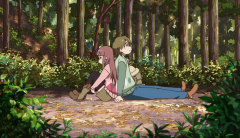
One of this episode’s best moments, however, come from Kotarou’s Mom as we witness how much she, like most of our parents, really, care for their own child. We have the impression before that she’s the type who want her son focusing on a good career path, and every step to that goal needed to be well-planed and perfect. Imagine her shock then that not only her son decided to pick school against her knowledge, it’s 2 hours away because of some girl he likes attending to that school. Must be a blow for her but one thing I really appreciate about her, it’s that she’s not a control freak. She gives Kotarou a necessary space for his own, and upon seeing how hard Kotarou is currently trying; she asks his homeroom teacher to give him a chance. The whole sequence when she talks to the homeroom teacher gives me a great impact from its show-don’t-tell approach, as we are only allowed to witness them exchanging gestures through the window. Subtle has always been a definitive style of Tsuki ga Kirei, but here it adds extra context: her action is supposed to be restraint, quiet, out of spotlight; just like how she makes him rice balls in the middle of the night for him to study, just like how she’s despite against the idea, still supports him because it is what he wanted; just like all the things that parents do for their kids and they just take them for granted.

And Kotarou and Akane’s love still progresses solidly. As they don’t have much time for each other during this study period, they LINE-ing each other and go out during Christmas. Akane makes him a handmade scarf and I swear her messy scarf is worth ten thousand times better than she was to buy one. Her sister makes a really good point of the burden the two gonna face if that love dies down (and from previous experience, I’m talking about her accurate thoughts on Chinatsu, I say you should listen to your sister, Akane, and listen well). Their time spending together, doing various activities alone just like a normal date would be, feel so warm and intimate. Whatever future (and the final episode) comes, I come to feel certain that the kids going to be happy together for a long time. This Tsuki ga Kirei’s ride has been a real treat, I swear. I will be sad to see it finally concludes.

ID-0 – 11 [Innocent Orbit]

I must say, despite my current worry from the direction ID-0 is heading towards the climax, we have another solid episode in our hands. Here’s one of the thing ID-0 continues to prove itself to be quite adept of: their pacing never drags. All the events progress gradually, and there aren’t many unnecessary scenes, if at all. Adam’s masterplan still rubs me in a wrong way (which I will detail below), but I guess that is an issue I have to live with for now. The concept of Rajeev planets, when we really get into it, is rather an intriguing one. Nothing is free. For every gold mine that human get their hands into, there will be some sorts of toxic, something nasty that is born as the result of excessively abused the source because we human break the harmony provided by Mother nature. In this case, the wandering planets are born to absorb the Onichalt. They’re dangerous because they have evolved to the point of achieving new intelligence, adapting freely to the new environment. They’re dangerous also because the human race has become too dependable to the Orichalt. Hey cannot live without it. This might sound like the usual conflict of most of sci-fi fictions out there but here ID-0 succeed because we learn about the irreplaceable roles of Onichalt in first few episodes before this Rajeev bastards start to run wild and threaten to destroy the humanity. As far as solid settings go this is as solid as an Orichalt rock.

In the first half, we back to the dynamic of the group, and serve as a necessary breather before the all-out attack in the second half. Almost everyone (including Fa-Losers) has some solid moments, except for Captain Grayman as he acts out of character. I’m not sure if his reactions are meant to show us how he deeply cares for Ido like his own family, but the switch between “who is that Alice again, why we care” and “I know you need our support Ido, let’s save Alice” moments later is just too jarring for me. Ido and Maya together have an excellent moment, as Ido, in his badly injured body, still insists to mind-trance back to his I-Machine form (at a cost of his body) because for him now that form is the true him.

Thanks god that Adam’s plan of using Alice is just to gather information from her to create his own Orillian. Well, when he kidnapped that poor girl last week I expected much worse. Though imagine he shoots his own “sperms” to the “ovaries” of the planet to save the humanity give a big smile to my face, as silly as it sounds. Like Ido said, Adam’s over-confident, drunken with power that he doesn’t realize the plan has backfired on him. Now to my qualms, I’m gladly to overlook how he conveniently learn all the necessary information and creates his own Orillian versions OFF-SCREEN in that little time, but why he sees the need to shoot himself in the head? I know, he’s MAD but that doesn’t justify how he can mind-trance back to his I-Machine body. He’d need the mask, right? One of the more interesting villain is an old man Hakubi, the one who often talked to Masked Man about various conspiracy plans. This episode reveals his real purpose is to achieve immortal. He has been in some sort of secret organization that tranced back to their clone young bodies to live forever, and they wish to achieve true immortality by becoming Orillians. These guys are much more sinister and dangerous than little Adams who just want some attention, but whether or not these guys die or whatever they plan after the explosion is still up in the air. I would love to see them come back though I find them rather interesting.

Finally, Alice starts talking. What is it that trigger her then? One thing I know for sure is that when that little girl starts talking, the humanity is at its stake.