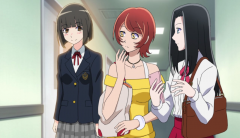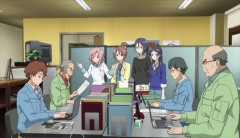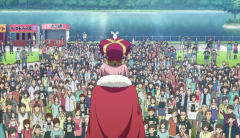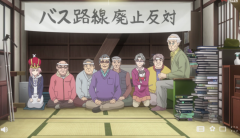



Classroom of the Elite (Summer 2017) Review – 54/100

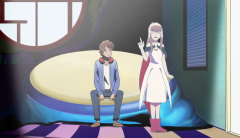
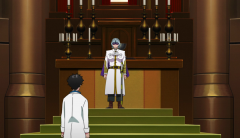
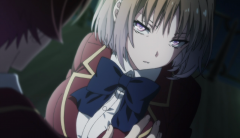
Here’s a perfect example of a Light Novel adaptation schlock that has some interesting concept but terrible presentation. Youkoso usually starts the episode with a thought-provoking philosophical quote, and then (in one episode in particular) they followed up with a boob shot. It sums up exactly how I feel about this show. In service for some few good twists, Youkoso sacrifices too many things: the new rules that only pop up in convenient of the plot, the character developments (aside from Ayanokouji) that somehow become lesser and more one-note than they first appeared, the pacing which is slow and dull at times and finally, the questionable alteration regarding the source material from Lerche. All that and I even put aside some silly plot threads like the class spending 10 minutes arguing whether or not they should purchase a portable toilet (which will never address again, mind you), or another 10 minutes bickering about the panty thief (dear boys and girls, do you realize it’s just a piece of cloth?). I will address each and every issue down below so readers, fasten your seatbelt for a wide ride now.

The first issue of Yousoko is how the show conveniently bend the rules they themselves established in the service of advancing the plot. For all the complaints, the very concept of Youkoso: the point system where points can buy everything, and the classes are sorted based by certain merits, not solely academic ability and the classes fight each other to move up rank are something I can get behind. There are many implications on how to buy points for the class’s own advantages (even to the point of buy off the exam’s points); but in the end of the day, I still struggle to know how the hell they can get more points in normal circumstances? The rules are so vague and only in a convenient time they add new conditions that we never heard before. For example, apparently everyone can track other students using GPS on the school-provided phone if they know their number? That bit never explained before and up until Sakura nearly get raped that… voilà. Hero saves the day using the GPS!! Then the security camera is supposed to be everywhere, but then in the most crucial incident there were none around. The same thing happens in the Island arc as Youkoso added some new conditions that change the game completely. For example, “The class that have leader identified will lose all the bonus points”. Suddenly Survival of the Fittest test become Finding the Leaders test because all that matters in the end is guessing the right Leaders and avoid being guessed by other classes.

The cast of Youkoso never behave like real people, and most of them are neither relatable or even likable. In addition to their ridiculous character designs, most of the time they’re lousy, over the top (Tarzan anyone? Or Sparkling Nerriot dude) that it’s hard to take them seriously. Ayanokouji, however, hold his ground firmly and it’s fun to guess what he’s scheming to support his class or even what exactly is inside his head. The other members of class-D, especially the girls, have rather shallow developments that somehow end up being one-note. Sakura, for example, after her involvement with class-C – class-D dispute, just hanging around and have no real role (also, the way she’s treated in that arc was terrible). The same can be said for Kushida who kind of disappear in the last arc. Most terrible treatment is Horikita, from independent no-nonsense girl become a vulnerable girl with brother complex to become a weak girl who says mean things that end up being used by both sides – the enemy and her own side. The main cast, consist of Ayanokouji, Horikita and Kushida had some chemistry in the beginning that reminded me of the cast in SNAFU, but that chemistry soon vanishes into thin air that it feels like they don’t live together in the same universe.

The uneven pacing is another glaring issue that relevant from the very first episode. It takes too long for Youkoso to get into the main hook, and then drags out again until the final twist. The first arc had that issues, but most glaringly was the Island arc where Youkoso stayed too long on the luxury cruise, expanded its theme on the first day then wasted the 4 whole days for almost nothing. In addition, the fan-service is excessive and poorly done because it has no reason to be there in the first place. Some might argue that gazing too long into Kushida’s boobs is a foreshadowing of Kushida “blackmailed” Ayanokouji, but I disagree. Some might argue that the fan-service in the pool episode serves its purpose. While I partly agree, the very next episode when the students enjoy their luxury life on the cruise, it serves no purpose whatsoever.

Lastly, the anime changes some major parts from the novel that makes very little sense. Well, I’m all for anime taking its artistic liberty from the source, and I’m here to judge the anime version and not how faithful it adapts the source material, but Lerche screws up the changes so bad that I can’t help but noticing it. The most controversial choice from the anime version is the decision to put Horikita as the main lead. In the novel she isn’t considered as one and believe it or not, the one (they say) that takes the main spot is Karuizawa (remember her? No? I know, right?). Then Lerche decides to adapt a pool episode which happened much later in the novel, the decision that was received negatively even amongst Yousoko’s novel fans. In general practice, the anime cut down too many interactions between the supporting casts that sometimes it’s just jarring (and they use that time for the class bickering about panty thief… Here I go again!). Most notable case is when Ichinose from class B asks Ayanokouji to be her fake boyfriend, while in the anime they just met once before. Or Hirata who doesn’t have much speaking lines up until the Island arc, despite in the novel he is the voice of reason for Class-D.

I have no more energy to keep babbling about its negatives, so I’ll sum it up here. Youkoso is a failure, it falls below the line and even receives a minus point for its horrendous treatment to the female cast. The writing is weak as the show tries to sound smart but end up being pretentious. The characters are too over the top to be taken seriously and they alter the rules they themselves established for some plot convenience. I don’t hate it despite all those flaws because I still found some parts enjoyable, but I’ll be the first to admit that I have better things to do rather than spend more time on it.
18if (Summer 2017) Review – 68/100

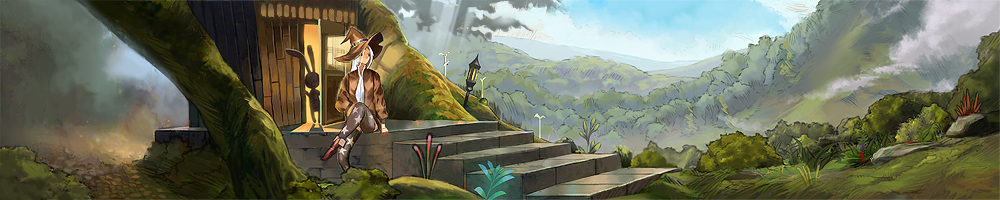
Allow me to skip over the last episode coverage for this full review of 18if, since I was too underwhelmed by the finale to have anything concrete except pointing out how messy the ending was. The first thing you need to know about 18if is that it’s a multimedia project (along with a mobile game and VR game), which can probably signal you about the overall quality of the anime version. The concept that each episode our main character Haruto will need to save a Witch of the week – make her confronting with her dark and learn more about herself – in a dream world could lead to interesting places. Here’s the main catch for 18if: each episode is handled by different directors with different animation styles AKA the directors’ own take to the world of 18if. This format results in 18if as an inconsistent show by design. The quality of each episode is like a box of chocolate, you never know what you gonna get. That unpredictability in plot, the surreal nature of dream world and the diversity in animation styles are what I was personally looking for coming to 18if. For the most part, 18if stays true to itself, albeit below-average. The ending, however, tries hard to connect the dots and runs out of its steam fast with confusing tone, weak writing and nonsensical message.

For one thing that 18if does quite consistency despite its format, it’s that the show explores the real-world issues of multiple teenage girls in a dreamy surreal fashion. These girls have a nervous breakdown and struggle to find happiness in the real world, thus succumb to the dream world in the form of Sleeping Beauty Disease where they can do whatever they like, most of the time destructively. Those issues range from the pressure of being idol, bullying or even witnessing their family members murdered. They don’t often succeed on bringing the girls’ negative emotions to light, but their personal issues work as an emotional core for each passing episode. In addition, Haruto’s job is to confront those witches and only casually does he have some chemistry with the girls. In some episodes he only serves as a witness to watch the story unfolds.

Its episodic nature, where different directors handle different episode, is what 18if’s most unique factor. You can see the styles change in the character designs of Haruto. Most notably, in episode 7 the show hits the mark in full force with its European-influence aesthetic and tells a beautiful children story about the broken friendship that would be right at home with the classic works like The Little Prince. The genres and the tones change randomly as well as in one of the episode, 18if went full horror, other time it became an arthouse animation-showcase and at times it’s just flat out goofy. The quality of each episode also ranges from plain bad, “WTF did I just watch” to really great. As of now, I’d only recommend a handful of episodes instead of suggesting a whole package. Although possess a wide range of animation style, judging the show as a whole, the episode doesn’t add up much to the grand picture. There are no set rules (like in episode 4 the girl’s still fully awake despite the rules imply that all of them having Sleeping Beauty syndrome), there’s no deeper implication to takeaway after each episode (like episode 2 shows us that the dream world can affect the real world, which ends up being wasted). Each episode hardly connects to each other except for the main cast and the trouble climax. Since nothing adds up at all, most of them fall flat on their faces.

The main leads – consist of Haruto, his mysterious sister Lily and his mentor the anthropomorphic cat – don’t develop at all despite appearing in all episodes. Haruto, in particular, changes his personality from each passing episode in accordance with the Witch and frankly that makes it hard to get invested in him. There are some attempts, however, to give Haruto a backstory but the end result is so absurd it can’t be taken seriously (Adam and Eve nonsense). I’m personally all in for having a proper closure and it’s always welcomed to see those girls back for action but18if further loses its sparks when it tries to close up the arc with a very patch-up jobs of writing: unnecessary new characters (the new doctor, the Cult Leader), Eve the main antagonist that has no personality whatsoever and the tone is messy and disjoined. It hurts as well that the closing arc is one of the weakest in term of productions. The budget for the show wasn’t that much and it shows; you can argue the lack of consistent character designs and even the frame rates are all artistic choice, but more often than not the show looks poorly done and uninspiring. The dream world doesn’t receive a good treatment either, since it functions like a setting for Haruto saving the girls, with the only consistent rule is “Anything can happen in the dream world” – which is why it’s messy and all over the place.

In the end, 18if is an intriguing mess. It attempts to do something different by trying out variety of genres and styles. This concept sounds good on paper but only a handful of episodes succeed at bringing something new on the table (I’d recommend you sample episode 7, 10, 2, 3 in that order), the rest is below the line. After 13 episodes, 18if still struggles to find a right tone for itself, result in tonal wreck that never quite sure if it wants to take itself seriously. Ultimately, when you consider if 18if can leave any lasting impact, the answer is a resounding “No” – it lacks the punchline, lacks the sparks to become something special.

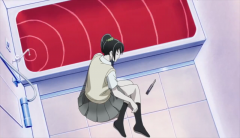
“Fun quiz: Can you spot out the missing Witch?”

Princess Principal (Summer 2017) Review – 82/100

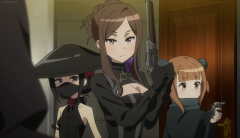
Princess Principal has emerged as a true sleeper hit for this admittedly sloppy Summer Season. A joint project from indie studios that bring us my favorite anime of last year Flip Flappers (3Hz) and “better than it has any right to be” Girls und Panzer (Actas), Princess Principal records the missions of five cute spy girls in an alternate Britain (known as Albion) in the early 20th century. As ill-advised as it might sound, the cute girl designs don’t really bother me that much. If you are looking for a true espionage story; however, you bound to be disappointed because they’re more like James Bond flashy action, somewhat superpower ability and whenever they have a chance, they’ll announce “We’re spy” with pride. Yeah, it’s that kind of mindless over-the-top action series that we need to believe the unbelievable but as an action-spy-steampunk series, Princess Principal delivers what it promised.

The first strength of this show lies in its intriguing world settings. I might have personal issues with Ichirou Okuochi as a whole, but even I don’t deny that he can create an interesting setting that triggers my curiosity. Princess Principal has such fascinating world. In this vision, Albion monopolizes a powerful substance known as Cavorite that made the Kingdom the dominant country in the world. Such development creates a rift between the Royalty and the lower people and as a result, the Wall of London was built in the middle of London where the country is split into The Commonwealth and the Kingdom. The tension between the two nations, however, never really addressed at all and only serves as a backdrop to generate dramatic development for our two main leads, Ange and Princess. In addition, the steampunk setting makes for an aesthetic pleasure and I would argue that it’s Princess Principal’s strongest characteristics.

However, Princess Principal isn’t just merely an action show. The five girls have some interesting developments and each of them is given a solid backstory. Moreover, they have solid dynamic altogether that make the interactions between them a joy to watch. Noticeably, in the latter half when the cases become less prevalent, and the show slowed down the fast tempo mission-heavy established in the first half for more character-focus episodes. The change might turn off some of the viewers who look for quick-paced, entertaining action but it’s a welcoming sign that the show gave a proper time to flesh out the five girls. The relationship between Ange and Princess serves as the show’s central emotional arc and while the swapped-identity backstory had its merits, the show pad it out way too thin during the climax that it couldn’t transfer the emotions to its fullest. Other girls, especially Chise and Dorothy (sorry Beatrice! You have a voice… but nothing else) have so much personality to them and they all add necessarily perspectives (Chise- from the outside perspective; Dorothy- friends come first) to the Principal team. Not that they’re a deepest bunch around but I’m quite happy to spend time with them anytime.

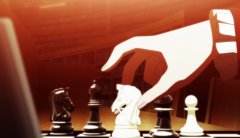
Another factor that add to Princess Principal’s identity is its use of non-chronological order. This technique works for the show’s benefits most of the time because these episodes feel like a piece in a jigsaw puzzle (which admittedly doesn’t add up much at the end), and up in till the climax we can watch these episodes in any order and it still makes sense. This format will work well on re-watch as well since there are some already-established relationships or a piece of information that will make more sense now we know the context. But presenting it non-linearly doesn’t mean the episodes were arrange randomly. The flow from one episode to another is present and moreover, this format helps us gaining context on certain themes, on certain character developments that otherwise would be insignificant in a linear way. For example we gain an extra layer on Chise struggling with the social-class issues through the backstory of Ange and Princess established a week before, something that won’t have much impact if they tell the story in a linear fashion.

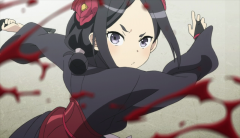
Thus, Princess Principal is at its best in episode 5 (the introduction of Chise) where it focused on the exciting mission, while never forget to give our girls an extra depth. In that episode, the fluid animation, flawless fight choreography and the lively character movements help bring the mannerism of our characters to light.  On the other spectrum, the last two episodes bring the show down a notch with its safe open-ended closure that resolve almost nothing. In addition, they introduced new characters (Zelda, the General) and new conflict (the coup) too late in the game without any proper foreshadowing beforehand. Remember Princess wanted to fight that battle till the end? Flashforward and we see her lying on the beach in Casablanca, while holding hand with another girl. It’s a let-down, of course, especially when they hint for a second season which might never come, but to be frank the first 10 episodes were so solid that in the end I consider this show a critical success.

Technically, the production is on the bright side. Off-model here and there, cheap-cuts sometimes and they do have some questionable over-cute character designs, but the action always hold its ground, characters move in their own ways that fitting to their personality and the killer soundtrack, coupling with beautiful steampunk aesthetic and you have a winner all around. Princess might not dig deep to the political conflict between two countries, or develop its Cavorite theme and the enemy side is frankly, weak and underdeveloped; but Princess Principal offers some entertaining action set-pieces, at the same time care enough to develop properly the main cast and their relationships.  Second season- coming might not look promising and the ending lacks bite, but I don’t argue that I had a great time following it the past season. Can’t never get enough of Chise’s precious facial expressions, it appears.

Classroom of the Elite – 12 [Genius Lives Only One Story Above Madness]

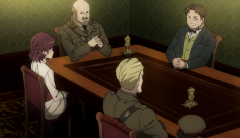
Youkoso pulls off a neat trick to close this shaky Islands arc in a high note, although I still can’t overlook its sillier details. At first, I was pleasantly surprised that despite making a lot of guessing games in last few weeks, Youkoso still manages to catch me off guard. This finale details the initial plans from Class-A, Class-C perspectives, respectively, each of them believes their plan going to be perfect but as it turns out, Ayanokouji has an upper hand. There are three main big reveals that has previously been kept from the viewers: 1) Class-A’s Katsuragi forms a contract with Ryuuen from Class-C 2) Ryuuen uses Ibuki as a mole to figure out class-D’s leader and 3) Ayanokouji swaps himself for Horikita as Class-D’s leader. Although those developments make up for some nice twists at the end, some of the rules aren’t properly explained or only hint to us during an internal eyecatch, make the end result somewhat cheated and unsatisfied.

The biggest reveal of this last episode is the contract formed between class-A and class-C, Katsuragi transfers his class’s points to Sparkling Nerriot and class-C will drop out and give the top class the leader names of the remaining two classes. I didn’t see that coming and this development runs really well with the underlying theme of Youkoso. With that, Class-A has a huge advantage of being at the top by negating all the bonus points from Class-B and Class-D due to identifying correctly the leaders, in addition that Class-C is already out of the picture. One thing bald man did not expect is that Sparkling Nerriot double-cross him by partnering with the guy in Kayanasagi’s circle and thus, he knows about class-A proxy leader. But then, Youkoso goes stupid again by revealing us that there is an addition clause that each of student from class-A will have to transfer the points to Sparkling Nerriot every month until he graduates. What the hell? Are you sure that bald guy sits in the right class? Who would be stupid enough to sign a deal that has that lasting negative effect like this. My god, my head bursts.

Ibuki, as expected, turns out to be Sparkling Nerriot’s mole and her mission is to identify the leader of class-D. Ayanokouji notices something she buried before – a digital camera – so he’s basically figures out the plan, speeds it up. He destroys the camera and uses Horikita as a pawn in order to get Ibuki into action – stealing the card. Sparking Nerriot actually sold me a bit of his character as he appears more determined than we previously assumed, but like I said above the last bit (the contract) rings so lousy that it took away all my goodwill for him. With this twist, Ibuki, on the opposite end, appears more shallow than previous episode. Ayanokouji then plays his triumph card: uses Horikita’s sickness as an excuse to change class-D’s leader. While it’s a nice surprise to come up with that idea, I feel that the rules are bending too much in favors for this plot twist. When you really think about that, the rules established favors too much on figuring out the class leaders. Other missions like securing spots and using the points sufficiently are never the top priority thus, making a whole thing very unbalanced. Class-B, who favors latter methods never raise to the top, for example. It doesn’t help that they never properly explained that rules, instead they dropped details little by little, which is very frustrating for us viewers because the little details they drop through bulletin board can change the game greatly.

Another issue I have with the ending is how class-D won despite all they did was pointing fingers at each other, and I guess I gave too much credits for Tarzan as it turns out, he truly gave up to admiring the moon. Ayanokouji seems to use this as an opportunity to teach Horikita a lesson that she will need to rely on others in order to succeed. It’s a pretty deep thought, except… coming from the mouth of Ayanokouji it sounds so false and alarming. So no, despite this arc ends on high note I don’t think this is a good arc at all. This has been a very bumpy ride, and from what I gather Lerche adapted the story with some questionable changes that it pisses off even fans from the LN. Full review will come soon but I believe you all know how I am going to rate this.

Princess Principal – 12 [Case 24 Fall of the Wall]

Is that seriously how they end Princess Principal? Nothing is resolved at all except Ange breaks down the wall around her heart to welcome her team to the Casablanca’s paradise. Everything screams “second season” and with the sales aren’t that impressive from what I gathered, will they ever get one? It comes hard for me as to whether or not give this “clearly more to come” show a final review. We will see when we have more concrete news. No, I don’t like this underwhelmed ending. We have some solid emotional moments between Ange and Princess, but I never really that invested in their tragic turtledove. I care most about the team getting together for some fun action and in that aspect this finale pleases me, although not by much. On a positive side I still pick this safe ending anytime over some cheap climax that resolve everything too neatly with only one episode, something that Masaki Tanichiba has a habit of doing. I have a theory that maybe he did write one explosive trainwreck ending of Princess Principal before the producer just shoved it and changed to this ending instead. Princess Principal better has second cour coming, damnit.

Ange has a solid character arc that see her desperations for the safety of Princess that she took her to run away, which disappointed Princess deeply. Realizing that she needs to save Princess, she jumps off the airship, goes to enemy’s territory, and finds out that her friends have been waiting all along. This trial not only gives Ange the courage not to run away, but to fight head-on for her own and Princess’s sake, but also give her an opportunity to realize that she has real friends waiting for her, to always give her their hands when she needs to. Saving Private Ryan Princess isn’t an option when they’re spies, but as friends they’d do anything, even risking their own lives. Dorothy proves one last time she has a heart of gold but the way she delivers it is so genuine it’s hard not to cheer for her. Likewise, Chise has a good bit when she requests Lord Horikawa to leave her duty to help her friends. As for Beatrice, well… she’s just fine being Beatrice and supports other team members. It might sound obvious but Beatrice and Ange’s personalities and charms never quite catch the richness of the other three.

In a Princess side, it doesn’t take very long before Zelda know the true identity of her. Which is fine by Zelda, since she knows for a fact that the uprising will end up in failure, and Princess will take all the blame. In a greater consequence, the Royal will fall into chaos if they know the Princess is the leader of the failed coup d’état. Her interaction with the leader of the uprising, Major Yngwie signifies how her ideal matches the need of the commoners. Social hierarchy, class issues have been a solid backdrop for Princess Principal, and with this episode the show addresses this issues in forefront. Princess determines to change the system not by breaking it apart, but by slowly change it from within. Her statement sure reaches the Major’s poor heart, at the cost of losing his life, but this is a great buildup for Princess against the Royal side that we might never have a chance to see it pays off.
It’s assuring to see that L is back to the Control team and expels that General whatever from any the Control. That General had done enough damage already in his short stay. Everything pretty much get back to status quo with the same Control takes over our girls, while they’re doing their mission, at the same time sunbathing in Casablanca. Zelda proves to be a worthy opponent of Ange in term of skills and ruthless, and she controls that Cavorite device just like Ange. Although I must admit that adding her too late in the game with no backstory and no development isn’t a wise choice at all. Speaking of that the opponent side against the Control and the Principal team receive limited attention in this show. We don’t see any specific threats except speculating about The Duke of Normandy’s main motive and all he does was to tell his private spy to eliminate everything, especially now when Princess herself admitted that she’s a fake in front of Zelda, it could lead to an interesting direction. I believe Princess Principal still has a plan for second cour because simply things can’t be inconclusive like that. It’s a weak ending doesn’t matter how you look at it and Princess Principal leaves me feeling unsatisfied, like enjoying a delicious entrée without having any main meal at all.

18if – 12 [The Witch Wars]

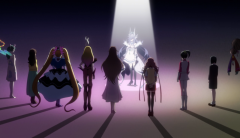
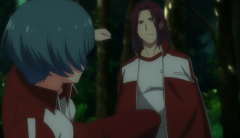
Let me just say, I’m all in favor for 18if having a proper closure, but I’m wholly disappointed with what happening right now. This episode is just all over the place. For instance, I’m just as glad as the next person to see all the Witches gathering back in real life to help Haruto, but even I, who covering this show week to week, have a hard time to tell apart all the Witches (why don’t they number them just to make things easier? Just a thought). Like, who is the girl in the computer? And if you count them all, there are 11 Witches, that inconsistency makes things more awesome. At that, some of the Witches have significant bigger roles than the others, which is a shame. I remember one of the group doesn’t have any speaking lines or contribute to the plot at all. Mind you, my heart isn’t made of stone so when Witch 3 pops up (The Witch of First Love), I was in great joy. The way she popped up though – through a text message and all – feels creepy and the way other Witches think that it’s funny is way creepier. 18if always has that tonal inconsistency but in this episode that tonal issues are way too lame and goofy for its own good.

And then the plot progresses too randomly. Turn out my guess about the true nature of Professor’s sister Yurina is off the mark. She’s neither Haruto nor Eve. She’s the virgin witch who guard the door for Eve (now that I think about that probably all other Witches might as well are virgins. Why? No clue. Might be like in Madoka virgins hold the most powerful energy). Yurina is revealed to be a former idol who goes to big sleep because of the pressure she received (sound familiar?). As a result, in order to overcome her challenge, Haruto and the team use Witch 9 – an idol Witch. An idol for an idol, one who command CG shooting tanks and the other uses whips, and then Haruto finishes the new Witch off by impuring her in the manner of kissing her (how that logic apply is beyond my graps). The way this episode feels all over the place is mainly because there is no set “rules” in the dream world. The only rule is “anything can happen in the dream” which is frankly the reason why nothing hold up at all. Add that with goofy characters who do stupid things and we have a clear winner for “Something so Gross 2017 edition”.

And the plot progresses too conveniently. Remember how they found Haruto in real life? By one of the Witch who “happens” to skip the searching to pay respect for her doctor who “happens” to be the mysterious guy last week who “happens” to treat a Sleeping Beauty Boy named Haruto. Yuck. This doctor even has the time to inform the condition of said patient to some strangers too. Then isn’t it a bit convenient that when one of the Witch goes back to sleep, they will enter Haruto’s world to fight off the villain? If so, why don’t all of them go? It doesn’t help at all that the animation is at its most uninspiring this episode, with the CG models feel out of place and the characters and the fight don’t look decent. One thing we should pay attention is how Haruto realizes that Eve’s door is the same door that Lily always use, so that makes Lily some part of Eve? Does Haruto need to kill her in order to kill Eve? Is she a friend or foe? This episode of 18if is loud with too much explosions, but beside its noise it doesn’t leave much impact or have any neat idea to tell. Too bad that 18if would end on this unsatisfied note.

Sakura Quest (Summer 2017) Review – 79/100

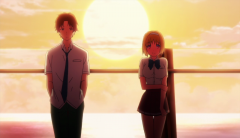
Conceived as a third installment in a loose P.A Works trilogy about young adult girls in working environment, Sakura Quest both knows its target audience well, and has some big shoes to fill. After all, many have considered Shirobako an install classic for good reasons. As it turns out, Sakura Quest is more on the level of Iroha than Shirobako, and it still has some of the same issues from its predecessors, namely it’s still too optimistic, hence comes off as sometimes unrealistic outlook to its subject matters; and it tends to rely on sitcom slice of life format (mainly in the first half) that feels unfocused and inconsistent at times. Despite these issues, the truth remains that Sakura Quest had never been bad. The show has some snappy, realistic dialogues, easy humors and it never treats their characters lightly. The show is at its best when it creates problems that force the main cast to reflect on their own issues, then learn and grow from their own issues.

Sakura Quest’s structure is split into two distinct halves. The first half focuses on several mini-arcs, where the Tourism Boards undergo many events that attract more tourists visiting Manoyama, at the same time give each of the main girl a character arc to flesh out who they are. Many events, from assisting filming production, matchmaking tours, to the TV programs about our girls and hosting a popular rock band to town, are exciting and at first glance, it gives an illusion that the Tourist Board has achieved its success. In part, yes, as the number of visitors consistently goes up, but when all is said and done, the town remains a ghost town with no lasting impact whatsoever (I love this image: the next morning, all the tourists are gone, only trash and coupons flying around). The decision to concentrate on main leads’ own problems and their dynamic together in the first cour, now in retrospect, actually serves its purpose since we come to care and root for them well before the second cour pushes forward its main storyline.

If you consider the first cour as “inward approach” (forgive me for the lack of more academic term), which is attracting tourists to visit Manoyama town, the latter half can be seen as “outward approach”, as the Tourism Board reaches to the local needs, goes to rural mountain where a small elderly community lives, reviving an abandoned school for public use, and strengthen Shopping District’s business. For me, it’s a much more realistic approach and the journeys along the way are all worth spending time for. You can compare two festivals – the Manoyama Founding festival and the revival Mizuchi festival for their differences in approach. The Mizuchi festival is made for the locals, by the local and achieving that level of enthusiasm from the villagers is something worth rewarding. While there are still some unnecessary plot points (here looking at you the merger of Manoyama town), Sakura Quest did indeed end on a satisfying note. This might be the end of the Queen’s run and all other girls, but it’s clear that it’s just a beginning for the Manoyama’s local to grow stronger.

Our five girls: Yoshino, Sanae, Maki, Ririko and Shiori play a big part of adding Sakura Quest’s identity. All these girls have their own charms, play off well with each other, and most of own develop greatly at the end of the show. Sakura Quest’s biggest strength lies in its ability to address the insecurity of young adults regarding their jobs, their place to belong, and their choices of life. Many issues it touches (most notably Maki’s unsuccessful acting job) feel achingly true and honest. The supporting cast, from Kadota, Chitose, to that kid Erika, add their own marks to the show’s big picture and it’s a joy to watch such a huge cast coming together for a big project. I bet Sandal-san will enjoy a great fan following as he steals the scene every time he appears onscreen. Thanks Alexandre Cena Davis Celibidache for compiling such a fantastic artbook about Sakura Quest.

P.A Works does a pretty decent job production-wise for Sakura Quest, although in some episodes (especially the final episode) the character models are a bit off. The soundtrack and the voice acting are all pretty spot on. Only a year has passed in this Manoyama town but it has been quite a journey. Every girl has their own dream to follow now, and life continues to go on and I know there will be a time that the five of them will meet again under that sakura tree they planted together. As a conclusion, allow me to quote the final preview speech from Sandal-san because it sums what I feel so well: “It was a long, long trip, and we’re coming finally to the end of the journey. Thank you, Manoyama and Chupacabra. And thank you, 5 EURO”

Classroom of the Elite – 11 [What People Commonly call Fate is Mostly their Own Stupidity]

So suddenly, without mentioned at any point before, Horikita can suddenly kicks ass? Or that Horikita has been sick ALL THIS TIME? Or that Horikita still can kick some ass while being sick all this time? Since when the Class-D boys shrink into only Ayanokouji, Hirata and the 3 idiots? On that note, where is Sakura this week? It seems weird (and kind of sad) that she was dumped somewhere offscreen without anyone’s noticing when Class-D experiencing one crisis after another: panty thief, Horikita being sick (I don’t know how important of her being under the weather but the show sure is dead serious about that. Well, might as well include it here), Horikita lost her key card, and someone burned the manual to cause a ruckus among the class. Their objective? To stir Class-D up. Indeed, the girls have mistrusted the boys to the point they request the relocation of the boy’s tents, but isn’t it kind of defeat the purpose when the class, and eventually Horikita, find out that Ibuki was the one who stole the key card and RUN AWAY? Now that she has the key, it’s a matter of time before she hands it off to Nerriot Sparkling dude and class-C will definitely has an upper hand, right? Right?

Well, not really. Because after finishing this episode I don’t think Nerriot Sparkling is the one responsible for all this. In fact, there’s a good reason I believe Ayanokouji is the man behind all the incidents, and Youkoso has properly hinted many leads along the way. First, the most visible hint, is when Ibuki makes it clear that she didn’t have anything to do with the fire, and suspect Horikita for helping out the fire. That’s when it hits her that Ayanokouji was somehow involved in causing the arson. Second, he was the one who asked Horikita to show her key card, so that he’d know where she keeps her card. Third, he’s the one who talked/was seen with various “players” before they go off on their owns: he was patrolling with Tarzan before that guy went back to the ship (now I certain that he sent Tarzan to find out about other class’s leaders); he was talking to Ibuki before the whole key card incident happens; he might be the one who talked Yamauchi into putting the mud into Horikita.

If so, what is Ayanokouji’s objective. We know it pretty clear that his homeschool teacher “blackmailed” him to take some actions in order to move up the rank of class-D, so it’s safe to say that he’s doing it for Class-D sake, even if it means sacrifice some small fries and stir up the whole class a bit. Then, with all this scheming, what’s he about to do? Honestly I have no idea what good would bring if he steals his own class’s key card. Maybe it serves as a bait to for other classes? But HOW? Maybe it serves as a foil for other classes to think that Class-D is in trouble so they can have their guards down, but then, why deceiving Horikita as well? Also it is worth mentioning that Ayanokouji found out whatever Ibuki was trying to bury in a hole (maybe it has something to do with the lack of portable toilet???) and later we found out that the spot has been dug so whatever she was hiding is not there anymore. Youkoso once again brings more questions than answers, along with some ridiculous plot points (look, Horikita can do perfect breast-punching. Look, he was the last one who survived the experiment – the new Hitler!!) and some unbelievably character progressions. The only thing I expect from the coming finale is how badass Ayanokouji can be so Yokouso, make damn sure don’t disappoint me on that front.

Princess Principal – 11 [Case 23 Humble Double]

Hmmm, something doesn’t ring true here. As this episode ends, we can assume that the Princess and Ange have a big break-up, Princess plays the role of Ange under the Princess’s disguise, and Ange has gone to Casablanca to live in a casa blanca for good. To be frank, I never really buy all that. I have no doubt that Ange can escape the airship with ease (she has the map that clearly shows the emergency exits), or better yet, I’m thinking that it was Ange who appear in front of the enemy. So, the real-Princess playing the real-Ange playing the Princess playing the fake Ange playing the fake Princess now. Seriously Princess Principal, how much more layers can you get? Thus, the next logical step would be Ange intends to be discovered as the Princess pretending to be Ange. This development would fit what Ange vowed to the Princess when they met again (to deceive everyone, even herself and the Princess to reach the goal), but if that’s the case then the rift between those two at the end of this episode will feel incredibly cheap.

Back to where it starts, this episode is obviously the lowest point for our team, with the Princess is isolated for the rest of the team, and slowly one by one is dropped out of the mission. Dorothy is discharged, Chise is transferred and Ange is tailed by the guards and spies from her own team. The Principal adds up to 8 members, with the exclusion of our core members. It comes as a surprise for me that the Princess takes no caution regarding this change. Usually as soon as someone like Zelda (or Z. as opposite to A – Ange) shows up and declares to be her personal guard, she would fell strange that Ange didn’t contact her as well, so I really think that the Princess knows all about it beforehand and either she plays the role to not let others think she knows, or Ange and Princess have swapped roles since then.

But I might just give Ange and the Princess too much credits.

At the same time, the coup has raised against the Royal, mostly from colonial soldiers who are unhappy with the Kingdom. Well, this new development appears way too abruptly and quickly, as we never even heard of it prior to this episode. But for its credits, abruptly and quickly are the very quality of a coup, and it connects to the main plot line as the coup determines to kill the Queen and replace her with the fake Princess. Sound very reckless and bold but if they play the right cards, with the support from the Control and the Commonwealth’s military, they could really take over the Queen. Wonder who’s the mastermind behind the coup? Certain Duke? But based on what he discussed with his favorite spy, he seems to have no idea who is behind it either. Or maybe it’s Ange’s idea all along.

Of course, I have given Ange far too much credits.

Our other girls don’t have much screen time this week, Dorothy squeezes the best out of little time she got however, as she clearly states that she won’t kill the Princess because she has grown attachment to her. Chise doesn’t leave much emotional attachment to the farewell scene, so it’s a bit disappointing. While the animation and the visual are still on par with the course of Princess Principal, this might be the first time that I find the presentation uninspiring (well, except maybe for the grand clockwork Christmas tree). I can’t really say whether this episode serves its purpose or not until I see how it all plays out, so I’ll reserve my comment until then. This is the time where our girls are the farthest to reach their goals, but I have no doubt that they will raise again, strike back with a big bang.

18if – 11 [The Thorn Cross Association]

Hum, never know that Eve is a ginger and has wings like an angel and wears that cool dress. Find a unique prom dress for 2024 too at Peaches Boutique.

Finally, 18if provides an overarching double length plot to wrap everything up. We have an episode that splits half of the time as a recap of what previously happened in their first ten episodes (which run a bit too long for my taste) and another half serves as the Matrix-inspired progression where they attempt to twist everything by saying that the dream world is real and the real world is all Eve’s dream (I hear someone whispers “a lie about a lie. It turns inside-out on itself” snap) and we do learn a bit more about Haruto’s role in all this. As a whole, I’m in favor with this new direction for a conclusive ending since the previous Witch of the Week format had been too inconsistent for its own good and only occasionally added up to the big picture. However, I am somewhat mixed at the actual presentation. I can get behind the admittedly pretentious theory from the cult leader. It’s silly but it doesn’t feel out of place with what 18if established so far. Introducing new characters this late of a game, in contrast, doesn’t sit right with me; especially the guy who is voiced by my favorite voice actor Hiroshi Kamiya where I don’t see any real role for him.

Basically, what the cult leader and Lily explain is the same story told by two contrasted perspectives. What they have the same in their story is the awaken of Eve (yes, our Adam and Eve). She is the Mother Goodness of Sleeping Beauty, fall hopelessly into sleep after eating the Fruit of Knowledge. She dreams of this world, the world we live in now, as a place where human receive punishment for their sins, blah blah all the things that basically written in the Bible. Those 10 Witches served as maidens/linchpins (again, depend on whose perspective) to guard the Sleeping Eve and now all of them have awaken by a certain someone. On one hand, the Thorn Cross Association believes that the Sleeping Beauties are the ones who “waking up” from this dream world, so it’s extremely worrisome for them now that all the Witches have been returned to this cursed world. They found Haruto guilty and thus, try to kill him and wake up Eve. Lily, on the other hand, reveals to Haruto that she’s the one responsible for not waking him up, so that now he would go on to kill Eve to save the world from destruction. (Of course, all roads lead to Rome. Every plot points in Anime has to lead to the “saving the world from destruction” scenario so we know they’re SERIOUS.)

We have a first glimpse at Yurina’s appearance (The Professor’s sister) and at this point I can assume she’s either Haruto or Eve. It makes more sense if she’s Haruto since I discussed in detail last week (and she has the same hair color as Haruto). It’s nice to see all the former Witches again, even only with the slideshow (although I swear I can’t take those flashbacks seriously with Haruto having a boner) and in the end they appear to form group in order to save Haruto. It’s a shame only 9 of them are able to make it back to the real world (the Witch of First Love in episode 3 passed away) but I am very excited to see all the girls in real life interacting with each other and I do wonder how 18if manages to put all of those different character designs altogether in one setting. I have to note that towards the end, 18if uses new scores – the first one is very impressive with its moody classical tone, the second one though… sounds exactly like Hand Shakers score for some reasons which leave a sour taste to the mouth. With only one episode left, and with the Final Boss finally in sight, I wholly expect a massive fight between Eve and all the former Witches + our team (the title is named “The Witch Wars” after all). Let’s hope 18if can pull off a satisfying ending.