Golden Kamuy – 04 [Grim Reaper]

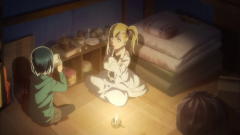
Given the brisk pace Golden Kamuy usually sprint through its storyline, breather moments like those in the first half of this episode is much needed. Not only it allows the events happened so far to sink in, it also gives more space to strengthen out main’s dynamic. In addition, it’s informative to say the very least that we get to learn more about the Ainu culture while they’re staying in Asirpa’s village, something that doesn’t discuss quite often in this medium. But by saying all that I feel Golden Kamuy drags at times when they focus too much on the Ainu traditions. That part about Sugimoto playing kisarari game with the children doesn’t need to be there for example, neither does those Ainu cuisines that pop up here and there. Those feel like more the author showing off his knowledge on the Ainu people than it has anything to do with the treasure hunt story, and that tonal whiplash hurts the show more than it helps. Golden Kamuy is the show that has no qualms at depicting excessive violence, like this week’s skewers, because it’s the nature of the show. Having Sugimoto tries (and fails) desperately at some children’s games feel like it belongs to another show altogether.

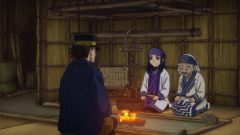
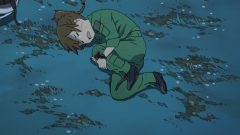
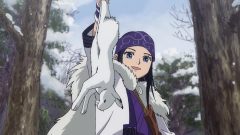
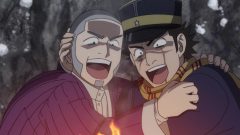
The main event coming out of that part, however, is that Sugimoto leaves Asirpa behind to pursuit the goal alone. It’s nothing dramatic though since all of us know for certain that they will get back together soon, but this marks an improvement to their relationship. Why, you ask? Many wonders if Sugimoto misunderstands what grandma said to him (FYI, the manga purposely leaves the part untranslated, so we, like Sugimoto, just gets grandma’s intention purely through her expression). I’m certain that he gets what she meant, and decides to leaves Asirpa behind because now he cares for her well-being. They’re close enough that he wants her out of this dangerous game that put their lives on the line. Consider this as a friendly brotherly act from Sugimoto. Asirpa, naturally, doesn’t take it easily since she herself has a history of being abandoned by the ones dear to her – which boasted by a bizarre flashback of the White Wolf (White Fang?) abandoned her BUT I SWEAR I SEE HIM FOLLOWING HER EVERYTIME (so what’s the use of “abandoned” then?). She embarks on her own journey to catch up with Sugimoto and catches Shiraishi, the Escape King instead. I like this guy well enough and I could see him joining the duo as a comic relief/ supporting guy who say cheese every time, and boy do I welcome him joining in for this quest.

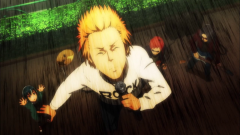
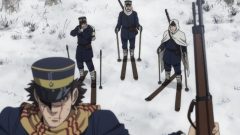
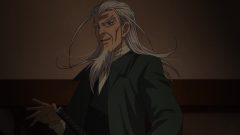
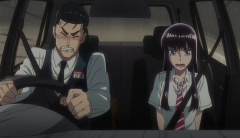
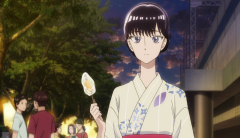
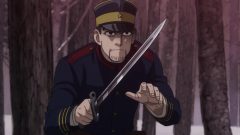
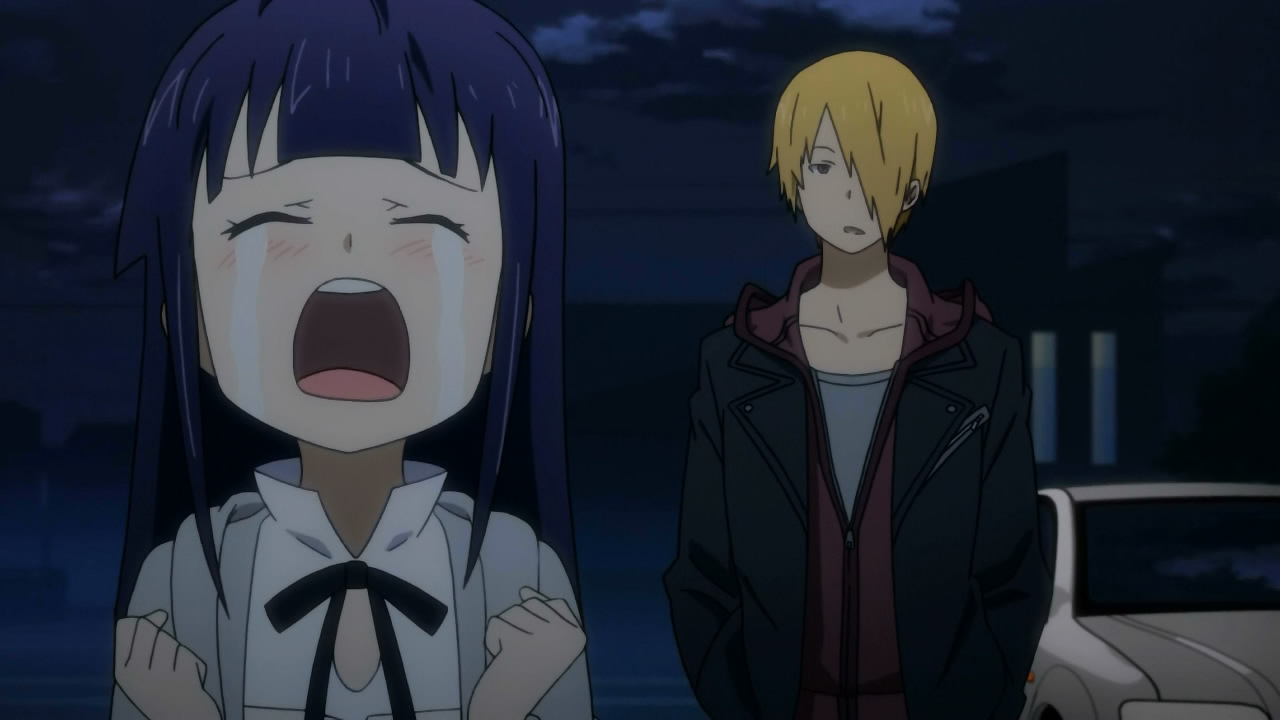
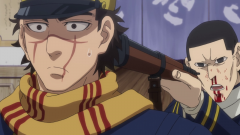
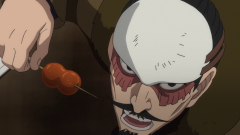
About Sugimoto, we’re all aware of Sugimoto the Immortal and not necessary Sugimoto the Wiseman, as he gets himself caught almost immediately by the Grim Reaper. The Immortal vs. the Grim Reaper’s gonna be a fight worth dying for, right? On that note, do you know the simple way to make your character badass? Make them as bold as possible (like a guy whose parts of brain missing) and then have them enjoying something cute. The image of him eating the kushi dango while making serious face will forever burn through my brain, thank you very much Golden Kamuy. It doesn’t take much time for the 7th Hokkaido Unit to identify Sugimoto, because as Grandma puts it, his turenpe is… distinguishable. Now we know the army’s main objective for the race, to buy arms from the US in order to rule the Hokkaido. The post-war dissatisfaction from ex-soldiers is a well-trodden path, but it fits to Golden Kamuy’s theme so I have no complain. What I do find unpleasant, however, is the character’s designs of the 7th Unit soldiers, especially their dead fish-eyes. Usually those eyes are used to portrait dummy, doll or characters with no soul and I don’t think these guys have no soul. The twin soldiers in this episode act a bit sadistic as well, make me wonder if the show’s gonna evil them up to inhuman level as the story goes on. And we also have those tattooed escaped prisoners who still lurking somewhere in the dark.
Hisone no Masotan – 03 [Take responsibility, would you?]

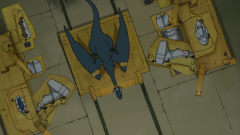
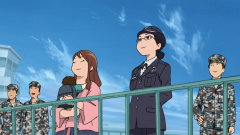
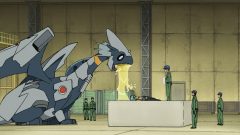
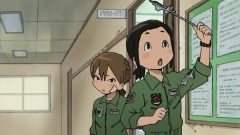
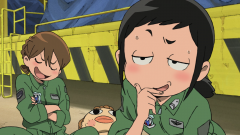
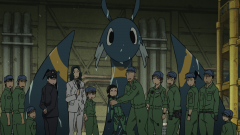
HisoMaso continues its bright, playful creativeness with another stellar episode, albeit a bit light in terms of plot. It’s an annual Air show and with that our titular characters’ bond is getting a little deeper. The cast’s getting even more expansive with several new faces, although somehow the main supporting characters that we see in the ED are still nowhere to be seen. Here I want to bring up one of HisoMaso’s unique appeal: its simple but incredibly expressive character designs: be it in their facial expressions or in their gestures. I believe the simple designs help loosen the strict movements we usually see in other anime. Here, each character has their own mannerism: their distinct movements can inform us plenty about the characters’ personality. In addition, their exaggerations actually never feel out of place with the tone of the show and the facial reactions from those characters are just something to behold, even with Masotan this episode whenever he hears Forest name. Those things help make up plenty for the lack of actual characteristics in our characters.

The main development of this episode revolves around the appearance of Hisone’s predecessor, Forest, which I’m still not sure if she’ll be a recurring character or just one-off. While she quit the D-pilot job few years ago, Hisone still feels the connection between Masotan and his old pal and becomes jealous of it. I can understand where Hisone coming from, given how she always regards Masotan and her have some sort of special bonding. Turns out, someone else even understands the dragon better than she does, so even her most secure feeling gets crumbling really quickly. Hisone’s speech with the dragon during their flight is another touching moment, further strengthen their special relationship. I also come to enjoy HisoMaso whimsical sense of wacky, most notably from Hisone’s remarks (gold: “I’m envious of your ability to sincerely believe this a proper contribution”. Way to go, Hisone) and her TAC name (which is like a nickname) is her freaking real name. I might not catch the nuance of the wordplays in those names here, or maybe the point is that these names don’t even mean anything excepts sound cool together (HisoMasooooooo)

As I said earlier, in terms of plot this show doesn’t have much to tell right now but it more than makes up by the strength of its stunning visual (I took like 40 screenshots out of this episode) and its easy-going bright atmosphere and fun characters. Being said that, I hope the show doesn’t get dark later on and I still HAVE NO IDEA what it will bring for the main overarching plot. The flights aspect is my least favorite part so far, so I hope they can turn that aspect into something more interesting. Somehow the lack of actual main plot doesn’t really worry me much, as long as HisoMaso still delivers those cute face expressions and introduces us more characters that we can relate to, I will be more than happy to get behind.

Hinamatsuri – 04 [Disownment Rock n’ Roll Fever]

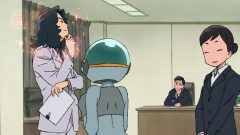
Contrary to what I predicted last week, turns out there is a continuation to the “cliff-hanger” last week, and more importantly, it serves as a catalyst for Hinamatsuri this week’s first half. This is a second week in a row that the show involves little-to-no crazy superpower hijinks, which I’m not sure if it works for the show’s benefits. I always consider these ridiculous power Hina and Ainzu possess one of Hinamatsuri’s distinctive personality, thus without those the show feels more like your typical odd-couple slice of life comedy show. I’m quite glad that Hina and Nitta pair gets a main focus in this first half. Hina gets kicked out of the house by Nitta, it’s a kind of natural progression considering how much of a sloth and mindlessness Hina is. Too useless that she immediately spends her amount of money on food, then stays with Anzu but does nothing but eats food and reads manga. Anzu delivers what might be one of the best line of anime this season: “That girl’s not even fit to be homeless”. She learns the rope of surviving though, when she teams up with the street band and performs “tricks”. The band becomes extremely popular much to Nitta’s surprise.

As for Nitta part, unexpectedly receives harsh reaction from his group through his bad choice of phrasing (I love that comedy bit where some strangers stand up against him the most), even being banned from Utako’s bar until he makes up with Hina in one of the episode’s most hilarious sequence where Utako throws salt right after he left – an act of cleansing all the evil’s spirits. I particular love the way Hinamatsuri animates Utako clumsy actions – he finds himself worrying about her despite claiming that he doesn’t care about her well-being one bit. This part is supposed to be a break so that both Nitta and Hina can see the importance of the other in their lives, but I’ll be honest to say that it doesn’t grab me much because it has been done to death before. In the end though, what worries me the most is the way after going through many hardships of being homeless, Hina doesn’t change much except that now she knows for sure that wants to be with Nitta. In terms of character’s development, this blue-hair girl is still pretty much a brat. Consider how her two friends grow right before our eyes through their dire situations, I’m a bit concerned that if Hina doesn’t grow soon she might be the least interesting character out of this pack.

Speaking of Hina’s two friends, the second half spends on Anzu and my girl Hitomi encounter for the first time. What I like the most about them is how despite being very contrasted in terms of personality (one timid, one self-centred, ends up at vastly different outcomes (one has money more than she could imagine, the other only makes few bucks a day), in an essence they have been going through the same thing: that they learn something out of their usual personality and they come to do their jobs with pride. There’s a hint of pride in Anzu’s statement of being homeless, there’s a great montage about Hitomi not only being good at bartender, but also excels on customer’s service – provides the kind of atmosphere that Nitta’s boss, her own homeroom teacher and even Utako herself can be their honest self and not worry about their real life. At heart that’s exactly what Hitomi’s doing here. Hitomi even manages to half-blackmail one staff so that Anzu can have those bags of cans, a glaring example of how she adapts real fast. Anzu goes a long way too, bringing her new “friend” home and offering her install-noodle as a repayment, something she learns by heart through her homeless gang. We shall see how they grow as friends but I suspect that this is the beginning of a beautiful friendship.
Golden Kamuy – 03 [Kamuy Moshir]

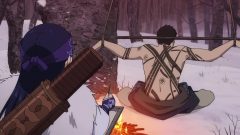
We have a sparser episode compared to the one last week, but believe me it’s still a dense episode with many seeds being planted and this week is essentially your Ainu 101 episode. The mangaka does a thoroughly research over Ainu culture, and he’s more than happy to show off here. But apart from the Ainu cooking porn in which I still feel out of place, Golden Kamuy uses the Ainu traditions and their culture to inform us about who Asirpa is and where her perspective comes from. Take the matter of rising a cub for example, Anui’s belief is to raise them and send them back to their kamuy (Anui’s god) life through sacrifice. It’s a fascinating view to how they approach life and death and I do really respect their belief. Asirpa belief grows beyond that view, the way she approaches it more realistically and she says it best herself “Our beliefs contain our way of life”. It could apply to any culture, to any individual belief out there. She really is mature and wise beyond her age.

Plot-wise, the duo gets chased down by more members of 7th Hokkaido unit, this time they all meet their miserable end, but not without a good fight. There of the soldiers are in hot pursuit for Sugimoto, and he escapes them just by a hair only because of Asirpa’s wisdom (although I like his quick resolve I have to say the “Bears won’t attack people who enter their hole” setup was hastily set up here). And the three still manage to take down the bear before dying themselves, just to show us the fighting spirits of those men (one of the men even had his face ripped off. Badass). Another soldier pursuits Asirpa and nearly kills her when he realized that she’s involved, but soon taken by the white wolf, Retar. If there is one central moral of this Golden Kamuy story, it is you need to kill your opponent properly because otherwise they’ll come back to haunt you. Asirpa leaves that poor soldier Tanigaki alive, and he vows to kill the wolf at all cost. I’m not keen on this development at all. It means trouble.

Speaking of Sugimoto and Asirpa’s real troubles, I’m worried for Asirpa’s kotan right now as the two seems to forget that they are being followed by a bunch of ruthless and skilful teams. The enemies’ character designs have now gotten to Rurouni Kenshin’s level of ridiculousness, which personally I’m not fond of, but well I can’t disagree that both teams following our duo are badass and will prove to be real threats. On the one hand, we have the army unit, lead by a “missing-the-front-of-his skull” Tsurumi, so you know he’s mad as hell, and on the other we have Hijikata himself, who figures out the way to take the tattoo NOT by skinning them off, so naturally he just kills for the fun of it (that’s half-true though). The next step should be for those two hot pursuers to kill off each other, right?

Hisone to Masotan – 02 [I’ll Name the Dragon Masotan]

It’s already 2 episodes in and I still have absolute no idea what HisoMaso’s overarching theme is going to be, which might no be a bad thing given I enjoy the show for what it is so far. HisoMaso’s main concept is quite silly when you think about it. A dragon camouflages as a military aircraft in which the person pilots it inside its organs. Yuck. And you see how he throws Hisone up? The show could easily fall apart if they take that concept seriously, yet so far they manage to get away with it. Even heaps of scenes in this episode could be viewed as workplace sexual harassment with all the touching, sexual innuendo (not to the level of FranXX but still,) and fetish-fuel suits, yet somehow they still work? Why then? I have no clue, but if I have to guess, it’s because of the show’s subtle parodical tone. Main characters, for example, have betrayed their common archetype tropes: Hisone is first seen as a character who have no qualms to be pushed around, turns out she’s the blabbermouth who says all negative things without thinking. Likewise, with Nao appears as your typical grumpy but kind-hearted partner, but this episode goes a long way to establish that she’s mean to Hisone through and through. Or even with the yoghurt lady who supposed to be a source of wisdom, turns out she just gives Hisone some random food (or is it not) and it’s Hisone who tries to make the meaning out of it.

Then again, I figure our best approach to HisoMaso should be don’t delve too deep into it and just enjoy the simple yet absolutely outstanding visual wash over you with some mild emotional core and some tweaks at the common tropes. And on that front HisoMaso more than shine through. This episode is all about Nao the delinquent who unsuccessfully bullying our main girl, but successfully steals a scooter and gets herself swallowed by the dragon (yay!). Her arc involves how Nao feels insecure with her position after Hisone becomes a main pilot. Ignored by her idol and had her rival standing up for her for all the wrong reasons, it comes to the breaking point where she need to revenge. Vengeance is the best cold dish there is. But why Nao, why do you have to go all the way to cook a meal for your rival? But further down the line and you realize that what Nao afraid the most is not living up to her mother. Kakiyasu the Captain does a crappy job to remind that her every single goddamn time. There’s a subtle hint that Kakiyasu used to be Nao’s mother junior, hence she understands what Nao is going through right now. But what she doesn’t understand is Nao the person, as the girl lashes out and runaways. Okay, Nao is pretty much a meanie but her character ticks with me through her little adorable details: her sketchbook with all the drawings are kawaii (with a commentary to boost), reading Princess Tutu / Black Swan manga, the way when she’s hurt she calls out for her Mama (big girl always calls out for Mama)

Judging from the OP and ED, there going to be three more additions that it makes me wonder if there is going to be another dragon appear. As I said earlier I absolutely have no clue whether HisoMaso will be more serious later on. I hope it’s not as for the moment I enjoy the chemistry between the titular characters, the bright and impressive visuals and I have a fondness for these quirky characters with no nose. The same can be said for its catchy French ED (I love French Pop, their sounds always remind me of bright summertime. German always sounds to angry for me – fitting for Metal music). One thing for sure is that whichever direction HisoMaso going to head, I am gonna be happily on board.

Hinamatsuri – 03 [Hobo Life 101]

Hinamatsuri week 3 plays like an extension to Anzu and Hitomi’s stories last week. It’s like two sides of a same coin where you can see these girls grow in a direction you don’t expect (NO innuendo here), albeit at the cost of the central chemistry between Nitta and Hina. Here’s the trick to why Hinamatsuri has such refreshing cast: establish a typical stock character, put them into situations that completely out of their comfort zone, and their real characteristic emerges. Hinmatsuri is interested in the way those characters behave and act in such situations, and the source of humor come from how they define their own characteristics. Take Anzu in this first half, the self-centred Anzu learns a long way about the value of work and the value of money by joining in the homeless community. It’s a neat idea the show explores here, since usually the way the normal Anzu type just couldn’t care less about all this, yet our homeless girl not only starts from the very bottom and adapts well, but finds true meaning behind it. Kudos to Yassan who provide a fatherly figure to our Anzu and shows her the way of how the homeless makes their own money. We see how she works to get the cash: collecting cans, looking for loose coins and walking for hours to receive just a few hundred yen. It doesn’t worth it, as it shouldn’t be, but this hard labour makes her realize how hard it is to make her own money, and how “wrong” she was for stealing foods.

She receives a cold shoulder from the homeless guys at first, who aren’t keen on taking young girl to their clan, but they all change their mind after her singing, which remind them of their grandkid. I especially like the song she sings, of course it makes sense for a person without food to sing a song about the hungry wolf goes munch, munch, munch right? And especially they are literally the lowest of the foodchain here (they’re the little pigs in the song). Her singing is just like mine, which to say horrible (thumbs up for the VA who nailed it on singing with wrong beats here). Being accepted to the homeless group also means she becomes one of them, and at that moment she grows attachment to them to the point that she would swallow her childish pride to accept the money for Nitta, since she knows that money can support the tribe greatly. All of her efforts come to naught, however, when Usako and the district people caught her and made her pay for the amount she stole. My favorite bit amongst this chase is when Usako won’t call it quit and spits when hearing the police; somehow all this fits her character (and somehow it rhymes). Ohh and Usako has a history with cops. I’m waiting for that episode right now. Getting caught is actually NOT a bad thing, since now Anzu pays off her debt and can have a fresh start as a homeless girl. This is a surprisingly touching tale about a girl who learns love and the value of effort in the damnedest place. Hinamatsuri continues to surprise me.

On the other side of coin, the second half is narrated by my girl Hitomi, who moonlight as a bartender at night. Despite her efforts not to work in the bar with hilarious mind games with Usako (damn, this girl learns fast), through many unforeseeable circumstances (including being blackmailed twice by Usako), she ends up working as a bartender, and needless to say, the customers, even Usako are fond of her bartending. The way her good-girl trait plays very well in contrast with everyone around her. The troubles come when her homeroom teacher comes to the bar, so the gags involve around the teacher’s suspicion of Hitomi, as well as challenge Hitomi to hit him with her best shots. Hit him with her best shots she did marvellously. There’s many play on words here: with Mishima- Million Dollar, Baka na? “Impossible” – Bartender. There’s also a wordplay in manga source only that has the vice president says Bartender – Tender bras. My favorite part is the elegant way Hitomi shaking her milkshake cocktail in a glorious animation by feel Studio. It’s certainly satisfying to see how Hitomi has changed since we meet her, but this section lacks the nuance the first half had done so well.

The last part focuses back to our main duo Nitta and Hina, although for me it’s the weakest part of the show so far. We have seen all this before, Hina tries to be a good girl (but I enjoyed her little nightmare here), ends up wrecking every single thing in the house. The most genius part for me is the way the show leaves Nitta’s reaction open-ended, because normal anime loves to show’s characters exaggerated reactions even stupidest jokes. Not here. We won’t know exactly but we have a pretty good idea on how Nitta will react. And sometimes by doing less, it matters so much more given now we have to fill the gap ourselves about what might happen to Hina afterwards.

Violet Evergarden (2018 Winter) Review – 76/100

Violet Evergarden’s existence has surely been a public one. Acclaimed before everyone lick a taste of it (it was awarded for grand prize in the fifth Kyoto Animation Award’s novel category in 2014 – read, KyoAni awards), it goes without saying that Violet Evergarden is one of the most anticipated show of the sparse Winter 2018 season. As with my first impression, I left the show feeling a bit torn about it. On one hand, the production is top notch and when the show hits right, it sweeps you right away. On the other hand, I don’t buy much of Violet’s central conflicts and the show has a tendency to go over-soapiness and try to explain too much, which I never fond of. To be fair, Violet Evergarden has never known for its subtlety, its intend is always to pull as many punch as possible. Violet Evergarden, therefore, is at its strongest when it uses Violet as an observer, to put her as a background for characters with their own struggles have to finds ways to overcome. When she stays in the spotlight, however, the amount of predictable development and cheesy moments always overwhelm the show’s own emotions.

Let’s begin our journey with the way KyoAni adapts these Light Novels into anime form. The Light Novels start with Violet as an already established Memory Doll, and makes it ambiguous as to whether Violet is a robot or a human. Throughout many encounters with clients should we learn more about the violent pass of Violet, and her super-soldier self. To put it another way the Light Novels uses her more as a reporter with set personality. In the anime version however, KyoAni decides to shift the focus to the whole character arc of Violet. Make her vulnerable at first, and then build her character gradually. I appreciate the intention (in fact about half of their episodes are original material. Impressive), since anime medium works different than written form so it’s always a wise move to modify the content, so it’d fit with the visual medium; BUT I’m not sure if these changes improve the narrative. The thing is, Violet as a central narrative is a boring lead and she’s utterly unrelatable. She doesn’t possess any personality traits and repetitive responses get pale really, really fast.

But to build Violet the character from ground zero also means that when she changes, the changes will be massive. Violet is suppose to be a robot, at least in terms of narrative sense. Everyone regards her as a killing machine, she sees herself as someone’s royal dog, the show visualizes her as a bleeding doll, and the novel purposely frames her as a robot, anything but a human. It’s also the show’s narrative that Violet needs to learn these emotions in order to truly become a full-fledged human. There are some neat ideas behind it, namely the way she realizes the bad deeds she has done in the past. When she doesn’t realize, it’s okay to live on, but when she does, the fact that she ends many people’s lives comes back to hurt her. Relying on someone else to live (in this case, Gilbert), is as sad and unbalanced as it might get, and her own arc has to do with her coming to terms with the fact that Gilbert is no longer there for her and raise independent on her own. It comes to episode 8 and 9 which feature one huge flashback to the day Gilbert died and Violet experiencing her grieving process. While I personally feel this flashback a huge waste of time given we don’t learn anything new, it feels like a complete arc for Violet. That is the reason why the real climax in the end doesn’t do much to me since we already see her arc done in previous episodes.

Violet Evergarden’s best parts are the standalone episodes where Violet doing her jobs – reciting or writing letters for their clients. At heart, these letters represent the desire to connect between people, they represent all those raw feelings that can’t be said out loud, and Violet is in middle of its own trying to translate those feelings into written words, and learn about emotions in the process. All these little stories, from a playwright making a new children-play, to the sick mother write future letters for her daughter, to write love letters from the heirs of two nations, each of them adds more layer to the concept of ghostwriting and her job of connecting the hearts of people together and most of them give a satisfying emotion to their story. The best episodes amongst them are episode 10 (sick mother and her daughter) and episode 7 (playwright).

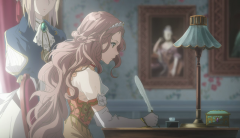
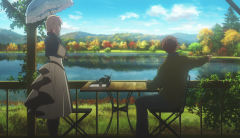
The production by and large is impressive with detailed character designs (it’s one rare production where all the background characters are fully portraited with their own costumes and figures), consistent animation and striking background designs. Each story where Violet performs her jobs has different kind of settings, and Violet Evergarden really gives it their own on breathing life to those places. The lighting, however, doesn’t give the show a justice here. All interior scenes feel too dark, for one thing, and the way Violet Evergarden uses their focus lenses which make the centre of focus detailed and the rest blurred) hurts the show more than support it. It’s one of the case where I consider they over-playing with post-production. Such a shame since it feels like they don’t have enough confidence to their raw production.

As for characters, it pains me to say that the supporting cast doesn’t reach their full potential either. There are many anime original characters, and most of them have their own episodes to shine. But Hodgins and Cattleya are surprisingly underdeveloped despite appear almost in all episodes. Gilbert is just a vessel for Violet’s personal growth and the appearance of Dietfried in the end doesn’t leave much impact either. There is a hint of the aftermath of postwar era, which I somewhat enjoy but I don’t feel that it reaches its full potential. And all the drama is over-blown, which kind of bang me hard in the head.

All in all, Violet Evergarden is a roller coaster of emotions, in more ways than one. It either sweeps you away with its grandeur approach, or it doesn’t (like myself). The central development is a conventional and predictable one, and the show’s best moments are the ones where they move away from Violet as the central conflict. Despite my grumpy it’s still a solid made and worth watching at least one, if only for the beautiful CG-animated mechanical hands of Violet.

A Place Further than the Universe (Winter 2018) Review – 77/100

Cute girls doing cute things is a genre that been done to death at this point. Even within this Winter 2018 we had been overloaded with big eyes fluffy face girls doing a lot of different things of interest. It takes a standout concept or a deeper narrative to make one stand out from this crowded pack. Enters Universe, an original show from Madhouse that has both of these. The show’s concept, after all, is about a group of high school girls making their trip to Antarctica, also known as the place further than the universe. Universe isn’t without its issues, the pacing in particular takes the girls way too long until they reach the destination. But to its defense this show is always more about the journey than the destination. It’s about experience life to the fullest and make friends who share the same interest in the process. The “friendship” bits can be contrived at times, but even with me (who isn’t that enthusiastic about it) realizes that the drama in this series is done quite well, as it always gives a satisfying emotional response to the conflicts it creates.

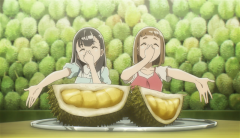
If there is one thing that I’m sure this show will be remembered for years to come, it’s the concept. Touring oversea isn’t that difficult nowadays compare to say, 20, 30 years ago, but a trip to Antarctica? Really? High school girls you say? What’s there to see in that icy place? How the hell do they get in there? Money? Lots of questions bound to come up upon hearing this premise and I’m happy to say that Universe never glosses over those issues, but instead approach them with a thoroughly research. Every stage of the trip is planned carefully, they never make light comments about high-school girls going for such harsh trip and indeed, they point out many times how extreme this trip can be. The expedition ship and the Antarctica place are so detailed that it’s easy to see the staffs made the same trip for their own research. It’s a joy to watch and know more about this little unheard place, to the point sometimes I feel this show is an advertisement for Antarctica (well, I’m sold). Moreover, a show that gives a detailed treatment to Singapore is always a plus (and I love durian!!).

What Universe also sells us is the way they frame this trip as a self-discovery, as a way to embrace the youth to their heart’s content. Mari, the show’s protagonist, is the perfect character for this trip. She worries about how she steps out of her comfort zone, and this trip makes a life-changing event, not necessary in terms of the specialty of Antarctica, but more about maturity. It also helps that the girls’ goal to reach the South Pole is much more than just “follow your own dreams”. Shirase is a girl that had her Mother disappeared in that very place, and it’s one of her resolve to go there just to be closer to her Mom. There’s also Hina who takes high school off but wants to experience something before college and most importantly, there’s Yuzuki, an idol who gets caught up with this trip and just tag along because she wants to travel with her new friends. And those make this trip a bit richer because doesn’t matter their own intention is, it’s the experience that they share together is the most important factor.

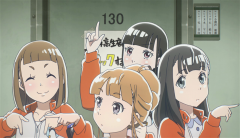
The girls make up a great central cast for us to follow. All 4 of the girls have different personalities, they have their own goals and their own backstories, and they have their own voices. Shirase, for example, is a no-nonsense but extremely unstable girl, whereas Mari is cheerful and acts like the emotional force of the group. Hina, my favorite character, has a wise (and bullying) side of her and Yuzuki somehow feels much more relatable through the way she loathes her “star” identity. Moreover, they bounce off extremely well and it’s a blast just to see the four girls interacting with each other. But most important of all, each of them has their own arc to overcome, and while some it I felt were made for the sake of creating conflict (in other words, unnatural), they always have a satisfying ending that elevate the shortcomings of the conflicts.

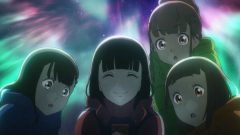
While the main theme is about self-discovery, I was a bit surprised to find out most of the show’s episodic conflicts are about the notion of friendships. Mari’s drama with her best friend, Megumi, for example, cuts unexpectedly but it cuts deep, mind you. Or Yuzuki’s little drama about “When will we know if we are friends” or Hina’s past issues with her secondary school friends. As a whole, I find the concentration to friendships theme a bit overplayed. Granted, their friendships in a nutshell are interesting ones. They haven’t known each other for so long and apart from this trip, they have very different lives. Yet Universe argues that as long as they share something together – be it getting seasick, eating a thousand-year-old snow corn or enjoying a view of mystical Southern light– they will always have a special place in each other’s heart.

The character designs and the production in general are in the more conservative side, but taken as a whole it fulfils its jobs nicely. There is a large amount of insert songs – most of them pretty heart-warming- so the music of Universe is solid overall. The pacing remains its biggest issue, as it takes until the end of episode 9 for the crew to finally takes their feet onto Antarctica icy ground. They could do it much better if they cut a bit of a transit section (Singapore and Australia, as well as on a ship section – another 2 episodes). Ultimately, Universe is a journey itself. It remains a feel-good show with relatable message of enjoying youth to the fullest and the girls make the most of their time on-screen. Certainly amongst the top tier of its cute girls pack.

After the Rain (2018 Winter) Review – 89/100

I suppose that most of us, even the perministic ones, enter After the Rain (Ameagari) with some reservations. After all, the premise about a crush from an 18-year-old girl to the store manager who is nearly 30 years senior raises a lot of red flags here. Yet the show handles this tricky premise with deep insight and offers us two of the more well written characters out there. Originally billed as a romantic drama, the last third of Ameagari steers away from any romantic tension to deliver something more profound. It explores the complexity of human emotion by examining the unlikely relationship between two individuals with broken dreams and how they influence each other to reach back their goals. While I’d love for the conclusion to be more impactful (the ending suggests their relationship is like… ahem… after the rain: fleeting, soft, momentary – I’d prefer for more storming here), this show remains one of the most intimate, sensitive – and ultimately – complex portrayal of bonding, and human relationship. This solid material is further elevated by the understated and strong visual storytelling, aesthetically pleasing visual presentation and color palette and one of the best soundtrack in recent years. Ameagari is pretty much excellent as a whole package.

Any decent romance story has to start with well-grounded and relatable main leads, and Ameagari offers us two characters that worth caring for. Both Tachibana and Kondou are complex characters, especially Kondou who first appears as a goofy likable old man, but through the course of its run, their personality, and their own dreams are revealed slowly. Behind their composure, there lies a huge disappointment of their current lives, and as we know them better, we learn that they have left behind the path they used to treasure the most – Tachibana with her injury that prevents her from running track again and Kondou with his passion for Japanese literature – and gradually lose the essence of who they really are, becomes a shell that has no more dream or desire (in one of the show’s most clever symbolism: he touches the shell of a cicada while speaking that lines).

Meanwhile, Ameagari follows mostly through the point of view of Tachibana. While the show’s never shy from exploring Kondou’s inner thoughts (and what poetic thoughts this guy has), we follow Tachibana mostly through visual cues: her gestures, her “sparkling moments”, the looks from her eyes. Why this difference in treatment? By giving Kondou an inner voice, we become certain that his feeling for Tachibana isn’t romantic or sexual interest, but more about how her reminds him of his own youth and his current lifeless life. For Tachibana, it’s more about fleeting first crush and the show more than nails it underlining those feelings with sensitivity of how first crush is like. As you can guess from the title, rain is the show’s motifs here, and it chronicles the progression of this romance, from gentle, quiet rains in the beginning, then “she comes like a rain” in the middle and bright in the end like a love after the rain.

The main selling point of Ameagari is undoubtedly the amazing chemistry between Tachibana and Kondou. Their back-and-forth exchanges always spark with so much dynamic that every time those two together, they’re bounce to have special moments together – a praise that you won’t hear me say often, especially in anime medium. We have The Confession, The Hug, the Kiss, The Final Confrontation… These moments are the highlights of not only this season, but for my money for the entire 2018 year. They’re impactful. They’re powerful. They’re just perfect. But even in those slower moments, whenever Tachibana and Kondou are seen together, they deliver a natural and positive influence on each other.

The supporting cast help expanding the lives of our two characters, although in retrospect, they still leave a lot to be desire. Chief among them is the inclusion of Kase in one particular episode that leaves a sour taste in the mouth for most of us, but what bad is the way he reverts back to background character and we never learn much about him again. Tachibana best friend, Haruka, receives more attention in the second half and she provides a welcomed conflict to Tachibana’s current crisis, but it feels unfocused when we have a section about her and the ex-captain of the football club (it’s as important as the second copy of the second will). Kondou’s long-lost friend Chihiro, on the other hand, provides an excellent supporting role by the way he counters Kondou about his writing’s passion or reflects further to the path of life that Kondou left behind.

The visual presentation of Ameagari furthers elevate this sensitive love story and makes it a total feast to the eyes. I admit that I didn’t have a high opinion to Wit Studio, mostly because the production approach in Attack of Titan was my least favorite, but I have totally changed my mind with this subtle yet gorgeous visual styles of Ameagari. The reason I bring up Wit studio in particular is because they have their own “make-up animation” team, which is a team who apply special effects to certain important scenes and they sure did the job marvelously here with downright impressive visual palette and strong direction. The soundtracks are simply mesmerizing. They not only bring out the best emotionally from these moments, listen to them alone can transfer you right back to these certain scenes. I could totally picture Tachibana in the rain, or moment when Kondou sees himself in his teen self or the moment they hug each other. I also enjoy the way the show leaves their characters a space to breathe. There are many wordless sections just to record simple daily activities of Tachibana, like when she misses a bus, walks to the train station or when she offers a stranger to walk them with her umbrella.

In conclusion, I know the word “done right” can justify anything but Ameagari is a glaring example of a show that done right in every aspect, from its concerning romance premise, to its visual approach and the way it handles the developments of these characters. What makes it raise above everything else this last season is that, all these excellent components are all in the service of its theme. As a result Ameagari feels like a complete product with no real weakness, as the same time delivers special relationship that reminds us once again about the complexity of our own emotions.

Golden Kamuy – 02 [Nopperabo]

Leave it to Japanese cartoon that done the Western genre better than the Westerners, at least from what we have seen so far (note: despite my pun, Western the genre doesn’t refer to the Western culture, but to the American Old West). Granted, Japanese cinema and literature has a strong tradition of samurai genre, which in some ways share many similarities in characteristics with Western genre. For me though, I still consider Golden Kamuy a Western one, and (so far) a good one at that. Treasure hunt is one of the most popular premise within the genre for one thing, and then we have its focus on the wilderness. The vast isolated landscape becomes a character on its own and Golden Kamuy certainly shares this. It has snowy mountain backdrop that sets in Hokkaido and the manga (remains a question mark for the anime) pays extremely careful details to Hokkaido places and the atmosphere. Social order and moral ambiguity also play important roles, so far Golden Kamuy carries many of those traits within Sugimoto character. Ex-solider, now becomes sort of nobody who looks for huge amount of money, and in the episode 2 we see his stance for his moral code: he isn’t a murderer, but if there is anyone going to kill him, he’ll kill them first without hesitation. Lastly, Western genre is famous for depicting minorities community, for better or for worse, and Golden Kamuy follows that tradition with a well-research presentation on the Anui people. On those fronts, Golden Kamuy is rather exceptional.

What I’m worried about this show, though, comes from its production. I watched Kokkoku last season and I feel the production of that show was only functionable, not exceptional or anything. It remains doubtful whether the new Geno Studio can do justice for this popular source. CGI bears aside*, the animation isn’t that consistent to be honest. There are many still frames that was a shot-by-shot with its manga source, so while it looks alright in stills, the lack of movement remains a concern. The characters look slightly off model in some scenes, and this is just second episode. I have my real worry that the production could fall apart as the series go one.

Get into the event of this second episode, this episode is jam-packed with actions and details and splits into three parts: 1) the pair gets into Otaru, the biggest city of Hokkaido and finds another tattooed prisoner there, 2) dinner, Ainu style (do they really eat the brain raw? Eew) and 3) another life and death situation – but hilariously so – with the third tattooed prisoner, an Escape Master. This episode also marks the end of the first volume of the manga, which for me the anime runs at a reasonable pace. We learn about a lot more enemies to our duo beside the bears. On one hand we have the whole 7th Hokkaido division, one of the strongest army unit involved to this gold hunting. The guy Sugimoto faces this time, Oogata is a threatening opponent. I like the way how, after he shoots the first prisoner death, he leaves the corpse there to pursuits the duo instead. Just show you how professional, and experienced this guy is. Kill all the hazards first, then skin the corpse. He manages to escape Sugimoto the Immortal and manages to survive himself, which means that now the army division will be actively involved in tracking Sugimoto and Aspira.

Still, even in this harsh, “the strong alive the weak die” world, there’s always time for more food porn. I get the intent that Golden Kamuy wants to delve deeper to Anui culture – and indeed, so far the show has shown its appreciation and respect to the Anui people – but the tone whiplash here is too severe. When these two characters have that chibi style and fluffy reactions (especially during Sugimoto exclaims(!!!) “This is so good”, I have a feeling someone padding me in my back and telling me I’m a good boy – the amount of self-indulgence is unBEARable. Other than that, the attitude towards Anui culture is overall positively portrayed in the show. Take a scene where the Escape King mocking Sugimoto about Aspira in which she sets aside and said “I’m used to it”, it just speaks volume here. The way Sugimoto feels about the insult isn’t subtle but it’s the right kind of attitude towards those kind race discrimination.

The last segment turns this capturing and chasing game into some odd whimsical enemy-turn-comrade situation, but for the show as grim and dark as this, a little light tone is more than welcome (just don’t go for food). Again, the setting of winter Hokkaido becomes its own character, it’s a force of nature for our characters to overcome. We learn more about the Leader of this prisoner gangs, who was a Samurai before and a scary figure that our duo need to be mindful of. I like this Escape King character and I figure we will see him back again soon. Overall, we have s busy episode where we got introduced to many major characters. The gold is nowhere in sight, the myth keeps getting more mysterious and heads certainly will roll and skins certainly will get ripped off. It’s a marvellous ride, now let’s all see if the production can keep up with it.

* I think the world has complained more than enough about those bears in the first episode that it isn’t worth beating that dead CGI bear dead horse at this point – although I can offer the reason why the director Nanba Hitoshi thinks it was a good idea. In one of the interview, he remarked that “[] bear have a special status for the Ainu, so I think the way to show them is different from other animals.” TAKE THAT.