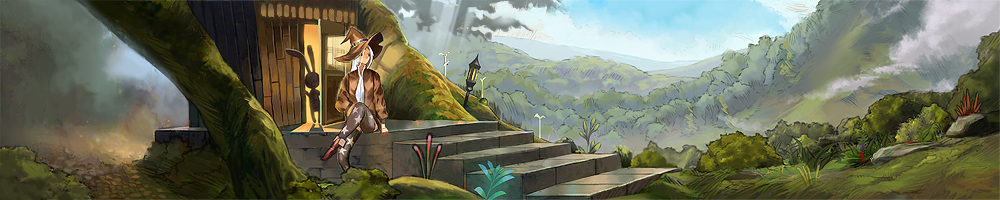
Genji Monogatari Sennenki – 07


Short Synopsis: Genji’s second child is about to be born.
Episode Rating: 8/10 (Excellent)
I think that one of the hardest parts in trying to understand this series is keeping track of all the different characters, combined with how all the characters like to talk in old Japanese, though this surprisingly isn’t the most difficult series to understand in the end (out of the currently airing series, that honor goes to Munto). while watching, there were a lot of question marks that popped up, and scenes, I couldn’t quite grasp, but at the end of the episode everything came together wonderfully and suddenly made sense.

So in this episode, Genji’s wife gets pregnant, and it takes place during the nine months of her pregnancy. This rumour reaches the ghost woman, who becomes even more struck with grief, and so she attempts to kill Genji’s wife as well. After the second attempt (after the baby is already born), she succeeds. With four episodes left, I believe that the creators are saving her as the main villain of the series, but the little girl still has yet to be important, even though she’s supposed to have a huge role in Genji’s life.

And I also loved how this episode had more visual effects than ever, and as usual, they looked GREAT. Especially during the climaxes, the creators were throwing these effects and filters everywhere.

And here’s something interesting: Genji has currently gotten two women pregnant, and has been flirting with quite a few more. Now compare this to Touya from White Album, who also is surrounded by a lot of females, though less extreme. I’m still surprised at how much hate Touya gets for being unrealistic and a bastard to women, and how Genji doesn’t get any hate at all, while his actions have been much worse. Sure, it’s probably due to the lack of subs for this series, but it’s interesting to see that some series are easier to hate than others.

Higurashi no Naku Koro ni – 51


Short Synopsis: Keiichi and the others go to the pool
Episode Rating: 7,5/10 (There are going to be five episodes of this!?)
Uh… yeah. Here I was expecting Higurashi no Naku Koro ni Rei to deliver some more background information about the series, flesh some more characters out and all… yeah.

In the end, this turns out to be more Arusu The Adventure: random stories involving the lead characters. This one had everyone and his dog chase after Keiichi’s swimming trunks because it was supposedly cursed. In the end, the only clue that we have that it was indeed cursed was the word of the one who sold it to him.

In any case, the episode was as hilarious as it was disturbing (try to imagine Tomitake and Oshii in the pool….), and the thing turned into a huge self-parody. Interestingly, the original director didn’t return to the director seat, but instead the one who did the series composition created this… thing. And to think that there are four more episodes left!

On a completely different note, though: that OP rocked. It doesn’t quite beat the original OP of the first season, but I’m glad to see that it’s still experimenting with different exotic instruments and sounds. It works really well in this case.

Zegapain Review – 82,5/100


I remember when Zegapain first started, I was really turned off by its first episode, so I dropped it without giving it much of a second chance. In the end, though, this series turned out to be pretty capable. While it starts out like any other series does, with a typical teenager who just lives a normal life and gets to meet a cute girl and pilot a big mecha (like an expert as well), it gradually evolves into a fascinating post-apocalyptic series, successfully degrading human beings in a bunch of computer bits.

This definitely is one of those series that doesn’t play all of its trumps right in the first turn. The whole mecha-fighting indeed does feel like a mere game to the lead character in the beginning, but gradually more and more about the setting of this series gets revealed. It’s basically the Matrix meets anime, though with differences I’m not going to spoil here.

The cast is likable, no character really feels wasted in the end, and overall it’s a pretty solid series, although it doesn’t hit any heights. My only gripe with the series is that the final bad guy hardly has any attention or development at all, and feels a bit shallow because of it. The action-scenes are also very prevalent throughout the series, but they hardly ever form any highlight. This is going to be a short review, because there’s not a lot that you can say about this series. Basically, there are some very nice ideas put into this series, and that’s the biggest reason why you should watch this.

Storytelling: 8/10
Characters: 8/10
Production-Values: 8/10
Setting: 9/10

Shikabane Hime – 21


Short Synopsis: The seven stars put Makina and Hokuto in one room. Fighting ensues.
Episode Rating: 8/10 (Excellent)
I’m still amazed at this series. I keep having these fears, for the huge amount of pitfalls that this series can fill into. And here it comes, and proves me wrong time and time again. The characters just keep saving this series whenever it’s about to fall apart. When boob-sama first appeared, I feared that she was just going to prove to be a source of annoyance, in the same veins of Saji and Louise in Gundam 00, and how she’d come back as a Shikabane Hime in order to form Ouri’s harem when she ‘died’. And here it turns out that she couldn’t be saved, and actually died for real with a pretty impressive finish. In the last episode, I remember noting how the rest of the seven stars looked like they were going to simply fight Makina in standard shounen fare, and this episode comes and it continues to provide very interesting back-stories for these guys. Heck, even the simple bash-fest between Makina and Hokuto turned out to be awesome somehow. I really didn’t see this coming when the second season started, but at this point, this series can hardly do anything wrong for me anymore. That’s how much I’m already caught up in this series’ pace.

So as it turns out, there’s a whole lot more to that simple flashback scene of Keisei and his former comrades than just them being at the same spot at the same time. It turns out to be a very important scene, having to do with Ouri’s origins. I didn’t understand it completely, but there seems to have been a shikabane that collected children, presumably this was Ouri’s mother. In their attempts to rescue them, Keisei and the others failed, and every child except for Ouri got killed off, and Ouri was brought to the orphanage. Also, did I understand this correctly and did Ouri’s mother turn into the cat? In any case, the biggest revelation in this episode was that one of these dead children was Hizuchi.

What I now want to know is why it’s so important for the Seven Stars to have Hokuto fight Makina, though this will probably get clearer once the creators start on her background.

It’s only a pity that the animation doesn’t feel as rich as in the first season. While it’s still much more than a bunch of still frames, and I can’t exactly put my finger to the big difference. I guess that the animation in the second season feels more standard and less inspired than what we saw in the first, if that makes any sense.

Casshern Sins – 21


Short Synopsis: Ouji returns.
Episode Rating: 8/10 (Excellent)
I’m not getting my hopes up. I’m NOT going to get my hopes up this time. There is no way that this cliff-hanger is going to be real. This series is going to be one of the best things since sliced bread if Casshern DOES end up dead, but I’ve seen too many cliffhangers like this one in which the main character supposedly gets killed off before the final episode. The next episode is probably going to feature some kind of plot twist that is going to keep Casshern alive. It’s going to be an awesome one, that’s for sure, but as much as I’d like to hope for a series to kill off its main character before its final episode, it ain’t gonna happen.

But that’s enough ranting, because this still remains such an excellent series. In this episode, it becomes clear that Luna indeed is very different from your guardian angel. In the time before her supposed death, it was so bad that anyone who met her met with death. When Braiking Boss ordered to kill her, he basically ended up killing his own subordinates, it seems. Still, since Luna was seen as the sun, nobody seemed to either bother or notice. Still, Casshern for some reason wasn’t affected by her death-rays, he stabbed her, and got in touch with her blood, and that’s why he became immortal. Nothing to do with love, like I originally suspected. This however, still leaves a truckload of questions yet to be answered:
– Why didn’t Casshern get himself killed?
– Why did Luna’s powers change all of a sudden?
– Where did the ruin come from?
– How come Casshern got pulverized at the end of this episode, without regenerating?
– Did Dune get his nickname really from his own actions, or were all the rumours of the people the original Luna killed delegated to him?

And here’s one thing I’ve been wondering:: every single recurring character has his or her own purpose in the series, except for Friender. Seriously, what was the last thing that it ever did? Try to dig out Casshern from a bunch of rocks. Apart from that, it’s just… there. Is Friender going to be more than just a simple cameo fro the original Casshan series, or will it have an important role in the end?

Hetalia: Axis Powers – 05


Short Synopsis: For whatever reason, Japan, Germany and Italy end up stranded on a desert island.
Episode Rating: 7,5/10 (Good)
Easily one of the most nonsensical episodes of this series yet. Again, it emphasized on how Italy only thinks about food. In this episode, he offers Germany some of his local dishes in order to seal the alliance between him and Germany, and builds a castle of Spaghetti (as a reference to the tower of Pisa, of course ^^;). Next episode, the rest of the countries should arrive, so that should prove to be fun.

Still, with this entry I’m going to stop blogging this series. It’s not because of the political incorrectness of the series, the stereotypes or the negative comments I’ve gotten about it. I still like this series a lot, but I hardly have any inspiration to write about it for every single episode, so I thought that I’d better quit while I’m ahead, before I burn out completely. It was a nice experiment definitely, and when I started blogging this series, I hoped that it’d be like Master of Epic (which was a lot of fun to blog for me when it aired), but the episodes are just too short for that. Perhaps I’m going to do some compilation posts along the way, but I’m not going to promise this.

Saishuu Heiki Kanojo Review – 82,5/100


One of the things I like about Gonzo: they take risks. That’s really where the best ideas come from. Sure, they definitely have their screw-ups; but then again: who doesn’t? In any case, another product of Good Gonzo is Saishuu Heiki Kanojo, or Saikano or She: The Ultimate Weapon as it’s known as as well. However, this isn’t just going to be the case where I simply list everything that it does right and just get things over with: like a lot of Gonzo’s series, it has a lot to like, but also a lot to hate about it.

Ultimately, whether or not you’re going to be able to enjoy this series is how much you can stomach teenaged angst, because BOY, do these characters WHINE in this series. On top of that, it loves to pull those plot twists that add extra drama: death, destruction, extravagant love triangles, for this series it can’t get sad enough for the lead couple, and the result is that the characters hardly every stop crying an whining.

I really was expecting a huge tear-jerker when I started watching this series, and I believe that the creators also intended this series to squeeze as many tears out of the viewer as possible, and yet I didn’t cry once, nor felt the inclination to. As a tear-jerker this show lacks subtlety. There’s just too much angst and sadness. This series just keeps bouncing back and forth between love triangles here and war is bad there, and I guess that this format failed to impress me.

Instead, I was sold on this series through completely different things. The characters just feel incredibly genuine. No matter what kind of overly sad plot twists the creators pull, the characters act believable and charming. The dialogue is consistently of a very high quality, and especially the voice acting made a lot of impact on me.

In fact, this series would have worked for me even if the lead female character, who is an ultimate destructive weapon that can wipe out entire cities at once, had been completely removed. What this series excels at is portraying how a huge war affects ordinary people, and how their lives are majorly impacted by it. The quiet moments in this series are so much more memorable than the obvious sad tear-jerker moments when the umpth character kicks the bucket.

In the end though, I can’t call anything about this series truly bad or flawed. Sure, the romance had its annoying moments, but for each annoying point it also had more than enough charming ones. Sure, the setting is overly sad, but I’m not going to deny that it made impact. In the end, the creators managed to create a provocative and hard-hitting series, that may not be perfect, nor hits any heights, but has enough that makes it worth watching.

Storytelling: 9/10
Characters: 9/10
Production-Values: 8/10
Setting: 7/10

Sora wo Miageru Shoujo no Hitomi ni Utsuru Sekai – 07


Short Synopsis: Munto tells Yumemi about the past of his country.
Episode Rating: 8/10 (Excellent)
Ah, finally! It was a long wait, but finally we know a bit more about what the heck is going on in this series. Finally we see a bit of the elf country when it’s not fighting. While it’s certainly not enough yet, it’s definitely a good start, although again the dialogue was pretty complex, meaning a lot of trouble for me to understand it. ^^;

So if I understood correctly, the past of Munto’s world looked a lot like it in terms of technological advancement. Then from out of nowhere (or from somewhere that’s yet to be explained) and started wrecking things with their huge amounts of powers. They then discovered the parallel world that Munto lived in, and created a link to it. Eventually though, they destroyed this link again when they became obsessed with their own powers, resulting in lots of destruction. In order to prevent this from happening again, I suspect that the outsider was born. This went fine until the strange evil guy who appeared in the previous episode appeared, and Munto tried to use Yumemi’s help to get rid of him, while Gntarl and his allies didn’t support his decision. At least, that’s what I understood from it.

One thing that worries me though is that the pacing still is as fast as ever. Even though this episode was a quiet one, it still rushed the history of Munto’s world through in less than half an episode, which was an especially bad sign for my hopes of seeing this series continue for more than thirteen episodes. Things really can go anywhere at this point, but if the creators do plan to squeeze the entire story in only one season, then the second half of the series is going to have to be consistently solid and excellent if it doesn’t want to end up the same as the very unfinished OVAs. This episode thankfully met those requirements, but but for this series it’s going to be a matter whether the big picture can deliver or not in the end.

As for the animation, I’m glad to say that now that the series has started its original material, the quality hasn’t gone down too badly. While things obviously look less detailed and impressive when compared to the first six episode, the creators thankfully still have lots of movement. Some details were lost in the process, but it’s better than just resorting to safe drawings with mostly still frames.

Natsume Yuujin-Chou – 21


Short Synopsis: Natsume and his two classmates pay a visit to an old inn.
Episode Rating: 7,5/10 (Good)
Yeah, now I’m sure: this series SO needs a third season. What this series needs now more than anything is some sort of continuing story, and according to the manga readers, that indeed is about to appear, though there’s no way that the creators are going to fit that in only five more episodes. Let’s hope that the higher-ups of Brains Base feel the same way. ^^;

In any case, this episode was a great way to flesh out Natsume’s classmates a bit more, as they invite Natsume to an inn in order to spend some quality time on their homework (read: goof off). The second half of the episode deals with the story an old woman who in her childhood used the blood of a mermaid to save a friend she looked up to a lot.

Most of the episode was about both the woman and the mermaid coming to terms as to what they had done, so that both of them could receive proper closure. A standard story for this series, but it’s still a really charming story.

Book Log

A few months ago, I was asked if I could do a post once in a while about some of my other interests aside from anime. It took me a while to think of something interesting to write, but I figured that I might as well use this post to keep track of the different books and novels I read from time to time. Do note that this list is over the scope of a couple of years: I’m a very slow reader, and usually take three months to finish one book. These all have nothing whatsoever to do with anime or Japan: most are either American thrillers, fantasy or European history, or a combination between these. Do note that some of these entries contain spoilers.

The Dreamers 1: The Island Thurn – David Eddings & Leigh Eddings
A story that takes place in a fantasy world, where a huge focus is spent on building up, and setting everything up correctly. While it’s a bit too caught up in its need to do everything by the book, give every single character background and enough time to develop, up to the point that there’s not much excitement along the way (nothing really happens through the first three quarters of the book), it does deliver nicely in the end, although nothing spectacular.

The Magic Circle – Catherine Neville
The prime example of how you can also get too convoluted. This novel set out with grand ambitions, as it attempted to tell a plot that spreads across 2000 years, with a story containing a huge amount of symbolism, referencing Jesus, Hitler some Roman Emperors and other notable historical figures all caught up in it. In the end, though, it becomes clear that it never really knew what it wanted to go for, and the story didn’t really accomplish anything, other than establishing the ridiculously complex family history of the female lead character. Seriously, in the end the twists about her family became so formulaic that you can almost predict the exact page at which the next increasingly ludicrous plot twist would arrive. It’s got a lot of nice trivia, though. The author really did some intensive historical research on this one.

The Collectors – David Baldacci
A very nice in-depth look in how con artists do their jobs, as we follow a group of four of them as they try to get away with a multi-million dollar scam. Great attention to detail, and a huge focus on careful preparation, only ruined by a joke of an ending which forsakes everything that the story has been building up for and instead goes for a nonsensical action end. The other story that runs parallel through the book also isn’t the most interesting: a bunch of old people solving a murder may sound good on paper, but it’s not the most exciting thing out there.

The Golden Compass – Philip Pullman
Excellent book, and I still need to get my hands on the continuation of this one. The whole idea of every person being accompanied by his own daemon (a sort-of animal that accompanies him everywhere; they even can change shapes for children) is fleshed out really well. The lead character may be just a little girl, but she’s a very likable lead. This is one story that gets increasingly better as it goes on.

Gone Baby Gone – Dennis Lehane
Absolutely fantastic. There’s no other way I can say it. The sheer imagination with which such a police thriller is told still amazes me. It’s an in-depth look at police cases involving missing children. It tells the story about two detectives, looking for a missing four year-old girl, and continues to keep the reader in the dark throughout the largest part of the book. But when a second child disappears, it finishes with an incredibly strong final quarter. I can safely say that this has been the best book I’ve ever read.

The Lost Labyrinth – Kate Mosse
This book tells about two stories as they intertwine: one about 12th century Carcasonne (France), and the other, happening about 8 centuries later. The former one is really good, with a likable female lead and a story that gets increasingly more interesting. The latter, however, just feels like second fodder in comparison. It’s full of plot holes, lacks detail and especially the romance that pops up near the end from out of nowhere feels a bit jarring. It’s got quite a few nice ideas, though.

Deverry: Daggerspell – Katherine Kerr
I’m only nearly halfway through this one at the moment, but I’m having a lot of trouble to get through it. Basically, this book is the first one of a large series of fantasy novels as it tells of a series of very annoying romances. Seriously, we have this guy who already was screwed in the head. His father dies and he continuously angsts and throws tantrums about it. He then proceeds to screw his sister and kill his best friend (no, really). When the bugger finally dies, you’d think that the annoyance finally stops, but no: he reincarnates, and the annoying romance starts all over again. Sure, in the end the story might have a very good conclusion, but I’m about to just drop it because people continue to behave like complete and unlikable imbeciles.

So yeah, one thing I noticed is that each medium has its own share of strengths and weaknesses. The things I noticed with these novels is that in nearly all cases, the thing that decides whether they succeed or not is their final quarter, the rest is all or mostly build-up. Nearly all of the above-mentioned ones either had very promising first halves, only to fall apart completely in the end, or fairly uneventful first halves, only to come together wonderfully in the end.

Another thing I can appreciate is the large diversity of lead characters. Okay, I may have just picked out the right books for this, but it feels like every lead character of the ones mentioned above comes from a different age group, as opposed to anime which tents to usually pick out teenagers. Still, the reason why I prefer anime to novels at this point is that novels lack the ability to suck me in and create an atmosphere. I’m a big fan of all sorts of things multimedia, and the thing I like about anime is how it combines all these things (audio, visuals, storytelling, etc) in order to create a coherent story. So yeah, in the end it’s just a matter of personal preference here, though with some of the above mentioned books, I’m glad to be able to have read them. Especially in the case of Gone Baby Gone. There are geniuses in every single kind of medium.

I may update this entry in the future as I read more. In the meantime, what are some of your favourite novels? I’m really a noob at this medium, so some help in deciding what to read next is always appreciated. ^^;